
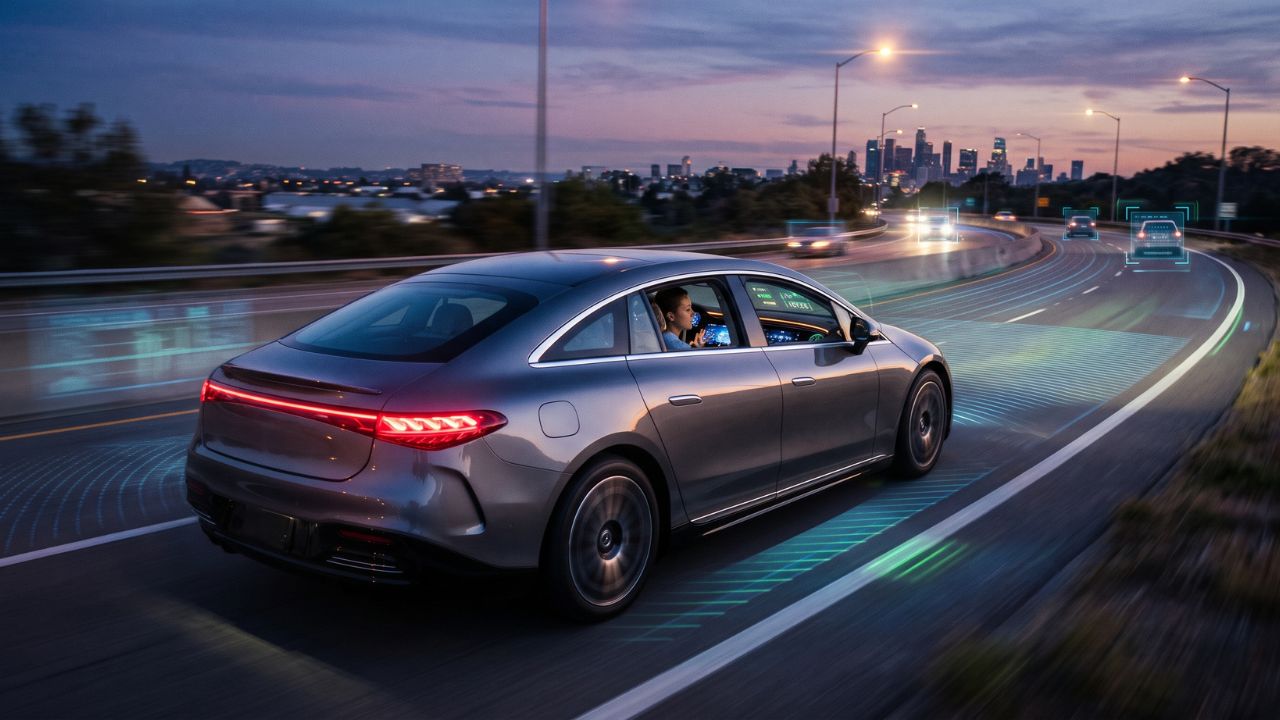
Have you ever watched a car hold its lane on the highway and wondered how much of the drive it can really handle? The best self-driving electric cars offer useful driver-assist technology, but every system still has limits that matter.
For U.S. buyers in 2026, the smartest choice is not the car with the boldest self-driving label. It is the one whose features match your regular roads, your comfort level, and the attention you are willing to give the drive.
No consumer EV in this list is a fully self-driving car. Some can steer, brake, change lanes, and manage mapped highway miles, yet you still need to follow the system instructions and take control when prompted.
I will walk you through what each vehicle does well, where it works, and what to test before you sign a purchase order.
What Defines Autonomous Driving in EVs?
Autonomous driving technology in electric vehicles combines cameras, radar, sensors, maps, software, and driver-monitoring systems. The car uses that information to control speed and steering within a defined situation, such as a divided highway or low-speed traffic.
The key phrase is defined situation. A system may work well on a mapped freeway with visible lane lines, then ask you to take over during construction, severe weather, faded markings, unusual traffic patterns, or an exit ramp.
Key features of the best self-driving electric cars systems
Good driver-assist systems do more than hold the center of a lane. They also watch your attention, manage following distance, identify nearby vehicles, and tell you clearly when the feature cannot continue.
- Cameras, radar, and mapping: Ford BlueCruise, BMW Highway Assistant, and GM Super Cruise use road and vehicle data to support highway driving. Mapped-road systems can be more predictable on routes they recognize, so test the feature on your own commute.
- Driver monitoring: A camera watches for attention on many hands-free systems. This matters because a hands-free feature still needs an alert driver who can respond to changing traffic.
- Software updates: Tesla, Lucid, Ford, BMW, and Mercedes-Benz can add or refine features through over-the-air updates. Ask the dealer which software version is installed, because the feature list can differ from an older review.
- Operational limits: Every system has an operating design domain, meaning the roads, speeds, weather, and traffic conditions where it is intended to work. Read those limits before relying on a feature for a daily trip.
- Fallback behavior: If cameras cannot see well or map coverage ends, the vehicle may ask you to steer immediately. A clear takeover alert is a safety feature, not an inconvenience.
A practical shopping tip: turn on the driver display during a test drive. You want to see plain messages about lane availability, driver attention, and takeover requests, not vague icons you have to decode at 70 mph.
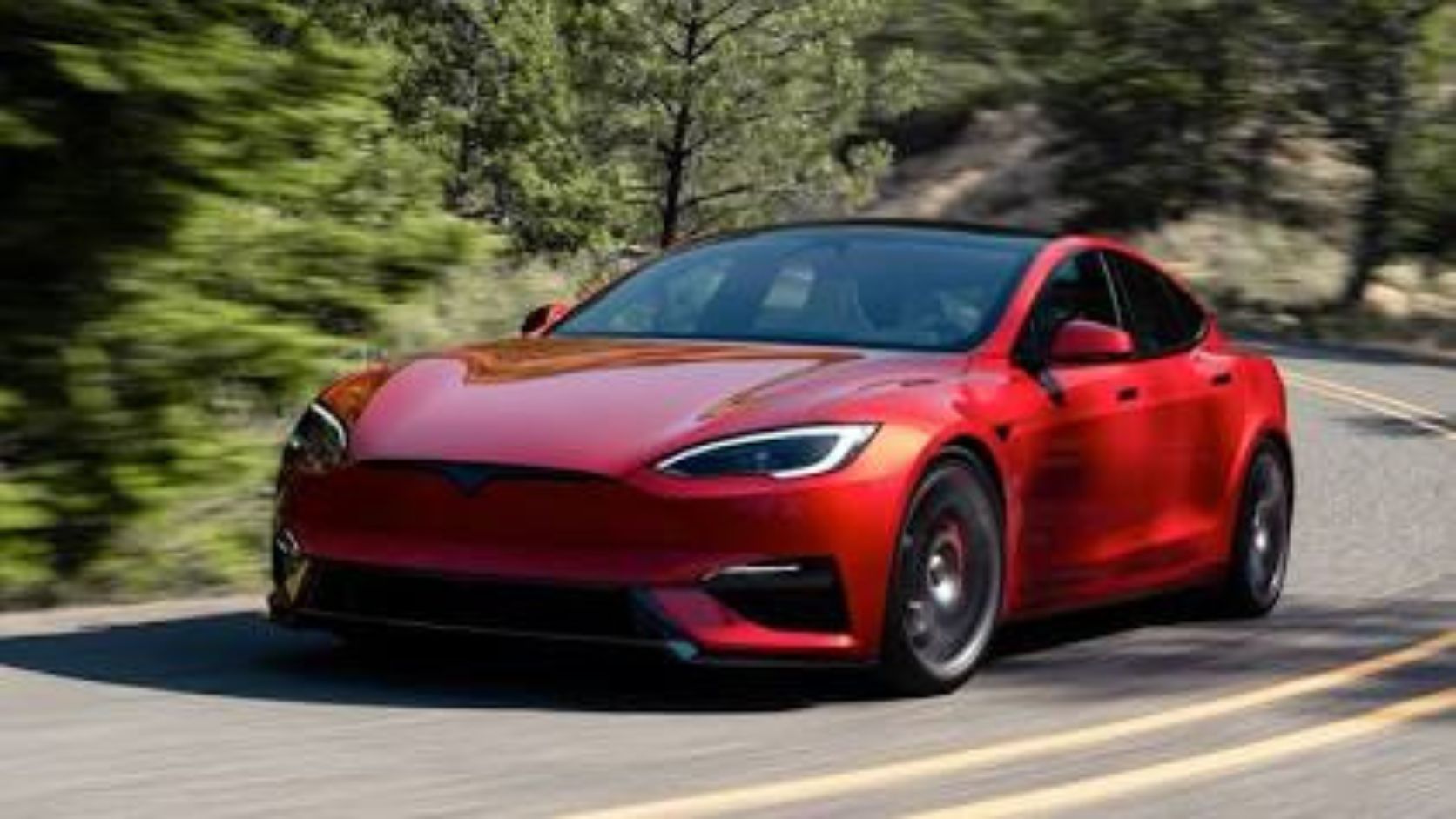
1. Tesla Model S Plaid
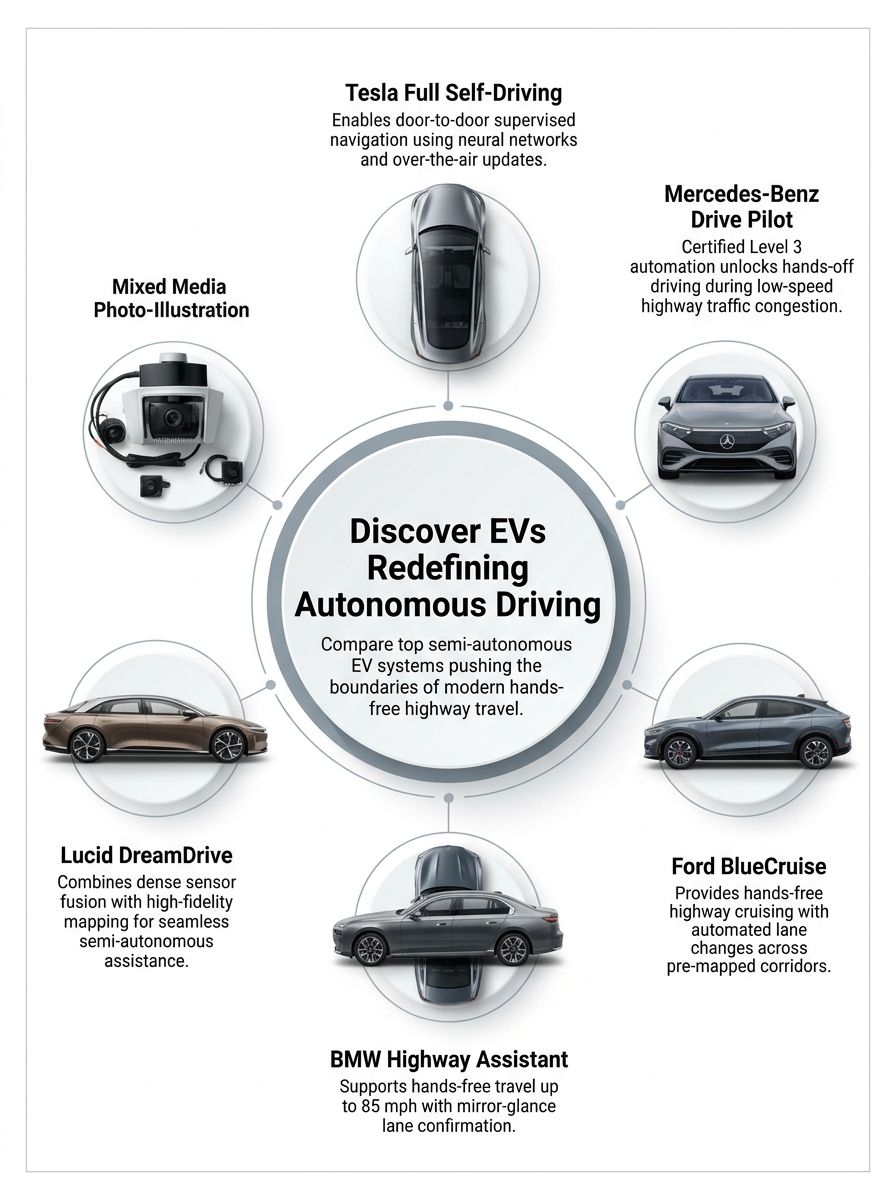
The Tesla Model S Plaid pairs extreme performance with Tesla Full Self-Driving (Supervised). Its appeal is broad route support: the system can assist on city streets, suburban roads, and highways, rather than focusing only on selected freeway segments.
That broad use does not change the driver’s job. You must supervise the system at all times, keep your attention on traffic, and take over if the vehicle makes an uncertain move.
Key Specifications
-
Power Output: 1,020 horsepower (760 kW) from a tri-motor all-wheel-drive setup.
-
Battery Capacity: 100 kWh (nominal).
-
Estimated Range: Up to 359 miles (EPA) / ~600 km (WLTP).
-
Acceleration (0-60 mph): 1.99 seconds (with rollout subtracted).
-
Top Speed: 200 mph (322 km/h) when equipped with proper hardware upgrades (otherwise governed at 162 mph).
-
Autonomous Tech Highlight: Full Self-Driving (Supervised), offering broad street and highway assistance via a camera-based neural network.
Autonomous driving capabilities
Full Self-Driving (Supervised) can assist with route guidance, traffic control recognition, lane changes, turns, parking-related functions, and highway driving. Tesla calls it supervised for a reason: it remains a Level 2 driver-assistance feature in the United States.
As of 2026, Tesla offers Full Self-Driving (Supervised) as a monthly subscription rather than a new upfront software purchase. Tesla lists the standard subscription at $99 per month, which makes a one-month trial useful if you want to see whether the system fits your routes before committing long term.
- Best fit: Drivers who want one assist system for both urban streets and highway miles.
- Big strength: The system can follow a destination route through more road types than highway-only hands-free systems.
- Main tradeoff: You need steady attention even when the drive feels smooth.
- Test-drive check: Try it around busy intersections, lane splits, and construction zones, then judge whether its driving style feels comfortable to you.
A common mistake is treating a successful drive on a familiar road as proof the feature will act the same everywhere. Use it as assistance, scan ahead, and keep your hands ready when traffic gets messy.
Key features and technology
Tesla relies heavily on camera-based vision and neural-network software rather than the lidar-focused approach used by some rivals. The vehicle uses its cameras to interpret lanes, vehicles, signals, pedestrians, and road edges in real time.
The Model S Plaid also receives software updates over the air. That can improve the interface and driving behavior without a dealer visit, but it also means online reviews can become outdated quickly.
| Feature | Why it matters on a real drive |
|---|---|
| Full Self-Driving (Supervised) | Provides broader route-based assistance than a highway-only feature, but requires continuous driver supervision. |
| Driver monitoring | Helps confirm that you are paying attention, which is especially important during hands-on or hands-ready driving. |
| Over-the-air updates | Can improve features over time, so ask which version the demonstration vehicle is running. |
| $99 monthly subscription | Lets you test the feature during a road-trip month instead of paying for it year-round if you rarely use it. |
2. Mercedes-Benz EQS
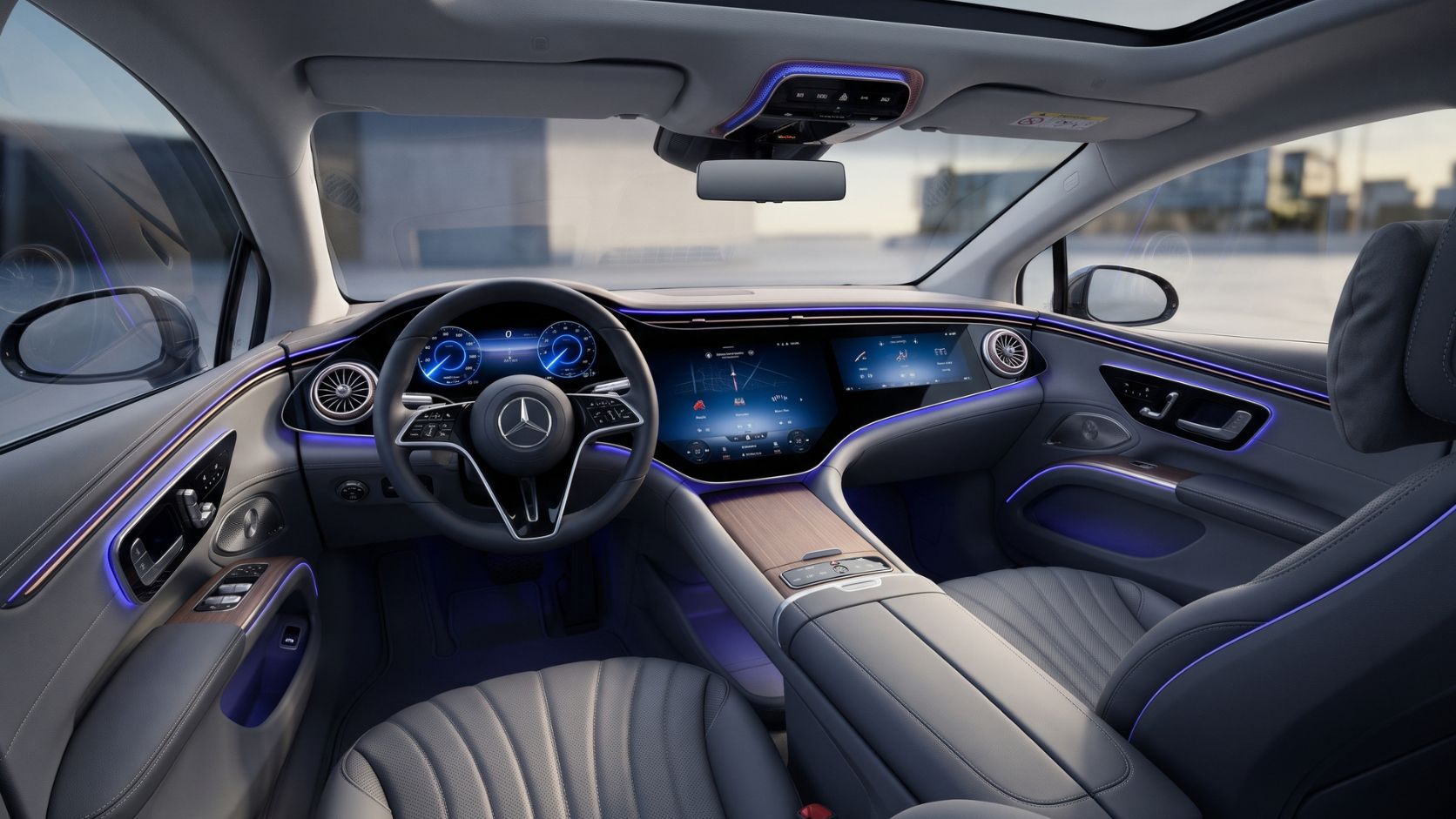
The Mercedes-Benz EQS stands apart because compatible versions can support DRIVE PILOT, a Level 3 automated driving system under limited approved conditions. This is a more tightly controlled approach than broad Level 2 assistance.
Mercedes-Benz lists DRIVE PILOT availability as dependent on vehicle compatibility, wireless connectivity, laws, and approved locations. Treat it as a feature to verify by VIN and state, not as something included with every EQS.
Key Specifications
-
Power Output: 335 hp (EQS 450+ single motor) up to 516 hp (EQS 580 dual motor).
-
Battery Capacity: 108.4 kWh to 118 kWh usable (depending on model year).
-
Estimated Range: roughly 340 to 352 miles (EPA), depending on trim and wheel size.
-
Acceleration (0-60 mph): 5.8 seconds (EQS 450+) / 4.1 seconds (EQS 580).
-
Top Speed: 130 mph (210 km/h).
-
Autonomous Tech Highlight: Compatible with DRIVE PILOT (Level 3 conditional automation) in legally approved areas for hands-free, eyes-off traffic jam assistance.
DRIVE PILOT system overview
DRIVE PILOT is intended for specific freeway conditions, including certain congested traffic situations. When it is active within its operating limits, the system can manage the driving task and allow the driver to focus away from the road until a takeover request appears.
This does not mean you can sleep, leave the seat, or ignore the vehicle. You must remain able to respond when the system requests control.
Before you pay for an EQS because of Level 3 capability, ask the dealer to show you the exact activation requirements. Confirm the vehicle hardware, your state, the roads you use, and whether a digital purchase or subscription applies.
Advanced safety and driver-assistance technology
The EQS also offers conventional driver-assistance features that work outside DRIVE PILOT’s narrow operating domain. These can include adaptive cruise control, lane support, blind-spot assistance, parking aids, and collision-avoidance functions, depending on the equipment package.
- Level 3 only in approved conditions: DRIVE PILOT is not meant for every freeway mile, every speed, or every weather condition.
- Clear takeover alerts: The vehicle gives prompts when it needs you back in control. Learn the alert sequence before your first long drive.
- Redundant systems: Mercedes-Benz uses multiple systems to support steering, braking, and vehicle control, which supports the stricter requirements of conditional automation.
- Good fit for traffic-heavy routes: The system has the most value for drivers who spend time in recurring freeway congestion on eligible roads.
Mercedes-Benz’s approach favors caution and a narrow operating domain. If you mainly want hands-free support across long interstate trips, Ford, BMW, or Lucid may offer a feature you can use more often, even though those systems remain Level 2.
3. Ford Mustang Mach-E GT
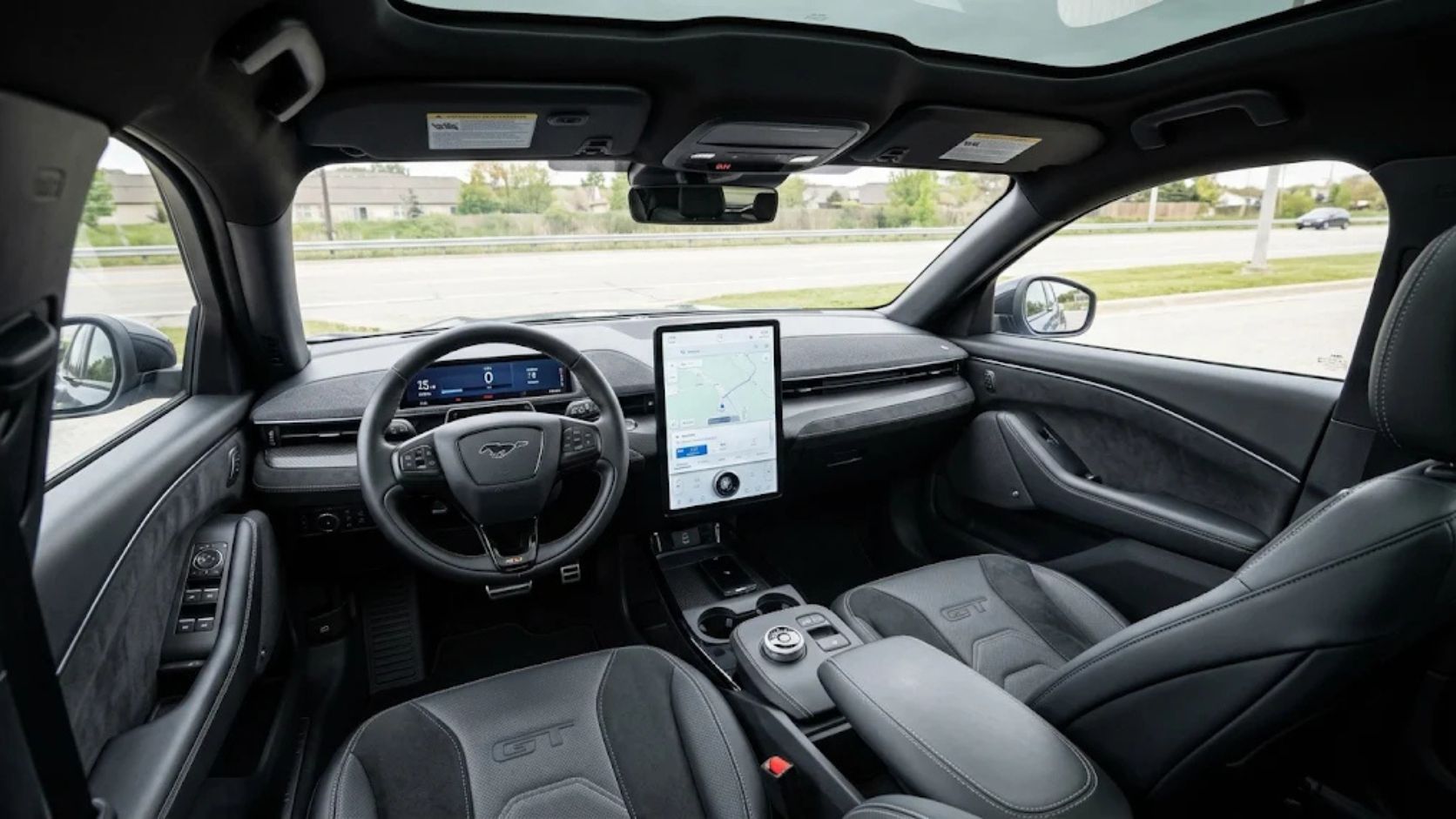
The Ford Mustang Mach-E GT brings BlueCruise to a quick, practical electric crossover. It is a good match for readers who spend long hours on divided highways and want a calmer commute without giving up a sporty feel.
BlueCruise remains a Level 2 system. You may take your hands off the wheel on supported Blue Zones, but you still need to watch traffic and respond to the driver-monitoring camera.
Key Specifications
-
Power Output: 480 horsepower and up to 700 lb-ft of torque (with the Performance Upgrade).
-
Battery Capacity: 91 kWh (usable extended-range battery).
-
Estimated Range: Approximately 280 miles (EPA).
-
Acceleration (0-60 mph): 3.8 seconds (or 3.3 seconds with the Performance Upgrade).
-
Top Speed: 124 mph (200 km/h).
-
Autonomous Tech Highlight: BlueCruise 1.5 (Level 2 hands-free), mapping over 130,000 miles of divided North American highways with automatic lane changes.
BlueCruise hands-free driving system
Ford BlueCruise works on prequalified divided highways in the United States and Canada. It uses lane centering, adaptive cruise control, mapping, and a driver-facing camera to support hands-free highway driving where the system allows it.
Ford’s BlueCruise 1.5 added Automatic Lane Change for supported 2025 and 2026 Mustang Mach-E vehicles. That feature can move the vehicle around slower traffic without the driver manually steering through the lane change, though you still must monitor the maneuver.
Ford offers BlueCruise access through terms that can vary by vehicle and purchase arrangement. The 2026 Mach-E order information lists an option that includes the hardware plus one year and 90 days of access, so check the current offer before comparing total ownership cost.
Performance and range highlights
The Mach-E GT is the performance-focused version of Ford’s electric SUV, with sharp acceleration and all-wheel-drive grip. Its range is lower than that of the long-range Mach-E trims, so buyers who drive far every week should weigh performance against charging stops.
This is where the system choice matters. BlueCruise can make freeway time feel less tiring, but it cannot create more range. Plan your charging stops first, then treat hands-free assistance as a comfort feature that supports the trip.
| What the Mach-E GT does well | What to consider before buying |
|---|---|
| Strong acceleration and responsive handling | Performance tires and driving style can affect real-world range. |
| BlueCruise hands-free driving on approved highways | It does not provide city-street self-driving or eyes-off driving. |
| Over-the-air software support | Check whether the vehicle includes active BlueCruise access after any included period ends. |
4. BMW iX xDrive50
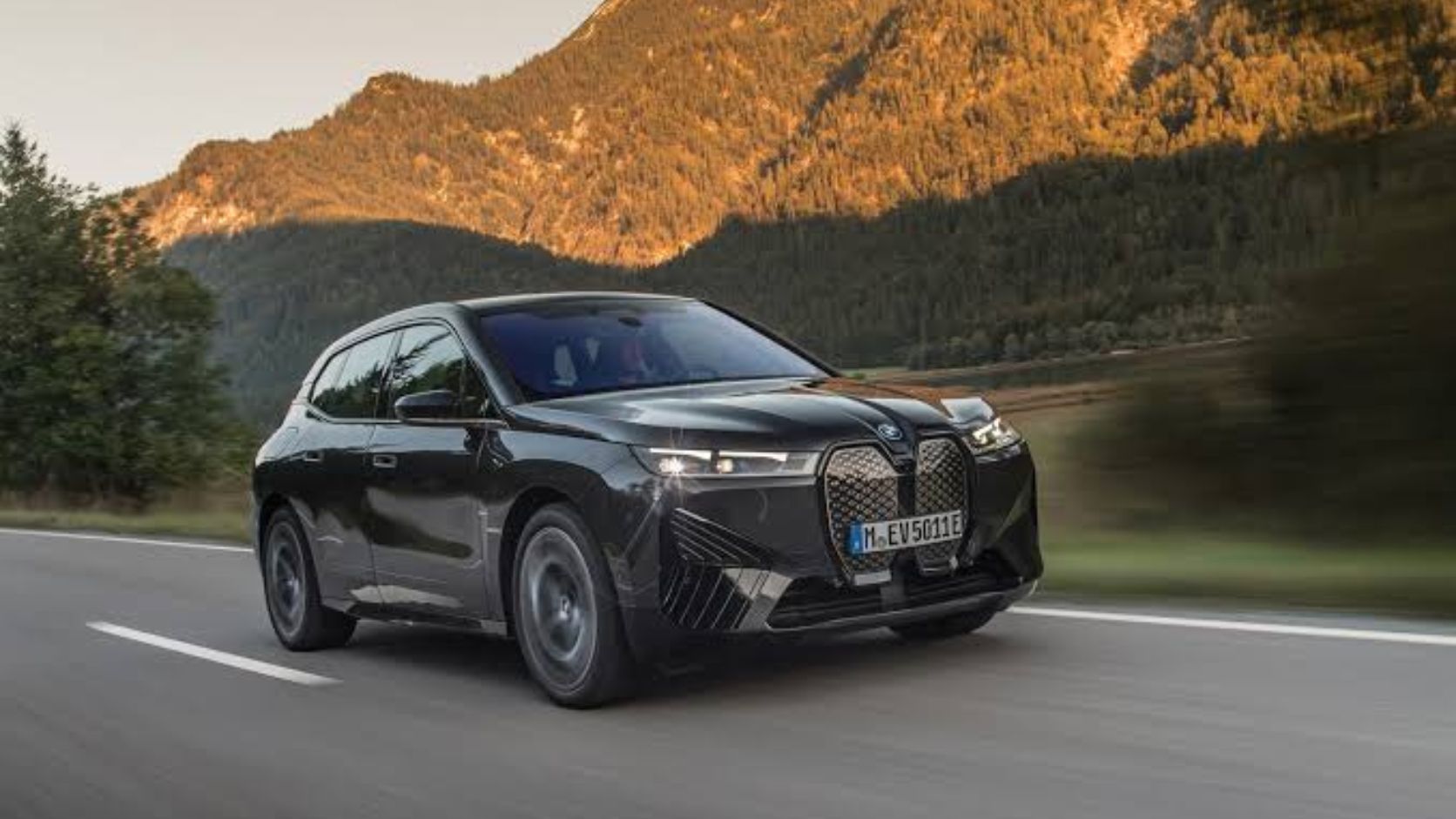
The BMW iX xDrive50 remains a useful used-EV option, while newer iX versions continue BMW’s driver-assistance approach. Its standout feature is Highway Assistant, which focuses on hands-free driving on suitable divided, limited-access highways.
For current 2026 iX shoppers, BMW offers Highway Assistant with the available Driving Assistance Professional package. The exact trim name may change, so ask for the feature by function rather than relying on an older model badge.
Key Specifications
-
Power Output: 516 horsepower from a dual-motor all-wheel-drive system.
-
Battery Capacity: 111.5 kWh gross (105.2 kWh usable).
-
Estimated Range: 303 to 311 miles (EPA), depending on wheel size.
-
Acceleration (0-60 mph): 4.4 seconds.
-
Top Speed: 124 mph (200 km/h).
-
Autonomous Tech Highlight: Highway Assistant (Level 2+ hands-free) for speeds up to 85 mph, including eye-activated lane changes.
Highway Assistant features
BMW Highway Assistant allows hands-free driving on suitable limited-access highways with divided lanes at speeds up to 85 mph. BMW classifies it as Level 2+, which still means you need to keep a close eye on traffic.
The system also includes Active Lane Change with eye activation. Instead of grabbing the wheel to confirm every suggested lane change, you can look at the appropriate exterior mirror to approve the action.
- Use it on controlled-access highways: This is where Highway Assistant is intended to work best.
- Watch the road even with your hands off: BMW’s system monitors driver attention and may ask you to reengage.
- Use the mirror glance deliberately: It confirms that you have checked the adjacent lane before an active lane change.
- Do not confuse the 85 mph limit with a recommended speed: Follow posted limits, traffic conditions, and weather.
- Check the package before buying: Highway Assistant requires the right driver-assistance equipment and may not be included on every iX.
For drivers who dislike frequent steering-wheel prompts, BMW’s hands-free approach can feel natural on a clear freeway. The eye-activated lane change also gives you a useful point of control without turning every lane change into a fully manual task.
Innovations in autonomous driving
BMW’s strategy focuses on building confidence through gradual automation rather than promising full self-driving. Highway Assistant combines navigation data, cameras, radar, lane recognition, and driver monitoring to support the driver during long highway stretches.
BMW Maps can work with driver-assistance information to guide the vehicle from a highway on-ramp to an exit while route guidance is active. That makes the feature more useful for a real trip than basic lane centering alone.
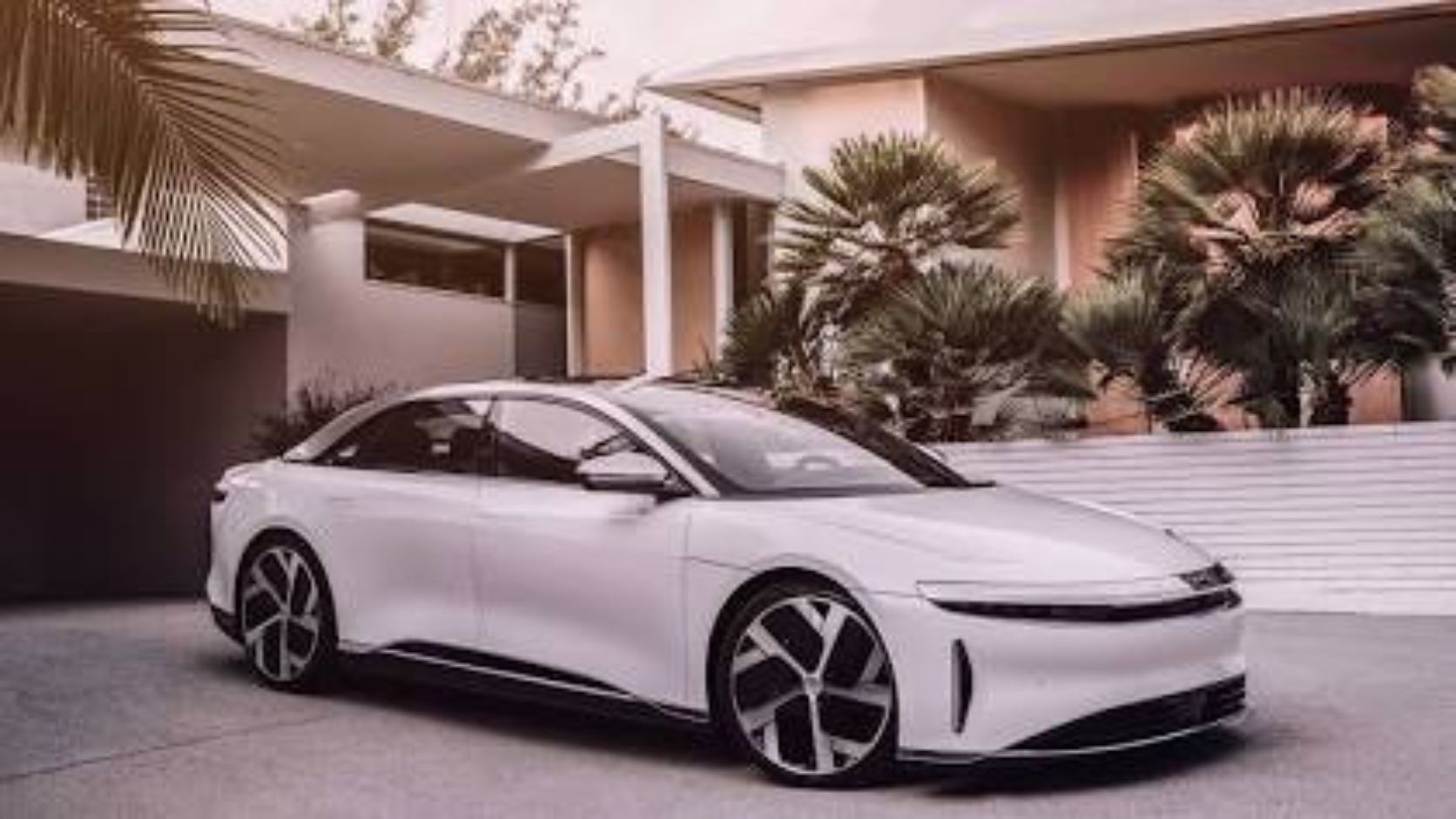
5. Lucid Air Dream Edition
The Lucid Air Dream Edition was the early flagship version of the Air, so it is mainly a pre-owned choice in 2026. Its driver-assistance story continues through Lucid DreamDrive and DreamDrive Pro, which place a strong emphasis on comfort, visibility, and highway support.
If you are shopping a used Dream Edition, do not assume every car has the same assist hardware. Verify whether it includes DreamDrive Pro and confirm its current software version before comparing it with a new Lucid Air.
Key Specifications
-
Power Output: 1,111 horsepower (Performance) / 933 horsepower (Range).
-
Battery Capacity: 118 kWh.
-
Estimated Range: 471 miles (Performance) / Up to 520 miles (Range) (EPA).
-
Acceleration (0-60 mph): 2.5 seconds (Performance) / 2.7 seconds (Range).
-
Top Speed: 168 mph (270 km/h).
-
Autonomous Tech Highlight: DreamDrive Pro, a robust Level 2 assistance suite utilizing 32 sensors, including high-resolution lidar, for refined highway support.
Software intelligence and driver experience
Lucid calls its Level 2 system Hands-Free Drive Assist, previously known as Highway Assist. It can support hands-free driving in appropriate conditions, but Lucid states that the driver remains responsible for keeping the vehicle and other road users safe.
DreamDrive Pro uses a mix of cameras, radar, ultrasonic sensors, and lidar hardware designed to support present and future driver-assistance features. For a buyer, that sensor mix matters because it gives the vehicle more than one way to interpret nearby traffic and road conditions.
Autonomous technology limits and strengths
Lucid does not position DreamDrive as a door-to-door supervised driving system like Tesla Full Self-Driving. Its strength is highway assistance and a refined driver experience, not an attempt to manage every city turn and intersection.
That simpler focus can be a plus if you want predictable help on freeway miles. It can be a poor fit if you expect the vehicle to handle a full urban route with minimal input.
| Lucid DreamDrive approach | What it means for you |
|---|---|
| Level 2 driver assistance | You remain responsible for watching the road and taking control. |
| Hands-Free Drive Assist on supported roads | Useful for divided-highway travel, not a substitute for active driving in every setting. |
| DreamDrive Pro sensor hardware | Supports advanced assistance features and updates, but future capability is never guaranteed. |
| Strong visual and parking assistance | Can make daily urban parking and low-speed maneuvering easier, even when hands-free driving is unavailable. |
Final Thoughts about the Best Self-driving Electric Cars
Best self-driving electric cars show that electric vehicles can make long trips and daily commutes easier. Tesla offers broad supervised route assistance, Mercedes-Benz offers limited Level 3 capability, and Ford, BMW, and Lucid bring useful hands-free highway support.
Start with your normal driving pattern. If you spend most of your time on divided highways, test BlueCruise, Highway Assistant, or Lucid Hands-Free Drive Assist on those roads.
If you want more active route guidance, test Tesla Full Self-Driving (Supervised) and pay close attention to how it handles the situations you face every week.
Try the feature yourself, read the active system limits, and choose the EV that helps you stay more comfortable while you remain in charge.