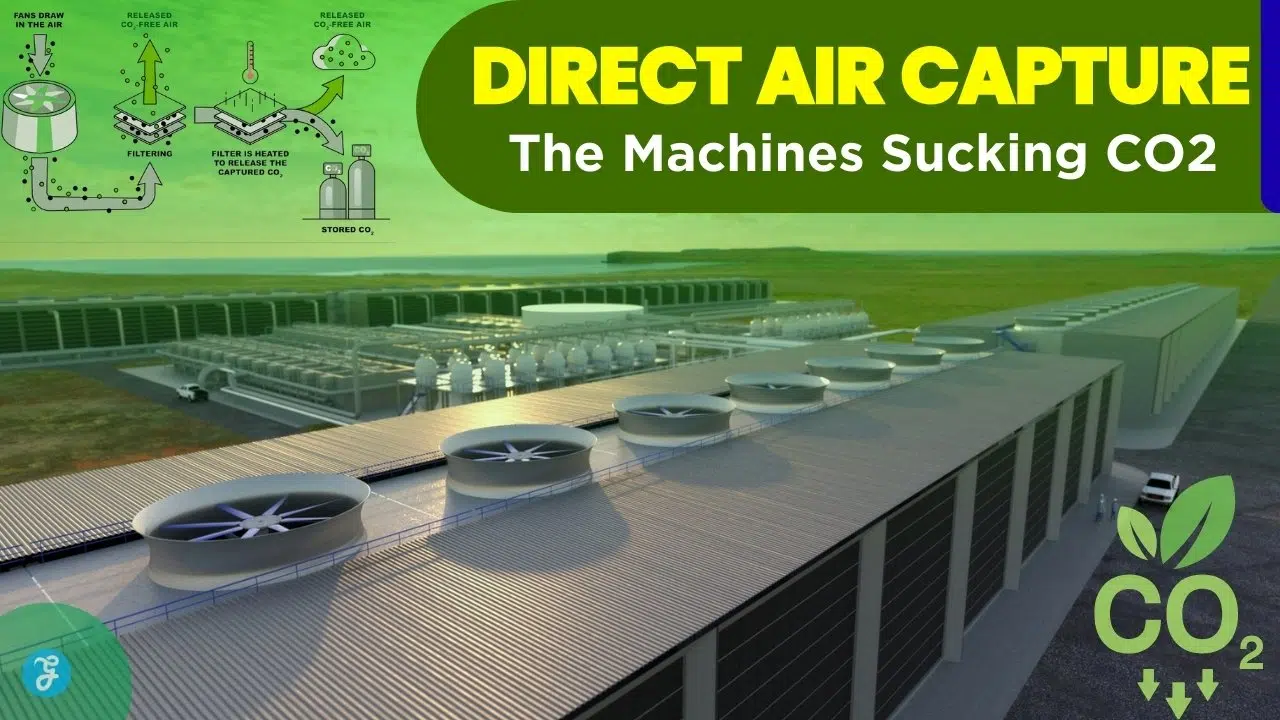
Have you been following the news and feeling overwhelmed by all the discussion around climate change? Many people are increasingly concerned about rising temperatures and extreme weather events.
A common question is whether anything can remove the carbon dioxide already accumulating in the atmosphere. One promising solution is an innovative technology known as Direct Air Capture—often described as machines that pull CO₂ directly out of the sky.
Direct Air Capture systems are designed to filter carbon dioxide from ambient air, helping reduce the amount of greenhouse gases contributing to global warming.
This guide explains how these machines work, what they do well, and where the technology still needs improvement. Explore how this emerging approach could play an important role in addressing climate change.
What is Direct Air Capture: The Machines Sucking CO2?
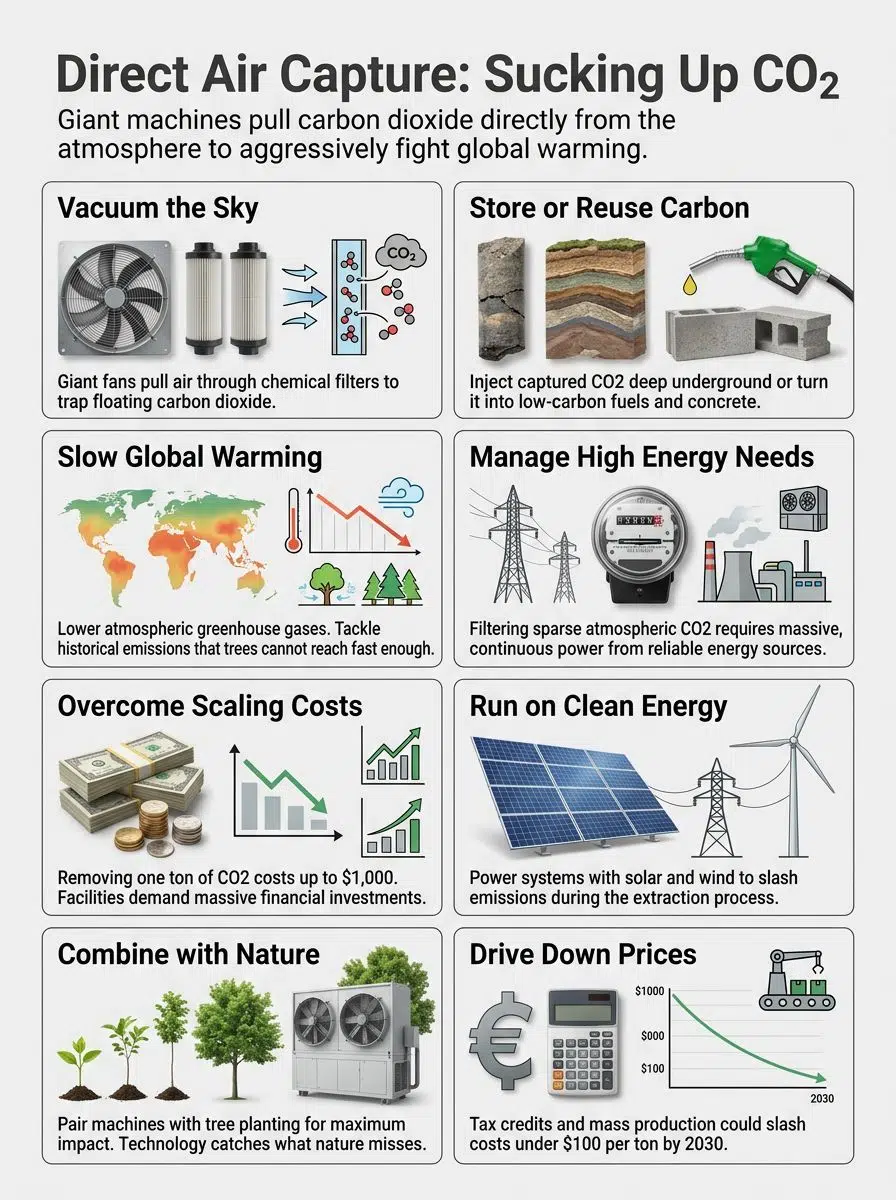
Direct Air Capture, usually called DAC, uses large machines to pull carbon dioxide straight out of the ambient air. These systems rely on powerful fans to move massive volumes of air through specialized filters.
Read a 2025 market report showing the United States DAC market is booming right now. It generated over $31 million in 2024 and is projected to hit $547.5 million by 2030.
That massive growth is happening because we need real solutions to cut greenhouse gas levels. The U.S. Department of Energy even launched an initiative called the Carbon Negative Shot, which aims to bring the cost of this technology down to under $100 per net metric ton of CO2.
Here are three ways this technology is changing the game:
- It captures emissions that have been lingering in the atmosphere for decades.
- It can be built almost anywhere, unlike carbon capture attached to factory smokestacks.
- It creates a steady stream of pure carbon dioxide for permanent storage.
How Does Direct Air Capture Work?
These machines pull air in, grab carbon dioxide from it, and then send the cleaner air back out. What happens to all that trapped CO2 next is fascinating.
Air intake and CO2 filtering
Giant fans pull air into the machines, acting like a massive vacuum cleaner for the sky. The air passes through filters packed with chemicals called liquid solvents or solid sorbents.
A great example of this is Heirloom Carbon, a startup based in Tracy, California. They use naturally abundant limestone as a solid sorbent to soak up CO2 like a giant rock sponge.
It takes a lot of energy to grab carbon this way. Liquid systems often need to be heated to nearly 900 degrees Celsius using natural gas, while solid systems only need about 100 degrees Celsius.
Storage or utilization of captured CO2
Once we trap the carbon dioxide, we have to put it somewhere safe. Companies do not just leave it sitting around in metal tanks.
1PointFive is currently building a massive project in Texas called Stratos. In 2025, they secured the first-ever EPA Class VI permits to inject their captured CO2 safely into deep underground saline aquifers.
Other companies get creative and put this pure carbon to work immediately. A company named Carbon Cure actually injects the captured gas straight into fresh concrete, which traps it permanently and makes the building material even stronger.
Key Benefits of Direct Air Capture
These machines give us a fighting chance to tackle the excess carbon dioxide already in the air. They might just be our best tool for a cooler, safer planet.
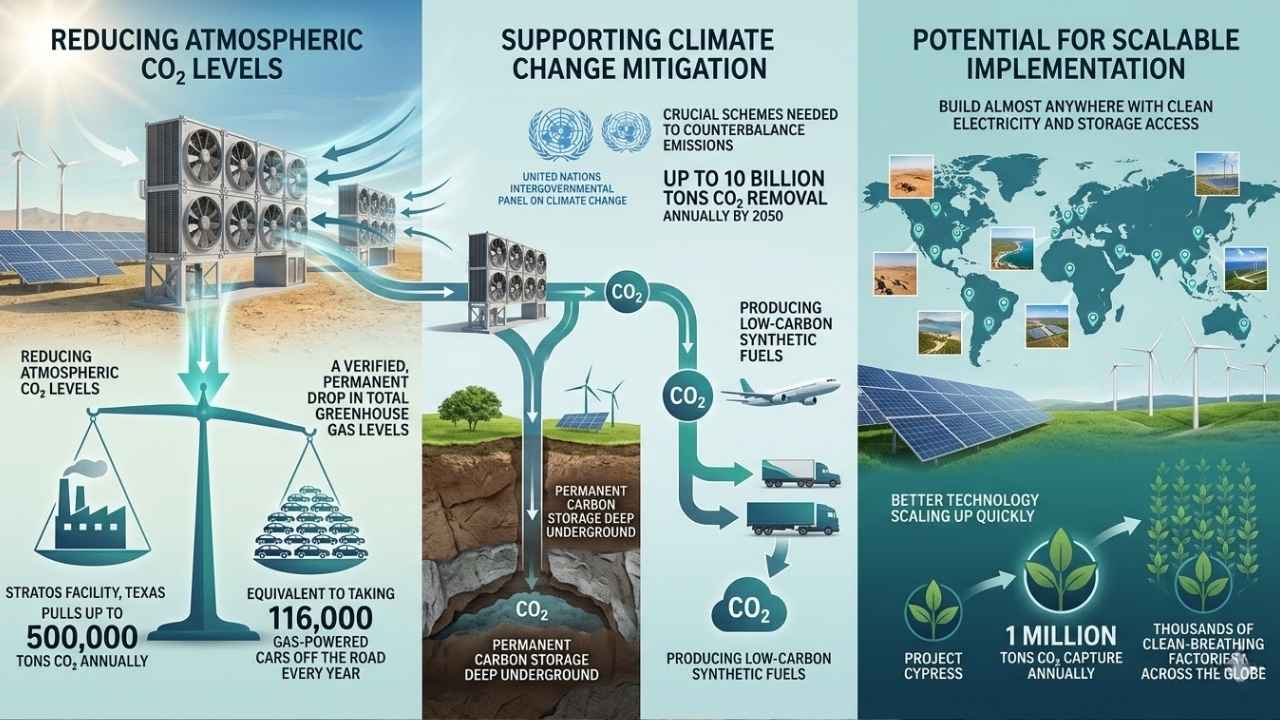
Reducing atmospheric CO2 levels
These machines pull carbon right out of the sky, which helps clean up the greenhouse gases causing climate change. They grab the pollution that trees simply cannot reach fast enough.
The sheer scale of these new plants is incredible. The Stratos facility in Texas is designed to pull up to 500,000 tons of CO2 annually once fully operational.
Here is what that massive capacity actually means in the real world:
- It equals taking 116,000 gas-powered cars off the road every single year.
- It provides a verified, permanent drop in total greenhouse gas levels.
Supporting climate change mitigation
DAC helps slow down global warming by directly removing the extra CO2 already causing trouble. We can store the collected gas deep underground or reuse it to make low-carbon fuels.
Experts agree that we cannot hit our climate goals just by reducing future emissions. We have to clean up the past, too.
“The deployment of carbon dioxide removal schemes, including direct air capture, is unavoidable if we are to counterbalance emissions and achieve net zero.”
The United Nations Intergovernmental Panel on Climate Change suggests we might need to remove up to 10 billion tons of CO2 every year by 2050. These machines are a crucial part of that massive cleanup effort.
Potential for scalable implementation
The best thing about these machines is that they do not need to sit next to power plants. You can build them almost anywhere with good access to clean electricity and safe storage.
The United States is investing heavily to scale this up quickly right now. The Department of Energy awarded funding to Project Cypress in Louisiana, which aims to capture 1 million tons of CO2 every year.
As solar panels and wind farms spread across the country, we can power more of these capture sites sustainably. Better technology will help us plant thousands of these clean-breathing factories across the globe.
Challenges Facing Direct Air Capture Technology
This technology faces some serious hurdles before it can be used everywhere. Fortunately, some brilliant solutions are popping up right around the corner.
High energy requirements
Pulling carbon dioxide straight from the air takes a massive amount of power. The fans must run constantly, and the filters require intense heat or chemical reactions to release the trapped gas.
The math here is really tough because CO2 makes up only about 0.04 percent of our outdoor air. I like to imagine trying to find a single green marble hidden in a swimming pool full of gray ones.
This massive dilution creates two major technical hurdles:
- Capturing a single ton of CO2 can require up to 2,000 kilowatt-hours of energy.
- If we do not use renewable power, we risk creating more emissions than we capture.
Cost of large-scale deployment
Building and running these facilities comes with a massive price tag. Right now, pulling one ton of carbon dioxide from the air costs anywhere from $600 to over $1,000 in the US.
That high cost makes it tough for governments and companies to jump in blindly. Fortunately, industry leaders are treating this just like the early days of solar panels.
By building larger megaton-scale plants, they hope to create massive economies of scale. The primary industry goal is to push the price down to about $100 per ton over the next few decades.
Infrastructure and policy limitations
We cannot just drop these machines in a field and turn them on. They require huge investments in pipelines, storage sites, and power grids.
Dealing with local laws and getting the right permits can sometimes take years rather than months. Luckily, government policies are starting to catch up and offer a helping hand.
Here are the key policy moves making a difference right now:
- The US 45Q tax credit gives companies up to $180 for every ton of permanently stored CO2.
- Federal grants are helping derisk the massive construction costs for early startups.
- New state-level carbon markets are allowing tech companies to buy verified removal credits.
Innovations in Direct Air Capture
New ideas in this field are turning heads and mixing hard science with a dash of hope. Some inventions almost sound like science fiction, but they are very real.
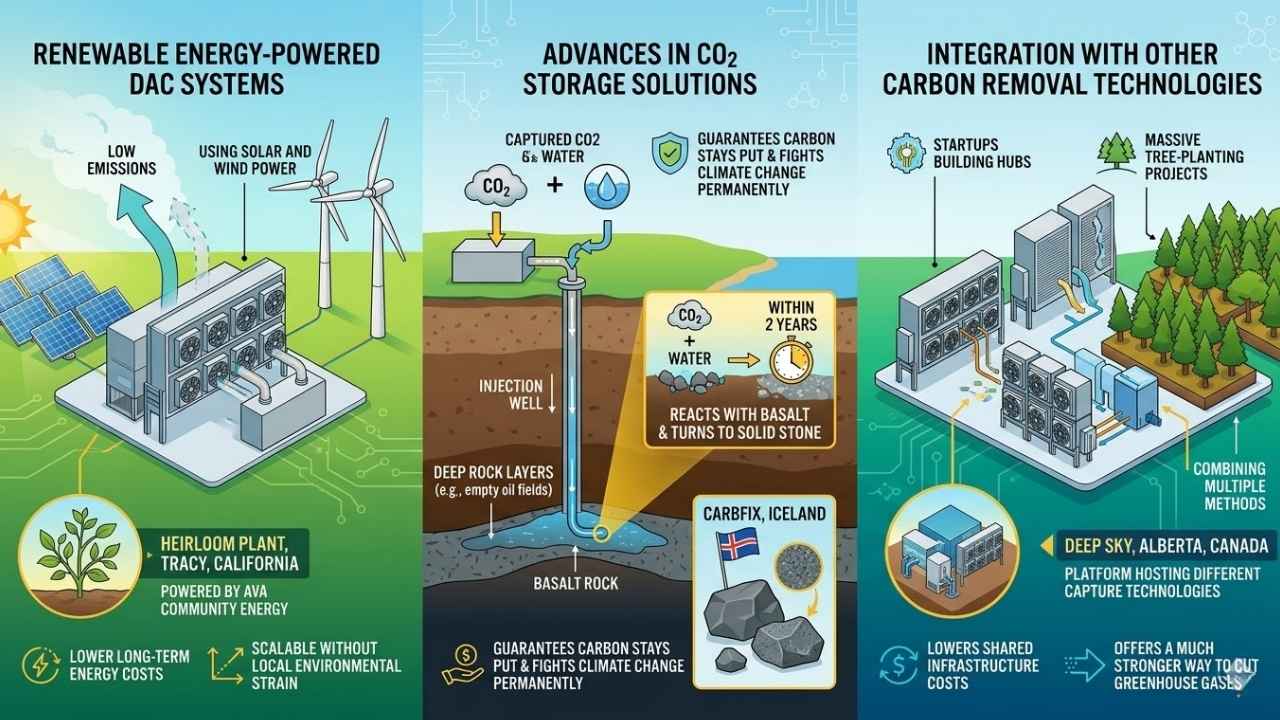
Renewable energy-powered DAC systems
Using solar and wind power to feed these machines is a total game changer. It slashes the emissions of the process itself, making the machines true climate allies.
The Heirloom plant in Tracy, California, is a perfect example of this in action. The entire facility is fully powered by local, renewable electricity provided by Ava Community Energy.
Running these systems on sun or wind lowers long-term energy costs. It allows us to scale up this technology without putting any extra strain on the local environment.
Advances in CO2 storage solutions
Scientists are finding incredibly clever ways to lock away carbon dioxide for centuries. The most popular method is injecting it into deep rock layers, like empty oil fields.
A company named Carbfix in Iceland has perfected an amazing technique using basalt rocks. They mix the captured carbon with water and pump it underground.
Within just two years, the injected gas reacts with the basalt and literally turns into solid stone.
This guarantees the carbon stays put and helps fight climate change permanently. It is a brilliant way to ensure the gas never escapes back into the sky.
Integration with other carbon removal technologies
These capture machines work brilliantly when paired with other environmental tools. Combining them with massive tree-planting projects packs a powerful double punch.
Startups are even building hubs that combine multiple removal methods into one location. A project called Deep Sky in Alberta, Canada, is designing a platform that hosts different capture technologies side-by-side.
This kind of teamwork lowers shared infrastructure costs for everyone involved. It offers a much stronger way to cut greenhouse gases than relying on just one single approach.
Leading Companies and Projects in DAC
Some brilliant companies are racing to build machines that catch carbon straight from the air. New projects keep popping up, each bringing fresh ideas to tackle climate change head-on.
Climeworks and its achievements
Climeworks is one of the absolute pioneers in this industry. Founded in Switzerland back in 2009, they have consistently pushed the boundaries of what is possible.
In May 2024, they officially started operations at their Mammoth plant in Iceland. This massive facility uses geothermal energy to remove up to 36,000 tons of CO2 every single year.
Big companies like Microsoft trust them implicitly. They have signed massive, multi-year contracts to purchase carbon removal credits directly from these plants.
Emerging startups in the DAC sector
The startup scene is exploding with fresh ideas and serious funding. Companies are racing to find the cheapest, most efficient way to scrub our skies.
It can be hard to keep track of the different approaches, so I made a quick comparison of two major projects in the US market:
| Company / Project | Technology Used | Target Capacity |
|---|---|---|
| 1PointFive (Stratos) | Liquid solvent | 500,000 tons/year |
| Heirloom Carbon | Solid limestone sorbent | 320,000 tons/year (Louisiana expansion) |
Both of these companies are proving that massive scale is possible today. As they grow, they inspire even more innovation in the environmental technology space.
Direct Air Capture vs Natural Solutions
Some folks root for trees, while others bet on machines. The truth is, both have huge roles to play in the big game of cutting carbon from the air.
Comparison with reforestation efforts
People love to debate whether we should plant trees or build machines. Both options have unique strengths in the fight against climate change.
Trees are nature’s living sponges, and they are incredibly cheap to plant. They clean the air while also providing homes for wildlife and improving the soil.
However, machines work much faster and require a fraction of the physical land space. While a DAC plant uses a lot of electricity, a forest might take decades to absorb the exact same amount of carbon.
Synergies between DAC and natural solutions
We do not have to choose between nature and technology. In fact, using them together is the smartest path forward.
Mixing both tools is the smartest way to cut greenhouse gases fast. You can use them together strategically:
- Place massive machines in dry deserts where trees cannot grow.
- Let natural forests thrive in healthy soil environments.
By combining both methods, we give ourselves a much better chance of meeting our global climate goals. Nature works beautifully, and technology steps in where nature needs a boost.
Future of Direct Air Capture Technology
Fresh ideas, teamwork across borders, and smart science are pushing these machines into the spotlight. The story is just getting started, with massive breakthroughs on the horizon.
Policy support and international collaboration
Government support is the wind in the sails for this entire industry. Friendly laws, tax credits, and grants make it easier for companies to build these massive machines.
In 2021, the US Bipartisan Infrastructure Law dedicated $3.5 billion specifically to create regional DAC hubs across the country. That kind of funding completely changes the speed of development.
Countries are also sharing research and setting rules together. Global partnerships make it much easier to figure out how to transport and store carbon safely across borders.
Prospects for cost reduction and efficiency improvements
We all know these machines are expensive right now, but the future looks incredibly bright. Mass production of these units is going to change the math completely.
I like to remind people how incredibly expensive solar panels used to be. As manufacturing improved, the prices dropped drastically, and experts agree the same thing will happen here.
“If we apply learning rates known from other industries like solar PV, we will end up at a cost level around $100 per ton heading into 2050.”
Smarter storage solutions and cheaper renewable energy will push costs down even further. Direct Air Capture is quickly becoming an affordable, large-scale climate solution.
Final Thoughts
These amazing CO2-sucking machines offer a fresh, powerful tool to build a cleaner world. Pulling carbon straight out of thin air sounds like science fiction, yet it is happening today with incredible speed.
New technology is making these systems more efficient, and powering them with green energy pushes us closer to solving our carbon problem. You can learn more by checking out trusted climate websites or following the stories of these amazing startups. Every small step counts, and Direct Air Capture: The Machines Sucking CO2 will help clear the sky for future generations.