

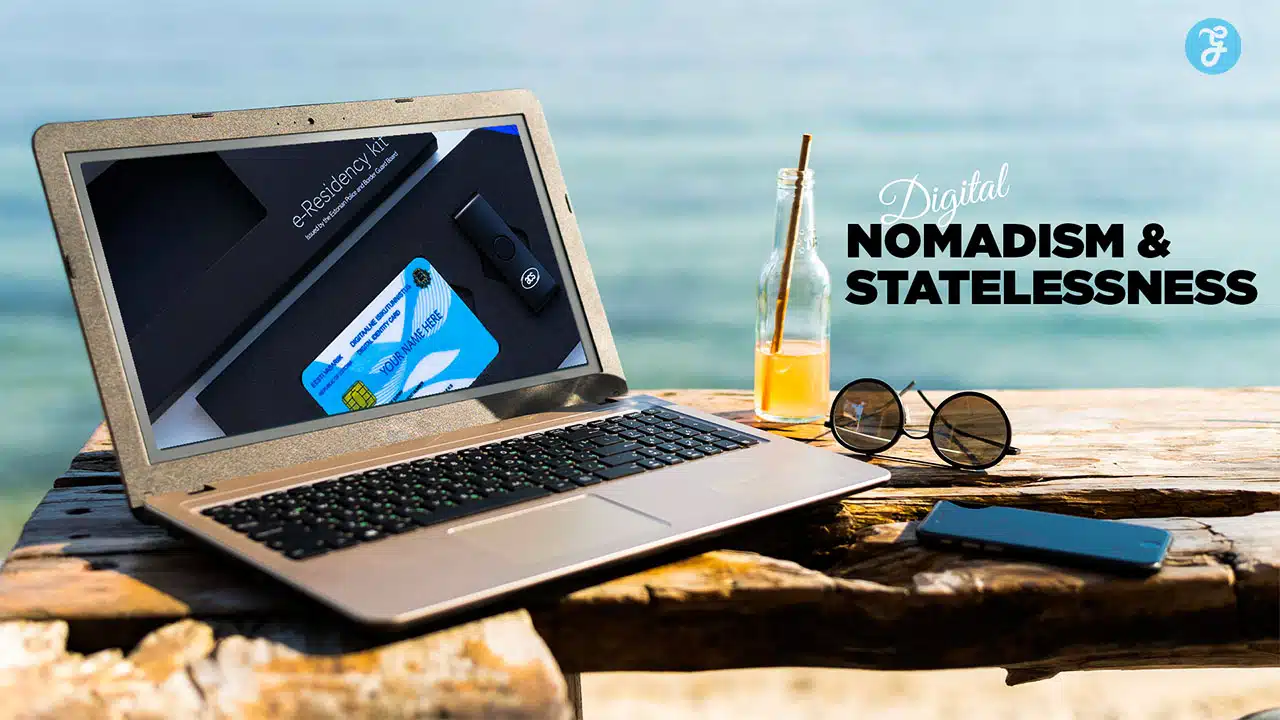
In a world shaped by hyper-connectivity and mobility, more people than ever before are embracing lifestyles that transcend traditional borders. Two phenomena—digital nomadism and statelessness—are converging in fascinating ways, challenging how we define home, identity, and citizenship.
Digital nomads travel the globe while working remotely, unbound by office cubicles or national boundaries. Meanwhile, some individuals are becoming stateless by force or by choice—living outside any official country’s recognition or jurisdiction.
This emerging trend is reshaping global norms and governance, raising pressing questions: What does it mean to live without borders? Who benefits from these lifestyle shifts—and who gets left behind?
The Digital Nomad Boom: Living and Working Without Limits

The rise of remote work has enabled millions to ditch traditional offices for a more flexible, travel-oriented lifestyle. From freelance writers and software engineers to startup founders and crypto consultants, digital nomads represent a growing global class of location-independent workers.
Platforms like Upwork, Toptal, Remote OK, and Nomad List have empowered professionals to find work from anywhere in the world. The COVID-19 pandemic accelerated this trend, forcing companies to embrace remote systems and making the idea of working from Bali or Lisbon not just possible, but practical.
Hotspots for the Globally Mobile
Many countries have capitalized on this shift by introducing “digital nomad visas” that welcome long-term travelers without granting permanent residency. Portugal, Estonia, Costa Rica, and Georgia have emerged as favorites among the community. These locations offer co-working spaces, modern infrastructure, and affordable lifestyles, making them magnets for tech-savvy professionals.
Some nations even offer tax incentives and residency perks to attract digital talent. Yet, despite these efforts, the legal landscape remains complex—especially when your job is on the cloud and your body never stays in one place for long.
Digital Nomadism and Statelessness: Between Margins and Movements
According to the UNHCR, over 4 million people worldwide are stateless—lacking legal recognition from any country. This may result from discrimination, displacement, or gaps in nationality laws. Ethnic minorities, refugees, and the children of undocumented migrants often fall into this legal limbo.
Stateless individuals face immense hardships: they often cannot access basic rights like healthcare, education, or even a passport. For these people, statelessness is a bureaucratic black hole with very real consequences.
Stateless by Choice: Breaking Free from Borders
On the flip side, a growing number of digital-first individuals are choosing to be stateless—or at least, post-national. These individuals often renounce their citizenship for ideological, financial, or political reasons. Some want to escape oppressive regimes or overreaching governments; others seek tax neutrality and greater personal freedom.
This fringe but growing movement challenges the idea that identity must be tied to a single nation-state. New models of belonging—such as blockchain-based citizenship or decentralized digital identities—are offering alternative frameworks for global existence.
Being a digital nomad doesn’t mean being invisible. Countries still expect compliance with immigration laws. The gray area between tourist visas, digital nomad visas, and work permits often creates legal friction. Some nomads risk overstaying or hop between visa-free countries to remain “off the grid.”
For stateless individuals, even acquiring a visa is often impossible without recognized documents. They may face detention, deportation, or indefinite exclusion despite no legal place to return to.
The Tax Puzzle: Residency, Revenue, and Regulations
Many digital nomads assume that if they don’t reside in any one place long enough, they can avoid taxes altogether. But international tax authorities are catching up. “No tax residency” can trigger audits, account freezes, or double taxation if nomads don’t properly establish a tax home.
Stateless individuals also face financial surveillance issues. Without official nationality or tax ID, opening a bank account, receiving payments, or investing can be nearly impossible—unless alternative solutions like crypto wallets or offshore financial networks are utilized.
Digital Identity and the Rise of Borderless Communities
Technology is increasingly replacing traditional notions of identity. Digital nomads rely on cloud services, encrypted communication, and decentralized tools to operate beyond borders. Now, blockchain-based identity platforms—such as Worldcoin, Proof of Humanity, and Civic—promise secure, borderless digital identities that may one day replace passports and driver’s licenses.
This digital nomadism and statelessness trend also enables participation in decentralized autonomous organizations (DAOs), which offer membership, income, and community—all without needing to belong to a country.
Virtual Nations and Network States
Visionaries like Balaji Srinivasan propose “network states” built entirely on digital platforms. These are communities of like-minded individuals organized online, united by values rather than geography, and sometimes even issuing their own e-passports.
While still experimental, these ideas reveal how digital nomadism and statelessness could redefine governance, belonging, and social contracts in the years ahead.
Who Gets Left Behind? The Inequity of Borderless Living
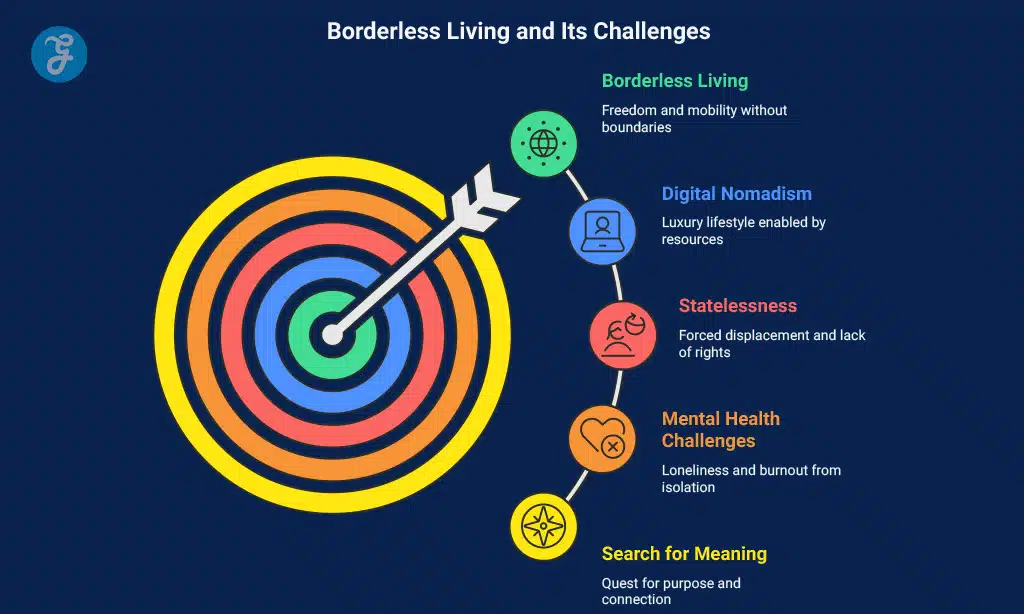
It’s important to distinguish between those who choose to live without borders and those who have no choice. A Western digital nomad living out of a MacBook and Airbnb is a world apart from a Rohingya refugee denied citizenship by their homeland.
This distinction highlights the deep inequality embedded in borderless living. Statelessness is a human rights issue, while digital nomadism is often a luxury made possible by wealth, education, and access to technology.
Loneliness, Identity, and the Search for Meaning
Despite the freedom, many digital nomads report mental health struggles, loneliness, and burnout. Without a stable community, support system, or cultural anchors, the borderless lifestyle can become isolating.
Some eventually settle down, creating hybrid identities or finding new forms of belonging in global subcultures, co-living hubs, or online communities. But the question remains—can a life without borders also be a life of purpose and connection?
Takeaways
As we move further into a digitized, decentralized world, the lines between digital nomadism and statelessness will likely blur even more. For some, it’s a path to personal freedom and financial independence. For others, it’s a state of vulnerability and exclusion.
Policymakers, technologists, and global citizens must work together to ensure that these emerging lifestyles are supported by ethical frameworks, inclusive systems, and humane governance. Ultimately, digital nomadism and statelessness may force us to redefine what it means to be a citizen—not of a country, but of the world.






















