

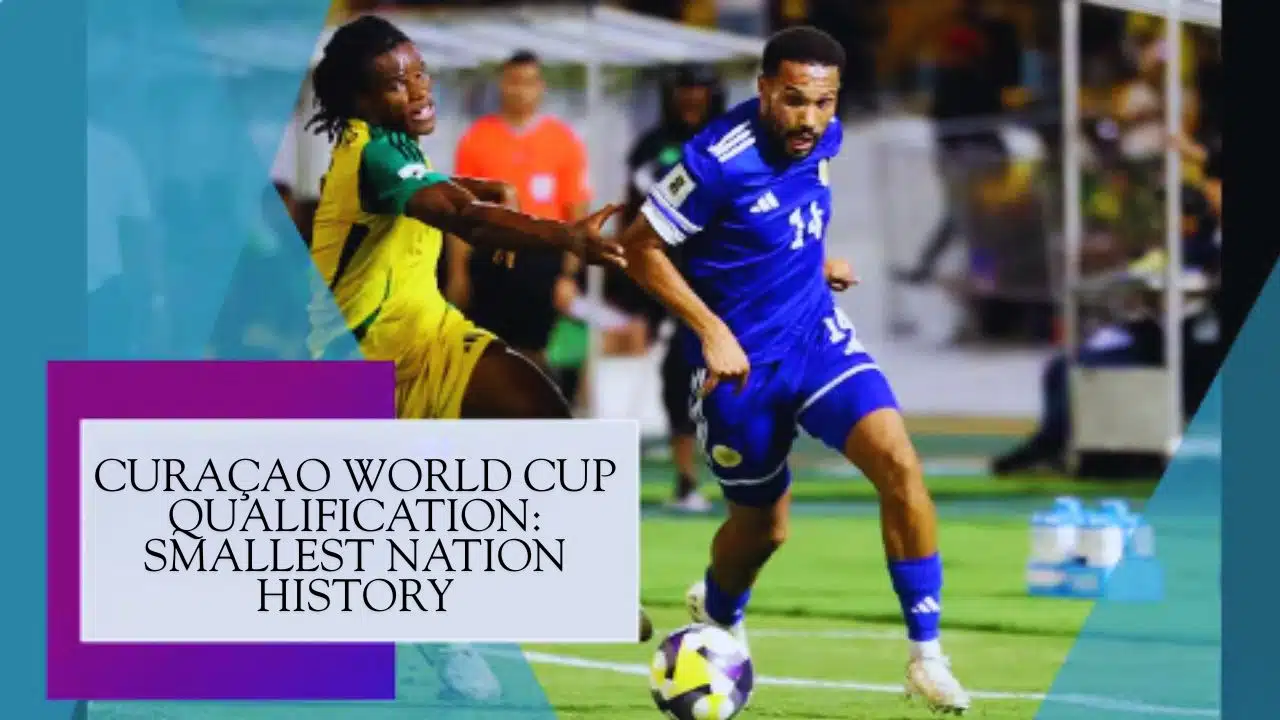
Curaçao, a tiny Caribbean island nation with a population of just 156,115 as of early 2025, has etched its name in football history by qualifying for the 2026 FIFA World Cup, becoming the smallest country by population to ever achieve this feat. Their qualification came through a hard-fought 0-0 draw against Jamaica on November 18, 2025, in Kingston, capping an unbeaten campaign in the CONCACAF qualifiers that showcased remarkable resilience and tactical discipline. This milestone surpasses Iceland’s previous record from the 2018 tournament, where Iceland qualified with around 350,000 residents—more than double Curaçao’s size—highlighting how the expanded 48-team format for 2026 has opened doors for underdogs from smaller confederations like CONCACAF.
The island, often called the “Dushi” (Papiamento for “sweet”) due to its vibrant culture and stunning turquoise waters, spans only 444 square kilometers (171 square miles), making it smaller than the Isle of Man and roughly the size of Washington, D.C. Located just 37 miles north of Venezuela’s coast in the southern Caribbean, Curaçao is known for its colorful Dutch colonial architecture in the capital Willemstad—a UNESCO World Heritage site—its thriving tourism industry centered on pristine coral reefs, and a multicultural society blending Dutch, African, Latin American, and indigenous influences.
With a population density of about 350 people per square kilometer, the nation relies heavily on oil refining, international trade, and eco-tourism, but football has now emerged as a unifying force. Curaçao only gained autonomous status as a country within the Kingdom of the Netherlands in 2010, following the dissolution of the Netherlands Antilles, and joined FIFA that same year, starting from a humble base ranked 150th in the world a decade ago. Today, they sit at 82nd in FIFA’s rankings, a testament to steady investment in youth development, coaching programs, and player recruitment from the Dutch diaspora.
Dramatic Draw Seals Qualification Amid Late Chaos
The pivotal match against Jamaica unfolded under intense pressure at the National Stadium in Kingston, where over 30,000 fans created an electric atmosphere for the home side. Jamaica, managed by former England coach Steve McClaren, entered the game desperate for a victory to secure their first World Cup appearance since 1998 and avoid the intercontinental playoffs. Curaçao, however, needed just a point to clinch qualification, and their defensive setup—led by a backline featuring Dutch-born talents—frustrated Jamaica’s attacks throughout the 90 minutes. The game remained goalless until stoppage time, when the drama peaked in the fourth of five added minutes, Curaçao substitute Jeremy Antonisse tangled with Jamaica’s Isaac Hayden in the penalty area, prompting El Salvadoran referee Ivan Barton to initially award a spot-kick to the hosts. The decision sent the crowd into a frenzy, but VAR officials quickly intervened, urging Barton to review the incident on the pitchside monitor. After a tense few moments, the referee overturned the call, ruling no foul had occurred, which drew boos and consternation from Jamaican supporters but preserved Curaçao’s clean sheet.
This resilient performance was no fluke; Curaçao’s third-round group C campaign saw them top the standings with 12 points from six matches—three wins, three draws, and zero losses—scoring eight goals while conceding just two. Across their 10 total qualifying games, they secured seven victories and stayed unbeaten, a remarkable turnaround from earlier rounds where they navigated tougher opposition like Honduras and Costa Rica. The draw not only confirmed their spot but also highlighted their growth under structured play, with midfield control and quick counters proving key against stronger teams. Post-match, celebrations erupted across Curaçao, with streets in Willemstad filling with blue-clad fans waving flags and chanting “Dushi Blou,” reflecting the national team’s nickname, The Blue Family. As one player noted in post-game interviews, this result was about heart: “We are small, but we are big at heart,” capturing the underdog spirit that propelled them forward.
Other CONCACAF Teams Advance in Thrilling Qualifiers
Curaçao’s success is part of a broader wave of achievements in CONCACAF, where the expanded World Cup slots—six direct qualifiers plus potential playoff spots—have rewarded persistence and tactical evolution. They join Haiti and Panama in automatic qualification, with Haiti securing their first berth since 1974 via a convincing 2-0 victory over Nicaragua in their final group match, thanks to goals from Duckens Nazon and a solid defensive showing that limited Nicaragua to few chances. Panama, meanwhile, advanced with a gritty performance in group B, finishing ahead of rivals like El Salvador through a combination of home wins and crucial away draws, marking their third consecutive World Cup appearance after debuting in 2018. Jamaica, despite the heartbreak, takes second place in group C with 11 points and now heads to the intercontinental playoffs in March 2026, facing off against teams from other confederations for a chance at the finals.
The CONCACAF qualifiers followed a multi-stage format starting in March 2024 the first round eliminated lower-ranked teams like Guyana and Montserrat, while the second round grouped 30 nations into five-team pods, with Curaçao advancing unbeaten from their pod by beating sides like Saint Kitts and Nevis. The third round’s double round-robin intensified the competition, where Curaçao’s consistency outshone Jamaica’s flair and Trinidad and Tobago’s late surge—Trinidad needed a win but fell short in a 2-1 loss to Honduras. Overall, this cycle has seen four debutants emerge globally, including Curaçao alongside Cape Verde (from CAF), Uzbekistan (AFC), and Jordan (also AFC), underscoring how the 2026 tournament’s growth to 48 teams—hosted across 16 cities in Canada, Mexico, and the United States—fosters inclusivity. For Curaçao, this places them in a group stage draw that could pit them against giants, but their unbeaten run suggests they can compete.
Midfielder Juninho Bacuna, speaking to BBC Radio 5 Live before the match, described the qualification as “crazy” and potentially “one of the biggest things that will happen to Curaçao.” He elaborated on the surreal journey”It’s incredible and amazing. Even a few years ago, you would not even think about it. To be personally part of it and to make that dream come true would be incredible.” Bacuna’s words resonate with a nation where football unites diverse communities, from the bustling Punda district to remote villages, and could inspire youth programs that have already produced talents playing in Europe.
Advocaat: Oldest Coach in World Cup History
At the helm of this historic run is 78-year-old Dutch coaching legend Dick Advocaat, who will become the oldest manager ever at a World Cup, eclipsing Otto Rehhagel’s 71 years with Greece in 2010. Advocaat, absent from the Jamaica match for personal reasons, took charge of Curaçao in January 2024 as his eighth national team role, bringing a wealth of experience from high-stakes tournaments. He guided the Netherlands to the 1994 World Cup quarterfinals, where they dazzled with attacking flair before falling to Brazil; with South Korea in 2002, his team co-hosted and reached the semifinals as an emerging force; and he reached the Euro 2004 semifinals with the Dutch. Other stops include the UAE (Asian Cup final in 2019), Belgium (Euro 2000 group stage), Russia (Euro 2008 quarterfinals), Serbia (Euro 2000 qualifiers), and Iraq (Asian Cup 2015 quarterfinals).
His club pedigree is equally impressive Advocaat won the Eredivisie multiple times with PSV Eindhoven, including a treble in 2005; lifted the Scottish Premiership with Rangers in 2003; secured the Russian Premier League and UEFA Cup with Zenit St. Petersburg in 2008; and even had a brief, challenging stint at Sunderland in 2006. Advocaat stepped in for Curaçao amid a payment dispute between players and the federation, which he helped resolve, then instilled a professional ethos focused on fitness, tactics, and mental toughness. Starting with Nations League qualifiers, his influence was immediate Curaçao jumped from inconsistent results to a cohesive unit, emphasizing high pressing and set-piece efficiency.
Bacuna credited him effusively”Everyone knows Dick Advocaat is a big name he is a big coach, and everyone respects him in his decisions and the way he works. His presence is really important for us as a team and also for the country, and his impact has been really big. We started working with him… and we saw a growth in the team in the way we worked and the way we fought in games.” Under Advocaat, Curaçao not only qualified but did so unbeaten, blending his European tactical nous with the players’ Caribbean passion.
Squad Built on Dutch Ties and Family Bonds
Curaçao’s squad is a melting pot of talent, predominantly players born in the Netherlands who trace their roots to the island through family heritage, allowing them to represent the nation under FIFA eligibility rules. This diaspora strategy has been crucial, tapping into the robust Dutch youth academies while fostering a sense of identity. Key figures include defender Joshua Brenet, who plies his trade at Scottish club Livingston and provides aerial strength midfielder Ar’jany Martha at Rotherham United in England’s Championship, known for his energetic box-to-box play; forward Sontje Hansen at Middlesbrough, a pacey winger who troubles defenses with his dribbling; and star midfielder Tahith Chong at Sheffield United, born in Curaçao and a former Manchester United academy product who debuted in the Premier League before seeking regular minutes abroad.
Juninho Bacuna’s story exemplifies this blend of heritage and ambition. The 27-year-old, who has suited up for Huddersfield Town, Rangers, and Birmingham City, made a pivotal switch to Curaçao in 2019 at age 21, forgoing potential with the Netherlands U21s for international caps with his homeland. A major motivator was reuniting on the pitch with his older brother Leandro Bacuna, the team captain and a veteran with AZ Alkmaar experience. Juninho reflected “I started to play for Curaçao in 2019 and it was a big decision for me… But I made a choice early to play for Curaçao. One of the reasons was I can play in the same team as my brother and for the family to see us play together.
The other reason was… my chances of playing for the Dutch national team, realistically, was not there.” This family dynamic has strengthened team chemistry, with the Bacuna brothers anchoring midfield transitions. Juninho also sees a bright future: “We’re seeing more players that are still young and able to play for Holland and they come to play for Curaçao—and make the team even stronger.” Other notable squad members include goalkeeper Eloy Room (Columbus Crew in MLS) and forward Gervane Kastaneer (Colorado Rapids), rounding out a group that’s 70% Dutch-based but fully committed to The Blue Family ethos.
A Boost for Curaçao’s Future
This World Cup qualification is more than a sporting triumph; it’s a catalyst for Curaçao’s social and economic fabric. In a nation where youth unemployment hovers around 20% and education focuses on vocational skills amid tourism’s dominance, football offers inspiration and pathways. The achievement has already sparked nationwide pride, with Prime Minister Gilmar Pisas declaring it a “unifying moment” that could boost investments in sports infrastructure, like upgrading the Ergilio Hato Stadium. Economically, it promises tourism spikes, with visitors eager to experience the island’s beaches, Christoffel National Park, and now its football legacy.
Globally, Curaçao joins a diverse 2026 field that includes powerhouses like Brazil and newcomers like Cape Verde, potentially drawn into groups that test their mettle in stadiums from Vancouver to Miami. As Bacuna put it, this “fairytale” could redefine the island: from a quiet haven of colorful pontoon houses and iguana-filled cays to a football powerhouse proving small nations can dream big on the world’s stage.
























