Lighting can make or break the ambiance of a space. Whether you’re designing a cozy living room, a productive office, or a relaxing bedroom, the right lighting elevates the environment and enhances the mood.
However, many homeowners fall victim to common lighting mistakes that not only hinder the overall aesthetics of their home but also affect functionality and energy efficiency.
In this article, we’ll discuss 8 common lighting mistakes and how to fix them. These mistakes are easy to make, but with a few simple changes, you can drastically improve the lighting in your home. Let’s dive in!
Lighting Mistake #1 – Insufficient Lighting in Key Areas
One of the most prevalent mistakes in home lighting design is insufficient lighting in key areas. Areas such as kitchens, bathrooms, reading corners, and workspaces require well-balanced lighting to serve their functional purposes.
When lighting is too dim, these spaces become impractical, leaving you with not only a gloomy atmosphere but also unnecessary strain on your eyes.
Insufficient lighting can affect your productivity, your ability to perform tasks efficiently, and even your mood. Imagine trying to read or cook in a room where you can barely see the details around you—it becomes frustrating and uncomfortable.
| Area | Recommended Lighting Type | Lighting Solution |
| Kitchen | Task Lighting, Under-Cabinet Lighting | Install pendant lights over counters, under-cabinet lights |
| Bathroom | Task Lighting, Ambient Lighting | Use bright vanity lighting, along with soft ceiling fixtures |
| Reading Area | Task Lighting, Accent Lighting | Use a desk lamp or pendant light for focused reading light |
| Workspace | Task Lighting | Desk lamps, pendant lights over desks or workstations |
| General Living | Ambient Lighting, Accent Lighting | Ceiling lights for general lighting, spotlights for accent |
How to Fix It
To ensure adequate lighting in key areas, it’s essential to incorporate a layered lighting approach. Here’s how to improve lighting in specific areas:
- Task Lighting: For tasks like reading, cooking, or working, use focused light sources like desk lamps, pendant lights over kitchen counters, or under-cabinet lighting. These will illuminate the areas you need without overpowering the entire space.
- Ambient Lighting: Use ceiling lights or soft overhead fixtures to create a general, diffused light that fills the entire room.
- Accent Lighting: Add accent lighting for visual interest, such as highlighting artwork, architectural features, or plants with spotlights or wall-mounted fixtures.
Quick Tip: Consider installing dimmer switches to adjust the lighting based on the time of day and the specific activities in the room.
Lighting Mistake #2 – Overlooking Natural Light
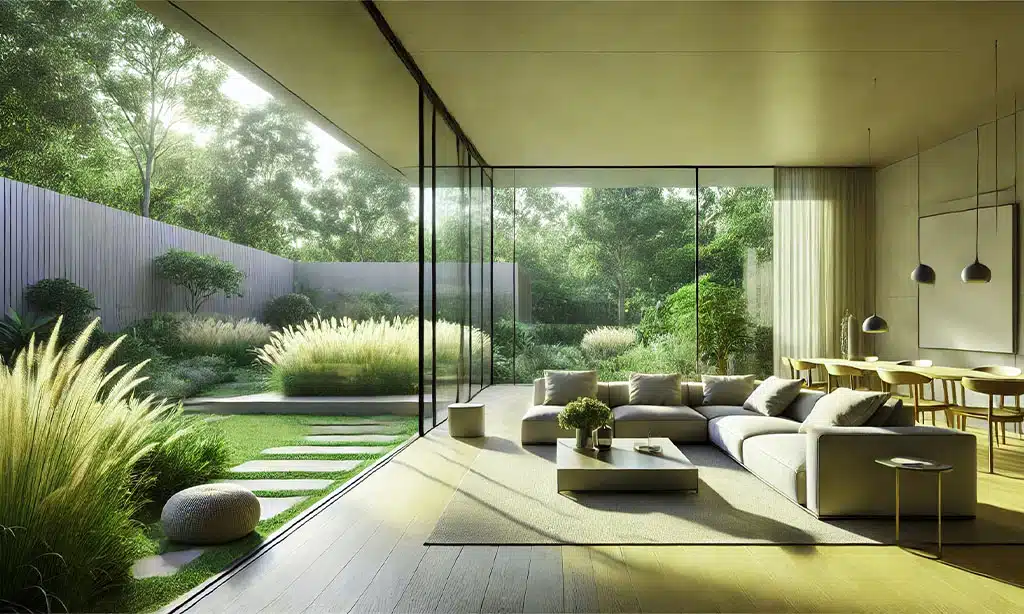
Natural light has a profound impact on your health and well-being. Not only does it brighten your space, but exposure to natural sunlight boosts mood, increases productivity, and helps regulate sleep patterns. Yet, many homeowners inadvertently block out or ignore natural light, relying too heavily on artificial lighting.
Windows and natural light sources should be an essential part of any room’s lighting design. Failing to optimize this resource can make rooms feel darker, smaller, and more closed off.
| Room Type | Strategy for Maximizing Natural Light | How to Apply |
| Living Room | Maximize Window Space | Avoid heavy curtains, use sheer drapes, ensure unobstructed windows |
| Dining Room | Reflective Surfaces | Add mirrors opposite windows to bounce light around the room |
| Bedroom | Window Treatments | Use Roman shades, or honeycomb blinds for privacy while allowing light |
| Kitchen | Maximize Window Space, Reflective Surfaces | Keep windows clear of obstructions, use light-colored cabinetry |
How to Fix It
To make the most of natural light, consider the following strategies:
- Maximize Window Space: Ensure windows are unobstructed by heavy curtains, furniture, or shelves. If you need privacy, choose light, airy curtains that allow light to filter through.
- Reflective Surfaces: Incorporate mirrors or light-colored furniture to reflect sunlight around the room and brighten up spaces.
- Window Treatments: Choose window treatments that allow light to enter the room while still maintaining privacy, such as sheer curtains, Roman shades, or honeycomb blinds.
Quick Tip: In rooms with limited natural light, consider placing mirrors across from windows to reflect sunlight deeper into the room.
Lighting Mistake #3 – Using the Wrong Bulb Color
Impact of Bulb Color on Atmosphere
Choosing the right bulb color is essential to setting the right mood. The color temperature of your light bulbs (measured in kelvins) directly affects the ambiance of your space.
- Warm Light (2700K-3000K): Best for living rooms, bedrooms, and dining rooms. It creates a cozy, inviting atmosphere perfect for relaxation.
- Cool Light (4000K-5000K): Ideal for kitchens, bathrooms, and offices where brightness is needed for productivity and clarity.
- Daylight (5000K-6500K): Emulates the natural sunlight spectrum and is perfect for areas where you need bright, crisp lighting, such as bathrooms and reading nooks.
Using the wrong bulb color can make a space feel too harsh or too dim, completely altering the atmosphere and function of a room.
| Room Type | Recommended Bulb Color | Why It Works |
| Living Room | Warm Light (2700K-3000K) | Creates a cozy, inviting ambiance for relaxation |
| Kitchen | Cool Light (4000K-5000K) | Provides bright, clear light for cooking and task-focused work |
| Office/Workspace | Cool Light (4000K-5000K) | Helps with concentration and visibility for work tasks |
| Bedroom | Warm Light (2700K-3000K) | Provides a relaxing and calming environment for sleep |
| Bathroom | Daylight (5000K-6500K) | Bright light for grooming and tasks |
How to Fix It
To fix this mistake, switch out the bulbs based on the function of the room.
- Living Areas: Use soft, warm light bulbs for a welcoming, relaxed environment.
- Work Areas: Opt for cooler bulbs in spaces where you need to focus, like offices or kitchens.
- Task-Specific Areas: If you need higher visibility, like in a kitchen or reading nook, daylight bulbs can enhance the clarity of your tasks.
Quick Tip: Experiment with smart bulbs to adjust the color temperature depending on the time of day and activities.
Lighting Mistake #4 – Ignoring Dimmers
Dimmers give you complete control over the brightness of your space, allowing you to set the lighting to match the time of day or activity. Without dimmers, you may find your rooms either too bright or too dark for comfort. This can make a space feel sterile, uncomfortable, or overbearing.
Additionally, dimmers can extend the life of your bulbs and reduce energy usage by allowing you to lower the brightness when full lighting isn’t necessary.
| Room Type | Best Locations for Dimmers | Lighting Control Options |
| Living Room | Overhead ceiling fixtures, table lamps | Adjust brightness for a cozy or bright ambiance as needed |
| Dining Room | Chandelier or pendant lighting | Create the perfect dining atmosphere with mood lighting |
| Bedroom | Bedside lamps, ceiling lights | Control brightness for reading or sleep time |
| Bathroom | Vanity lights | Adjust for grooming tasks or relaxing baths |
How to Fix It
Install dimmer switches in key areas like the living room, bedroom, and dining room. Dimmers allow you to create mood lighting, adjust to different tasks, and save energy.
- Smart Dimmers: Upgrade to smart dimmers that can be controlled via your smartphone or voice commands. This makes it easy to adjust the lighting remotely.
Quick Tip: Use dimmer switches on both ceiling lights and lamps to provide versatile lighting options.
Lighting Mistake #5 – Too Much Overhead Lighting
Many homes rely solely on overhead lighting, like bright ceiling lights, which can be harsh and unflattering. Overhead lights often cast shadows, create glares, and lead to uneven lighting that makes the room feel unbalanced and uncomfortable.
This mistake is especially common in larger rooms or spaces with high ceilings, where a single light fixture may not be sufficient.
| Room Type | Recommended Lighting Layering | Solution to Overhead Lighting Mistake |
| Living Room | Use task and accent lighting alongside ambient lighting | Add floor or table lamps for softer lighting |
| Dining Room | Install pendant lights, use sconces for accent lighting | Place pendants directly above the table for focused light |
| Bedroom | Add bedside lamps and ambient ceiling lights | Create a balanced lighting effect with layered fixtures |
| Kitchen | Use under-cabinet and task lighting, along with ambient ceiling lights | Avoid using just overhead lights by incorporating task lighting |
How to Fix It
To fix this, incorporate different layers of lighting to soften the effect:
- Task Lighting: Use floor lamps, table lamps, or desk lights to provide localized lighting for specific tasks.
- Accent Lighting: Add wall sconces or spotlights to highlight art or architectural features.
- Ambient Lighting: Consider installing dimmable, softer ceiling lights or adding pendant lights in the center of the room.
Quick Tip: Position your light fixtures at various levels (floor, table, and ceiling) to create depth and dimension in your space.
Lighting Mistake #6 – Incorrect Placement of Light Fixtures
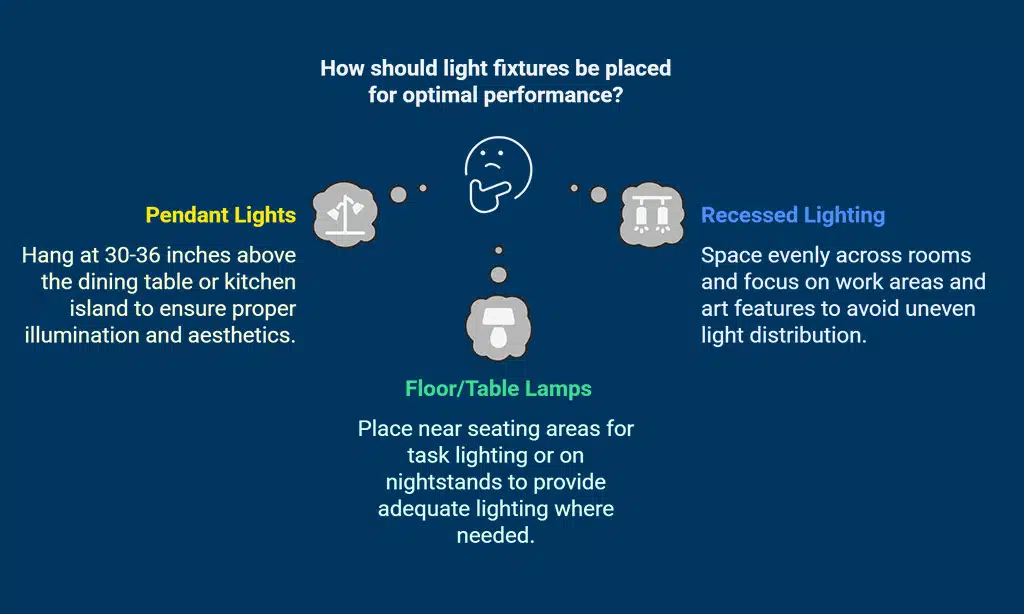
Even the most beautiful light fixtures can fail to perform if they are placed incorrectly. Fixtures that are too high, too low, or in the wrong spot can create poor lighting, cast unflattering shadows, or fail to light up important areas effectively.
For example, pendant lights should be hung at the right height above a table, and recessed lighting should be spaced evenly across a room to avoid spots of intense light or areas left in the dark
| Fixture Type | Correct Placement | Common Mistake |
| Pendant Lights | Hang at 30-36 inches above the dining table or kitchen island | Hanging too high or low, not centered over the table |
| Recessed Lighting | Space evenly across rooms, focus on work areas and art features | Poor spacing leading to uneven light distribution |
| Floor/Table Lamps | Place near seating areas for task lighting, on nightstands | Placing lamps too far from seating areas, causing poor task lighting |
How to Fix It
When installing light fixtures, keep the following in mind:
- Ceiling Fixtures: Hang pendant lights or chandeliers at eye level (approximately 30-36 inches above a dining table) to provide adequate illumination and visual balance.
- Recessed Lights: Space recessed lights evenly and aim them at specific areas like workspaces or art pieces.
- Floor and Table Lamps: Ensure lamps are placed where they provide sufficient task lighting without casting unwanted shadows or glares.
Quick Tip: Use a combination of different fixture types (pendants, sconces, recessed) to spread light evenly across the room.
Lighting Mistake #7 – Using the Same Lighting Throughout the Home
Using the same lighting scheme throughout your entire home can make spaces feel monotonous and uninspiring. Different rooms serve different purposes, so the lighting in each room should reflect the function and mood of that area.
For instance, bright, cool lighting may work well in a kitchen or office but feel too sterile in a living room or bedroom.
| Room Type | Ideal Lighting Type | Why It Works |
| Living Room | Warm light with floor/table lamps, soft ceiling lights | Creates a cozy, comfortable atmosphere |
| Kitchen | Bright, focused task lighting (under-cabinet lights, pendants) | Ensures visibility for food prep and cleaning tasks |
| Bedroom | Soft, ambient lighting with reading lamps | Creates a relaxing and restful environment |
| Office/Workspace | Cool, task-specific lighting (desk lamps, pendant lights) | Provides clarity for focused work |
How to Fix It
Tailor your lighting to the function of each room:
- Living Rooms: Use soft, warm lighting with a combination of floor lamps, table lamps, and ceiling fixtures.
- Kitchens: Bright, task-oriented lighting is essential. Use under-cabinet lights, pendant lighting, or track lighting for focused illumination.
- Bedrooms: Incorporate ambient lighting with soft overhead lighting and reading lamps.
Quick Tip: Invest in adjustable lighting fixtures to create different atmospheres as needed.
Lighting Mistake #8 – Failing to Maintain and Clean Fixtures
Importance of Clean Lighting Fixtures
Over time, dust, dirt, and grime accumulate on light fixtures, bulbs, and lampshades. This not only reduces the effectiveness of your lighting but can also shorten the lifespan of your bulbs. Dirty fixtures can dim the light output and affect the overall ambiance of your room.
| Type of Fixture | Maintenance Needed | Cleaning Tips |
| Chandeliers/Light Fixtures | Dust frequently, clean glass components with mild cleaner | Use a soft cloth or vacuum cleaner attachment for hard-to-reach places |
| Bulbs | Replace burned-out bulbs promptly, avoid over-tightening | Ensure bulbs are securely installed but not overtightened |
| Mirrors and Glass Fixtures | Wipe with a non-abrasive cloth to avoid scratches | Use a microfiber cloth and gentle glass cleaner to avoid streaks |
How to Fix It
Regularly clean your light fixtures to maintain optimal lighting conditions:
- Dust Fixtures: Use a soft cloth to wipe down lampshades, chandeliers, and light bulbs. For hard-to-reach fixtures, use a step ladder or a vacuum cleaner with an extension hose.
- Replace Bulbs: Regularly replace bulbs that have burned out or are flickering to maintain brightness and efficiency.
- Clean Reflective Surfaces: Mirrors, glass fixtures, and reflective surfaces should be cleaned regularly to ensure maximum light reflection.
Quick Tip: Create a cleaning schedule for your home’s lighting fixtures to ensure they stay in top condition.
Wrap Up
Lighting plays a pivotal role in shaping the atmosphere and functionality of your home. By recognizing and fixing these 8 common lighting mistakes, you can improve not only the aesthetic appeal of your space but also its energy efficiency and practicality.
From choosing the right bulbs and fixtures to strategically placing lights and optimizing natural light, each adjustment brings you one step closer to a beautifully lit home. Remember that lighting isn’t just about brightening a room—it’s about creating the right mood and supporting the tasks that take place in each space.
Don’t be afraid to experiment and make adjustments to find what works best for your home. Once you implement these tips, you’ll see how much of a difference the right lighting can make.