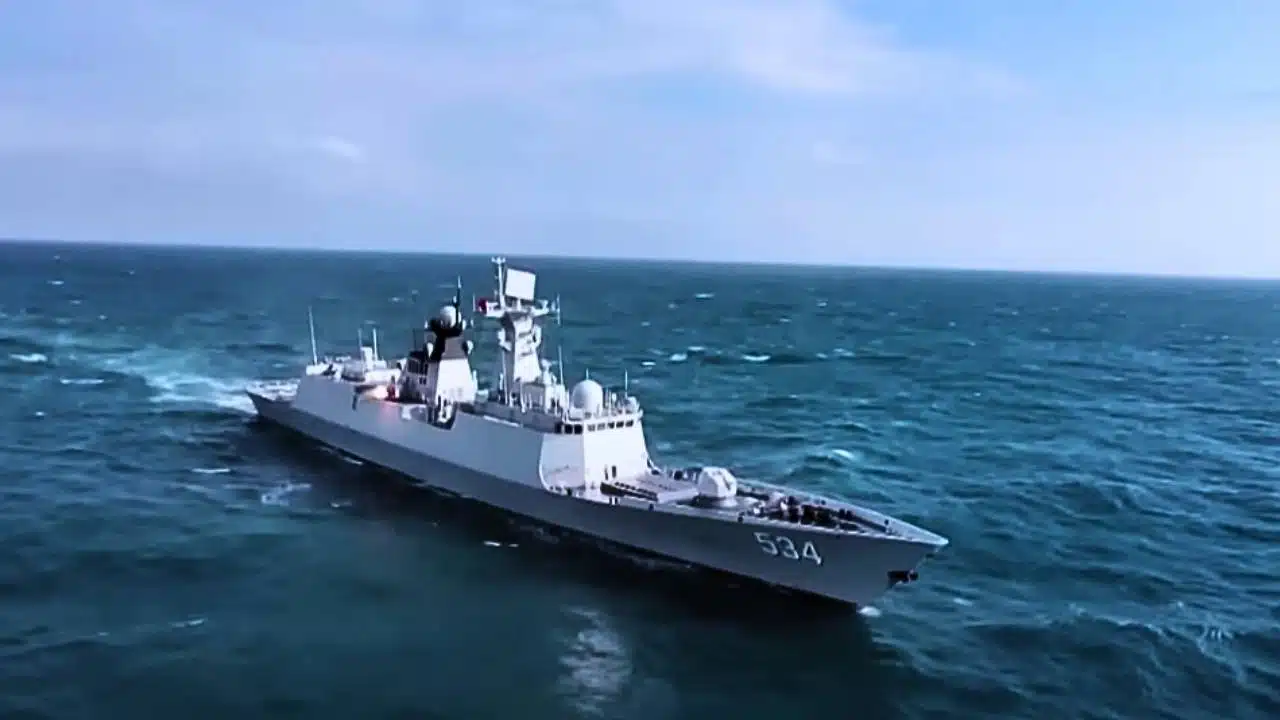
China military drills near Taiwan intensified in “Justice Mission 2025,” with live-fire zones, rockets fired north of the island, and a surge in aircraft and vessels as Taiwan raised readiness and warned of rising regional risk.
What Happened And Where The Drills Unfolded?
China launched its largest known round of joint exercises around Taiwan under the name “Justice Mission 2025,” spreading activity across seven announced drill zones and adding extra live-fire areas as the operation expanded. The drills were framed by Beijing as a deterrent message against “Taiwan independence” and against outside involvement, while Taiwan described them as destabilizing and risky for the region.
The activity was conducted around multiple approaches to the island, creating pressure from more than one direction and forcing Taiwan to monitor a wide arc of airspace and sea lanes. Taiwan’s officials reported large numbers of military aircraft operating near the island and a steady presence of Chinese naval and coast guard vessels near sensitive waters, including the contiguous zone—the band of sea extending 24 nautical miles from shore.
A major feature of the operation was the use of live-fire warnings and the expansion of exercise areas over time. Taiwan also reported at least one short-duration exercise zone that appeared without prior public notice, adding uncertainty for civilian operators trying to plan routes around the island.
Key Drill Elements Reported By Authorities
| Element | What Was Reported | Why It Matters |
| Scale | Seven zones around Taiwan with live-fire activity | Wider footprint increases operational risk and uncertainty |
| Rocket activity | Rockets fired north of Taiwan; debris entered the contiguous zone | Raises safety and escalation concerns beyond routine training |
| Close-in operations | Coast guard vessels operating near the contiguous zone and facing Taiwanese ships | “Gray-zone” pressure can stay persistent and hard to deter |
| Target practice themes | Simulated strikes on sea and land targets | Signals training for coercive scenarios beyond messaging |
| Port pressure | Blockade-style rehearsal around major ports | Ports are economic lifelines; disruption can ripple quickly |
How “Justice Mission 2025” Was Carried Out?
The structure of the drills looked designed to demonstrate coordination across multiple forces rather than a single-service exercise. China’s Eastern Theatre Command described a package of operations that included warships, aircraft, rocket force elements, and maritime law-enforcement forces working in tandem. This matters because a real-world coercion campaign would likely rely on layered pressure—air power to dominate skies, ships to control access at sea, missiles to threaten key infrastructure, and coast guard units to sustain presence and create friction below the threshold of open conflict.
Rockets And Live-Fire Activity
Taiwan confirmed that rockets were fired to the north of the island and that debris entered the contiguous zone. Even when rockets or munitions are not aimed at Taiwan’s landmass, the combination of live-fire advisories and active launches reduces the margin for error for both civil aviation and shipping.
Blockade Rehearsal Around Ports
China highlighted simulated blockade operations around Taiwan’s major ports—especially Keelung in the north and Kaohsiung in the south. Those ports are not symbolic targets; they are choke points for cargo, fuel, and supply chains. Rehearsing a closure of these approaches sends a direct signal about how quickly Taiwan could face economic pressure if a crisis escalates.
Coast Guard Standoffs And Close Shadowing
Taiwan’s coast guard described stand-offs with Chinese coast guard vessels near the contiguous zone, including one-to-one parallel navigation and maneuvering tactics intended to push vessels away. This kind of close shadowing is a hallmark of gray-zone operations: constant pressure, frequent contact, and limited warning time if a situation changes.
Large Amphibious And Strike-Capable Assets
The drills also showcased high-end platforms and messaging about amphibious capacity. Reporting during the drill period highlighted the appearance of major amphibious assets and discussion of assault-ship capabilities—reinforcing the idea that the exercise was not only about signaling, but also about practicing complex, multi-domain operations.
Taiwan’s Response And Immediate Disruptions
Taiwan’s government publicly condemned the drills and said its forces were monitoring and responding with appropriate deployments and readiness measures. Taiwan’s defense leadership emphasized that military planners must assume worst-case scenarios, including the possibility that drills could shift into a more serious posture.
Activity Levels Taiwan Reported
Taiwan’s updates during the drill period included major figures for aircraft and vessel activity near the island. One official update described 130 Chinese military aircraft and 22 navy and coast guard vessels operating around Taiwan in a 24-hour window, alongside continued coast guard presence. Earlier figures during the operation included 89 military aircraft and a combined set of military and coast guard ships near the island.
Reported Activity Snapshot
| Time Window (Local Reporting) | Aircraft | Vessels Near Taiwan | Notes |
| Early phase of drills | 89 | 14 military vessels + 14 coast guard boats (with additional ships observed farther out) | Marked escalation from prior patterns |
| Later update during drills | 130 | 22 navy + coast guard vessels | Reflected intensified tempo as drills continued |
Flight Routing And Passenger Impact
Civil aviation was affected as drill zones and live-fire advisories intersected with busy regional routes. Taiwan’s authorities indicated that 11 of Taiwan’s 14 flight routes were affected during the operation, while disruption to international flights appeared limited compared with the scale of the exercise. At the same time, reported impacts included large passenger totals facing schedule changes and significant domestic flight cancellations.
Air Travel Disruption Reported During The Drill Period
| Indicator | Reported Impact |
| Flight routes affected | 11 of 14 routes |
| International passenger disruption | More than 100,000 scheduled international passengers affected (reported during drill planning/continuation) |
| Domestic flights | Around 80 domestic flights set to be canceled (reported) |
Why Taiwan Focuses On The “Contiguous Zone”?
The contiguous zone (24 nautical miles from shore) is not the same as territorial waters (12 nautical miles), but it is still sensitive. Activity there increases the chance of direct interaction with Taiwan’s vessels and adds pressure on Taiwan’s maritime enforcement and military decision-making. Taiwan also indicated that some declared live-fire zones overlapped with waters it defines as its territorial sea, sharpening legal and political tensions.
What’s Driving The Escalation Now?
The drills began 11 days after the United States announced a record $11.1 billion arms package for Taiwan. Taiwan’s reporting and regional coverage described the package as including multiple defense items, such as HIMARS (High Mobility Artillery Rocket Systems), along with other systems intended to raise Taiwan’s ability to deter or withstand coercion.
Beijing’s public messaging tied the operation to what it called “external interference,” while Taiwan argued that defensive support and international engagement do not justify military intimidation.
Another factor shaping the atmosphere is broader regional signaling. China’s rhetoric sharpened after remarks by Japan’s prime minister suggesting that a hypothetical attack on Taiwan could trigger a military response by Tokyo under certain conditions. These statements add a new layer to deterrence messaging in Northeast Asia and increase the political stakes around any military move in the Taiwan Strait.
Why HIMARS Showed Up In The Messaging?
HIMARS became a symbol during the drill period because it represents mobile, long-range firepower that can threaten targets across the strait. When a drill narrative includes simulated strikes on such systems, it signals training for countering Taiwan’s defenses and for reducing Taiwan’s ability to respond during a fast-moving scenario.
Why The Region Is Watching Closely?
The Taiwan Strait is central to regional trade and global supply chains. Even limited drills can have outsized effects by raising perceived risk, shifting shipping routes, and prompting airlines to adjust corridors. Larger exercises with expanding live-fire zones amplify these effects.
Three Strategic Signals Embedded In The Drills
| Signal | What It Suggests | What It Could Mean Next |
| Scale and proximity | Ability to operate closer and over larger areas | Shorter warning time in a future crisis |
| Port blockade rehearsal | Emphasis on economic pressure tools | More frequent coercive “closure” exercises |
| Gray-zone enforcement | Coast guard role alongside military assets | Persistent pressure without formal conflict |
Risk Of Miscalculation
When aircraft and ships operate close to one another, especially during live-fire activity, the chance of unintended incidents rises. The presence of coast guard vessels increases the frequency of interactions, while the involvement of major combat units raises the stakes if something goes wrong.
Longer-Term Readiness Timelines
U.S. defense assessments over recent years have repeatedly focused on China’s modernization goals and readiness milestones. A widely discussed timeline is 2027, tied to the centenary of the People’s Liberation Army and frequently mentioned in policy discussions as a marker for capability goals. The significance is not that conflict is inevitable, but that military planning on all sides increasingly references that window when discussing preparedness and deterrence.
China military drills near Taiwan in “Justice Mission 2025” combined large-scale joint operations, expanding live-fire zones, rocket activity, coast guard standoffs, and a clear focus on blockade-style pressure around key ports. Taiwan responded with heightened readiness and extensive tracking, while civil aviation and regional routes absorbed disruptions tied to the drill footprint.
What comes next will be judged by whether China sustains a high operational tempo into early 2026, whether similar multi-zone exercises become more frequent, and whether the region sees new risk-reduction steps—or a continued cycle of signaling that keeps the Taiwan Strait on edge.