

Since the landmark 2010 Supreme Court ruling in Citizens United v. Federal Election Commission, the political influence of wealthy individuals and corporations has drastically increased. The ruling allowed unlimited independent political expenditures by corporations, unions, and individuals through Super PACs, fundamentally altering the financial landscape of American elections.
Over the last decade, this decision has fueled the rise of billionaire donors who can inject massive sums into campaign financing, advocacy groups, and policy lobbying efforts, often behind closed doors. The effects of these contributions are far-reaching, and critics argue that such unchecked financial power has eroded democratic values and created a pathway for an American oligarchy—a government dominated by the wealthiest citizens.
Melinda French Gates Raises a Red Flag
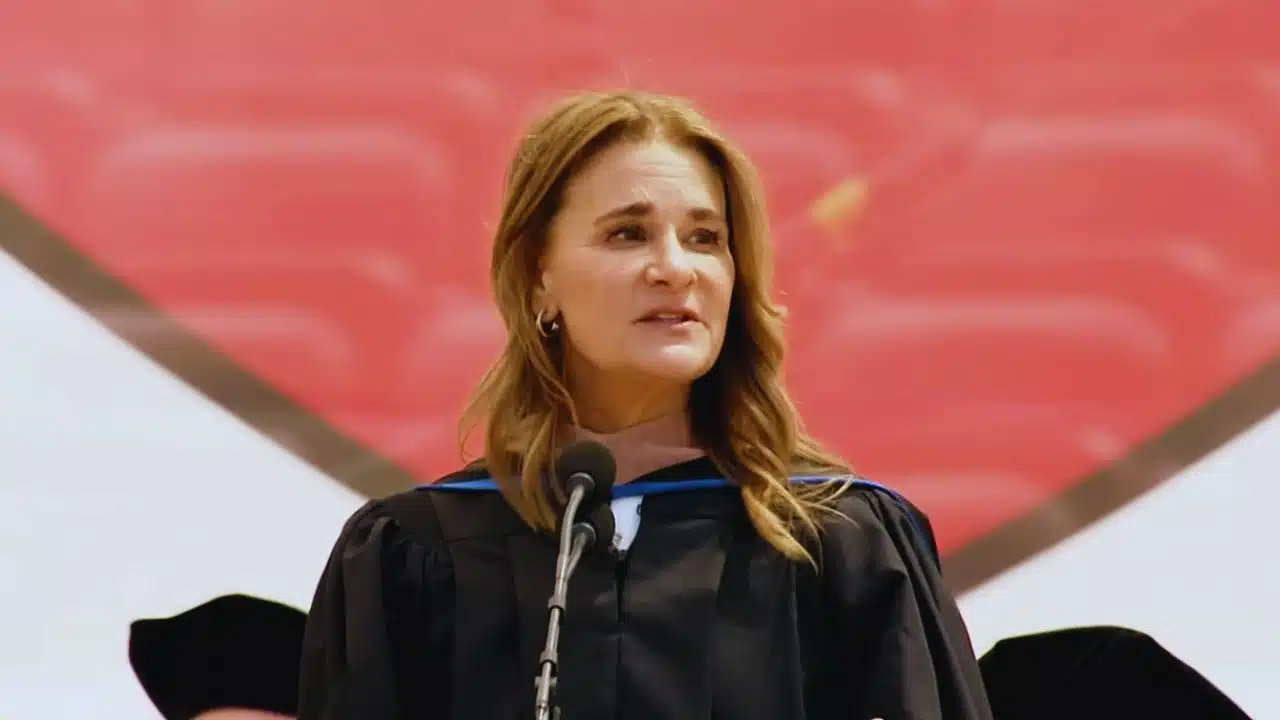
In a CNN interview with Abby Phillip, aired Tuesday night, Melinda French Gates, a leading philanthropist and global advocate for women’s rights, shared her unease about the increasing political involvement of ultra-wealthy individuals.
“I think we are seeing some of their true personalities come out in the last few years,” French Gates remarked. “I think this has always been in the undertone of lots of people.”
While she did not name individuals directly, her words hinted at growing concern about how wealth and influence can expose character—and not always in a flattering way. French Gates’ statement suggests that behind the curtain of corporate philanthropy and tech innovation, some billionaires may be revealing motives that conflict with public interest or democratic norms.
Billionaire Influence: From Boardrooms to Ballots
In recent years, the role of billionaires in U.S. politics has been increasingly visible, especially among tech moguls like Elon Musk, Jeff Bezos, and Mark Zuckerberg. These figures have attended key political events, including Donald Trump’s 2017 inauguration, and have invested heavily in political campaigns, advocacy groups, and media influence.
Their involvement has led many observers to argue that U.S. governance is sliding into plutocracy, where policymaking is disproportionately shaped by a small group of ultra-rich elites.
Beyond the tech sector, other billionaires like Michael Bloomberg, who ran for president in 2020, and Warren Buffett, a longtime political donor, have also wielded significant sway in shaping public discourse and policy debates. Critics have raised concerns that these powerful figures—who are not elected officials—can drive political outcomes that align more with their personal values and business interests than with the needs of the average citizen.
A Wealthy Philanthropist with a Distinct Set of Values
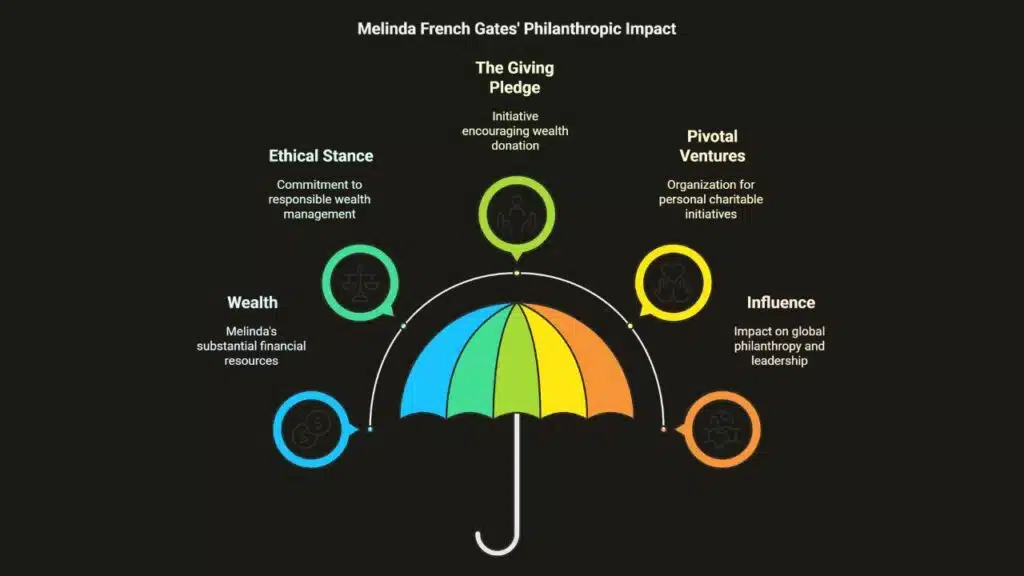
Melinda French Gates is no stranger to wealth or influence herself. Following her divorce from Microsoft co-founder Bill Gates, she stepped down from the Bill & Melinda Gates Foundation—one of the world’s largest philanthropic organizations. As part of the separation agreement, she received $12.5 billion to pursue her own charitable initiatives through her organization Pivotal Ventures.
According to the Bloomberg Billionaires Index, her current net worth is approximately $14.4 billion. Despite her immense wealth, French Gates has maintained a firm stance on using that wealth ethically and responsibly.
“If you have a billion dollars, that’s an absurd amount of wealth. You have a moral responsibility to give away at least half of it,” she told CNN.
This belief is at the core of The Giving Pledge, which she co-founded in 2010 with her then-husband and Warren Buffett. The initiative encourages the world’s richest individuals to commit to donating at least half of their fortunes to charitable causes, either during their lifetimes or in their wills. Notably, Sam Altman, CEO of OpenAI, and his husband recently signed the pledge, reinforcing its ongoing relevance among the next generation of tech leaders.
However, Jeff Bezos, the founder of Amazon and the world’s second-richest person, has not signed the pledge. His absence has sparked criticism from both philanthropic and public watchdog communities, especially given his vast fortune and global influence.
Values and Vision: French Gates Versus Other Billionaires
French Gates acknowledged that she knows many of these powerful individuals personally. “I know a lot of these folks. I’ve met a lot of them,” she said. But she also emphasized that their core values are often at odds with hers. “They have values that they espouse that are just different than mine.”
Her philanthropic focus has increasingly centered on gender equality, reproductive rights, and women’s economic empowerment—causes she believes are fundamental to a more just and inclusive society.
In 2023, she pledged $1 billion through 2026 to advance women’s rights, particularly in response to the U.S. Supreme Court’s 2022 decision in Dobbs v. Jackson Women’s Health Organization, which overturned Roe v. Wade and removed the constitutional right to abortion. French Gates described this decision as a turning point that required urgent action and investment in women’s health and freedoms.
Political Neutrality with a Critical Eye
Unlike some of her billionaire peers who heavily fund one political party, French Gates said she has voted for both Republican and Democratic candidates over the years. Her political giving, she emphasized, does not stem from loyalty to a party but from a desire to support candidates and policies aligned with her values.
Addressing the long-term effects of Citizens United, she noted that despite the massive political spending on both sides, the outcome of elections is not always determined by money alone.
“I see a lot of giving on both sides of the aisle, and I wouldn’t say one or the other swayed the election,” she told CNN.
Still, watchdog groups like OpenSecrets.org report that billions of dollars were spent in recent election cycles by Super PACs and wealthy donors, and many believe this has contributed to rising political polarization and diminished public trust in government institutions.
Could the U.S. Become an Oligarchy?
When asked directly whether the United States is becoming an oligarchy—a system ruled by a wealthy elite—French Gates responded cautiously but hopefully.
“I sure hope not,” she said.
Her response underscores the broader fear among voters and democracy advocates: that when a small group of billionaires holds outsized sway over political processes, public discourse, and media narratives, the principles of democratic representation may be undermined.
Numerous studies and surveys echo this concern. A 2023 Pew Research Center poll found that 76% of Americans believe that rich individuals and corporations have too much power and influence in politics. Meanwhile, Harvard’s Institute of Politics found that younger voters are particularly distrustful of a political system they view as dominated by financial interests rather than public service.
A Call for Moral Leadership
Melinda French Gates’ remarks offer a critical reminder: wealth must be paired with responsibility. As billionaires become more involved in the political process, public scrutiny of their motives and values is not just necessary—it’s vital for preserving the integrity of democracy.
Her advocacy stands in contrast to some of her peers in the billionaire class. Through her philanthropy, commitment to reproductive rights, and support for giving back, she sets a tone for ethical leadership in a time when money and power are increasingly intertwined in public life.
French Gates’ hope—that the U.S. resists turning into an oligarchy—resonates deeply in today’s political climate. But as she pointed out, this outcome will depend not only on how billionaires use their influence, but also on how society holds them accountable.
The Information is Collected from CNN and Forbes.
























