
Steam is full of cheap games, but only a handful feel like steals. The Best Indie Games On Steam Under $20 do not just save you money. They give you tight mechanics, memorable worlds, and replay loops that can last longer than many big-budget releases.
This list is built for real buying decisions. Every pick is typically $19.99 or less on Steam in the U.S., and many drop even lower during sales. To make choosing easy, each game includes its genre, expected playtime, difficulty, replay value, co-op status, and the exact type of player it fits best.
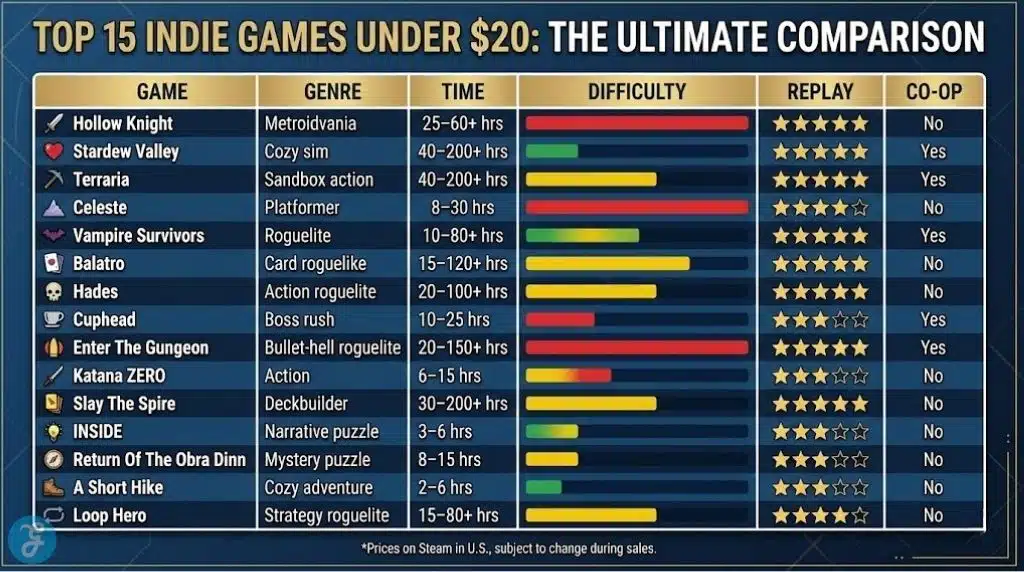
At-A-Glance Comparison Table
| Game | Genre | Time | Difficulty | Replay | Co-Op | Best For |
|---|---|---|---|---|---|---|
| Hollow Knight | Metroidvania | 25–60+ hrs | Medium-High | High | No | Exploration + bosses |
| Stardew Valley | Cozy sim | 40–200+ hrs | Low | Very High | Yes | Cozy long-term play |
| Terraria | Sandbox action | 40–200+ hrs | Medium | Very High | Yes | Building + bosses |
| Celeste | Platformer | 8–30 hrs | High | Medium-High | No | Precision mastery |
| Vampire Survivors | Roguelite | 10–80+ hrs | Low-Med | Very High | Yes | Quick runs |
| Balatro | Card roguelike | 15–120+ hrs | Medium | Very High | No | Synergy hunting |
| Hades | Action roguelite | 20–100+ hrs | Medium | Very High | No | Combat + story |
| Cuphead | Boss rush | 10–25 hrs | High | Medium | Yes | Pattern learning |
| Enter The Gungeon | Bullet-hell roguelite | 20–150+ hrs | High | Very High | Yes | Skill + chaos |
| Katana ZERO | Action | 6–15 hrs | Med-High | Medium | No | Stylish speed |
| Slay The Spire | Deckbuilder | 30–200+ hrs | Medium | Very High | No | Strategy depth |
| INSIDE | Narrative puzzle | 3–6 hrs | Low-Med | Medium | No | Atmosphere |
| Return Of The Obra Dinn | Mystery puzzle | 8–15 hrs | Medium | Medium | No | Deduction |
| A Short Hike | Cozy adventure | 2–6 hrs | Low | Medium | No | Chill reset |
| Loop Hero | Strategy roguelite | 15–80+ hrs | Medium | High | No | Planning + meta |
15 Best Indie Games On Steam Under $20
Here 15 best indie games on Steam under $20:
1) Hollow Knight
A massive, moody metroidvania with precise combat and unforgettable boss design.
-
Genre: Metroidvania, Action-Adventure
-
Time: 25–60+ hours
-
Difficulty: Medium-High
-
Replay: High
-
Co-Op: No
-
Best For: Exploration lovers who enjoy mastering bosses
-
Why It’s Great: Huge interconnected world, constant upgrades, and fights that reward patience
2) Stardew Valley
A cozy life-sim with farming, friendships, mining, crafting, and endless “one more day” momentum.
-
Genre: Cozy sim, Farming, RPG-lite
-
Time: 40–200+ hours
-
Difficulty: Low
-
Replay: Very High
-
Co-Op: Yes
-
Best For: Relaxed long-term progression and comfort gaming
-
Why It’s Great: You can play slow and cozy or min-max hard without the game forcing either
3) Terraria
A 2D sandbox that turns into a boss-hunting, gear-chasing, base-building addiction.
-
Genre: Sandbox, Action, Survival-Crafting
-
Time: 40–200+ hours
-
Difficulty: Medium
-
Replay: Very High
-
Co-Op: Yes
-
Best For: Players who want building, loot, and progression
-
Why It’s Great: The amount of content for the price is almost unfair
4) Celeste
A precision platformer with perfect movement and a story that hits emotionally without slowing the pace.
-
Genre: Platformer
-
Time: 8–30 hours
-
Difficulty: High
-
Replay: Medium-High
-
Co-Op: No
-
Best For: Players who love skill growth and clean controls
-
Why It’s Great: Layered difficulty means you can finish the story and still have deep optional challenges
5) Vampire Survivors
Minimal controls, maximum satisfaction. Your build snowballs into screen-filling chaos.
-
Genre: Roguelite, Survival, Arcade
-
Time: 10–80+ hours
-
Difficulty: Low-Medium
-
Replay: Very High
-
Co-Op: Yes
-
Best For: Quick runs, easy starts, constant unlocks
-
Why It’s Great: One of the highest value-per-dollar games on Steam
6) Balatro
Poker hands meet roguelike synergy. You chase broken combos and bigger multipliers every run.
-
Genre: Strategy, Card Roguelike
-
Time: 15–120+ hours
-
Difficulty: Medium
-
Replay: Very High
-
Co-Op: No
-
Best For: Optimization, experimentation, “one more run” energy
-
Why It’s Great: The build variety keeps it fresh far longer than you expect
7) Hades
Fast, responsive combat with a story that keeps moving even when you fail runs.
-
Genre: Action Roguelite
-
Time: 20–100+ hours
-
Difficulty: Medium
-
Replay: Very High
-
Co-Op: No
-
Best For: Players who want action plus narrative payoff
-
Why It’s Great: Tight combat loop with progression that actually feels meaningful
8) Cuphead
Boss-rush pressure, hand-drawn animation, and a brutal but fair learning curve.
-
Genre: Boss Rush, Run-and-Gun
-
Time: 10–25 hours
-
Difficulty: High
-
Replay: Medium
-
Co-Op: Yes
-
Best For: Pattern learning and execution
-
Why It’s Great: Every boss feels handcrafted and memorable
9) Enter The Gungeon
Bullet-hell roguelite chaos with tons of guns, room variety, and high skill expression.
-
Genre: Roguelite, Shooter, Bullet Hell
-
Time: 20–150+ hours
-
Difficulty: High
-
Replay: Very High
-
Co-Op: Yes
-
Best For: Dodging mastery and replayable action
-
Why It’s Great: Wild weapon pool plus satisfying progression as you improve
10) Katana ZERO
A stylish action game built around perfect room clears and quick restarts.
-
Genre: Action, Neo-Noir
-
Time: 6–15 hours
-
Difficulty: Medium-High
-
Replay: Medium
-
Co-Op: No
-
Best For: Fast, precise gameplay in short sessions
-
Why It’s Great: Flow state combat with a punchy story tone
11) Slay The Spire
The deckbuilder blueprint. Every run is strategy, risk management, and adaptation.
-
Genre: Strategy, Deckbuilder Roguelike
-
Time: 30–200+ hours
-
Difficulty: Medium
-
Replay: Very High
-
Co-Op: No
-
Best For: Players who love smart decisions and long mastery arcs
-
Why It’s Great: Deep systems without feeling bloated or messy
12) INSIDE
A short, atmospheric puzzle-platformer with flawless pacing.
-
Genre: Narrative Puzzle, Platformer
-
Time: 3–6 hours
-
Difficulty: Low-Medium
-
Replay: Medium
-
Co-Op: No
-
Best For: A one-night indie experience with a strong atmosphere
-
Why It’s Great: It tells a story through tension and environment, not dialogue dumps
13) Return Of The Obra Dinn
A deduction-driven mystery where you solve identities through logic and observation.
-
Genre: Mystery, Puzzle, Investigation
-
Time: 8–15 hours
-
Difficulty: Medium
-
Replay: Medium
-
Co-Op: No
-
Best For: Puzzle fans who enjoy thinking and note-taking
-
Why It’s Great: True detective work that rewards careful attention
14) A Short Hike
A warm, cozy mini-adventure that feels like a reset button.
-
Genre: Cozy Adventure, Exploration
-
Time: 2–6 hours
-
Difficulty: Low
-
Replay: Medium
-
Co-Op: No
-
Best For: Relaxing exploration and feel-good vibes
-
Why It’s Great: Short, charming, and genuinely uplifting
15) Loop Hero
You build the world as you loop through it, balancing risk, rewards, and long-term upgrades.
-
Genre: Strategy, Roguelite, Auto-Battler Elements
-
Time: 15–80+ hours
-
Difficulty: Medium
-
Replay: High
-
Co-Op: No
-
Best For: Planning, meta-progression, and system tinkering
-
Why It’s Great: It looks simple until the strategy grabs you
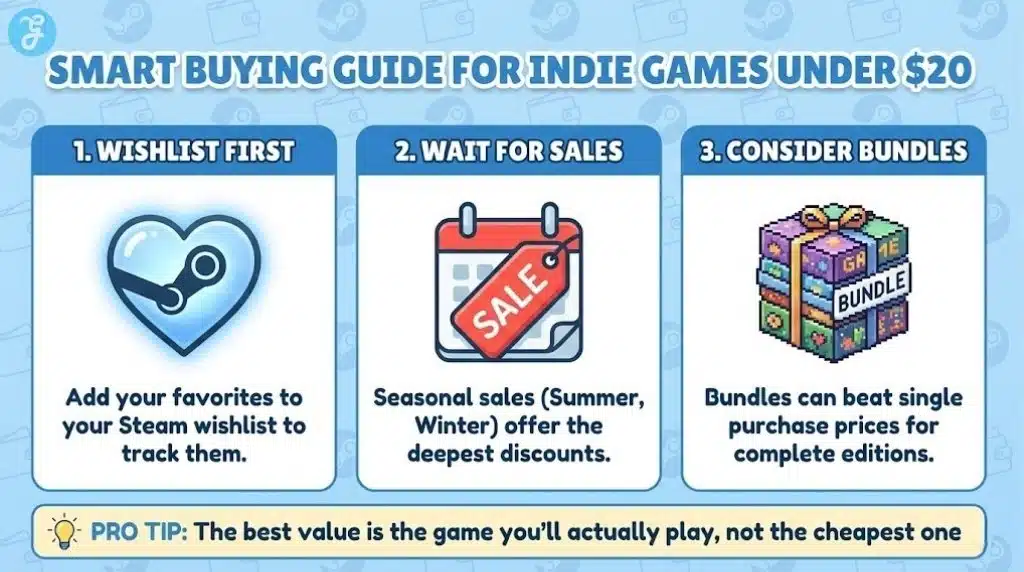
Buying Tips In One Minute
-
Wishlist first, then buy when your favorites drop
-
Seasonal sales usually bring the deepest indie discounts
-
Bundles can beat single purchases if you want DLC or complete editions
Wrap-Up: The Smartest Indie Buys Under $20
If you only buy one game from this list, pick the one that matches how you actually play. The best value is not the cheapest title. It’s the game that keeps pulling you back without feeling like homework.
-
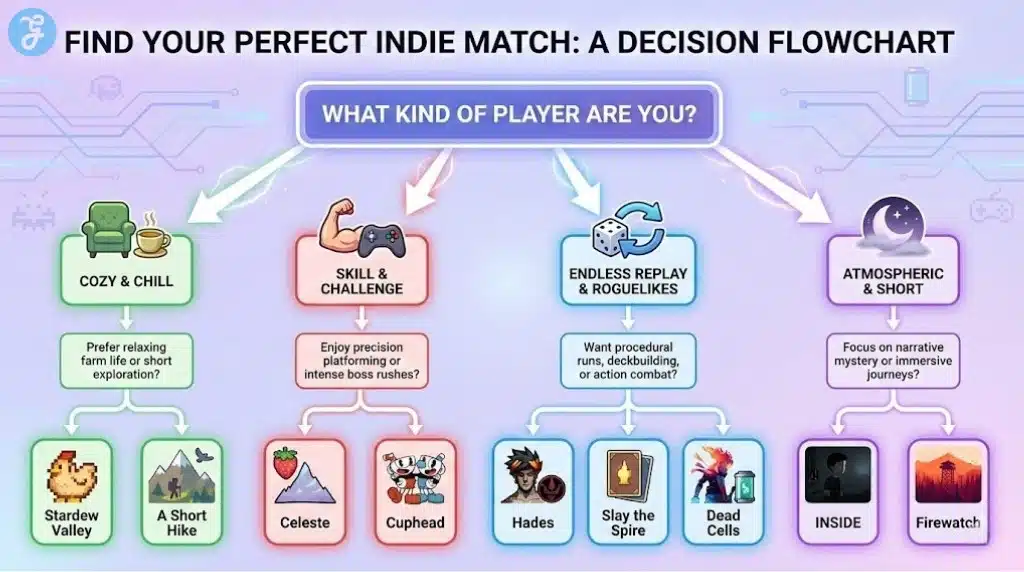
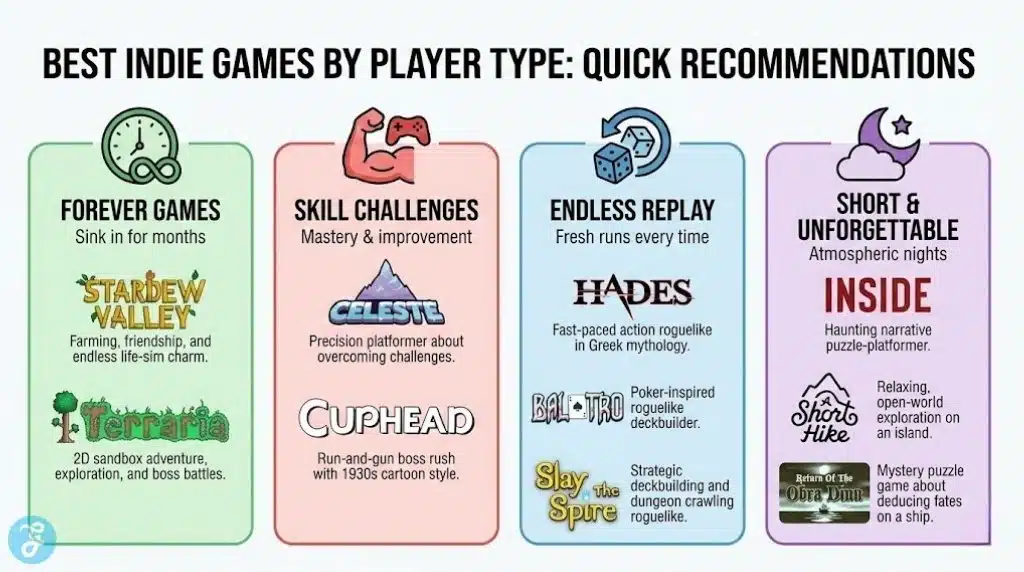
Want a forever game you can sink into for months, then get Stardew Valley or Terraria
-
Want a clean skill challenge that makes you noticeably better, then get Celeste or Cuphead
-
Want endless replay with fresh runs every time, then get Hades, Balatro, or Slay The Spire
-
Want a short, unforgettable night of atmosphere, then get INSIDE, A Short Hike, or Return Of The Obra Dinn
Steam sales will make these even cheaper, but none of them feel like “budget” games. They’re the kind of under-$20 purchases that can outlast a $70 release, because the design is focused, the gameplay is tight, and the fun shows up fast.