

In today’s globalized world, supply chains have become increasingly complex, requiring businesses to embrace digital transformation for efficiency and competitiveness.
One of the most revolutionary advancements in supply chain management is ecosystem integration—a seamless, technology-driven approach that connects all stakeholders, processes, and systems within the supply chain.
The benefits of ecosystem integration in modern supply chains go beyond operational efficiency. It enhances collaboration, boosts transparency, mitigates risks, and improves customer satisfaction. Businesses that leverage digital integration can stay ahead of disruptions, optimize inventory, and build resilient, agile supply networks.
This article explores the top 10 benefits of ecosystem integration, explaining how businesses can leverage this approach for sustainable growth and success.
What Is Ecosystem Integration in Supply Chains?
Ecosystem integration refers to the seamless interconnection of supply chain components using advanced technologies such as cloud computing, AI, blockchain, and IoT. Unlike traditional supply chain models that operate in silos, an integrated ecosystem fosters real-time data sharing and collaboration among suppliers, manufacturers, logistics providers, and customers.
Key Components of Ecosystem Integration:
| Component | Function |
| Cloud-Based Platforms | Enable real-time data exchange and automation. |
| Internet of Things (IoT) | Facilitates tracking and monitoring of goods in transit. |
| Artificial Intelligence (AI) & Machine Learning | Enhances predictive analytics and decision-making. |
| Blockchain Technology | Ensures data security and transparency. |
| APIs & EDI (Electronic Data Interchange) | Streamlines data exchange between systems. |
By integrating these technologies, businesses can enhance their agility, resilience, and efficiency in managing supply chain operations.
Why Ecosystem Integration Matters in Modern Supply Chains
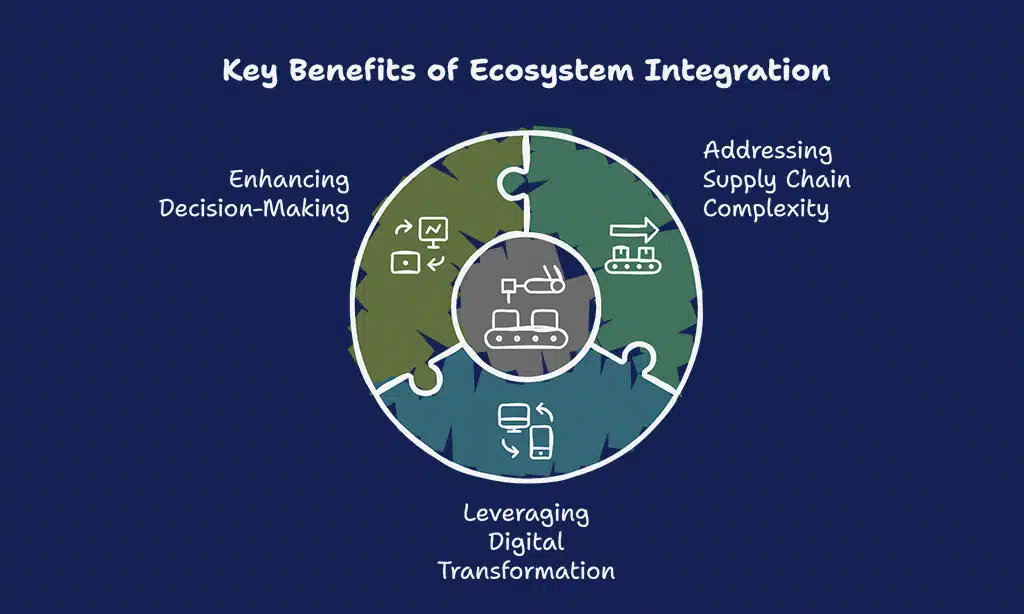
With rising consumer expectations, increased global trade, and the need for real-time responsiveness, businesses must prioritize ecosystem integration to remain competitive. Here’s why it’s crucial:
- Addresses Supply Chain Complexity – Modern supply chains involve multiple stakeholders and touchpoints; integration simplifies coordination.
- Leverages Digital Transformation – Businesses that embrace ecosystem integration can harness the power of AI, IoT, and automation for better efficiency.
- Enhances Decision-Making – Real-time insights help businesses respond to disruptions and customer demands promptly.
- Improves Sustainability Efforts – Integrated ecosystems support waste reduction and better resource utilization.
Top 10 Benefits of Ecosystem Integration in Modern Supply Chains
As businesses continue to navigate the complexities of global supply networks, adopting an integrated ecosystem has become essential. By breaking down silos and fostering real-time data sharing, ecosystem integration enables organizations to enhance their operational agility, drive efficiency, and improve customer satisfaction.
This approach not only optimizes internal processes but also strengthens partnerships, ensuring seamless collaboration among suppliers, manufacturers, and logistics providers.
1. Enhanced Real-Time Visibility and Transparency
One of the primary benefits of ecosystem integration in modern supply chains is improved visibility. Real-time tracking allows businesses to monitor goods, identify bottlenecks, and address issues proactively. With advanced analytics, companies can detect inefficiencies, optimize inventory levels, and streamline logistics.
| Visibility Benefits | Impact |
| End-to-end tracking | Reduces lost or delayed shipments |
| Accurate demand forecasting | Prevents overstocking and stockouts |
| Proactive issue resolution | Enhances supply chain agility |
2. Improved Collaboration and Communication
A well-integrated ecosystem enhances collaboration among stakeholders, ensuring smooth operations and reducing miscommunication. When suppliers, manufacturers, and logistics providers have access to real-time data, they can respond quickly to changes, improving overall supply chain efficiency. Improved collaboration leads to better resource allocation, fewer production delays, and a more resilient supply chain.
Example: Companies using integrated digital platforms like SAP Business Network experience up to 40% improvement in supply chain coordination.
| Collaboration Factor | Benefit |
| Real-time data sharing | Faster response to disruptions |
| Cloud-based communication | Improved coordination between stakeholders |
| Automated workflows | Reduction in manual errors |
| AI-driven insights | Enhanced decision-making and forecasting |
3. Increased Operational Efficiency
Automation plays a vital role in increasing efficiency in supply chains. Integrated systems eliminate manual data entry, reducing human errors and accelerating workflows. Businesses using AI-driven logistics optimization can improve delivery accuracy by over 25%.
| Efficiency Factors | Benefits |
| Automated inventory management | Reduces handling errors |
| AI-driven demand forecasting | Enhances stock control |
| Digital workflows | Speeds up processing time |
4. Stronger Risk Management and Resilience
An integrated ecosystem helps businesses anticipate and mitigate supply chain risks before they escalate. By utilizing real-time data and AI-driven insights, companies can proactively identify vulnerabilities, assess their impact, and take preventive measures.
Predictive analytics helps businesses model potential disruptions, from supplier shortages to geopolitical events, enabling them to develop contingency plans. Additionally, by integrating blockchain and IoT technology, companies can ensure end-to-end visibility, improve response times, and enhance supply chain resilience against unexpected disruptions.
| Risk Factor | Solution |
| Supply chain disruptions | AI-driven early warning systems |
| Cybersecurity threats | Blockchain for secure transactions |
| Compliance risks | Automated tracking and reporting |
5. Cost Savings Through Optimized Resource Allocation

Reducing operational costs is a significant benefit of ecosystem integration in modern supply chains. With data-driven insights, businesses can minimize waste and optimize resource utilization, leading to lower expenses and higher profitability.
Automated inventory management, real-time demand forecasting, and optimized transportation routes are just a few ways integration can drive cost efficiency. Companies leveraging digital transformation can streamline processes, eliminate unnecessary expenditures, and maximize productivity.
Example: A logistics company reduced fuel costs by 20% using AI-powered route optimization.
| Cost-Saving Factor | Benefit |
| Automated Inventory Management | Reduces storage costs and prevents overstocking |
| AI-Driven Demand Forecasting | Minimizes waste and aligns supply with actual demand |
| Optimized Transportation Routes | Lowers fuel consumption and reduces delivery times |
| Digital Documentation & Automation | Decreases administrative expenses and human errors |
6. Seamless Integration with Emerging Technologies
Ecosystem integration enables businesses to leverage cutting-edge technologies such as AI, IoT, and blockchain, leading to smarter supply chain operations. By utilizing AI-driven analytics, companies can predict demand fluctuations and optimize resource allocation in real time.
IoT devices provide continuous monitoring of inventory and shipment status, ensuring efficiency and reducing losses. Blockchain technology, on the other hand, enhances security and traceability, creating an immutable ledger for transactions that fosters trust among stakeholders.
The combination of these technologies results in a more resilient, agile, and cost-effective supply chain.
| Technology | Benefit |
| IoT sensors | Real-time shipment tracking |
| AI-powered chatbots | Instant customer support |
| Blockchain | Secure and tamper-proof transactions |
7. Better Compliance and Regulatory Adherence
Regulatory compliance is a crucial aspect of supply chain management, and integration helps businesses stay compliant effortlessly. With constantly evolving regulations across different regions, businesses must adopt a proactive approach to compliance.
An integrated supply chain ecosystem ensures automated tracking, real-time audits, and enhanced reporting, reducing the risk of fines and legal complications. Furthermore, leveraging blockchain technology helps in maintaining an immutable record of transactions, ensuring transparency and adherence to regulatory frameworks.
| Compliance Factor | Benefit |
| Automated reporting | Reduces human error |
| Blockchain tracking | Ensures transparency |
| AI-driven audits | Identifies risks early |
8. Faster Time-to-Market for Products
Reducing lead times is critical for maintaining a competitive edge. Integrated supply chains enable businesses to bring products to market faster by streamlining logistics and manufacturing workflows.
By minimizing delays in production and distribution, companies can quickly respond to market demand, avoid inventory build-up, and enhance customer satisfaction. Advanced digital tracking systems and predictive analytics further optimize supply chain movement, ensuring efficiency and reducing costs.
| Key Factor | Benefit |
| Digital tracking | Enhances real-time monitoring of shipments |
| Predictive analytics | Improves demand forecasting and production planning |
| Automated workflows | Reduces processing time and manual interventions |
| Supplier integration | Ensures seamless collaboration and faster replenishment |
9. Improved Customer Experience and Satisfaction
Customer expectations for fast and accurate deliveries continue to rise. A well-integrated ecosystem ensures seamless order processing and real-time updates, increasing customer satisfaction and brand loyalty.
Companies that integrate advanced tracking systems, AI-powered customer support, and automated logistics processes can significantly enhance their service reliability. By providing customers with real-time notifications and improved supply chain visibility, businesses can reduce delays, manage expectations better, and foster long-term customer trust.
| Factor | Benefit |
| Real-time tracking | Provides customers with accurate delivery estimates |
| AI-driven customer support | Enhances response time and issue resolution |
| Automated logistics | Reduces errors and improves efficiency |
| Predictive analytics | Anticipates customer demands and optimizes inventory |
10. Scalability and Growth Opportunities
A flexible and scalable supply chain allows businesses to expand into new markets seamlessly. Companies with integrated supply chain systems can scale operations quickly without major disruptions.
By leveraging cloud-based platforms, AI-driven analytics, and automation tools, businesses can dynamically adjust their supply chain to meet fluctuating demands. This flexibility enables organizations to enter new markets, adapt to industry changes, and maintain competitive advantage with minimal risk and cost.
| Factor | Benefit |
| Cloud-based platforms | Enable real-time scaling and data accessibility |
| AI-driven analytics | Predict market demands and optimize resource allocation |
| Automation tools | Reduce manual errors and enhance operational efficiency |
| Integrated supplier networks | Foster seamless collaboration and adaptability |
Takeaways
The benefits of ecosystem integration in modern supply chains are transformative, offering enhanced visibility, operational efficiency, risk management, and cost savings.
As global supply chains become increasingly interconnected, businesses that embrace integration will enjoy a competitive advantage.
By implementing cutting-edge technologies, fostering collaboration, and prioritizing real-time data sharing, companies can build resilient, scalable, and customer-centric supply chains. Investing in ecosystem integration today ensures long-term success in the ever-evolving marketplace.





















