


Many professionals predict major changes in how organizations communicate their messages and engage new clients as 2025 is getting started.
Recent findings indicate that companies aim to shift from old-fashioned promotions to multifaceted methods involving data-savvy thinking, creative output, and responsible practices. One study labeled creativity as a prime factor that drives nearly half of revenue gains attributed to advertising. Th
That insight alone shows the value of inspired campaigns that speak directly to the needs of the public. Meanwhile, brand building gains traction as a vital component, especially for leaders in high-growth sectors.
Several marketers also point to next-level technology, such as GenAI, as a boost for personalization, productivity, and research. These directions hint at a future where data techniques adapt to enormous information streams, and where metrics around sustainability and trust become ever more significant.
The following sections examine what drives demand in marketing right now, why these changes matter for authenticity, and how business owners can focus efforts to remain relevant. These observations set the stage for the first area of interest.
Creativity and Brand Building: Cornerstones of Modern Communication
Creativity remains a prime driver of strong campaigns. Recent assessments reveal that a clear majority of marketing leaders place originality at the top of their priority lists. This follows a period when data-based decision-making sometimes overshadowed inventive concepts, but new data shows that distinctive ideas produce major gains in engagement and profit. One publication points out that nearly 49 percent of revenue shifts linked to advertising result from the quality of the content itself. This statistic underscores the advantage of devoting time and budget to messages that stay memorable.
Another key factor involves the renewed focus on brand building. Clients want experiences that not only satisfy their purchasing decisions but also reflect shared values. The overall perception of an organization rests on unified visuals, consistent story lines, and a sincere identity. Trust grows when audiences sense that a brand represents reliable attributes. Some rising groups emphasize brand-building campaigns more than short bursts of promotion. For that reason, growing ventures might direct extra funds into brand teams, brand identity refreshes, and cross-channel brand storytelling.
Advertising with a creative dimension tends to show higher returns. Unique messages that speak to emotional triggers frequently push an audience to take action. Some experts note that a solid creative plan can multiply marketing returns when compared to standard, less engaging messages. In these cases, brand building and creative concepts go hand in hand. Inviting voices, a consistent theme, and a purpose-driven outlook often create interest that extends beyond a single campaign. Many of these priorities also feed into the next development: the use of new artificial intelligence tools to automate tasks, personalize outreach, and aid research.
Recent marketing news underscore how innovative, well-developed campaigns build trust and drive measurable results. It serves as a reminder that investing in original content and authentic brand narratives remains a sound strategy.
Leveraging GenAI for Efficiency and New Concepts
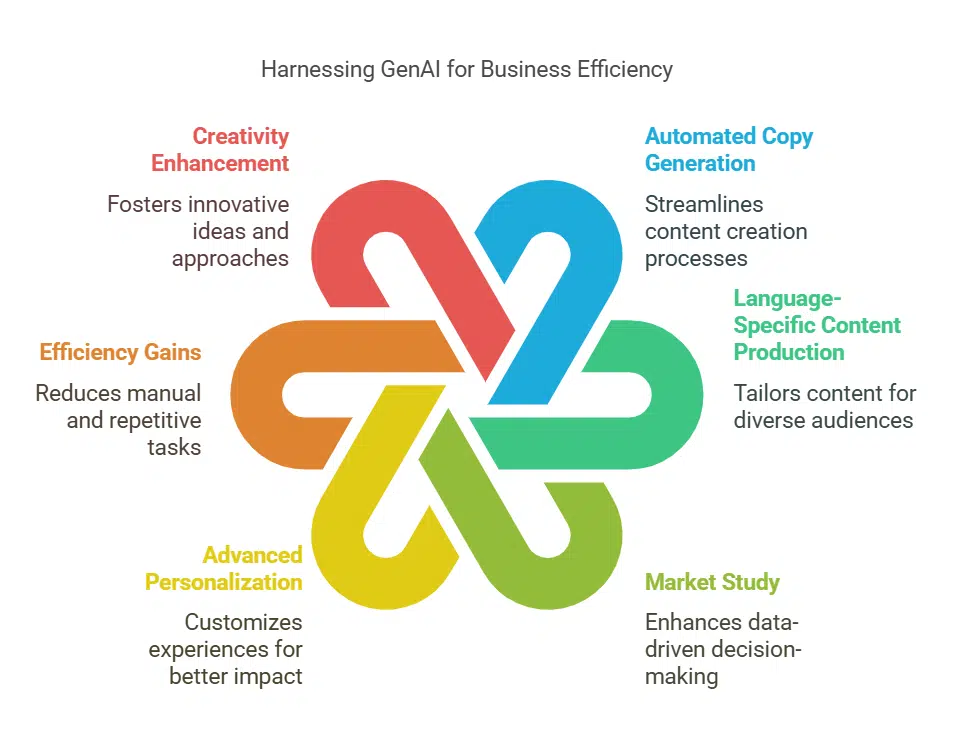
Many decision-makers point to next-generation artificial intelligence as a way to produce impactful results with fewer manual processes.
People can adopt GenAI in tasks as varied as automated copy generation, language-specific content production, market study, and advanced personalization. Some research indicates that organizations see a 5 to 15 percent reduction in marketing spend once they properly embed AI-driven methods, without sacrificing impact.
Human creativity remains vital for ideas that resonate, but AI tools can assist in ways that free up time and spark new approaches. As an illustration, a creative director might feed an early project brief into a GenAI platform, and the system can propose angles or references that the team later fine-tunes. Efficiency gains appear when staff no longer handle repetitive steps, such as reformatting text or extracting data, because the platform manages these.
Techniques Employed in GenAI Usage
| Task | Method | Outcome |
| Personalization of Emails | Automated text creation | Faster outreach with relevant messages |
| Keyword Research | AI-based data scanning | Better alignment with consumer searches |
| Market Forecasting | Predictive modeling | Higher accuracy in demand projections |
Those who use AI-driven approaches can examine audience traits with significant speed and detail, then build segment-specific campaigns that speak to each group’s preferences. In many fields, that practice helps drive loyalty. Some platforms even tailor images or text for each user segment based on automated data. This frees marketers to manage big-picture concepts, such as brand voice and creative themes. Still, one must always remember to remain transparent and consistent, especially as regulations and expectations around privacy continue to tighten.
Evolution in Analytics: From Techniques in Search of Data to Data in Search of Techniques
A senior voice in marketing research once described how, decades ago, experts designed novel methods and then searched for data sets to fill them. Now, the volume of available information is so large that organizations need to pick the right technique for each scenario. This shift is tied to the rising quantity of digital interactions, online purchases, and device usage. As the amount of information accumulates, the real challenge becomes how to identify meaning rather than drown in the details.
Advanced analytics can pinpoint patterns in consumer behavior, highlight potential inefficiencies, and show which channels generate quality leads. Many businesses rely on real-time dashboards that track social sentiment, click-through rates, and share of voice. Others incorporate predictive systems to guess at next steps among prospective buyers. The overarching effect can be more consistent choices in marketing spend. Rather than guess which approach might yield results, analysts can run pilot campaigns with smaller budgets, collect data promptly, and refine the campaign based on performance.
Marketing Metrics for 2025
| Metric | Application | Data Source |
| Real-Time Click Analysis | Targeted ad adjustments | Ad platform dashboards |
| In-Store Footfall Patterns | Offline–online alignment | Sensors and loyalty scans |
| Predictive Churn Risk | Retention strategies | Subscription behavior logs |
Businesses that master analytics cultivate a culture of learning, so teams remain flexible and open to frequent strategy reviews. This method promotes well-grounded decisions. By contrast, an organization that fails to refine its data approach may lose opportunities for stronger outcomes.
Balancing Data Privacy with Hyper-Personalization
Public concerns over data usage keep expanding. New regulations define what companies can collect and store, or how they seek user consent. At the same time, many individuals still favor content that reflects their circumstances, from promotions to service alerts. The two goals—protecting personal information yet still offering relevant messages—must work in tandem.
Leaders often address such questions by clarifying how and why they gather data, whether it appears in an app or web form. When an audience understands the reason behind data collection, the relationship can stay stable. The full value of personalization only emerges when customers trust the brand with their details. Some campaigns adopt a double opt-in method, which ensures participants confirm both interest and willingness to share. Laws in regions across the globe also impose obligations on how data is stored and handled. Marketers who anticipate changes in data law might reduce risk and keep strong brand credibility.
Methods for Better Data Privacy
| Method | Implementation | Benefit |
| Shorter Retention Periods | Regular deletion cycles | Less risk of breaches |
| Explicit Opt-In Scripts | Clear requests for consent | Higher trust |
| Transparent Privacy Pages | Plain language policies | Stronger brand reputation |
Handling these considerations can bring positive outcomes. Many clients prefer a deeper level of personalization, but only after they confirm that the entity collecting the data respects boundaries. A study by Google and Ipsos found that a large fraction of people would move to a different brand if they felt unsatisfied with data policies. Thoughtful steps in this area can keep relationships intact.
Measuring Marketing ROI: Proving Value in a Shifting Field
An accurate measure of return on investment keeps the executive team satisfied and helps marketing divisions gain backing for future projects. Precise tracking of how each campaign influences outcomes can pave the way for higher budgets or for resource reallocation. One approach uses multi-touch attribution, which credits each point in the buyer’s path. Another uses lift tests, where small test groups see a certain message while a control group does not.
Data from major corporations show that 90 percent of executives assert they have a strong sense of marketing’s overall value, yet only half of chief marketing officers echo that sentiment. That gap might indicate a need for standardized procedures. With better measurement approaches, staff can isolate which strategies truly move the needle for sales or brand awareness. When these insights feed back into the broader plan, marketing teams can strengthen how they manage budgets.
Decisions about ROI often intersect with concerns about brand presence. Just because a campaign delivers an immediate jump in conversions does not always mean it supports the long-term brand mission. It may bring short bursts in traffic but also risk cheapening the brand identity if done repeatedly. An ideal plan tracks intangible effects, such as how certain marketing pieces shifted brand favorability or how a series of promotions affected brand loyalty.
Sustainability: A Strong Imperative for Consumer-Focused Brands
Survey data reveals that many prospective buyers weigh environmental standards and ethical considerations when deciding where to spend. Sustainability no longer sits on the fringe; many see it as part of a brand’s core obligations. Efforts to reduce waste, adopt cleaner supply chains, or use ethically sourced materials can shape public impression.
Consumers want brands that align with social causes or environmental progress. Analysts have noted that more than half of younger clients look for items produced with lower emissions. Marketers might incorporate these considerations into every stage of the process, from messaging to packaging. That might mean using recycled materials, offsetting carbon footprints, or clarifying how the brand supports fair labor. Each step, if communicated properly, amplifies credibility and fosters goodwill. Large retailers already commit to green packaging, and some pass the knowledge along to smaller firms in the same supply chain. In that sense, sustainability can unify multiple players in the same sector.
Even in real estate, event planning, or other fields that might not appear eco-focused at first, these concerns still arise. People expect brands to convey clear, genuine updates on steps that address climate impact or community outreach. If these claims remain consistent over time, they add a layer of authenticity that resonates across markets. On the other hand, superficial claims, known as “greenwashing,” can produce damage when discovered.
Closing Comments
Brand planners who wish to remain relevant in 2025 should consider how much creative thinking drives real growth. Original content elevates an identity far beyond forgettable slogans. Strengthening that identity often demands better research, bigger ideas, and lasting consistency. Studies show that flourishing brands put faith in marketing programs built on authenticity, purposeful technology, and thoughtful data use.
Analytics also shift from rigid formulas to flexible approaches that adapt to torrents of data. When done wisely, that can mean sharper targeting, improved outcomes, and more efficient spending. Yet leaders must recognize that personalization and privacy must coexist in a respectful manner.
Growing demand for sustainability also nudges firms to highlight environmental responsibility. This pursuit includes revising supply chains, adopting responsible materials, or adjusting distribution to reduce emissions. In each step, a brand can affirm its dedication to social or environmental issues.
As 2025 starts to shape, a fusion of creativity, AI-assisted strategies, advanced analytics, proven ROI measurement, and genuine sustainability stands at the center of progress. Each factor has its own value, but combined, they can form an approach that propels marketing teams forward with authenticity, relevance, and consistent results.





















