

Are you tired of the same old Wordle challenges? Maybe you’re looking for a new puzzle to stretch your brain in a fun way. If guessing the right word feels too easy, there’s a cool twist for you — it’s called Antiwordle.
Unlike Wordle, Antiwordle flips things upside down. Your job isn’t to solve the word quickly. Instead, you try *not* to guess the hidden word! It sounds simple but gets tricky fast.
This guide will show you how this game works and share tips to boost your score.
Ready for a fresh challenge? Keep reading!
Key Takeaways
- Antiwordle flips Wordle by making players avoid guessing the hidden word.
- Red, yellow, and gray letters guide guesses but limit options each turn.
- Tips include starting with vowels like “E” and avoiding rare letters early.
- Skwarecki claims some players stretch up to nine guesses for fun.
- The game has gained 1.2 million shares for its challenging twist on puzzles.
How to Play Antiwordle
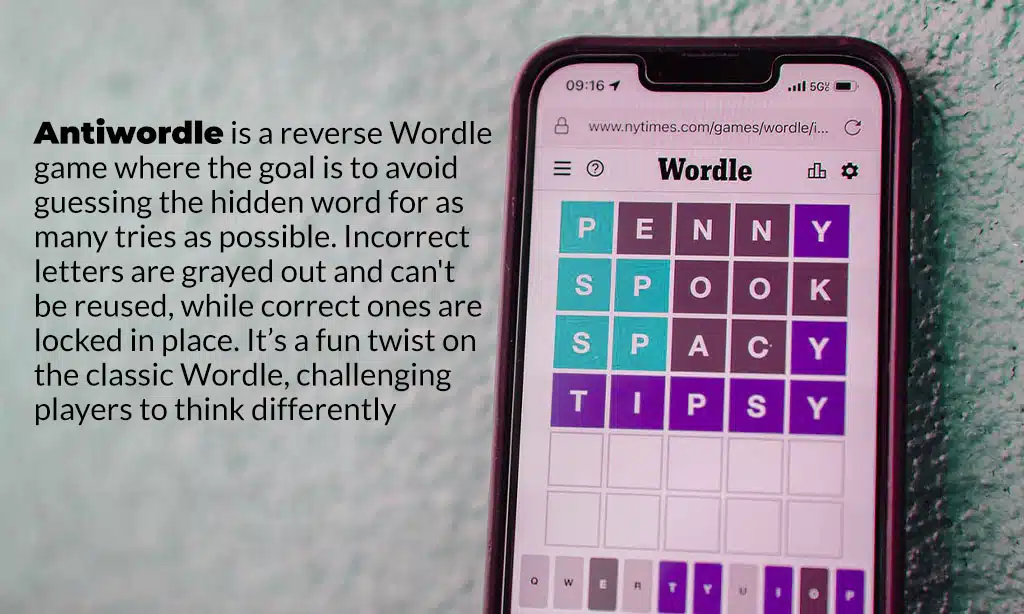
Want a challenge that flips Wordle on its head? In Antiwordle, your goal is to avoid guessing the secret word for as long as you can.
Rules and Gameplay
Each turn in the antiwordle game gives clues. Incorrect letters turn gray, meaning they can’t be used again. Yellow letters show they belong in the secret word but are in the wrong spot.
Red marks a correct letter that’s locked in position for your next guess.
Players must avoid guessing the hidden word too soon. The goal is to stretch out turns and make as many tries as possible. Input words carefully because correct red or yellow letters limit future options.
Key Differences from Wordle
Antiwordle flips the rules of Wordle. Instead of trying to guess the exact word, players aim to avoid it for as long as possible. This opposite approach increases difficulty and redefines the strategy.
Red letters stay locked in place once they appear. Yellow letters must be used again but can shift positions in subsequent guesses. Gray letters cannot be reused, limiting options further with each turn.
These twists make educated guesses harder and add a fun challenge not found in traditional word games like Wordle or even Absurdle.
Tips and Strategies to Succeed at Antiwordle
This word puzzle is tricky but fun. Use these tips to increase your chances of success:
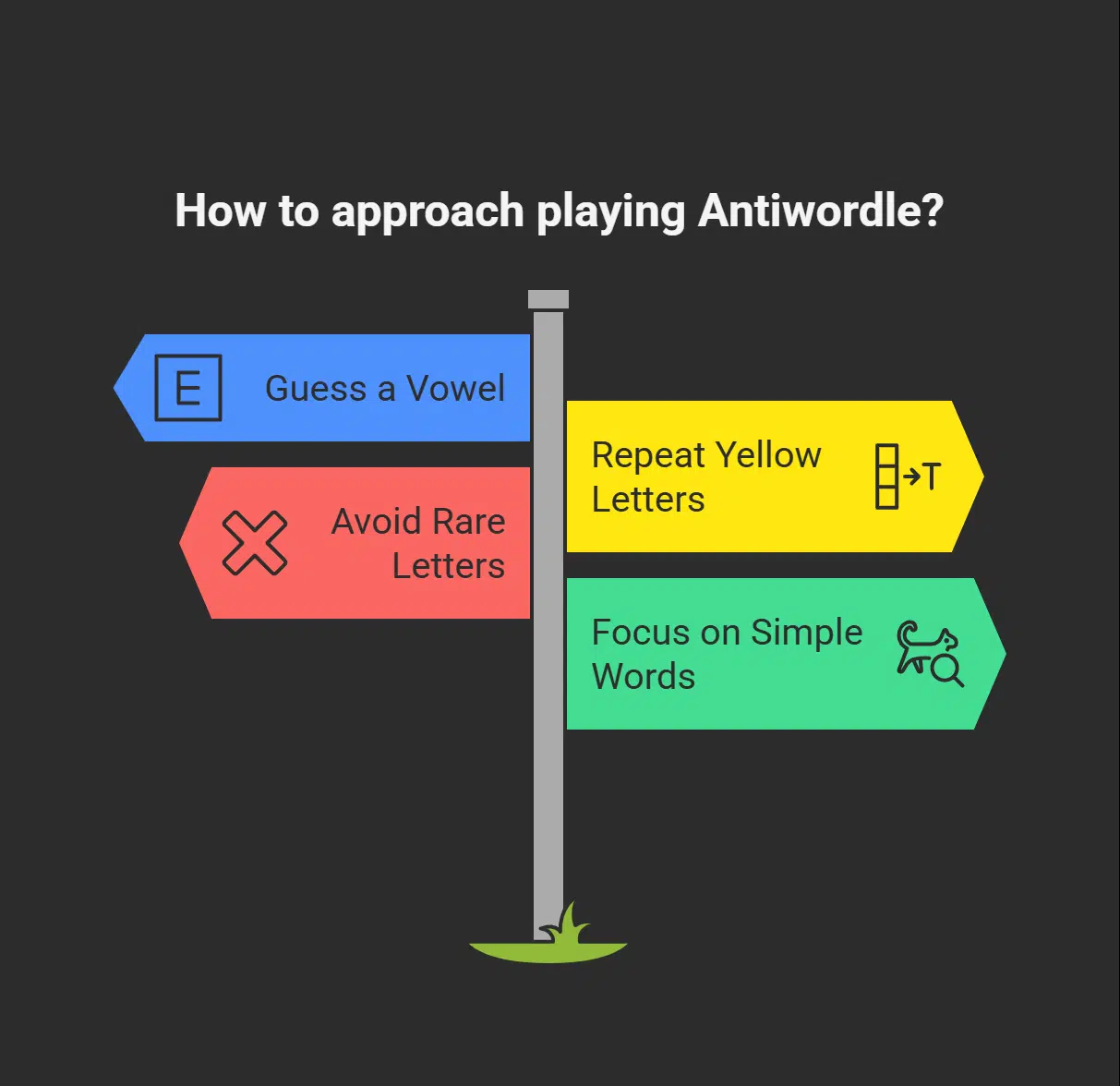
- Guess one vowel first. This keeps more options open for later guesses. For example, start with “E” since it’s common in English words.
- Repeat yellow letters in the same position. This helps find surrounding letters that match the hidden word.
- Avoid rare letters early on. Letters like “Z” or “X” limit your guesses and make it harder to succeed.
- Focus on simple words at first. English has many common patterns, so try to use those to spot possibilities.
- Exceed six guesses for a successful game! Some players, like Skwarecki, even guess up to nine times for extra challenge and fun.
- Consider if knowing the correct word actually helps you win. Sometimes guessing without overthinking works better.
- Use logic and thinking carefully after each turn red pop-up window resets your path forward!
Why Antiwordle is a Fun Challenge
Antiwordle flips the popular word game on its head. Instead of finding the word, players avoid guessing it. This twist makes each round exciting and unpredictable. The objective involves strategy, patience, and quick thinking.
Skwarecki even calls it a great way to blow off steam when frustrated with other games. Players must deny their instincts, which feels surprisingly satisfying.
The game attracts fans of brainy challenges who reject straight paths. Antiwordle has been shared 1.2 million times for good reason: people love tough puzzles! Logical reasoning shines here as players outsmart themselves to stretch every possibility.
It’s like playing chess against your own habits! Winning doesn’t happen by luck—it takes effort and focus.
Takeaways
Antiwordle flips Wordle on its head. It’s a fun, brain-twisting twist for word game fans. You’ll laugh and groan as you try to play “wrong.” Give it a shot—it might just become your new favorite challenge!
FAQs on Antiwordle
1. What is the Antiwordle game?
Antiwordle is a fun, online word-guessing game that flips the rules of the original Wordle. Instead of guessing the correct word quickly, you try to avoid it for as long as possible.
2. How does Antiwordle differ from Wordle?
Unlike Wordle, where speed and accuracy matter most, Antiwordle challenges you to delay finding the answer. It’s a mode where strategy beats luck.
3. Why has Antiwordle become so popular?
The game’s popularity comes from its fresh twist on a familiar concept and how it provides players with something different yet entertaining.
4. Can I play Antiwordle on Windows 11?
Yes, you can enjoy playing this word-guessing challenge on any device with an internet browser, including those running Windows 11.
5. Is there anything tricky about playing frequently?
If you’re hooked—don’t forget—it gets harder over time! Double-check your guesses or you’ll end up solving faster than you’d like!
























