

The modern digital media landscape requires an unprecedented balance between high production volume and strict editorial control. For digital media operations, the path to sustainable scaling is not found in automated article generators that compromise brand authority. Instead, it relies on integrating structured AI workflows for publishers directly into the traditional production line.
By offloading repetitive operational tasks to machine learning protocols, editorial teams can protect their creative energy for primary research and investigative reporting. This comprehensive blueprint outlines 11 critical AI workflows for publishers, designed to optimize their blog AI workflow, upgrade your publisher AI use, and cement a high-yield content site AI strategy.
Content Optimization via AI Workflows for Publishers
The lifecycle of a digital publication does not end at the initial publish button. High-performing content sites maximize the value of their existing libraries by deploying automated auditing pipelines.
1. Content Decay Auditing
Isolating declining URLs is the foundation of structural traffic retention. By feeding legacy article text alongside trailing twelve-month traffic data into an analytical model, editors can pinpoint exactly where a page is losing search relevance. The system automatically highlights outdated statistics, notes expired product links, and identifies shifts in user search intent.
2. Search Intent Gap Analysis
Competitive search environments require complete topical authority. Publishers can deploy models to scrape top-ranking competitor URLs and construct a detailed semantic map. The system analyzes the text to isolate the specific questions answered by competitors but ignored by your current draft, providing writers with an immediate roadmap to achieve superior information depth.
3. Historical Refresh Briefing
Instead of assigned writers spending hours reviewing legacy content for yearly updates, an automated pipeline can review past copy against current industry benchmarks. The system acts as an automated managing editor, generating a definitive punch list of dated time markers, broken structural elements, and legacy industry assumptions that require human replacement.
Editorial Integrity and Voice Standards
Scaling a network of external contributors introduces severe variance in writing quality. Programmatic guardrails keep quality standardized before a piece ever reaches the senior copy desk.
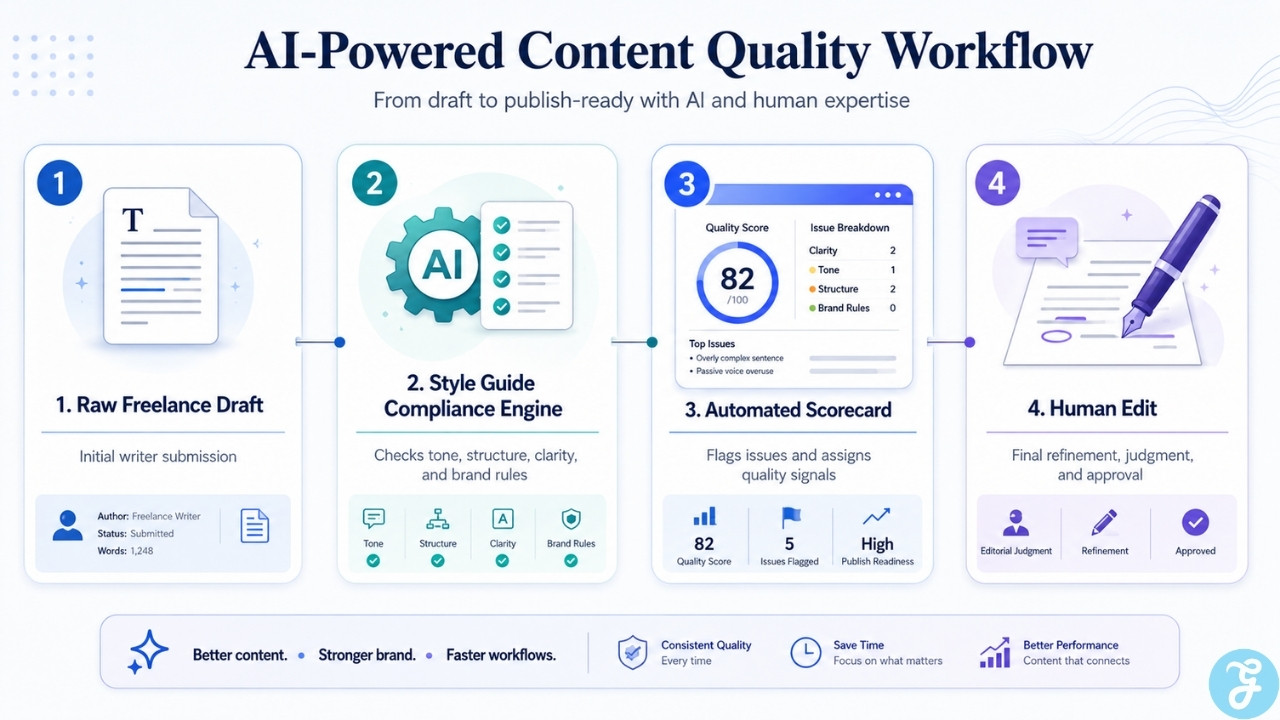
4. Structural Style Guide Compliance
By embedding your specific house style guide directly into a system prompt, you can process raw submissions through a structural compliance filter. The model analyzes the text to flag passive voice, unauthorized industry jargon, structural inconsistencies, and forbidden formatting habits. The writer receives a clear, automated scorecard showing exactly where the draft deviates from brand standards.
5. Primary Source Synthesis
Authentic journalism relies heavily on interviews, yet sorting through multi-hour audio transcripts is highly inefficient. Publishers can use synthesis models to parse raw interview text, categorize key insights by thematic relevance, and strip out verbal fillers. The output is an organized, searchable repository of direct quotes, allowing the writer to focus entirely on building the narrative arc.
6. Narrative Hook Engineering
A clinical, dry introduction causes bounce rates to spike instantly. Editors can use advanced prompt structures to analyze the factual core of a completed draft and generate three distinct introductory hooks: a metric-first revelation, an anecdotal opening, or a direct challenge to conventional wisdom. The writer selects the option that best fits the target demographic.
Technical Architecture and User Experience
A modern content site must optimize for both the human reader and the machine crawler. Integrating automated scripts into the technical backend ensures flawless indexing and superior engagement metrics.
| Workflow Area | Operational Input | Automated Machine Output |
| Technical SEO | Finalized editorial text body | Valid, error-free JSON-LD schema markup |
| User Engagement | Complex formulas or step-by-step math | Lightweight, responsive HTML/JS calculators |
| Global Scaling | English master content file | Dialect-mapped regional variations |
7. Semantic Schema Mapping
Search engine crawlers rely heavily on structured data to interpret content context accurately. Once an article is finalized, an automated script can extract key entities, primary authors, organizational references, and core FAQs to output valid JSON-LD schema markup. This replaces a highly technical, manual coding step with an instant, error-free process.
8. Interactive Element Scripting
Increasing on-page dwell time is a critical metric for digital media properties. Publishers can instruct code-generation models to analyze static text sections that explain formulas, steps, or financial equations, and instantly output lightweight HTML and JavaScript. This allows teams to embed custom on-page calculators or responsive checklists directly into the body of the text.
Multi-Channel Content Distribution
A single piece of long-form content must work across multiple distribution channels to achieve a positive return on investment. Automation allows publishers to fragment a singular asset into platform-native distribution hooks without duplicating production costs.
9. Multi-Variant Headline Generation
The system analyzes the finalized text to produce three distinct title variations: an SEO-optimized headline built for search click-through patterns, a professional variation structured for LinkedIn audiences, and a high-utility title for newsletter subscribers. All generation rounds strictly ban hyperbolic clickbait phrases.
10. Cross-Channel Snippet Repurposing
A background workflow identifies the core data points within a new post and transforms them into platform-specific micro-copy. This includes tight narrative hooks for Twitter threads and text outlines for standalone graphic slides, all calibrated to match platform-specific character constraints perfectly.
11. Localization and Dialect Mapping
Global media brands must adapt top-performing content for regional audiences without relying on literal translation tools. The workflow processes the original text to identify idioms, regional spellings, and cultural terminology, swapping generic phrasing for hyper-local language while preserving technical accuracy.
Implementing Scalable AI Workflows for Publishers
Transitioning to automated editorial workflows requires a distinct operational boundary. Automation must be deployed exclusively to handle systemic, administrative, and analytical tasks, freeing human journalists to do the hard work of primary sourcing, investigative interviewing, and original writing. By enforcing this clear separation of labor, digital media brands can scale their footprint while cementing their status as trusted, authoritative voices in their respective industries.