

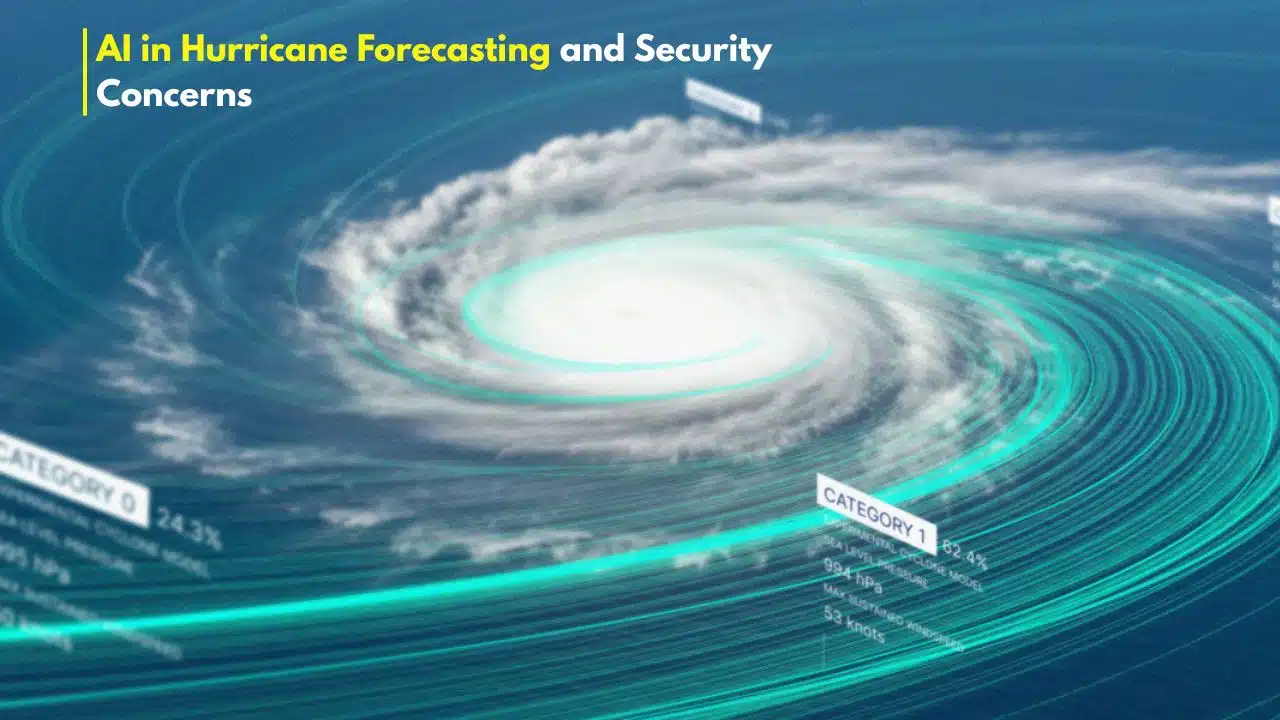
AI is revolutionizing hurricane forecasting, offering unprecedented accuracy and speed in predicting storm paths and intensities. However, this technological leap comes with new security challenges that could undermine public trust and safety. The 2025 Atlantic hurricane season showcased the dramatic impact of artificial intelligence (AI) on meteorology, but also highlighted urgent concerns about the vulnerability of these advanced systems to cyberattacks and manipulation.
The Rise of AI in Hurricane Forecasting
Artificial intelligence has rapidly become a cornerstone of modern weather prediction, especially for hurricanes. The National Hurricane Center (NHC) and other agencies have integrated AI-driven models into their forecasting workflows, significantly enhancing their ability to predict both the trajectory and intensity of storms. One of the most notable examples is the Google DeepMind model, which demonstrated remarkable accuracy in forecasting rapid intensification—a phenomenon where hurricanes escalate from relatively weak systems to catastrophic Category 5 storms in a matter of days.
AI models like DeepMind’s operate by analyzing vast amounts of historical weather data, identifying patterns that traditional physics-based models might miss. These systems can run multiple simulations with slight variations in atmospheric conditions, producing ensemble forecasts that help meteorologists gauge the reliability of predictions. The DeepMind model, for instance, allowed forecasters to confidently predict Hurricane Melissa’s rapid intensification three days before it struck Jamaica, a feat that was previously unattainable with conventional models.
How AI Improves Accuracy and Speed
The core advantage of AI in hurricane forecasting is its ability to process and analyze billions of data points from satellites, sensors, radar, and historical records at speeds far beyond human or traditional model capabilities. This enables meteorologists to generate forecasts with greater accuracy and longer lead times, which is crucial for issuing timely warnings and preparing vulnerable communities.
AI-powered models can assimilate new observational data in real time, making rapid updates to forecasts as storms evolve. This is especially valuable for predicting sudden changes in hurricane intensity, which are becoming more common due to climate change. Additionally, AI can provide hyper-localized forecasts, delivering hourly updates for specific locations and integrating local terrain and sensor data to improve resolution and accuracy. These capabilities empower businesses, governments, and emergency services to make more informed decisions and take targeted actions to minimize damage and save lives.
Security Risks and the Threat of Cyber Manipulation
Despite the clear benefits, the increasing reliance on AI for hurricane forecasting introduces new security risks. A recent study warns that AI-powered weather models could be vulnerable to cyberattacks, potentially allowing hackers to manipulate forecasts and generate false hurricane alerts. Adversarial attacks—subtle manipulations of input data—can cause AI systems to produce wildly inaccurate predictions, leading to unnecessary panic, economic disruption, or dangerous complacency.
Experts emphasize that the consequences of such attacks could be severe, especially in densely populated coastal regions. False alerts could trigger mass evacuations costing billions of dollars, while suppressed warnings could leave communities unprepared for real threats. Cybersecurity specialists like Dr. Emma Thompson of the University of Cambridge stress that improving AI accuracy alone is not enough; authorities must also strengthen cybersecurity and public education to ensure the reliability and integrity of digital storm warnings.
The Need for International Safeguards
Given the global nature of weather systems and the cross-border impact of hurricanes, international collaboration is essential to protect AI-powered forecasting infrastructure. Researchers urge meteorological agencies to implement robust safeguards, including audit trails for AI predictions, verification layers that compare AI forecasts against traditional models, and red-team simulations to test resilience against deliberate manipulation. Transparent communication protocols are also needed to mitigate the effects of false alerts and maintain public trust.
The World Meteorological Organization (WMO) reports that nearly 60% of national weather services worldwide have already integrated AI or machine learning into their forecasting workflows, making the need for international cybersecurity standards more pressing than ever. As AI-powered climate infrastructure expands, particularly in regions with weaker cybersecurity standards, coordinated efforts are vital to prevent malicious interference and ensure that these powerful tools remain reliable, accurate, and secure.
The Future of Hurricane Forecasting
The future of hurricane forecasting is undoubtedly intertwined with the continued advancement of AI. Experts predict that AI models will become even more sophisticated, offering longer lead times, higher resolution, and greater customization for local conditions. However, the meteorological community must remain vigilant about the potential for misuse and manipulation.
John Cangialosi, a senior hurricane specialist at the NHC, notes that while AI is transforming hurricane forecasting, it is not set to replace physics-based models or displace human forecasters. Instead, AI will serve as a powerful complement to traditional methods, enhancing the overall accuracy and reliability of predictions. As Wallace Hogsett, science officer at the NHC, observes, forecasters are growing more comfortable relying on AI-driven models, but they remain cautious about the opacity of these systems and the need for rigorous validation.
Balancing Innovation and Security
The integration of AI into hurricane forecasting represents a major leap forward in our ability to predict and prepare for extreme weather events. However, this innovation must be balanced with robust security measures to protect against cyber threats and maintain public trust. Authorities, researchers, and international organizations must work together to develop and implement comprehensive safeguards, ensuring that AI-powered forecasting remains a reliable tool for safeguarding lives and livelihoods.
As the world faces increasingly frequent and intense hurricanes due to climate change, the role of AI in meteorology will only grow in importance. By addressing both the opportunities and challenges, the global community can harness the power of AI to build more resilient societies and better protect vulnerable populations from the devastating impacts of hurricanes.
























