A supplier sends a sample pouch and a two-word description: “recycled canvas.” You’re writing an eco product page, and those two words look ready for the headline. Then you unzip the pouch. There’s a cream lining, a metal zipper and a backing on the navy fabric. Which part did the supplier mean? And how much of it is recycled?
The answer changes what a shopper thinks they’re buying. Someone comparing two pouches may reasonably read “50% recycled” as a statement about everything on the scale. The mill may have measured only the polyester in the outer fabric. The seven checks below take a fictional pouch from that first supplier note to a materials description a customer can actually use.
1. Match the material to the component and colorway
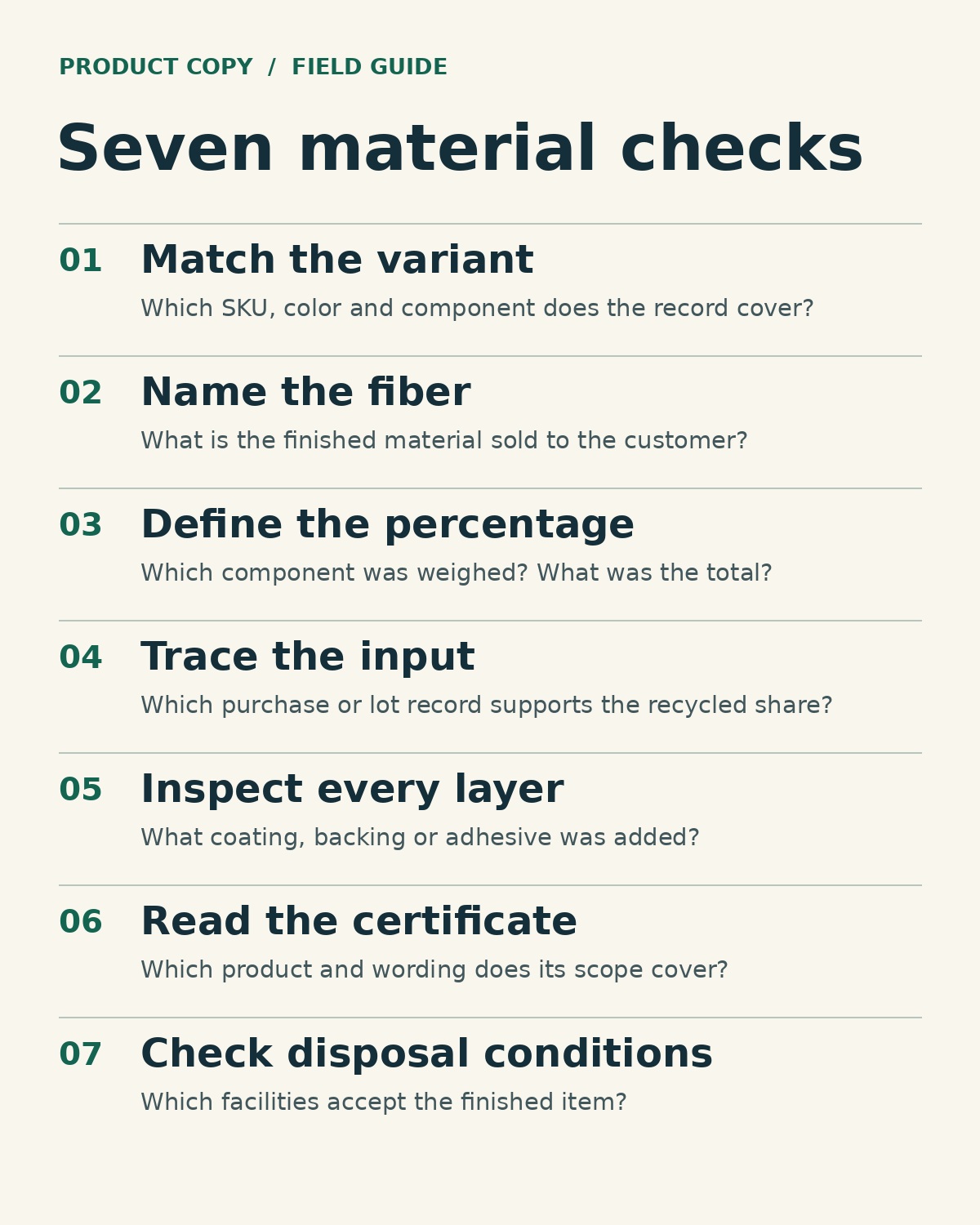
Start with the item a buyer can select. Look up the navy pouch’s stock-keeping unit (SKU) and match it to the current bill of materials, the list of parts used to make that version. Find the outer fabric, lining, zipper and backing. Keep the paper sleeve on a separate packaging line so a fact about the wrapper doesn’t migrate into the product description.
Now switch colors on the product page. Does the printed pouch use the same fabric as the navy one? If the supplier’s document covers only navy, place the detail in the navy variant’s materials field. On a page with a single description shared across colors, write “The navy version has a cotton lining” if that is all the records establish. That small change lets the shopper know exactly which choice the sentence describes.
2. Identify the finished material behind the trade name
Canvas tells you something about the construction of the cloth. It leaves open whether the mill used cotton, polyester or a blend. Ask for the fiber breakdown tied to the fabric code on the order. If the shell is a cotton-polyester blend and the lining is cotton, a shopper should be able to find both facts without guessing which part touches the contents.
Plant names deserve particular care. The U.S. Federal Trade Commission explains that when bamboo supplies the raw material for rayon, sellers can describe the resulting fiber as “rayon made from bamboo.” Calling it simply “bamboo” loses the distinction between the plant and the finished textile. The same question is worth asking whenever a supplier leads with a raw ingredient: What material will the buyer actually hold? FTC guidance on bamboo textiles

3. Find the weight behind the percentage
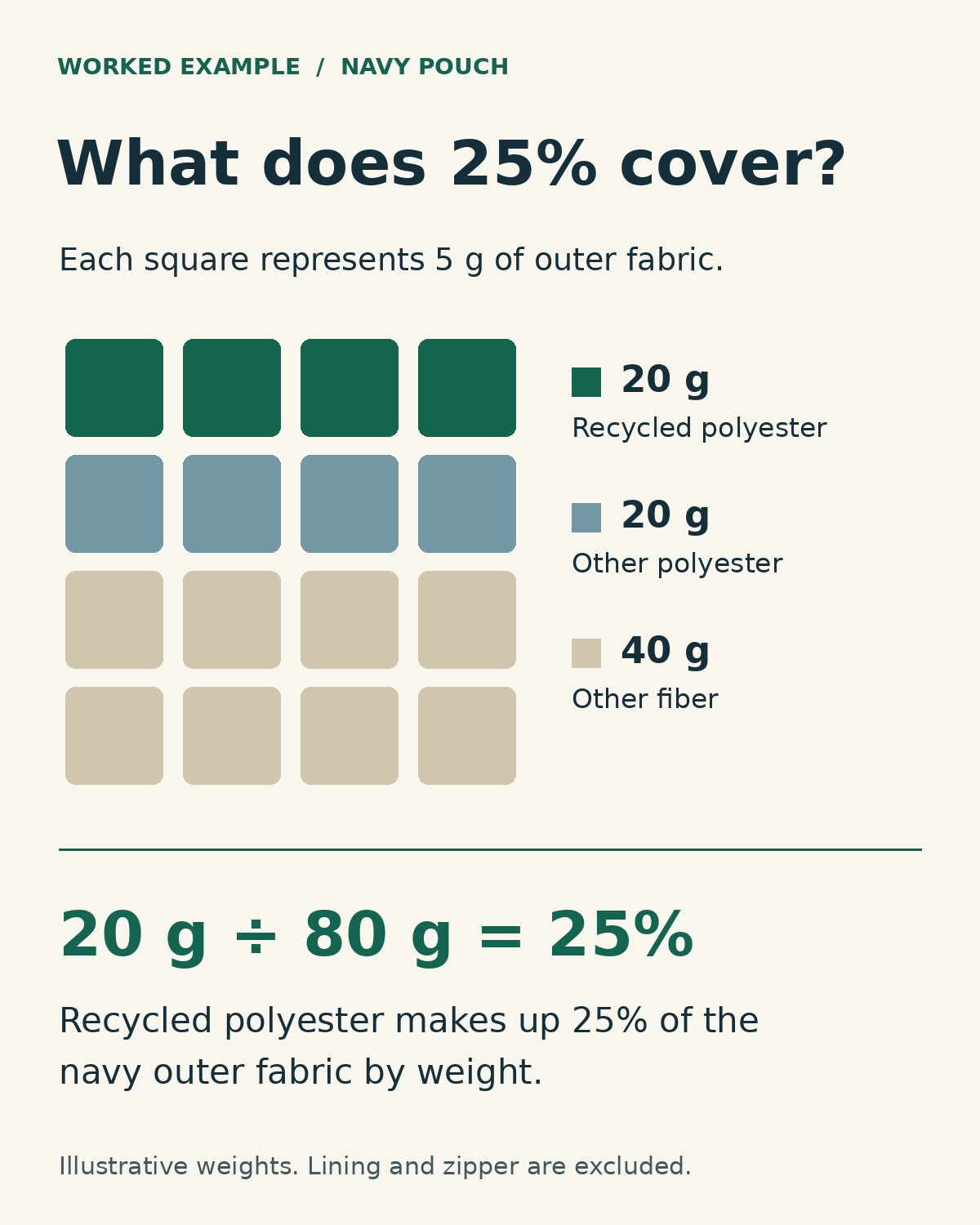
Suppose the navy pouch’s outer fabric weighs 80 grams. Its specification lists 40 grams of polyester, and the supplier confirms that half of that polyester is recycled. The arithmetic takes two steps:
| What you want to know | Calculation | Result |
|---|---|---|
| How much recycled polyester is in the outer fabric? | Half of 40 g | 20 g |
| What share of the outer fabric does that represent? | 20 g divided by 80 g | 25% by weight |
The sentence those fictional records support is “Recycled polyester makes up 25% of the navy outer fabric by weight.” Both “50%” and “25%” are mathematically correct, but they answer different questions. Neither figure establishes the recycled share of the complete pouch. To calculate that, you would need the total finished weight and records for any other recycled inputs you count.
Keep the original weights with the approved copy. When a supplier changes the lining or adds a pocket, the next editor can see immediately which calculation needs to be revisited. For another worked example, see Editorialge’s guide to writing verifiable product material descriptions.
4. Trace the recycled input to the fabric you purchased
A fiber specification can identify polyester. The next question is how the supplier knows that any of it was recycled. Ask for a declaration or traceability record that identifies the relevant fabric lot, then match that lot to the order used for the navy pouches. A supplier that offers both conventional and recycled versions of one fabric may use nearly identical sales descriptions for them.
Read the document as closely as you read the proposed copy. Does it identify post-consumer material? Does it actually name discarded bottles as the source? If it supports only a recycled share, you can still give the buyer the percentage you verified. Leave the bottle illustration out of the gallery until a record supports that part of the story, too.
5. Account for the layers a shopper can’t see
Open the paper sleeve along a seam. The outside may feel like ordinary kraft paper while the inside has a smooth film. A mill’s specification for the paper stock can be entirely accurate and still tell you little about the finished sleeve. Ask the company that printed, laminated and glued it for the full construction.
The same issue comes up with coated canvas. A backing can sit between the outer cloth and lining, hidden even when the pouch is open. Record the coating or backing separately and check whether its weight was included in the fabric figure you used. If all you can establish about the packaging is that it uses paper and a film laminate, “ships in a laminated paper sleeve” gives buyers a concrete detail. A “plastic-free packaging” badge would require evidence covering the whole packaging claim.
6. Check what the certificate allows you to say
When a supplier emails a certificate, look for the holder, the named facility, the materials or products covered, and the dates. Then look for the record connecting that scope to your purchase. A mill may hold a valid certificate while selling several grades of cloth. The mill’s name on your invoice answers who sold the fabric. It can take a fabric code or an order-specific document to establish which material you bought.
Before adding a seal beside the price, check the certification scheme’s rules for the proposed wording and logo. Placement matters. A badge beside a photograph of the complete pouch can imply that the certification covers the lining and zipper as well. If the verified claim covers only the outer fabric, put the authorized wording beside that component in the materials panel, where the shopper can see its scope.
7. Verify the disposal instructions for the finished item
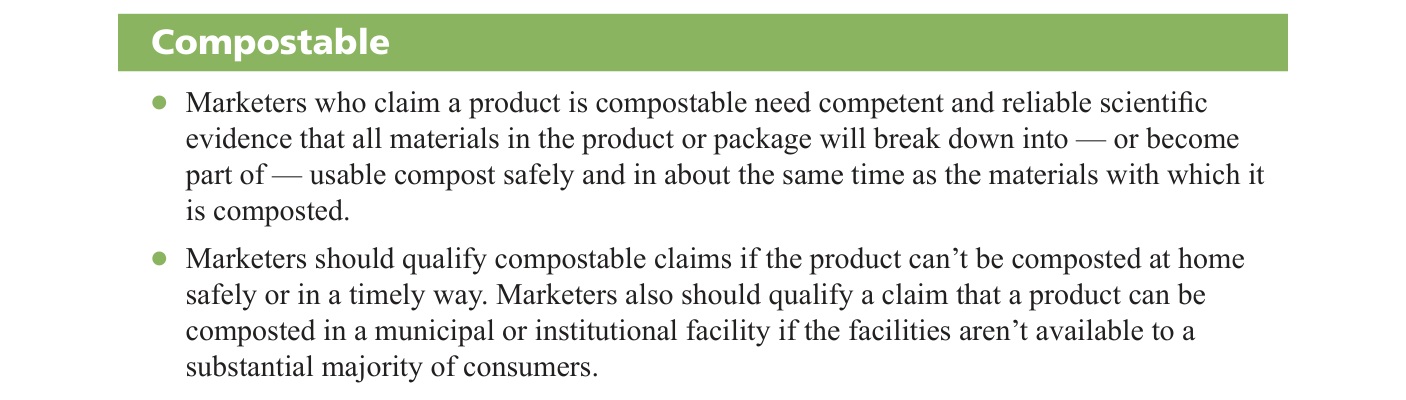
Imagine a buyer holding the empty sleeve over a kitchen compost bin. What on the page tells them whether it belongs there? A compostability report for unprinted paper leaves open what happens to the sleeve’s film, ink and glue. Ask which finished construction was assessed, under what conditions, and whether buyers in the intended market have access to a facility that accepts it.
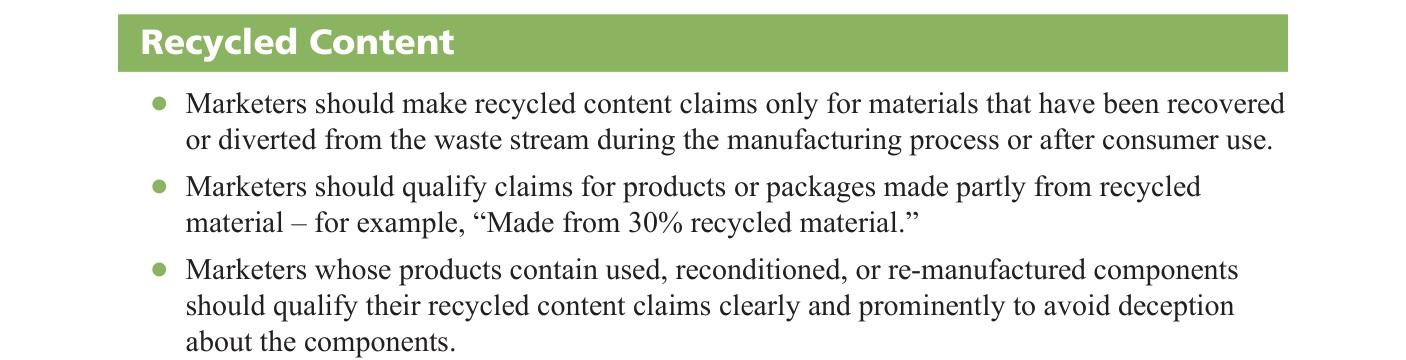
A commercial-composting result gives you no basis for directing someone to a backyard pile. Even a nearby commercial facility may have an acceptance list that excludes the sleeve. Put any verified restriction beside the instruction, where a buyer making that decision will see it. If the disposal route remains unresolved, describe the sleeve’s construction and hold the composting claim. The FTC summarizes the evidence and qualifications relevant to U.S. environmental marketing in its Green Guides overview.
What belongs on the finished eco product page?
For the fictional navy pouch, suppose the records confirm the shell calculation, cotton lining and laminated sleeve. The materials panel can be three lines long:
Navy outer fabric: Recycled polyester makes up 25% of the outer fabric by weight.
Lining: Cotton.
Packaging: Ships in a laminated paper sleeve.
Give the shortest version of the eco product page one last read. On a mobile card, “25% recycled” saves a few words but drops the part that makes the number meaningful. If the full sentence won’t fit, use “Cotton-lined navy pouch” on the card and keep the percentage in the materials panel. The shopper gets a useful fact in both places, and each sentence says exactly what the records support.