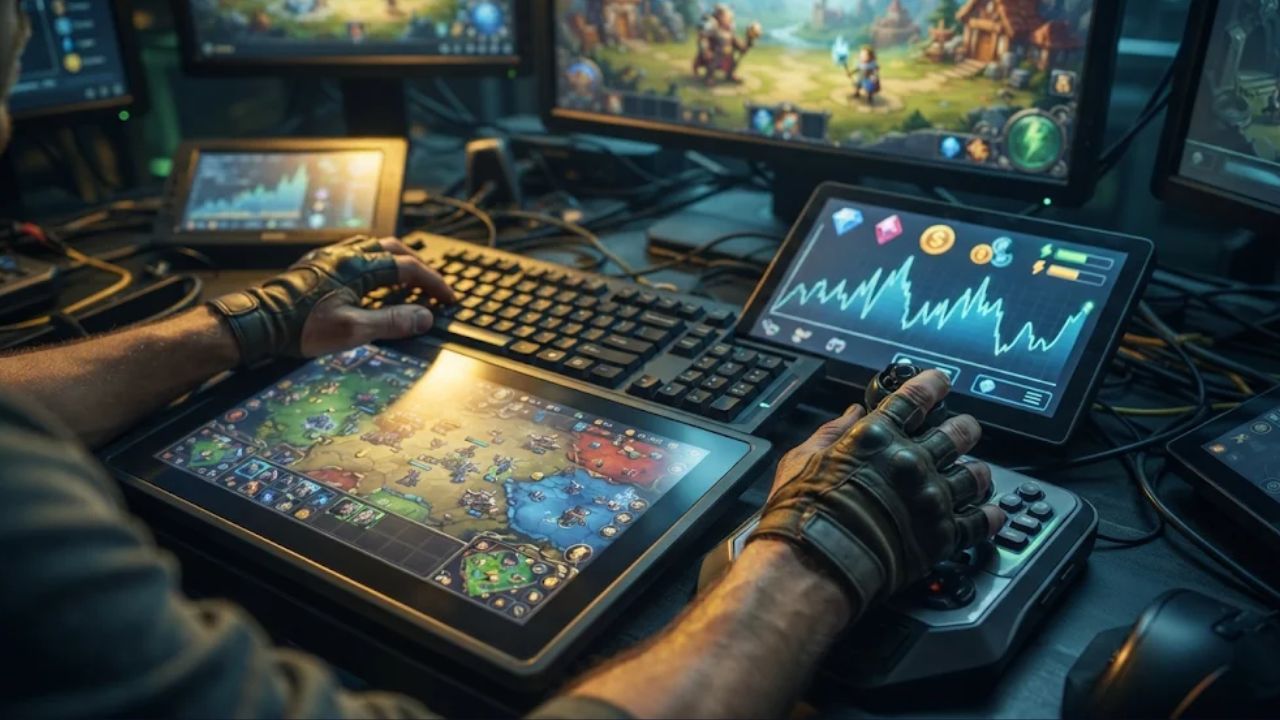
Play-to-earn games reward eligible activities such as winning ranked matches, completing quests, or reaching a leaderboard cutoff. Some rewards can be claimed as crypto tokens or sold as digital items. Others can only be spent in the game.
To understand how play-to-earn gaming works, follow a reward all the way from the match to the point where someone will buy it. Eligibility, fees, and demand can each change what you take home.
Start with a question the game’s trailer may leave unanswered. What does a new player receive in the mode they can actually enter? A free starter character might get you into the arena, while a seasonal prize pool might be open only to players who meet separate requirements. Check both before buying anything.
How Play-to-Earn Gaming Works From Match to Wallet
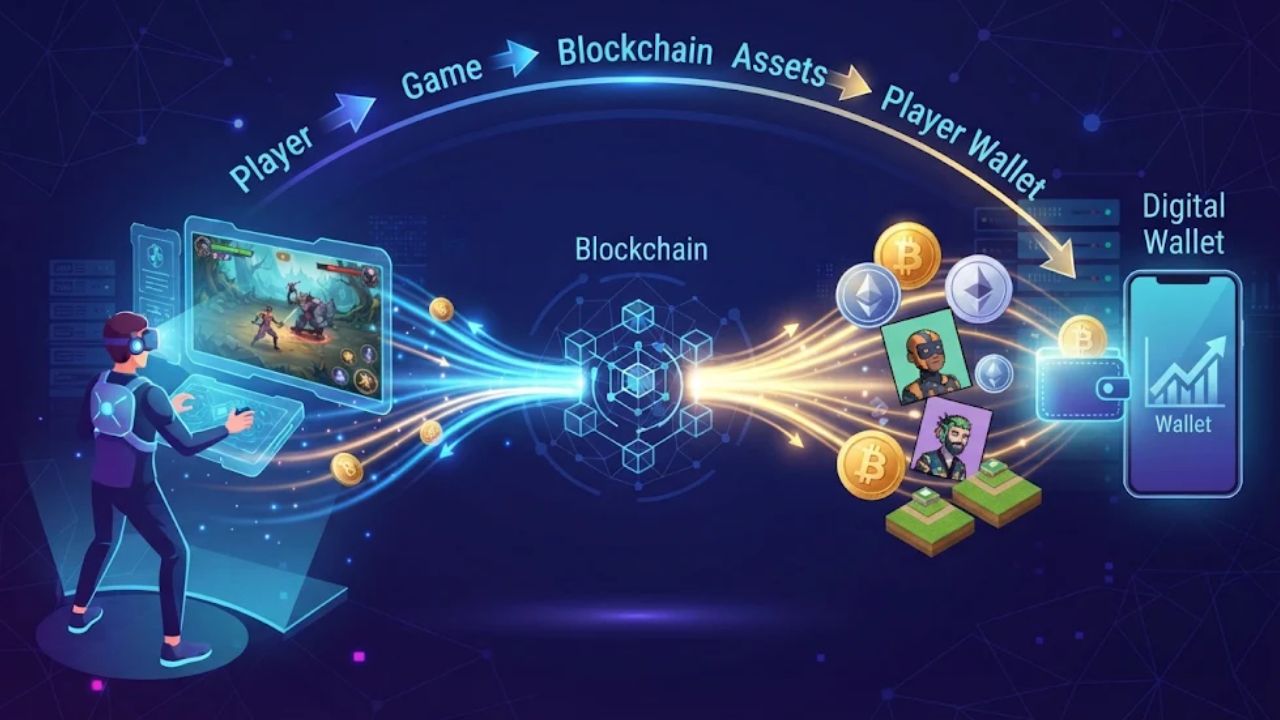
A game’s rules determine which actions earn rewards. One game might credit tokens for wins in a ranked mode. Another might give players materials they can use to craft and sell items. The first rewards an eligible result. The second generates proceeds only if a sale goes through. Both models can appear under the same play-to-earn label.
Look for the exact reward name in the rules for your mode and season. A number on the results screen could represent points, an amount waiting to be claimed, or a token already held in your wallet. If prizes depend on rank, check when the standings become final. A midseason position gives you a sense of where you stand, while the final standings determine who qualifies under the game’s rules.
| What you receive | What you may be able to do with it | What to check first |
| In-game points or credits | Spend them on upgrades, crafting, or other in-game features | Whether the rules allow any transfer or redemption |
| Transferable crypto tokens | Move them to a compatible wallet and sell them through a supported service | Claim conditions, minimums, fees, and whether buyers are available |
| Tradable NFTs | Use the associated item in supported games or list it for sale | Transfer permissions, completed sales, and the terms attached to the item |
An NFT, or non-fungible token, is a distinct blockchain record. In a game, it might represent a character, skin, or piece of equipment. The game determines what that item can do, and another game would need to support it to make it usable there.
Axie Infinity Shows Why the Game Mode Matters
Sky Mavis offers free starter Axies in Axie Infinity: Origins. These starter characters are regular in-game assets, so you can build a team and learn the battle system without buying NFT characters. Sky Mavis also says Origins stopped issuing Smooth Love Potion (SLP) as a reward on January 7, 2026. Players could still deposit SLP for some in-game uses after the change. An older guide about earning SLP in Origins can therefore describe a reward that the mode has since removed.
The same franchise can handle withdrawals differently across modes. Sky Mavis’s game-portal documentation describes eligible tokens earned in Axie Classic going through a withdrawal review before becoming claimable. That is one example of a delay between earning a reward and receiving it in a wallet. Check the current rules for the specific reward before assigning it a cash value.
What Has to Happen Before You Can Cash Out?
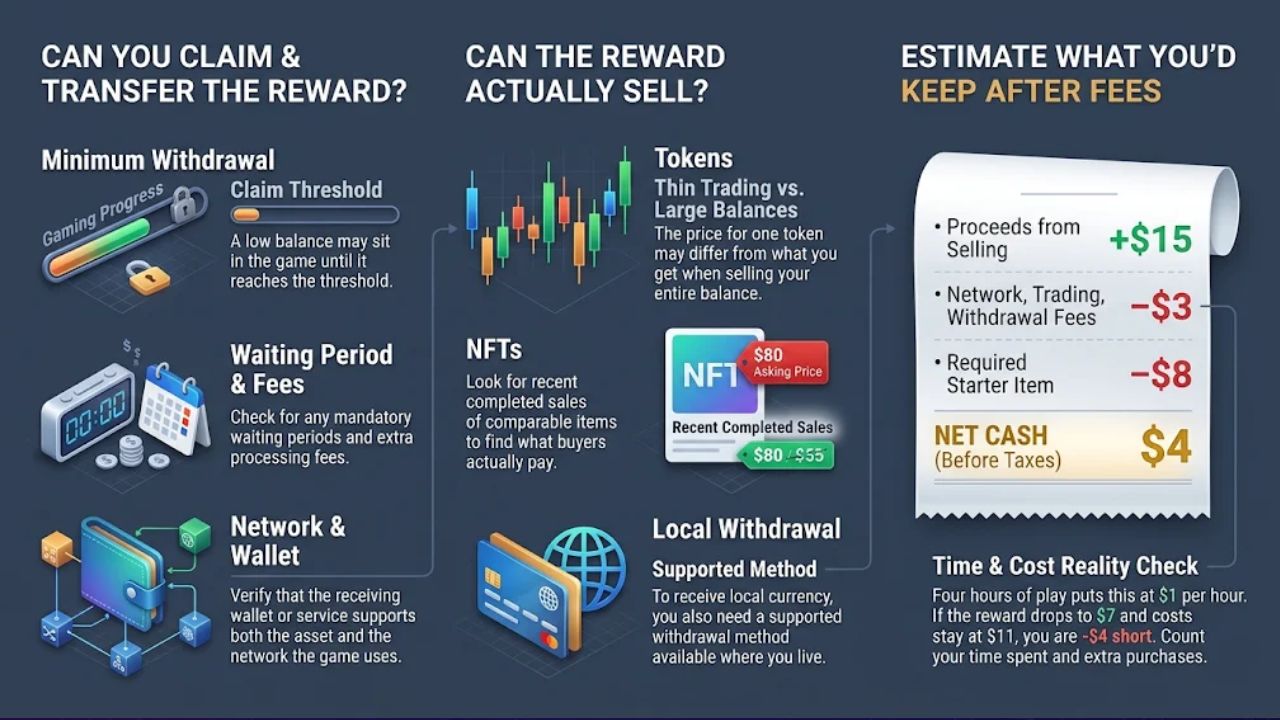
Find out whether the game lets you claim the reward and where it can go. Check for a minimum withdrawal, a waiting period, and fees. A low balance may sit in the game until it reaches the claim threshold. For a crypto transfer, verify that the receiving wallet or service supports both the asset and the network the game uses.
Then see whether the reward can actually be sold. For a token, check how much a supported market would pay for the amount you plan to sell. The price displayed for one token may differ from the price you can get for your whole balance when trading is thin. For an NFT, look for recent completed sales of comparable items. An item listed at $80 gives you an asking price. A recent sale gives you evidence of what a buyer paid. To receive local currency, you also need a supported withdrawal method available where you live.
A blockchain explorer can confirm that a transfer recorded on a public network reached a particular address. You still need the marketplace or exchange to see what the asset can sell for.
Estimate What You Would Keep After Fees
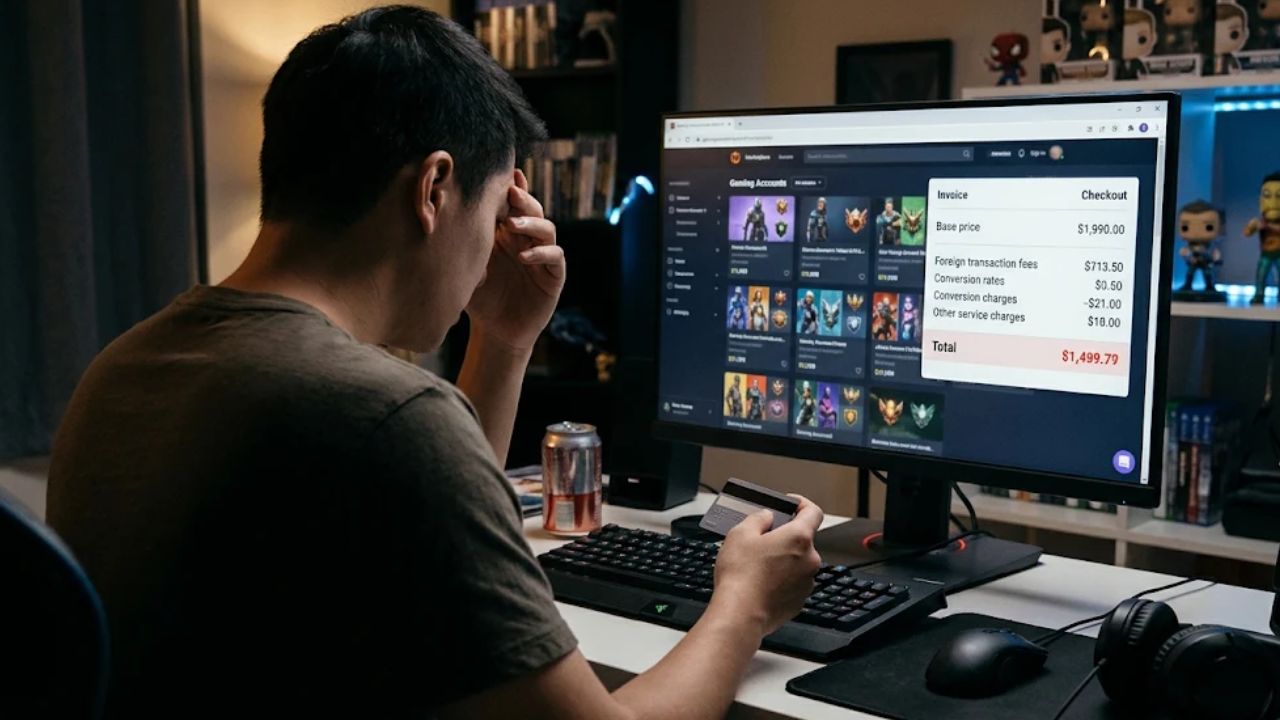
Use the amount you could sell for and subtract every cost you would incur to get there. This hypothetical example uses US dollars and assumes the entire eligible reward sells.
| Item | Amount |
| Proceeds from selling the reward | $15 |
| Network, trading, and withdrawal fees combined | −$3 |
| Required starter item | −$8 |
| Net cash before any applicable taxes | $4 |
Four hours of play would put that example at $1 per hour before taxes. If the same reward sells for $7 and costs stay at $11, the same four hours leave you $4 short. The example assumes you keep the starter item and receive no resale proceeds from it. Your own estimate should include time spent meeting eligibility requirements and any extra purchases needed to keep playing the eligible mode.
What to Check Before You Spend Money
Play the free mode if the game offers one. See whether you enjoy the matches, progression, or crafting on their own. Then check whether the paid or ranked mode changes the rules for earning. A game may let you try a starter character for free while requiring different assets for particular events.
Read the current season rules and the last reward update. Check what generates rewards, how many players qualify, and when the rules were last revised. Also ask what players use the reward for. If there are few people buying a token or item for use in the game, a wave of sellers may have trouble finding buyers. Independent research on Axie Infinity documents how falling reward values and changes to the game’s economy affected the time players put into it.
Set a spending limit that still makes sense if your rewards never sell. Include any purchase needed to qualify, plus recurring fees. If you want to buy an NFT because you like the character, weigh the purchase as you would another game add-on. Count potential resale proceeds only after a sale.
Check who is asking you to connect a wallet. Find the game on the publisher’s official site and read every wallet permission before approving it. The FBI has documented fake games that display growing rewards, then drain wallets and demand extra fees to unlock the supposed earnings. If you decide to connect a wallet, the FBI recommends using a separate gaming wallet to keep your main holdings isolated.
Decide What Makes the Game Worth Your Time
Once you understand how play-to-earn gaming works, decide what you’d pay for the game if the token price fell or the reward season ended. If the free mode is enjoyable, you can keep playing while you follow the rules for the activities that interest you. If the purchase only makes sense because you expect to cash out, check for recent completed sales and total fees first. If you can’t verify either, leave the expected payout out of your budget.
Final Thoughts
Once you understand how play-to-earn gaming works, decide how much time and money the game is worth to you if the rewards never sell. Try the free mode if one is available. Before paying to enter a reward mode, check which rewards you qualify for, whether buyers are active, and how much you could keep after fees.
Frequently Asked Questions About Play-to-Earn Gaming
What is play-to-earn gaming?
Play-to-earn gaming lets players earn rewards through eligible activities such as completing quests or winning matches. Depending on the game, rewards may include in-game credits, crypto tokens, or tradable NFTs.
Can you really make money from play-to-earn games?
Some players can sell eligible rewards for money. Whether you make a profit depends on the sale price, entry costs, and transaction fees.
Do you need to buy NFTs to start a play-to-earn game?
It depends on the game and mode. Some games offer free starter characters, while specific reward modes may require an eligible NFT or other paid asset.
How do you cash out rewards from play-to-earn games?
If the reward is transferable, you can sell it through a compatible exchange or marketplace. Check for buyers, withdrawal minimums, and a cash-out method available in your region.
What are the biggest risks of play-to-earn games?
Reward prices can fall, rules can change, and fees can exceed what you earn. Fake gaming apps can also display false rewards to lure players into connecting a wallet.