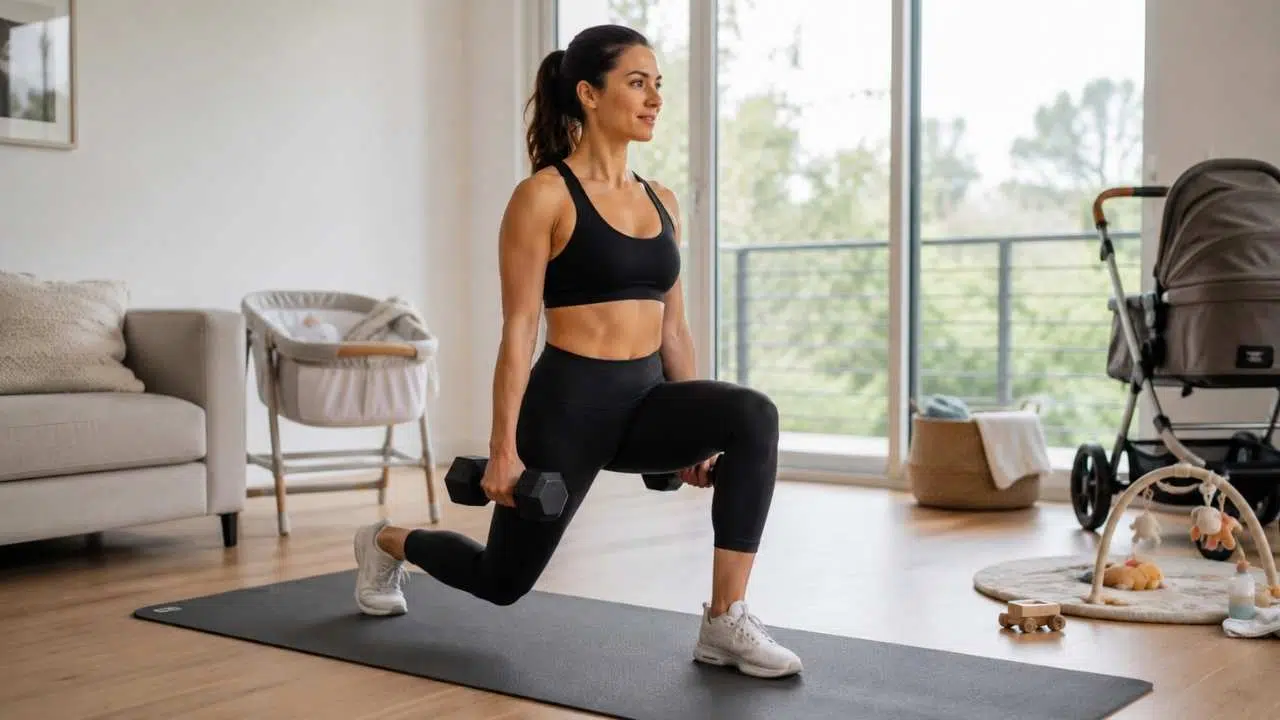
Before pregnancy, fitness fit easily into my identity. I lifted several times a week, cooked regularly, and knew what my body could do.
After having my baby, almost every part of that routine changed. Sleep came in fragments, meals happened whenever I had two free hands, and exercise required planning around recovery, feeding, childcare, and pure exhaustion.
I wanted to regain my previously fit body. I also knew that pregnancy and birth had asked a great deal of me. My plan to maintain muscle, lose fat needed to respect the body I had now.
First, I Stopped Using My Old Routine as the Starting Line
My first mistake was mentally returning to my pre-pregnancy workouts. I remembered the weights I used, the pace I could hold, and the amount of exercise I could fit into a normal week.
My postpartum body needed a gradual return.
The American College of Obstetricians and Gynecologists (ACOG) recommends at least 150 minutes of moderate-intensity aerobic activity per week after pregnancy. Those minutes can be divided into shorter sessions, including 10-minute walks.
That flexibility mattered. Thirty uninterrupted minutes often felt unrealistic. Three short walks fit between the unpredictable parts of the day.
Before adding demanding exercise, I also needed appropriate medical clearance and attention to pelvic-floor symptoms, abdominal control, pain, bleeding, and incision healing. Recovery timelines vary, especially after complications or cesarean delivery.
Then, I Rebuilt Strength in Layers
My early strength work looked simple: breathing drills, gentle core engagement, sit-to-stands, supported split squats, rows, glute bridges, and light carries. The sessions were brief, yet they gave me something important. I could feel my body becoming coordinated again.
ACOG provides examples of postpartum exercises that can be performed at home and recommends a gradual return to activity.
Over time, I added resistance. Bands became dumbbells. Bodyweight squats became goblet squats. Short sessions became more complete workouts when sleep and childcare allowed.
A study of 60 postpartum women compared twice-weekly resistance training with flexibility training over 18 weeks. The study looked at body composition, strength, and mental well-being, and its findings support the use of structured resistance training after pregnancy.
My own goal stayed modest: two strength sessions most weeks, with room for a third when recovery was good.
I Simplified Food Instead of Dieting Aggressively
I had no interest in measuring every crumb while caring for an infant. I created a meal formula that reduced decision-making:
Protein + produce + a satisfying carbohydrate + some fat
Breakfast might be eggs, fruit, and toast. Lunch could be a turkey sandwich with vegetables and yogurt. Dinner might include salmon, potatoes, and a bagged salad.
Protein helped support muscle repair and made meals more filling. Carbohydrates supported training and daily energy. Fruits, vegetables, beans, and whole grains supplied fiber and micronutrients.
Breastfeeding can also affect hunger, hydration, and energy needs. I avoided aggressive calorie restriction and discussed nutrition questions with my healthcare professional. Milk supply, recovery, and health deserved consideration alongside fat loss.
I Expanded the Definition of Progress
A bathroom scale cannot show whether weight changes come from fat, muscle, water, or other lean tissue. Strength, measurements, photos, clothing fit, and body composition testing can provide a more complete picture of progress. This broader perspective is especially helpful postpartum. Hormonal changes, sleep loss, breastfeeding, fluid shifts, and an irregular schedule can all make body weight unpredictable.
Instead of worrying about the scale, I began noticing other wins. I could carry the car seat with less effort. My back felt stronger during feedings. My jeans fit differently. I could complete a workout and still function afterward.
A 2025 systematic review concluded that postpartum physical activity can improve body measurements and reduce postpartum weight retention.
Those results supported the approach I was learning to trust: move consistently, rebuild strength, eat enough to recover, and allow body composition to change over time.
My Fit Body Looks Different Now
I still want to feel athletic again. That desire hasn’t disappeared, and I don’t think it needs an apology.
But fitness after pregnancy has a wider meaning for me. It includes strength, energy, pelvic-floor function, recovery, confidence, and the ability to care for my child without feeling physically depleted.
To maintain muscle and lose fat after pregnancy, I needed patience with a purpose. I stopped chasing my old routine and began building a new one — one walk, one meal, and one strong repetition at a time.