


Plant-based eating can support serious training, but it starts to fall apart when athletes only remove animal foods and never replace what those foods used to provide.
That is where many problems begin. The athlete may still be eating “healthy” meals, but the meals are too small, too low in protein, too high in fiber before hard sessions, or missing nutrients that need regular attention. A vegan or mostly plant-based diet can fit endurance training, strength work, team sports, and everyday fitness. It just needs to be built for the work the body is doing.
Plant-Based Diets for Athletes are not automatically better or worse than omnivorous diets. They succeed when they cover the basics: enough calories, enough carbohydrate, enough protein, enough fat, smart recovery meals, and a plan for nutrients such as vitamin B12, iron, zinc, calcium, iodine, vitamin D, and omega-3 fats.
The useful question is not, “Can athletes perform without animal products?” They can. The better question is, “Is the diet planned well enough to support training week after week?”
Start With Enough Food
A strong plant-based sports diet has to do the same jobs as any other athletic diet. It must fuel training, support recovery, protect health, and fit the athlete’s real schedule.
The plant-based part changes the food choices. It does not change the body’s training demands.
A distance runner still needs carbohydrate. A strength athlete still needs enough total energy and protein to gain or maintain muscle. A footballer training twice a day still needs convenient meals and snacks between sessions. A recreational lifter trying to lose body fat still needs enough recovery nutrition to avoid dragging through every workout.
The first mistake is assuming plant-based meals are automatically performance meals. A bowl with rice, lentils, tofu, vegetables, and olive oil can be excellent. A small salad after a long session is not a recovery meal, even if every ingredient looks healthy.
Under-Eating Is Easy on a High-Fiber Diet
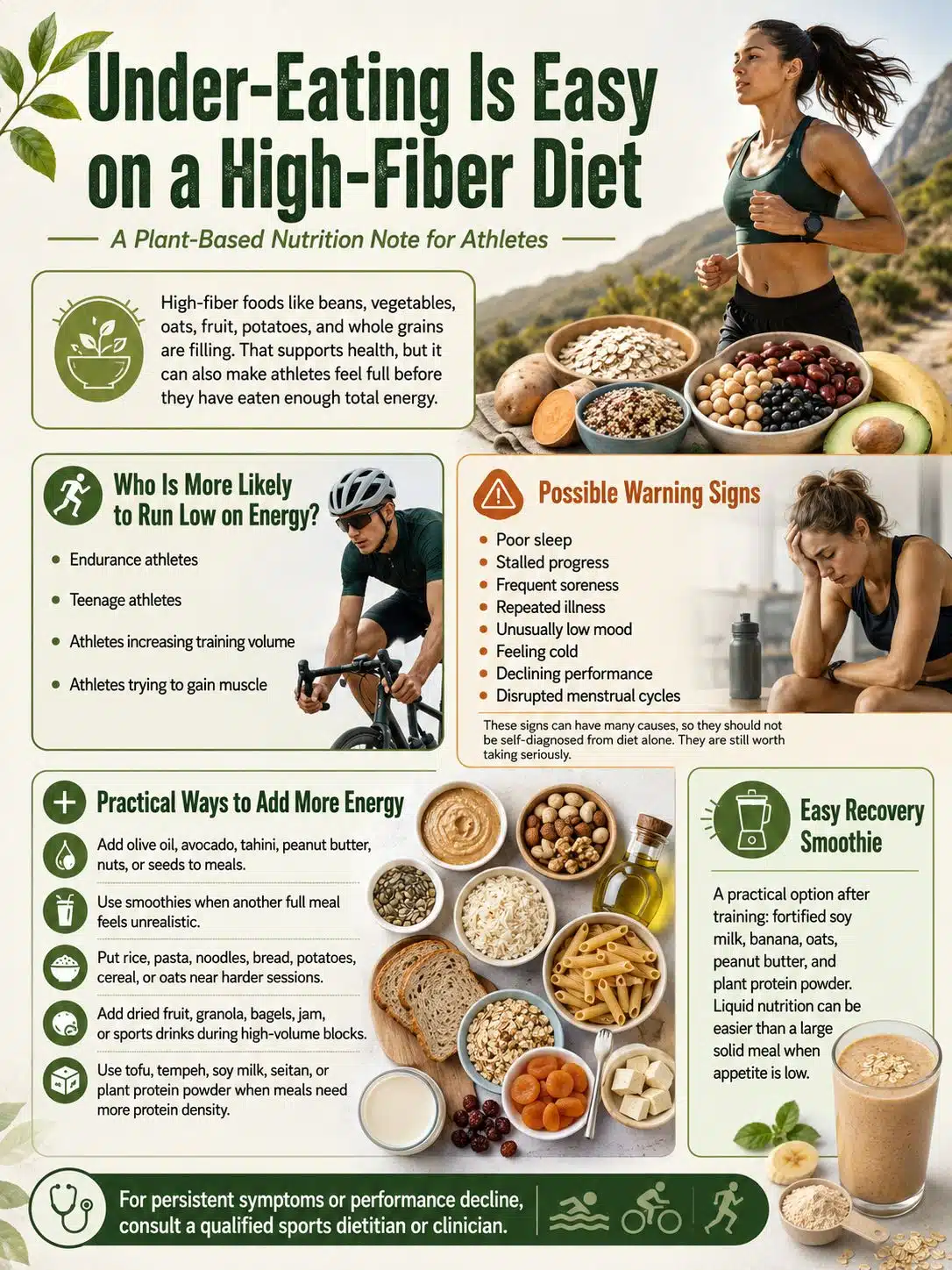
Many athletes worry about protein first. Protein matters, but total energy often becomes the earlier problem.
Beans, vegetables, oats, fruit, potatoes, and whole grains are filling. That can be useful for general health and appetite control. It can also make athletes feel full before they have eaten enough. This is especially common in endurance athletes, teenage athletes, athletes increasing training volume, and anyone trying to gain muscle.
Possible signs of low energy intake include poor sleep, stalled progress, frequent soreness, repeated illness, unusually low mood, feeling cold, declining performance, or disrupted menstrual cycles. These symptoms can have many causes, so they should not be self-diagnosed from diet alone. They are still worth taking seriously.
A few practical ways to add energy without turning every meal into a huge plate:
- Add olive oil, avocado, tahini, peanut butter, nuts, or seeds to meals.
- Use smoothies when chewing another full meal feels unrealistic.
- Put rice, pasta, noodles, bread, potatoes, cereal, or oats near harder sessions.
- Add dried fruit, granola, bagels, jam, or sports drinks during high-volume blocks.
- Use tofu, tempeh, soy milk, seitan, or plant protein powder when meals need more protein density.
For athletes with low appetite after training, liquid nutrition can be useful. A smoothie made with fortified soy milk, banana, oats, peanut butter, and plant protein powder is often easier than a large bowl of beans and grains.
Carbohydrates Are Usually a Strength, Not a Weakness
Plant-based diets usually make carbohydrates easy to find. Rice, oats, potatoes, pasta, bread, fruit, lentils, beans, and whole grains can all support training.
The detail that matters is timing.
A bean-heavy chili may be a good dinner. It may be a poor choice 45 minutes before intervals. A sports drink may not look like a “whole food,” but during a long ride, tournament, or hard run, it can be the practical option.
Sports nutrition guidance commonly scales carbohydrate intake to body weight and training load. Athletes doing moderate daily training often need less than athletes doing long, intense, or repeated sessions. Many moderate training days may sit around 5–7 grams of carbohydrate per kilogram of body weight, while heavier endurance blocks or long team-sport days can require more.
A simple way to apply this:
| Training Situation | Better Carbohydrate Choices | Practical Note |
|---|---|---|
| Normal training day | Oats, rice, potatoes, whole-grain bread, lentils, beans, fruit | Keep fiber and variety high when digestion is not under pressure. |
| Before hard training | Banana, toast, rice, cereal, bagel, dates, sports drink | Lower-fiber options usually sit better. |
| During long sessions | Sports drink, gels, chews, bananas, dates, jam sandwich | Useful when the session is long enough to drain fuel. |
| After hard sessions | Rice bowl, pasta, potatoes, smoothie, cereal with soy milk | Pair carbs with protein for recovery. |
Some athletes underfuel because they want every carbohydrate source to be minimally processed. That can work on easy days. It can backfire during competition, long sessions, or two-a-day training. During sport, digestion and timing matter more than making every bite look perfect.
Protein Needs Planning, Not Panic
Plant-based athletes can build and maintain muscle. The diet just needs enough total protein, spread well enough across the day, with protein sources that are dense enough for the athlete’s goals.
Many training athletes fall somewhere around 1.2–2.0 grams of protein per kilogram of body weight per day, depending on sport, body size, age, training load, total energy intake, and body-composition goals. Strength athletes, athletes in hard blocks, and athletes dieting for fat loss usually need to be more precise than someone training casually a few days a week.
Useful plant-based protein anchors include:
- Tofu
- Tempeh
- Edamame
- Soy milk
- Lentils
- Chickpeas
- Beans
- Seitan
- Textured vegetable protein
- Soy, pea, rice, or blended plant protein powders
Not every plant protein food should be treated the same. Nuts and seeds are nutritious, but they bring more fat than protein. Hummus is useful, but it is not a high-protein meal by itself unless the portion is large and paired with other protein sources. A lentil curry with rice is more useful than a small spoon of lentils beside mostly vegetables.
For most athletes, the practical move is simple: include a clear protein source at breakfast, lunch, dinner, and at least one snack or recovery meal. That usually works better than drifting through a low-protein day and trying to fix it with a huge dinner.
Recovery Meals Should Be Boring Enough to Repeat
Recovery food does not need to be fancy. It needs to be eaten consistently.
After an easy session, a normal meal may be enough. After a hard lift, long run, swim session, match, cycling block, or double-session day, recovery food needs more intention. Carbohydrate helps restore fuel. Protein supports repair and adaptation. Fluids and sodium matter when sweat loss is high.
Good plant-based recovery meals include:
- Rice, tofu, vegetables, and soy sauce
- Pasta with lentils or textured vegetable protein
- Smoothie with fortified soy milk, banana, oats, and protein powder
- Burrito with beans, rice, salsa, avocado, and tofu
- Potatoes with tempeh and vegetables
- Cereal with fortified soy milk plus fruit
- Noodles with edamame and peanut sauce
Timing depends on what comes next. If another hard session is coming later the same day or early the next morning, recovery timing matters more. If the next workout is light or more than 24 hours away, a balanced meal at the next normal eating time may be enough.
Nutrients That Deserve Extra Attention
Plant-based diets can be rich in fiber, carbohydrates, fruits, vegetables, legumes, and unsaturated fats. That does not mean every nutrient takes care of itself.
Some nutrients need deliberate planning because they are less concentrated in plant foods, less easily absorbed, or mainly found in animal foods unless fortified products or supplements are used.
| Nutrient | Why It Needs Attention | Practical Plant-Based Approach |
|---|---|---|
| Vitamin B12 | Unfortified plant foods are not reliable B12 sources. | Use fortified foods or a reliable supplement. Strict vegan athletes should not leave B12 to chance. |
| Iron | Plant iron is non-heme and is generally less readily absorbed than heme iron. | Use lentils, beans, tofu, seeds, fortified cereals, and vitamin C-rich foods. Keep tea and coffee away from iron-rich meals if iron status is a concern. |
| Zinc | High-phytate diets can reduce zinc absorption. | Use beans, lentils, tofu, tempeh, seeds, nuts, and whole grains. Fermented or soaked foods can help. |
| Calcium | Removing dairy can lower intake if it is not replaced. | Use calcium-set tofu, fortified plant milks, fortified yogurts, leafy greens, tahini, and calcium-fortified foods. |
| Vitamin D | Status varies by sunlight, season, skin exposure, geography, and fortified food intake. | Check levels where appropriate and use fortified foods or supplements when needed. |
| Iodine | Dairy, seafood, and eggs are common sources in many diets. | Use iodized salt where suitable or discuss supplementation. Seaweed can be inconsistent and sometimes excessive. |
| Omega-3 fats | Plants provide ALA, while direct EPA and DHA are limited without fish or algae. | Use flaxseed, chia, walnuts, and canola oil. Consider algae-based EPA/DHA if direct long-chain omega-3 intake is desired. |
Iron needs special care. Female athletes, endurance athletes, athletes training at altitude, vegetarian and vegan athletes, and athletes with low energy availability may be at higher risk of low iron status. Iron supplements should not be taken casually. Blood work and professional guidance matter because too much iron can also be harmful.
Vitamin B12 is the least negotiable nutrient for strict vegan athletes. Fortified nutritional yeast, fortified plant milks, and supplements can help, but intake has to be consistent. Fatigue from low B12 or low iron can look like poor fitness, overtraining, or lack of motivation. Guessing is not a good strategy.
Supplements Can Be Useful, But They Are Not a Diet Plan
Supplements should solve a specific problem. They should not be used to cover a poorly built routine.
The most relevant options for plant-based athletes are usually:
Vitamin B12: Essential for strict vegan diets unless intake is reliably covered by fortified foods.
Vitamin D: Useful when blood levels are low or sunlight exposure is limited.
Iron: Appropriate only when testing and a qualified professional support it.
Algae-based EPA/DHA: A practical option for athletes who want direct long-chain omega-3 fats without fish oil.
Creatine monohydrate: Worth considering for strength, sprint, power, and repeated high-intensity work. Vegan and vegetarian athletes may be especially interested because dietary creatine mainly comes from animal foods.
Protein powder: Not required, but convenient. Soy, pea, rice blends, and mixed plant proteins can help athletes hit daily targets without relying on very large meals.
Competitive athletes need a stricter filter. Supplements can be contaminated, mislabeled, or risky under anti-doping rules. Third-party testing reduces risk, but no certification makes supplement use risk-free. Athletes subject to testing should be especially careful with stimulant-heavy pre-workouts, fat burners, “muscle builders,” and products with vague blends or long ingredient lists.
A Practical Plant-Based Training Day
This is not a prescription. It is a realistic structure showing how a plant-based athlete might distribute fuel across a training day.
Morning training day:
Pre-training: Toast with peanut butter and banana, or oats with soy milk if there is more time to digest.
Post-training: Smoothie with fortified soy milk, banana, oats, berries, and plant protein powder.
Lunch: Rice bowl with tofu, edamame, vegetables, avocado, and a salty sauce.
Snack: Soy yogurt with granola, or a bagel with hummus and fruit.
Dinner: Lentil pasta or chickpea curry with rice, vegetables, and olive oil.
Before bed if needed: Fortified plant milk, trail mix, or a smaller protein-rich snack.
The pattern matters more than the exact menu. Carbohydrate appears before and after training. Protein shows up more than once. Energy-dense foods prevent the day from becoming too low in calories. Fortified foods are treated as practical tools, not afterthoughts.
Mistakes That Hold Athletes Back
The most common mistake is eating too little. This often happens when every meal is built around vegetables and the athlete forgets the training load. Vegetables are valuable, but athletes also need fuel.
Another common mistake is trusting the front label on plant-based convenience foods. Some vegan burgers, yogurts, cheeses, and snacks are useful. Others are low in protein and mostly provide starch or fat. The nutrition panel matters more than the marketing.
Fiber timing can also cause problems. Beans, bran-heavy cereals, large salads, and big servings of cruciferous vegetables can be excellent foods, but not always before hard training. If digestion becomes an issue, move the highest-fiber meals away from key sessions instead of removing those foods completely.
Some athletes also avoid fortified foods because they want the diet to feel more natural. That can make nutrition harder than it needs to be. Fortified soy milk, fortified cereal, and nutritional yeast can be sensible parts of a serious plant-based plan.
The last mistake is waiting too long to investigate fatigue. If an athlete is sleeping, training, and eating reasonably well but performance keeps dropping, blood work may be more useful than another motivational push.
Guidance for Coaches
Coaches do not need to become dietitians, but they should know what to watch for.
A plant-based athlete who is progressing, recovering well, maintaining stable health, and eating enough does not need to be treated as fragile. The diet alone is not a red flag.
Concern rises when the athlete has repeated fatigue, frequent illness, stress fractures, sudden weight loss, declining performance, poor recovery, irregular or missing menstrual cycles, or anxiety around food. Those signs deserve support, not criticism.
The useful response is practical: ask about meal timing, food access, recovery habits, travel meals, and whether the athlete has access to a sports dietitian. For young athletes, parents or guardians may need to be involved carefully. For elite and competitive athletes, nutrition should be matched to training load, competition schedule, medical care, and supplement risk.
Is Plant-Based Eating Better for Performance?
Plant-based diets are not magic. They do not automatically make an athlete faster, stronger, leaner, or better recovered. They also do not automatically weaken an athlete.
A better way to frame the evidence is this: a well-planned plant-based diet can support athletic performance. A poorly planned one can create problems. The same is true of omnivorous diets.
A plant-based pattern may make it easier to eat more carbohydrate, fiber, fruits, vegetables, legumes, and unsaturated fats. At the same time, athletes must plan around protein density, vitamin B12, iron, zinc, calcium, iodine, vitamin D, and omega-3 fats.
For most athletes, the performance difference will not come from the label “vegan” or “plant-based.” It will come from execution.
What to Check Before Changing Your Diet
Before switching fully plant-based, athletes should look at the parts of the week that usually cause problems: early mornings, long training days, travel, competitions, school or work schedules, and late-night recovery meals.
A useful checklist:
- Do you have a reliable vitamin B12 source?
- Can you get enough calories without feeling uncomfortably full?
- Is there a protein source in most meals?
- Do you know what you will eat after hard sessions?
- Are high-fiber foods placed away from the workouts where digestion matters?
- Have you planned for iron, calcium, iodine, vitamin D, zinc, and omega-3 fats?
- If you compete in tested sport, are supplements third-party certified and necessary?
This is where many diets succeed or fail. The issue is rarely one perfect meal. It is the ordinary Tuesday when training runs late, lunch was too small, and recovery food was not planned.
Final Thoughts
Plant-Based Diets for Athletes can work very well when they are built around training demands rather than food rules. The strongest plans are not extreme. They are consistent, well-fueled, protein-aware, and honest about nutrients that need extra attention.
Start with enough food. Put carbohydrates where training needs them. Spread protein across the day. Use fortified foods or supplements where they make sense. Treat iron, B12, vitamin D, and other risk nutrients with enough respect to check them properly.
A plant-based athlete does not need a perfect diet. They need a diet that supports the work: the session today, the recovery tonight, and the next block of training.
FAQs on Plant-Based Diets for Athletes
Can athletes build muscle on a plant-based diet?
Yes. Muscle gain depends on progressive training, enough total calories, enough protein, and recovery. Plant-based athletes may need more planning because some plant proteins are less protein-dense, but tofu, tempeh, soy milk, seitan, lentils, textured vegetable protein, and protein powders can all help.
Do plant proteins need to be combined at every meal?
Usually, no. Athletes should focus on total daily protein, variety, and enough high-quality plant protein across the day. Combining grains, legumes, soy foods, nuts, and seeds over the full day is more practical than trying to perfect every plate.
Is a vegan diet better for endurance athletes?
It can be a good fit because many plant-based foods are rich in carbohydrate, which endurance athletes need. That does not make vegan eating automatically superior. Endurance athletes still need enough calories, iron, B12, fluids, sodium, and recovery food.
Should plant-based athletes take supplements?
Strict vegan athletes need a reliable vitamin B12 source, usually through fortified foods or supplementation. Other supplements depend on diet, blood work, sport, location, sun exposure, and individual needs. Iron should be supplemented only with proper testing and guidance.






















