As a competitive esports gamer, I’ve seen firsthand how critical the esports coaching industry is for transforming raw talent into consistent tournament-level performance. Talent alone can get you so far, but structured guidance, strategic feedback, and disciplined practice habits often determine whether a player can truly compete professionally. In this section, I’ll explain how coaching works, why it matters, and how it has influenced my own growth as a player.
The Role of a Coach in Competitive Gaming
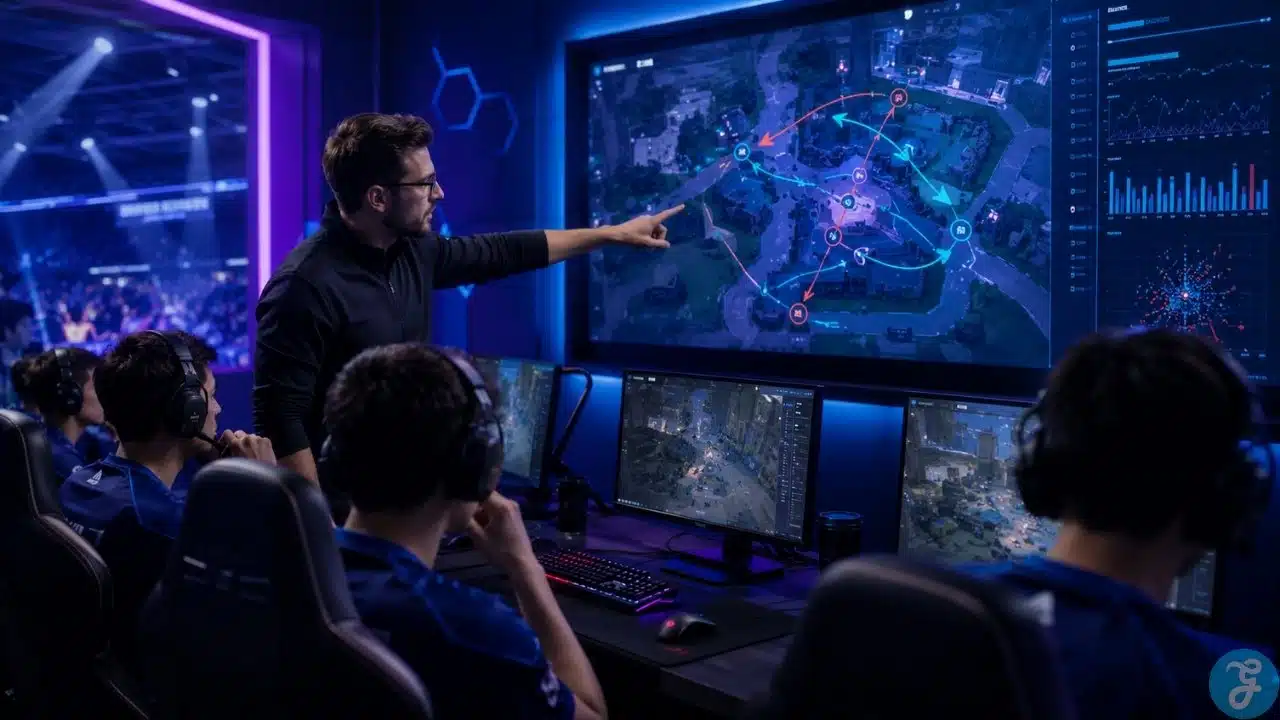
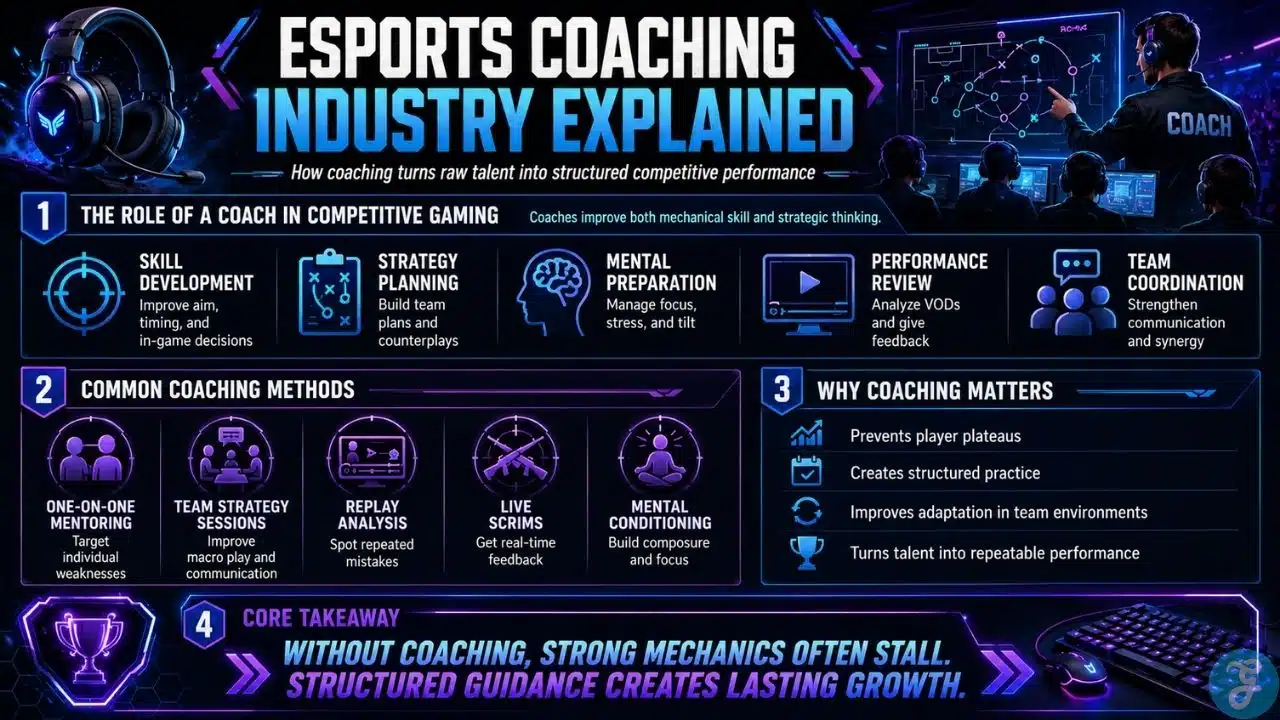
Coaches do much more than tell you what to do in-game. From my experience, effective coaching improves both mechanical skill and strategic thinking. Coaches analyze gameplay, identify patterns, and guide players to optimize performance while building sustainable habits.
Core Responsibilities of Esports Coaches
- Skill development: Improving aim, timing, and in-game decision-making
- Strategy planning: Developing team strategies and counterplays
- Mental preparation: Managing stress, focus, and tilt during high-pressure matches
- Performance review: Conducting VOD analysis and providing actionable feedback
- Team coordination: Ensuring clear communication and synergy within the roster
Without coaching, players often plateau even with strong mechanics. I’ve seen talented individuals struggle to adapt to team environments because they lacked structured guidance.
Why Every Aspiring Pro Should Consider Coaching
Even if a player has natural talent, integrating coaching early provides:
- Faster mechanical improvement
- Strategic awareness and adaptation
- Professional habits for practice, scrims, and tournaments
- Mental resilience under pressure
- Networking opportunities within the competitive ecosystem
From my own journey, I can confidently say that leveraging the esports coaching industry is the single fastest path to bridging the gap between casual skill and competitive performance.
Coaching Methods and Approaches
The coaching process varies depending on the player’s level and goals. I’ve observed effective coaches consistently use methods that combine skill refinement with behavioral training.
Common Coaching Methods
- One-on-one mentoring to target individual weaknesses
- Team strategy sessions focusing on macro gameplay and communication
- Replay analysis to identify repeated mistakes
- Live scrims with real-time feedback
- Mental conditioning drills for focus and composure
Each method reinforces gameplay while instilling habits that last beyond practice.
Platforms and Opportunities
The esports coaching industry offers opportunities ranging from freelance online coaching to full-time positions within professional teams. I’ve personally used a mix of online platforms and local mentorship to accelerate my development.
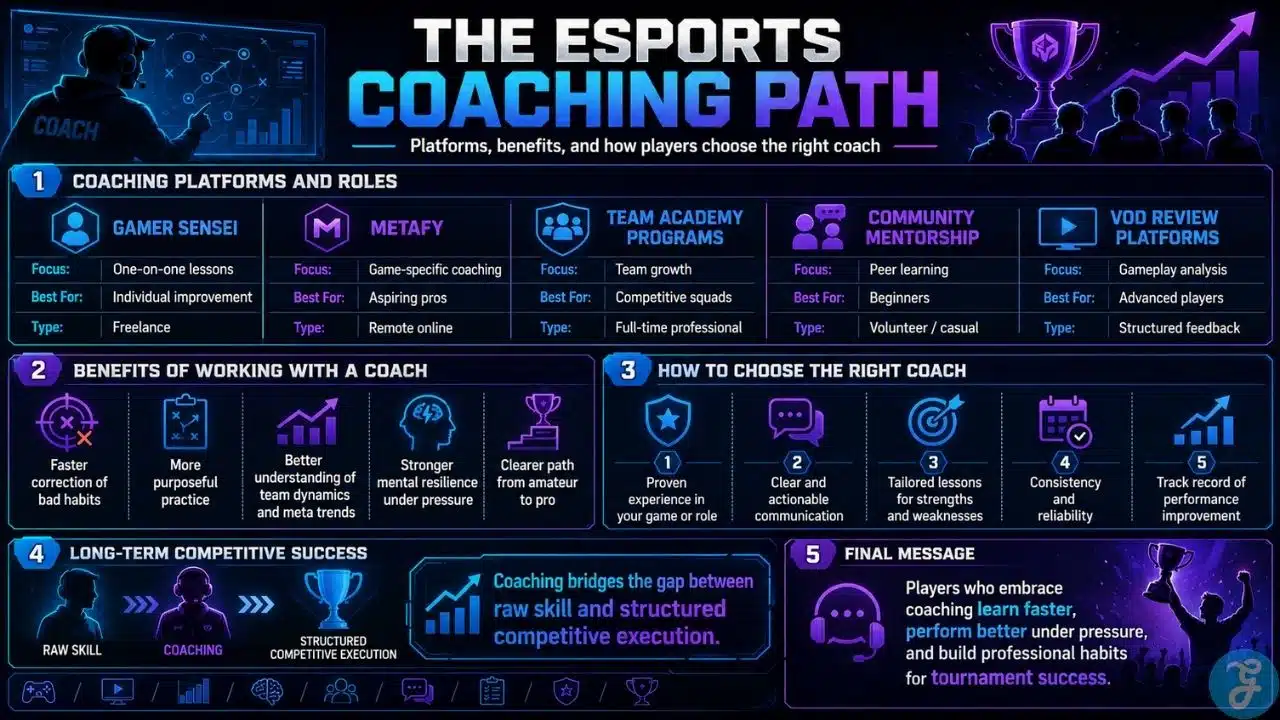
Coaching Platforms and Roles
| Platform/Organization | Focus | Best For | Type of Coaching |
|---|---|---|---|
| Gamer Sensei | One-on-one lessons | Individual skill improvement | Freelance |
| Metafy | Game-specific coaching | Aspiring pros | Remote online |
| Team Academy Programs | Team-focused growth | Competitive squads | Full-time professional |
| Community Mentorship | Peer learning | Beginners | Volunteer / casual |
| VOD Review Platforms | Analyzing gameplay | Advanced players | Structured feedback |
Choosing the right coaching path depends on your skill level, goals, and whether you aim for a professional career or casual improvement.
Benefits of Working With a Coach
From my own experience, having a coach accelerates improvement in esports gaming in ways self-guided practice cannot. Benefits include:
- Rapid correction of bad habits
- More structured and purposeful practice
- Insight into team dynamics and meta-game trends
- Stronger mental resilience during high-pressure matches
- Clearer path from amateur to professional play
Choosing the Right Coach
Selecting a coach is just as important as the coaching itself. I look for qualities that ensure real growth:
- Proven experience in the same game or role
- Clear, actionable communication
- Ability to tailor lessons to a player’s strengths and weaknesses
- Consistency and reliability
- Track record of improving competitive performance
Advanced Coaching Techniques I Use
In my experience, top-tier coaching goes beyond basics. I’ve observed that the most effective coaches combine mechanical feedback with cognitive and psychological support. Some of the advanced techniques include:
- Split-focus drills: Training players to maintain awareness of both mini-map and action simultaneously
- Scenario simulations: Running scrims that replicate high-pressure tournament conditions
- Adaptive learning plans: Customizing drills depending on player performance trends and weaknesses
- Cognitive load management: Teaching players to handle multiple in-game priorities without panicking
- Mental resilience training: Exercises to manage tilt, anxiety, and fatigue during long sessions
These methods allow a player like me to convert raw talent into structured, repeatable performance.
The Business Side of the Esports Coaching Industry
It’s important to understand the industry beyond gameplay. Coaches often manage schedules, negotiate contracts, and coordinate with organizations. Key business aspects include:
- Setting hourly rates or subscription packages for freelance coaching
- Building a client base with proof of results
- Using analytics tools to provide measurable improvement reports
- Understanding tournament schedules to sync practice sessions effectively
By learning this, I can see how coaching roles support both player growth and organizational success.
Transitioning to Long-Term Competitive Success
Integrating coaching into your routine isn’t just for immediate results. Coaches help players establish habits, understand strategy, and maintain composure under pressure. From my perspective, coaching bridges the gap between raw skill and structured, competitive execution.
Future Trends in the Esports Coaching Industry
The industry is evolving fast. I see several trends shaping how coaching will work in the coming years:
- AI-assisted coaching: Tools that provide instant feedback on mechanics or positioning
- Data-driven training plans: Using telemetry from matches to design personalized drills
- Virtual team management: Coaches overseeing distributed teams online
- Mental performance apps: Gamified exercises for focus, tilt management, and cognitive speed
Staying aware of these trends allows me to anticipate the skills and preparation methods I will need to stay competitive.
Mastering the Esports Coaching Industry
The esports coaching industry is more than a career for coaches; it is a critical component of player development. Players who embrace structured coaching learn faster, perform better under pressure, and cultivate the professional habits required for tournament success. It ensures talent is refined, strategy is applied intelligently, and potential becomes measurable performance.