

Old glass jars and bottles have a strange habit of collecting quietly in kitchen cabinets. One pasta sauce jar becomes three. A nice olive oil bottle feels too pretty to throw away. A jam jar sits near the sink because “it might be useful someday.” Then one day the shelf is full.
The good news is that those jars are not clutter by default. With a little cleaning, basic styling, and a realistic eye for what actually suits your home, they can become some of the most charming low-cost decor pieces you own. This guide on Creative Ways to Use Old Glass Jars and Bottles in Home Decor focuses on ideas that are practical, attractive, and not too craft-heavy.
Glass is especially worth reusing because food and beverage glass can be recycled repeatedly, and reuse sits even higher than recycling in the waste-reduction hierarchy. The U.S. EPA advises reducing and reusing before recycling, where possible, while the Glass Packaging Institute notes that glass containers can be recycled without loss of quality or purity.
Start With the Right Jars, Not Every Jar
Not every jar deserves a second life on your shelf. Some are useful. Some are just taking up space.
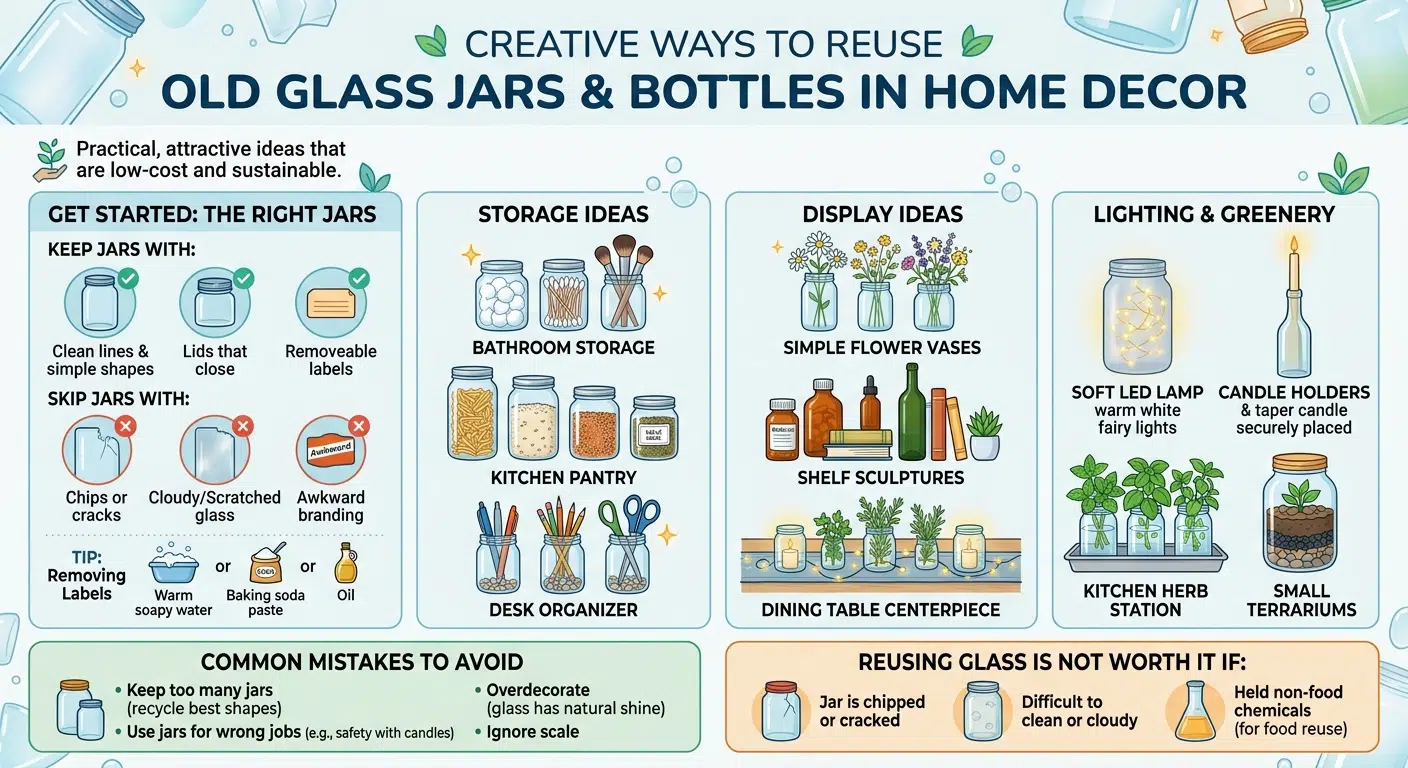
Keep jars and bottles that have:
- Clean lines and simple shapes
- Clear or lightly tinted glass
- Lids that still close properly
- No chips, cracks, or sharp edges
- Labels that can be removed cleanly
- A shape that feels decorative even before you add anything
Skip jars that are cloudy, scratched, greasy, or awkwardly branded in a way you cannot hide. A recycled decor project should make your home look better, not like you forgot to take out the trash.
For removing labels, soak the jar in warm soapy water first. A little baking soda paste or cooking oil can help loosen leftover adhesive. Wash thoroughly afterward, especially if the jar previously held pickles, sauces, oils, or strong-smelling foods.
Creative Ways to Use Old Glass Jars and Bottles in Home Decor
The best Creative Ways to Use Old Glass Jars and Bottles in Home Decor usually fall into three groups: storage, display, and lighting. Storage ideas work well in kitchens, bathrooms, and workspaces. Display ideas suit shelves, dining tables, and entryways. Lighting ideas are beautiful, but they require more care because candles and heat pose safety risks.
Here are the ideas worth trying first.
Turn Clear Jars Into Simple Flower Vases
This is the easiest idea, but it can still look polished if you treat it like styling rather than dumping flowers into a jar.
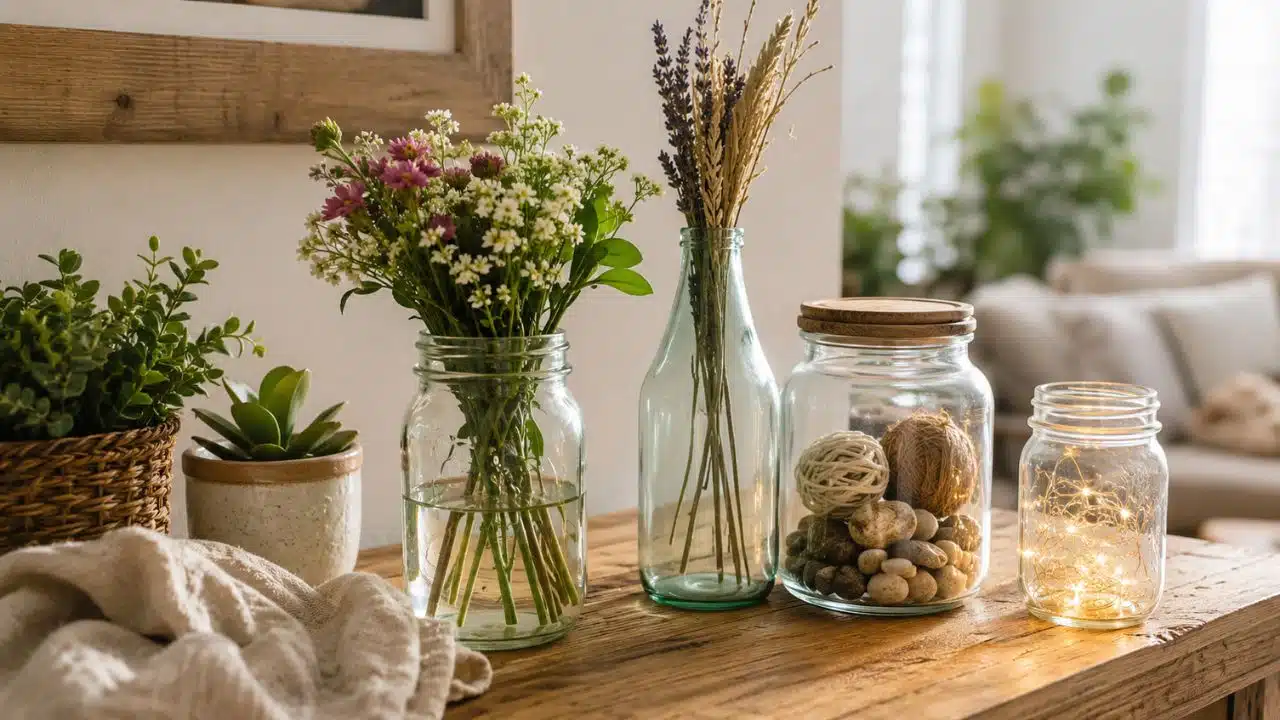
Short jam jars look good with small bunches of daisies, marigolds, baby’s breath, herbs, or wildflowers. Tall sauce bottles suit single stems, eucalyptus branches, dried grass, or long-stemmed roses. A narrow-necked glass bottle often looks better with one dramatic branch than with a full bouquet.
For a cleaner look, group three jars of different heights together. Keep the flowers in the same color family so the arrangement does not feel messy. Clear jars suit modern, Scandinavian, farmhouse, and minimal interiors. Green or brown bottles work better in rustic, vintage, or earthy rooms.
A small warning: do not overfill the jar with water if it is sitting on wood. Put a coaster, tray, or small plate underneath. Condensation rings can quickly ruin the look.
Use Bottles as Candle Holders, But Choose Safely
Old wine bottles, soda bottles, and narrow glass bottles can become elegant taper candle holders. They work especially well on dining tables, mantels, or outdoor dinner setups.
The safest approach is to use the bottle only as a holder for taper candles that fit securely at the neck. If the candle wobbles, do not force it. Use candle putty or choose another bottle.
Avoid making container candles in random food jars unless you know the glass is heat-resistant. Candle containers are designed with heat and breakage risks in mind, and the National Candle Association references ASTM candle safety standards that cover glass container performance. The NFPA also reminds homeowners that candles are open flames and should be kept away from anything that can burn.
For homes with children, pets, curtains, or busy dining tables, flameless LED candles are the better choice. They still give a warm glow and remove most of the fire risk.
Make Bathroom Storage Look Less Plastic
Bathrooms often become crowded with plastic packaging: cotton pads, cotton swabs, bath salts, hair ties, razors, toothbrush heads, and small skincare tools. Clear jars can make these items look intentional.
Use wide-mouth jars for cotton balls and bath salts. Use slim jars for makeup brushes or toothbrushes. Small jars with lids are useful for hair clips, safety pins, or reusable face rounds.
The trick is restraint. Two or three jars on a bathroom shelf look neat. Seven jars can look like a store display. Also, keep jars away from the very edge of the sink. Wet hands and glass are not a great combination.
For a softer look, add a simple label or tie a thin cotton string around the neck. Avoid over-decorating bathroom jars with glitter, thick ribbons, or fake gems. Those details collect dust and often age badly.
Build a Kitchen Counter Herb Station
Glass jars are excellent for small water-grown herbs and cuttings. Mint, basil cuttings, spring onions, and pothos cuttings can sit in water-filled jars near a bright window.
This works best when the jars are not too deep. Roots need room, but the stems should not be confined to a dark, narrow container. Change the water every few days to prevent odor and mosquito issues in warm climates.
A row of reused jars on a kitchen windowsill can look beautiful, especially when the jars vary slightly in height. If you want a neater setup, place them all on a wooden tray or ceramic plate.
Do not use old glass jars for serious food preservation unless they are proper Mason-type canning jars and in good condition. Extension guidance from universities warns that commercial single-use jars are not the same as canning jars and may fail during heat processing. For home decor, though, older jars can work perfectly as vases, dry storage, or plant holders.
Create a Soft LED Jar Lamp
A glass jar filled with battery-powered LED fairy lights is popular for a reason: it is simple, affordable, and forgiving.
Use warm white lights instead of harsh white lights for bedrooms and living rooms. Cool white often makes jars look like emergency lighting rather than decor. Frosted jars, ribbed jars, or tinted bottles can further soften the glow.
Place LED jar lamps on:
- Bedside tables
- Bookshelves
- Window ledges
- Outdoor balcony tables
- Festive dinner corners
- Entryway consoles
LEDs are also more energy-efficient than traditional incandescent bulbs. The U.S. Department of Energy says that residential LEDs, especially ENERGY STAR-rated products, use at least 75% less energy and last much longer than incandescent bulbs.
Do not trap plug-in lights inside a sealed jar unless the product is designed for that use. Battery-powered LED strings are usually the safer and cleaner option for decorative jars.
Use Bottles as Minimalist Shelf Sculptures
Some bottles do not need flowers, lights, or labels. Their shape is enough.
Amber medicine-style bottles, green wine bottles, blue glass water bottles, and clear bottles with unusual shoulders can become shelf objects. This works best in homes that already use natural textures such as wood, linen, cane, stone, or ceramic.
Try this arrangement:
- One tall bottle
- One medium jar
- One small ceramic bowl
- A stack of two books
- A small plant or framed photo
That mix feels collected rather than staged. Avoid lining up ten identical bottles unless you are creating a deliberate installation. Most shelves look better with breathing room.
Turn Jars Into Desk Organizers
Old jars make practical desk organizers for pens, markers, scissors, paintbrushes, rulers, clips, and charging cables.
For a home office, choose jars with clean shapes and remove labels fully. If the jar is too light and tips over, add small pebbles, dried beans, or glass beads at the bottom for weight.
This is one of the most useful ideas for students, remote workers, artists, and anyone who keeps small supplies around. It also prevents buying another plastic organizer that may not even fit the desk properly.
A small friction point: transparent storage only looks good when the items inside are reasonably tidy. If your pens, cords, and clips are chaotic, use opaque sleeves, fabric wraps, or a wooden tray to calm the look.
Make a Dining Table Centerpiece Without Buying New Decor
Glass jars and bottles can make a dining table feel finished without expensive accessories.
For everyday styling, place three glass pieces down the center of the table. Add seasonal elements: fresh herbs in summer, dried grasses in autumn, small branches in winter, and bright flowers in spring.
For dinner parties, combine:
- One bottle with a taper candle
- One jar with flowers
- One small jar with LED lights
- A plain runner or folded linen cloth
Keep the arrangement low enough for people to see each other across the table. Tall centerpieces look dramatic in photos but can be annoying during meals.
If you are using real candles, leave space between glass, greenery, napkins, and paper menus. NFPA candle safety guidance is clear that open flames can ignite nearby materials, so decorative styling should never crowd a flame.
Use Jars for Open Pantry Storage
Glass jars can make pantry shelves calmer and easier to scan. They work well for dry items such as lentils, rice, pasta, oats, tea bags, coffee beans, dried chilies, nuts, and homemade spice blends.
For pantry use, lids matter. A pretty jar with a weak lid is fine for decor but not ideal for food storage. Choose jars that close tightly, wash them properly, and make sure they are completely dry before adding dry goods.
A quick table helps here:
| Use Case | Best Jar Type | Practical Warning |
|---|---|---|
| Pasta, rice, lentils | Tall wide-mouth jars | Check that the lid closes tightly |
| Tea bags, coffee pods | Medium jars | Keep away from direct sunlight |
| Spices | Small jars | Label clearly to avoid mix-ups |
| Cookies or snacks | Large jars | Use quickly if the lid is not airtight |
| Decorative pantry display | Matching clear jars | Too many sizes can look messy |
Do not store food in jars that previously held chemicals, paint, cosmetics, or unknown liquids. Food jars are the safer choice for food-related reuse.
Make Small Terrariums, But Keep Them Simple
Glass jars are often used for terrariums, but beginners tend to overcomplicate them. A good jar terrarium needs the right plant, proper drainage, and adequate light.
Open jars are easier than closed terrariums. Use them for succulents only if the jar is wide and the plant receives enough light. Closed jars suit humidity-loving plants better, but they can become moldy if overwatered.
A beginner-friendly version:
- Add small pebbles at the bottom.
- Add a thin layer of activated charcoal if available.
- Add suitable potting mix.
- Add one small plant, not five.
- Mist lightly instead of pouring water.
The most common mistake is using too much water. Glass jars do not drain like plant pots. If the soil stays wet, roots can rot quickly.
Create Wall-Mounted Jar Displays
Wall-mounted jars can be used for flowers, herbs, bathroom supplies, or craft materials. This idea works well in small homes because it frees up counter space.
Usually, the jar is attached to a wooden board using a metal clamp. The board is then fixed to the wall. It looks good in kitchens, bathrooms, laundry corners, balconies, and craft rooms.
Do not hang heavy glass jars on weak adhesive hooks. Use proper hardware, especially if the jar will hold water, soil, or utensils. A jar that looks light when empty becomes much heavier when filled.
For renters, a freestanding wooden rack may be safer than drilling into walls.
Use Bottles as Reed Diffuser Holders
A narrow glass bottle can become a reed diffuser holder if it has a small opening. This is a neat way to reuse perfume, oil, or decorative beverage bottles.
Clean the bottle extremely well before adding diffuser oil. Old oil or alcohol smells can interfere with the fragrance. Use natural reeds or diffuser sticks that fit the bottle height.
Place diffusers away from pets, children, delicate surfaces, and direct sunlight. Fragrance oils can stain wood or stone if spilled. A small ceramic coaster under the bottle solves that problem.
This idea works best in entryways, bathrooms, and bedrooms where you want gentle scent rather than a strong room spray.
Make Seasonal Decor That Does Not Feel Wasteful
Seasonal decor is one of the easiest ways to overspend. Glass jars give you a reusable base that can change through the year.
Try these simple swaps:
- Spring: fresh flowers, pastel ribbons, small branches
- Summer: shells, sand, citrus slices for table styling
- Autumn: dried leaves, cinnamon sticks, warm-toned candles
- Winter: pinecones, fairy lights, paper snowflakes
- Festive season: ornaments, bells, dried orange slices
The jar stays the same. The filling changes. That saves money and storage space.
Keep edible and non-edible decor separate. A jar used for glitter, paint, glue, or fragrance should not be returned to kitchen storage.
Use Painted Jars Carefully
Painting jars can look good, but it is also where many DIY projects start looking messy.
Matte paint works better than glossy paint for most interiors. White, cream, black, sage, terracotta, muted blue, and soft grey are safer choices than neon colors. If you want a vintage look, paint the outside only and lightly sand raised areas after drying.
Painted jars work well as:
- Pencil holders
- Planters with inner nursery pots
- Dry flower vases
- Shelf accents
- Makeup brush holders
Do not paint the inside of jars used for food, water, plants, or candles unless the paint is specifically safe for that purpose. For most home decor projects, painting the outside is enough.
Create Balcony and Garden Decor
Glass bottles and jars can add charm to balconies, patios, and small gardens. Use them for solar lights, small flower cuttings, hanging vases, or tabletop arrangements.
Outdoor use needs extra care. Wind can knock bottles over. Strong sunlight can fade colored fillings. Rainwater can collect inside jars and attract insects.
For balconies, place jars in trays, baskets, or wall shelves rather than scattering them around the floor. If using hanging jars, check the wire or rope regularly. Glass falling from a balcony is not just a decor failure; it is dangerous.
Common Mistakes to Avoid
Reusing glass jars may seem simple, but a few mistakes can ruin the final look or pose safety risks.
The first mistake is keeping too many jars. Save the best shapes and recycle the rest according to local rules. Recycling acceptance varies by city, so check your local guidance before putting glass into the bin. EPA guidance also advises that recyclable containers should generally be empty and rinsed clean of food debris.
The second mistake is using jars for the wrong job. A jar that is fine for dried flowers may not be safe for candles. A decorative bottle may not be practical for food storage. A cracked jar should not be reused at all.
The third mistake is overdecorating. Glass already has shine, texture, and shape. Too much ribbon, paint, rope, glitter, lace, and artificial flowers can make the piece look cheap. One detail is usually enough.
The fourth mistake is ignoring scale. A tiny jar on a large dining table disappears. A giant bottle on a narrow shelf looks awkward. Match the jar’s size to the surface around it.
A Practical Styling Formula
If you want your reused glass decor to look intentional, use this simple formula:
Glass + natural texture + one useful object
For example:
- Glass jar + wooden tray + candle
- Glass bottle + linen runner + dried branch
- Glass jar + cane basket + bathroom supplies
- Glass bottle + stack of books + small framed print
- Glass jar + ceramic saucer + herb cutting
This keeps the decor grounded. Glass alone can feel cold. Pairing it with wood, fabric, clay, stone, or greenery makes it warmer.
When Reusing Glass Jars Is Not Worth It
Some jars are better recycled than reused.
Recycle or discard safely if the jar is chipped, cracked, cloudy, greasy, or difficult to clean. Do not reuse jars that held non-food chemicals for food, candles, or plants. Do not keep jars only because they feel “too good to throw away.” That is how eco-friendly intent turns into clutter.
Also, if your home already has enough vases, storage containers, and candle holders, reuse does not have to mean keeping everything yourself. Offer clean jars to local schools, craft groups, gardeners, refill stores, or neighbors who make preserves, candles, or handmade gifts.
Sustainable living is not about storing every object forever. It is about keeping materials in use where they genuinely serve a purpose.
Final Thoughts
The best Creative Ways to Use Old Glass Jars and Bottles in Home Decor are not complicated. A clear jar can become a vase. A narrow bottle can hold a candle. A wide-mouth jar can organize a bathroom shelf. A tinted bottle can add color to a bookcase. Small changes like these make a home feel more personal without buying more decor.
Start with five good jars, not fifty. Clean them well, choose one room, and solve a real need first: flowers, storage, lighting, plants, or table styling. Once the first few pieces look natural in your space, you can build from there.
Old glass has character. Used with care, it brings charm, function, and a quieter kind of sustainability into the home.
FAQs
Can I use any old glass jar as a candle jar?
No. Random food jars may not be designed for candle heat. They can crack or break if the glass is unsuitable or the candle burns too hot. For safety, use jars to hold LED or taper candles instead of pouring hot wax into unknown glass containers.
How do I make reused jars look less cheap?
Remove labels fully, choose jars with simple shapes, and group them with better materials such as wood, linen, ceramic, stone, or fresh greenery. Avoid too many craft details. Clean glass with one thoughtful accent usually looks better than a heavily decorated jar.
Are old jars safe for food storage?
Food jars can be reused for dry pantry storage if they are clean, dry, odor-free, and have tight lids. Do not use jars that held chemicals, cosmetics, paint, or unknown liquids for food. For home canning, use proper Mason-type canning jars rather than ordinary commercial jars.
What is the easiest decor idea for beginners?
Use three clean glass jars as small vases. Pick different heights, add simple flowers or greenery, and place them on a tray. It takes very little skill and works in kitchens, bedrooms, dining rooms, and entryways.






















