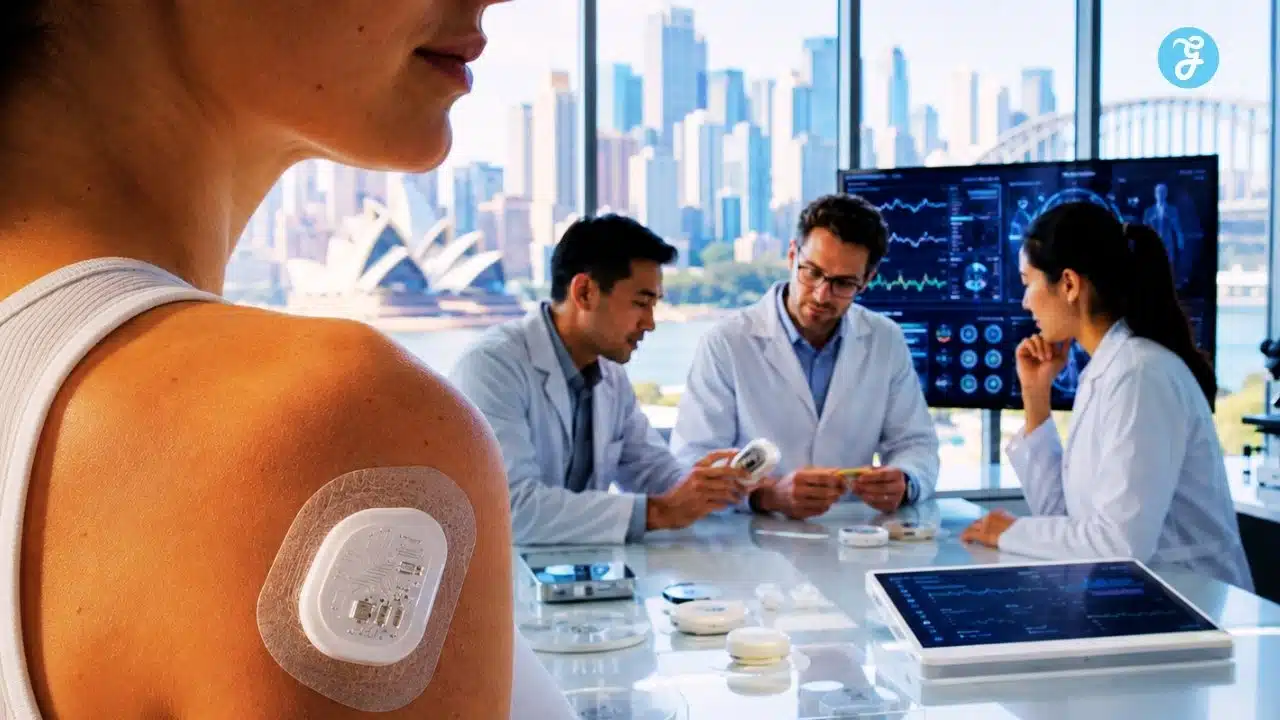
The future of medicine is shifting away from bulky hospital monitors and painful needle sticks. Today, clinical diagnostics can stick directly to your skin like a simple bandage. Australia is emerging as a serious contributor to this medical technology sector. Local startups and small businesses are pioneering highly accurate wearable biosensors that track real-time biological shifts. These advanced devices do not just count steps. They measure molecular biomarkers, trace hydration levels, and monitor high-risk pregnancies from the comfort of a patient’s home.
For institutional investors and healthcare procurement teams, this technological surge represents a major market shift. Global healthcare systems want to lower hospital readmission rates. These skin sensors offer the exact clinical data needed to achieve that goal. Venture capital is flowing into research hubs across Sydney, Melbourne, and Brisbane. This capital is driving significant regulatory breakthroughs and human trials, fundamentally redefining remote patient care.
The Catalyst: Clinical Utility Over Consumer Hype
Consumer smartwatches have flooded the market with general wellness data. However, health systems cannot make critical treatment decisions based on step counts or erratic pulse readings. This limitation is exactly why professional investment is shifting toward dedicated medical patches.
The rapid adoption of these wearable biosensors stems from structural crises in global healthcare. Hospitals face severe nursing shortages and unsustainable inpatient costs. Administrators must find ways to discharge patients earlier without compromising safety. Skin-applied sensors may help address this problem by supporting continuous monitoring outside traditional hospital settings. This sudden surge is propelled by major breakthroughs in flexible, biocompatible materials and highly miniaturized electrochemical sensors. Additionally, the rapid integration of artificial intelligence allows these devices to instantly translate raw physiological data into predictive clinical insights.
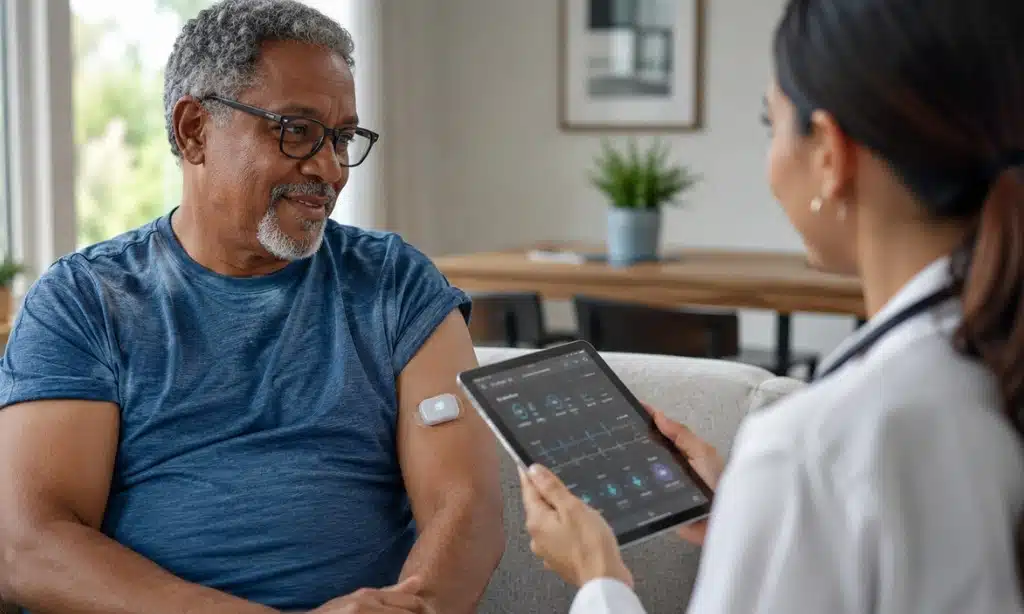
The financial incentive is clear for B2B procurement teams and venture funds. These devices can help reduce extended-stay costs and support more precise pharmaceutical dosing. Regulatory pathways such as FDA Breakthrough Device Designation and TGA priority review can help eligible devices move through development and assessment more efficiently, although these pathways do not guarantee market approval. These pathways may shorten development and review timelines for eligible products, helping companies move closer to commercial readiness in a growing remote healthcare infrastructure market.
Rigorous Benchmarking: Our Selection Criteria
We analyzed the domestic medical technology sector to isolate the true leaders in the wearable biosensors space. Every company on this list met a strict set of business and medical benchmarks.
- Verified Australian Footprint Each organization maintains its corporate headquarters or central research facilities within Australia.
- True Medical Focus The selection isolates direct adhesive skin patches and patch-adjacent medical sensors. We deliberately excluded companies that only manufacture consumer lifestyle gadgets or basic fitness trackers.
- Regulatory Activity We prioritized firms with verified documentation of human clinical trials, institutional research partnerships, or active regulatory engagement with bodies like the FDA and the Therapeutic Goods Administration.
- Financial and Commercial Traction Every entry shows clear market validation through venture capital backing, public market listings, or substantial government innovation grants.
- Data Integrity We verified all leadership records, core services, and founding histories using official corporate filings and institutional press releases.
Australia’s Premier Biosensor and Medical Patch Innovators
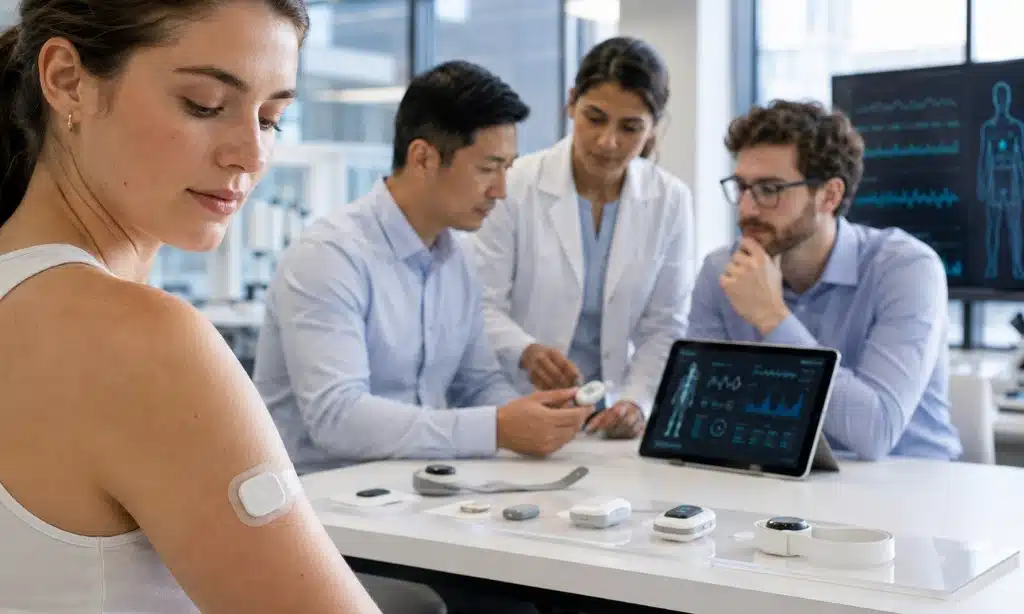
The following directory outlines the fifteen frontline startups and SMEs reshaping the remote care sector. These specialized businesses are divided into direct adhesive skin patches and advanced patch-adjacent monitoring tools. Each profile details corporate leadership, core services, and verified market traction. Together, they represent the vanguard of domestic clinical innovation and global commercial readiness.
1. Nutromics
HQ: Melbourne, Victoria, Australia
SME or Startup: Startup / Scaleup — Direct Biometric Patch
Company Overview: Nutromics is one of Australia’s strongest direct biometric patch startups. Its Lab-on-a-Patch platform combines microneedles, DNA-based biosensors, and wireless data systems to continuously measure molecular biomarkers from the body. The company is focused first on therapeutic drug monitoring, especially where real-time dosing decisions can improve hospital care. Its work on vancomycin monitoring gives it strong clinical relevance. For a business listing, Nutromics is a direct fit because the company’s core technology is literally a wearable diagnostic patch.
Core Services:
- Lab-on-a-Patch diagnostics
- Continuous molecular monitoring
- Therapeutic drug monitoring
- Microneedle biosensor platform
- Wireless clinical data monitoring
Target Market & Track Record: Hospitals, ICUs, precision dosing teams, pharmaceutical research, and clinical diagnostics. Nutromics has raised about A$60 million cumulatively and is developing wearable patch diagnostics for real-time biomarker monitoring.
Website: nutromics.com
2. WearOptimo
HQ: Brisbane, Queensland, Australia
SME or Startup: Startup — Direct Microwearable Patch
Company Overview: WearOptimo is a Brisbane-based medtech startup developing skin-worn Microwearable sensors that capture bio-signals from the body in real time. Its first product is focused on hydration monitoring, making it highly relevant for sport, defense, mining, industrial safety, healthcare, and aged care. The company’s technology uses tiny sensor structures that interact with the skin to access meaningful physiological information. WearOptimo is one of the clearest Australian companies to include in a biometric patch list because its product is patch-like, sensor-based, and designed for continuous monitoring.
Core Services:
- Hydration monitoring
- Microwearable sensor platform
- Real-time bio-signal capture
- Heat-stress risk monitoring
- Wearable health analytics
Target Market & Track Record: Sport, defense, mining, workplace safety, healthcare, and aged care. WearOptimo describes itself as a Brisbane-based company using patented Microwearable technology, with Professor Mark Kendall as Founder and CEO.
Website: wearoptimo.com
3. Symex Labs
HQ: Melbourne, Victoria, Australia
SME or Startup: Startup — Direct Hormone Biosensor Patch
Company Overview: Symex Labs is a Melbourne startup developing a wearable biosensor patch for fertility and IVF monitoring. Its technology is designed to track hormones such as progesterone and estradiol through skin/interstitial fluid, reducing the need for repeated blood tests during fertility treatment. This makes it a direct biometric patch company, not just a general wearable business. Symex is especially useful for your listicle because it sits at the intersection of women’s health, fertility technology, wearable biosensors, and remote clinical monitoring.
Core Services:
- Fertility hormone monitoring
- IVF cycle tracking
- Wearable biosensor patch
- Progesterone and estradiol sensing
- Remote fertility data support
Target Market & Track Record: IVF clinics, fertility patients, women’s health providers, and reproductive health researchers. Symex was founded in 2022, is Melbourne-based, and has partnered with Monash IVF, University of Melbourne, and RMIT-linked research partners.
Website: symexlabs.com
4. Australis Scientific
HQ: Sydney, New South Wales, Australia
SME or Startup: Startup — Direct Smart Therapeutic Patch
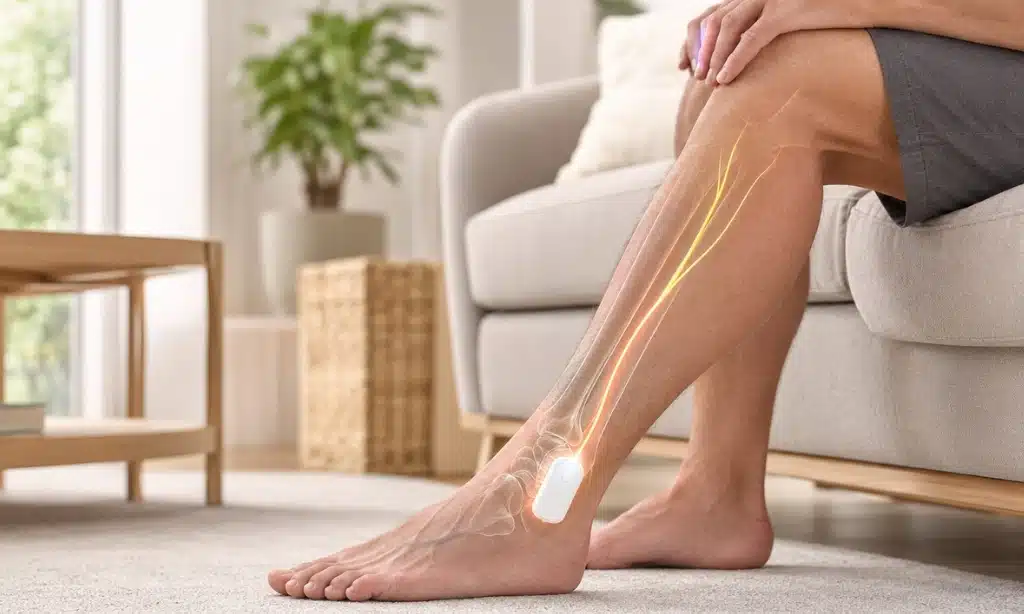
Company Overview: Australis Scientific is a Sydney medtech startup developing Confidanz, a smart patch for overactive bladder and urinary incontinence. The product is a bandage-sized wearable patch that uses tibial nerve stimulation as a home-based therapy alternative. It is not a diagnostic biometric patch, so it should be positioned as a smart therapeutic patch. However, it still belongs in the broader biometric patch ecosystem because it is wearable, connected, body-applied, and clinically targeted. Its recent funding and clinical trial activity make it a verified Australian startup.
Core Services:
- Confidanz Smart Patch
- Bladder neuromodulation therapy
- Overactive bladder support
- Urinary incontinence treatment
- Home-based wearable therapy
Target Market & Track Record: Urology clinics, aging populations, overactive bladder patients, and home-based bladder care. Australis launched first-in-human trial activity for Confidanz and received US$6 million funding from Rohto Pharmaceutical.
Website: australisscientific.com
5. Kali Healthcare
HQ: Melbourne, Victoria, Australia
SME or Startup: Startup — Direct Sensor Patch / Pregnancy Monitor
Company Overview: Kali Healthcare is a Melbourne startup developing a wearable pregnancy monitoring system that uses a small device and sensor patch to capture fetal heart-rate information. The company is focused on making late-stage pregnancy monitoring easier, especially for remote, regional, and telehealth-based care. Its product is still under development and clinical validation, but the category fit is strong because the technology uses a body-worn sensor patch. Kali is a legitimate Australian biometric patch startup with a clear maternal health use case.
Core Services:
- Pregnancy monitoring wearable
- Fetal heart-rate sensing
- Maternal health monitoring
- Remote clinician platform
- Telehealth pregnancy support
Target Market & Track Record: Obstetricians, hospitals, pregnancy telehealth programs, regional patients, and maternal-fetal monitoring teams. Kali raised A$1 million pre-seed and later received CRC-P support for clinical development.
Website: kalihealthcare.com
6. Lubdub.ai / Lubdub Technologies
HQ: Perth, Western Australia, Australia
SME or Startup: Startup — Direct Wearable ECG Patch / Cardiac Biosensor
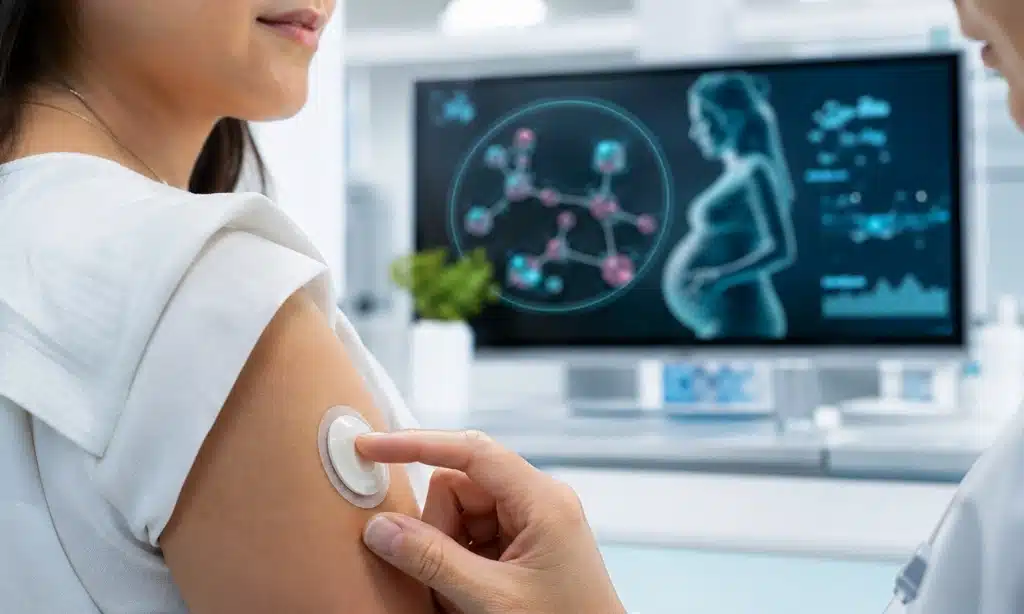
Company Overview: Lubdub.ai is a Perth-based healthtech startup developing a home heart-health kit that includes a wearable ECG patch, saliva biosensor, and wireless ultrasound. Its ECG patch can monitor heart rhythm over an extended period, making the company highly relevant to biometric patch listings. Lubdub’s strongest value is its multi-device cardiac diagnostics approach, which combines wearable signals with biomarker and imaging data. It is not just a wellness wearable; it is positioned around clinical heart-disease detection and monitoring.
Core Services:
- Wearable ECG patch monitoring
- Home heart-health diagnostics
- Saliva biomarker testing
- Wireless ultrasound support
- Cardiac risk analytics
Target Market & Track Record: Cardiology clinics, heart-disease screening programs, remote diagnostics, home monitoring, and clinical research. Lubdub is a Perth startup founded in 2023 and has Heart Foundation-backed recognition for its wearable cardiac diagnostic system.
Website: lubdub.ai
7. Kynetyka Technologies
HQ: Adelaide / Underdale, South Australia, Australia
SME or Startup: Startup / SME — Patch-Adjacent Vascular Sensor
Company Overview: Kynetyka Technologies is an Adelaide-based medical device company developing DVTect, a non-invasive screening tool for deep vein thrombosis. The device uses a sensor placed on the calf to read vascular waveforms and transmit data into software for analysis. It is not a classic adhesive biochemical patch, but it is a body-applied biometric sensor and is relevant to patch-adjacent medical monitoring. Kynetyka is a better replacement than weak wearable entries because it has a clear clinical use case, active funding signals, and Australian medtech validation.
Core Services:
- Deep vein thrombosis screening
- Calf-applied vascular sensing
- Point-of-care diagnostic support
- Waveform data analysis
- Clinical vascular risk detection
Target Market & Track Record: Hospitals, emergency departments, vascular clinics, aged care, and DVT screening programs. Kynetyka was incorporated in 2017, joined ANDHealth’s program, and received AusHealth funding support in 2025.
Website: kynetyka.com.au
8. Baymatob
HQ: Leichhardt, Sydney, New South Wales, Australia
SME or Startup: Startup / SME — Patch-Adjacent Maternal Wearable Sensor
Company Overview: Baymatob is a Sydney maternal health startup behind Oli, an AI-supported wearable sensor platform for pregnancy and labor monitoring. Its first major product focus is Oli PPH, which aims to identify postpartum hemorrhage risk before severe bleeding begins. This is not a skin patch in the narrow sense, but it is a wearable biometric sensor for clinical monitoring. Baymatob deserves inclusion as a patch-adjacent company because it measures maternal physiological signals and connects them to predictive clinical decision support in hospital maternity settings.
Core Services:
- Oli wearable maternal sensor
- Postpartum hemorrhage risk prediction
- AI-guided maternity monitoring
- Labor physiological monitoring
- Clinical decision-support analytics
Target Market & Track Record: Hospitals, maternity wards, obstetric teams, maternal-health systems, and clinical trial partners. Baymatob is Sydney-based, was founded in 2017, and Oli has FDA Breakthrough Device Designation.
Website: baymatob.com
9. VitalTrace
HQ: Perth, Western Australia, Australia
SME or Startup: Startup / SME — Patch-Adjacent Biosensor
Company Overview: VitalTrace is a Perth medtech company developing DelivAssure, a real-time fetal monitoring biosensor for labor and delivery. Its technology continuously measures fetal lactate, a biomarker linked with fetal distress, hypoxia, and acidosis. The company is not a skin-patch startup, but it is a strong biometric biosensor SME and much more relevant than general consumer wearables. VitalTrace belongs in the extended biometric patch ecosystem because it uses real-time physiological sensing to support clinical decision-making during childbirth.
Core Services:
- Continuous fetal lactate monitoring
- Labor and delivery biosensing
- Fetal distress detection support
- DelivAssure monitoring platform
- Obstetric decision-support data
Target Market & Track Record: Hospitals, labor wards, obstetricians, midwives, and maternal-fetal medicine teams. VitalTrace was founded in 2017, has more than 45 employees, and its DelivAssure product has FDA Breakthrough Device status.
Website: vitaltrace.com.au
10. Pretect Devices
HQ: Perth, Western Australia, Australia
SME or Startup: Startup — Patch-Adjacent Neonatal Wearable Monitor
Company Overview: Pretect Devices is a Perth startup developing Vedette, a wearable neonatal monitor for early detection of IV infiltration and fluid leakage in premature or critically ill babies. The problem is clinically important because IV leakage can damage fragile neonatal tissue before staff visually detect it. While Vedette is not a classic biometric patch, it is a body-worn monitoring device for neonatal safety. Pretect is a valid Australian startup for a broader biometric wearable and sensor-patch list because it has a clear hospital use case and active development pathway.
Core Services:
- Vedette neonatal monitor
- IV infiltration detection
- Extravasation injury prevention
- NICU safety alerts
- Continuous infant monitoring
Target Market & Track Record: NICUs, children’s hospitals, neonatal clinicians, and critical infant-care teams. The company describes Vedette as a continuous IV monitoring solution and lists Dr Nipanjana Patra and Dr Samuel Bolland as co-founders.
Website: pretectdevices.com
11. Nuroflux
HQ: Sydney, New South Wales, Australia
SME or Startup: Startup — Patch-Adjacent Brain Monitoring Wearable
Company Overview: Nuroflux is a Sydney startup developing a wearable device for continuous, non-invasive brain monitoring. Its technology is designed to monitor brain activity and brain blood flow, especially for hospitalized stroke patients and other neurocritical care use cases. Nuroflux is not an adhesive skin patch company, so it should be labeled patch-adjacent. Still, it is a strong Australian biometric wearable startup because it captures clinically meaningful physiological signals from the body and aims to improve real-time monitoring in hospital settings.
Core Services:
- Brain blood-flow monitoring
- Brain activity monitoring
- Stroke patient monitoring
- Neurocritical-care wearable sensing
- Continuous hospital data support
Target Market & Track Record: Stroke units, hospitals, neurologists, neurocritical care teams, and clinical researchers. Nuroflux describes its product as a non-invasive wearable for brain activity and blood-flow monitoring, and public profiles list its co-founders.
Website: nuroflux.com
12. Neurode
HQ: Sydney, New South Wales, Australia
SME or Startup: Startup — Patch-Adjacent Neuro-Wearable
Company Overview: Neurode is a Sydney startup developing a wearable headband for ADHD support using brain monitoring and stimulation. The company combines neurotechnology, fNIRS-based monitoring, and brain stimulation to help users manage symptoms and measure neurological signals. It is not a biometric patch in the adhesive sense, but it is an Australian body-worn biometric sensor startup with a strong neuro-wearable angle. Neurode is useful for your list only if you frame it under patch-adjacent biometric wearables rather than direct biometric patches.
Core Services:
- ADHD neuro-wearable
- Brain monitoring
- Brain stimulation
- fNIRS signal tracking
- Digital neurotherapy support
Target Market & Track Record: ADHD users, mental-health practitioners, neurotechnology researchers, and digital therapeutics partners. Neurode was co-founded in 2021 and raised funding for its wearable ADHD headband technology.
Website: neurodelabs.com
13. Lenexa Medical
HQ: Burnley / Melbourne, Victoria, Australia
SME or Startup: Startup / SME — Patch-Adjacent Smart Sensing Fabric
Company Overview: Lenexa Medical is a Melbourne medical technology company using smart sensing fabric and AI software to monitor patient position, pressure, and pressure-injury risk. Its LenexaCARE platform is not a wearable skin patch, but it is body-contact biometric monitoring technology used in healthcare environments. The company’s value is strongest in hospital and aged-care pressure injury prevention, where continuous sensing can reduce harm and improve clinical workflow. Lenexa is suitable as a patch-adjacent SME, but should not be described as a biometric patch manufacturer.
Core Services:
- Smart sensing fabric
- Pressure injury prevention
- Patient position monitoring
- AI pressure mapping
- Hospital and aged-care alerts
Target Market & Track Record: Hospitals, aged-care providers, wound-prevention teams, insurers, and clinical risk managers. Lenexa was founded in 2017 after University of Melbourne Biodesign work and has developed fabric-based sensor systems for patient monitoring.
Website: lenexamedical.com
14. Control Bionics
HQ: Cremorne, Victoria, Australia
SME or Startup: SME — Adhesive / Wearable EMG Biometric Sensor
Company Overview: Control Bionics is an Australian SME known for NeuroNode, a wireless wearable sensor that captures EMG bioelectric signals and movement inputs to help people control communication and assistive technology. Its products can use adhesive or non-adhesive electrodes, making it relevant to wearable biometric sensing, although it is not a diagnostic patch company. The business is more mature than a startup, but still fits SME criteria. It is best listed as an adhesive/wearable EMG sensor company serving disability, rehabilitation, and assistive communication markets.
Core Services:
- NeuroNode wearable EMG sensor
- Assistive communication control
- Bioelectric signal capture
- NeuroStrip surface EMG sensing
- Disability technology integration
Target Market & Track Record: People with ALS/MND, cerebral palsy, spinal cord injury, rehabilitation users, and assistive-technology providers. Control Bionics is headquartered in Cremorne and publicly describes NeuroNode as a wireless wearable EMG sensor platform.
Website: controlbionics.com
15. ExerWatch
HQ: Melbourne, Victoria, Australia
SME or Startup: Startup — Patch-Adjacent Rehabilitation Wearable Sensor
Company Overview: ExerWatch is a Melbourne startup developing AI-enabled wearable sensor technology for rehabilitation, exercise adherence, and movement correctness. It is not a skin patch company, but it is relevant to the broader biometric wearable ecosystem because it captures body-movement data and turns it into feedback for patients and practitioners. The company is early-stage and should be described carefully as a developing startup. Its strongest use case is physiotherapy and rehabilitation, where practitioners need objective evidence that exercises are being completed correctly.
Core Services:
- Exercise adherence monitoring
- Wearable motion sensing
- AI form-correction feedback
- Physiotherapy compliance reports
- Rehabilitation performance analytics
Target Market & Track Record: Physiotherapists, rehabilitation clinics, patients, sports practitioners, and athletes. ExerWatch states it is launching in 2026 and describes its product as AI-enabled wearable sensor technology for exercise compliance and correctness.
Website: exerwatch.com.au
Comparison Matrix: Australian Biometric Patch & Wearable Biosensor Companies
Here is the scannable comparison table mapping out all 15 startups and SMEs.
| Company & Product | Primary Use Case | Core Technology / Focus | Target Audience | Standout Feature / Differentiator |
| Nutromics
(Lab-on-a-Patch) |
Therapeutic drug monitoring | Microneedles, DNA biosensors, wireless data | Hospitals, ICUs, pharma research | Continuous molecular biomarker tracking for real-time precision dosing. |
| WearOptimo
(Microwearable) |
Hydration & heat stress monitoring | Skin-interacting sensor structures | Sports, defense, mining, healthcare | Patented platform capturing physiological signals directly from the skin. |
| Symex Labs
(Biosensor Patch) |
Fertility & IVF cycle tracking | Progesterone and estradiol sensing | IVF clinics, fertility patients | Replaces repeated blood tests by monitoring hormones through interstitial fluid. |
| Australis Scientific
(Confidanz) |
Overactive bladder therapy | Tibial nerve neuromodulation | Urology clinics, aging populations | Home-based wearable therapy alternative to clinic visits or invasive treatments. |
| Kali Healthcare
(Sensor Patch) |
Fetal heart rate tracking | Maternal/fetal monitoring system | Obstetricians, regional telehealth | Simplifies late-stage pregnancy monitoring for remote and telehealth care. |
| Lubdub.ai
(Home Heart Kit) |
Cardiac risk detection | Wearable ECG, saliva biosensor, ultrasound | Cardiology clinics, home monitoring | Multi-device approach combining wearable heart rhythms with biomarker data. |
| Kynetyka Technologies
(DVTect) |
Deep vein thrombosis screening | Calf-applied vascular sensing | Hospitals, EDs, vascular clinics | Non-invasive vascular waveform analysis right at the point of care. |
| Baymatob
(Oli) |
Postpartum hemorrhage prediction | AI-guided maternal sensor | Maternity wards, obstetric teams | Identifies internal bleeding risk well before severe physical symptoms occur. |
| VitalTrace
(DelivAssure) |
Fetal distress detection | Continuous fetal lactate biosensor | Labor wards, midwives, obstetricians | Real-time, continuous lactate measurement during childbirth to prevent hypoxia. |
| Pretect Devices
(Vedette) |
Neonatal IV infiltration detection | Continuous infant monitoring | NICUs, children’s hospitals | Prevents extravasation injury in fragile neonatal tissue before visible swelling. |
| Nuroflux
(Wearable Device) |
Stroke & brain monitoring | Brain blood flow & activity sensing | Stroke units, neurocritical care | Continuous, non-invasive neuro-monitoring designed specifically for hospital settings. |
| Neurode
(Wearable Headband) |
ADHD management | fNIRS sensing & brain stimulation | ADHD users, mental health providers | Combines fNIRS brain monitoring with active digital neurotherapy. |
| Lenexa Medical
(LenexaCARE) |
Pressure injury prevention | Smart sensing fabric & AI mapping | Hospitals, senior care providers | Fabric-based alerts for patient position mapping to reduce clinical workflow burden. |
| Control Bionics
(NeuroNode) |
Assistive communication | Wearable EMG bioelectric sensor | ALS/MND, cerebral palsy patients | Translates subtle bioelectric muscle movements into direct communication control. |
| ExerWatch
(Wearable Sensor) |
Rehabilitation compliance | AI motion tracking | Physiotherapists, sports clinics | Provides objective, AI-enabled form correction and exercise feedback for patients. |
The Horizon: A Clearer View of Human Health
These technical advancements show how medical monitoring is gradually moving beyond traditional hospital settings. Instead of relying only on occasional tests or in-person checkups, healthcare providers can use wearable biosensors to collect useful clinical signals over longer periods. For enterprise buyers, local care providers, and patients, this creates a more practical way to understand health changes as they happen.
What These Startups Tell Us
The growth of Australia’s medical technology sector shows where parts of healthcare are heading. These startups and SMEs are not replacing doctors, hospitals, or established diagnostic systems. Instead, they are creating tools that may help clinicians monitor patients more consistently and make better-informed decisions.
Continuous Over Episodic Care
Medicine is gradually moving beyond occasional hospital checkups and one-time test results. Continuous monitoring can help clinicians notice changes earlier, especially in high-risk patients. However, these tools work best when used alongside proper medical evaluation, not as standalone decision-makers.
Less Invasive Access
Patients may not always need repeated blood draws or bulky equipment for every type of monitoring. Some advanced skin sensors are designed to collect molecular or bioelectric signals with less discomfort than traditional testing methods. This could be especially useful in hospitals, remote care programs, and long-term monitoring settings.
Data-Driven Personalization
Generic treatment paths are becoming less suitable for many clinical needs. Real-time or near-real-time data can help clinicians adjust therapies, monitor risk, and support more precise pharmaceutical dosing. The value depends on device accuracy, regulatory status, clinical validation, and how well the data fits into existing care workflows.
Simpler Healthcare Decisions
Wearable biosensors may help reduce guesswork by giving providers more objective data between clinic visits. For patients, this can make remote monitoring feel more connected and less reactive. For healthcare teams, it can support earlier review when symptoms or biomarker changes suggest a possible concern.
The Next Phase of Remote Diagnostic Infrastructure
This shift creates practical opportunities for venture capitalists, enterprise procurement officers, hospitals, and medical founders. The market is moving from general fitness tracking toward more clinically focused wearable devices, but adoption will depend on validation, reimbursement, data security, usability, and regulatory progress.
For corporate buyers, these systems may help reduce operational pressure by supporting earlier discharge, remote follow-up, and more targeted patient monitoring. For founders, the success of these early Australian companies offers useful lessons in clinical partnerships, device validation, funding, and regulatory planning. These businesses are not simply launching new gadgets. They are helping build a more connected model of remote medical monitoring, where clinical data can move more safely between patients, care teams, and healthcare systems.
Frequently Asked Questions (FAQs) on Wearable Biosensors
Are clinical biosensors safe to wear during showers or strenuous activity?
Water resistance depends on the device, adhesive, approval status, and manufacturer instructions. Some wearable biosensors are designed for extended wear, but patients should follow the specific guidance provided by the clinician or device maker. In many cases, users may be advised to avoid fully submerging the patch in baths or pools and to keep the area away from harsh soaps or lotions.
How do hospitals ensure patch data remains secure?
Healthcare-grade biosensor systems should use secure data transmission, controlled access, and privacy-compliant storage to protect patient information. Exact security measures vary by provider, device platform, and local healthcare regulations, so hospitals usually assess each system’s privacy, cybersecurity, and data-handling standards before adoption.
Can long-term patch use cause skin irritation?
Mild redness or itching can occur with adhesive wearables, especially during extended use or in people with sensitive skin. However, persistent irritation, pain, swelling, rash, or allergic symptoms should be checked with a clinician. Patients should also follow the device maker’s instructions for wear time, skin preparation, and removal.