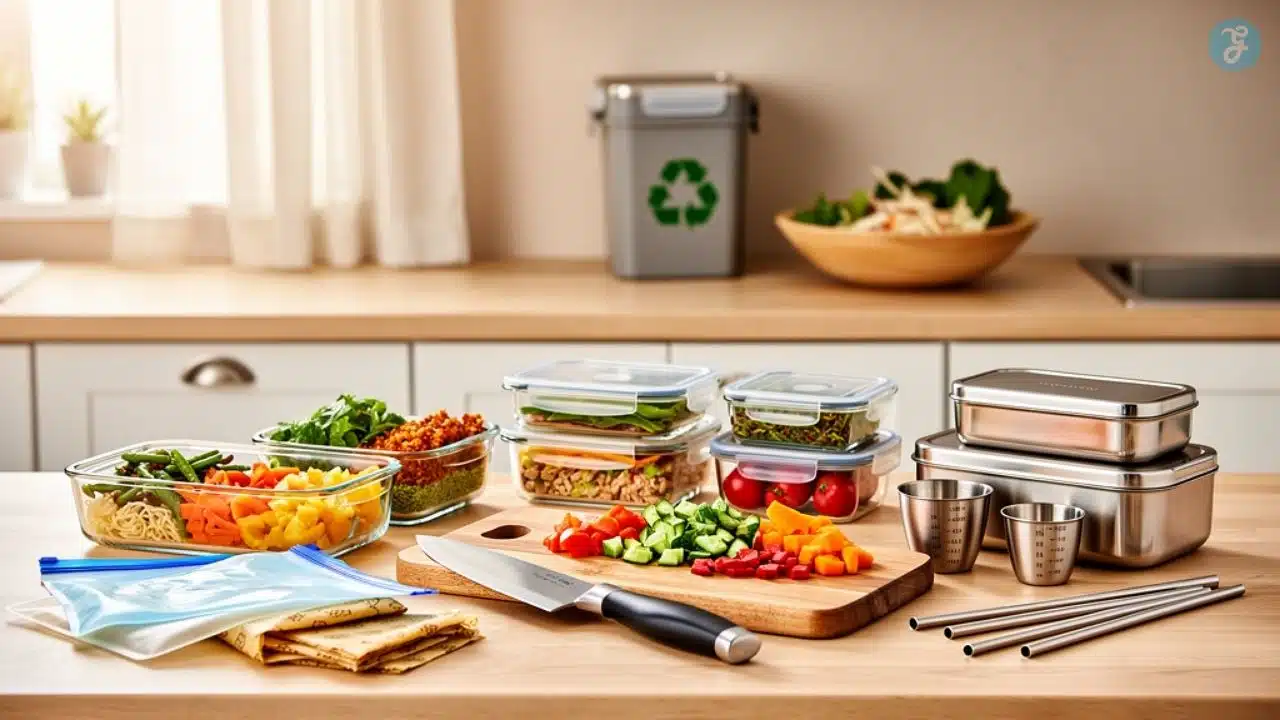
Mastering Sustainable Meal Prep is one of the most impactful shifts you can make toward a more environmentally conscious lifestyle. As we rethink our relationship with food, the convenience of single-use plastics and disposable packaging is rapidly being replaced by durable materials and mindful cooking habits. This transition is not just about saving the planet; it is also about creating a healthier, more organized, and financially efficient home kitchen.
When you learn to cook in batches with an eye on sustainability, you inherently reduce your exposure to harmful chemicals, minimize your weekly grocery expenses, and drastically cut down on household waste.
To build a truly green cooking routine, it is essential to look beyond just the food on your plate. A comprehensive approach involves examining the entire lifecycle of your meals, from how ingredients are sourced and the tools used to prepare them, to the specific containers that keep them fresh and the methods used to handle the inevitable scraps.
Strategic Meal Planning and Sourcing
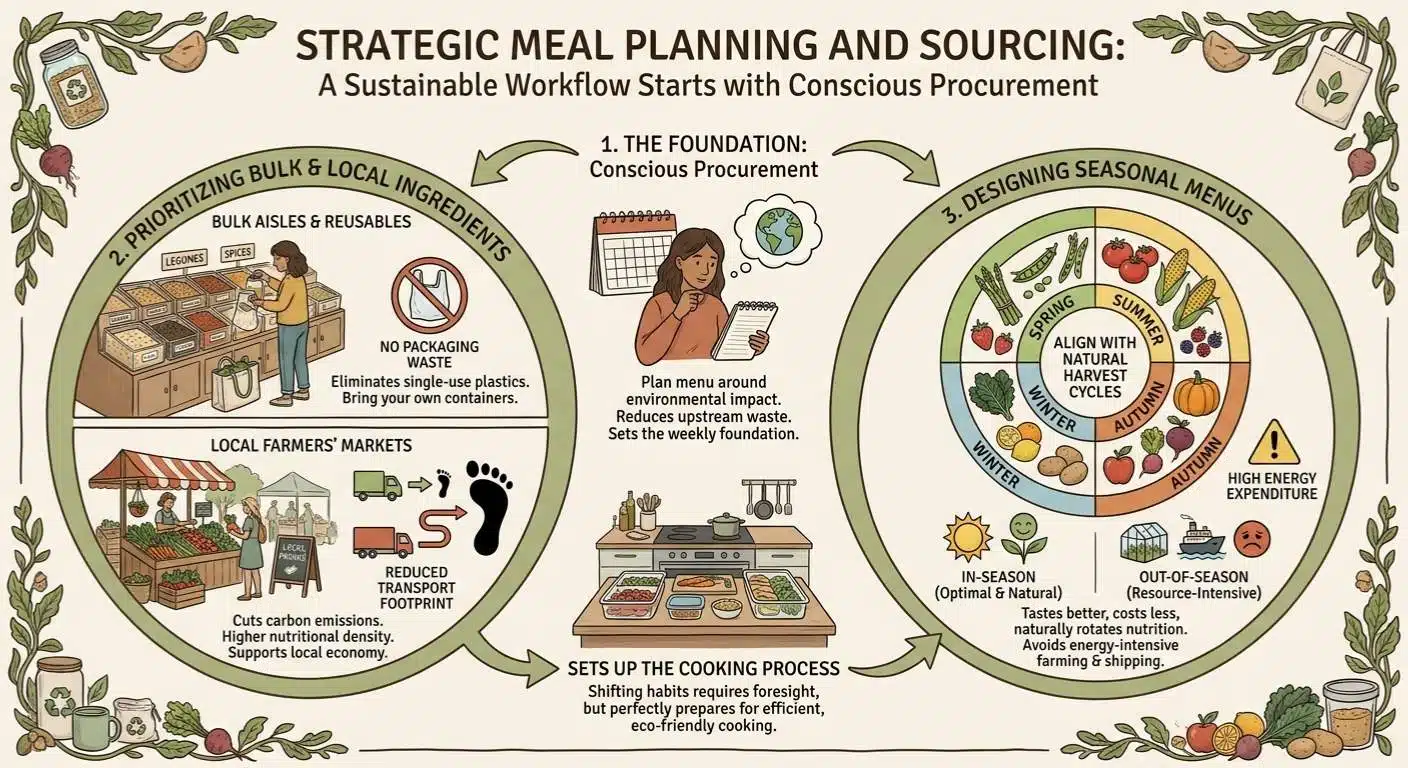
Before any chopping, cooking, or storing begins, a sustainable workflow starts with conscious procurement. Planning your menu around environmental impact drastically reduces upstream waste and sets the foundation for your week.
Prioritizing Bulk and Local Ingredients
The most effective way to eliminate packaging waste is to stop it before it enters your home. Sourcing ingredients from local farmers’ markets or utilizing the bulk aisles at your neighborhood grocery store cuts off the supply chain of single-use plastics. By bringing your own reusable cotton produce bags, glass jars, and cloth totes, you can purchase grains, legumes, spices, and fresh vegetables without generating any trash.
Furthermore, buying locally reduces the massive carbon footprint associated with long-distance food transportation. When ingredients do not have to travel thousands of miles in refrigerated trucks, their environmental impact plummets, and their nutritional density remains intact.
Designing Seasonal Menus
Creating recipes based on what is locally in season is a cornerstone of an eco-friendly diet. Seasonal produce not only tastes significantly better and costs less, but it also naturally rotates your nutritional intake throughout the year. Relying on out-of-season produce often means supporting resource-intensive greenhouse farming or international shipping, both of which require immense energy expenditures.
By aligning your meal prep with the natural harvest cycles of your region, you ensure that your food is grown under optimal, natural conditions. Shifting your sourcing habits requires a bit of foresight, but it perfectly sets up the actual cooking process.
Foundational Habits for Sustainable Meal Prep for Beginners
If you are just starting out, completely overhauling your kitchen can feel overwhelming. Establishing a few core habits makes sustainable meal prep for beginners a manageable and rewarding journey.
Starting with a Simple, Focused Plan
The primary cause of food waste is over-ambition. When beginners attempt to cook five complex, entirely different meals for the week, the ingredient list balloons, and items inevitably spoil before they can be used. Instead, the most sustainable approach is to focus on a modular cooking style.
Choose two or three versatile proteins, a large batch of a complex carbohydrate like quinoa or brown rice, and an array of roasted seasonal vegetables. These components can be mixed and matched into bowls, salads, and wraps throughout the week. This modular approach ensures that every ingredient is fully utilized, minimizing the risk of forgotten food deteriorating in the back of the fridge.
Embracing Plant-Forward Recipes
Reducing your environmental impact in the kitchen is closely tied to the types of food you choose to prepare. Plant-based ingredients, such as lentils, chickpeas, and hearty vegetables, require a fraction of the water and land resources needed to produce animal proteins.
Incorporating more plant-forward meals into your weekly prep not only lightens your carbon footprint but also introduces high-fiber, nutrient-dense foods into your diet. Even if you are not strictly vegetarian, designating several days a week for plant-based batch cooking is a highly effective sustainability strategy. Once your ingredients are planned and prepped, keeping them fresh without relying on disposable plastics is the next critical hurdle.
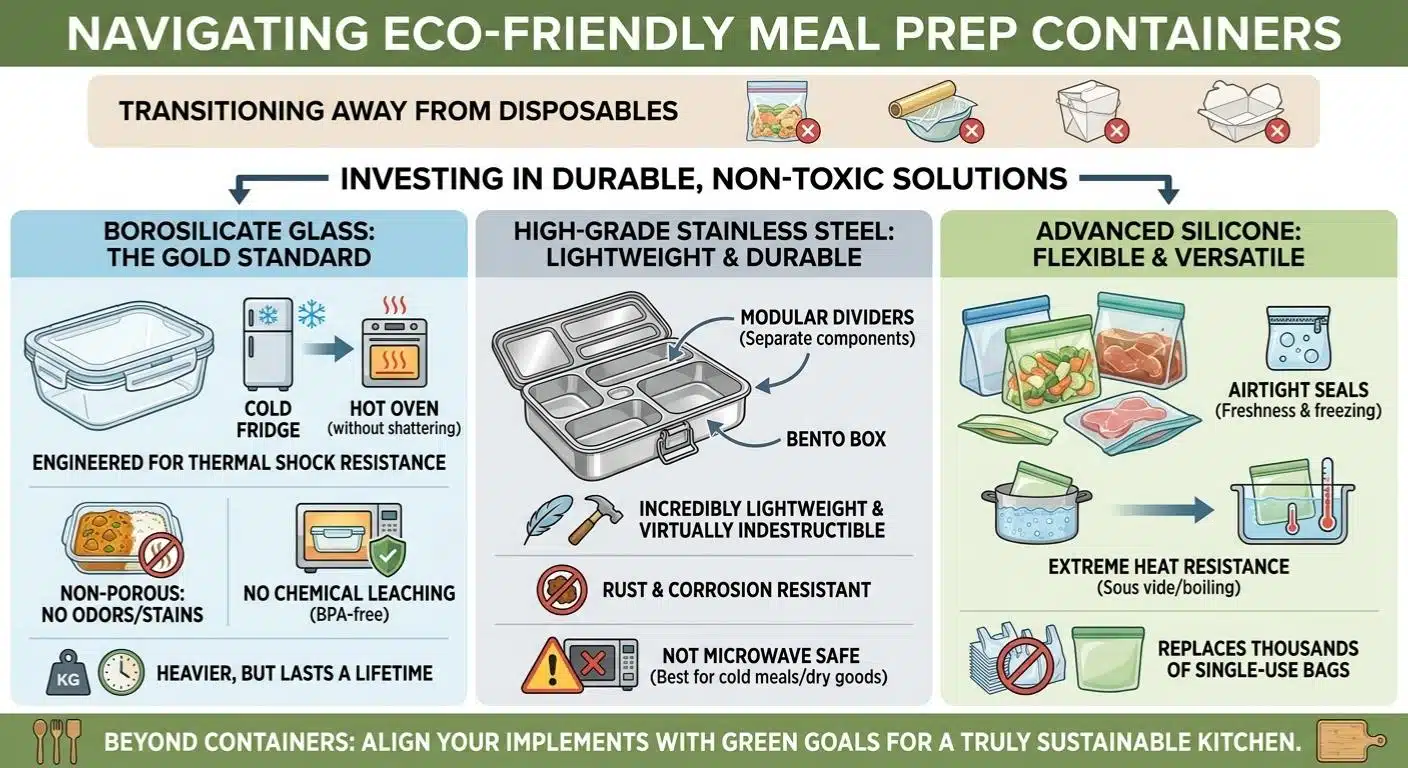
A core pillar of this lifestyle is transitioning away from the convenience of zip-top bags, cling wrap, and fragile takeaway boxes. Investing in durable, non-toxic, eco-friendly meal prep containers is essential for maintaining the longevity and safety of your food.
The Versatility of Glass Storage Solutions
Borosilicate glass containers are the absolute gold standard for a zero-waste kitchen. Unlike standard glass, borosilicate is engineered to withstand severe temperature changes, meaning it can safely transition straight from a cold refrigerator to a hot oven without shattering. Glass is completely non-porous, ensuring that it will never absorb strong odors from dishes like curries or garlic-heavy sauces, nor will it stain from acidic foods like tomato paste.
Most importantly, glass eliminates the risk of microplastics or endocrine-disrupting chemicals leaching into your food when reheated. While they are heavier and require more careful handling than plastic, a high-quality set of glass containers can last a lifetime, making them a superb investment.
Integrating High-Grade Stainless Steel
For situations where heavy glass is impractical, such as packing a lunch for work, sending meals to school with children, or taking food on a hike, food-grade stainless steel bento boxes are the perfect alternative. Stainless steel is incredibly lightweight, virtually indestructible, and completely resistant to rust and corrosion.
Many modern designs include modular dividers, allowing you to keep different components of your meal separated without needing multiple small containers. The only significant drawback to stainless steel is that it cannot be microwaved, making it best suited for cold meals like salads, sandwiches, and grain bowls, or for storing dry goods in your pantry.
The Rise of Advanced Silicone Alternatives
Finding a sustainable replacement for the ubiquitous plastic sandwich bag used to be difficult, but high-quality, food-grade silicone has solved this problem. Reusable silicone storage bags are thick, durable, and highly flexible. They feature airtight seals that are excellent for freezing pre-chopped vegetables, marinating proteins, or keeping snacks fresh on the go.
Because silicone can withstand extreme heat, these bags can even be used for sous vide cooking or boiled directly on the stove. When properly cared for and thoroughly dried to prevent mildew, a single silicone bag can replace thousands of single-use plastic bags over its lifespan. Beyond the containers themselves, the physical implements you use to process your ingredients must also align with your green goals.
Essential Sustainable Batch Cooking Tools
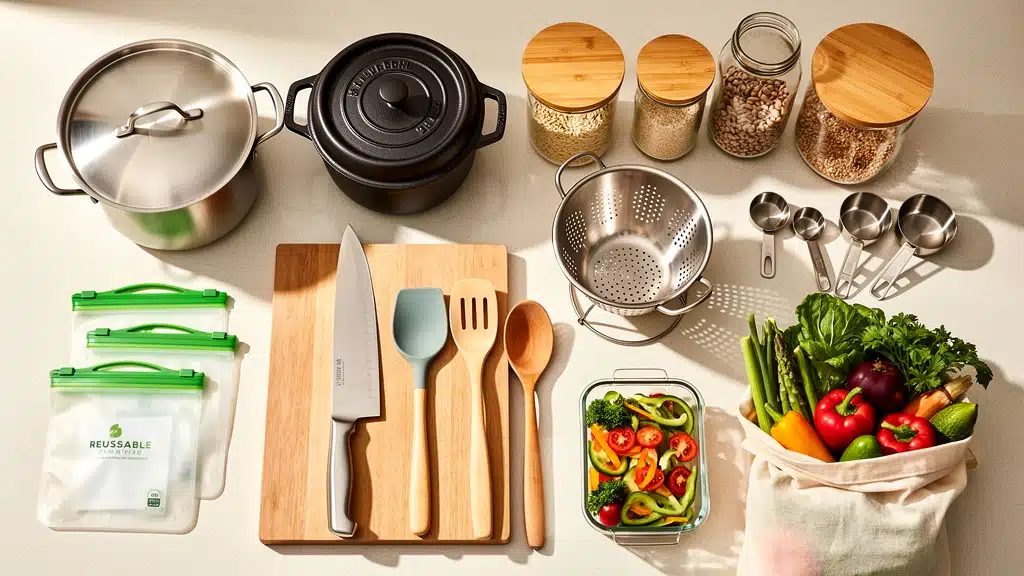
The tools and gadgets used in your workspace should favor renewable materials over synthetics. Upgrading your kitchen with sustainable batch cooking tools significantly enhances the environmental profile of your weekly prep sessions.
Upgrading Your Cutting Surfaces
The standard plastic cutting board is a major hidden source of microplastics in the modern diet. As knives score the plastic surface, microscopic shards are inevitably mixed into your food. Transitioning to a high-quality bamboo or Forest Stewardship Council (FSC)-certified wood cutting board eliminates this issue entirely.
Bamboo is particularly advantageous because it is a rapidly renewable resource that grows without the need for harsh pesticides. Furthermore, both bamboo and dense hardwoods possess natural antibacterial properties that help keep your prep station sanitary. With regular oiling and proper hand-washing, a wooden board will far outlast its plastic counterpart.
Moving Away from Non-Stick Cookware
Traditional non-stick pans are frequently coated with per- and polyfluoroalkyl substances (PFAS), also known as “forever chemicals.” These synthetic compounds break down under high heat, releasing toxic fumes and flaking off into your food, and they persist indefinitely in the environment once disposed of. For sustainable batch cooking, the best alternatives are cast iron and carbon steel.
While they require a bit of maintenance to build up a natural, seasoned patina, both materials are exceptionally durable, naturally non-stick once properly cared for, and capable of holding high, even heat for roasting large batches of vegetables or searing proteins.
Smart Gadgets for Kitchen Efficiency
Efficiency in the kitchen directly correlates with reduced waste and lower energy consumption. Below is a breakdown of simple tool swaps that streamline your prep while maintaining a green focus.
| Traditional Kitchen Item | Sustainable Alternative | Primary Environmental Benefit |
| Synthetic Sponges | Loofah or Cellulose Sponges | Fully compostable; stops microplastic shedding down the sink drain. |
| Cling Film / Plastic Wrap | Beeswax Food Wraps | Uses natural antibacterial properties to keep food fresh; fully biodegradable. |
| Disposable Baking Mats | Reusable Silicone Baking Mats | Replaces hundreds of sheets of parchment paper and aluminum foil. |
| Paper Towels | Unbleached Cotton Dish Cloths | Drastically reduces paper waste and the energy required for single-use manufacturing. |
Equipping your kitchen with these thoughtful tools sets the stage for the most impactful aspect of this lifestyle: handling the leftovers and scraps.
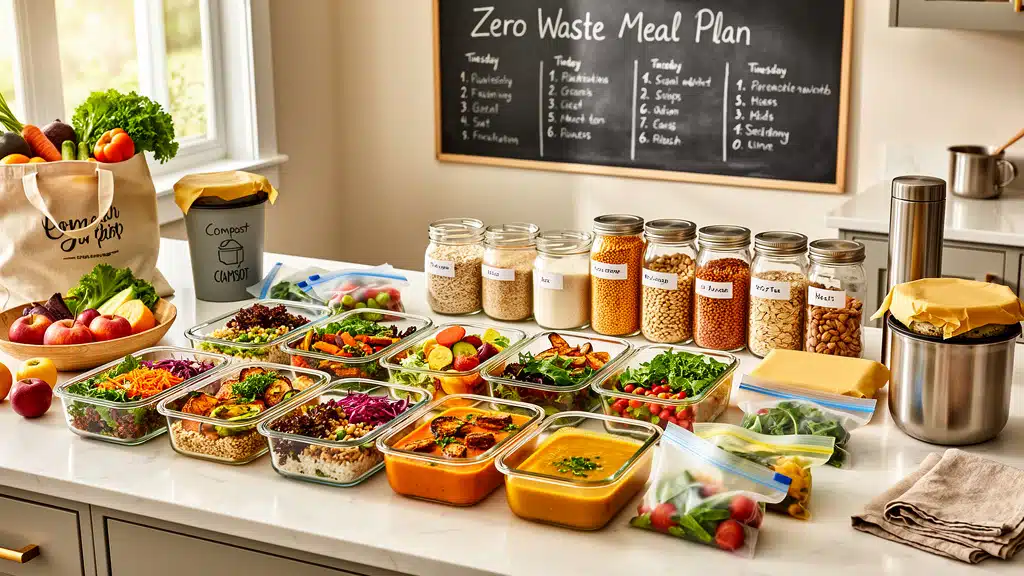
Implementing Zero Waste Meal Prep Ideas
The ultimate goal of an eco-conscious kitchen is to utilize every edible ounce of the food you purchase. Integrating zero-waste meal prep ideas requires a shift in culinary perspective, viewing what is traditionally considered “trash” as an opportunity for flavor.
The Art of Root-to-Stem Cooking
Root-to-stem cooking is a philosophy that challenges the home chef to use every part of a fruit or vegetable. The modern food system encourages us to discard massive amounts of perfectly nutritious food simply because it is unconventional. For example, broccoli and cauliflower stalks are often thrown away, yet when peeled and roasted, they are tender and flavorful.
Carrot tops can be blended with garlic, nuts, and olive oil to create a vibrant, peppery pesto. Watermelon rinds can be pickled, and potato peels can be tossed in oil and baked into crispy snacks. By actively finding ways to incorporate these elements into your recipes, you maximize your grocery budget and extract the highest possible nutritional value from your produce.
Mastering the Scrap Broth Technique
One of the easiest and most rewarding zero-waste habits is maintaining a “scrap bag” in your freezer. Whenever you chop vegetables, toss the clean ends, peels, and skins, such as onion skins, celery tops, carrot peels, and mushroom stems, into the bag rather than the garbage. Once the bag is full, dump the frozen scraps into a large pot, cover them with water, add a few herbs and peppercorns, and simmer for several hours.
The result is a rich, complex, and completely free vegetable broth that can be used as a base for soups, stews, and cooking grains. This simple practice entirely eliminates the need to purchase store-bought broth, which is typically packaged in unrecyclable, multi-layer cartons. Even with maximum utilization, however, some waste is inevitable, which brings us to the final stage of the food lifecycle.
Advanced Strategies to Reduce Food Waste at Home
Managing your inventory and properly storing your prepped meals is the only way to ensure your hard work doesn’t end up in the trash. Learning how to reduce food waste at home relies on smart organization and an understanding of food science.
Optimizing Refrigerator Zones
Many people unpack their groceries haphazardly, unaware that a refrigerator has distinct microclimates. Storing food in the wrong zone guarantees faster spoilage. The door is the warmest part of the fridge and experiences the most temperature fluctuation; it should only be used for highly stable items like condiments and preserved sauces, never for dairy or eggs. The lower shelves are the coldest, making them the safest place for raw meats and delicate proteins.
The crisper drawers are designed to manage humidity. Leafy greens, herbs, and vegetables that are prone to wilting thrive in high humidity, while fruits that emit ethylene gas, such as apples, pears, and avocados, should be kept in low-humidity environments to prevent them from prematurely ripening the produce around them. Understanding these zones extends the life of your prepped ingredients by days or even weeks.
The FIFO Method in Action
Professional kitchens operate on the FIFO principle: First In, First Out. This simply means that older ingredients should always be placed at the front of the fridge or pantry, and newer items tucked behind them. When batch cooking, this translates to eating the oldest prepped meals first.
To make this foolproof, utilize a strip of masking tape and a marker to clearly date every container of food you prepare. Establishing an “Eat Me First” bin at eye-level in your refrigerator is another excellent strategy; any random leftovers, half-cut vegetables, or meals nearing the end of their shelf life are placed in this bin, signaling to everyone in the household what needs to be consumed immediately.
Implementing Countertop Composting
For the organic matter that simply cannot be eaten, like eggshells, coffee grounds, tea leaves, and avocado pits, composting is the final defense against the landfill. When food waste is sent to a landfill, it decomposes anaerobically (without oxygen) and produces methane, a greenhouse gas exponentially more potent than carbon dioxide.
Setting up a small, charcoal-filtered compost bin on your kitchen counter allows you to collect these scraps odor-free. Depending on your living situation, this waste can then be added to an outdoor compost tumbler, fed to a vermicomposting (worm) bin, or processed by an electric countertop composter that grinds and dehydrates the waste into a nutrient-rich soil amendment in a matter of hours.
The Long-Term Economic and Environmental Impact
The benefits of committing to this system extend far beyond the walls of your kitchen. Over time, the compounding effects of these daily choices create a significant positive impact on both your personal finances and the broader environment.
Stretching the Grocery Budget
Sustainable meal prep is inherently economical. By prioritizing bulk purchasing, choosing seasonal produce, and stretching your proteins with plant-based alternatives, the initial cost per meal drops dramatically. Furthermore, by practicing root-to-stem cooking and rigorous waste-reduction strategies like the FIFO method, you ensure that every dollar spent at the grocery store translates directly into consumed calories, rather than rotting in a landfill.
The money saved by avoiding single-use plastics, store-bought broths, and pre-packaged convenience foods quickly pays for the initial investment in high-quality glass containers and durable kitchen tools.
Tracking Your Environmental Footprint
The environmental relief provided by a single household making these changes is substantial. By diverting organic matter to a compost bin, you actively prevent the release of harmful methane emissions.
By refusing single-use plastics, you decrease the demand for fossil fuel extraction and reduce the burden on overloaded recycling facilities. Every homemade meal stored in a reusable container represents a victory over the wasteful packaging inherent in takeout culture and industrial food processing.
Cultivating a Lifelong Sustainable Routine
Transitioning to a highly efficient, zero-waste kitchen is a marathon, not a sprint. It does not require you to throw away everything you own and buy a completely new set of gear tomorrow. Instead, it is about making better choices as your old, unsustainable items wear out. When your plastic containers warp or crack, replace them with glass. When your non-stick pan loses its coating, invest in cast iron.
By methodically upgrading your physical tools and continuously refining your habits to utilize more food and generate less trash, you create a cooking ecosystem that respects the planet. Over time, these deliberate, mindful actions compound, turning the daily necessity of preparing food into a powerful, consistent act of environmental stewardship.
Frequently Asked Questions About Sustainable Meal Prep
1. Are glass meal prep containers safe to put in the freezer?
Yes, most high-quality borosilicate glass containers are freezer-safe. However, it is crucial to leave at least an inch of space at the top of the container before freezing, as liquids and water-heavy foods expand when they freeze. If overfilled, the pressure can cause the glass to crack or shatter. Also, avoid moving glass directly from the freezer to a hot oven; let it thaw in the fridge first to prevent thermal shock.
2. How long do beeswax food wraps actually last, and how do I clean them?
With regular use and proper care, a high-quality beeswax wrap typically lasts between six months and a year. To clean them, simply wash them by hand in cool water with a mild, eco-friendly dish soap and hang them to dry. Never use hot water, put them in the dishwasher, or use them to wrap raw meat, as the heat required to sanitize them will melt the wax coating. Once they lose their grip, they can be composted.
3. Is sustainable meal prep more expensive than traditional meal prep?
While the upfront cost of buying glass containers, silicone bags, and quality kitchen tools is higher than buying a box of plastic zip-top bags, sustainable meal prep is significantly cheaper in the long run. You save money by buying in bulk, eating seasonal produce, reducing meat consumption, and practically eliminating the need to constantly repurchase disposable kitchen items.
4. Can I put silicone storage bags in the microwave or dishwasher?
Yes, one of the main advantages of food-grade silicone is its incredible heat resistance. Most high-quality silicone bags are perfectly safe for the microwave, dishwasher, and even boiling water (for sous vide cooking). To ensure they get thoroughly clean in the dishwasher, prop them open over the prongs on the top rack.
5. How do I keep my fresh greens from wilting before I can eat them?
Moisture control is the secret to keeping greens fresh. When you bring leafy greens home, wash them, dry them completely (a salad spinner is highly recommended), and store them in a glass container or silicone bag with a clean, dry cotton cloth or paper towel tucked inside. The cloth will absorb excess condensation, which is the primary culprit behind slimy, wilted spinach and lettuce.
6. Does countertop composting smell bad?
It shouldn’t! A properly managed countertop compost bin will not emit foul odors into your kitchen. The key is to use a bin with a tight-fitting lid and a built-in activated charcoal filter, which traps and neutralizes smells. Additionally, you should empty your indoor bin into an outdoor compost pile or municipal green bin every few days, especially during warmer months.