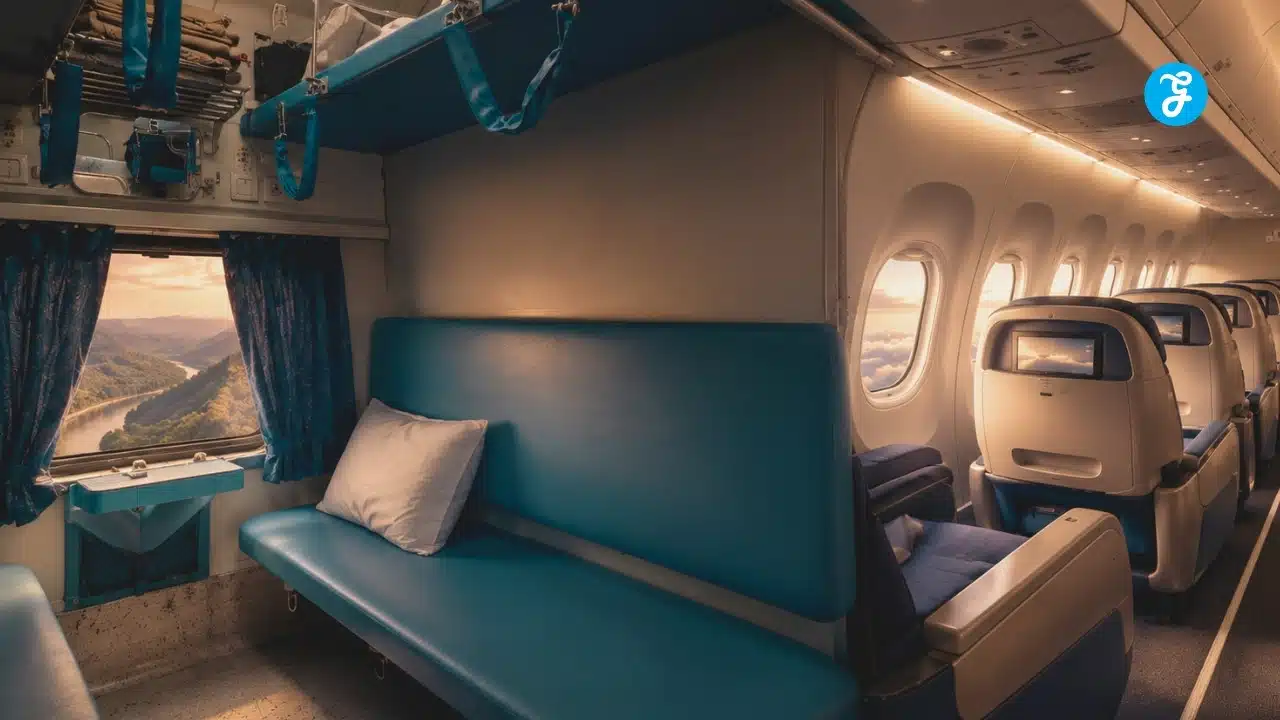
The modern airport experience is reaching a breaking point. Most travelers feel a sense of dread when they look at a boarding pass. It is not just about the long lines or the stale air. It is about a system that treats humans like luggage. For decades, we chose flight for its speed. We wanted to arrive as fast as possible. But the cost was our peace of mind. Recent luxury travel experiences show that people are finally opting out of this exhausted cycle. They are choosing presence over efficiency.
New data confirms this shift. The FeedbackNow Global Airports Index for early 2026 shows a sharp decline. Passenger satisfaction at departure gates dropped by seven points in just one quarter. In North America, satisfaction levels have slumped to 70 percent. Infrastructure simply cannot keep up with the volume of people. Security delays and staffing shortages are now expected parts of the trip. Travelers are tired of automated kiosks and cold terminals. They want a human connection.
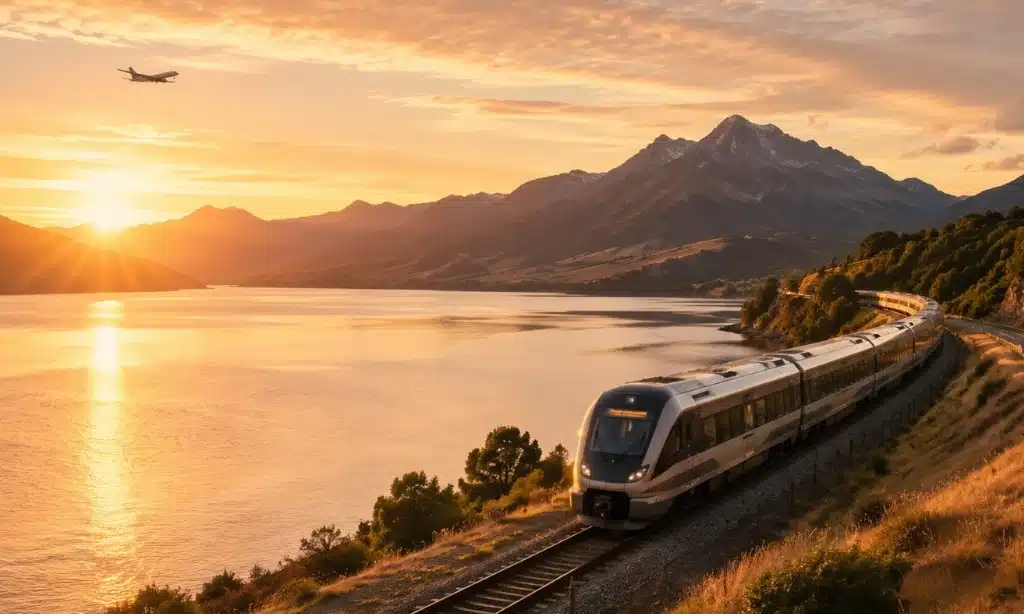
We are witnessing the Great Deceleration. Luxury once meant getting there first. Now, it means having the room to breathe. It means a window seat that reveals a changing horizon instead of a gray wing. Rail culture is enjoying a massive global revival because it offers something aviation cannot provide. It offers time. The journey is becoming the destination once again.
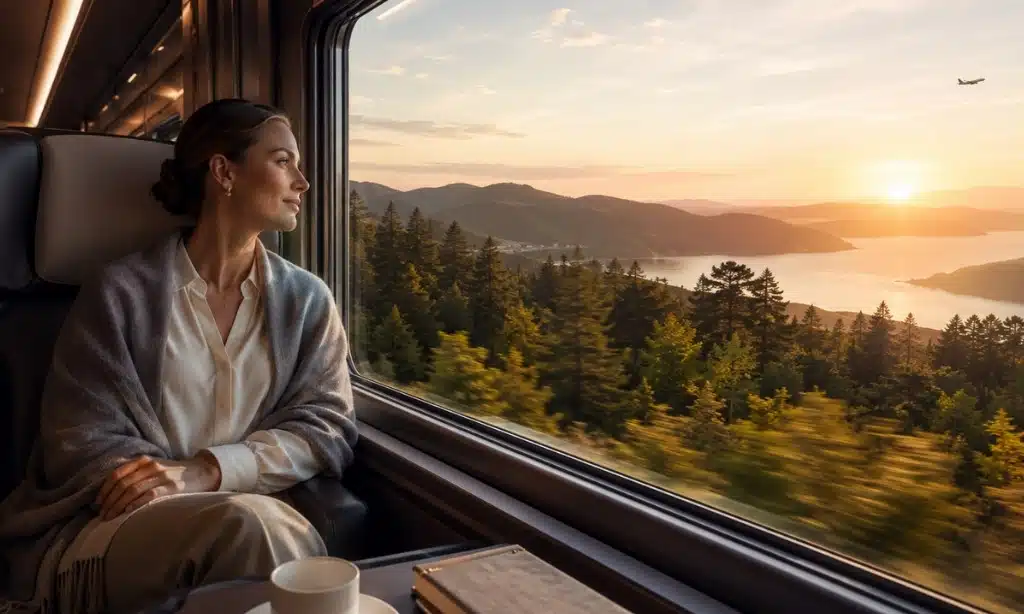
This transition is fueled by two major forces. First, people are recovering from hurry sickness. They want to unplug and slow down. Second, climate awareness is now a primary driver of travel choices. In Europe, aviation accounts for 13.9 percent of all transport emissions. Travelers are looking for ways to see the world without harming it. The railway is reclaiming its status as the most sophisticated way to move. It is the new gold standard for the thoughtful explorer.
The Great Deceleration: Why the Journey is Now the Destination
For years, aviation was the ultimate symbol of modern progress. It was a testament to human efficiency and a fast-moving world. Today, a profound global shift is redefining the concept of premium transit. Travelers are prioritizing spaces for rest and reflection over mere speed. This movement is not just about transport; it is a structural change in how we perceive luxury.
The Infrastructure of Friction: Why Airports are Losing the Luxury War
Airports are increasingly struggling to deliver the comfort and control premium travelers expect. Severe infrastructure strains and a lack of human-centric service have turned air travel into a source of dread. As terminal congestion outpaces capacity, high-net-worth travelers are actively seeking alternative modes of transport that respect their personal space. To understand the magnitude of this shift, it is essential to look at the verifiable data tracking both passenger sentiment and the environmental toll of short-haul aviation.
| Metric / Touchpoint | Reported Data Point | Industry Impact |
| North America Airport Satisfaction | 70% (FeedbackNow Q1 2026) | Lowest-performing region; heavily affected by staffing and security delays. |
| Information Desks Satisfaction | 91% (FeedbackNow Q1 2026) | Shows travelers still value human-supported, personal interaction over digital automation. |
| EU Aviation Transport Emissions | 13.9% of total transport emissions | Confirms aviation as the second-largest transport greenhouse gas source in the EU. |
| Night Train Consideration | 69% of surveyed travelers in DE, PL, FR, ES, and NL | Shows strong public interest in sleeper train alternatives for regional routes. |
Climate as a Catalyst: The Policy-Driven Rail Renaissance
Environmental awareness has evolved from a niche preference into a primary driver of travel logistics. Legislative shifts in the European Union are making short-haul flights economically less viable. This green mandate is fundamentally reshaping corporate travel policies and luxury itineraries toward carbon-conscious rail networks. As policy shifts, so does the physical design of the travel environment.
The Sovereignty of Space: The 2026 Shift in Luxury Travel Experiences
The experience economy is turning environmental necessity into financial growth. Modern railway design is characterized by high-tech nostalgia. By offering private suites with 5G connectivity and noise-canceling technology, trains are becoming standalone destinations that allow the modern traveler to reclaim their time.This reclamation of time is especially evident for those undergoing major life transitions.
The Expert View: A Balanced Future for Tourism
Before looking at the individual journeys of modern travelers, Dr. Himanshu Talwar, popularly known as #DrTourism offers a strategic perspective on why the tracks are winning. He views the rail revival as a necessary evolution in the global travel market.
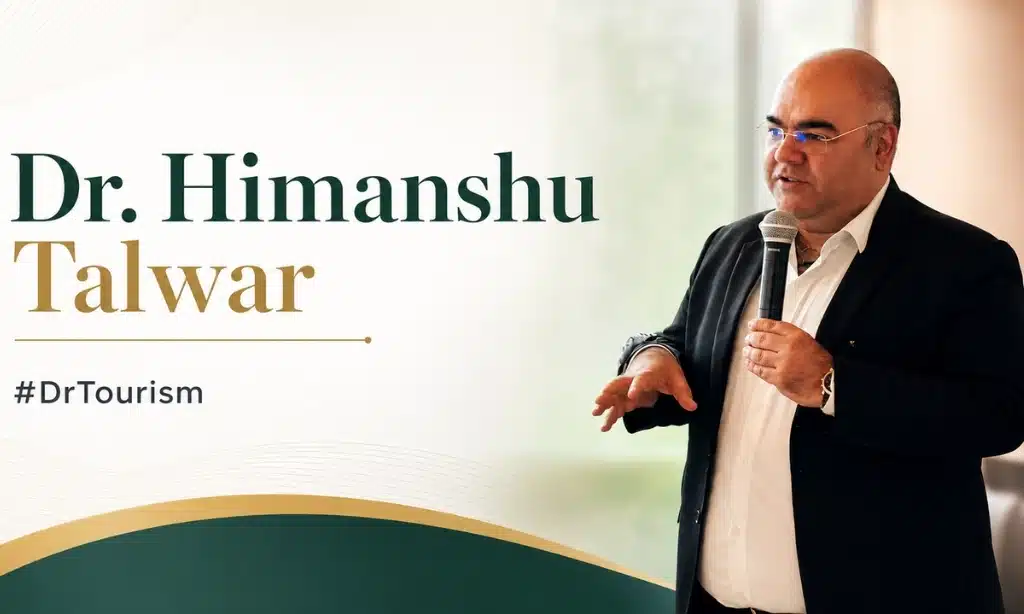
“The global revival of rail travel reflects a positive shift in how people experience tourism,” says Dr. Talwar. “While air travel continues to connect the world efficiently, many travelers are now embracing trains for their comfort, scenic value, and slower, more meaningful pace. Rail journeys offer opportunities to relax, reconnect with landscapes, and enjoy the journey itself as part of the travel experience. Growing environmental awareness and demand for wellness-focused tourism are also encouraging this trend. For destinations, rail tourism creates exciting possibilities to promote regional exploration, sustainable mobility, and immersive cultural experiences. It represents a balanced future where travel is not only faster, but also richer and more memorable.”
A Human Scale to Global Transit: Why the Modern Traveler Chooses the Track
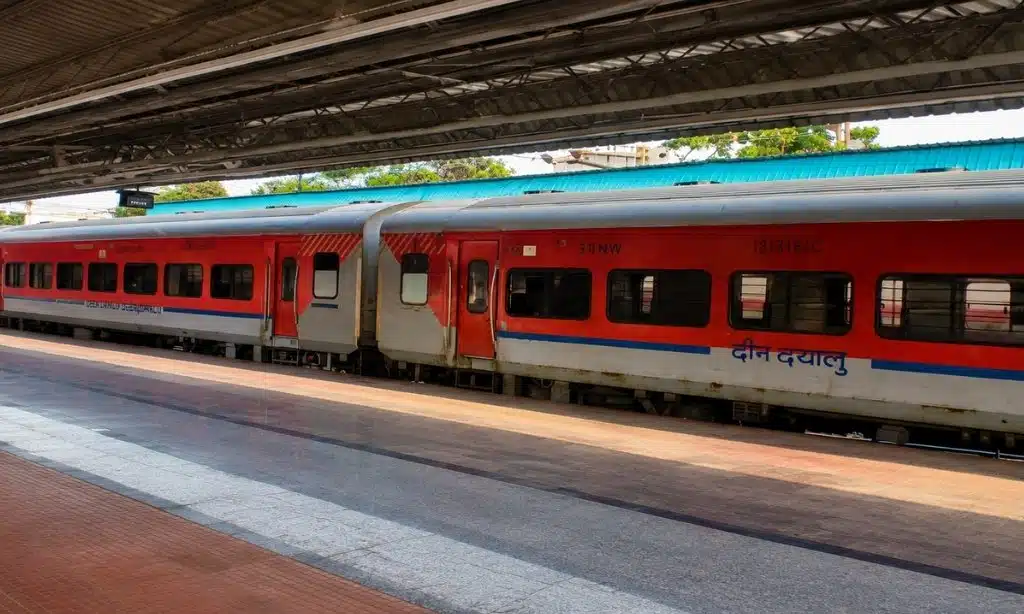
For students like Sreemoyee Bhattacharya and Ujan Banerjee, the journey to Sweden for higher studies began long before they reached the airport. To complete their pre-departure formalities in New Delhi, they chose the Sealdah Rajdhani Express. This decision reflects a growing preference for the physical and mental space that only rail travel provides.
The Comfort of the Long Haul: Ujan and Sreemoyee’s Journey
Ujan, the more talkative of the two friends, explains that the choice was about more than just a ticket. While Sreemoyee offers a quiet smile of agreement, Ujan notes that the train allows them to stretch their arms and legs in a way a middle seat on a flight never could. He admits that while the onboard dinner might not always hit the mark, the rest of the catering is reliable. For these students, the Rajdhani is a comfortable transition zone that prepares them for the massive life shift ahead. These personal stories are symptoms of a larger cultural realignment.
The Drivers of the Revival: Why Now?
The return to the rails is not an accident of nostalgia. It is a calculated response to a world that has become too loud and too fast. Modern travelers are looking for a sense of agency that aviation no longer provides. They are choosing routes that align with their values and their mental health.
Climate Awareness and the Flight Shaming Movement
Environmental impact is now a primary filter for luxury travel experiences. The Flygskam or flight shaming movement began in Sweden but has since spread across the globe. In 2026, carbon-conscious exploration is a requirement for the thoughtful traveler. Aviation accounts for a significant portion of transport emissions, leading many to seek out the low impact profile of high-speed rail. Choosing the train is a visible statement of intent. It shows a commitment to seeing the world without contributing to its decline.
Digital Detox Culture and the Value of the Slow Zone
We live in a state of constant connectivity that has led to widespread digital burnout. The train carriage has emerged as a rare sanctuary from the algorithmic noise of daily life. While many modern trains offer high-speed internet, the physical rhythm of the journey encourages a different mindset. It is a slow zone where unplugging is the ultimate amenity. Travelers are using these hours to read, write, or simply stare at the passing terrain. This intentional disconnection is a luxury that a frantic airport terminal cannot offer.
The Post-Pandemic Psyche and Controlled Environments
The global health crisis of the early 2020s fundamentally changed how we perceive shared spaces. There is a lasting desire to avoid massive, anonymous crowds and high-touch surfaces. Rail travel satisfies this need through private cabins and controlled environments. Unlike the open cabin of a commercial jet, a private sleeper suite offers a personal bubble. It provides safety, privacy, and a sense of ownership over one’s immediate surroundings. This shift toward seclusion is driving the demand for premium rail journeys that prioritize the individual over the masses.
Global Luxury Rail Trends: Regional Deep Dives
The rail revival is a coordinated global movement. Different continents are interpreting the desire for slow travel through their own cultural lenses. From the restored sleepers of Europe to the high-tech precision of Asia, the tracks are becoming the stage for the world’s most exclusive journeys.
Europe’s Renaissance and the Return of the Night Train
Europe is currently the epicenter of the sleeper train comeback. The expansion of the Belmond fleet has set a new standard for continental glamour. New routes now connect major hubs like Paris, Vienna, and Berlin, allowing travelers to cross borders while they sleep. These journeys are replacing the stress of regional budget flights with the elegance of a midnight departure and a sunrise arrival in a new capital. It is a seamless way to navigate the continent that honors the environment and the traveler’s comfort.
Asia’s Precision Luxury and the Japanese Cruise Train
In Asia, the focus is on a blend of hyper-modern aesthetics and traditional hospitality. Japan remains the leader with its iconic Seven Stars in Kyushu. These are not merely trains but mobile art galleries that showcase the finest regional craftsmanship. Other Japanese cruise trains utilize glass and light to create a futurist experience. This precision luxury ensures that every minute on board is curated to reflect the natural beauty of the passing landscape.
The Great Outdoors: North America and Australia
In regions with vast landscapes, the train serves as a living gallery. The Rocky Mountaineer in North America offers glass-domed cars that provide an unobstructed view of the rugged wilderness. Similarly, The Ghan in Australia cuts through the heart of the Red Centre. It transforms a harsh environment into a comfortable, high-end expedition. For these travelers, the window is the primary entertainment. The value lies in seeing the world at a human pace from the safety of a premium suite.
The Commuter’s Perspective: Sanchalita on German Efficiency
This preference for the tracks is shared by Sanchalita, who currently resides in Germany. She views the train as her primary mode of connection. Sanchalita notes that in Germany, commuting by rail is not just a utility but a lifestyle choice. It offers a consistent environment where she can observe the landscape and remain productive. For her, the train represents a reliable and stress-free alternative to the complexities of road travel or short-haul flights. This lifestyle shift is supported by radical new developments in design.
The Architecture of the Experience: Design and Gastronomy
The modern rail car is a masterpiece of sensory engineering. Designers are moving away from the cramped constraints of the past to create expansive, tactile environments. Every detail is intended to anchor the traveler in the present moment while celebrating the heritage of the route.
Cabin Evolution: From Bunks to Residential Suites
The standard sleeper cabin has undergone a total transformation. The 2026 fleet, led by the Britannic Explorer, has replaced utilitarian bunks with Grand Suites that feel like high-end apartments. Designers are using artisanal materials like limed oak and plush velvet to create a sense of place. These rooms feature private showers, marble vanities, and furniture that transitions seamlessly from day to night. The aesthetic is one of elevated simplicity.
Moving Kitchens: The Hyper-Local Dining Revolution
Fine dining on rails has evolved into a sophisticated farm-to-fork experience. Modern luxury trains no longer rely on pre-packaged meals. Instead, chefs curate menus that change with the geography of the journey. A passenger might enjoy fresh Cumbrian tea while passing through the Lake District or local seafood as the train skirts the Welsh coast. This zero-waste philosophy ensures that the plate tells the same story as the landscape.
Observation Cars: Engineering the Unobstructed View
The observation car is the social heartbeat of the new rail era. Modern engineering has allowed for massive glass domes and open-air platforms that dissolve the barrier between the traveler and the world. These spaces are designed to maximize natural light and offer 360-degree views of the passing terrain. It is a space designed for shared discovery.
Economic and Environmental Impact
The rail revival is a catalyst for regional growth that air travel cannot match. While planes fly over rural landscapes, trains move through them, creating a direct physical link between high-spending travelers and remote communities.
Revitalizing Rural Economies Through Slow Tourism
Luxury rail brings a surge of capital to remote towns. Routes like the Britannic Explorer are designed to highlight local craftsmanship. When a train stops in Cornwall or the Lake District, it is supporting local artisans, farmers, and historians through curated excursions and hyper-local sourcing. This decentralized spending helps reduce regional inequalities.
Private Investment as a Catalyst for Public Rail Upgrades
The boom in private luxury rail is actively funding the future of public infrastructure. Large-scale operators are investing billions into fleet modernization and station restoration. In 2026, the global heritage railway market is projected to reach $398.14 billion, with luxury offerings capturing nearly 39 percent of that value. These private ventures often serve as the proof of concept for broader public upgrades.
The Challenges: Cost vs. Accessibility
The rapid ascent of rail culture has brought its own set of structural hurdles. While the demand for slow travel is at an all-time high, the industry must navigate the delicate balance between premium exclusivity and public necessity.
The Elite Label: Beyond the Gilded Carriage
There is a persistent perception that slow travel is a luxury reserved solely for the wealthy. With the heritage rail market nearing a $400 billion valuation, luxury offerings command nearly 40 percent of that wealth. This concentration of capital at the high end can alienate the average traveler who seeks a sustainable alternative to flying. However, the industry is beginning to see a bifurcation of services. While ultra-luxury suites continue to thrive, new budget sleeper options are emerging.
The Infrastructure Gap: Keeping Up with the Boom
Global rail networks are currently struggling to match the surge in passenger enthusiasm. In 2026, many popular luxury routes are sold out months in advance. Rail operators are facing severe operational disruptions as they attempt to integrate high-speed technology with historic heritage lines. Addressing this gap requires massive capital outlay. Fortunately, record-breaking investments, such as the ₹2.78 lakh crore allocated for Indian Railways in the 2026 budget, show that governments are prioritizing modernization.
The Soul of the Slow Track
In an era defined by the frantic optimization of every waking second, the resurgence of luxury rail travel is more than a transit trend; it is a profound psychological realignment. For the last twenty years, we have conditioned ourselves to view travel as a logistical “cost”, a period of lost time to be minimized through speed and efficiency. We accepted the exhausting logistics of the airport terminal because we believed the destination was all that mattered.
But the data of 2026 suggests a collective breaking point. As digital burnout peaks and “hurry sickness” becomes a global epidemic, the train carriage has re-emerged as the ultimate sanctuary for human presence. By choosing the track over the tarmac, we are reclaiming the right to inhabit the transition. Sitting behind a window on the Britannic Explorer or the Nightjet is an active rebellion against the culture of instant movement. It is a reminder that the most valuable thing a traveler can possess isn’t a faster engine, but the mental space to watch a landscape unfold at a human pace. We aren’t just shifting our tickets; we are reconnecting travel with place and presence.
Reclaiming the Luxury of Presence
Ultimately, the global railway revival proves that in an increasingly frantic world, peace and privacy are the ultimate luxuries. While a plane is a tool for reaching a place, a train is a vessel for inhabiting it. We have spent decades optimizing for speed, but the $398 billion boom in heritage rail suggests we are finally ready to optimize for presence. We have stopped treating transit as a void to speed through, recognizing it instead as a space worth inhabiting. In 2026, the most sophisticated way to move is to slow down, look out the window, and reclaim the luxury of the transition.
Frequently Asked Questions on Luxury Travel Experiences
What distinguishes High-End from Quiet luxury in 2026?
High-end luxury focuses on visible opulence like gold leaf interiors. Quiet luxury prioritizes the sovereignty of space, natural materials, and invisible service. In modern rail travel, this means private compartments where the complete absence of noise and crowds is the primary amenity.
How does neuro-inclusive design fit into modern transit?
Travel brands are finally adapting to neurodivergent needs. Premium sleeper trains now feature low-sensory zones. These private cabins use dedicated noise-canceling technology and adjustable ambient lighting to prevent sensory overload during the journey.
Can long-distance travel truly be carbon neutral?
Yes. Modern operators treat sustainability as a core luxury requirement. By shifting from short-haul flights to electrified rail networks, brands offer clear conscience guarantees. They offset any remaining footprint through direct investments in local biodiversity.
How is biohacking changing sleeper train journeys?
Wellness is no longer just for the destination. Luxury trains now integrate sleep science directly into the cabin. New suites feature circadian lighting and advanced climate control to regulate your body temperature. This ensures deep, restorative rest while you cross time zones.
What role does Agentic AI play in luxury itineraries?
It replaces static planning with immediate personalization. The AI monitors your travel preferences to anticipate your needs before you ask. On high-end rail routes, these systems can instantly adjust your dining times or schedule private station tours based on real-time delays.
What are Salvaged Stays and how do they connect to rail travel?
These are accommodations born from restored historical relics like old monasteries or lighthouses. They provide a deep cultural soul. Heritage rail routes often serve as the primary link to these remote properties, creating a seamless vintage experience from departure to arrival.
Why is the Shoulder Season Strategy gaining popularity?
Travelers are actively avoiding peak congestion. Booking a trip just outside the high season provides private access to global landmarks without the massive crowds. This strategy proves that quiet isolation is far more valuable than perfect weather.