

Every day on the calendar serves as a profound mirror to human civilization, reflecting our most extraordinary triumphs, devastating tragedies, and revolutionary cultural shifts. May 2 is a magnificent example of this temporal phenomenon. From the definitive collapse of totalitarian empires in the mid-twentieth century to the birth of cinematic legends in South Asia, this specific date provides a fascinating cross-section of global history. Whether you are a dedicated history enthusiast, an academic archivist, or simply a curious reader wondering about the historical footprint of your birthday, exploring the events of May 2 offers a sweeping journey through time.
Navigating through the centuries, we can clearly see how the critical decisions made on this exact date have rippled outward to shape the geopolitical, artistic, and social realities of the modern world. We will embark on a comprehensive exploration of this date, beginning with pivotal moments in the Indian subcontinent, moving through world-altering international events, and concluding with the life cycles of some of the most recognizable and influential figures in human history.
The Bangalee Sphere
The Indian subcontinent is a region bursting with deep cultural heritage, fierce colonial resistance, and unparalleled intellectual milestones. The events that unfolded on May 2 within this specific sphere have deeply influenced regional literature, international cinema, and the complex geopolitical landscape of modern South Asia.
To provide a clear, accessible overview of the historical landmarks in the region on this date, we have compiled a quick-reference chronological guide below.
| Year | Event/Person | Significance |
| 1921 | Birth of Satyajit Ray | Legendary Bengali filmmaker, author, and composer born in Calcutta. |
| 1926 | Birth of Mario Miranda | Renowned Indian cartoonist known for capturing vibrant Goan and Indian life. |
| 1971 | International Reporting on Liberation War | The New York Times publishes Peggy Durdin’s eyewitness account of the systematic genocide in East Pakistan (Bangladesh). |
| 2014 | Death of T. K. Rajeev Kumar | Esteemed Indian Malayalam film director passes away. |
1921: Birth of Satyajit Ray

Satyajit Ray emerged as a titan of 20th-century storytelling, directing 36 films that included features, documentaries, and shorts. His debut film, Pather Panchali (1955), was produced on a shoestring budget but went on to win 11 international prizes, including the inaugural Best Human Document award at the Cannes Film Festival. Alongside Aparajito (1956) and Apur Sansar (1959), it forms The Apu Trilogy, widely regarded by critics and filmmakers as one of the greatest film series of all time. Beyond the director’s chair, Ray was a true polymath. He authored widely beloved science fiction and detective novels, introducing enduring characters like the sleuth Feluda and the eccentric scientist Professor Shonku to Bengali literature. He also composed his own film scores, designed sets, and meticulously illustrated his own cinematic storyboards, ultimately earning him an Academy Honorary Award in 1992 for his lifetime of cinematic achievements.
1926: Birth of Mario Miranda
Mario Joao Carlos do Rosario de Brito Miranda, born in Daman but intrinsically linked to his ancestral home in Loutolim, Goa, became one of India’s most celebrated cartoonists. Entirely self-taught and lacking formal training in art, Miranda developed a highly distinctive, densely populated, and intricate illustration style that perfectly captured the beautiful chaos of Indian society. His daily strips and illustrations became a staple in massive publications like The Times of India and The Illustrated Weekly of India. Miranda’s cartoons vividly documented the bustling, cosmopolitan energy of Mumbai (then Bombay) and the laid-back, culturally rich atmosphere of Goa, featuring recurring, iconic characters like Miss Nimbupani and Bundaldass. For his immense, lifelong contributions to Indian art and culture, he was posthumously awarded the Padma Vibhushan, India’s second-highest civilian award, in 2012.
1971: International Reporting on the Liberation War
The year 1971 was marked by a brutal and systematic genocide in East Pakistan (now Bangladesh), initiated by the West Pakistani military establishment through Operation Searchlight. During this horrific period, heavy censorship was immediately imposed, and foreign journalists were expelled in an attempt to hide the massacres. However, courageous and persistent reporting by international journalists—including Peggy Durdin for The New York Times, alongside others like Sydney Schanberg and Anthony Mascarenhas—shattered the media blackout. Durdin’s harrowing eyewitness accounts and detailed dispatches provided the international community with undeniable proof of the targeted killings of intellectuals, students, and innocent civilians. This critical investigative journalism bypassed the military junta’s propaganda, mobilized global public opinion, and played a decisive role in garnering international sympathy and diplomatic support for the birth of an independent Bangladesh.
2014: Clarifying the T. K. Rajeev Kumar Timeline
While the original timeline data suggested the passing of T. K. Rajeev Kumar in 2014, it is highly important to correct the record: the esteemed Malayalam film director is still alive and active today. Born in 1961, Rajeev Kumar has enjoyed a prolific career spanning several decades. He made a massive impact with his directorial debut, the highly acclaimed 1989 thriller Chanakyan, which starred Kamal Haasan and won several state awards. Known for his versatility and emotional depth, he has directed iconic films such as Pavithram (1994), Kannezhuthi Pottum Thottu (1999), and Sesham (2002). Beyond traditional filmmaking, he has been deeply involved in orchestrating major stage shows and international cultural events for the Malayalam film industry. The 2014 date likely confuses his timeline with the passing of other notable Indian film figures during that year, such as the legendary Tamil director K. Balachander.
Curated Historical Milestones: The Global Impact of May 2
When examining the broader, sweeping scope of global history, certain specific events on May 2 stand out for their absolute, paradigm-shifting impact. These are the monumental moments that literally redrew international maps, permanently altered religious practices, and redefined the nature of global security in the twenty-first century.
Here is an in-depth exploration of three of the most critical and transformative global events that took place on this day.
The Death of Osama Bin Laden (2011)
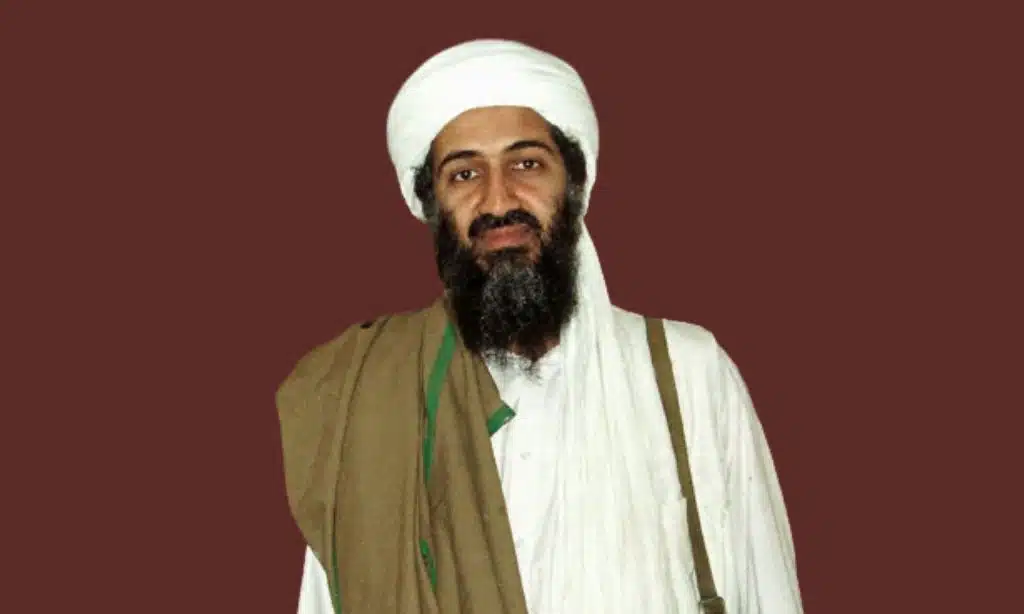
The conclusion of a nearly decade-long global manhunt fundamentally altered the trajectory of the United States’ “War on Terror” and shifted geopolitical dynamics across the Middle East and South Asia. On May 2, 2011 (Pakistan Standard Time), United States Navy SEALs from the elite Naval Special Warfare Development Group (DEVGRU), commonly known as SEAL Team Six, executed “Operation Neptune Spear.” Acting on years of painstaking intelligence gathered by the CIA—which eventually tracked a trusted courier to a heavily fortified compound in Abbottabad, Pakistan—the SEALs launched a daring nighttime raid using modified stealth Black Hawk helicopters.
The operation lasted exactly 38 minutes. Osama bin Laden, the founder of the militant Islamist organization al-Qaeda and the primary architect behind the devastating September 11 attacks, was killed in the firefight. The transmission of the code word “Geronimo,” signaling that the target had been neutralized, brought a sense of closure to millions of Americans and victims of terrorism globally. However, the event also sparked intense, lingering international debates regarding national sovereignty (as the Pakistani government was not informed prior to the raid), the complex ethics of targeted military assassinations, and the long-term effectiveness of decapitation strikes against highly decentralized terrorist networks.
The Publication of the King James Bible (1611)
Shifting from modern warfare to literary and religious history, May 2 marks the publication of what is arguably the most influential book ever printed in the English language. In 1604, King James I of England convened the Hampton Court Conference in an attempt to settle brewing religious conflicts between the Church of England and the growing Puritan faction. The result was a commission of 47 top scholars and theologians tasked with creating a new, definitive English translation of the Christian Bible.
Published on May 2, 1611, by the King’s Printer, Robert Barker, the King James Version (KJV) was not just a religious text; it was a linguistic masterpiece. The translators were specifically instructed to ensure the text sounded majestic when read aloud in churches. As a result, its poetic cadence, rhythm, and accessibility not only standardized the wildly varying English language of the era but deeply influenced literary giants for centuries to come, from William Shakespeare and John Milton to Herman Melville and Walt Whitman. Countless everyday idioms still used today—such as “the skin of my teeth,” “a drop in the bucket,” “the writing on the wall,” and “broken heart”—were permanently cemented into the global lexicon by this single publication.
The Fall of Berlin Announced (1945)
In the theater of twentieth-century European history, few dates carry the weight of May 2, 1945. On this day, the Soviet Union officially announced the capture of Berlin, signaling the definitive, total collapse of Nazi Germany and bringing an end to the European theater of World War II—the deadliest conflict in human history. The Battle of Berlin was exceptionally brutal, characterized by savage house-to-house urban combat. Soviet forces, led by Marshals Georgy Zhukov and Ivan Konev, overwhelmed the city’s remaining defenders, which tragically included conscripted teenagers from the Hitler Youth and elderly men from the Volkssturm.
Following Adolf Hitler’s suicide in his subterranean bunker on April 30, General Helmuth Weidling, the commander of the Berlin Defense Area, officially surrendered the city to the Soviet army on the morning of May 2. The iconic image of a Soviet soldier raising the red flag of the USSR over the ruined Reichstag building became the defining symbol of the victory over fascism. However, the total destruction of Berlin’s infrastructure and its subsequent division by the victorious Allied powers directly set the stage for the ideological rift of the Cold War, the construction of the Berlin Wall, and decades of heightened nuclear tension between the East and the West.
As we pivot our focus from the heavy gravity of historical events to contemporary global culture, it is highly important to recognize how the modern world unites to observe shared values and interests on this specific day.
International Observances and Global Holidays
May 2 is officially recognized by various international governing bodies, environmental groups, and passionate cultural communities as a day of vital awareness, celebration, and ecological focus. These varied observances highlight our diverse global priorities, ranging from critical environmental sustainability to modern pop culture phenomena.
Here is a detailed look at the varied global observances celebrated annually on May 2.
| Observance | Focus Area | Significance |
| World Tuna Day | Environmental Conservation | Established by the UN to highlight the importance of sustainably managing global tuna populations to prevent overfishing. |
| International Harry Potter Day | Pop Culture & Literature | Commemorates the canonical date of the “Battle of Hogwarts” (May 2, 1998) from J.K. Rowling’s renowned fantasy series. |
| National Teacher Day (Iran) | Education & Remembrance | Honors the assassination of influential Iranian cleric and university professor Morteza Motahhari on this date in 1979. |
| Flag Day (Poland) | National Pride | A modern holiday celebrated between Labor Day and Constitution Day to honor the national colors and rich heritage of Poland. |
World Tuna Day, officially recognized by a resolution of the United Nations General Assembly in 2016, is a surprisingly critical observance for global food security and marine biology. Tuna represents a massive, multi-billion dollar portion of the global seafood trade, and the day serves as an urgent, global reminder of the dire threats posed by illegal, unreported, and unregulated (IUU) fishing fleets. By dedicating an entire day to this specific marine species, the UN actively aims to encourage sustainable fishing practices, ensuring that fragile marine ecosystems are maintained and that coastal communities relying on this industry for their economic survival are protected for future generations.
On the completely opposite end of the cultural spectrum, International Harry Potter Day showcases the immense, unifying power of modern literature to create global, shared experiences. Fans worldwide use May 2 to celebrate the overarching themes of bravery, enduring friendship, and the ongoing fight against systemic prejudice that are present throughout the books. May 2, 1998, is the widely accepted canonical date of the fictional “Battle of Hogwarts,” the climactic, series-ending conflict where the forces of good defeated the dark wizard Lord Voldemort. It serves as a unique, highly visible example of how fictional history can inspire real-world community building, charity events, and literary appreciation among millions of readers.
Beyond broad cultural events and institutional observances, the true legacy of a date is most often defined by the specific, extraordinary people who entered the world on that day.
Famous Birthdays on May 2
The unique individuals born on May 2 have left indelible, historically significant marks across a wide array of human disciplines, ranging from imperial governance and revolutionary political philosophy to contemporary blockbuster sports and global entertainment.
The following table highlights a curated selection of the most highly influential figures born on this day.
| Name | Year Born | Nationality | Profession / Claim to Fame |
| Catherine the Great | 1729 | Russian | The longest-ruling female leader of Russia, who aggressively expanded the empire. |
| Theodor Herzl | 1860 | Austro-Hungarian | Visionary journalist and the undisputed father of modern political Zionism. |
| Manfred von Richthofen | 1892 | German | Legendary WWI fighter pilot famously known as the “Red Baron.” |
| Dr. Benjamin Spock | 1903 | American | Groundbreaking pediatrician whose book fundamentally changed global parenting. |
| Dwayne “The Rock” Johnson | 1972 | American | Global professional wrestling icon and blockbuster Hollywood leading actor. |
| David Beckham | 1975 | English | Legendary international footballer and global fashion and cultural icon. |
Catherine II, known universally to history as Catherine the Great, is perhaps the most formidable and politically complex historical figure born on May 2. Originally a minor German princess, she took power through a meticulously planned, bloodless coup in 1762 that deposed her deeply unpopular husband, Peter III. She subsequently ruled the vast Russian Empire with an iron grip for 34 years. Under her visionary reign, Russia expanded its borders aggressively, securing the strategic Crimean Peninsula, the northern shore of the Black Sea, and vast territories in Poland. Simultaneously, she embraced the intellectual ideals of the European Enlightenment, corresponding enthusiastically with philosophers like Voltaire and Diderot. She aggressively modernized Russian cities and positioned the nation as one of the great powers of Europe, leaving behind a complex legacy of ruthless political acumen combined with a genuine, enduring passion for the arts and education.
Another deeply influential figure born on this day is Manfred von Richthofen, famously immortalized as the “Red Baron.” Born in 1892, he became the most widely recognized and feared fighter pilot of the First World War. Flying his iconic, bright red Fokker Dr.I triplane, he was credited with 80 confirmed air combat victories, commanding a highly elite fighter squadron known as the “Flying Circus.” His tactical brilliance in the chaotic skies over Europe made him a hero in Germany and earned him deep respect even among his Allied enemies, representing the last vestiges of “chivalry” in an otherwise highly mechanized, brutal global conflict.
Jumping forward to the modern era, May 2 also brought us two of the most instantly recognizable faces in global sports and entertainment: Dwayne Johnson and David Beckham. Johnson’s unprecedented transition from a wildly popular, charismatic professional wrestler in the WWE to becoming one of the highest-grossing, most bankable actors in Hollywood history is a literal masterclass in personal branding and relentless work ethic. Similarly, David Beckham transcended the traditional boundaries of the sport of football. While his athletic achievements—including his deadly accuracy with free-kicks and winning league titles in four different countries (England, Spain, US, France)—are absolutely stellar, his unique ability to merge high-level sports with global fashion, marketing, and pop culture fundamentally redefined what it means to be a modern athlete-celebrity in the twenty-first century.
Just as we celebrate and analyze the remarkable lives that began on this date, we must also respectfully reflect on the monumental figures whose journeys came to an end.
Notable Deaths on May 2
The passing of highly influential figures often marks the definitive end of an era, forcing society to pause, mourn, and thoroughly reflect on the lasting legacy left behind. May 2 has unfortunately seen the departure of unparalleled artistic geniuses, powerful political figures, and deeply controversial modern leaders.
Here is a brief but detailed overview of the notable individuals who passed away on May 2.
| Name | Year Died | Nationality | Legacy / Cause of Death |
| Leonardo da Vinci | 1519 | Italian | The ultimate Renaissance polymath; died of a presumed stroke at age 67. |
| Joseph McCarthy | 1957 | American | US Senator known for anti-communist paranoia; died of hepatitis. |
| J. Edgar Hoover | 1972 | American | First Director of the FBI; died of a sudden heart attack at age 77. |
| Justin Fashanu | 1998 | English | The first openly gay professional footballer; tragically died by suicide. |
| Osama bin Laden | 2011 | Saudi Arabian | Infamous founder of al-Qaeda; killed in a targeted US military operation. |
The death of Leonardo da Vinci in 1519 remains one of the most significant and mourned intellectual losses in human history. Dying at the age of 67 in the Château du Clos Lucé in Amboise, France—where he had been living under the generous patronage of King Francis I—da Vinci embodied the very essence of the High Renaissance. He was not merely the masterful painter of The Mona Lisa and The Last Supper; he was an obsessively curious scientist, a brilliant civil engineer, and an unparalleled anatomist. His surviving private notebooks, densely filled with his famous mirror-script and visionary sketches of flying machines, armored tanks, and perfect human proportions (like the Vitruvian Man), reveal a mind that was operating centuries ahead of its time. His death marked the closing chapter of the Italian Renaissance, leaving behind a relatively small but profoundly impactful body of work that continues to baffle, challenge, and inspire scholars, artists, and scientists today.
Centuries later, in 1972, the sudden death of J. Edgar Hoover sent massive shockwaves through the American political establishment and media landscape. Hoover had served as the formidable Director of the Federal Bureau of Investigation (FBI) for nearly half a century, successfully surviving the shifting administrations of eight different US presidents. He fundamentally built the agency into a modern, highly scientific, and formidable crime-fighting organization, aggressively pioneering the use of centralized national fingerprint files and cutting-edge forensic laboratories.
However, his historical legacy is deeply and perhaps permanently controversial. Upon his death, the vast, terrifying extent of his secret files, widespread illegal wiretaps, and covert counter-intelligence programs (such as COINTELPRO)—which were specifically aimed at disrupting, discrediting, and destroying civil rights movements and political dissidents like Martin Luther King Jr.—were fully exposed. His death and the subsequent revelations forever altered how the American public viewed federal law enforcement, leading directly to sweeping legislative reforms regarding government surveillance and the strict limitation of the FBI Director’s tenure to ten years.
Understanding the magnitude of these births and deaths provides a much-needed human context to the massive, sweeping timeline of global history.
The Unbroken Thread of May 2
When we pull back to look at the holistic, overarching picture of May 2, it becomes abundantly clear that history is never a static, dusty collection of facts. It is a constantly weaving, unbroken tapestry of human ambition, conflict, and endeavor. From the quiet, sunlit drafting tables of Renaissance France where Leonardo da Vinci drew his final, brilliant breath, to the tense, smoke-filled war rooms of 1945 Berlin and 2011 Washington D.C., May 2 is a date characterized by profound, world-altering transformation.
It teaches us that global progress is often painfully born from conflict, that high art has the enduring power to transcend geographical borders, and that the specific actions taken by individuals on any given day can echo through eternity. Exploring comprehensive “On This Day” history allows us to properly contextualize our present moment. By understanding the legislative acts, the artistic breakthroughs, and the complex geopolitical maneuvers that definitively occurred on May 2, we are infinitely better equipped to analyze the news, cultural shifts, and political events unfolding in our own modern time, recognizing our place in the ongoing, unbroken chain of human history.






















