
The United Kingdom has long been a powerhouse in the global video game industry, but the true creative heartbeat of the region often lies outside the massive AAA publishers. Exploring the landscape of Indie Game Studios SMEs reveals a thriving ecosystem of agile, innovative, and highly specialized developers pushing the boundaries of interactive entertainment.
From Oxford to Sheffield, these independent teams and boutique labels are responsible for some of the most culturally significant and mechanically inventive titles of the decade. Establishing a clear understanding of this landscape requires looking at the specific studios shaping the future of British game development.
Our Selection Methodology
Identifying the most impactful development houses required a focused look at the unique structures that define the British independent scene. We evaluated studios that maintain an independent spirit while delivering exceptional digital experiences.
-
Creative Impact. Proven ability to release titles that disrupt traditional genre conventions and secure critical acclaim.
-
Operational Independence. Maintaining a core identity as an SME or operating as an independent label within a larger publishing framework.
-
Geographic Identity. Headquartered or deeply rooted within the United Kingdom’s unique development culture.
-
Mechanical Innovation. A track record of prioritizing experimental gameplay loops over safe, predictable design trends.
Understanding these criteria highlights exactly why these specific teams are so influential.
Evaluating the Top 15 Indie Game Studios SMEs in UK
The following studios and independent labels represent the pinnacle of British game design. Here is our curated breakdown of the standout developers shaping the industry today.
Starting with one of the most established names provides a baseline for independent success in the region.
1. Rebellion Developments
Operating out of Oxford, Rebellion Developments is one of the UK’s oldest and most successful independent studios. Best known for the highly successful Sniper Elite franchise and the cooperative shooter Strange Brigade, the studio has managed to scale its operations while fiercely maintaining its independent status. They own their proprietary Asura engine and have even expanded into comic book publishing and film production.
Best for: Fans of historically grounded tactical shooters and expansive, multi-layered cooperative multiplayer experiences.
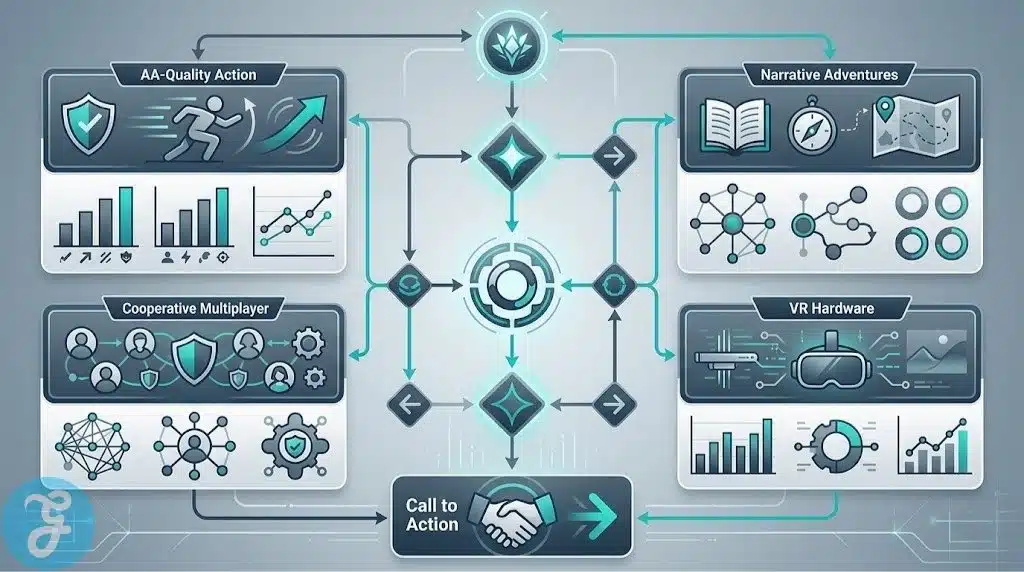
Why We Chose It: The studio proves that independent developers can produce high-fidelity, AA-quality action games that successfully compete with massive publisher-backed franchises.
Things to consider: Their heavy focus on established intellectual properties like Sniper Elite means they release entirely new, experimental IPs less frequently.
Transitioning from realistic shooters to highly stylized action, we find developers focusing on pure arcade joy.
2. Roll7
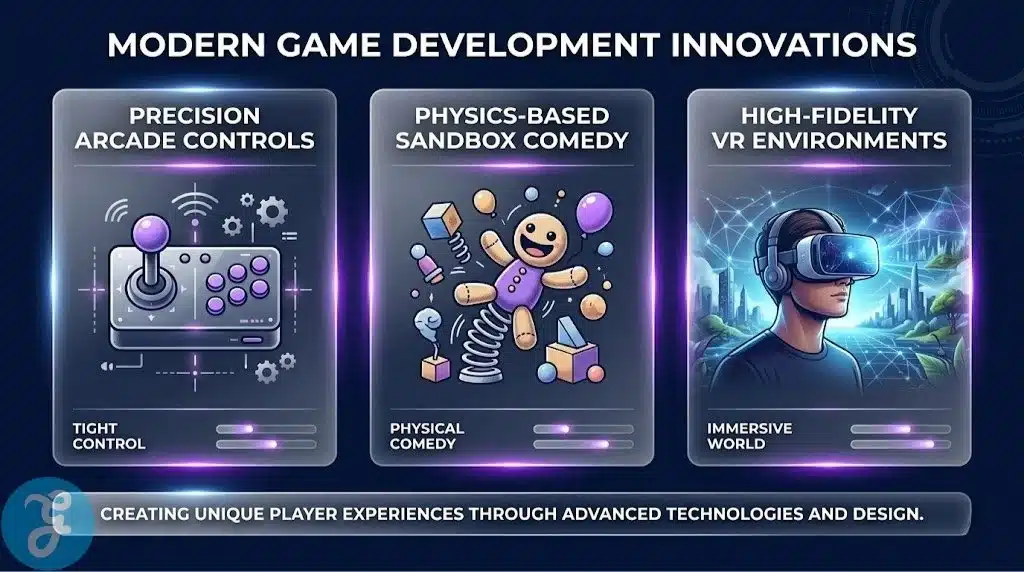
Based in London, Roll7 has carved out a massive reputation for creating critically lauded, tightly controlled arcade experiences. They are the creative force behind the BAFTA-winning OlliOlli series, culminating in the critically acclaimed OlliOlli World, as well as the dystopian sports game Rollerdrome. Their games are defined by “flow state” mechanics, requiring intense precision and rhythmic button combinations.
Best for: Players who appreciate incredibly tight, responsive controls and high-skill-ceiling arcade gameplay.
Why We Chose It: They masterfully blend retro-inspired score-chasing mechanics with stunning, modern visual aesthetics.
Things to consider: The punishing difficulty curve of their titles can occasionally alienate casual players looking for a relaxed experience.
Moving from traditional arcade titles to hardware-defining platformers requires a unique structural approach.
3. Team Asobi
Operating as a highly celebrated indie-spirited arm with deep ties to PlayStation’s global development network (including its London roots), Team Asobi is the creative force behind the globally recognized Astro Bot franchise. Their work is characterized by unparalleled charm, precise platforming, and an obsessive dedication to utilizing every specific feature of the gaming hardware they develop for.
Best for: Gamers seeking joyful, family-friendly platforming experiences that maximize the sensory feedback of modern controllers.
Why We Chose It: They consistently deliver Game of the Year-contending quality while maintaining the whimsical, experimental energy of a small independent studio.
Things to consider: Their output is strictly tied to the PlayStation ecosystem, limiting accessibility for players on other hardware platforms.
When precision platforming gives way to intentional chaos, game design takes a delightfully weird turn.
4. Bossa Studios
Located in London, Bossa Studios operates on the philosophy of joyful frustration. They are the masterminds behind incredibly popular, physics-based titles like Surgeon Simulator and I Am Bread. By intentionally making their control schemes difficult and unpredictable, they turn mundane tasks into hilarious, highly shareable digital performances.
Best for: Content creators and players looking for humorous, physics-driven sandbox games that don’t take themselves seriously.
Why We Chose It: They fully embraced the streaming and Let’s Play culture, designing games that are just as entertaining to watch as they are to play.
Things to consider: The intentional clumsiness of the controls can shift from funny to genuinely frustrating during extended play sessions.
Stepping away from digital chaos, some teams focus entirely on meticulous, physical craftsmanship.
5. State of Play Games
Also based in London, State of Play Games is renowned for its breathtaking dedication to handcrafted art styles. For their award-winning puzzle adventure Lumino City, the team literally built a massive, ten-foot-tall physical model of the game world out of paper, cardboard, and miniature lights, and then filmed it to create the game’s environments.
Best for: Art enthusiasts and puzzle fans looking for visually unique, meditative, and beautifully crafted narrative experiences.
Why We Chose It: Their refusal to rely entirely on digital rendering sets them apart, proving that physical model-making still has a profound place in game development.
Things to consider: The intense, labor-heavy nature of their development process means new releases are relatively infrequent.
Scaling down to the smallest possible team size reveals the incredible potential of solo developers.
6. Size Five Games
Functioning primarily as a one-person studio spearheaded by Dan Marshall, Size Five Games punches significantly above its weight class. The studio is responsible for critically praised indie hits like the steampunk cyber-crime game The Swindle and the chaotic multiplayer shooter Gun Monkeys. The games are characterized by sharp writing, unique art direction, and highly replayable loops.
Best for: Fans of rogue-like mechanics, stealth-action hybrids, and games heavily infused with sarcastic British humor.
Why We Chose It: It serves as a masterclass in how a microscopic team can utilize procedural generation to create expansive, infinitely replayable games.
Things to consider: The procedural nature of the level design can occasionally lead to brutal, unavoidable difficulty spikes.
Managing mobile and PC development simultaneously requires deep flexibility and rapid iteration.
7. Spilt Milk Studios
Spilt Milk Studios is a versatile indie developer with a strong track record across both PC and mobile platforms. They have developed a wide array of titles, from the chaotic twin-stick shooter Tango Fiesta to the ambitious MMO Lazarus. The studio is known for its highly collaborative approach to development and its active engagement with the indie community.
Best for: Players who enjoy frantic, retro-inspired action games and quick-burst multiplayer experiences.
Why We Chose It: They demonstrate incredible agility, successfully pivoting between different genres, art styles, and hardware platforms.
Things to consider: Their highly varied portfolio means they lack a single, defining genre identity compared to more specialized studios.
Diving into immersive technology requires developers to build entirely new interaction paradigms.
8. Coatsink
Headquartered in Sunderland, Coatsink has established itself as a premier developer within the virtual reality space, alongside a robust portfolio of traditional indie games. They are deeply involved in expanding major IPs into VR, including their work on the Jurassic World VR experiences, while also developing original titles like the charming puzzle game Esper.
Best for: Virtual reality early adopters seeking highly polished, immersive narrative and puzzle experiences.
Why We Chose It: They successfully bridge the gap between niche indie experimentation and major franchise partnerships within the complex VR hardware space.
Things to consider: Experiencing their most groundbreaking titles requires an expensive investment in modern virtual reality headsets.
Giving players the tools to build their own fun requires robust sandbox engineering.
9. Payload Studios
Based in London, Payload Studios is best known for TerraTech, a massive open-world sandbox game where players design, build, and command custom fleets of vehicles. The studio is deeply community-driven, constantly iterating on the game’s physics and building mechanics based directly on the feedback of their dedicated player base.
Best for: Creative thinkers, engineering enthusiasts, and players who love deep vehicle customization and physics-based combat.
Why We Chose It: They have successfully cultivated a “games-as-a-service” model within the indie space, keeping a single game vibrant and growing for years.
Things to consider: The massive complexity of the vehicle-building interface can be overwhelming for players who just want a simple action game.
Pushing the graphical limits of virtual reality requires intense technical optimization.
10. Vertigo Games
Operating with significant ties to the UK development scene, Vertigo Games is a powerhouse in the VR action genre. They are the minds behind After the Fall, a highly technical, fast-paced VR cooperative shooter that pushes the visual and mechanical limits of modern headsets. They focus heavily on maintaining high frame rates and precise gunplay in fully immersive 3D environments.
Best for: Hardcore VR players looking for intense, high-fidelity action and cooperative zombie survival mechanics.
Why We Chose It: They prove that VR games can successfully handle the fast-paced, high-stress mechanics typically reserved for traditional flat-screen shooters.
Things to consider: The intense, fast-paced locomotion in their VR titles may cause motion sickness for newer users.
Combining publishing power with internal development creates a safety net for quirky titles.
11. Curve Games
Operating out of London, Curve Games functions as both a highly successful indie publisher and a development entity. They are responsible for bringing massive indie hits like the physics-brawler Human Fall Flat and the strategic simulator Bomber Crew to global audiences. They specialize in identifying weird, highly replayable concepts and scaling them into massive commercial successes.
Best for: Players who enjoy quirky, physics-based multiplayer games and deep, strategic simulation titles.
Why We Chose It: They possess an unparalleled eye for spotting bizarre prototypes and providing the resources necessary to turn them into global phenomenons.
Things to consider: As a dual publisher/developer, their internal output is often overshadowed by the massive success of their third-party publishing deals.
Creating a global cultural phenomenon requires mastering the art of accessible multiplayer.
12. Mediatonic
Originally a UK-born indie powerhouse, Mediatonic rocketed to global superstardom with the creation of the battle-royale party game Fall Guys. While they are now a part of Epic Games, their roots are firmly planted in the British indie scene, where they spent years developing quirky flash games, visual novels, and mobile titles before creating their defining masterpiece.
Best for: Casual gamers and massive friend groups looking for vibrant, non-violent, and highly accessible multiplayer chaos.
Why We Chose It: They successfully reinvented the battle-royale genre by replacing guns and military aesthetics with slapstick comedy and obstacle courses.
Things to consider: The transition into a massive, live-service ecosystem under Epic Games has shifted their focus away from smaller, experimental indie titles.
Blurring the line between independent spirit and AAA execution requires a unique studio structure.
13. Sumo Digital Sheffield
While Sumo Digital is a massive organization, its Sheffield studio frequently operates with a distinct indie spirit, producing deeply creative, AA-tier titles. A prime example is the award-winning Snake Pass, a puzzle-platformer where players must literally think and move like a snake, coiling around bamboo to climb rather than simply pressing a jump button.
Best for: Players looking for highly polished, mid-tier games that experiment with entirely unique movement and control mechanics.
Why We Chose It: They prove that even massive work-for-hire studios can incubate and release wonderfully weird, mechanically original indie concepts.
Things to consider: The studio’s primary focus remains on massive co-development projects for AAA publishers, making these smaller original titles a rarity.
Emerging studios rely heavily on strong narrative focus to make an immediate impact.
14. Rogue Sun
Representing the next wave of the UK independent scene, Rogue Sun is an emerging studio focusing heavily on deep narrative adventures and atmospheric puzzle design. Built by industry veterans looking for creative freedom, the studio focuses on intimate, story-driven experiences that prioritize emotional resonance and world-building over massive action set pieces.
Best for: Fans of atmospheric storytelling, rich world-building, and environmental puzzle-solving.
Why We Chose It: They represent the continued vitality of the UK scene, proving that new teams are still forming to push the boundaries of digital storytelling.
Things to consider: As a newer entity, their back catalog is limited compared to the deeply established veteran studios on this list.
Operating as an indie label within a larger corporation provides stability without sacrificing creativity.
15. Secret Mode
Operating as a UK-based indie label and development partner, Secret Mode is dedicated to publishing and supporting highly creative, offbeat titles. They are behind critically acclaimed experiences like Killer Frequency, a unique narrative game where the player acts as a 1980s radio DJ helping callers survive a slasher movie scenario.
Best for: Players seeking highly original, narrative-driven concepts that blend different genres in unexpected ways.
Why We Chose It: They provide vital funding and publishing support to smaller teams, ensuring that risky, high-concept games actually make it to market.
Things to consider: They act primarily as a curator and publisher, meaning the actual development styles vary wildly from game to game.
Reviewing these varied development houses side-by-side helps clarify the scope of the region’s talent.
An Overview Of Indie Game Studios SMEs
Examining these distinct providers collectively provides a clear perspective on the digital infrastructure available to modern gamers. The following data points highlight the primary functional differences between these independent entities.
Overview Comparison Table
Comparing these specific metrics highlights the structural differences between solo developers and massive independent publishers.
| Studio / SME | Headquarter Location | Notable IP | Core Focus |
| Rebellion Developments | Oxford | Sniper Elite | AA Action & Co-op |
| Roll7 | London | OlliOlli World | Precision Arcade Action |
| Team Asobi | London/Tokyo Roots | Astro Bot | Hardware-Defining Platformers |
| Bossa Studios | London | Surgeon Simulator | Physics-Based Comedy |
| State of Play Games | London | Lumino City | Handcrafted Art Puzzles |
| Size Five Games | Remote / UK | The Swindle | Procedural Action |
| Spilt Milk Studios | Remote / UK | Tango Fiesta | Retro-Inspired Action |
| Coatsink | Sunderland | Jurassic World VR | Immersive VR & Puzzles |
| Payload Studios | London | TerraTech | Vehicle Sandbox Building |
| Vertigo Games | UK Links | After the Fall | High-Fidelity VR Action |
| Curve Games | London | Human Fall Flat | Indie Publishing & Dev |
| Mediatonic | London Roots | Fall Guys | Multiplayer Party Games |
| Sumo Digital Sheffield | Sheffield | Snake Pass | Original AA Concepts |
| Rogue Sun | UK | Tin Hearts | Narrative Adventures |
| Secret Mode | UK | Killer Frequency | Unique Concept Publishing |
Evaluating these diverse creative houses naturally leads to our primary recommendations for specific gaming experiences.
Our Top 3 Picks and Why
Narrowing down the field highlights three developers making exceptional contributions to the interactive landscape. Roll7 stands out by consistently delivering flawless, high-skill arcade experiences that perfectly balance retro difficulty with modern aesthetic polish. State of Play Games provides unmatched artistic vision, physically building their game worlds to create textures and lighting that digital rendering cannot replicate. Finally, Payload Studios completely redefines the sandbox genre, maintaining an incredibly tight relationship with their community to keep their vehicle-building ecosystem thriving for years.
Selecting the right studio to follow requires balancing your personal gaming preferences with the specific output of the developer.
How to Choose the Right Indie Game Studios SMEs by Yourself
Navigating the massive volume of independent releases successfully means finding a studio that aligns with your specific gameplay preferences and hardware setup.
-
Assess Hardware Limitations. Determine if you play primarily on a PC, a specific console, or if you have invested in high-end Virtual Reality headsets.
-
Define the Gameplay Goal. Decide if you are looking for deeply emotional narrative experiences, physics-based comedy, or high-stress mechanical challenges.
-
Evaluate Replayability Needs. Ensure the studio’s focus matches your habits; rogue-likes offer infinite replayability, while narrative games offer a single, curated story.
-
Track the Community. Look for studios that maintain active Discord servers and transparent development roadmaps if you want to be involved in the game’s evolution.
Applying this framework directly to your specific gaming habits allows you to match the right developer to your library.
Decision Matrix
Matching your specific entertainment priorities with the right developer ensures a seamless digital experience.
| Choose This Studio… | If You Prioritize… |
| Rebellion or Sumo Digital | High-fidelity, AA-quality experiences with massive production values. |
| Bossa Studios or Mediatonic | Physics-based humor, accessible multiplayer, and highly streamable content. |
| Coatsink or Vertigo Games | Pushing the boundaries of immersion through advanced Virtual Reality hardware. |
| State of Play or Rogue Sun | Deep narrative adventures and entirely unique, handcrafted visual aesthetics. |
Before committing your time and money to a new independent title, running through a rapid verification process is vital.
The Final Checklist
Running through this quick verification process guarantees you are supporting a quality release.
-
Verify the developer’s update history to ensure they actively patch bugs and support their games post-launch.
-
Check community forums to gauge how transparent and responsive the studio is to player feedback.
-
Test the game’s performance reviews specifically on your chosen hardware to avoid poor console ports.
-
Confirm the studio provides adequate accessibility options, such as colorblind modes and customizable control mapping.
-
Review the developer’s stance on microtransactions to ensure the game respects your initial purchase investment.
Understanding the value of these studios requires looking past the code and recognizing the artistry involved.
Beyond the Pixels: Fostering Genuine Creativity
The video game industry often feels dominated by massive, faceless corporations churning out predictable sequels, but exploring the landscape of British independent studios reveals a vastly different reality. Taking a step back to reflect on the sheer creativity emerging from these smaller teams, it is impossible not to feel a profound sense of optimism for the medium. These developers are not just writing code; they are crafting deeply personal narratives and pushing mechanical boundaries that major publishers are simply too risk-averse to attempt. It reminds us that at its core, game development is an art form driven by passion, late nights, and a desperate need to share a unique vision with the world.
When a small team in Sheffield or London manages to capture the global zeitgeist with a quirky puzzle game or an emotional narrative adventure, it proves that massive budgets are not a prerequisite for cultural impact. Supporting these smaller studios means investing in the future of interactive storytelling. It is about preserving the weird, the experimental, and the profoundly human elements that make video games such a powerful medium to begin with.
To further clarify the landscape of independent game development, addressing common industry questions is essential.
Frequently Asked Questions (FAQs) About Indie Game Studios SMEs
What exactly makes a game studio “indie”?
Traditionally, an indie (independent) studio is one that creates games without the financial backing or creative control of a large, massive publisher like EA or Activision. However, the definition has blurred, and it now often refers to the spirit of the team—smaller sizes, experimental concepts, and retaining ownership of their intellectual property.
Why do many indie games use retro or pixelated art styles?
While some studios use pixel art purely for nostalgic aesthetics, it is often a practical choice. High-fidelity, photorealistic 3D graphics require massive teams and millions of dollars to produce. Stylized 2D art allows a small team to create a beautiful, cohesive visual identity without bankrupting the studio.
Do indie studios ever release physical copies of their games?
Yes, but typically not at launch. Because manufacturing discs and cartridges is incredibly expensive, most indie games launch digitally. If the game becomes a massive hit, they will often partner with boutique physical publishers like Limited Run Games to produce a limited batch of physical copies for collectors.
How do small indie studios get their games on major consoles?
Console manufacturers like Sony, Microsoft, and Nintendo have dedicated independent developer programs (like ID@Xbox). They provide indie studios with development kits, technical support, and a streamlined certification process to help them publish their games on the digital storefronts.
Is Early Access a good way to support indie developers?
Purchasing an Early Access game provides the studio with vital funding to finish development, and allows the player to shape the game through active feedback. However, buyers must be aware that the game is unfinished, may contain bugs, and in rare cases, may never reach a final 1.0 release.