Every single day of the calendar year holds a mirror up to the past, reflecting the triumphs, tragedies, innovations, and cultural shifts that have shaped our modern world. April 30 is no exception. It is a date that has witnessed the birth of nations, the fall of empires, the dawn of the digital age, and the arrival of visionaries who would go on to change the fabric of art, science, and politics. From the bustling streets of late 18th-century New York to the war-torn landscapes of 20th-century Vietnam, the events of this day offer a profound glimpse into the human experience. As we peel back the layers of time, we find a rich tapestry of historical milestones, celebrated birthdays, and solemn anniversaries that deserve our attention and reflection.
To help you navigate the vast expanse of history associated with this date, the following table provides a quick, reader-friendly overview of the most critical events that occurred on April 30.
| Year | Region | Historical Event | Impact |
| 1789 | United States | George Washington inaugurated | Set the precedent for the U.S. presidency and democratic transition. |
| 1803 | France / USA | Louisiana Purchase Treaty signed | Doubled the size of the U.S., fundamentally altering North American borders. |
| 1945 | Germany | Adolf Hitler commits suicide | Marked the functional collapse of Nazi Germany in WWII. |
| 1975 | Vietnam | The Fall of Saigon | Ended the decades-long Vietnam War and reunited the country. |
| 1991 | Bangladesh | Dissipation of the 1991 Cyclone | Led to a complete overhaul of global disaster response and coastal infrastructure. |
| 1993 | Switzerland | CERN makes the WWW free | Democratized the internet, launching the modern digital communication era. |
These singular moments in time serve as pillars of our modern geopolitical and cultural landscape. Let us explore the intricate details of these monumental events and understand why they continue to resonate deeply in our contemporary society.
Monumental Global Events on April 30
The events that transpire on any given day can send ripples through centuries, altering the course of human destiny. April 30 is heavily anchored by political shifts, technological breakthroughs, and moments of intense conflict that redefined global borders.
George Washington’s Inauguration (1789)
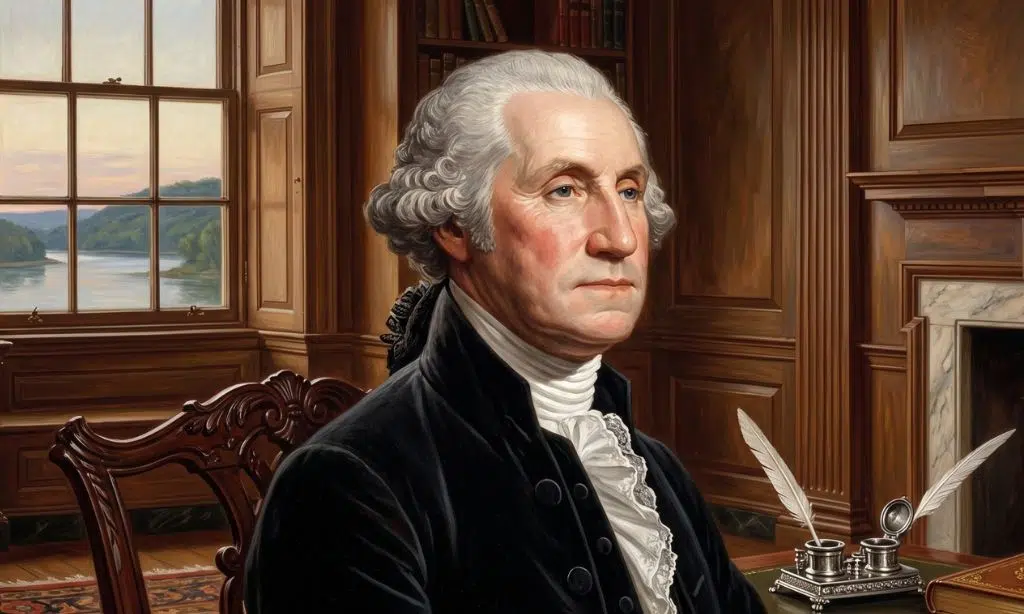
The foundation of the American democratic experiment was solidified on this very day when a reluctant but dutiful George Washington stepped onto the balcony of Federal Hall in New York City. The atmosphere was electric, with thousands of citizens crowding the dirt streets to catch a glimpse of the man who had led the Continental Army to victory. Administered by Chancellor Robert Livingston, the oath of office was a relatively brief affair, but Washington’s conscious decisions during this inauguration established enduring traditions.
By adding “So help me God” to the end of his oath and subsequently choosing the understated title “Mr. President” over the grandiose royal honorifics suggested by the Senate, Washington set a tone of humble public service. This day acts as the operational starting point of the United States executive branch, transitioning the young nation from a fragile, loose confederation under the Articles of Confederation to a functional federal republic capable of surviving the centuries.
The Louisiana Purchase Treaty (1803)
A stroke of a pen in Paris dramatically changed the geographical and political destiny of North America, shifting the balance of global power away from European empires. Driven by the financial strain of the impending war with Great Britain and the devastating loss of the lucrative colony of Saint-Domingue (modern-day Haiti) to a successful slave revolt, Napoleon Bonaparte offered the entirety of the Louisiana territory to American diplomats James Monroe and Robert Livingston.
For a mere $15 million—roughly four cents an acre—the United States acquired over 828,000 square miles of territory. This monumental treaty essentially doubled the nation’s size overnight, securing control of the vital Mississippi River and the port of New Orleans. While celebrated as a brilliant diplomatic triumph for President Thomas Jefferson, who had to overcome his own strict constitutional scruples to authorize it, this expansion deeply impacted the Indigenous populations living in those territories. It precipitated over a century of subsequent conflict, forced displacement, and the devastating trail of American westward expansion.
The End of an Era in Berlin (1945)
The darkest chapter of the 20th century began to draw to a definitive close as Soviet artillery pounded the streets of Berlin, forcing the ultimate collapse of the Third Reich. Deep underground in the claustrophobic confines of the Führerbunker, Adolf Hitler realized that capture by the rapidly advancing Red Army was imminent. In the early afternoon of April 30, Hitler and his companion of many years, Eva Braun—whom he had married just hours prior—retreated to his personal study and committed suicide.
Their bodies were hastily carried up the stairs to the bombed-out Chancellery garden and doused in petrol, burning as the Soviet shells continued to fall. This gruesome, definitive event effectively decapitated the Nazi leadership, demoralizing the remaining German forces and leading to the unconditional surrender of Germany just over a week later. This day not only ended the immediate tyranny of the fascist regime in Europe but also set the stage for the ideological division of Germany and the ensuing decades-long Cold War between the Allied victors.
The Fall of Saigon (1975)
Decades of brutal, asymmetrical warfare in Southeast Asia reached a chaotic and visually stunning climax as North Vietnamese tanks crashed through the iron wrought gates of the Presidential Palace in South Vietnam. The capture of Saigon marked the unconditional surrender of the South Vietnamese government and the official end of the Vietnam War.
The preceding days were marked by Operation Frequent Wind, the largest helicopter evacuation in history, which saw desperate scenes of American personnel and at-risk South Vietnamese citizens fleeing from the roof of the US Embassy. The sheer human cost of this day was staggering, triggering a massive, immediate refugee crisis. Hundreds of thousands of Vietnamese “boat people” fled the new communist regime by any means necessary, embarking on perilous sea journeys that would eventually reshape the demographic landscapes of receiving countries like the United States, Canada, Australia, and France.
CERN Democratizes the World Wide Web (1993)
In a quiet European laboratory, a decision was made that would fundamentally alter how humanity communicates, works, learns, and entertains itself. CERN (the European Organization for Nuclear Research) officially announced that the World Wide Web protocols, meticulously developed by British computer scientist Tim Berners-Lee, would be placed in the public domain and made freely available to everyone without royalties or restrictions.
At the time, the internet was a fragmented landscape of closed, proprietary networks like Gopher. By relinquishing intellectual property rights, CERN catalyzed an unprecedented explosion of global connectivity. Had the organization chosen to patent and monetize the underlying code, the internet as we know it today—an open, hyper-connected, and relatively democratic space for instantaneous information exchange—might never have flourished. It is arguably the single most important technological decision of the late 20th century.
The Dissipation of the 1991 Bangladesh Cyclone
Nature’s wrath can alter a nation’s trajectory just as violently as any war or political treaty. After making a catastrophic landfall on the night of April 29, generating a terrifying 20-foot storm surge, the cyclone finally began to dissipate over land on April 30. The morning light revealed a level of destruction that shocked the global community.
Striking the densely populated southeastern coast of Bangladesh, particularly the Chittagong region, the storm claimed an estimated 138,000 to 140,000 lives and left upwards of 10 million people instantly homeless. Entire coastal islands were submerged and wiped clean of habitation. The incomprehensible tragedy of this event forced a global reckoning on climate vulnerability and disaster response. It triggered massive international military and civilian aid initiatives, such as the US-led Operation Sea Angel, and resulted in the highly successful, large-scale implementation of modern concrete cyclone shelters and early warning volunteer networks that have saved countless thousands of lives in the decades since.
History is driven not just by these massive, abstract forces, but by the brilliant, flawed, and creative individuals who push boundaries. April 30 has welcomed an impressive array of minds that have revolutionized mathematics, pioneered cinematic arts, and shaped global pop culture.
To easily identify the influential figures who share this birthday, review the detailed table below before we delve into their specific legacies.
| Year Born | Name | Nationality | Field/Profession | Key Contribution |
| 1777 | Carl Friedrich Gauss | German | Mathematics & Physics | Revolutionized number theory and statistics. |
| 1870 | Dadasaheb Phalke | Indian | Cinema | Father of Indian Cinema; directed Raja Harishchandra. |
| 1933 | Willie Nelson | American | Music & Activism | Pioneer of outlaw country music; Farm Aid co-founder. |
| 1981 | Kunal Nayyar | British-Indian | Acting | Starred as Raj Koothrappali in The Big Bang Theory. |
| 1982 | Kirsten Dunst | American | Acting | Award-winning actress across diverse film genres. |
| 1985 | Gal Gadot | Israeli | Acting & Modeling | Global cinematic icon, best known for Wonder Woman. |
Delving deeper into the lives of these individuals reveals how a single person’s dedication to their craft can leave an indelible mark on the world, influencing generations long after their initial breakthroughs.
Visionaries and Icons Born on April 30
The luminaries born on this day share a common thread of breaking established molds, whether in the rigid halls of academia, the nascent film studios of colonial India, or the soundstages of modern Hollywood.
Carl Friedrich Gauss (1777)
Often referred to as the Princeps mathematicorum (the “Prince of Mathematicians”), Carl Friedrich Gauss’s intellectual footprint is still glaringly visible in almost every branch of modern science. Born to poor working-class parents in Brunswick, his prodigious mathematical talent was recognized early, allowing him to bypass his socioeconomic constraints.
Gauss’s work on the fundamental theorem of algebra, modular arithmetic, and his massive contributions to number theory reshaped the mathematical landscape. Perhaps most famously, his development of the Gaussian distribution (the classic “bell curve”) forms the absolute bedrock of modern statistics and probability. Without his 18th-century breakthroughs, the algorithms that power today’s computing, financial risk models, and artificial intelligence simply would not exist.
Dadasaheb Phalke (1870)
In an era before digital effects, massive studio budgets, and global distribution networks, one visionary laid the cornerstone for what would become the largest film industry in the world. Dhundiraj Govind Phalke, universally known as Dadasaheb Phalke, was an Indian producer, director, and screenwriter who recognized the immense storytelling potential of the moving image.
Deeply inspired by the life of Christ depicted in a silent French film, Phalke sought to bring Indian mythology to the silver screen. In 1913, he successfully produced and directed India’s very first full-length feature film, Raja Harishchandra. Working with incredibly primitive equipment and facing severe societal stigma against the acting profession, his perseverance birthed the phenomenon of Bollywood. Today, the Dadasaheb Phalke Award remains the absolute highest official recognition for cinematic excellence in India, a testament to his foundational genius.
Willie Nelson (1933)
With his signature waist-length braids, his famously battered acoustic guitar affectionately named “Trigger,” and an unmistakable, jazz-inflected vocal phrasing, Willie Nelson became a towering American cultural institution. Born in Texas during the Great Depression, Nelson initially struggled to fit into the heavily orchestrated, rigid “Nashville sound” of the 1960s country music establishment.
Rejecting those constraints, he relocated to Austin, Texas, and pioneered the “outlaw country” subgenre, creating sparse, narrative-driven masterpieces like the landmark album Red Headed Stranger. Beyond his massive musical influence, Nelson’s tireless activism—most notably his co-founding of the annual Farm Aid concert series in 1985—demonstrates the profound power of celebrity influence when channeled toward supporting marginalized, working-class agricultural communities.
Gal Gadot (1985)
From serving her mandatory time in the Israel Defense Forces to capturing the Miss Israel title, and eventually stepping onto the forefront of global blockbuster cinema, Gal Gadot’s meteoric rise has made her one of the most recognizable faces of the 21st century.
After gaining international attention in the Fast & Furious franchise, she secured her cinematic legacy by taking on the mantle of Wonder Woman. Her 2017 portrayal of the iconic Amazonian warrior shattered box office records for female-led superhero films, critically proving that female action leads could anchor massive, highly profitable global franchises. Her career trajectory highlights the increasingly globalized nature of modern Hollywood, where international talent can seamlessly embody quintessential, historic pop-culture icons.
As much as we celebrate the arrivals and the artistic and scientific births on this day, we must also honor the departures. April 30 marks the passing of several towering figures whose deaths left profound voids in their respective fields.
Before exploring the nuanced stories of their passing, the table below provides a respectful summary of the notable figures we lost on this day.
| Year Died | Name | Nationality | Field/Profession | Cause of Death / Legacy |
| 1030 | Sultan Mahmud of Ghazni | Turkic | Empire Ruler | Natural causes; left behind a vast, influential empire. |
| 1883 | Édouard Manet | French | Painter | Syphilis complications; bridged Realism and Impressionism. |
| 1926 | Bessie Coleman | American | Aviator | Tragic airshow accident; first Black/Native American female pilot. |
| 1943 | Beatrice Webb | British | Sociologist | Natural causes; co-founder of the London School of Economics. |
| 1983 | Muddy Waters | American | Musician | Heart failure; the undisputed father of modern Chicago blues. |
The legacies left behind by these individuals offer profound lessons in resilience, creativity, and the enduring nature of human achievement, reminding us that true impact often outlives the physical self.
Remembering the Legacies: Notable Deaths on April 30
The passing of these historical figures closed the chapters on incredibly dynamic lives, but their ideas, music, and conquests continued to shape the world long after they were gone.
Sultan Mahmud of Ghazni (1030)
The shifting sands of the 11th century were heavily dominated by the relentless military campaigns and aggressive empire-building of this formidable ruler. As the first independent ruler of the Turkic Ghaznavid dynasty, Mahmud transformed his capital of Ghazni (in modern-day Afghanistan) into a wealthy, thriving center of Islamic culture, poetry, and learning, famously patronizing scholars like Al-Biruni and Ferdowsi.
However, his historical legacy is deeply complex. He is most heavily remembered for his frequent, highly destructive military incursions deep into the Indian subcontinent. Plundering vast wealth from Hindu temples—most notably the Somnath temple—his campaigns drastically reshaped the religious, cultural, and political demographics of South Asia, paving the way for future Islamic rule in the region.
Édouard Manet (1883)
The rigid, deeply traditional Parisian art world was forever altered by a man who stubbornly refused to conform to the strict, idealized rules of the powerful academic salons. Édouard Manet was a pivotal, transitional figure who boldly bridged the gap between the grounded grit of Realism and the fleeting light of Impressionism.
His highly controversial masterpieces, such as the boldly unidealized nude in Olympia and the jarring contemporary picnic scene in Le Déjeuner sur l’herbe, shocked prominent critics and scandalized the public. He stripped away mythological pretenses to paint modern life exactly as it was. Though he faced intense public ridicule during his lifetime, dying at the relatively young age of 51 from complications of syphilis, his unwavering vision essentially birthed modern art.
Bessie Coleman (1926)
The sky was never a limit but a canvas for a woman who refused to let the heavy, systemic chains of early 20th-century racial and gender discrimination ground her ambitions. Bessie “Queen Bess” Coleman was a trailblazer of the highest order, becoming the very first African American and Native American woman to hold a pilot’s license.
Because every aviation school in the United States barred her entry due to her race and gender, she learned French, crowd-funded her travel, and sailed to France to earn her international aviation license in 1921. She returned to the US as a media sensation, performing highly dangerous stunt flying at airshows while strictly refusing to perform at venues with segregated admissions. Her life was tragically cut short at age 34 when she was thrown from an open-cockpit plane during a rehearsal, but her immense courage paved the runway for the Tuskegee Airmen and generations of diverse aviators.
Muddy Waters (1983)
The driving, electric current of modern rock and roll can trace its direct lineage back to the gritty, deeply soulful strings of Muddy Waters’ guitar. Born McKinley Morganfield in rural Mississippi, he absorbed the raw acoustic delta blues of the plantations before migrating north to Chicago in the 1940s.
Finding that his acoustic guitar was drowned out in loud, crowded urban clubs, he plugged in an electric guitar and added a heavy rhythm section, essentially inventing the “Chicago blues” sound. Songs like “Hoochie Coochie Man” and “Mannish Boy” became global anthems. His amplification of the blues created a heavy, swaggering sound that directly triggered the British Invasion of the 1960s, heavily inspiring legendary acts like Eric Clapton and prompting an English blues band to name themselves after his 1950 hit, “Rollin’ Stone.”
History isn’t just about the individuals who lived and died; it’s also about how we collectively choose to remember, celebrate, and advocate for our shared humanity across different cultures.
International Observances and Cultural Milestones
April 30 plays host to several unique international observances and deeply rooted cultural festivals. These observances weave a rich cultural fabric, demonstrating how different nations interpret the significance of late April through diplomacy, remembrance, and ancient folklore.
International Jazz Day
Declared by UNESCO in 2011 at the urging of jazz legend Herbie Hancock, this day goes far beyond simply celebrating a musical genre. It officially recognizes jazz as a powerful educational tool and a global force for empathy, intercultural dialogue, and the eradication of discrimination. By hosting massive global concerts, educational jam sessions, and community masterclasses, the UN highlights how the improvised, deeply collaborative nature of jazz music serves as a perfect metaphor for international diplomacy and global harmony.
Reunification Day and Journey to Freedom Day
The traumatic and historical events of April 30, 1975, birthed two very different observances that highlight the varied perspectives of historical memory. In Vietnam, it is a triumphant public holiday known as Reunification Day (or Liberation Day), complete with massive military parades, red flags, and fireworks celebrating the end of the war and the consolidation of the country.
Conversely, across the world in Canada, the exact same date is recognized by an act of Parliament as “Journey to Freedom Day.” This is a solemn, deeply respectful observance of the harrowing escape made by hundreds of thousands of Vietnamese refugees fleeing the newly established communist regime. It serves to honor the massive, compassionate humanitarian effort by the Canadian government and private citizens to successfully resettle over 60,000 of those displaced individuals into Canadian society.
Walpurgis Night
Rooted heavily in ancient Germanic pagan traditions and later Christianized to honor Saint Walpurga, Walpurgis Night is fervently celebrated across Sweden, Finland, Germany, and Estonia on the eve of May 1st. In a spectacular visual display, university students and local communities gather around massive, towering bonfires. They sing traditional choral songs, dance late into the night, and loudly welcome the highly anticipated arrival of the spring season while symbolically warding off the lingering dark spirits and harsh elements of the brutal Northern European winter.
The Lasting Resonance of April 30
From the ink drying on the monumental Louisiana Purchase to the final, desperate hours echoing in a Berlin bunker; from the birth of mathematical genius to the tragic silencing of a soaring American aviator—April 30 serves as a powerful microcosm of the human timeline. It reminds us that our present reality—the very borders we live within, the open internet we browse daily, the amplified music we listen to, and the complex democratic systems we navigate—was meticulously forged by the brave actions, immense sacrifices, and radical innovations that occurred exactly on this day, years, decades, or centuries ago.
By studying these cascading events, we do not merely memorize static dates; we learn the dynamic rhythm of our shared global story, ensuring that the vital echoes of the past continue to illuminate the choices we must make for our future.