


Have you ever gone through a stretch where you felt bloated, tired, and just “off,” without any clear reason? You are not alone. Millions of people try new diets and stock up on expensive supplements, only to still feel stuck. The missing piece might be sitting right in your gut. Recently, scientific research has shed light on the incredible Fermented Foods Benefits, revealing how these simple, ancient foods can make a profound difference in how you feel every day.
Your gut holds trillions of tiny organisms that shape your mood, energy, and digestion. Fermented foods carry living bacteria called probiotics that help rebuild this microbiome from the ground up. Think of your microbiome like a garden: probiotics are the seeds that help it grow strong.
In this article, we will break down what fermentation actually does to food, explore the top Fermented Foods Benefits for your digestion and immune system, and show you exactly how to add these nutritional powerhouses to your meals without feeling overwhelmed.
What Are Fermented Foods?
Fermented foods are whole foods that have gone through a natural process where beneficial bacteria or yeast break down sugars and starches. This ancient preservation method turns ordinary ingredients into probiotic powerhouses that your gut actually craves.

The Fermentation Process
Fermentation transforms food through the power of microorganisms. When vegetables, dairy, or teas are left in the right conditions (often with salt or a brine), oxygen levels drop. This allows anaerobic bacteria to take over and multiply. These tiny living things consume the food’s natural sugars and produce lactic acid.
This lactic acid acts as a natural preservative and gives fermented foods their signature tangy taste. As the process unfolds, often taking anywhere from a few days to several weeks, bubbles form inside the jar, a clear sign that active fermentation is happening. The final product is nature’s medicine: a food packed with living probiotics and nutrients your body can absorb instantly.
Pickled vs. Fermented: Knowing the Difference
A common mistake people make when seeking out Fermented Foods Benefits is confusing fermented foods with pickled foods. They are entirely different processes:
- Pickling: It involves soaking foods in an acidic liquid, like commercial vinegar, to preserve them. While delicious, pickled foods are often pasteurized and do not contain live probiotics.
- Fermenting: It relies on naturally occurring bacteria to produce its own acid (lactic acid) over time. This creates the living cultures your gut needs.
- The Golden Rule: If a jar of sauerkraut lists “vinegar” in the ingredients, it is pickled, not fermented.
The Science Behind Fermentation
Fermentation works like a microscopic factory inside your food. Beneficial bacteria break down complex molecules, creating a welcoming environment for your digestive system.
How Fermentation Impacts Your Gut Microbiota
Your gut microbiota, the trillions of bacteria living in your belly, feasts on the probiotics that fermentation creates. These beneficial bacteria multiply and thrive, crowding out the harmful pathogens that cause illness and discomfort.
The more good bacteria you grow, the less room “weeds” have to take over. By eating fermented foods regularly, your microbiome becomes stronger, more diverse, and better equipped to handle daily digestion.
The Role of Probiotics in Gut Health
Probiotics act like tiny, dedicated helpers living in your intestinal tract. They produce short-chain fatty acids that actively repair your gut lining. Here is what makes probiotics so essential:
- They break down complex foods into simpler forms your body can easily use.
- They increase microbiome diversity, which strengthens your gut’s ability to fight off disease.
- They support your immune system, which relies on beneficial bacteria to function properly.
The “Synbiotic” Secret: Why Probiotics Need Prebiotics
Eating fermented foods is only half the equation. Once those live probiotics reach your gut, they need fuel to survive, multiply, and do their job. This fuel comes from prebiotics, specific types of indigestible plant fibers that feed your beneficial bacteria.
When you combine a probiotic (like yogurt or kimchi) with a prebiotic (like oats or garlic), you create a synbiotic meal. This powerful combination ensures the bacteria not only survive the journey through your digestive tract but thrive once they arrive. To maximize your Fermented Foods Benefits, try to pair your ferments with prebiotic-rich whole foods such as asparagus, onions, leeks, bananas, apples, and whole grain oats.
Core Fermented Foods Benefits
Fermented foods pack a powerful punch for your gut. They transform your digestive system and reshape how your body absorbs nutrients.
1. Supports Digestion and Nutrient Absorption
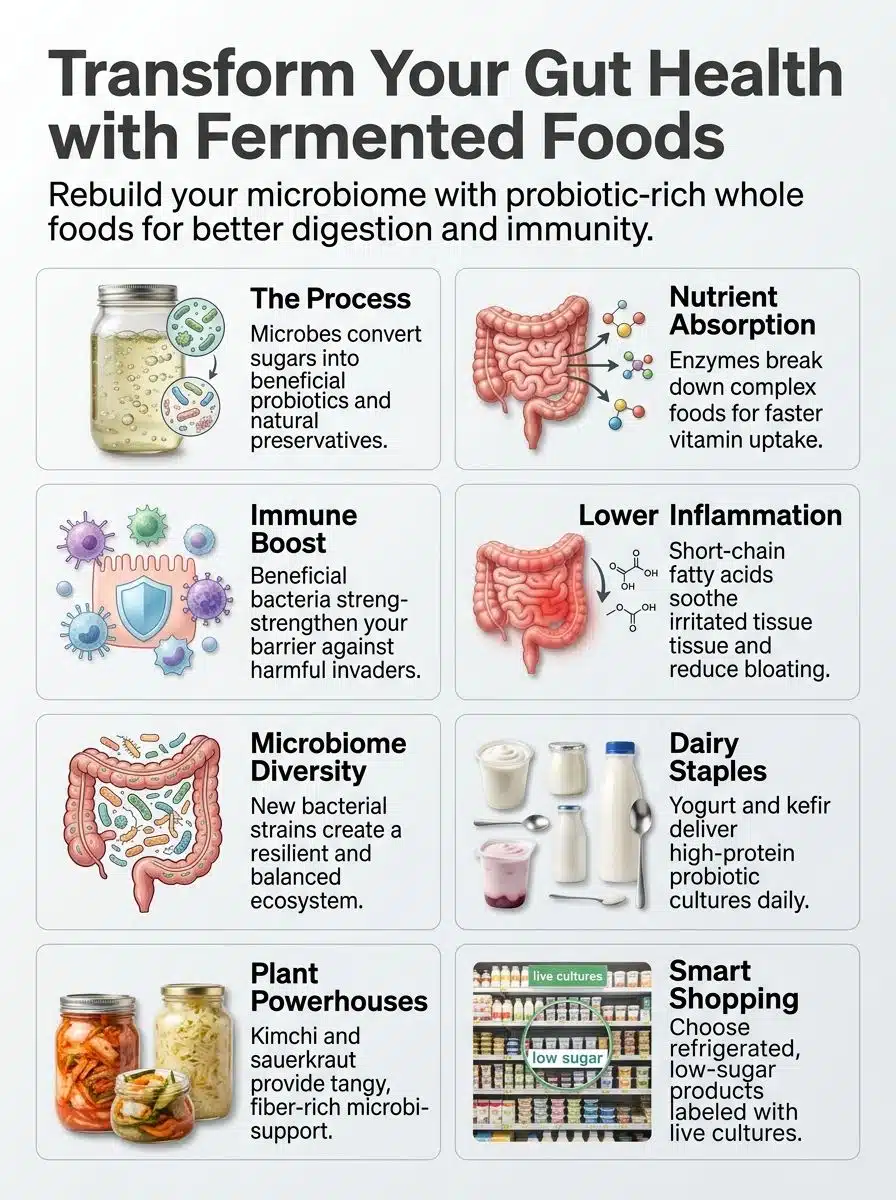
Your gut does the heavy lifting when breaking down food. The probiotics in yogurt, kimchi, and sauerkraut produce enzymes that pre-digest complex foods into simpler pieces. Because the food is partially broken down before it even enters your stomach, your body can grab the nutrients faster, absorbing far more vitamins and minerals from every bite.
2. Reduces Gut Inflammation
Fermented foods work like tiny firefighters inside your digestive system. According to a 2025 landmark clinical trial from the Stanford School of Medicine, a diet high in fermented foods decreased 19 distinct inflammatory proteins in the body, including Interleukin-6, which is linked to rheumatoid arthritis and type 2 diabetes. That is not just calming a little discomfort; that is a measurable, systemic impact on your long-term health.
3. Boosts Immune System Function
Your gut acts as the command center for your immune system. Probiotics in fermented foods train your immune cells to recognize threats and fight them off. They also strengthen your intestinal wall, stopping harmful invaders from slipping into your bloodstream. Studies consistently show that people who eat fermented foods regularly experience fewer colds and infections.
4. The Gut-Brain Connection: Mood and Mental Clarity
One of the most exciting Fermented Foods Benefits being studied today is its impact on mental health. Your gut and your brain are connected by the vagus nerve, often referred to as the “gut-brain axis.” In fact, an estimated 95% of your body’s serotonin (the “happy chemical”) is produced in the gut. By balancing your microbiome with fermented foods, you can actually reduce brain fog, lower stress levels, and support a more stable mood.
Top Fermented Foods for Gut Health
Here is a look at the champions of microbiome health and what makes each one worth adding to your plate.
Yogurt and Kefir
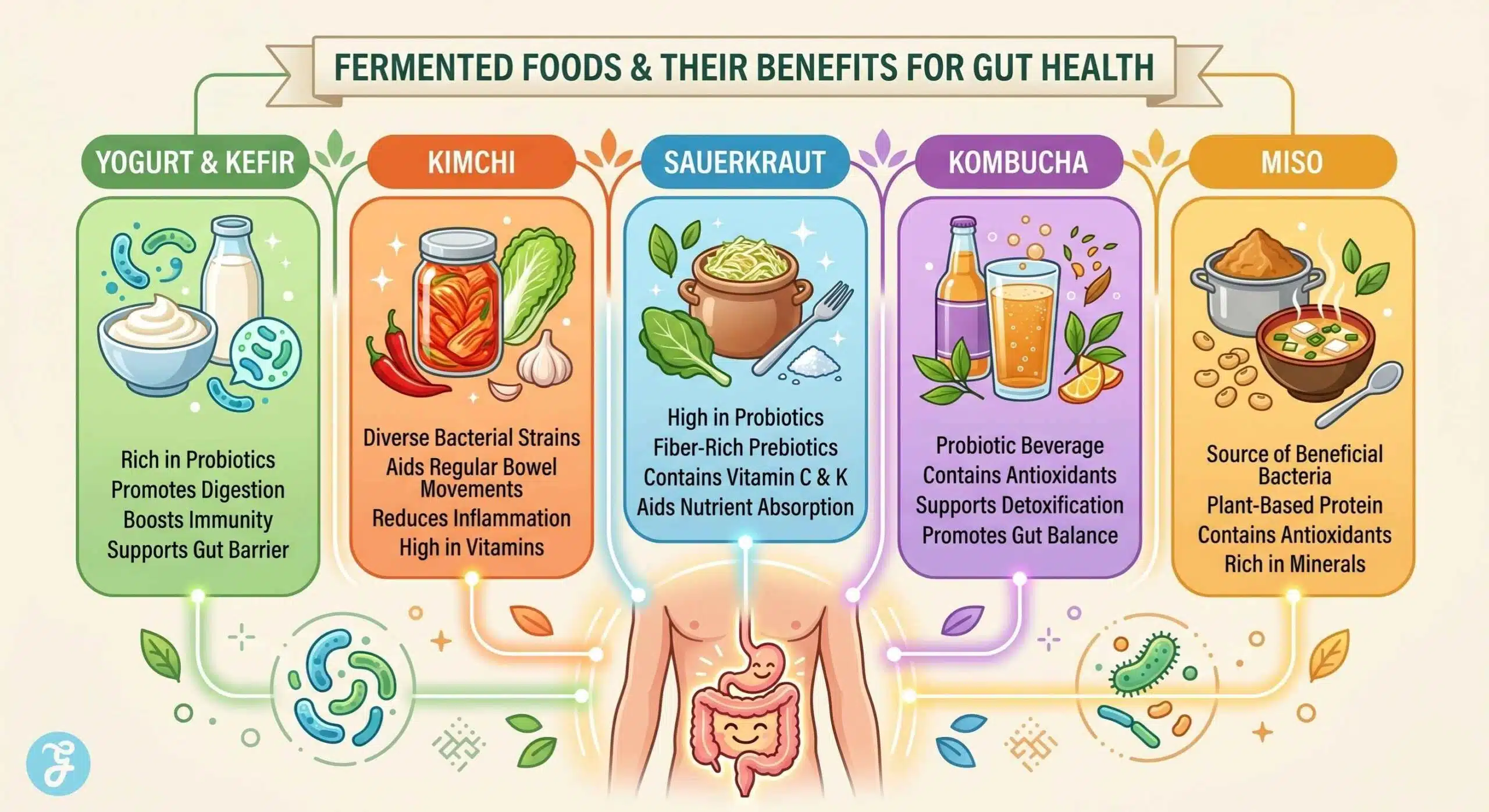
These deliver live cultures that strengthen your microbiome. Kefir packs more probiotic diversity than yogurt, offering over 30 different bacterial strains. Cardiovascular protection is a major benefit here: 2026 research by the American Society for Microbiology shows that probiotic strains in these foods can actively reduce the gut’s production of trimethylamine N-oxide (TMAO), a primary driver of atherosclerosis.
Kimchi
This spicy Korean staple ferments cabbage, radishes, and spices. The kick comes from gochugaru pepper, which adds anti-inflammatory compounds alongside probiotics for complete gut support.
Sauerkraut
Using just cabbage and salt, this simple food improves nutrient absorption. The fermentation process makes high levels of vitamin C and K2 instantly bioavailable to your body.
Miso
A concentrated dose of probiotics from fermented soybeans. Just one tablespoon of miso paste provides millions of beneficial microorganisms. (Just remember never to boil miso, as high heat kills the living cultures!).
Kombucha
A fizzy, tangy beverage made from fermented sweet tea. Its organic acids lower stomach pH and improve nutrient availability.
Sourdough Bread
Uses wild yeast and bacteria to break down gluten. According to 2025 nutritional analyses published in Medical News Today, true sourdough fermentation lowers the bread’s glycemic index to a highly stable 54, keeping your blood sugar and gut microbiota balanced.
Potential Considerations and Risks
Not all fermented foods pack the same punch. Your body might also react differently to these foods than someone else’s, so paying attention to how you feel matters.
Identifying Added Sugars and Salts
Manufacturers often hide added sugars and excess sodium behind clever marketing. According to a 2025 dietary analysis by Evidation, a single serving of traditional sauerkraut can contain up to 900 mg of sodium, nearly 40% of the daily limit. Meanwhile, “natural” flavored kombuchas often hide 15-25 grams of added sugar per bottle, rivaling some desserts.
What to look for:
- Choose plain Greek yogurt (0-5 grams of sugar) over flavored varieties.
- Look for sauerkraut with salt listed as the primary preservative, not sugar or vinegar.
- Opt for low-sodium fermented options or monitor your overall daily salt intake when eating kimchi or miso.
Understanding Your Personal Tolerance
Your gut is as individual as your fingerprint. Start slow, introduce one new fermented food at a time, allowing your microbiome to adjust.
Additionally, based on 2026 clinical allergy reports, approximately 1-3% of the population suffers from DAO enzyme deficiency (histamine intolerance). For these individuals, aged fermented foods can trigger allergic-style reactions, including migraines, rashes, and severe bloating. If you have FODMAP sensitivities or histamine intolerance, speak with a nutritionist before diving in.
The Fermented Foods Benefits Timeline: What to Expect
Healing your gut microbiota is a marathon, not a sprint. While your microbiome begins shifting almost immediately, the systemic health benefits compound over time. Here is a realistic timeline of what you can expect when you consume fermented foods daily:
| Timeframe | Biological Action in the Gut | Noticeable Health Benefits |
| Days 1 to 3 | Introduction of new bacterial strains. Mild shifts in gut acidity. | You may experience mild, temporary gas as your microbiome adjusts. Bowel movements may begin to regulate. |
| Weeks 2 to 4 | Probiotics begin successfully colonizing the gut and pre-digesting complex foods. | Significant reduction in daily bloating. Noticeably smoother digestion and improved energy levels after meals. |
| Months 2 to 3 | Gut lining strengthens (reduced intestinal permeability). Serotonin production stabilizes. | Enhanced immune response (fewer colds), clearer skin, and noticeable improvements in mood and mental clarity (reduced brain fog). |
| 6 Months+ | Long-term microbiome diversity is established. Systemic inflammation markers drop. | Deep, systemic health shifts. Better metabolic health, sustained energy, easier weight management, and a highly resilient immune system. |
Tips for Adding Fermented Foods to Your Diet
Getting fermented foods’ benefits doesn’t require a dietary overhaul. Start small:
- Spot Authentic Products: Check the ingredient list for “live and active cultures.” Look in the refrigerated section (heat-treated, shelf-stable jars have dead bacteria).
- Start Small: Add a serving of yogurt to breakfast or swap a tablespoon of kimchi into your favorite rice bowl.
- Mix it Up: Rotating between kombucha, miso, kefir, and sauerkraut keeps your microbiome diverse and resilient.
Your First Step Toward a Thriving Microbiome
Your gut health journey starts with simple choices today. Adding these foods to your meals opens the door to better digestion, stronger immunity, and enhanced mental clarity. The incredible Fermented Foods Benefits work quietly in the background to reduce inflammation and reshape your gut flora in powerful ways. Start small, taste what appeals to you, read your labels carefully, and give your gut the attention it deserves.
Frequently Asked Questions (FAQs) on Fermented Foods Benefits
1. What are fermented foods, and how do they unlock Fermented Foods Benefits?
Fermented foods like yogurt, kimchi, and sauerkraut contain live probiotics that add beneficial bacteria to your digestive system. According to a 2025 study published in Cell, people who eat fermented foods regularly show increased gut microbiome diversity, which strengthens their immune response.
2. How do fermented foods improve digestion?
The probiotics in these foods produce enzymes that pre-digest complex food components (like lactose in dairy). This means your body works less to absorb more nutrients from every meal.
3. Can eating fermented foods help with bloating?
Yes, they can significantly reduce bloating by rebalancing your gut bacteria. A 2024 study from Stanford found that participants eating fermented foods daily experienced a 25% reduction in bloating symptoms after just four weeks.
4. How often should you eat fermented foods to see results?
Consistency is key. If you eat a small serving daily, like a half-cup of kefir or a few forkfuls of sauerkraut, you will typically start noticing improvements in your digestion and energy levels within two to four weeks.
5. Can I cook or heat fermented foods without losing the benefits?
High heat is the enemy of probiotics. Cooking or boiling fermented foods (like adding miso to boiling water or roasting sauerkraut) will kill the beneficial bacteria. To keep the probiotics alive, always stir fermented ingredients into your meals after they have been removed from the heat.
6. Can fermented foods help with healthy weight management?
While not a magic pill, they play a crucial role in metabolic health. A balanced microbiome helps regulate blood sugar spikes (reducing cravings) and optimizes how your body extracts and stores energy from food, making healthy weight management significantly easier.
7. What are the best dairy-free fermented foods?
If you are lactose intolerant or vegan, you can still reap massive gut health benefits. Water kefir, kombucha, traditional sauerkraut, kimchi, raw apple cider vinegar, and fermented soy products like tempeh and miso are entirely dairy-free and loaded with diverse probiotic strains.






















