
Choosing the right CRM can feel overwhelming, especially for small businesses managing leads, sales, and customer support. Disorganized contact data, slow sales cycles, and poor team alignment often create unnecessary friction.
When marketing tools fail to sync with sales systems, deals stall and productivity drops. Many startups face these challenges, losing valuable time on platforms that don’t scale effectively.
In the HubSpot Vs Salesforce Vs Zoho comparison, one key advantage stands out: HubSpot provides the strongest free marketing tools, including email marketing and lead capture features, making it ideal for beginners.
This guide compares HubSpot, Salesforce, and Zoho across customization, scalability, user experience, and pricing. It highlights strengths in inbound marketing, sales automation, reporting, and analytics, along with limitations such as Zoho’s outdated interface.
Find the right CRM solution based on business needs—whether scaling a startup, adopting enterprise-level tools, or enhancing sales performance with AI-powered features.
Overview of the Top CRMs
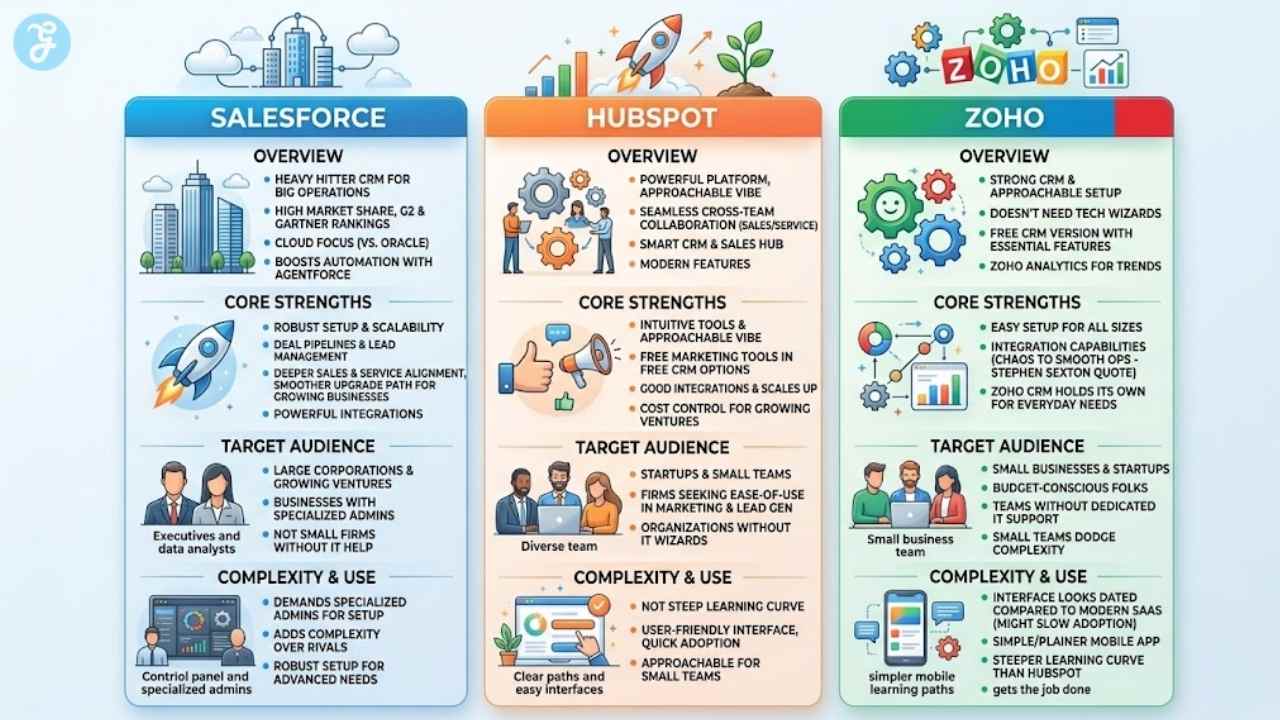
You know, picking the right CRM can feel like finding a trusty sidekick for your business hustle. We break down Salesforce, HubSpot, and Zoho next, so stick around to see which one fits your sales team like a glove.
What is Salesforce?
Salesforce stands out as a top customer relationship management tool for businesses. It helps sales teams handle lead management and deal pipelines with ease. This CRM offers deep sales and service alignment, plus a smooth path to upgrade as your company grows.
Many users praise its market share and rankings on sites like G2 and Gartner. Yet, it demands specialized admins to set up and run, which adds complexity over rivals like HubSpot or Zoho.
Think of it as the heavy hitter in the CRM game, packed with integrations that fit big operations.
People often call Salesforce a powerhouse for customer success, especially with features like Agentforce that boost automation. It differs from Oracle in its cloud focus, and beats many in scalability.
Small firms might find it tough without IT help, but growing ones love the robust setup. Zoho’s mobile app mimics Salesforce, but looks plainer by comparison.
Salesforce provides deeper sales and service alignment with a smoother upgrade path for growing businesses, notes a key fact from industry comparisons.
What is HubSpot?
HubSpot stands out as a powerful CRM platform, perfect for businesses that crave seamless cross-team collaboration. Teams love its hubspot free crm options, which pack in top-notch free marketing tools.
You’re juggling leads and sales, and HubSpot’s Smart CRM steps in like a trusty sidekick, making everything flow. It differs from Salesforce and Zoho in offerings, integration capabilities, and pricing structures.
HubSpot’s Sales Hub competes head-on with traditional CRM approaches, fostering that sales and service alignment you need.
Businesses turn to HubSpot for its approachable vibe, especially in marketing and lead generation. You get tools that feel intuitive, no steep learning curve here. Zoho might seem dated by comparison, but HubSpot shines with modern features.
Small teams, listen up, this CRM suits startups without demanding IT wizards. It integrates well, scales up, and keeps costs in check for growing ventures.
What is Zoho?
Zoho CRM stands out as a strong customer relationship management tool that fits small businesses and startups like a glove. Teams love it for its approachable setup, especially if you lack dedicated IT support.
You jump right in without needing a tech wizard on speed dial. Zoho offers a free CRM version that packs essential features, making it a go-to for budget-conscious folks. And Zoho Analytics helps you crunch numbers and spot trends with ease.
Stephen Sexton from Nowadays Media swears by its integration capabilities, turning chaos into smooth operations.
Sure, the interface looks a bit dated next to flashy modern SaaS products, which might slow down your team’s adoption. Zoho’s mobile app keeps things simple, much like Salesforce, but with a plainer design that gets the job done.
Expect a steeper learning curve than HubSpot, so plan extra time for training. Small teams thrive here, dodging the complexity that bigger platforms bring. Keywords like Sybill or Salesflare pop up in comparisons, but Zoho CRM holds its own for everyday needs.
Key Features Comparison
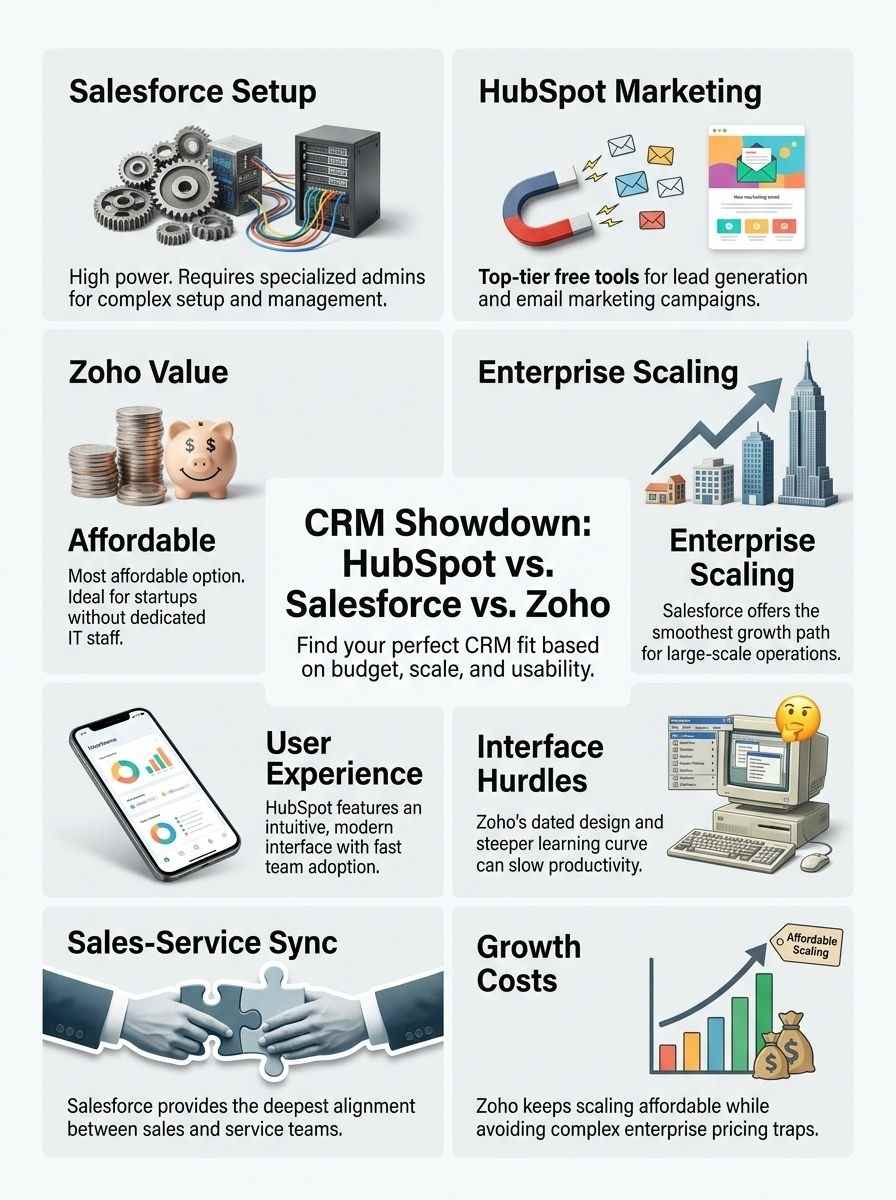
Ever wondered how these CRM giants stack up in real-world battles, like a sales team chasing leads versus a marketing squad crafting campaigns? Let’s break it down side by side, so you can pick the winner for your business hustle.
Customization and scalability
You want to know how these CRMs stack up on customization and scalability, right? Let’s break it down in this table, like comparing cars for a road trip – some zoom ahead with fancy upgrades, while others keep it simple for the daily drive.
| CRM Platform | Customization | Scalability |
|---|---|---|
| Salesforce | Salesforce lets you tweak almost everything, from fields to workflows. It shines with deep options for sales and service alignment. But watch out, it often needs specialized administrative resources. That makes setup more complex than rivals. Think of it as building a custom house – rewarding, but you might need pros to handle the blueprint. | Salesforce scales smoothly for growing businesses. It offers a clear upgrade path. Businesses expand without big headaches. Deeper integration capabilities set it apart. Imagine your team growing from a small crew to a full fleet; Salesforce keeps pace without missing a beat. |
| HubSpot | HubSpot provides robust customization through its Smart CRM and Sales Hub. These tools compete well against Salesforce’s traditional setup. Focus on cross-team collaboration. You get flexible options without overwhelming complexity. Picture it as a modular kitchen set – snap in what you need, no fuss. | HubSpot scales for various business sizes. It differs in offerings and integration from Salesforce and Zoho. Choices depend on needs and budget. Small teams find it easy to grow. Like planting a garden that expands season by season, it adapts without much extra effort. |
| Zoho | Zoho keeps customization approachable for smaller teams. No need for dedicated IT support. It differs in integration capabilities from the others. Setup feels straightforward. It’s like customizing a bike – simple adjustments, perfect for quick rides without expert help. | Zoho scales well for startups and small groups. Budget constraints play a big role in picking it. It suits teams lacking resources. Growth happens without the complexity of Salesforce. Envision a startup ballooning into a business; Zoho stretches along nicely, keeping things light. |
Marketing and sales automation
Marketing and sales automation can make or break your team’s efficiency, so let’s break down how Salesforce, HubSpot, and Zoho stack up in this area.
| CRM Platform | Key Automation Features | Strengths and Differences |
|---|---|---|
| Salesforce | Sales automation, service alignment, upgrade paths for growth | Salesforce delivers deep sales and service alignment. It offers a smooth upgrade path for growing businesses. Teams get robust tools for cross-team collaboration. Integration capabilities stand out among the three platforms. |
| HubSpot | Marketing tools, sales automation, Smart CRM, Sales Hub | HubSpot provides the best free marketing tools out there. Its Smart CRM and Sales Hub compete directly with Salesforce’s traditional setup. Focus falls on marketing and lead generation. Offerings differ in integration and pricing from rivals. |
| Zoho | Marketing automation, sales tools, simplified features | Zoho suits smaller teams without IT support. It handles marketing and sales tasks well. Platforms like this differ in offerings and structures. Businesses pick based on needs and budget. |
Reporting and analytics
You need solid insights on reporting and analytics to pick the right CRM.
| Aspect | Salesforce | HubSpot | Zoho |
|---|---|---|---|
| Core Strengths | Salesforce delivers deep data views. It aligns sales and service with strong metrics tracking. Teams get real-time dashboards for quick decisions. | HubSpot shines in free marketing tools that tie into analytics. Picture easy lead tracking, like a clear map guiding your team. It boosts cross-team work with smart CRM features. | Zoho gives basic reports at low cost. Small teams love its simple setup, no IT experts needed. Think of it as a no-fuss toolbox for quick stats. |
| Ease of Use | Setup takes more effort here. You might need admins to tweak reports. Yet it scales well for big growth. | HubSpot keeps things user-friendly. Dashboards feel modern and quick to learn. Your crew picks it up fast, no steep curves. | Zoho’s interface looks old-school. Training time adds up more than with rivals. Still, it works fine for startups without fancy bells. |
| Integration and Scalability | Salesforce links with many apps smoothly. It offers a clear path to upgrade as needs grow. Data flows without hitches in sales alignment. | HubSpot competes head-on with sales hubs for team collaboration. Free plans include analytics that expand easily. It’s like a growing garden, simple to tend. | Zoho suits small groups lacking support. Mobile apps mirror basics from others, but designs stay plain. Budget fits tight spots well. |
| Key Drawbacks | Complexity hits hard without dedicated help. Reports demand more tweaks than simpler options. | Advanced analytics cost extra beyond free tiers. It trails in deep service ties compared to some. | Dated looks slow adoption. Learning feels tougher, eating into team time. |
User Experience and Accessibility
Picking a CRM that feels like chatting with an old friend, easy and fun, right? Salesforce dazzles with its sleek dashboard and strong screen reader support, while HubSpot keeps things simple with drag-and-drop tools that anyone can master on the go.
Zoho shines for quick mobile access, letting you handle customer data from your phone without a hitch. Each one fits different teams, like a glove for sales pros or a comfy chair for beginners.
Want the full scoop on which suits you best? Stick around for more.
Interface design and ease of use
Salesforce packs a punch with its CRM interface, but it demands specialized admins to keep things running smooth. You might feel like you’re wrestling a beast at first, given its complexity compared to rivals like HubSpot or Zoho.
Small teams often struggle without IT help, turning setup into a real headache. Zoho steps in as the friendlier option for those groups, offering an approachable design that skips the need for tech pros.
Yet Zoho’s look feels a bit old-school next to sleek modern tools, which can slow down how fast your crew picks it up. HubSpot shines here with a gentler learning curve, making team training quicker and easier than Zoho’s steeper path.
Think of it like slipping into comfy shoes versus breaking in stiff boots. If you crave something even simpler, check out Pipedrive as another free CRM contender, though Zoho free CRM holds its own for budget-conscious startups eyeing Salesforce free CRM vibes without the hassle.
Mobile app functionality
You love staying connected to your customer relationship management tools while on the move, right? Zoho steps up with a simplified mobile app that mirrors Salesforce’s setup. This app keeps things straightforward for quick tasks, like checking leads or updating contacts.
Teams often grab it for its no-fuss vibe, perfect if you juggle work from coffee shops or commutes. Picture a sales rep sealing a deal mid-flight, all without clunky interfaces slowing you down.
Salesforce shines in mobile functionality, offering robust features that feel sleek and powerful. Zoho’s version stays similar but sports a plainer design, which might not wow you as much.
HubSpot joins the party with solid mobile access, though it leans toward marketing folks who need fast lead tracking. Small teams, you might prefer Zoho’s approach if IT support feels like a distant dream.
Go ahead, test these apps yourself, and see which one fits your daily grind like a glove.
Pricing and Affordability
Money talks, right, when you’re picking a CRM that fits your wallet without skimping on power. HubSpot kicks things off with a no-cost option packed with core tools like contact management and email tracking, perfect for teams testing the waters.
Jump to their paid starter pack, and you pay just $18 a month for two users, but watch out, scaling to pro levels with sales automation can climb to $800 monthly for bigger crews. Salesforce jumps in at $25 per user each month for its essentials bundle, covering lead scoring and opportunity tracking, yet adding custom apps or AI features pushes costs way up, sometimes into thousands for enterprises.
Zoho keeps it wallet-friendly with a free edition that includes basic pipeline management, and their standard tier starts at $14 per user monthly, making growth easy without the sticker shock of extra modules for reporting.
Your business as a growing tree – HubSpot and Salesforce might demand premium fertilizer as branches spread, while Zoho lets you expand on a budget, like using everyday soil.
Scaling costs hit hardest with Salesforce’s per-user fees and add-ons for things like Einstein AI, but Zoho caps it affordably, and HubSpot bridges the gap with tiered hubs for marketing or service.
Curious how these stacks up for your exact needs? Stick around for the next sections.
Free plans and entry-level pricing
HubSpot shines with its top free marketing tools in the CRM world. You get robust features without spending a dime, perfect if you’re testing the waters. Zoho and Salesforce also offer entry points, but they differ big time in pricing setups. Think of it like picking a coffee, some spots give you a free sample to hook you, while others charge from the get-go. Budget plays a key role here, folks, as these customer relationship management platforms vary in how they scale costs.
Salesforce starts higher on the price ladder, yet it provides strong value for growing teams. Zoho keeps things affordable for small outfits, no fancy bells needed. HubSpot’s free tier stands out, drawing in startups eager for quick wins. Choices boil down to your wallet and needs, like choosing tools that fit just right without breaking the bank.
Cost of scaling and advanced features
Salesforce scales up with a smoother path for growing businesses, but it demands specialized admins to handle the complexity. That bumps up costs, you know, like hiring experts to keep things running smooth. Zoho keeps it simple for small teams without IT pros, so scaling feels less like a wallet drain. HubSpot throws in top-notch free marketing tools, making advanced features more budget-friendly as your CRM needs expand.
Your business hits a growth spurt, and suddenly pricing structures matter big time. Salesforce offers deep sales alignment, yet those upgrades can add up fast if you need custom tweaks. Zoho stays approachable with its plain design, fitting tight budgets for startups eyeing customer relationship management without breaking the bank. All three CRMs differ in integration perks, so pick based on your needs to avoid sticker shock down the line.
Best CRM for Specific Use Cases
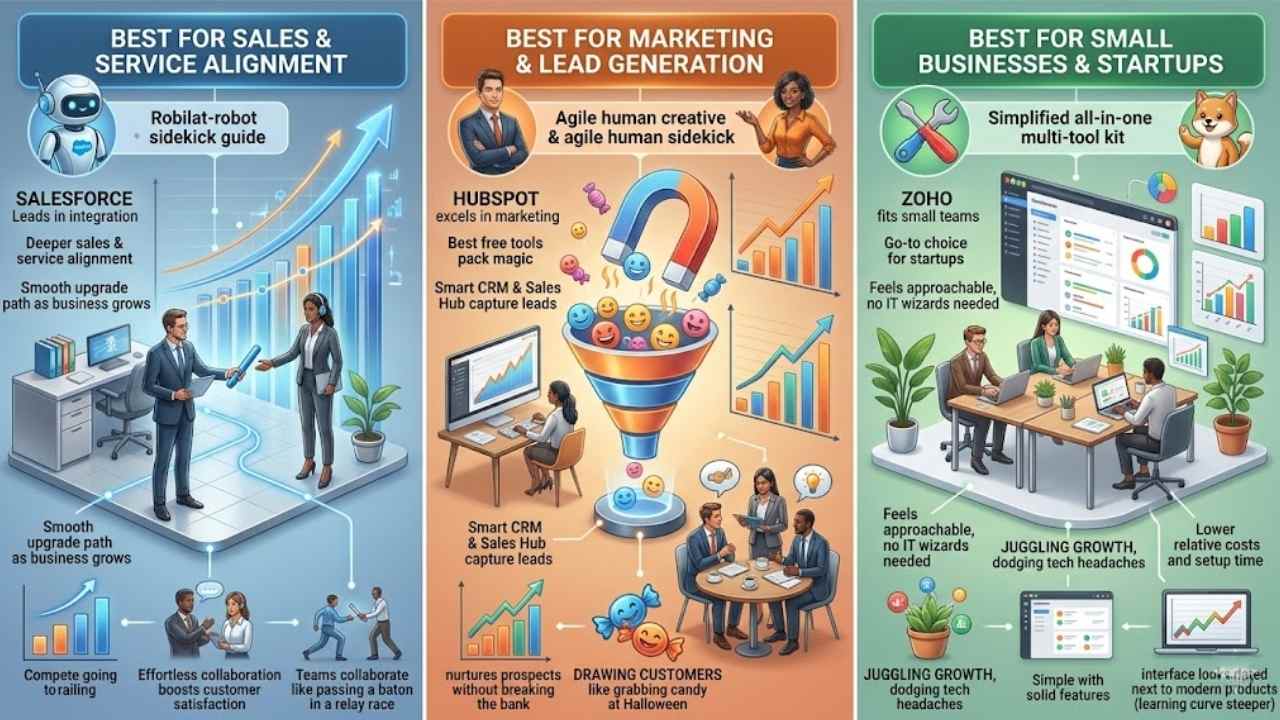
Picking the right CRM feels like choosing a trusty sidekick for your business adventures, whether you’re aligning sales and service teams with Salesforce’s powerhouse tools, sparking lead generation magic through HubSpot’s marketing automation tricks, or keeping things budget-friendly for startups using Zoho’s all-in-one customer management features—curious which one fits your story? Keep scrolling to find out!
Best for sales and service alignment
Salesforce shines in aligning sales and service teams, folks. It delivers deeper connections between these groups, with a smooth path to upgrade as your business grows. Imagine: your sales crew hands off leads to service pros without a hitch, like passing a baton in a relay race.
Teams collaborate effortlessly, boosting customer satisfaction and closing deals faster. No wonder growing companies pick it for that seamless flow.
HubSpot steps up as a strong rival here, with its Smart CRM and Sales Hub pushing cross-team teamwork. These tools challenge Salesforce’s old-school style, making collaboration feel natural and fun.
Zoho fits in too, but Salesforce leads if you need strong integration for sales and service harmony in your customer relationship management setup. Your choice boils down to business needs and budget, right?
Best for marketing and lead generation
HubSpot shines in marketing and lead generation. You get the best free marketing tools out of the three CRM platforms. Imagine your team grabs leads like kids snatch candy at Halloween, all thanks to HubSpot’s Smart CRM and Sales Hub.
These tools compete head-on with Salesforce’s old-school style, boosting cross-team work. Zoho and Salesforce trail here, but HubSpot makes it easy for you to nurture prospects without breaking the bank.
Folks often pick HubSpot for its edge in drawing in customers. It fits small groups chasing growth, with features that spark real conversations. Salesforce offers deep ties between sales and service, yet HubSpot’s setup feels like a friendly chat over coffee.
Zoho keeps things simple, but its tools lack that marketing punch. Choose based on your business needs, and watch leads pour in.
Best for small businesses and startups
Small teams often need a CRM that fits like a glove without breaking the bank. Zoho steps up as the go-to choice for startups and small businesses. It feels approachable, especially if you lack dedicated IT support.
Juggling growth while dodging tech headaches; Zoho keeps things simple for that. Sure, its interface looks a bit dated next to flashy modern SaaS products, and the learning curve hits steeper than HubSpot’s.
You might spend extra time on team training. But hey, it suits smaller crews who want solid customer relationship management without the fuss.
Salesforce brings deeper sales and service alignment, perfect for businesses eyeing a smooth upgrade as they grow. Yet, it demands specialized admins, which can complicate setup for tiny operations.
HubSpot shines with the best free marketing tools among these robust CRM platforms. Picture a startup grabbing leads on a shoestring budget; that’s HubSpot’s sweet spot. All three differ in offerings, integrations, and pricing, so pick based on your needs and wallet.
Limitations of Each Platform
Every CRM has its weak spots, like a car that shines on the highway but struggles in city traffic. Dig into these drawbacks to pick the one that fits your business ride without the bumps.
Salesforce limitations
Salesforce shines in many ways, but it demands specialized admins to set up and run it. This makes the CRM tougher to implement than rivals like HubSpot or Zoho. Imagine trying to build a complex puzzle without the right tools, that’s the hassle for teams short on IT pros.
Businesses often face steep learning curves here, slowing down their start.
Costs can climb fast too, especially for custom features in this customer relationship management system. Growing companies love its deep sales and service links, yet the need for experts adds extra layers of management.
Think of it as a high-end sports car, powerful but picky about who drives it well. Small teams might struggle without that support, leading to frustration.
HubSpot limitations
HubSpot packs a punch with its free marketing tools, the best among these CRM options. Businesses love that edge for lead generation. It positions its Smart CRM and Sales Hub as solid rivals to Salesforce’s traditional setup, boosting cross-team work.
Teams find it easier to learn than Zoho, cutting down on training time.
All three platforms stand out as strong customer relationship management choices, yet they vary big time in features, integrations, and costs. Salesforce delivers deeper ties between sales and service, plus easier upgrades as your company expands.
Pick HubSpot if marketing drives you, but weigh your needs and budget first, folks, it might not suit every growing setup.
Zoho limitations
Zoho’s interface looks old next to sleek modern software. This can slow down how fast teams pick it up and start using it. Picture your crew fumbling with clunky buttons, like trying to drive a vintage car on a high-speed freeway.
Adoption rates drop because of that dated feel, and it hurts user experience in customer relationship management tasks.
The learning curve hits harder than HubSpot’s. Teams need extra time for training and getting everyone on board. Zoho suits small groups without big IT help, but its plain mobile app lacks the polish of rivals.
That simple design, while easy, feels basic and limits quick on-the-go work for growing businesses.
Which CRM Is Right for You?
Salesforce fits big teams that need deep sales tools and smooth growth paths, while HubSpot shines for free marketing features and easy team work. Zoho works well for small groups without IT help, but its old look might slow you down.
Pick based on your size and budget, these CRMs make customer tracking simple and boost your sales fast. Check out their trial versions or forums for more tips, you’ll find the right fit quick.
Go ahead, grab the CRM that matches your vibe, and watch your business soar like a rocket.
Final Thoughts
We’ve compared HubSpot, Salesforce, and Zoho, highlighting their strengths in customization, automation, and pricing for customer relationship management needs. These tools make scaling your business simple and effective, with options that fit any team size without much hassle.
What does your company value most in a CRM, sales alignment or free marketing perks? Picking the right one can boost your leads and cut costs, transforming everyday operations into smooth successes.
Check out each platform’s free trials to see what clicks for you, and dive deeper with their online guides. Go ahead, choose wisely, and watch your business thrive like never before.
Frequently Asked Questions (FAQs): HubSpot vs Salesforce vs Zoho CRM
1. What does CRM stand for, and why should I care about it?
CRM means customer relationship management, that handy system that keeps your customer info organized like a well-stocked toolbox. It helps you track leads and sales without dropping the ball, making your business run smoother than a greased pig at a fair. Think of it as your secret weapon for turning one-time buyers into loyal fans.
2. How does HubSpot stack up against Salesforce for CRM needs?
HubSpot shines for small teams with its easy setup and free tools, while Salesforce packs a punch for big companies needing custom features. If you’re just starting out, HubSpot feels like a friendly neighbor, but Salesforce is the powerhouse that scales up like climbing a mountain.
3. Is Zoho a good CRM choice compared to the others?
Zoho offers affordable CRM options with tons of built-in apps, perfect if you’re watching your wallet. It integrates well for customer relationship management without the hefty price tag of Salesforce.
4. Which CRM wins for beginners: HubSpot, Salesforce, or Zoho?
For newbies, HubSpot wins with its simple interface and helpful guides, easing you into customer relationship management like dipping your toes in a pool. Zoho follows close with low costs and flexibility, but Salesforce might overwhelm you unless you need advanced CRM bells and whistles. Pick based on your team size, like choosing shoes that fit just right.