Sales CRM solutions (Customer Relationship Management) are essential tools for businesses aiming to streamline their sales processes, enhance customer relationships, and boost overall revenue. By leveraging a CRM, businesses can manage customer interactions, track leads, automate workflows, and gain valuable insights into their sales performance.
Key Features of Sales CRM Solutions
- Lead Management: Efficiently capture, track, and manage sales leads from various sources.
- Contact Management: Store and organize customer information, including communication history and purchase behavior.
- Sales Automation: Automate repetitive tasks such as follow-ups, email campaigns, and sales reporting.
- Pipeline Management: Visualize and manage the sales pipeline to track progress and identify bottlenecks.
- Analytics and Reporting: Generate detailed reports and analytics to measure sales performance and identify areas for improvement.
- Integration Capabilities: Seamlessly integrate with other tools and platforms, such as email marketing software and social media.
Sales Lead Automation: Enhancing Efficiency and Effectiveness
Sales lead automation is the process of using technology to automate lead generation, nurturing, and conversion activities. By automating these processes, businesses can save time, reduce manual errors, and ensure a consistent and personalized approach to lead management.
Benefits of Sales Lead Automation
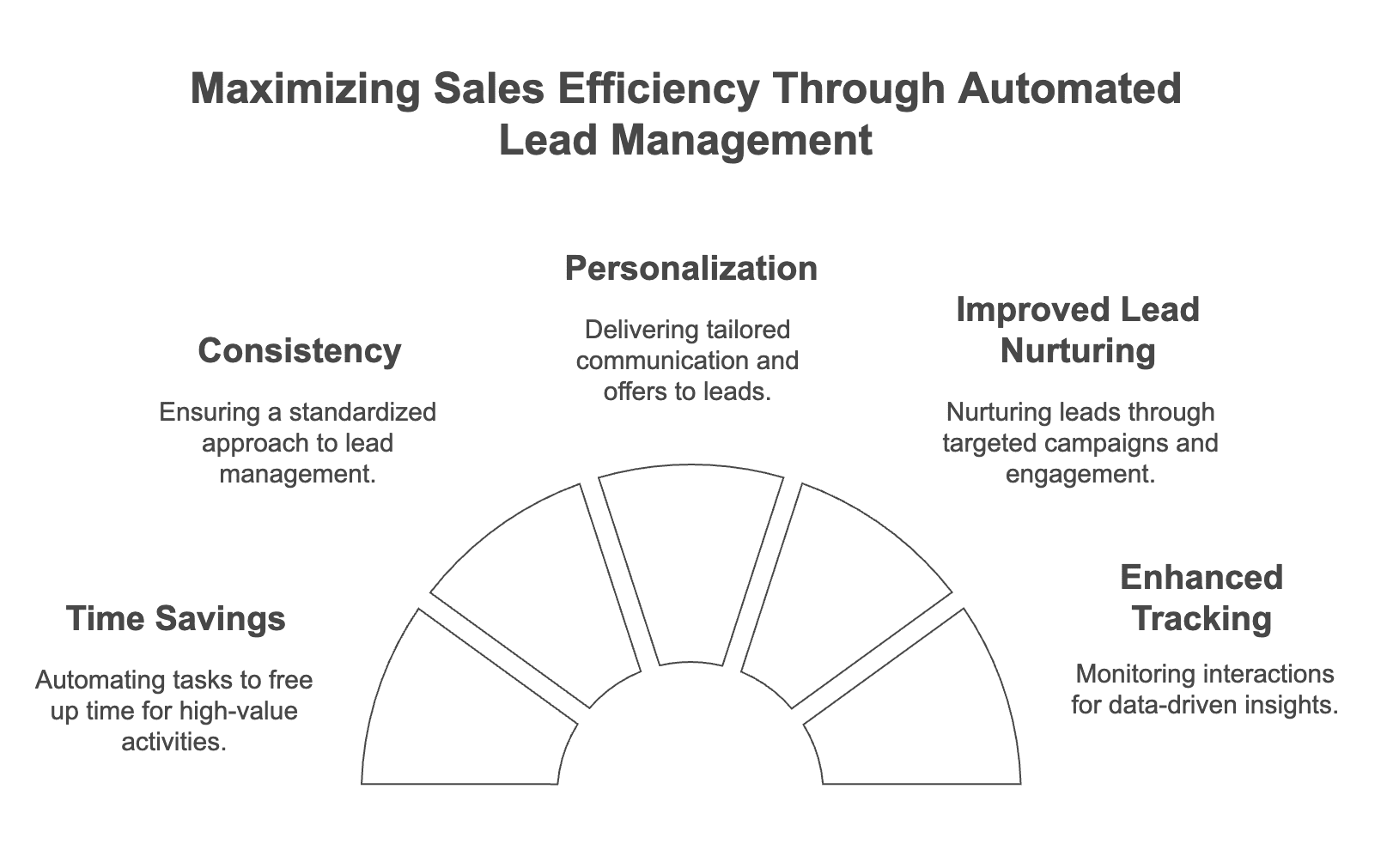
- Time Savings: Automating repetitive tasks frees up time for sales teams to focus on high-value activities.
- Consistency: Ensures a standardized and consistent approach to lead management.
- Personalization: Utilize data to deliver personalized communication and offers to leads.
- Improved Lead Nurturing: Automatically nurture leads through targeted email campaigns, content marketing, and social media engagement.
- Enhanced Tracking: Monitor lead interactions and behavior to gain insights and make data-driven decisions.
Implementing Sales Lead Automation
To successfully implement sales lead automation, consider the following steps:
- Identify Automation Opportunities: Determine which tasks and processes can be automated to enhance efficiency.
- Choose the Right Tools: Select automation tools that align with your business needs and integrate seamlessly with your CRM.
- Define Lead Scoring Criteria: Establish criteria for scoring leads based on their interactions, behavior, and engagement levels.
- Develop Automated Workflows: Create workflows for lead generation, nurturing, and conversion, ensuring that they are personalized and relevant.
- Monitor and Optimize: Continuously monitor the performance of your automated processes and make adjustments as needed to optimize results.
Integrating CRM and Sales Lead Automation for Maximum Impact
Combining sales CRM solutions with sales lead automation can significantly enhance your sales process and drive business growth. Here are some ways to achieve this integration:
- Seamless Data Flow: Ensure that data flows seamlessly between your CRM and automation tools, providing a unified view of customer interactions and lead activities.
- Unified Reporting: Generate comprehensive reports that combine data from both CRM and automation tools to gain deeper insights into sales performance.
- Automated Lead Assignment: Automatically assign leads to the appropriate sales representatives based on predefined criteria and lead scoring.
- Personalized Communication: Leverage CRM data to deliver personalized and targeted communication to leads at different stages of the sales funnel.
- Enhanced Customer Experience: Provide a consistent and personalized customer experience by integrating CRM insights with automated marketing and sales efforts.
Conclusion
In conclusion, sales CRM solutions and sales lead automation are indispensable tools for modern businesses looking to optimize their sales processes, improve customer relationships, and drive revenue growth. By leveraging these technologies, businesses can achieve greater efficiency, consistency, and personalization in their sales efforts, ultimately leading to higher conversion rates and sustained success.