Spending long hours indoors can lead to rising stress levels, especially with hidden pollutants like benzene, formaldehyde, and trichloroethylene from paints, carpets, and HVAC systems. Poor indoor air quality can disrupt emotional balance and leave the mind feeling drained.
Research highlights the benefits of indoor plants for air purification, with species like the spider plant known for removing toxins such as carbon monoxide and xylene.
Top choices include snake plant, peace lily, bamboo palm, aloe vera, and English ivy. These plants not only help purify the air but also promote a calming environment. With minimal care and the ability to thrive in low light, they offer a simple, natural way to improve air quality and reduce stress.
How Plants Purify Air and Reduce Stress

Plants grab harmful gases like carbon dioxide and benzene from your indoor air, turning them into fresh oxygen through photosynthesis, as NASA studies show. They also ease your mind, acting like a quiet friend that whispers calm during tough days, cutting stress with their green glow.
The science behind air purification
Indoor plants clean the air through photosynthesis. They take in carbon dioxide and release oxygen. This process also pulls in indoor pollutants like benzene, formaldehyde, and trichloroethylene.
NASA studies show this clearly. They list Spider Plant (Chlorophytum comosum) as one of the best for cleaning indoor air. Snake Plant (Sansevieria trifasciata) makes the list too. Peace Lily (Spathiphyllum) removes those common toxins with ease.
Boston Fern (Nephrolepis exaltata Bostoniensis) ranks as one of the most efficient air purifiers. Pothos handles all types of indoor toxins, even in low light and humidity. Think of it like a natural filter, quietly working in your home.
Healthy plants purify air better than weak ones. Keep them thriving with proper light and watering. This boosts their air-purifying abilities. Dracaena stands out as a top choice for air purification.
Weeping Fig (Ficus Benjamina) reduces indoor pollutants while improving air quality. Fiddle Leaf Fig helps too, cleaning the air in homes and offices. English Ivy cuts down on mold for better air.
Bamboo Palm adds humidity, fighting dry air issues. Aloe Vera purifies and soothes, like a green ally against toxins. You see, these air-purifying houseplants tackle ammonia, toluene, and more through their leaves and roots.
Plants act as the lungs of your home, breathing in the bad and exhaling the good, says a NASA researcher on indoor air quality.
The psychological benefits of indoor plants
Plants bring calm to your space, folks. They cut down stress like a gentle breeze on a hot day. Imagine: you come home after a tough day, and your jade plant sits there, easing your mind.
Studies show Dracaena plants top the list for stress reduction. They purify air too, which boosts your mood. Ficus Benjamina, that weeping fig, shines as a star in offices for slashing tension.
It cleans the air while you relax. Add a fiddle leaf fig to your home decor, and watch worries fade. These greens act as silent therapists, always ready to help.
You feel better with plants around, right? They create a soothing vibe that fights daily grind. Dracaena ‘Janet Craig’ stands out for its stress-relieving powers. Pair it with a rubber plant for double the calm.
Even a simple parlor palm adds elegance and peace. Think of them as nature’s chill pill in your living room. Betsy Schaffitzel from Schaffitzel’s Flowers might agree; she knows plants heal the soul.
Keep them healthy, and they reward you with lower stress levels. Your mind thanks you for this green touch.
Top Air-Purifying Plants for Stress Relief
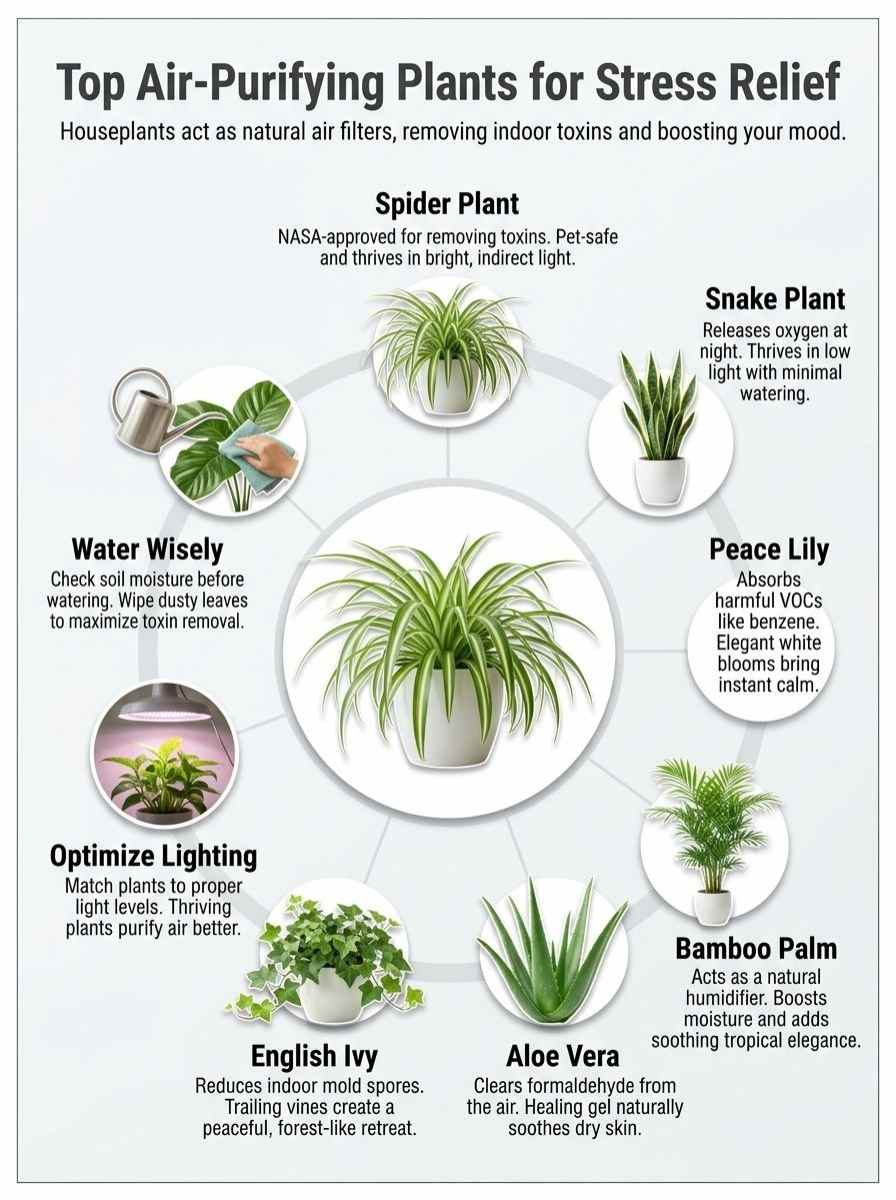
Spider Plant (Chlorophytum comosum)
A plant that hangs like a friendly spider, pulling toxins from your air while easing your mind, much like a quiet buddy in the corner. NASA studies show these green wonders scrub away harmful stuff, and their easy vibe melts stress away, so why not grab one for your space?
Air-purifying qualities
Spider plants excel at cleaning indoor air, folks. They pull toxins right out, like a vacuum for your home’s atmosphere. NASA lists Chlorophytum comosum as a top choice for this job.
Imagine your living room turning into a fresh oasis, all thanks to these easy growers. Healthy ones work best, so give them proper light and water to boost their purifying power.
Spider Plant (Chlorophytum comosum) is recognized by NASA as one of the best plants for cleaning indoor air. – Important Facts on Air-Purifying Houseplants
These air-purifying plants tackle common pollutants with ease. They fit well in homes or offices, tolerating low light like champs. Pair them with other gems, such as snake plants or peace lilies, for even better results.
Your space feels cleaner, and you breathe easier every day.
Stress-reducing characteristics
The Spider Plant eases stress with its cheerful green leaves. You see it hanging around, and it feels like a slice of the outdoors inside. Clean air from this gem lifts your mood right up.
The national aeronautics and space administration ranks it high for purifying indoor spaces. People breathe deeper, worry less. Think of it as nature’s chill button, always on duty.
Care for your Chlorophytum comosum to keep those benefits strong. Give it proper light and water. Healthy plants purify air better than weak ones. Pet safety matters too; the ASPCA says this one poses no risk to cats or dogs.
You relax more without that extra concern. Add it near a window, watch it grow. Stress melts away, simple as that.
Snake Plant (Sansevieria trifasciata)
This tough green buddy pulls nasty toxins from your air and cranks out fresh oxygen, even while you sleep. With its low-effort care routine, it lets you kick back and relax without the fuss of constant tending.
Air purification and oxygen release
Snake plants clean the air like pros. They pull in nasty toxins and spit out fresh oxygen, even at night. NASA lists dracaena trifasciata as a top air purifying houseplant for this reason.
Your bedroom turning into a mini oasis, with less stuffiness and more calm vibes.
Keep these plants healthy to boost their powers. Proper light and watering help them thrive, just like the pros at Wagners Greenhouse suggest. Pair them with a pothos or calathea for extra punch against indoor pollutants.
Your space feels fresher, and stress melts away.
Low-maintenance benefits for relaxation
You love a plant that fits right into your busy life, right? Snake plants thrive with little fuss, making them perfect air purifying houseplants for folks on the go. They handle low light and forgetful watering like champs, so you skip the daily worry.
This ease lets you kick back and relax, knowing your space stays fresh without extra effort. Coming home to that tall, sword-like greenery, no drama involved.
Healthy plants like these perform best, as NASA’s list shows with the snake plant topping charts for clean air. Give them proper light and occasional water, and they maximize benefits for your calm vibe.
But watch out, they’re toxic to pets, so keep them up high if you have furry friends around. Imagine the peace, with less chores and more chill time in your cozy spot.
Peace Lily (Spathiphyllum)
Think a plant that sucks up those nasty volatile organic compounds like a vacuum, making your air feel fresh and clean, while its glossy leaves and white blooms turn your space into a serene oasis that melts away the day’s worries.
Pair it with a gerbera daisy for extra color pop, or place it near a Kimberly Queen fern to boost that calming vibe, and watch how it transforms your home into a stress-free haven.
VOC absorption and air quality improvement
Peace Lilies soak up volatile organic compounds, or VOCs, like nobody’s business. They pull benzene, formaldehyde, and trichloroethylene right out of your indoor air. This action boosts air quality in homes and offices.
Your living room, fresh and clean, thanks to these elegant plants. Pothos plants, such as the baltic blue pothos or epipremnum pinnatum, join in too. They remove all sorts of indoor toxins, even in low light spots.
Dracaena varieties, like dracaena ‘janet craig’, tackle air purification with ease. Boston ferns rank high as efficient cleaners. Keep plants healthy for top results. They thrive with proper light and water.
Add a gerbera daisy or kimberly queen fern for extra punch against pollutants. These choices create fresher spaces, day in and day out.
Creates a calming indoor atmosphere
Peace Lily plants bring a soothing vibe to your home with their elegant white blooms and glossy leaves. They act like gentle guardians, pulling toxins such as benzene, formaldehyde, and trichloroethylene right out of the air.
Coming home after a long day on Route 66, kicking off your shoes, and feeling that instant calm wash over you, thanks to this plant’s quiet presence. Folks like Mike and Abigail swear by them for turning a hectic space into a peaceful retreat, much like adding a lemon button fern nearby amps up the tranquility.
These beauties thrive in low light, making them perfect for cozy corners where stress melts away. Pair one with a succulent like Crassula ovata for an extra touch of zen, or think about Bernadine’s Spring Open House in Springfield for more ideas on calming setups.
Healthy plants, kept in proper light and watered just right, boost that serene feel even more. They remind you of a soft whisper in a noisy world, easing your mind without any fuss.
Bamboo Palm (Dypsis lutescens)
This graceful plant, with its feathery leaves, turning your dry room into a moist oasis by raising humidity levels naturally. Those slender stems and lush greenery add a touch of elegance, easing your mind like a quiet walk in the woods, so why not grab one for that cozy spot at home?
Humidity-boosting properties
Bamboo palms, like the chamaedorea seifrizii, add moisture to dry indoor air. They act as natural humidifiers, pulling water from their soil and releasing it through leaves. This process fights off that stuffy feeling in homes or offices.
Think of them as quiet helpers, keeping your space fresh and comfy. Healthy plants, such as the broad lady palm or thatch palm, work best when you give them proper light and water.
They thrive and boost humidity levels, making breathing easier.
Pair a bamboo palm with an areca palm for even more moisture magic. These plants mimic a tropical vibe, easing stress with their green glow. Scarlet star plants fit in too, adding color while they humidify.
Fittonia varieties join the fun, loving the extra dampness. Boston ferns excel here, ranking as top air purifiers that also increase humidity. Keep them strong with steady care, and watch your room transform into a calm oasis.
Elegant addition for stress relief
The Bamboo Palm adds grace to any room with its tall, feathery fronds. It swaying gently in a corner, like a quiet friend offering calm during busy days. People often say it turns a plain space into something special, easing your mind after a long day.
My neighbor, Bernadine, swears by hers; she placed one in her living room and noticed less tension right away. This plant fits well in homes or offices, bringing a touch of nature that soothes the soul.
Ficus Benjamina, known as the Weeping Fig, ranks high for cutting stress while cleaning air in spots like that. Dracaena plants also shine in this role, pulling toxins and promoting peace.
The Fiddle Leaf Fig helps too, boosting air quality and dropping stress levels in daily life. Healthy plants like these thrive with proper light and water, maximizing their perks for you.
Bernadine’s choice mirrors how such greens create a serene vibe without much fuss.
Aloe Vera (Aloe barbadensis)
Aloe Vera pulls toxins from your indoor air, like a quiet hero in the corner. Plus, it eases your worries with its soothing gel, and hey, that same stuff works wonders on dry skin, as Bernadine’s garden tips often show.
Purifies air and soothes stress
This plant pulls toxins from the air in your home. NASA spots the Spider Plant as a top cleaner, and Aloe Vera follows suit. It clears out bad stuff like benzene and formaldehyde, much like the Peace Lily does.
Healthy plants do the job best, not those fighting poor conditions. Give them right light and water to boost their power.
Stress melts away with Aloe Vera nearby. It as your chill buddy in bernadine’s cozy corner. Folks love how Dracaena and Fiddle Leaf Fig cut tension too, just like this one.
It turns your space into a calm spot, easing your mind after a long day. Boston Fern ranks high for air cleaning, and Aloe matches that vibe for peace.
Additional benefits for skin care
Aloe Vera doubles as a natural healer for your skin. Snip off a thick leaf, and scoop out that cool, gooey gel. Rub it on sunburns or dry patches; it moistens and calms irritation fast.
Folks swear by it for minor scrapes, like a green bandage from your windowsill. Keep the plant healthy with proper light and watering, so it thrives and delivers top-notch gel.
Your Aloe sits there, purifying air while ready to rescue your skin after a long day. The gel fights inflammation, eases acne spots, and even softens rough elbows. Healthy plants perform better in general, maximizing those soothing effects.
Give it bright, indirect sun, and water sparingly to avoid rot; your skin will thank you for the fresh supply.
English Ivy (Hedera helix)
English Ivy acts as a natural guard against mold, pulling toxins from the air to keep your home fresh and clean. Its lush vines drape like a cozy blanket, turning any room into a peaceful retreat that eases your mind after a long day.
Mold reduction and improved air quality
English Ivy tackles mold like a quiet warrior in your home. This plant pulls mold spores from the air, cutting down on those sneaky allergens that make you sneeze. Studies show it boosts air quality by filtering out toxins, much like the Boston Fern, which ranks as one of the top air purifiers.
Keep it healthy with proper light and water, and it works even harder, just as all strong plants do.
English Ivy draping over a shelf, freshening your space with ease. It absorbs harmful vapors, creating cleaner breaths for you and your family. Folks often say it’s like having a natural air filter that also adds charm.
Pair it with plants like Pothos for extra toxin removal in low-light spots, and watch your indoor air transform.
Aesthetic appeal for a tranquil space
English Ivy trails like a green waterfall over shelves, turning your room into a peaceful retreat. It draping from a high spot, its leaves catching light and casting soft shadows that ease your mind after a long day.
This plant’s lush vines create that cozy, nature-inspired vibe, much like how Ficus Benjamina reduces stress in offices with its elegant form. Folks often say it feels like bringing a bit of the forest indoors, and hey, who doesn’t need that calm corner?
Keep your Ivy healthy with proper light and water, just as experts note for plants like Dracaena that thrive and purify air best in good conditions. Its glossy leaves add a touch of class, blending with decor to build a serene spot where worries fade.
Chatting with a friend over coffee, surrounded by this verdant hug, it just lightens the mood. Pair it with a Fiddle Leaf Fig for extra stress relief, as studies show these greens boost air quality and relaxation in homes.
Tips for Caring for Air-Purifying Plants

Put your spider plants near a sunny window, but keep them out of direct blasts that might scorch leaves. Water snake plants only when soil feels dry to the touch, and you’ll see them boost your room’s calm vibe, so dive deeper into these care hacks below.
Placement and lighting requirements
Plants need the right spot and light to thrive indoors. Good choices here boost their air-cleaning power and help you relax more.
- Place your Spider Plant near a window with bright, indirect light; it tops NASA’s list for air purification, but it struggles in dim spots, so avoid dark corners to keep it healthy and effective at scrubbing toxins.
- Set the Snake Plant in low-light areas like bedrooms; this NASA-approved gem releases oxygen at night, and it tolerates shade well, making it perfect for spots where other plants might wilt.
- Position Peace Lilies in medium to low light, away from direct sun that can scorch leaves; they remove benzene, formaldehyde, and trichloroethylene, but they need that filtered glow to stay vibrant and calm your space.
- Put Bamboo Palms in bright, indirect spots to boost humidity; their elegant fronds reduce stress, yet they demand consistent light to perform at their best, just like healthy plants outperform weak ones in air cleaning.
- Keep Aloe Vera on a sunny windowsill for strong growth; it purifies air and soothes skin, but proper lighting ensures it thrives, maximizing benefits without the plant fighting to survive.
- Hang English Ivy in bathrooms or kitchens to cut mold; it improves air quality with its trailing vines, and it prefers bright, indirect light to create that tranquil vibe you crave.
- For Pothos, choose low-light zones since it handles shade, low humidity, and cooler temps; this toxin remover excels when placed right, proving that smart spots lead to better purification.
- Boston Ferns love high humidity and indirect light, like in steamy bathrooms; they’re top air purifiers, but give them the right placement to avoid poor conditions that weaken their skills.
- Locate Ficus Benjamina in bright areas for stress relief in offices; it purifies air well, and with proper light, it stays robust, underlining how vital setup is for peak performance.
- Dracaena plants fit in medium-light spots for both cleaning air and easing tension; they need that balance to thrive, showing why light and placement matter for maximum impact.
- Place Fiddle Leaf Figs near east-facing windows for indirect sun; they cut stress and boost air quality, but they require careful lighting to remain healthy and effective indoors.
Watering and maintenance essentials
You want your indoor plants to thrive and clean the air well. Healthy plants beat out weak ones in purifying your space, as studies show.
- Check soil moisture before you water; stick your finger an inch deep, and if it feels dry, give the plant a drink to avoid root rot. Overwatering drowns roots, like flooding a garden, so aim for even moisture that keeps the plant perky without sogginess. Proper watering boosts air-purifying power, since thriving plants remove toxins better than those fighting poor conditions.
- Water most air-purifying plants every one to two weeks, but adjust based on your home’s humidity and season; in dry winters, you might need to water more often. Think of it as quenching thirst on a hot day, not drowning in a pool. This routine maximizes their ability to filter out benzene and formaldehyde, keeping them strong for stress relief.
- Use room-temperature water to prevent shocking the roots; cold taps can stress plants, much like an ice bath surprises you. Filtered water cuts down on chemicals that harm leaves over time. Good watering habits ensure plants like the snake plant release more oxygen at night, enhancing your relaxation.
- Fertilize every four to six weeks during growing seasons with a balanced houseplant food; this feeds them nutrients for robust growth. Skip it in winter when plants rest, avoiding buildup that burns roots. Strong nutrition helps plants such as peace lilies absorb volatile organic compounds, or VOCs, more effectively for cleaner air.
- Prune dead or yellow leaves right away with clean scissors; this promotes new growth and stops disease spread. It’s like trimming split ends for healthier hair. Regular pruning keeps air-purifying abilities at peak, as healthy foliage tackles indoor pollutants without struggle.
- Repot every one to two years if roots crowd the pot; choose a slightly larger container with fresh soil for better drainage. Crowded roots limit water uptake, weakening the plant’s toxin-fighting skills. This step maintains top performance in purifying air, just as proper light and watering do for all indoor greens.
- Wipe leaves monthly with a damp cloth to remove dust; dusty leaves block the plant’s breathing pores, cutting down on air cleaning. Imagine it as clearing fog from a window for a better view. Clean leaves let plants like spider plants, praised by NASA, work harder at removing toxins and reducing your stress.
Final Thoughts
These indoor plants, like the Spider Plant and Snake Plant, clean your air and ease your stress with ease. Pick low-maintenance options, such as the Peace Lily, to boost humidity and create calm spaces without much fuss.
Good air quality fights toxins, and green friends cut tension for a healthier home or office life. Check NASA’s list for more air-cleaning ideas, or visit a local nursery for tips.
Go ahead, add some foliage to your spot, and watch your worries fade away like morning mist.
Frequently Asked Questions (FAQs) About Indoor Plants for Air Purification
1. What are the top indoor plants that purify air and reduce stress?
Turning your living room into a mini oasis; snake plants and peace lilies top the list because they suck up toxins like a vacuum and calm your nerves like a good friend’s hug. These champs filter out nasty stuff from the air while their green vibes help you unwind after a tough day. Just water them occasionally, and watch your stress melt away.
2. How do indoor plants like these actually purify the air?
They work like nature’s little filters, pulling in pollutants through their leaves and roots. This process freshens up your space, making it feel like a breath of fresh air on a spring morning.
3. Can these plants really help reduce my stress levels?
Absolutely, Think this: you’re sipping coffee next to a lush fern, and suddenly your worries feel lighter; studies show plants lower cortisol, that pesky stress hormone. Plus, caring for them gives you a simple routine that grounds you, like tending a tiny garden in your own home.
4. Which top indoor plants are easiest for beginners to keep alive?
Go for spider plants or pothos; they’re tough as nails and forgive you if you forget to water them now and then.