Sports injuries hit hard, right? You push your body in a game or workout, and bam, a sprain or strain sidelines you. It frustrates athletes at every level, from weekend warriors to pros.
No one likes missing out on the action, feeling that ache hold them back. Think about twisting an ankle during a pickup basketball game; suddenly, your routine grinds to a halt.
Athletes recover by giving their bodies the resources to rebuild strength after tough activity, according to experts at Henry Ford Health. This blog explores proven tips from sports medicine, like the RICE method for quick relief and physical therapy for solid healing.
Stick around to learn how these steps can speed up your comeback. Get ready to bounce back stronger.
Understanding Sports Injuries
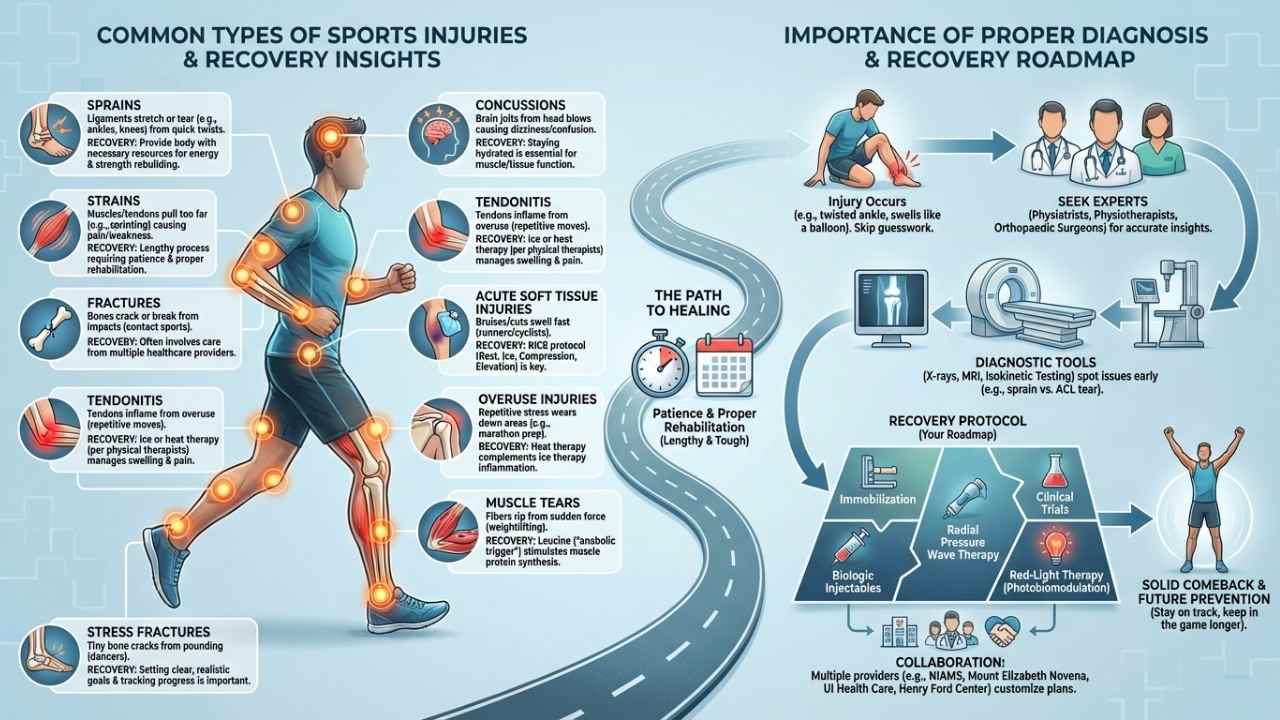
Sports injuries can hit you like a curveball, from sprains and strains to fractures that sideline even the toughest athletes. Get a proper diagnosis with tools like X-rays or magnetic resonance imaging from orthopaedic surgeons, and you’ll be on the fast track to healing.
Common types of sports injuries
You know, dealing with sports injuries feels like getting sidelined in the big game, but let’s break down the usual suspects that trip up athletes.
| Type of Injury | Description | Key Recovery Insight |
|---|---|---|
| Sprains | These happen when ligaments stretch or tear, often in ankles or knees during quick twists. | Athletes recover by providing their bodies with necessary resources to maintain energy and rebuild strength after intense physical activity. |
| Strains | Muscles or tendons pull too far, like a hamstring yank in a sprint, leading to pain and weakness. | Return from athletic injury can be a lengthy and difficult process requiring patience and proper rehabilitation. |
| Fractures | Bones crack or break from impacts, common in contact sports, and they demand quick attention. | Injured athletes commonly receive care from multiple healthcare providers during their rehabilitation process. |
| Concussions | Brain jolts from head blows shake things up, causing dizziness or confusion in games like football. | Staying hydrated is essential to keep muscles and tissues functioning properly during recovery. |
| Tendonitis | Tendons inflame from overuse, think tennis elbow, and it builds up over time with repetitive moves. | Ice or heat therapy, as recommended by physical therapists, helps manage swelling and pain associated with sports injuries. |
| Acute soft tissue injuries | These include bruises or cuts that swell fast, hitting runners or cyclists hard on the trail. | RICE protocol, which stands for rest, ice, compression and elevation, is the key treatment approach for acute soft tissue injuries. |
| Dislocations | Joints pop out of place, like a shoulder in basketball, and it screams for immediate help. | Ice therapy is one of the most popular treatments used to help speed up recovery from sports injuries by reducing inflammation. |
| Overuse injuries | Repetitive stress wears down areas, such as shin splints in marathon prep, sneaking up without warning. | Heat therapy is another popular treatment method that complements ice therapy in the sports injury recovery process. |
| Muscle tears | Fibers rip apart from sudden force, common in weightlifting, and recovery needs smart fuel. | Leucine is an amino acid known as “the anabolic trigger” that stimulates muscle protein synthesis faster than other amino acids, supporting injury recovery. |
| Stress fractures | Tiny bone cracks form from pounding activities, like in dancers, and they hide until they hurt big. | Setting clear and realistic goals is an important mental component of recovering from sports injuries, as athletes benefit from tracking data and monitoring their progress. |
Importance of proper diagnosis
Sports injuries hit hard, and getting a proper diagnosis sets the stage for a solid comeback. You twist your ankle during a game, and it swells up like a balloon. Skip the guesswork; head straight to experts like physiatrists or a physiotherapist for accurate insights.
They spot issues early, whether it’s a sprain or something worse, like an ACL tear needing surgery. Injured athletes often work with multiple healthcare providers, from the NIAMS team to specialists at Mount Elizabeth Novena Hospital, ensuring a full picture of the damage.
Dr. Gowreeson Thevendran might use tools like isokinetic testing to check your strength. This approach avoids setbacks in the healing process.
Think of proper diagnosis as your roadmap through the recovery protocol. It guides treatments, from immobilization to biologic injectables or radial pressure wave therapy. Return from athletic injury demands patience and proper rehabilitation, often lengthy and tough.
Multiple providers, including those at UI Health Care or Henry Ford Center for Athletic Medicine, collaborate to customize plans. They might recommend clinical trials or red-light therapy, known as photobiomodulation, to boost sports performance.
Stay on track; accurate diagnosis prevents future slips, keeping you in the game longer.
Immediate Steps to Take After an Injury
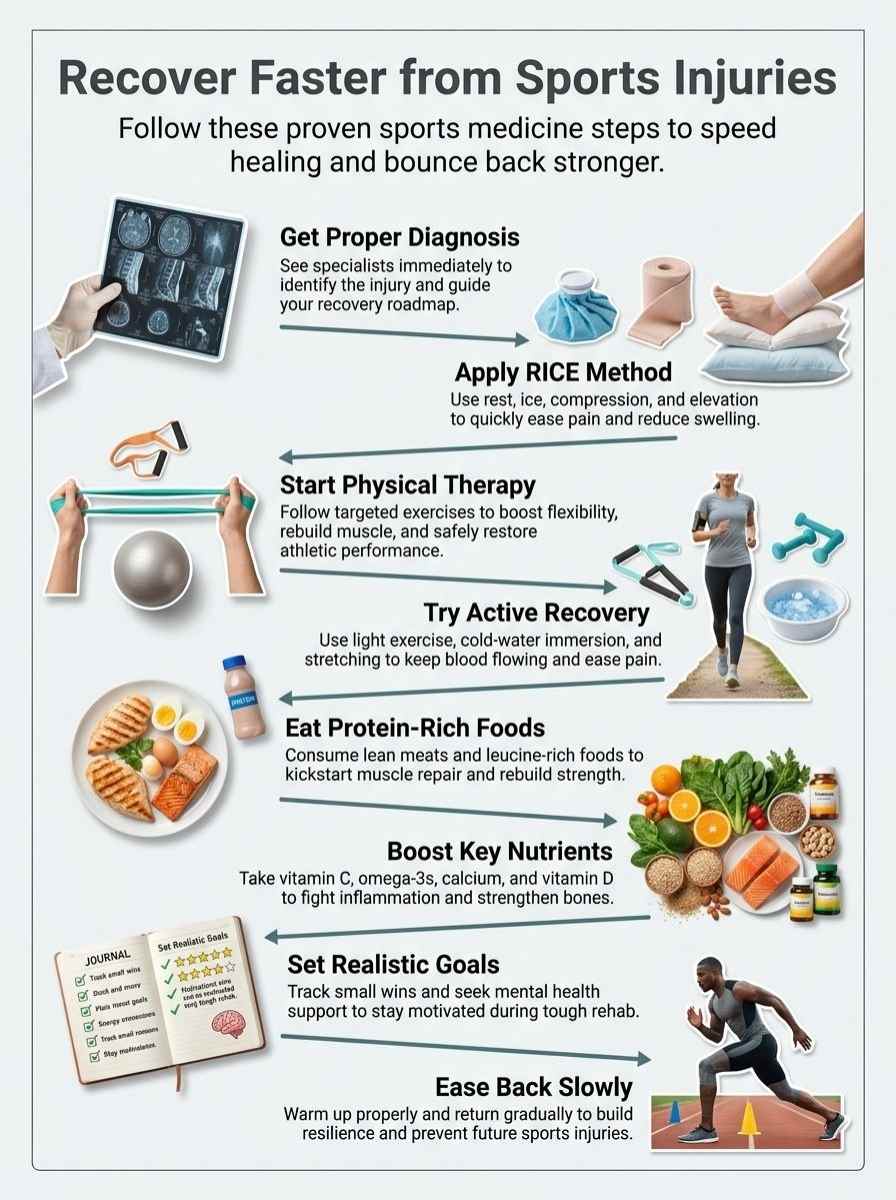
Twist on the field hurts more than a bad call from the ref, but acting fast can turn the tide. Grab that ice pack, prop up your leg, and call your doc right away to kickstart healing with the classic RICE approach—rest, ice, compression, elevation—before things swell like a balloon.
Rest, Ice, Compression, Elevation (RICE) method
Sports injuries hit hard, but you can bounce back smarter with the right first steps. The RICE method acts like your injury’s best friend, easing pain and swelling right away while you gear up for full recovery.
- Kick off with rest, because pushing through an injury is like ignoring a flat tire on your car; it only makes things worse, so give your body time to heal by avoiding stress on the hurt area, as the RICE protocol demands for acute soft tissue injuries.
- Grab some ice next, since ice therapy ranks as one of the most popular treatments to speed up recovery from sports injuries by reducing inflammation, and note that staying hydrated keeps your muscles and tissues working well during this phase.
- Wrap it up with compression, using a bandage to control swelling, much like squeezing a sponge to get the water out, and pair it with ice or heat therapy as your physical therapist suggests to manage pain effectively.
- Finish strong with elevation, lifting the injured spot above your heart to drain fluids away, and know that the RICE method stands as the key treatment approach for those fresh soft tissue blows.
- Think of heat therapy as the sidekick to ice in the recovery process, applying it later to boost blood flow once the initial swelling drops, helping athletes like you return from athletic injury through patience and proper rehabilitation.
- Injured athletes often team up with multiple healthcare providers, so seek medical advice early to blend RICE with options like cryotherapy or cold-water immersion for faster healing.
Seeking medical advice
Injured athletes often face a tough road back to full strength, and that’s where seeking medical advice makes all the difference. Head straight to a doctor or specialist, like those at Mount Elizabeth Hospital, right after the injury hits.
They can spot the real issue fast, whether it’s a torn ACL or a rotator cuff strain, and guide you through proper rehabilitation. Think of it as calling in the pros, folks like Dr.
Gowreeson Thevendran or Paul Pursley, who team up with physical therapists from the Department of Rehabilitation Therapies. These experts handle everything from anti-gravity treadmills to hydrotherapy, ensuring you get care from multiple healthcare providers.
This step cuts down risks and speeds up your athletic recovery, no shortcuts needed.
Patience pays off big time in this process, as return from athletic injury demands steady effort. Doctors might recommend the R-I-C-E method – rest, ice, compression, elevation – to tackle swelling and pain right away.
They could suggest ice therapy to reduce inflammation or heat therapy to ease stiff muscles, based on what your body needs. Staying hydrated keeps your tissues in top shape, while pros like Brian George or Seth Swary might point you toward behavioral health support for the mental side.
Set SMART goals to track progress, and don’t skip mental health check-ins; they help you stay motivated through the grind.
Proven Methods for Faster Recovery
You’ve twisted an ankle on the field, and now you’re itching to play again, right? Speed up that comeback with smart moves like guided rehab sessions and ice baths that chill the pain away, plus light exercises to keep your body flexible and strong.
Physical therapy and rehabilitation
Physical therapists play a key role in your rehab journey after a sports injury. They guide you through targeted exercises, like strength training and stretching, to boost flexibility and rebuild muscle.
Athletes often team up with multiple healthcare providers, from doctors to trainers, for a full recovery plan. This process demands patience, as returning from an injury can feel like climbing a steep hill, slow but steady.
Ice therapy, a go-to method, cuts down inflammation and speeds healing, as experts at places like the NIH recommend. Heat therapy complements it, easing pain when your physical therapist suggests the switch.
Imagine you’re dealing with something tough like ACL surgery recovery, and these tools, plus active rest, keep you on track without pushing too hard. Dr. Gowreeson Thevendran notes how such steps enhance athletic performance over time.
Active recovery techniques
Active recovery techniques help you heal without pushing too hard. They keep blood flowing, ease pain, and rebuild strength step by step.
- Try light cardiovascular exercise, like a gentle walk or easy bike ride, to boost blood flow and deliver nutrients to injured spots; athletes recover by providing their bodies with necessary resources to maintain energy and rebuild strength after intense physical activity, so this method supports that process while you stay hydrated, which is essential to keep muscles and tissues functioning properly during recovery.
- Use cold therapy, such as ice packs or cryotherapy sessions, to cut down swelling and speed healing; ice therapy is one of the most popular treatments used to help speed up recovery from sports injuries by reducing inflammation, and experts at the center for sports performance and research often recommend it alongside the RICE protocol, which stands for rest, ice, compression, and elevation, as the key treatment approach for acute soft tissue injuries.
- Add heat therapy to your routine after the first few days, applying warm packs to relax muscles and improve circulation; heat therapy is another popular treatment method that complements ice therapy in the sports injury recovery process, and injured athletes commonly receive care from multiple healthcare providers during their rehabilitation process, including advice from pros like Dr. Gowreeson Thevendran on when to switch from cold to warm methods.
- Include protein-rich foods with leucine in your meals, think eggs or chicken, to kickstart muscle repair; leucine is an amino acid known as “the anabolic trigger” that stimulates muscle protein synthesis faster than other amino acids, supporting injury recovery, and it fits right into active recovery by fueling your body for light activities.
- Practice visualization techniques to stay mentally sharp, imagining yourself back in the game; sport psychology plays a big role here, as setting clear and realistic goals is an important mental component of recovering from sports injuries, since athletes benefit from tracking data and monitoring their progress, and this keeps you motivated during the lengthy and difficult process that requires patience and proper rehabilitation.
- Float in a saltwater float tank for deep relaxation and reduced stress on joints; this active recovery tool eases tension, much like a quiet escape from the chaos, and it pairs well with injury prevention strategies by improving flexibility without strain.
- Mix in ice or heat therapy as your physical therapist suggests, to manage swelling and pain; therapists often guide this, helping you avoid setbacks, and it ties into the full recovery picture where return from athletic injury can be a lengthy and difficult process requiring patience and proper rehabilitation.
Cryotherapy and cold-water immersion
Athletes often turn to cryotherapy to bounce back from injuries, and it packs a punch against swelling. This cold treatment chills your body, shrinking blood vessels to cut down inflammation fast.
Ice therapy stands out as a top pick for speeding recovery, just like in the RICE method that pairs rest with ice, compression, and elevation for those fresh soft tissue hits. Picture plunging into an icy bath, your muscles sighing in relief as pain fades.
Dr. Gowreeson Thevendran highlights how pros use this to manage aches without drugs. Stay hydrated too, folks, because water keeps your tissues humming along during the chill.
Cold-water immersion works like a loyal sidekick to ice, diving deeper to ease deep soreness. Grab a tub, fill it with cold water, and soak for 10 to 15 minutes to flush out waste from tired muscles.
Physical therapists recommend this after checking your injury, blending it with heat therapy later to boost blood flow and healing. Imagine your body as a garden; cold nips the weeds of swelling, while staying quenched lets new growth sprout strong.
Athletes swear by this combo, feeling the burn of recovery turn into a cool victory lap.
Stretching and mobility exercises
Stretching opens doors to quicker healing, like unlocking a stiff lock with the right key. Mobility exercises build your body’s resilience, helping you dodge that frustrating setback feeling.
- Focus on dynamic stretches before activities to warm up muscles, as Dr. Gowreeson Thevendran often advises athletes in recovery; these moves mimic sport actions, cut down injury risks, and boost blood flow, much like revving an engine gently to avoid a breakdown.
- Add static stretching after workouts to ease tight spots, holding each pose for 20 to 30 seconds; this method aids muscle repair, pairs well with the RICE protocol for acute soft tissue injuries, and keeps tissues flexible, preventing that creaky door sensation in your joints.
- Try foam rolling as a mobility tool to massage sore areas, releasing knots like popping bubble wrap for stress relief; injured athletes who stay hydrated see better results here, since water keeps muscles and tissues functioning properly during recovery.
- Incorporate yoga flows for complete mobility, blending breath with movement to rebuild strength; think of it as a quiet chat with your body, setting realistic goals to track progress, just as mental health support helps athletes stay motivated in tough times.
- Use resistance bands for assisted stretches, targeting weak spots to improve flexibility; this approach complements physical therapy, where multiple healthcare providers guide you, and it stimulates recovery faster, similar to how leucine acts as the anabolic trigger for muscle protein synthesis.
- Practice daily hip openers to enhance range of motion, vital for sports like running or soccer; returning from athletic injury demands patience, so start slow, providing your body with resources to maintain energy and rebuild strength after intense activity.
- Include shoulder circles and arm swings to loosen upper body tension, reducing pain from overuse; combine this with ice or heat therapy as physical therapists recommend, managing swelling effectively, like switching tools in a toolbox for the perfect fix.
- Explore ankle mobility drills, such as calf raises on a step, to fortify lower limbs; these exercises support bone health when paired with calcium and vitamin D intake, helping you avoid future slips, akin to laying a solid foundation before building a house.
- Blend in core twists for spinal mobility, easing back strains common in sports; staying motivated through this process, with clear goals and progress tracking, turns a lengthy rehabilitation into a rewarding journey, full of small wins.
Photobiomodulation therapy
Photobiomodulation therapy shines low-level lasers or lights on your injured spots to boost healing. This method sparks cell repair, cuts down swelling, and eases pain without drugs.
Experts like Dr. Gowreeson Thevendran point out how it fits into rehab plans. Athletes recover faster when they pair it with rest and proper care. Your body gets the resources it needs to rebuild strength after tough workouts or hits.
Staying hydrated keeps tissues working well during this process. Add in ice therapy to fight inflammation, just like many pros do. Heat therapy complements it too, managing pain as you mend.
Injured athletes often see multiple healthcare providers for the best results. Set clear goals to track your progress, and watch motivation soar. Leucine from protein foods triggers muscle fixes quicker, tying right into the therapy’s glow.
Nutrition for Recovery
Fuel your body with the right eats, like lean meats and nuts, to mend those torn muscles fast and get back in the game. Think of omega-3s from fish as your secret weapon against swelling, keeping you strong while calcium from dairy builds unbreakable bones.
Protein-rich foods for muscle repair
Protein helps fix muscles after sports injuries. Athletes need it to rebuild strength and keep energy up.
- Eat foods high in protein, like chicken, eggs, and fish, to repair damaged muscles. These choices give your body the building blocks it needs. Dr. Gowreeson Thevendran often points out how crucial this step is for quick healing.
- Add leucine-rich options, such as dairy or soy products, to your meals. This amino acid acts as the anabolic trigger. It sparks muscle protein synthesis faster than others, boosting recovery from injuries.
- Choose lean meats or plant-based picks, like beans and nuts, for steady muscle repair. They provide resources to maintain energy. Pair them with veggies for a full recovery punch.
- Include Greek yogurt or cottage cheese in snacks. These pack protein that supports tissue rebuild. Athletes recover better when they fuel this way after tough sessions.
- Try protein shakes with whey or casein after workouts. They help restore strength in hurt areas. Mix in fruits for taste, and watch your body bounce back quicker.
Importance of vitamin C and omega-3 fatty acids
Athletes need vitamin C to heal from sports injuries. This nutrient helps your body make collagen, which fixes damaged tissues like muscles and tendons. You get it from foods such as oranges, strawberries, and bell peppers.
Dr. Gowreeson Thevendran often points out how vitamin C fights inflammation too, easing pain during rehab. Eat plenty, and your recovery picks up speed, just like adding fuel to a car engine.
Pair it with staying hydrated, since water keeps everything running smooth.
Omega-3 fatty acids act as your body’s natural anti-inflammatory team. They come from fish like salmon, or nuts such as walnuts, and they cut down swelling after a tough injury. These fats support muscle repair, working alongside leucine, that key amino acid which kicks off protein building fast.
Think of omega-3s as oil for rusty joints, making movement easier as you rebuild strength. Athletes who include them in meals often bounce back quicker, feeling more like themselves on the field.
Calcium and vitamin D to strengthen bones
You need strong bones to bounce back from sports injuries, and calcium teamed up with vitamin D makes that happen. These nutrients act like a dynamic duo, rebuilding bone tissue and keeping fractures at bay during recovery.
Dr. Gowreeson Thevendran often points out how injured athletes get care from multiple healthcare providers, and they stress eating dairy, leafy greens, or fortified foods to load up on calcium.
Pair that with sunlight or supplements for vitamin D, and you speed up the healing process. Think of it as giving your skeleton the tools it needs, like a builder stocking up on bricks and mortar.
Staying hydrated plays a big role too, since it keeps muscles and tissues working well while these nutrients do their job. Athletes recover by fueling their bodies with resources to maintain energy and rebuild strength after tough activity, so add protein-rich foods for muscle repair alongside your calcium boost.
Return from injury takes patience and proper rehab, but tracking progress with realistic goals keeps you motivated. Ice therapy reduces inflammation, and heat complements it, yet strong bones form the foundation for getting back in the game.
Psychological Aspects of Recovery
Your mind as a muscle that needs its own workout during injury downtime, right? Setting small wins, like celebrating tiny progress steps, can keep that fire lit and turn frustration into fuel for getting back on the field stronger.
Setting realistic goals
Set clear goals to boost your recovery from sports injuries. Athletes gain from this mental step, as it helps you track data and monitor progress. Picture yourself as a runner aiming to jog a mile without pain in two weeks, not sprinting a marathon right away.
Dr. Gowreeson Thevendran often stresses this approach in his work with injured folks. You avoid frustration by keeping targets real, like adding small strength exercises each day.
Track your wins with a simple journal or app to stay on top. This method sparks motivation, turning tough days into steps forward. Imagine chatting with a buddy about hitting that first pain-free workout; it feels good, right? Empathy kicks in here, since recovery tests your mind as much as your body.
Mix in some humor by celebrating tiny victories, like “Hey, I tied my shoes without wincing today!
Staying motivated during the recovery process
Staying motivated through sports injury recovery feels like climbing a steep hill, but you can make it easier with smart steps. Athletes often face a long, tough road back, one that demands real patience and solid rehab plans.
Dr. Gowreeson Thevendran, a trusted expert in this field, stresses how key it is to lean on pros for guidance. Imagine you’re sidelined, itching to play again, so start by jotting down small wins each day.
Track your progress with simple notes, like how far you walked without pain, and celebrate those tiny victories. They build momentum, like fuel for your inner fire.
Injured athletes benefit from clear, realistic goals that keep the mind sharp and focused. Think of it as mapping out a treasure hunt, where each checkpoint brings you closer to full strength.
Share your journey with friends or a support group; their cheers can lift you up on rough days. Hey, add a dash of humor to the mix, maybe joke about your “superhero comeback” story.
Monitoring data, from steps taken to energy levels, turns recovery into a game you can win. Stay patient, keep pushing, and watch how that drive speeds things along.
Mental health support for injured athletes
Injured athletes face a tough road back to the game, and mental health plays a big role in that journey. Imagine you’re sidelined, feeling like a benchwarmer in your own life, but support can turn things around.
Experts like Dr. Gowreeson Thevendran stress that recovery demands patience, as the process often feels long and hard. Athletes get help from a team of pros, including therapists and counselors, who guide them through the emotional ups and downs.
They build coping skills, like journaling frustrations or talking it out with a buddy, to keep spirits high.
Set clear goals to stay on track, folks, because monitoring progress boosts your mindset. Track small wins, such as hitting a daily walk target, and celebrate them like a game-winning shot.
This mental edge helps you push through rehab without losing steam. Support groups offer a safe space to share stories, reminding you that you’re not alone in this fight. Lean on friends or pros for that extra motivation, and watch how it speeds up your comeback.
Preventing Future Injuries
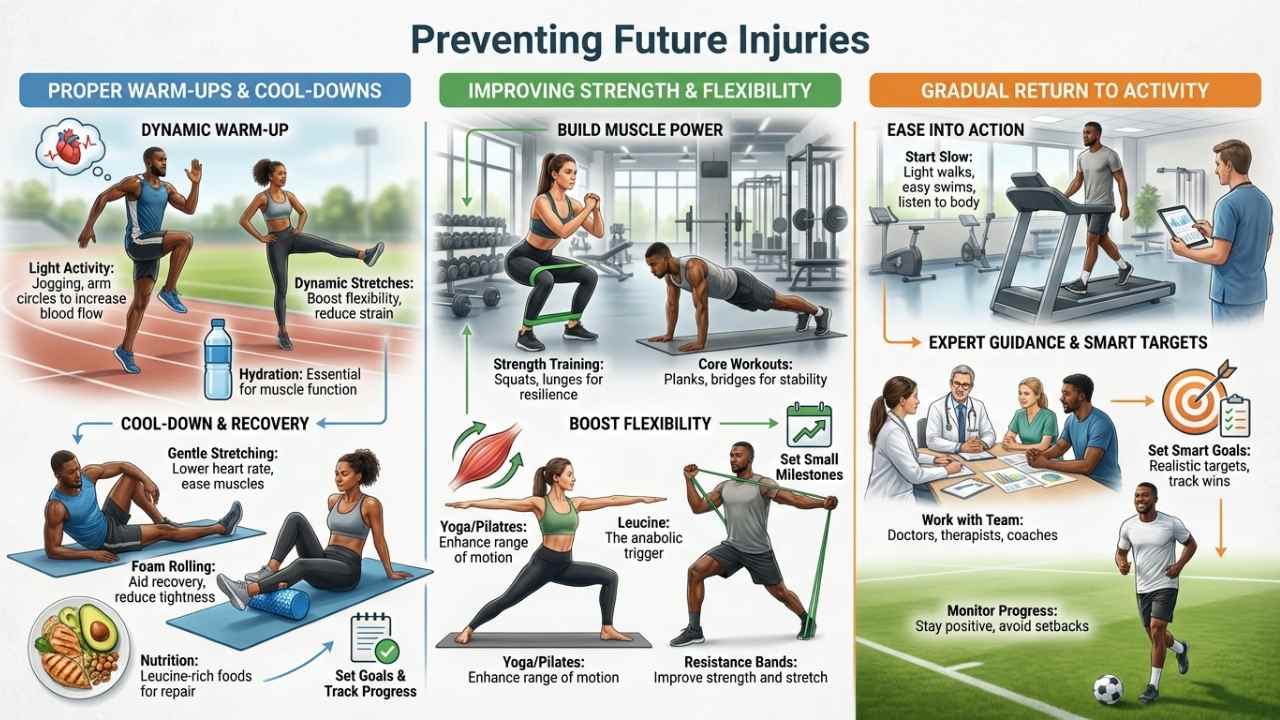
Nobody wants to sit on the sidelines again after that nasty sprain or pull, so kick things off with dynamic warm-ups like jumping jacks to get your blood pumping, build muscle strength through squats and lunges for better support, amp up flexibility with yoga poses to dodge those twists, and ease back into your game slowly, like testing the waters before a big dive, to keep injuries at bay—want the full scoop on staying in the action? Stick around for more tips in our conclusion.
Proper warm-ups and cool-downs
Proper warm-ups and cool-downs act like your body’s best friends in sports. They help you dodge injuries and bounce back stronger, just as experts like Dr. Gowreeson Thevendran often stress in athlete care.
- Start your routine with light activities, such as jogging in place or arm circles, to get blood flowing and muscles ready. This step, much like revving an engine before a race, cuts injury risks by warming tissues. Athletes recover by providing their bodies with necessary resources to maintain energy and rebuild strength after intense physical activity, so include this to stay in the game longer.
- Add dynamic stretches, think leg swings or walking lunges, to boost flexibility without strain. Return from athletic injury can be a lengthy and difficult process requiring patience and proper rehabilitation, but these moves prevent that hassle. Injured athletes commonly receive care from multiple healthcare providers during their rehabilitation process, and warm-ups make sure you avoid needing that team.
- Keep hydrated during warm-ups, sip water steadily to support muscle function. Staying hydrated is essential to keep muscles and tissues functioning properly during recovery, and it plays a big role here too. Picture forgetting your water bottle, it’s like running a marathon in flip-flops, not smart at all.
- Follow workouts with cool-downs, ease into slow walks or gentle stretches to lower heart rates. Ice or heat therapy, as recommended by physical therapists, helps manage swelling and pain associated with sports injuries, but cool-downs stop those issues from starting. RICE protocol, which stands for rest, ice, compression and elevation, is the key treatment approach for acute soft tissue injuries, so use cool-downs to skip it altogether.
- Incorporate foam rolling in cool-downs, roll out tight spots to aid recovery. Ice therapy is one of the most popular treatments used to help speed up recovery from sports injuries by reducing inflammation, yet this simple tool keeps inflammation at bay. Heat therapy is another popular treatment method that complements ice therapy in the sports injury recovery process, and rolling mimics that warmth for muscles.
- Focus on nutrition ties, eat leucine-rich foods post-cool-down for muscle repair. Leucine is an amino acid known as “the anabolic trigger” that stimulates muscle protein synthesis faster than other amino acids, supporting injury recovery. Hey, it’s like giving your body a high-five after hard work, and it builds habits that last.
- Set goals for your routines, track progress to stay motivated. Setting clear and realistic goals is an important mental component of recovering from sports injuries, as athletes benefit from tracking data and monitoring their progress. Dr. Gowreeson Thevendran might say, make it a habit, and watch how it transforms your game.
Improving strength and flexibility
Strength training and flexibility work build a solid defense against repeat injuries. Think of your body as a well-oiled machine that needs regular tune-ups to stay in top shape.
- Build muscle power with exercises like squats and lunges, as athletes recover by providing their bodies with necessary resources to maintain energy and rebuild strength after intense physical activity. Return from athletic injury can be a lengthy and difficult process requiring patience and proper rehabilitation, so start slow and consult experts like Dr. Gowreeson Thevendran for guidance. You gain resilience, cut down on downtime.
- Add yoga or pilates to your routine, they boost flexibility and help you move like a cat on a hot tin roof. Injured athletes commonly receive care from multiple healthcare providers during their rehabilitation process, team up with them to customize your plan. Feel the difference in your range of motion, hey, it’s like unlocking a stiff door after years.
- Focus on core workouts, planks and bridges strengthen your midsection, a key spot for stability. Staying hydrated is essential to keep muscles and tissues functioning properly during recovery, drink up to support those gains. Your body thanks you with fewer pulls and strains.
- Use resistance bands for gentle pulls, they improve both strength and stretch without overload. Ice or heat therapy, as recommended by physical therapists, helps manage swelling and pain associated with sports injuries, apply it post-session. It’s a smart hack, like giving your muscles a cozy blanket or a cool compress.
- Incorporate dynamic stretches before activities, arm circles or leg swings prep your joints. RICE protocol, which stands for rest, ice, compression and elevation, is the key treatment approach for acute soft tissue injuries, blend it with strength building. You prevent tweaks, stay in the game longer.
- Try foam rolling for self-massage, it loosens tight spots and boosts blood flow. Ice therapy is one of the most popular treatments used to help speed up recovery from sports injuries by reducing inflammation, pair it with flexibility drills. Imagine your knots melt away like butter on a griddle.
- Eat foods high in leucine, that amino acid acts as the anabolic trigger to spark muscle protein synthesis faster than others. Heat therapy is another popular treatment method that complements ice therapy in the sports injury recovery process, use it to warm up stiff areas. Fuel your efforts, watch recovery zoom.
- Set small milestones for progress, tracking data keeps you on point. Setting clear and realistic goals is an important mental component of recovering from sports injuries, as athletes benefit from tracking data and monitoring their progress. Stay motivated, it’s like climbing a hill one step at a time, rewarding at the top.
Gradual return to activity
You got hurt playing sports, and now you want back in the game without more trouble. A slow comeback keeps you safe and strong, with tips from pros like Dr. Gowreeson Thevendran.
- Ease into action after an injury, because return from athletic injury can be a lengthy and difficult process requiring patience and proper rehabilitation. Start with light walks or easy swims, folks, to test how your body feels. Build up bit by bit, like climbing a hill one step at a time, so you avoid setbacks. Listen to your aches, and stop if something feels off, you know?
- Work with a team of experts, since injured athletes commonly receive care from multiple healthcare providers during their rehabilitation process. Chat with your doctor, a physical therapist, and maybe a coach, all pulling together like a well-oiled machine. They guide your steps, track improvements, and adjust plans on the fly. This setup boosts your odds of a solid recovery, no doubt about it.
- Set smart targets to stay on track, as setting clear and realistic goals is an important mental component of recovering from sports injuries, as athletes benefit from tracking data and monitoring their progress. Pick goals like “jog for ten minutes without pain” instead of rushing to full speed. Mark your wins in a journal, hey, it feels good to see progress add up. Stay positive, like telling yourself, “I’m getting there, one day at a time,” to keep the fire burning.
Final Thoughts
You’ve learned about tackling sports injuries with smart steps like the RICE method, physical therapy, and nutrition boosts from protein and vitamins. These tips fit right into your daily routine, simple as slipping on your favorite sneakers, and they cut recovery time without the hassle.
Ever wondered how swapping in omega-3s or a quick stretch could get you back on the field sooner? Picture the payoff: stronger muscles, fewer setbacks, and that winning edge in your game.
For expert advice, check out insights from Dr. Gowreeson Thevendran, a pro in orthopedic care who guides athletes through rehab. I once twisted my ankle playing soccer, and sticking to hydration and goal-setting turned my downtime into a comeback story.
So grab these tools, stay patient like a marathon runner, and watch your body bounce back faster than ever.
FAQs
1. What should I do right after a sports injury hits?
Rest that sore spot right away, and ice it to cut down swelling; Dr. Gowreeson Thevendran often tells folks to elevate the area too, like propping it up on a pillow. Compression helps, you know, wrap it snug but not too tight. That way, you bounce back quicker, avoiding bigger troubles down the road.
2. Can nutrition speed up my recovery from a twisted ankle?
Load up on proteins and veggies; they fuel your body’s repair crew.
3. When do I need to see a doc for my sports mishap?
If pain sticks around or gets worse, head to an expert like Dr. Gowreeson Thevendran; don’t play hero, it might be more than a simple bruise. Swelling that won’t quit or trouble moving? That’s your cue to get checked, pronto.
4. Any tips to avoid injuries while getting back in the game?
Start slow, like easing into a jog after a break; Dr. Gowreeson Thevendran suggests warm-ups, they’re your best buddy against repeat offenders.