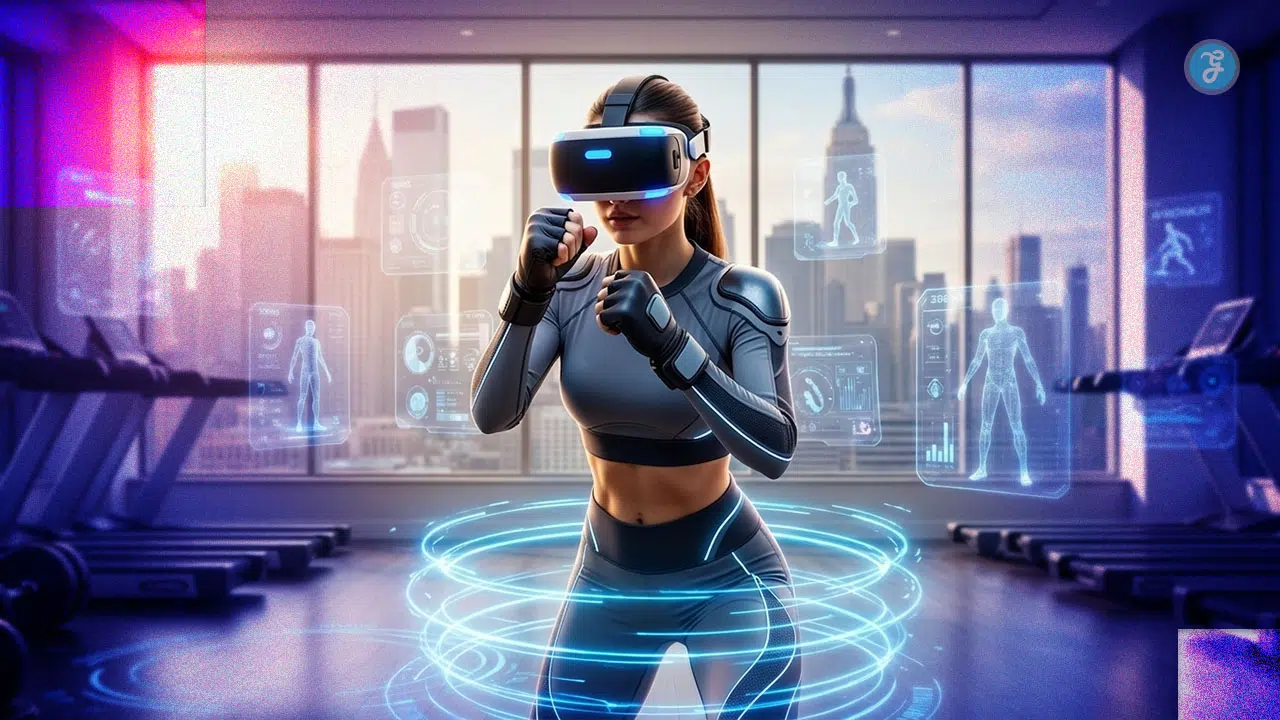
The American gym floor has gone quiet. In its place, a digital playground has emerged. As of early 2026, the market for VR workouts in US homes has moved from a niche gaming hobby to a cornerstone of the $4.2 billion gamified fitness sector. This shift is not just about cool gear. It is about a fundamental change in how we move. Americans are no longer just tracking steps on a watch. They are stepping into immersive worlds. Here, the lonely sweat of the treadmill is replaced by high-stakes social competition.
What is VR Gamified Fitness?
In simple terms, it is the use of immersive virtual reality to turn exercise into an interactive game. Instead of staring at a white wall while you lift weights, you are transported to a glacier or a neon arena.
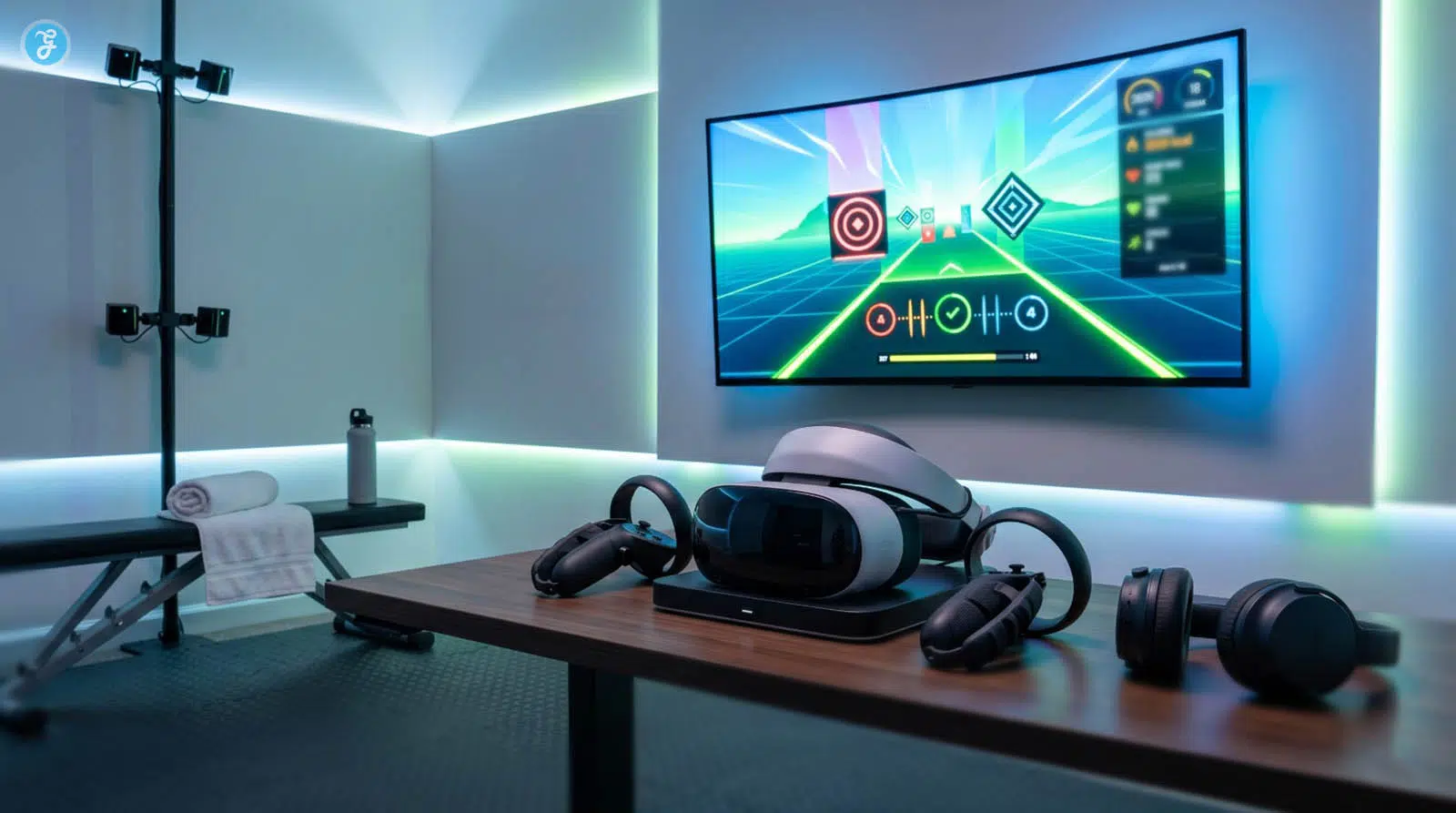
You forget you are working out because you are too busy playing. This is why many consider these the best VR fitness apps 2026 has to offer.
The Foundations of the Immersive Experience
To understand why this movement is booming, look at these four ingredients:
- Sensory Isolation: VR removes the distractions of your living room and focuses your brain entirely on the movement. When your eyes see a mountain peak, your mind believes you are there. This focus leads to higher intensity without the mental fatigue of a traditional gym.
- Physical Agency: Using Six Degrees of Freedom (6DoF), your entire body becomes the controller. You are not just pushing buttons; you are physically dodging obstacles, ducking under beams, and striking targets. It turns a workout into a full-body experience.
- Interactive Storytelling: Many apps turn a sweat session into a mission. You are no longer just a person on a yoga mat; you are a survivor, a gladiator, or an elite athlete. The story keeps you coming back when your muscles want to quit.
- Biometric Integration: Modern headsets sync with smart rings and skin sensors to display your caloric burn and heart rate as a live “score” in your field of vision. This data-driven approach is why the American College of Sports Medicine now recognizes VR as a powerhouse tool for cardiovascular health.
The Rise of the Fitness Player
The year 2026 marks a turning point for health in the United States. The old habit of making a New Year’s resolution and quitting by February is over. It has been replaced by year-round activity fueled by game mechanics. Americans are trading dusty gym memberships for digital worlds that offer instant rewards.
From Mirrors to Leaderboards
The goal of a workout has shifted. People used to exercise just to change how they looked in a mirror. Now they move to climb a leaderboard. This social drive makes consistency easier to maintain. When you see your friends online, you are more likely to put on your headset and join the session.
Exercise as a Byproduct
In this new era, fitness is what happens while you are having fun. You might be outrunning a virtual horde of zombies or racing a bike through a neon forest. You are not thinking about the burn in your lungs. You are thinking about the next level. This mental shift has helped millions of people stick to a routine for the first time in their lives.
The Death of the Traditional Gym
Big box gyms are feeling the pressure. In major cities like New York and Los Angeles, boutique VR studios are opening up where traditional weight rooms used to be. These spaces offer high end gear and a sense of community that a treadmill cannot provide. For many, the living room is now the primary place for a heavy sweat.
The Algorithm of Human Willpower
The American fitness scene has quietly shifted into a game of numbers and nerves. We are no longer just people hitting the pavement or lifting weights.

We have become active players in a high-stakes health simulation. This new reality suggests we have learned to hack our own biology. We use our hunger for social validation and the fear of losing a streak to fight a sedentary lifestyle.
The Psychology of the Streak
I find this shift both fascinating and slightly unsettling. There is a discomfort in realizing that motivation now often comes from a digital badge rather than a raw love for movement. We are essentially gamifying our survival. Critics worry that we are reducing the human body to mere data points on a screen. We risk losing the simple joy of a walk if it does not count toward a virtual goal.
Immediate Feedback vs. Long Term Health
Yet the results are hard to ignore. For many, a virtual trophy or a communal challenge works better than a stern warning from a doctor. Behavioral scientists call this narrowing the feedback loop. It bridges the gap between the hard work of today and the health of tomorrow. The data shows that people using these VR systems stay active longer than those using traditional gym methods.
Reclaiming the Human Element
The real test is to ensure these systems serve us rather than the other way around. We must not become slaves to our sensors or feel stress when we need a rest day. While the rewards are pixels, the impact on our longevity is very real. The sweat is physical and the heart rate is actual. We are playing a game, but the prize is a longer, healthier life.
Drivers Behind the US Digital Fitness Surge
The United States has emerged as the primary hub for the virtual fitness movement. This growth is not accidental. It stems from a unique mix of high tech availability and a cultural shift toward home-based health. Americans are leading the charge in turning living rooms into high performance training zones.
Hardware in Every Home
Access to gear is the first major factor. By 2026, headsets like the Meta Quest 4 and the latest Apple Vision models have become as common as game consoles. They are no longer clunky prototypes. They are sleek and lightweight. Most American households already own the hardware required to jump into a high intensity session. This ease of entry has removed the friction that used to keep people on the couch.
The Chemical Pull of Progress
There is a biological reason for this boom. Every time you unlock a new level or hit a target, your brain releases a small hit of feel-good chemicals. This makes the workout feel less like a chore and more like a reward. In a country where time is a luxury, the efficiency of getting a mood boost while burning calories is a winning formula. It is simply harder to quit when the experience feels this good.
Corporate Backing and Wellness Credits
The business world has also taken notice. Many US employers now provide subsidies for VR equipment. They see it as a smart investment in employee health. Some insurance providers even offer premium credits for users who maintain their digital workout streaks. When your boss and your insurer both want you to play, the market grows at a staggering pace. This financial support has moved VR fitness from a luxury to a standard employee perk.
Intelligent Adjustments in Real Time
By 2026, the real intelligence in these workouts lies in the invisible coach powered by generative AI. Modern VR platforms are no longer just guessing your effort. They are analyzing live biometric data streams. This ensures that every session is tailored to your physical state at that exact moment.
The Rise of Predictive Personalization
This level of detail is a major leap from the static videos of the past. If your heart rate variability shows high stress or your smart ring indicates poor sleep, the system notices. Instead of a grueling HIIT class, your VR avatar might suggest a Rest Quest or a low intensity mobility session. This hyper personalization helps users stay consistent and prevents the burnout that often ends traditional fitness routines.
Adaptive Resistance and Form Correction
The tech has also moved into physical guidance. Some apps now use computer vision and haptic feedback to correct your form in the middle of a movement. If you are leaning too far forward during a squat, the AI coach will give you a gentle verbal or visual cue to adjust. It is like having a personal trainer in your living room who never misses a detail. This precision reduces the risk of injury and makes every rep more effective.
Managing Mental and Physical Load
AI is now being used to track your emotional state too. By monitoring your voice or facial expressions through the headset, apps can tell if you are bored or overwhelmed. They can then change the music or shift the game difficulty to keep you in a state of flow. This balance between challenge and ability is why VR workouts in US homes have seen such a massive surge in retention. The game adapts to you so you never feel the urge to quit.
10 Best VR Workouts in the US: 2026 Ranking
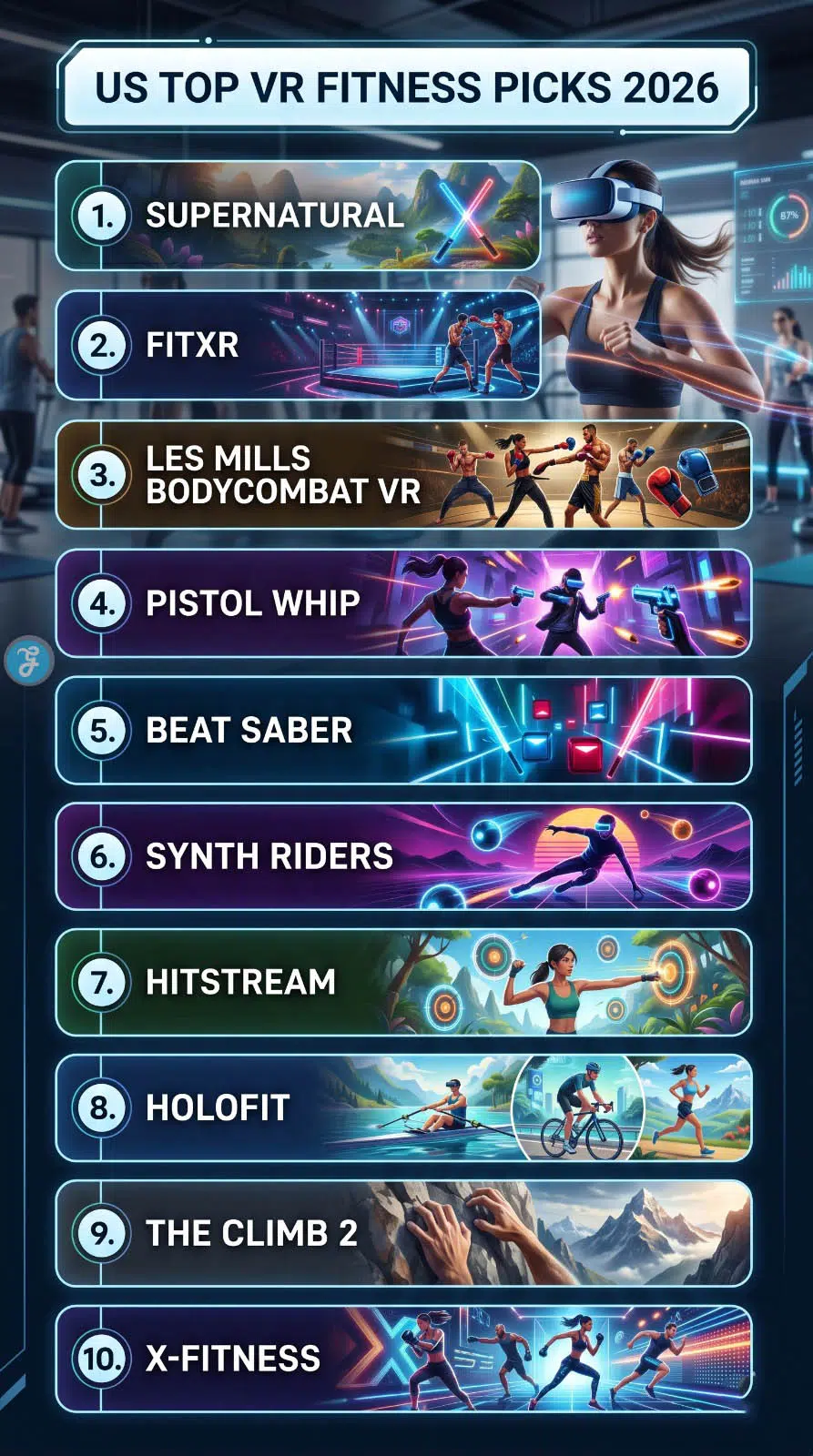
The following platforms have mastered behavioral design. They turn every calorie burned into a digital win. Here is how they rank based on technical merit and user impact.
1. Supernatural
Supernatural remains the premier fitness app for the Meta Quest series. It transports you to 8K photorealistic glaciers and deserts. You strike targets and squat under barriers to the beat of popular music.
- Recommended For: People who find traditional gym environments boring.
- Underlying Technology: High fidelity photogrammetry and spatial audio.
- Industry Impact: It proved that VR can be a primary tool for weight loss in the US.
- Pros: Incredible visuals and real human coaches.
- Cons: Requires a monthly subscription and a Meta headset.
2. FitXR
FitXR has moved beyond simple boxing. It is now a total virtual fitness club. It offers Box, HIIT, Sculpt, and Dance classes within a social environment.
- Recommended For: Users who crave the energy of a live boutique studio.
- Underlying Technology: Real-time multiplayer cloud syncing.
- Industry Impact: It set the standard for group fitness in virtual spaces.
- Pros: Wide variety of workout types and community features.
- Cons: Some users find the menu system a bit crowded.
3. Les Mills BODYCOMBAT VR
This app brings world-class martial arts choreography into the virtual realm. It is widely considered the most intense cardio experience available.
- Recommended For: Serious athletes looking for high-intensity interval training.
- Underlying Technology: Advanced hit detection and 3D choreography.
- Industry Impact: It consistently holds the highest recorded calorie burn per minute in the VR category, with intensity levels reaching up to 15 calories per minute.
- Pros: No subscription required and very high intensity.
- Cons: Very demanding physically and not for those with joint pain.
4. Pistol Whip
Think of this as an action movie where you are the star. You dodge bullets and strike targets in time with a thumping soundtrack. It is a secret weapon for building leg strength.
- Recommended For: Gamers who want to sweat without feeling like they are working out.
- Underlying Technology: Rhythmic haptic feedback and procedural level generation.
- Industry Impact: It popularized the concept of “accidental fitness” through gaming.
- Pros: Addictive gameplay and excellent leg conditioning.
- Cons: Can be visually overwhelming for some users.
5. Beat Saber
The most famous VR game is still a fitness powerhouse. You slice through blocks with laser swords. In 2026, new maps designed by kinesiologists focus on maximizing your range of motion.
- Recommended For: Beginners and anyone looking for a flow state experience.
- Underlying Technology: Low latency motion tracking and custom light engines.
- Industry Impact: It is the primary entry point for VR workouts in US homes.
- Pros: Very easy to learn and highly satisfying.
- Cons: Higher levels can be hard on the wrists if your form is poor.
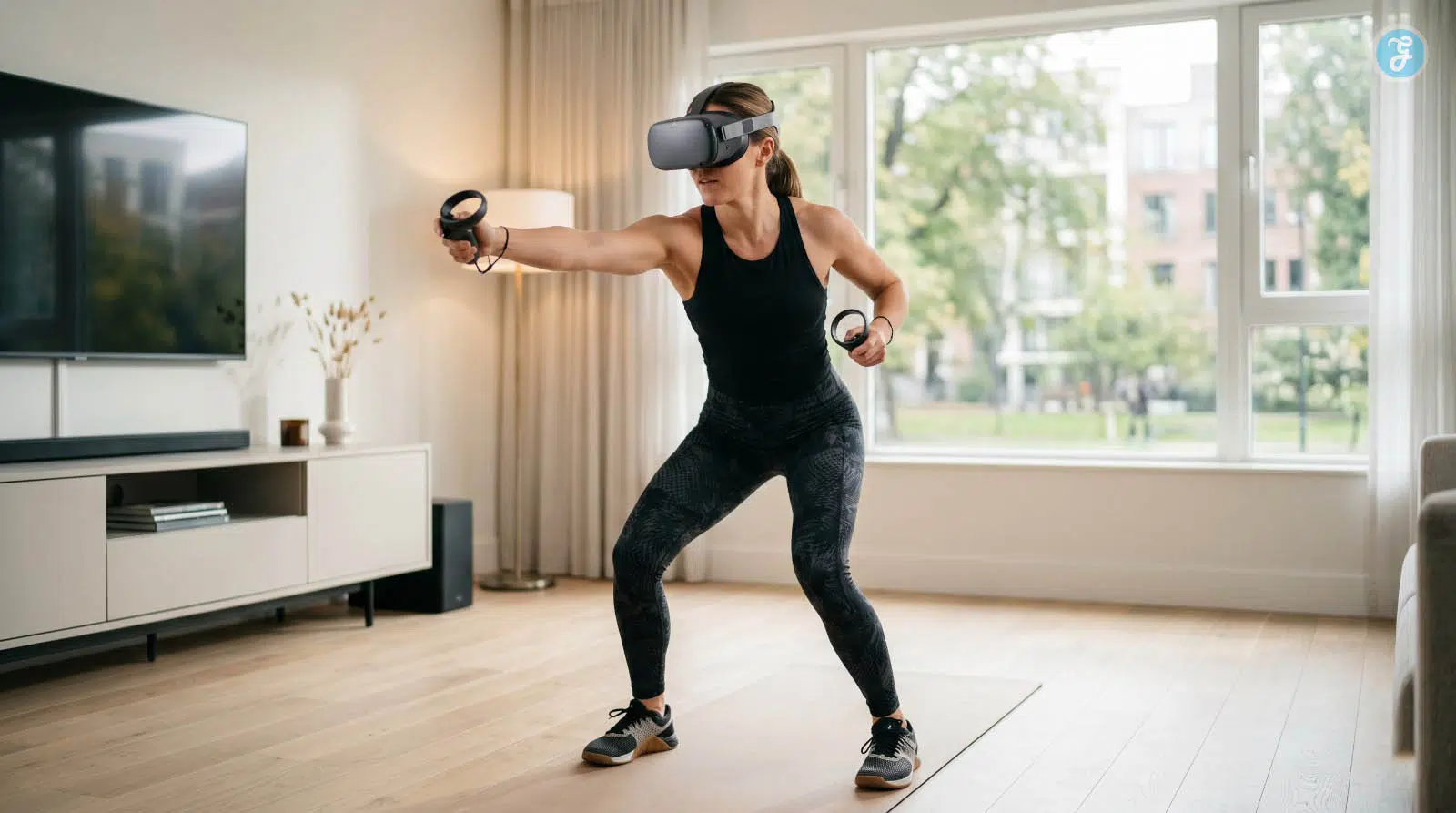
6. Synth Riders
This is a dance focused rhythm game. It emphasizes flowing movements rather than sharp strikes. It is excellent for core stability and flexibility.
- Recommended For: Fans of 80s aesthetics and creative movement.
- Underlying Technology: 360 degree spatial mapping.
- Industry Impact: It carved out a niche for low impact but high cardio dance fitness.
- Pros: Smooth motion and lower risk of repetitive strain.
- Cons: The music library is smaller than some competitors.
7. Hitstream
Hitstream focuses on natural movement in outdoor virtual settings. It requires you to punch and duck in all directions. It is designed to get you moving through a full 360 degree range.
- Recommended For: Improving functional agility and balance.
- Underlying Technology: 3D environment tracking.
- Industry Impact: It shifted the focus from forward facing games to total spatial awareness.
- Pros: Great for lateral movement and core strength.
- Cons: Requires a bit more physical floor space than other apps.
8. Holofit
Holofit connects to your existing cardio machines. It works with bikes, rowers, and treadmills. It turns a stationary session into a race through a digital world.
- Recommended For: People who own home gym equipment and want to stop the boredom.
- Underlying Technology: Bluetooth FTMS (Fitness Machine Service) protocol.
- Industry Impact: It saved the home cardio market by gamifying stationary machines.
- Pros: Works with many brands and offers great variety.
- Cons: Requires additional hardware like a cadence sensor for some machines.
9. The Climb 2
This app simulates solo free climbing. It is a major workout for the upper body and shoulders. It also tests your mental focus and grit.
- Recommended For: Building upper body endurance and core tension.
- Underlying Technology: Advanced physics-based hand tracking.
- Industry Impact: It demonstrated how VR can simulate niche outdoor sports accurately.
- Pros: Stunning views and a very unique physical challenge.
- Cons: Not a traditional cardio workout and can trigger vertigo.
10. X-Fitness
This is a flexible tool for those who want to use their own music. It generates targets based on the MP3 files you upload. It is a straightforward and effective way to train.
- Recommended For: DIY enthusiasts who want a personalized soundtrack.
- Underlying Technology: AI-based beat detection algorithms.
- Industry Impact: It challenged the subscription model by offering a one time purchase.
- Pros: Highly customizable and no monthly fees.
- Cons: The visuals are basic compared to high budget titles.
Wellness as a Professional Metric
The office watercooler has been replaced by the digital dashboard. In 2026, leveling up in a fitness app is becoming part of the professional ladder in the United States. Employers are moving away from passive health insurance toward active wellness participation.
Subsidized Sweat and Gear
Many US corporations now view VR headsets as essential office equipment. Companies like Microsoft and various Silicon Valley startups are shipping Meta Quest or Apple Vision Pro units to remote employees as part of their onboarding kits. This is not just a perk; it is a strategic move to lower healthcare costs and boost mental clarity. By subsidizing these tools, employers are ensuring their teams have no excuse to remain stationary during the workday.
Insurance Credits for Digital Streaks
The financial incentive has moved beyond the HR department. Major US insurance providers are now offering premium credits to policyholders who share their verified workout data.
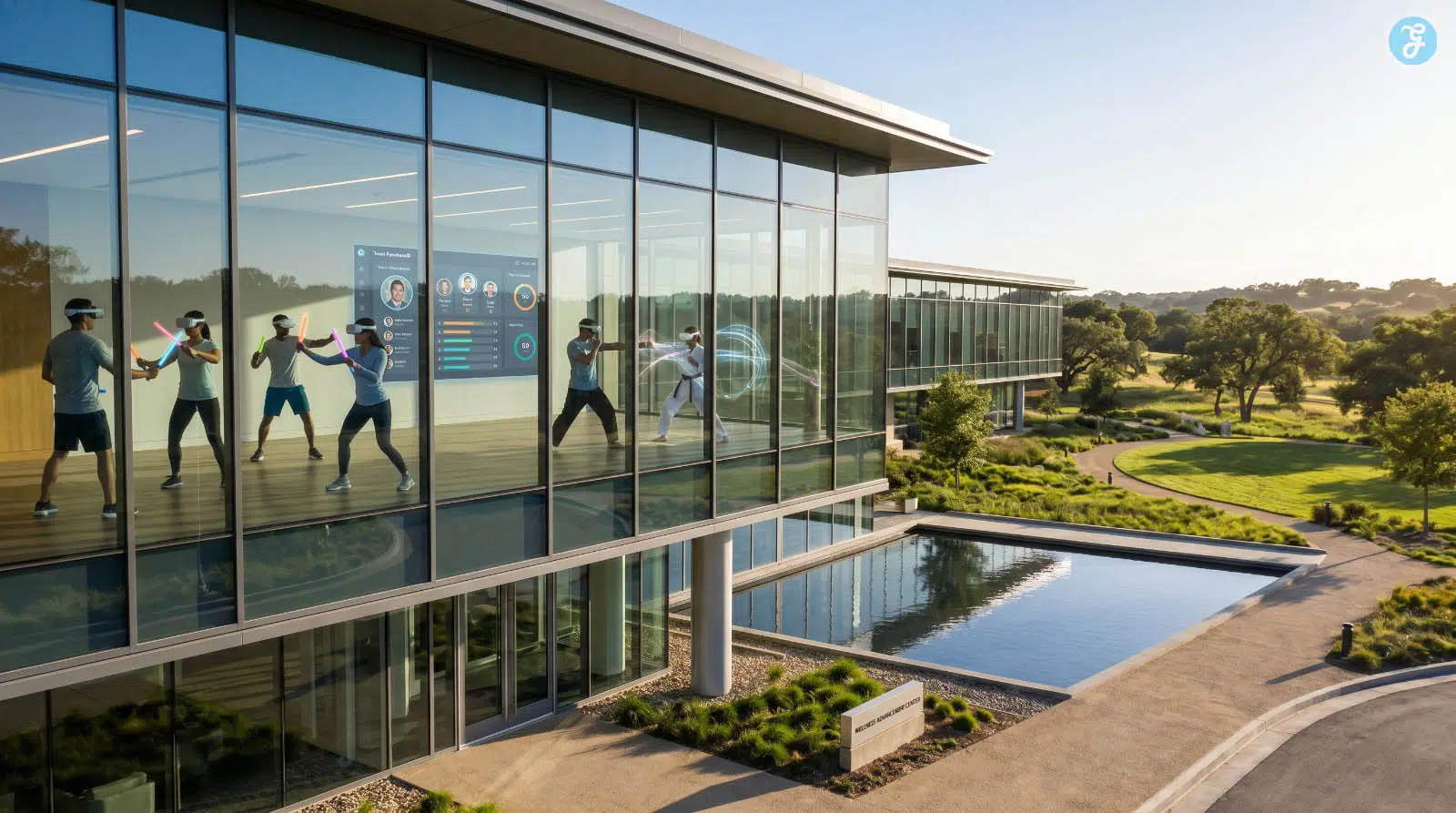
Maintaining a VR workout streak can lead to lower monthly premiums or increased contributions toward health savings accounts (HSAs). This shift turns personal wellness into a shared corporate and financial goal.
The New Team-Building Environment
Traditional happy hours are being traded for virtual competitive sessions. Teams now meet in apps like FitXR for a quick midday multiplayer HIIT class, or compete asynchronously through Supernatural, rather than gathering for a catered lunch. This digital camaraderie is especially popular for hybrid and remote teams across different time zones, building a sense of community through shared physical effort. When your manager is at the top of the leaderboard, it creates a new kind of professional motivation that lives entirely in the virtual realm.
The Human Mechanics of the Game
The success of these apps is a triumph of behavioral design. By moving beyond the physical act of exercise, developers have tapped into how the human brain processes reward and social status. This is not about distracting you from a workout. It is about restructuring the way your mind perceives effort.
Why Gamification Wins: The Dopamine Edge
In behavioral economics, a digital badge often beats raw willpower. Traditional exercise offers a delayed reward. You might have to wait weeks to see a change in the mirror or on a scale. VR gamification changes that timeline instantly. Every digital trophy or leaderboard climb releases a small hit of dopamine. This turns a grueling session into a series of mini wins. By 2026, research shows that this immediate feedback loop makes users 40% more likely to return for their next session compared to those using standard gyms.
The Hardware Factor: Headsets as Health Consoles
In 2026, the gym has migrated to the wearable. VR headsets like the Meta Quest 4 have become the primary consoles for health in the American home. These tools have lowered the barrier to entry significantly. You no longer need a dedicated room full of heavy weights or a commute to a specialized studio. High end athletic tracking is now accessible to anyone with a living room and a headset. These devices do more than just show images. They act as precise sensors that record every move, providing a level of data accuracy once reserved for professional sports labs.
From Sweat to Score: The Rise of Playable Fitness
We are seeing a massive shift in how different generations view health. For Gen Z and Millennials, wellness is now a social experience rather than a private chore. They do not want to sweat in silence. They want to compete, share their scores, and build community in a digital world. For this demographic, fitness is a form of social currency.

The Longevity Gaming Movement
As the US market moves toward 2027, the focus is expanding toward the 50+ demographic. This movement is being called longevity gaming. Developers are creating experiences specifically designed to maintain mobility, balance, and joint health. These apps use the same reward systems found in high intensity games but apply them to gentle, functional movements. This ensures that older adults stay engaged with their physical therapy or daily activity goals.
The Future of the Hybrid Athlete
The final trend of 2026 is the rise of the hybrid athlete. These are people who mix traditional outdoor activities with VR training. A runner might use a headset on a rainy day to navigate a virtual trail in the Alps, or a cyclist might use VR to practice a specific race route before the actual event. This blend of the physical and the digital is becoming the new standard. It proves that the “game” is no longer a separate part of life. It is the tool we use to enhance our real world performance.
Frequently Asked Questions (FAQs) on VR workouts in US
Can VR fitness truly replace a traditional gym membership?
For millions of Americans in 2026, the answer is yes. While VR cannot yet replace heavy progressive resistance like a squat rack, it has effectively replaced the need for stationary cardio equipment and boutique group classes. Apps like FitXR and Les Mills provide the same caloric burn and intensity as a live class without the commute. Many users now use a hybrid model, using VR for 80% of their activity and visiting a local gym only for heavy weightlifting.
How do I prevent sweat from damaging my VR headset during heavy sessions?
Sweat management is a primary concern for the frequent “exergame” player. In 2026, the most effective solution is using a silicone or leather facial interface that can be wiped clean instantly. Many US users also use “VR covers,” which are washable cotton liners that absorb moisture. Additionally, the use of a high speed floor fan pointed directly at the workout area helps prevent lens fogging and keeps the hardware cool during high intensity intervals.
What is the “VR Legs” phenomenon and how do I get them?
“VR Legs” refers to the process of your brain and inner ear adapting to movement in a virtual space. To build your VR legs, start with stationary apps like Beat Saber before moving to games with “artificial locomotion” like The Climb. Experts suggest taking the headset off at the first sign of a “hot flash” or slight dizziness. In 2026, new software features like “vignetting” help reduce motion sickness by narrowing your field of vision during movement.
Are there medical risks associated with exercising in VR?
The main risks involve spatial awareness and repetitive strain. It is easy to punch a wall or a ceiling fan when you are fully immersed in an environment. In 2026, headsets use “Augmented Reality Passthrough” to show you your furniture if you get too close to the edge of your play space. Physicians also warn against overtraining, as the gamified nature of these apps can mask physical fatigue, leading to minor joint strain if proper rest days are not taken.
How can I get insurance credits for my VR workout routine?
As of March 2026, several major US health insurance providers have updated their wellness programs to include VR activity. To qualify, you typically need to sync your headset data with a verified health app like Apple Health or Google Fit. If you maintain a consistent “active” heart rate for at least 20 minutes a day, three times a week, you may be eligible for premium discounts or contributions to your Health Savings Account (HSA). Check with your provider’s “Digital Therapeutics” or “Wellness Rewards” section for specific enrollment steps.
Disclaimer: This content is for informational purposes only and does not constitute medical or fitness advice. VR apps are motivational tools and should not replace professional medical judgment. Consult a healthcare provider before starting any new exercise protocol.
Note on Methodology: This list is based on editorial research into the US virtual fitness market in 2026. While the apps are numbered, this represents a guide to their unique technological strengths rather than a definitive ranking of quality. Each platform offers distinct breakthroughs for different fitness needs.