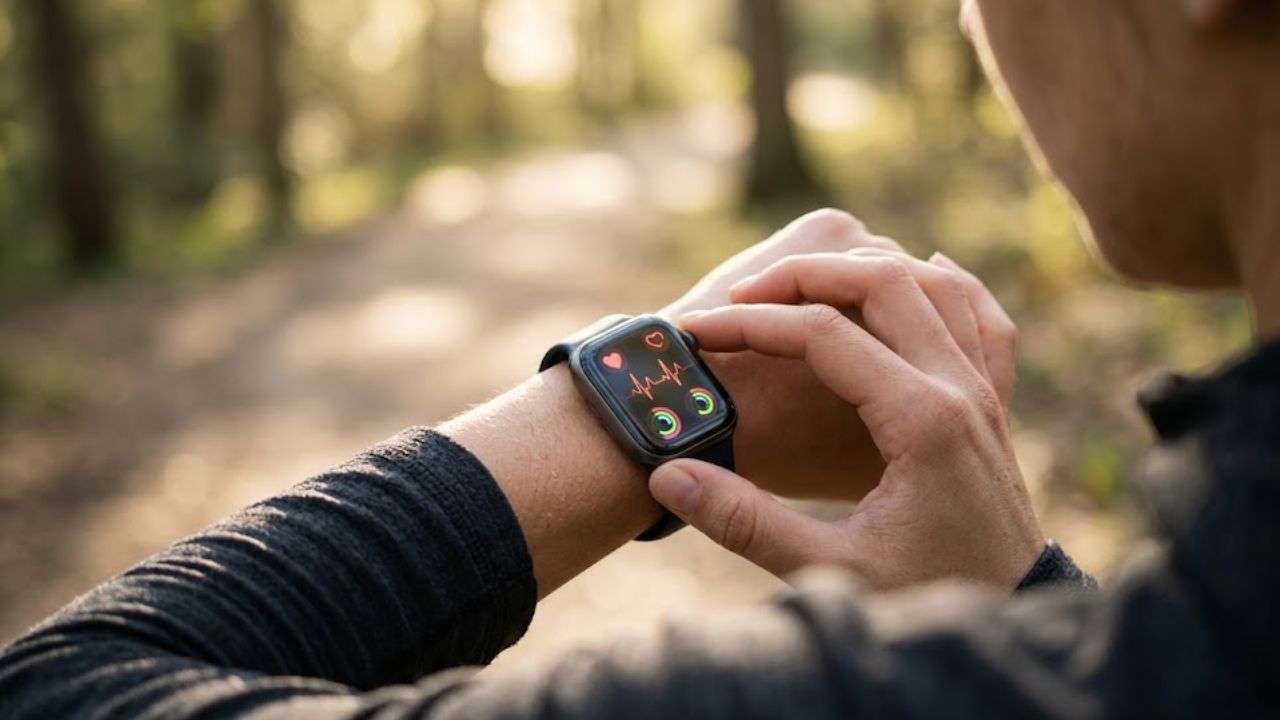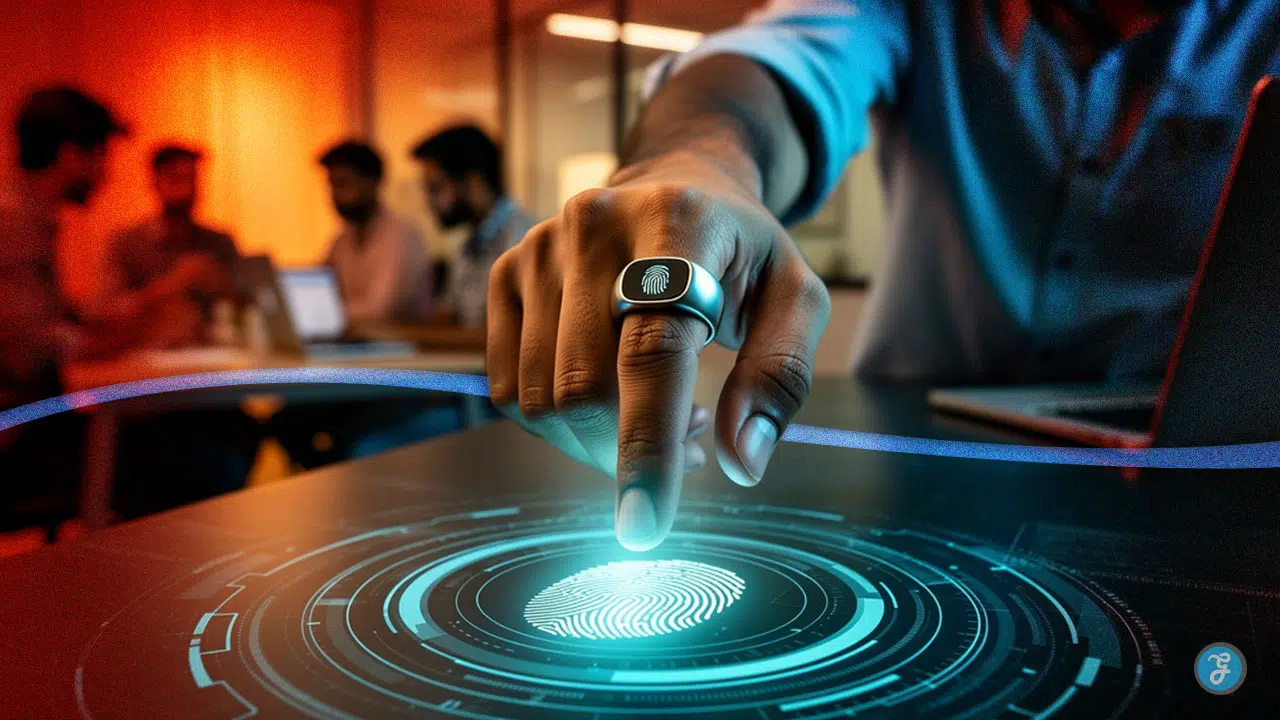
The era of constantly checking a glowing wrist screen is fading. We have entered the age of passive intelligence. This shift is turning Smart Rings in India from a niche novelty into a mainstream obsession. You no longer need to actively track your health. The wearable simply exists in the background. It quietly gathers your biometric data while you live your life. This offers a powerful cure for notification fatigue.
A smart ring is a miniaturized computer worn on the finger. It packs medical-grade sensors, tiny batteries, and processors into a standard jewelry band. It syncs with your phone to monitor sleep patterns, resting heart rates, and daily movement. It delivers highly accurate, silent health tracking entirely without a screen.
The Biological Edge and Domestic Innovation
Why choose the finger over the wrist? The answer lies in human biology. The skin on your wrist is relatively thick. It contains hair, muscle, and bone that often block optical sensors. Your finger offers a much clearer window into your body. The arteries here sit closer to the surface. Arterial blood flow in the finger gives photoplethysmography sensors a much stronger and cleaner signal. This physiological advantage results in highly precise readings for your heart rate and blood oxygen levels.

India is driving this hardware shift forward. We are no longer just an assembly hub for foreign tech brands. Our domestic wearable market has pivoted to genuine research and development. Local startups recognized the biological advantage of ring sensors early on. Engineering teams in tech corridors like Bengaluru and Noida are now designing proprietary algorithms from scratch. They are pushing boundaries with advanced sleep staging and recovery metrics. Manufacturers are shifting production away from cheap plastics. They now favor aerospace-grade titanium and hypoallergenic ceramics. Local founders have a highly accurate read on domestic consumer demands. These consumers want premium hardware, but they refuse to pay endless monthly subscription fees for their own health data. This homegrown innovation is setting new global benchmarks for wearable technology. The shift toward finger-based wearables is well underway.
The 2026 Landscape: Passive Intelligence Meets Domestic Scale
The wearable market in India is undergoing a structural realignment. We are moving away from devices that demand our attention toward those that understand our intention. This shift is fueled by a perfect storm of manufacturing independence and a growing cultural rejection of the “always-on” notification culture. In 2026, the smart ring has transitioned from an expensive toy for early adopters into a foundational tool for the modern Indian professional.
The Rise of Invisible Technology
Modern professionals are facing a crisis of notification fatigue. Our wrists have become extensions of our office desks, constantly buzzing with emails, Slack pings, and social alerts. This relentless digital noise is driving a mass migration toward “invisible” tech. Smart rings offer a sanctuary from the screen. They provide the same critical health data as a smartwatch, often with better accuracy, without the distracting glow of a 400-nit display. This allows users to stay connected to their biological health while remaining disconnected from the digital chaos.
Manufacturing Sovereignty and Material Science
The price of premium wearables has plummeted thanks to a massive localized manufacturing push. India has successfully moved beyond mere assembly. We are now processing aerospace-grade titanium and hypoallergenic ceramics within domestic tech corridors. By 2026, the supply chains in Noida and Bengaluru have matured enough to offer these high-end materials at a fraction of the cost of international imports. This domestic capability ensures that an Indian consumer can own a medical-grade titanium ring for the price of a mid-range smartphone. We have democratized luxury through engineering efficiency.
AI and the Shift to Predictive Health
We are currently witnessing the end of raw data dump. Consumers no longer care about seeing a list of 10,000 steps or a basic heart rate graph. Startups are now deploying advanced AI models that transform these raw biomarkers into predictive health insights. Instead of telling you how you slept last night, these rings now predict how you will perform today. By analyzing heart rate variability and skin temperature shifts, these algorithms can flag a viral infection up to two days before you feel your first symptom. This is no longer just tracking; it is an early warning system for the human body.
Personal Data Ownership: Moving Beyond the Subscription Model
The smart ring market today shows two very different approaches. On one side are global companies that treat the device purchase as just the beginning of ongoing payments. On the other side, new Indian startups are focusing on giving users more control. They see health data not as something to rent back to the user, but as something the user already owns. In 2026, this idea of personal data ownership has become one of the main reasons Indian users are choosing local brands over older global ones.
Ending the Paywall System
Many early global smart ring companies created a model where important health insights were locked behind monthly fees. The ring was only fully useful if you kept paying every month.
If you stopped, the device became much less useful even though you had already bought it. Indian startups like Ultrahuman and Noise have changed this approach. They offer a one-time purchase where all health data like sleep and activity tracking stays available for as long as you use the device. This feels more fair and transparent to many users who prefer not to have ongoing charges for basic features.
A Device That Feels Natural to Wear
The smart ring is one of the most comfortable wearable devices so far. It feels more like a part of the body than a separate gadget. A smartwatch often reminds you that it is there and needs regular charging and attention.
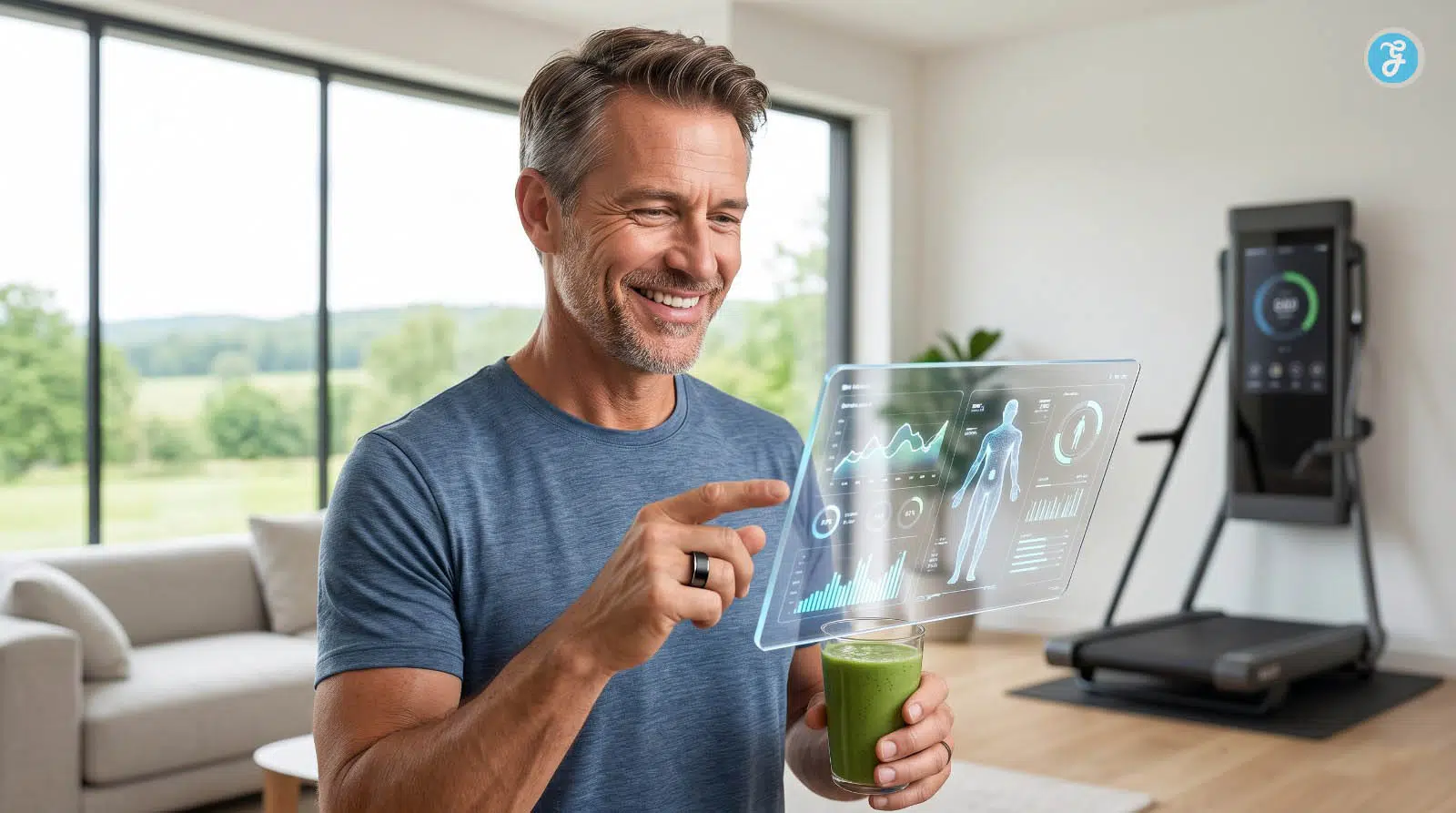
A ring, on the other hand, can be worn all day and night without much thought. It works during sleep, exercise, and daily life without getting in the way. This makes it feel like a natural extension of the user rather than a tech device they must manage.
More Than Just a Device
The real success of smart rings is not only about technology or design. It is also about giving users control over their own health data. By not locking basic health information behind subscriptions, Indian brands are building more trust with users. This change is making technology feel more honest and user-friendly. It keeps health data in the hands of the person it belongs to and makes the experience simpler and more open.
The Top Tier: Market Leaders and Global Standards
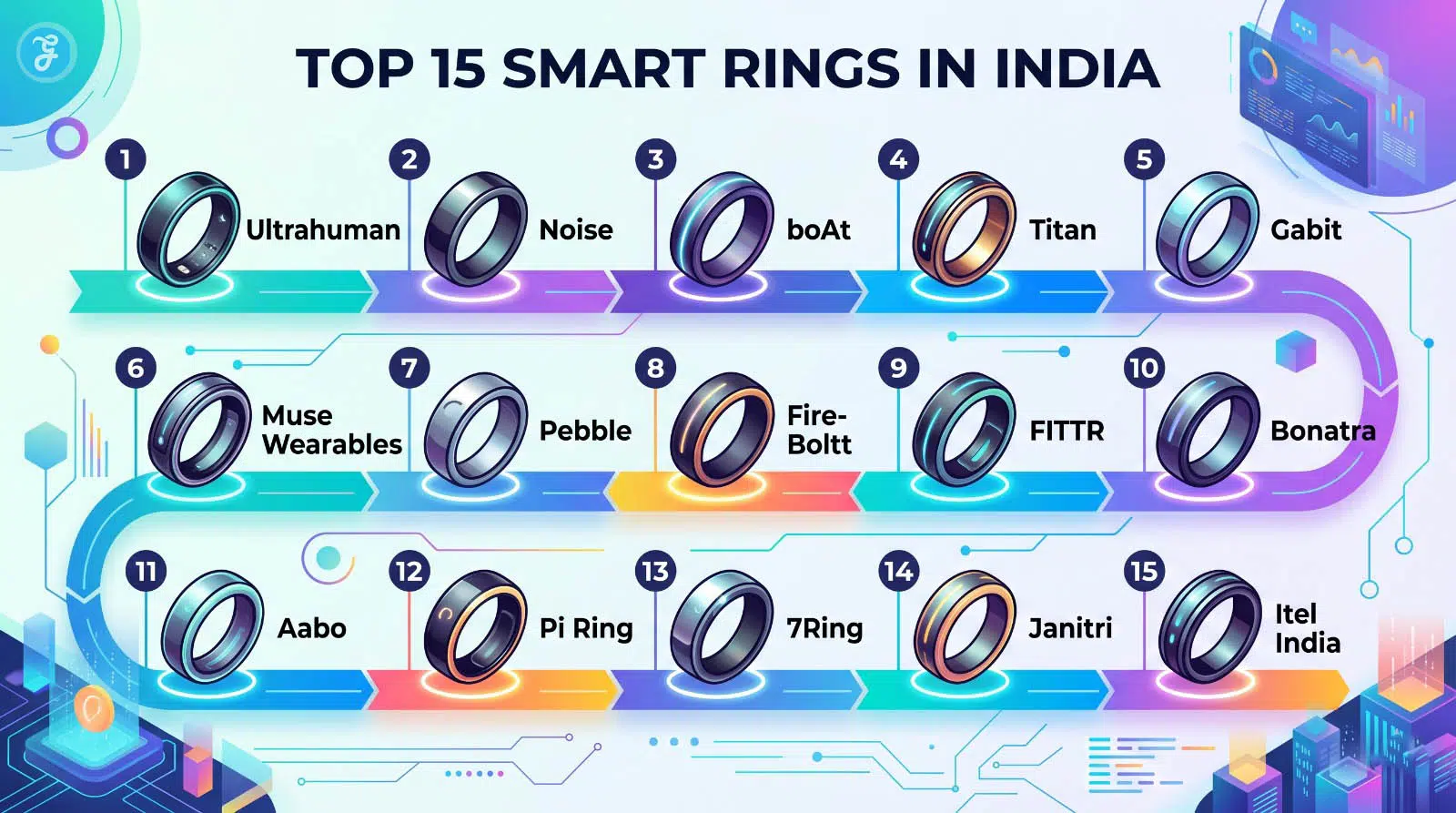
1. Ultrahuman
Best Suited For: Elite athletes, biohackers, and high-performance professionals seeking metabolic optimization.
Core Technology: The Ring Air uses an infrared photoplethysmography (PPG) sensor, a non-contact medical-grade skin temperature sensor, and a 6-axis motion sensor. Its true power lies in the M1 integration, which pairs the ring with a continuous glucose monitor (CGM) to provide a “Cyborg” view of how food affects your recovery.
Market Influence: They have effectively established the “Readiness Score” as a vital health metric in the Indian consciousness. Ultrahuman is the only Indian brand competing directly with global incumbents like Oura on the world stage.
Main Challenges: The high entry price and the technical complexity of the app can be overwhelming for casual users who just want basic step counting.
2. Noise
Best Suited For: Tech-savvy lifestyle users who want a premium, reliable device backed by a familiar domestic brand.
Core Technology: The Luna Ring features a fighter-jet grade titanium body with a diamond-like carbon coating. It utilizes infrared sensors for heart rate and SpO2 tracking, alongside a dedicated temperature sensor to monitor physiological stress.
Market Influence: Noise used its position as India’s leading smartwatch brand to bring smart rings into the mainstream. They have successfully shifted the narrative from “tech gadget” to “premium fashion accessory.”
Main Challenges: Managing the transition of a massive user base from low-cost watches to a significantly more expensive premium ring category.
3. boAt
Best Suited For: Budget-conscious Gen Z users and students who want to enter the wearable ecosystem without financial strain.
Core Technology: The Smart Ring Active focuses on essential vitals. It provides reliable heart rate monitoring, sleep tracking, and SpO2 sensors encased in a durable, lightweight alloy.
Market Influence: They are the undisputed volume king. By pricing their rings aggressively, boAt has effectively democratized a technology that was previously reserved for the luxury segment.
Main Challenges: Maintaining sensor accuracy and build quality while keeping price points at an all-time low.
The Trusted Names and Wellness Ecosystems
4. Titan
Best Suited For: Traditionalists and luxury consumers who prioritize brand heritage, aesthetics, and after-sales reliability.
Core Technology: Titan focuses on a “jewelry-first” approach, utilizing premium ceramic and metallic finishes. The internal tech stack provides refined sleep and activity tracking with a focus on long-term data consistency.
Market Influence: As a legacy watchmaker, Titan brings a level of consumer trust that startups cannot easily replicate. They have made the smart ring an acceptable alternative to the traditional wedding band.
Main Challenges: Competing with tech-first startups on software features and rapid AI updates.
5. Gabit
Best Suited For: Individuals focused on longevity and preventative health who want actionable coaching rather than just raw data.
Core Technology: Gabit utilizes an AI-driven longevity ecosystem. Their sensors feed into a proprietary engine that interprets biomarkers to offer personalized habit coaching for nutrition, sleep, and fitness.
Market Influence: They have successfully moved the conversation away from simple tracking and toward “health forecasting.”
Main Challenges: Convincing users to engage with a broader wellness app rather than just wearing the hardware.
6. Muse Wearables
Best Suited For: Early adopters and urban professionals who want a hybrid of health tracking and contactless payment convenience.
Core Technology: Born out of IIT Madras, Muse packs high-end PPG sensors into their rings. Their standout feature is the integrated NFC chip, allowing for secure “tap-to-pay” transactions without a phone or wallet.
Market Influence: They have pioneered the “utility ring” concept in India, proving that a wearable can be a financial tool as well as a health tracker.
Main Challenges: Expanding the NFC payment infrastructure across all major Indian banking partners.
The Aggressive Challengers and Community Favorites
7. Pebble
Best Suited For: Casual fitness enthusiasts looking for a balanced mix of style and recovery insights.
Core Technology: Pebble’s smart rings focus on sleek, hypoallergenic designs. They offer robust recovery insights by analyzing heart rate variability (HRV) and skin temperature fluctuations.
Market Influence: They serve as a solid mid-range disruptor, providing premium-adjacent features at a more accessible price point than the top tier.
Main Challenges: Differentiating their product in an increasingly crowded mid-market segment.
8. Fire-Boltt
Best Suited For: Trend-seekers who want the latest hardware designs at high-speed market delivery.
Core Technology: Known for rapid-fire product cycles, Fire-Boltt utilizes standard biometric sensor arrays with an emphasis on durable, high-polish finishes and aggressive battery life.
Market Influence: They have mastered high-volume distribution, ensuring that their rings are available at almost every major electronic retailer in the country.
Main Challenges: Overcoming the perception of being a “fast-fashion” tech brand to establish long-term health credibility.
9. FITTR
Best Suited For: Dedicated fitness community members and athletes who already use human coaching for their transformations.
Core Technology: The Hart Ring is designed to sync perfectly with the FITTR coaching ecosystem. It monitors steps, sleep stages, and HRV to help human coaches adjust a user’s workout intensity in real-time.
Market Influence: They have built a built-in audience through their massive community, making the ring a natural extension of a pre-existing fitness journey.
Main Challenges: Appealing to users who are not already part of the FITTR digital community.
The Clinical and Engineering Specialists
10. Bonatra
Best Suited For: Patients and individuals managing chronic conditions like diabetes or hypertension under medical supervision.
Core Technology: Bonatra stands out by pairing their smart ring with doctor-led health programs. The hardware serves as a continuous data feed for clinical experts to manage metabolic health.
Market Influence: They have carved out a niche in the “clinical wearable” space, moving the ring from a lifestyle choice to a medical necessity.
Main Challenges: The high cost of the combined hardware and medical consultation service.
11. Aabo
Best Suited For: Users who are primarily concerned with stress management and early illness detection.
Core Technology: Aabo focuses on predictive intelligence. Their algorithms analyze HRV and skin temperature to flag potential burnout or the onset of a viral infection before physical symptoms appear.
Market Influence: They have established themselves as a “preventative sentinel,” appealing to the growing demographic of wellness-conscious urbanites.
Main Challenges: Building enough consumer awareness for a brand that focuses on “what might happen” rather than “what just happened.”
12. Pi Ring
Best Suited For: Minimalists who find standard smart rings too bulky or heavy for 24/7 wear.
Core Technology: The engineering focus here is on extreme miniaturization. The Pi Ring X is one of the lightest smart rings in existence, yet it maintains core tracking for sleep, heart rate, and SpO2.
Market Influence: They have pushed the boundaries of material science, proving that medical-grade tech can fit into a nearly weightless form factor.
Main Challenges: Battery limitations inherent in such a small and light chassis.
The Unique Value Propositions
13. 7Ring
Best Suited For: Urban commuters and minimalists who want to leave their wallet and phone behind for quick errands.
Core Technology: 7Ring utilizes a unique hybrid architecture. While its primary health and activity sensors require a micro-battery, the dedicated NFC payment module is passive. This allows the ring to process secure transactions at POS terminals even if the device power is depleted.
Market Influence: They have successfully isolated the “utility” aspect of the smart ring, creating a product that appeals to those who don’t want another health tracker but want a smarter way to pay.
Main Challenges: Balancing the consumer expectation for a “forever-on” payment tool with the power demands of continuous biometric tracking.
14. Janitri
Best Suited For: High-risk pregnancy monitoring and clinical-led maternal wellness programs.
Core Technology: The MOMI ring serves as a bridge between consumer wearables and clinical diagnostic tools. It tracks maternal vitals like HRV and SpO2, feeding this data into a platform often used by obstetricians to monitor recovery and stress during the third trimester and postpartum phase.
Market Influence: Janitri has successfully integrated the smart ring into the formal healthcare ecosystem. Unlike lifestyle rings, it is frequently deployed as part of a supervised medical protocol to improve maternal safety outcomes.
Main Challenges: Navigating the strict regulatory and accuracy requirements of the prenatal health space.
15. Itel India
Best Suited For: Entry-level users and rural markets where price is the primary barrier to technology adoption.
Core Technology: Itel strips back the premium materials and advanced AI insights to offer a reliable, functional smart ring that tracks basic heart rate and movement.
Market Influence: They serve as the critical gateway for the “Next Billion” users, introducing the concept of smart rings to a demographic that was previously priced out of the wearable market.
Main Challenges: Competing with established low-cost watch brands that offer more visible features for the same price.
The Internal Schematic: Science Behind the Band
The true magic of a smart ring lies in its ability to condense a clinical laboratory into a form factor that weighs less than five grams. Achieving this requires a sophisticated orchestration of hardware and material science. In 2026, the sensor stack in these devices has reached a level of precision that rivals dedicated chest straps and medical monitors.
The Sensor Trinity: PPG, Temperature, and Motion
The primary data source is the Photoplethysmography (PPG) sensor. This unit uses infrared and green LEDs to illuminate the capillaries in your finger. By measuring the light reflected back, the ring calculates your heart rate, blood oxygen levels (SpO2), and heart rate variability (HRV). Because the arteries in the finger are closer to the skin surface than those in the wrist, the PPG signal is exceptionally clean.
A dedicated skin temperature thermistor sits alongside the optical stack. It tracks minute fluctuations in your body’s thermal baseline. This is not just about detecting a fever; these sensors are precise enough to monitor hormonal shifts and circadian rhythm changes. Finally, a 6-axis accelerometer and gyroscope track your physical movement. This inertial subsystem identifies whether you are running, typing, or entering a specific phase of REM sleep by detecting the subtle micro-movements of your hand.
The Challenge of Extreme Miniaturization
Fitting this technology into a size-6 ring is one of the most difficult feats in modern consumer electronics. Every millimeter is a battleground. Engineers must use rigid-flex PCBs, circuit boards that can fold and bend like origami, to fit around the curve of the finger. The biggest hurdle remains the battery.
A smart ring typically uses a tiny, curved lithium-polymer cell with a capacity of roughly 15 to 20 mAh. For context, that is less than one percent of the capacity of a standard smartphone battery. Despite this, the ring must power continuous sensing and Bluetooth syncing for up to a week. To achieve this, startups are developing ultra-low-power processors that remain in a “deep sleep” state, waking up only for milliseconds to capture a data point before going dark again. This efficiency is what allows the fingerprint revolution to remain silent, powerful, and invisible.
The Future of Passive Wellness and Digital Dignity
India has rapidly transformed into a global laboratory for wearable innovation. Our domestic startups have successfully balanced high-end engineering with a deep understanding of consumer psychology. They recognized that people want to own their health data without being tethered to a subscription or a distracting screen. By mastering local production and material science, these brands have made Smart Rings in India more than just a trend. They are now a cultural standard for the modern professional.
The fingerprint revolution has permanently shifted our expectations of technology. We no longer value gadgets that scream for our attention with every notification. Instead, we prize devices that work in total silence to protect our well-being. This transition marks the beginning of a more harmonious relationship with our digital tools. We are finally using technology that fits our lives rather than forcing us to fit its demands. As we move through 2026, it is clear that the smartest thing you can wear is also the most discreet.
Frequently Asked Questions (FAQs) on Smart Rings in India
Can I wear a smart ring while lifting weights at the gym?
Most smart rings in India are made from aerospace-grade titanium or ceramic; however, they can still scratch when they come into contact with steel dumbbells or Olympic bars. There is also a risk of “ring avulsion” or skin pinching during heavy lifts. It is generally recommended to move the ring to your non-dominant hand or remove it entirely during high-friction strength training to protect both the hardware and your finger.
Do smart rings emit harmful EMF radiation?
Smart rings use Bluetooth Low Energy (BLE) to sync data with your smartphone. These devices are typically Class 2 Bluetooth devices, which means they emit significantly less radiation than a standard smartphone or even a pair of wireless earbuds. Most rings only activate their Bluetooth transmitter for a few seconds per day during data synchronization, remaining in a passive state for over 99 percent of the time.
How do I handle finger swelling while wearing a smart ring?
Human fingers naturally expand and contract based on temperature, diet, and time of day. In the humid climate of India, swelling is common. It is best to wear your sizing kit for at least 24 hours before choosing your final size. If your ring feels tight in the afternoon, try holding your hand above heart level for a few minutes to reduce fluid retention or use cold water to help slide the ring off.
Can I wear multiple smart rings at the same time?
Technically, you can wear multiple rings, but it is not recommended on adjacent fingers. The hard materials like titanium or ceramic will scratch each other as your fingers move. Furthermore, wearing two rings that track the same data may cause conflicts within health apps like Google Fit or Apple Health, as they may struggle to prioritize which device provides the “true” heart rate or sleep score.
Will the ring sensors work if I have dark skin or tattoos?
Most modern smart rings in 2026 utilize green, red, and infrared LEDs to improve accuracy across all skin tones. While dark ink from tattoos can sometimes absorb the light from optical PPG sensors, the placement of a ring on the underside of the finger usually avoids the most heavily tattooed areas of the hand. Indian startups like Ultrahuman and Noise have specifically calibrated their algorithms to ensure medical-grade accuracy for the diverse skin tones found across the subcontinent.
Disclaimer: This feature is for informational purposes only and does not constitute medical or professional health advice. The Smart Rings in India and associated technologies mentioned are designed as wellness and motivational tools; they are not intended to diagnose, treat, or replace professional medical judgment. Always consult a qualified healthcare provider before making significant changes to your health regimen or interpreting biometric data for medical purposes.
Note on Methodology: This list represents the detailed research and industry analysis conducted by our editorial team for the 2026 market. While we have ranked these companies based on their current market merit, technological innovation, and domestic influence, this assessment recognizes that each player offers a distinct value proposition. The “best” smart ring remains a subjective choice based on an individual’s specific needs for privacy, budget, and clinical accuracy.