
Email lists are built with care, yet subscribers often disappear quickly. Even value-packed newsletters can trigger unsubscribes when inboxes feel overcrowded, making it a persistent challenge for e-commerce and digital marketers.
High unsubscribe rates weaken customer engagement, damage sender reputation, and reduce email deliverability. Industry benchmarks show average unsubscribe rates range between 1% and 2%, while keeping rates below 1% indicates a strong, healthy list.
To reduce email unsubscribe rates, proven strategies focus on personalization, smart segmentation, and preference centers that align with subscriber interests. Maintaining clean lists, optimizing email frequency, and ensuring mobile-friendly design also play a critical role in improving engagement and retention.
What is Email Unsubscribe Rate?
Email unsubscribe rate measures the percentage of users who opt out from your email campaigns. This metric gives key insights into how well your emails connect with readers. Tools like Klaviyo and Salesforce Marketing Cloud track it for you.
They calculate rates and create reports for each campaign, or even monthly and quarterly views. Think of it as a report card for your e-mail-marketing efforts. A high rate signals trouble, like emails landing in spam folders with mailbox providers such as Yahoo or Apple.
Subscribers might see your messages as junk, hurting your subscriber retention and general deliverability. Zustellbarkeit, or delivery success, drops when rates climb.
A good unsubscribe rate keeps your list healthy and your inbox placement strong, says Michael Pattison from Inbox Monster.
Calculate it with a simple formula. Divide the number of unsubscribed users by the number of delivered emails. Multiply that by 100 to get the percentage. Take this example. You send 1,000 marketing emails.
Then, 100 subscribers unsubscribe. Your rate hits 10%. That points to a clear disconnect with your zielgruppe, or target audience. Average unsubscribe rates sit between 1% and 2% in most sectors.
Branchenbenchmarks show this range holds true across industries. Aim low to boost subscriber loyalty and avoid reputation issues with email infrastructure like SPF, DKIM, and DMARC.
Why Do People Unsubscribe from Emails?
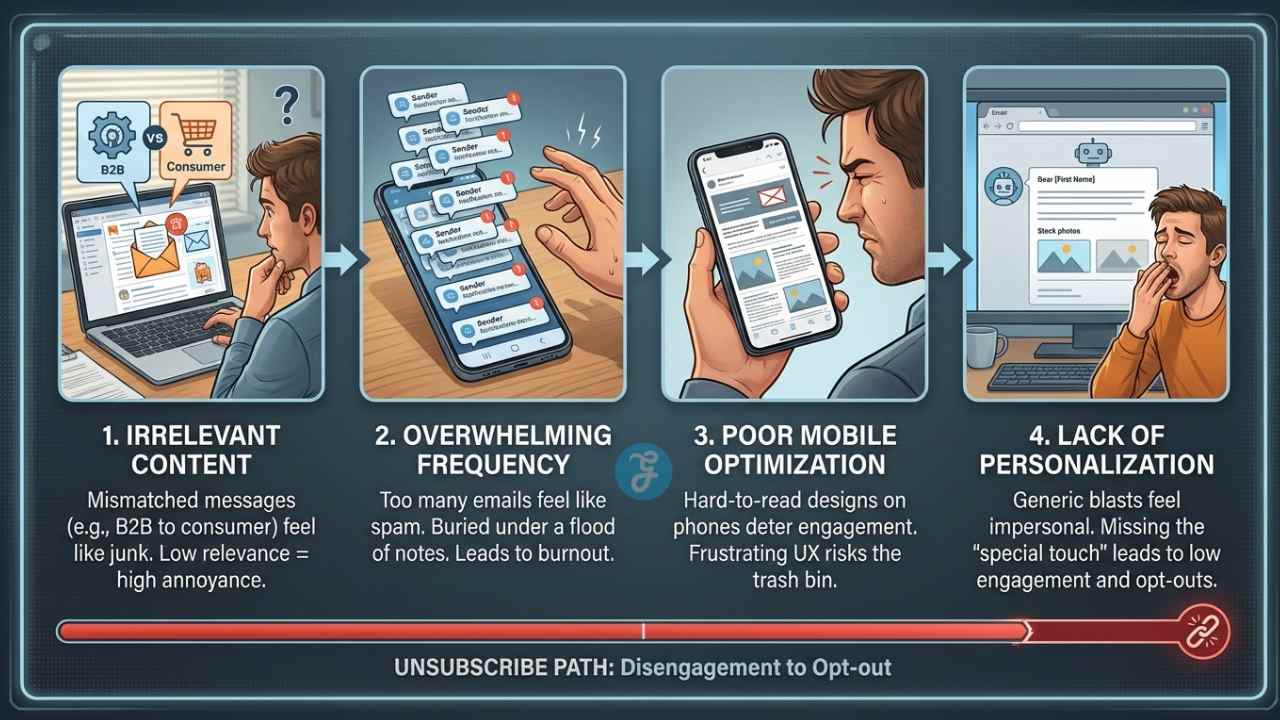
Ever get that sinking feeling when your inbox overflows with emails that just don’t click, like a bad blind date that drags on forever? Folks hit the unsubscribe button fast if content feels off-target or bombards them too often, pushing senders to rethink their approach with smarter tools like preference management and mobile experience tweaks.
Irrelevant or repetitive content
People unsubscribe when they get irrelevant or repetitive content in their inboxes. Ineffective segmentation sends mismatched messages, like a B2B offer to a consumer-focused company, and that boosts unsubscribe rates fast.
Content relevance matters a lot, you know, because stuff that misses the mark on audience interests just annoys folks. Think about it, repetitive messaging, say offering the same discounts over and over, leads to disengagement and prompts people to hit that list-unsubscribe header.
Marketing messages not customized to subscriber behavior flop hard; they get ignored or ditched.
Segmented emails change the game with 2x open rates and 3x revenue per recipient compared to general blasts. Repetitive offers or info cause real annoyance, pushing subscribers away.
Content that does not appeal or align with interests spikes those unsubscribe numbers. Tools like Movable Ink help craft dynamic email content, while preference management lets folks control what they see in automated flows.
Rose-Marie Clément from Novatize points out how customer journey mapping avoids these pitfalls, keeping your list healthy.
Overwhelming email frequency
Sending too many messages overwhelms recipients, and this stands as a common reason for unsubscribes. Overly frequent messaging makes emails seem like spam, which hurts your list. You set incorrect expectations about communication frequency, and that leads to dissatisfaction with the content.
Subscribers feel buried under a flood of notes, like trying to drink from a firehose. Gathering feedback on how often they want to hear from you helps manage frequency in your e-mail-kampagnen.
Finding the right balance in email cadence is crucial to keep unsubscribe rates low, says a marketing expert.
Create a sending schedule based on customer engagement levels to avoid overwhelming subscribers. Adjusting email frequency based on high abmelderate can reduce loss of subscribers, especially with tools like marketingautomatisierungen.
Avoiding spam-like frequency keeps a healthy email list, so use a subscription center for better control. Think of it as tuning a radio, you dial in just right to hold the audience.
Poor mobile optimization
People open emails on their phones more than ever. Many consumers check email mainly on mobile devices. That makes optimization vital. Poor email design deters engagement. It causes users to unsubscribe.
Emails hard to read on phones boost unsubscribe rates. They get deleted or ignored. This hurts your list. Lack of proper design for mobile builds distrust in the brand. Subscribers hit unsubscribe fast.
Picture your email like a clunky old car on a smartphone screen. It frustrates folks. Non-mobile-friendly emails risk the trash bin. This adds to higher unsubscribe rates. Fix it with mobile-responsive designs.
They enhance access on desktops, laptops, and mobile devices. Improving user experience sparks more engagement. Mobile optimization keeps subscribers around. It cuts unsubscribe rates.
Think of it as a reputation defender for your brand. Craft sharp subject lines to draw clicks too. Your audience stays hooked that way.
Lack of personalization
Lack of personalization hits hard in email marketing. Subscribers crave that special touch, like a friend who remembers your coffee order. Most folks now expect brands to customize messages, based on their tastes and habits.
Skip this step, and you risk boring them into hitting unsubscribe. Non-personalized emails flop with low open rates and weak engagement, pushing opt-outs higher. Imagine sending the same generic note to everyone; it feels like shouting into a crowd, where no one listens.
Explore segmentation to fix this mess. Personalize through groups based on behaviors and preferences; it connects you right to individuals, boosting involvement. This approach can double your open rates and triple revenue per subscriber.
Gather feedback to fine-tune content for their interests, cutting unsubscribe risks even further. Use subscriber data wisely, and watch disengagement fade away.
Strategies to Reduce Email Unsubscribe Rates
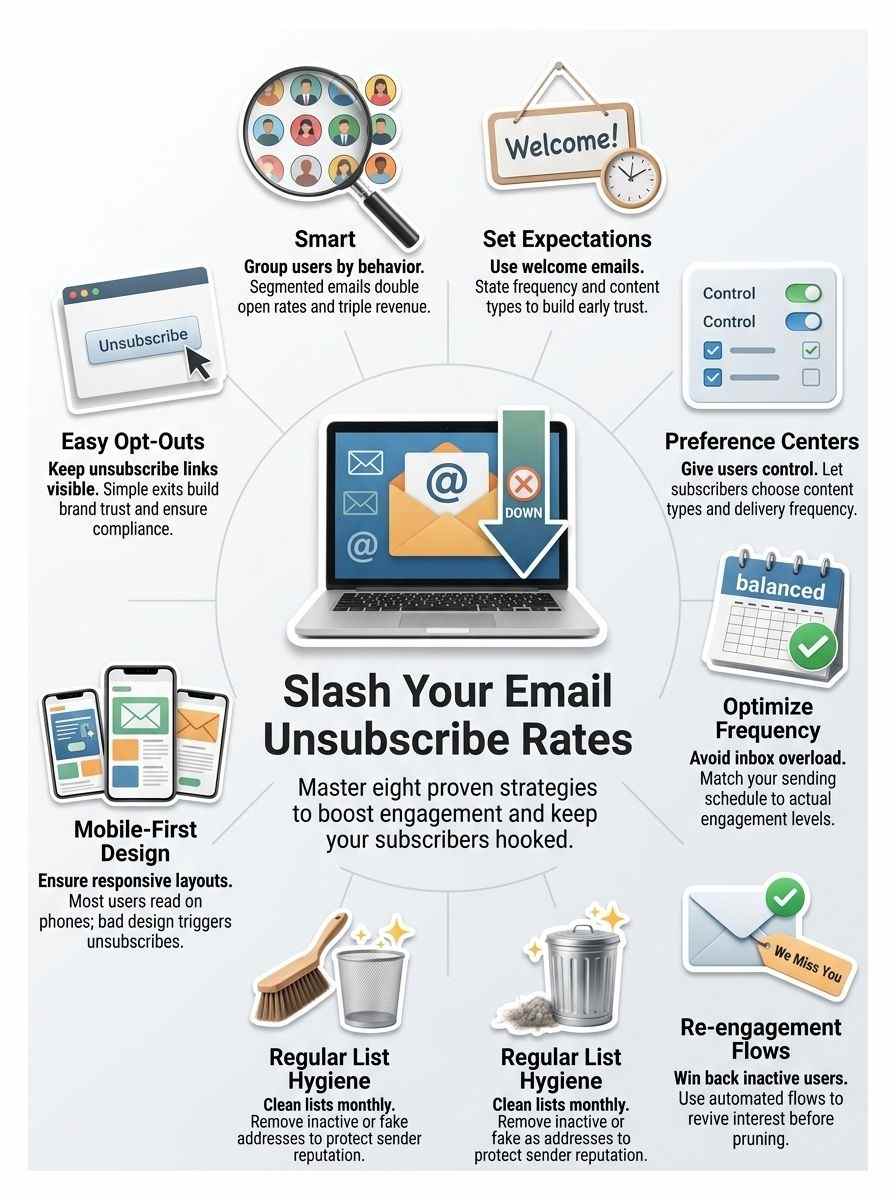
Your subscribers sticking around like loyal fans at a rock concert, all because you tweak a few smart moves in your email game. Check out these proven tactics, from customizing messages with customer groups to sparking life back into quiet contacts, and watch those unsubscribe numbers drop fast.
Personalize emails through segmentation
Personalization boosts your email game’s effectiveness. Segmentation turns generic blasts into targeted hits that keep subscribers hooked.
- Segmented emails achieve 2x open rates and 3x revenue per recipient compared to non-segmented sends, so you see real gains when you group your list by interests or behaviors. Think you send a promo for hiking gear only to outdoor fans, and suddenly your clicks soar because it feels spot on. You avoid the trap of one-size-fits-all messages that bore folks into hitting unsubscribe.
- Personalization through segmentation is crucial for connecting with individuals and enhancing engagement, like chatting with a friend instead of shouting into a crowd. You use data from past purchases or clicks to craft notes that resonate, making each reader feel seen. This approach cuts down on that “not for me” vibe that pushes people away.
- Using subscriber preferences and behaviors for segmentation reduces unsubscribe rates, as you customize content to what they actually want. Imagine a coffee lover getting tips on brews, not random ads for tea; it builds loyalty. You gather this info from sign-up forms or click patterns, then group them smartly for better results.
- Ineffective audience segmentation can lead to irrelevant content and higher unsubscribe rates, so dodge that by double-checking your groups. You might lump newbies with veterans by mistake, sending advanced tips that confuse beginners and drive them off. Fix it with clean data and test sends to spot issues early.
- Segmentation allows targeting specific audiences with customized content, increasing relevance and lowering unsubscribes, much like a chef customizing a menu for picky eaters. You divide your list into segments based on location or activity level, then hit them with spot-on offers. This keeps your emails fresh and valued, not just noise in the inbox.
- Personalizing communications makes recipients less likely to unsubscribe, turning casual readers into loyal fans. You add their name or reference past interactions, creating that warm, familiar touch. It’s like remembering a buddy’s birthday; small efforts build big connections over time.
- Segmentation errors can affect lifecycle targeting and result in higher opt-outs, so you stay vigilant with regular audits. Say you mess up and send cart abandonment reminders to folks who already bought; it annoys them. Refine your process with tools like Mailchimp or Klaviyo to track stages accurately and keep everyone engaged.
- Leveraging automated flows based on segmentation delivers timely, relevant content, like a well-timed joke that lands just right. You set up sequences in platforms such as ActiveCampaign that trigger based on actions, sending nurture emails to new sign-ups or win-back notes to the quiet ones. This keeps the conversation going without overwhelming anyone.
Set clear expectations in the welcome email
New subscribers often join your list with high hopes. Meet those hopes right away in your welcome email. Tell them what to expect, like how often you’ll send messages and what kind of content they’ll get.
This simple step cuts down on surprises, and it lowers unsubscribe rates. Rose-Marie Clément points out the need to show value, such as early access to sales. Many folks sign up just for a promo code, then bail.
Highlight ongoing perks to keep them around. A strong welcome series can bring in $2.65 per recipient, so make that first impression count.
Wrong expectations spark dissatisfaction and more opt-outs. Reinforce what they’ll receive during initial onboarding. State email frequency and types clearly. This builds trust, like a firm handshake at the door.
Subscribers come with ideas in mind; match them to avoid quick exits. Communicate benefits beyond the first deal, and watch retention grow.
Create a preference center for subscription control
Readers, you know that sinking feeling when subscribers hit unsubscribe, right? A preference center puts the power back in their hands, and cuts those rates down.
- Let subscribers pick their content types, like newsletters, product updates, or promotions, which helps slash unsubscribes by matching what they want.
- Build in options for communication frequency, such as daily, weekly, or monthly sends, so folks stay engaged without overload.
- Add choices for channels, including email, SMS, or push notifications, and watch how this boosts their sense of control.
- Place links to the preference management page in your email headers and footers, making access a breeze for quick tweaks.
- Design that preference management page to be clear and simple to use, because nobody likes a maze when updating settings.
- Offer opt-down features, where customers select less frequent communication, and show your flexibility to keep them on board.
- Gather data from the preference management page, then apply it to segment and target future campaigns for better results.
- Give subscribers control over their email experience, and they’ll stick around longer, feeling valued in the process.
Optimize email frequency for audience preferences
People often hit that unsubscribe button because emails flood their inboxes too much. Too frequent messaging ranks as a leading reason for unsubscribes, like a friend who calls every hour.
Gather feedback on how often subscribers want to receive emails. This simple step helps tailor frequency to their needs. Create a sending schedule based on customer engagement levels.
You spot patterns in opens and clicks, then adjust. Tools like Mailchimp or Constant Contact make this easy with their analytics dashboards.
Avoid overwhelming recipients with too many messages; it’s crucial for keeping them around. Use preference center data to customize frequency, which supports better engagement. Proactively solicit frequency preferences at sign-up to preempt future dissatisfaction.
Balance frequency to align with subscriber expectations, and you minimize opt-outs. Adjust email frequency in response to high unsubscribe rates; this can improve retention. Imagine your list as a garden, not a weed patch, by pruning the excess sends.
Use re-engagement campaigns for inactive subscribers
Inactive subscribers often feel like forgotten friends at a party. Reach out with re-engagement campaigns to spark their interest again and cut down on unsubscribes.
- Send re-engagement emails to users who have not interacted, as this maintains their interest and reduces unsubscribes in total. Target those who haven’t engaged in over 90 days or non-purchasers. See it as tossing a lifeline to someone drifting away; a quick, friendly note can pull them back in.
- Remove consistently unengaged subscribers from future campaigns to lower total unsubscribe risks. Think of it as pruning a garden, you know, to let the healthy plants thrive. This step keeps your list fresh and focused.
- Implement a sunset flow that phases out customers who are not engaging with the brand. You phase them out gently, over time, like easing into a goodbye. It avoids sudden drops in engagement.
- Engage inactive subscribers before removing them, as this can revive interest and lower opt-outs. A simple campaign might say, “Hey, we miss you – here’s something special.” That personal touch often works wonders.
- Use automated flows such as abandoned cart and abandoned browsing to keep subscribers engaged with timely content. For abandoned cart flows, aim for the benchmark of $3.65 revenue per recipient. It’s like an automatic nudge that says, “Don’t forget about this gem in your cart.”
- Add abandoned browsing flows, which hit a benchmark of $1.07 revenue per recipient. These remind folks about items they viewed but left behind. Imagine a helpful whisper in their ear, guiding them back to your site.
- Include post-purchase flows for ongoing engagement, with a benchmark of $0.41 revenue per recipient. After a buy, follow up with tips or related products. It’s that warm, “Thanks for shopping, here’s more value” vibe that builds loyalty.
Regularly clean and update your email list
Clean your email list on a regular basis to keep it fresh and effective. This simple step boosts your success in email marketing, much like trimming dead branches from a tree to help it grow stronger.
- Conduct monthly audits to spot and remove inactive or unresponsive subscribers, which improves deliverability and lowers unsubscribe rates, as these folks drag down your total performance.
- Remove or suppress unengaged subscribers who skip interacting with your emails, a move that cuts the chance of them hitting unsubscribe later.
- Spot misspelled email addresses and pull them from your list to maintain accuracy, because errors like that mess with your sender reputation over time.
- Eliminate fake email addresses and phone numbers to keep the list healthy, ensuring only real contacts stay and avoiding bounces that hurt your Klaviyo campaigns.
- Embrace regular cleaning to enhance sender reputation and reduce the likelihood of high unsubscribe rates, turning your list into a lean machine for better results.
- Pull non-interacting subscribers from the mix, which helps reduce the likelihood of them unsubscribing and keeps your audience engaged.
- Make list cleaning a habit, as it proves essential for maintaining good deliverability and sender reputation in the long run.
- Listen to Michael Pattison, lead digital strategist at Klaviyo, who stresses holistic channel planning that includes regular list cleaning to tie everything together smoothly.
Avoid using purchased email lists
Purchased email lists might seem like a quick fix, but they spell trouble for your campaigns. People on those lists never signed up, so they unsubscribe fast and mark your messages as spam.
This hurts your sender reputation and messes with email deliverability down the line.
Mailchimp and similar tools warn against buying lists, calling the practice outdated. Stick to emails gathered with real consent instead; that builds trust and keeps unsubscribe rates low.
Unsolicited blasts erode engagement quick as a flash, plus they trigger ISP flags that tank future sends.
Ensure mobile-friendly email designs
People check emails on their phones a lot these days. Make your emails work well on mobile devices, and you’ll boost access across desktops, laptops, and smartphones too. Imagine: a subscriber opens your message on the go, but it looks all jumbled up.
That frustration hits like a brick wall, right? Poor designs for phones push folks away, killing engagement and sparking unsubscribes. Fix that with smart tweaks, and watch involvement soar.
Many folks mainly use cell phones for email. Skip mobile tweaks, and your messages get trashed or skipped, jacking up those unsubscribe numbers. Opt for designs that shine on small screens; they lift open rates and clicks, like a well-oiled machine.
Big players in email tools, think Mailchimp or Constant Contact, push for these handy templates. Test your emails on different gadgets; it keeps things smooth and fun for everyone involved.
Additional Tips for Retaining Subscribers
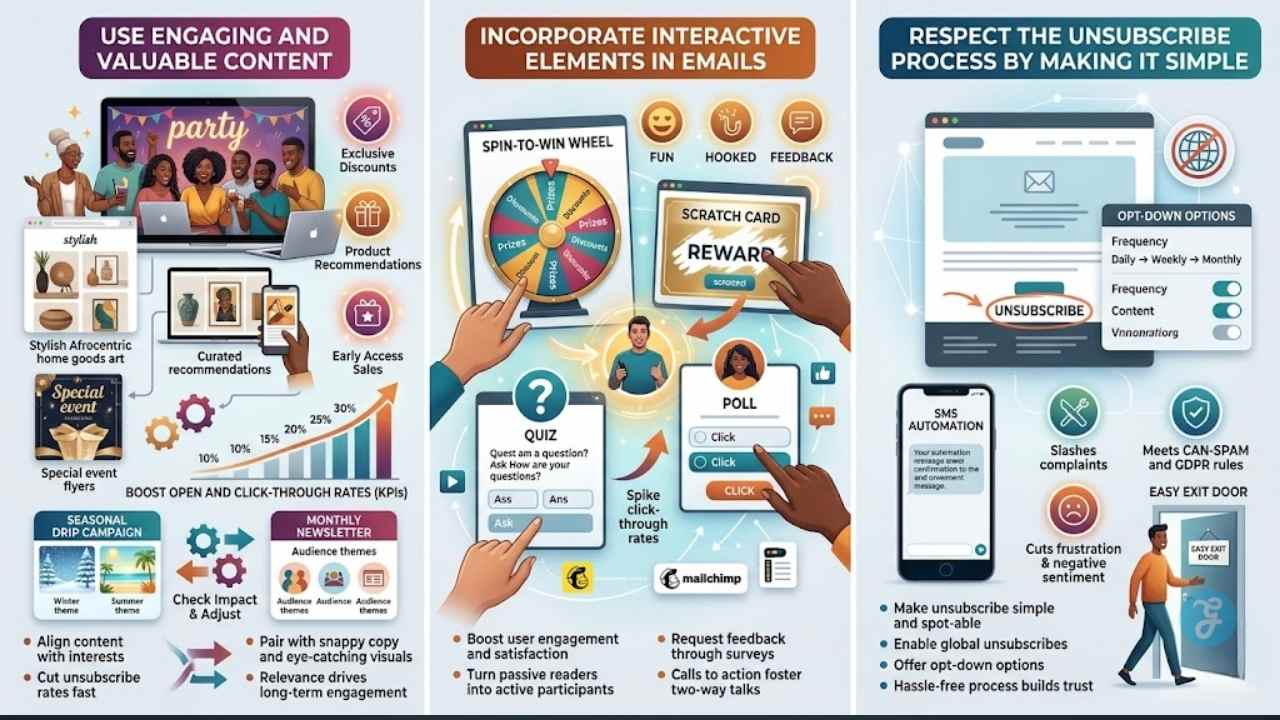
Your email list as a lively party where guests stick around because the vibes feel just right, and you throw in surprises that spark real fun. Picture adding polls or quizzes that get folks clicking and chatting back, while you keep things easy by letting them bow out gracefully if they choose.
Use engaging and valuable content
You want subscribers to stick around, right? Create content that matches their interests, like Afrocentric home goods and art for culturally focused brands. This alignment cuts down unsubscribe rates fast.
Offer valuable perks, such as exclusive discounts, product recommendations, or early access to sales. People love that stuff; it feels like a special invite to the party.
Engaging content boosts open and click-through rates, key wins for your KPIs. Think seasonal drip campaigns and monthly newsletters tuned to audience themes; they keep folks coming back.
Pair them with snappy copy and eye-catching visuals to build real connections. Relevance drives long-term engagement, so check your content’s impact often. Adjust as needed, and watch relationships grow stronger.
Incorporate interactive elements in emails
Add surveys, polls, or quizzes to your emails. These boost user engagement and satisfaction, like a friendly chat that keeps folks hooked. Imagine subscribers scratching a virtual card or spinning a wheel for fun; gamification elements like scratch cards or spin-to-win spark continued interest.
They make your messages pop, turning passive readers into active participants.
Request feedback through surveys to grasp what your audience craves and refine your content. Interactive features spike click-through rates, that vital email metric everyone tracks.
Engaged folks stick around longer with these lively touches; they cut unsubscribe risks and build brand loyalty. Calls to action for input foster two-way talks, strengthening bonds.
Grab tools like Mailchimp to weave in these components; it keeps emails fresh and memorable.
Respect the unsubscribe process by making it simple
Make the unsubscribe process simple, and you’ll keep your brand’s image strong. Enable global unsubscribes. This removes a subscriber from all lists when they opt out. Put the unsubscribe link where folks spot it fast, like in the email footer or header.
Simplifying this step boosts brand perception and trust. It cuts down on frustration and negative brand sentiment, too.
Offer options to opt-down in frequency or content type. This user-friendly move lets customers tweak their choices without bailing out. Set up SMS automation to confirm preferences after an email opt-out.
That keeps engagement alive on other channels. A hassle-free process slashes complaints and negative feedback. Plus, it meets CAN-SPAM and GDPR rules, which demand a clear unsubscribe option.
Think of it like giving an easy exit door; people appreciate the respect, and it might even make them think twice about leaving.
Final Words
You learned ways to cut email unsubscribe rates, like personalizing messages and cleaning your lists. These steps work fast and fit into any busy schedule. Have you checked your own email frequency lately? Lower rates boost engagement and keep your audience loyal.
Check out tools like preference centers for easy subscriber control. I once lost subscribers from bad mobile designs, but fixes turned things around. Start today, and watch your list thrive.
Frequently Asked Questions (FAQs) to Reduce Email Unsubscribe Rates
People unsubscribe when emails feel like spam, or when the content misses the mark on what they want. Think of it like a bad blind date; if it’s not clicking, they’re out. To reduce email unsubscribe rates, focus on value that keeps them hooked.
2. How can I make my emails pop and keep subscribers around?
Send stuff that’s tailored to their interests, like a custom playlist that hits all the right notes. Use fun subject lines and clear calls to action.
3. What’s the sweet spot for email frequency to avoid high unsubscribe rates?
Don’t bombard them daily; that’s like overwatering a plant, it just wilts away. Aim for once or twice a week, based on what your audience prefers.
4. Can segmenting my list really help cut down on unsubscribes?
Yes, grouping subscribers by their likes turns generic blasts into targeted chats, like whispering secrets to a friend instead of shouting in a crowd. It boosts engagement and loyalty. Test different groups to see what works best.