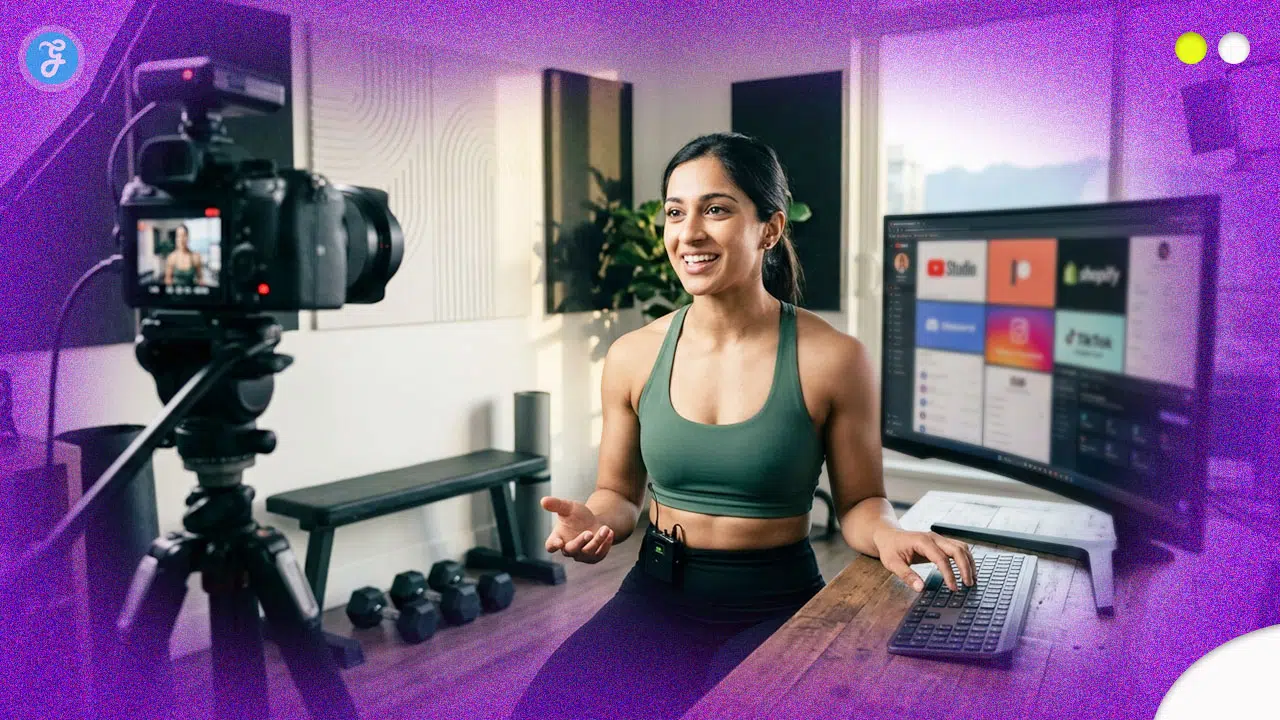
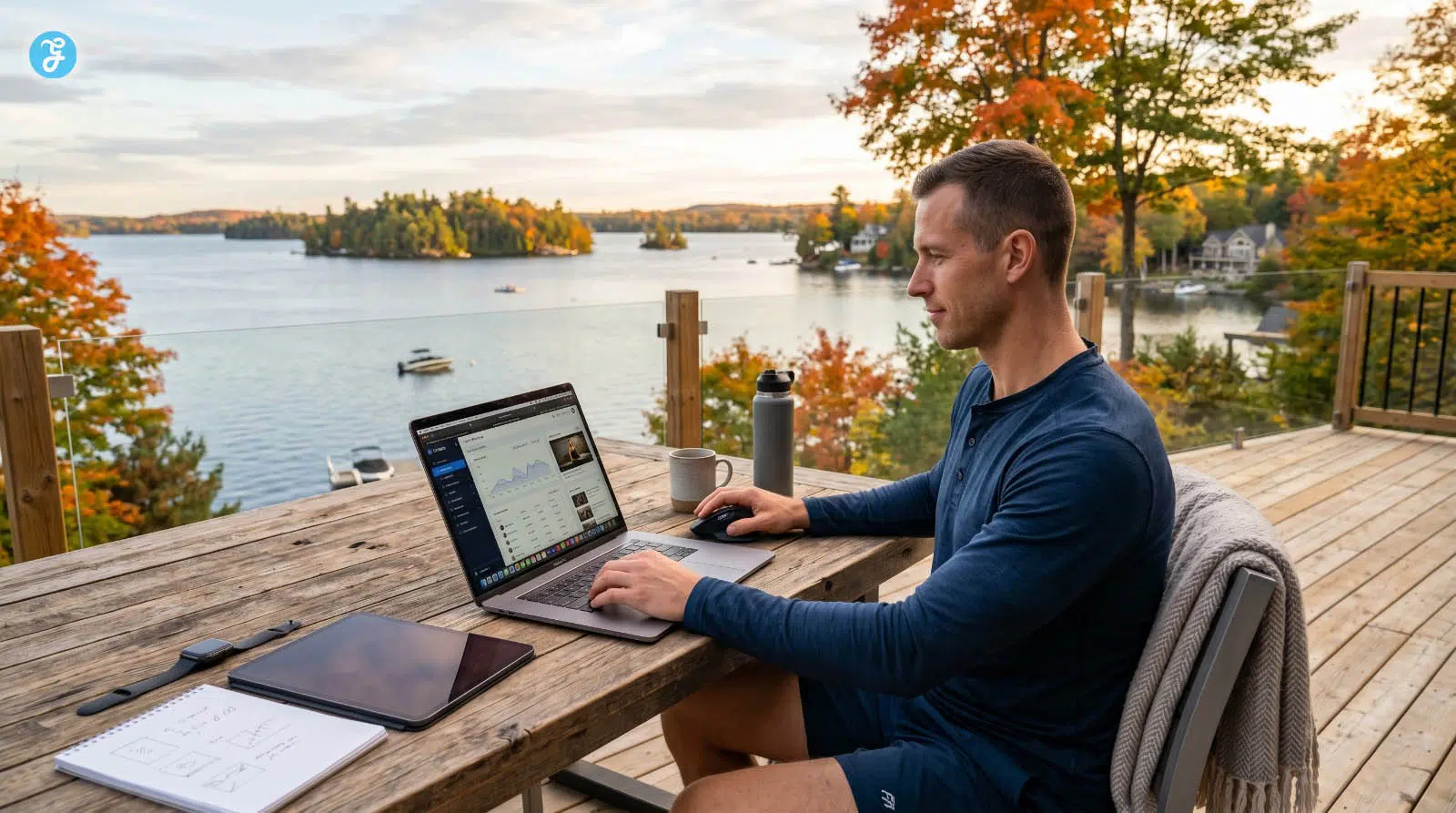
Six years ago, Marcus was training clients in a humid basement in Toronto’s Liberty Village. He traded his hours for dollars, limited by the four walls of his studio and the number of sessions he could squeeze into a day. Today, Marcus runs a global operation from his laptop in Muskoka. He is not just a coach anymore. He is a Digital CEO. This shift is the new reality for health professionals across the country. The rise of Fitness Creator Platforms Canada has made this transition possible.
The Canadian fitness market has moved to a hybrid model. Having a digital presence is no longer an optional add-on. It is as fundamental to the business as a physical squat rack. Thousands of trainers are now building their own empires by turning their expertise into scalable digital products.
These digital tools allow a single person to manage hundreds of clients while maintaining high standards of care. In 2026, the goal is to move away from the grind of one-on-one sessions toward a “one to many” revenue stream. This means selling automated coaching, community challenges, and specialized training programs.
Success in this competitive space depends on your choice of technology. You need a platform that aligns with your specific coaching philosophy and meets strict Canadian business requirements. This includes handling GST or HST and ensuring data stays secure under local privacy laws like PIPEDA.
The following guide breaks down the top ten platforms helping Canadian creators dominate the digital frontier. These are the tools that turn a local side hustle into a massive online business. Whether you focus on high performance athletics or holistic wellness, the right choice will define your growth in the coming year. This is about working smarter and reaching further than a basement studio ever allowed.
Why Homegrown Tech Matters for Your Fitness Business
Choosing a platform is about more than just features and pricing. For a Canadian fitness creator, the physical location of your tech provider impacts your bottom line and your legal safety. Using local tools ensures that your business stays compliant with national standards while supporting the domestic economy. This strategic choice builds a stronger foundation for long-term growth and professional credibility.
Tax Compliance and Currency
Managing finances across borders can be a headache for independent coaches. When you use Fitness Creator Platforms Canada, you get native support for CAD processing.

This means you avoid the hidden costs of currency conversion fees that eat into your margins. These platforms also automate the collection of GST, HST, and PST based on your client’s province. It simplifies your bookkeeping and ensures you stay on the right side of the Canada Revenue Agency.
Data Privacy and Security
Canadian fitness creators handle sensitive health data every day. This information is protected under the Personal Information Protection and Electronic Documents Act, also known as PIPEDA. Many international platforms do not meet these specific Canadian standards for data residency and consent.
By prioritizing high-security local platforms, you ensure that client biometric data remains protected within our borders and complies with PIPEDA or provincial equivalents like PIPA and Law 25. This builds a layer of trust that is essential for any high-touch coaching business.
The Homegrown Advantage
Supporting the Canadian tech ecosystem creates a virtuous cycle for the local creator economy. Hubs in Vancouver, Toronto, and Ottawa are now world leaders in fitness technology innovation. When you choose a local partner, you get customer support that understands your time zone and your specific market challenges. You are not just buying software; you are investing in a network of developers and entrepreneurs who understand the unique needs of the Canadian health and wellness sector.
The Top 10 Platforms for Your Digital Empire
The following selection represents the best in Canadian innovation and global standards for 2026. Each platform solves a specific problem for the modern fitness creator.
- QuickCoach (Toronto, ON)
Best for: Emerging fitness creators and coaches who want a completely frictionless, white-labeled client experience.
The Problem: Most coaching software forces the client to download a clunky app and create an account before they can even see their workout, causing friction.
The Solution: Built by the team behind the Personal Trainer Development Center (PTDC), QuickCoach operates via simple web links with no client login required, making onboarding instant.
The 2026 Edge: “Frictionless Delivery” allows creators to text a link directly from an Instagram DM to a client, opening a fully formatted, branded workout instantly.
Features: No-login client access, custom branding, program builder, and habit tracking.
Pros: Unbeatable free tier; incredibly simple for clients to use.
Cons: Lacks complex automated billing and deep clinical biometric integrations.
- Elite Trainr (Quebec City, QC)
Best for: High-growth independent trainers looking for a lean, focused “business in a pocket.”
The Problem: Larger platforms often force trainers to pay for hundreds of features they never use, eating into the profit margins of an emerging SME.
The Solution: Elite Trainr focuses on the essentials: high-quality workout delivery, custom program building, and direct nutrition management without the enterprise bloat.
The 2026 Edge: Highly streamlined client compliance tracking that flags drop-offs in engagement, allowing coaches to intervene before a client churns.
Features: Unlimited client capacity on basic tiers, macro tracking, and automated check-in forms.
Pros: Extremely cost-effective for Canadian solopreneurs; highly responsive local support.
Cons: Lacks the advanced automated marketing funnels found in larger enterprise tools.
- Practice Better (Toronto, ON)
Best for: Holistic nutritionists, kinesiologists, and integrated wellness coaches.
The Problem: Managing health data, lab results, and meal plans across different consumer apps creates a fragmented, non-compliant client experience.
The Solution:
This Toronto-based Series A scale-up is a secure hub for clinical wellness, centralizing intake forms, telehealth, and supplement protocols in one professional portal.
The 2026 Edge: Deep integration capabilities with third-party clinical data and wearables, all while maintaining strict PIPEDA compliance for Canadian health data.
Features: Secure messaging, automated meal planning, telehealth integration, and automated billing.
Pros: The absolute gold standard for privacy, compliance, and professional clinical management.
Cons: The interface feels more medical and clinical rather than “high-energy fitness.”
- Hexfit (Quebec City, QC)
Best for: Data-driven personalized coaching and clinical fitness integration.
The Problem: Basic workout apps miss the critical biometric data (sleep, recovery, heart rate variability) needed for high-performance or clinical coaching.
The Solution: Hexfit centralizes all client data, allowing professionals to build incredibly detailed programs while pulling data from nearly every wearable on the market.
The 2026 Edge: Advanced biometric syncing capabilities that allow trainers to adjust workout intensity based on real-time recovery data from devices like Garmin and Oura.
Features: Advanced goal tracking, comprehensive document sharing, and multi-wearable synchronization.
Pros: Deep data analytics; native French and English support tailored perfectly for the Canadian market.
Cons: Steeper learning curve due to the sheer volume of data and customization options.
- Trainer+ (Toronto, ON)
Best for: Lean, data-driven workout management and precise strength tracking.
The Problem: Many apps are cluttered with social features that distract from the actual training data and program execution.
The Solution: Trainer+ focuses on the math of muscle. It is a highly efficient platform built for coaches who want robust workout libraries and precise progress tracking without the fluff.
The 2026 Edge: A highly optimized, minimalist dashboard designed for speed, allowing creators to view strength trends across their entire client base at a glance.
Features: Extensive exercise library management, automated strength tracking, and secure client portals.
Pros: Very fast and efficient for pure training; affordable pricing model for growing brands.
Cons: Lacks the lifestyle, habit-tracking, and community-building features of robust influencer-focused apps.
- WellnessLiving (Toronto, ON)
Best for: Fitness creators expanding into digital or hybrid studio memberships.
The Problem: Managing online subscriptions, physical class drop-ins, and digital content libraries usually requires cobbling together three different software subscriptions.
The Solution: An independent, medium-sized enterprise that offers an all-in-one scalable ecosystem designed to handle scheduling, marketing, and client retention in one unified place.
The 2026 Edge: Advanced retention marketing automation that uses analytics to identify clients at risk of churning and automatically deploys targeted SMS offers.
Features: Automated marketing suites, hybrid class scheduling, and custom branded mobile apps.
Pros: Exceptional all-in-one suite for growing businesses; highly competitive pricing compared to legacy US tools.
Cons: The feature-heavy dashboard can be overwhelming for a solo online-only creator.
- Fitlog (Montreal, QC)
Best for: Creators who want highly customizable, granular control over workout and nutrition parameters.
The Problem: Many out-of-the-box platforms restrict how a coach can format a superset, calculate a macro split, or design a multi-phase periodization plan.
The Solution: Fitlog is a robust online coaching software that acts as a digital canvas for fitness professionals, offering highly customizable training programs and supplement protocols.
The 2026 Edge: Advanced auto-periodization features that allow coaches to map out undulating progression models that automatically adjust based on the client’s logged metrics.
Features: Advanced program builder, auto-renewal memberships, and recurring check-in management.
Pros: Incredible depth for serious strength and conditioning coaches; highly flexible architecture.
Cons: The user interface is highly functional but lacks the sleek, modern aesthetic of newer creator-focused apps.
- FLiiP (Montreal, QC)
Best for: Fitness creators transitioning from solo online coaching to owning a hybrid digital/physical studio.
The Problem: Managing digital program subscriptions alongside community management requires constant manual administration.
The Solution: A Montreal-born management platform that scales with a creator, handling billing, scheduling, and community management in one clean ecosystem.
The 2026 Edge: “FLiiP RISE” CRM tools that automate member engagement, sending targeted check-ins to clients who haven’t logged a workout recently.
Features: Automated billing, live-class scheduling, integrated CRM, and member portals.
Pros: Incredible all-in-one value for creators launching robust hybrid coaching models.
Cons: Overkill for a creator who only wants to sell basic PDF templates.
- Movr (Vancouver, BC)
Best for: Integrating premium, personalized mobility assessments into digital training programs.
The Problem: Standardized digital fitness programs ignore a client’s unique movement limitations, leading to injuries and canceled subscriptions.
The Solution: Movr is a B2B startup that provides movement health infrastructure. It allows creators to assess a user’s mobility digitally and automatically generate corrective warm-ups.
The 2026 Edge: Their advanced Movement Assessment API integrates directly into a creator’s existing app, providing users with a hyper-personalized “movement score” before they even lift a weight.
Features: Gamified movement assessments, corrective exercise libraries, and seamless API integration.
Pros: Adds a highly premium, clinical-grade feel to generic fitness challenges.
Cons: Best utilized by creators who have custom web apps, rather than out-of-the-box solopreneurs.
- Playfitt by IntelliSports (Montreal, QC)
Best for: Creators looking to monetize gamified movement challenges and micro-habits.
The Problem: Getting followers to commit to a 12-week heavy lifting program is a high barrier to entry; many just want to move more daily.
The Solution: An AI-driven, gamified startup app that uses a phone’s accelerometer to track basic movements (squats, pushups, steps) and turns fitness into a game.
The 2026 Edge: Advanced machine learning algorithms that instantly verify a user’s reps through their phone camera, preventing cheating on community leaderboards.
Features: AI rep counting, gamified leaderboards, and automated movement tracking.
Pros: The absolute best tool for high-energy, low-barrier viral fitness challenges.
Cons: Not designed for traditional, heavy strength and conditioning programming.
Mastering Your Revenue Stack
Building a sustainable business means you cannot rely on a single source of income. Modern creators often combine different Fitness Creator Platforms Canada to build a robust revenue stack. For instance, you might use QuickCoach or Elite Trainr to handle your daily coaching while running a Shopify store for your branded equipment. This multi-layered approach ensures that if one stream slows down, your entire business does not collapse. It allows you to meet different client needs at various price points.

One major lesson of the digital age is that you must own your audience. Relying solely on social media algorithms is a high risk strategy. Algorithms change, and reach can vanish overnight. By moving your followers onto a dedicated platform or an email list, you gain direct access to your community. This shift from “rented” social media space to “owned” digital property is the mark of a true entrepreneur. It provides the stability needed to scale without constant fear of a platform update.
The New Frontier for Health Professionals
The barriers to entry in the fitness world have officially crumbled. You no longer need a massive bank loan or a physical gym lease to share your expertise with the world. Technology has democratized the ability to help others, allowing any passionate coach with a laptop to compete on a global scale. Canadian creators are uniquely positioned to lead this movement with high standards of education and innovative tech partners.
The digital frontier is wide open and waiting for those ready to claim their space. By selecting the right tools today, you are securing your professional future for years to come. Do not wait for the perfect moment to start building your online empire. The infrastructure is already here, and the demand for authentic, expert-led coaching is at an all-time high. It is time to take your expertise beyond the local studio and show the world what Canadian fitness looks like.
Frequently Asked Questions (FAQs) on Fitness Creator Platforms Canada
Do I need to register for a GST or HST number as a digital fitness creator?
In Canada, you must register for a GST/HST account if your total taxable revenues from all your businesses exceed $30,000 within a single calendar quarter or over four consecutive quarters. Even if you are below this threshold, voluntary registration allows you to claim Input Tax Credits (ITCs) to recover the sales tax you pay on business expenses like equipment and software.
How does PIPEDA impact the way I store client workout data?
The Personal Information Protection and Electronic Documents Act (PIPEDA) requires you to obtain meaningful consent before collecting health and biometric data. You must ensure your chosen platform uses high level encryption and ideally stores data on Canadian servers. Since fitness creators often track heart rate and body composition, you are legally responsible for protecting this “sensitive personal information” from unauthorized access.
Can I deduct my home gym equipment on my Canadian tax return?
Yes, if you use your equipment primarily for creating content or training clients online, it is a deductible business expense. Items under $500 can usually be deducted immediately, while more expensive equipment must be claimed through the Capital Cost Allowance (CCA) as it depreciates over time. Ensure you keep digital receipts for at least six years to satisfy Canada Revenue Agency (CRA) requirements.
Are there specific Canadian regulations for fitness influencers and “material connections”?
Yes, the Canadian Competition Act requires you to disclose any “material connection” you have with a brand. If you are using a specific supplement or wearing apparel in your videos because you were paid or given the product for free, you must use clear disclosures like #ad or #sponsored. Ambiguous terms are not sufficient under Canadian law, and both you and the brand can be held liable for non-compliance.
Is income from US-based platforms like Patreon or YouTube taxable in Canada?
Absolutely. Every dollar you earn from digital platforms is considered taxable income by the CRA, regardless of where the platform is headquartered. While US platforms may not issue a Canadian T4A slip, you are still required to report this as self-employment income on Form T2125 as part of your annual tax return.
Disclaimer: This content is for informational purposes only and does not constitute medical or fitness advice. The platforms and health tools discussed are data-focused aids intended for monitoring and motivation. They should not replace professional medical judgment. Always consult a healthcare provider before starting a new exercise protocol or making significant changes to your wellness management based on digital data.
Note on Methodology: This selection is based on editorial research into the Canadian fitness technology market in 2026. While the platforms are numbered, this is a guide to their unique technological strengths rather than a definitive ranking. We have selected these entries based on their specialized capabilities in client management, habit tracking, and digital commerce within the Canadian business sector.