

Do you ever notice trash piling up in the kitchen or rising energy bills? Many households deal with daily food waste and energy-hungry appliances that increase costs and environmental impact.
This not only strains budgets but also adds to the growing climate crisis. Adopting eco-friendly kitchen tips can make a meaningful difference, one meal at a time.
In fact, Americans saved $30 billion in 2013 by choosing Energy Star appliances, reducing greenhouse gas emissions by 277 million metric tons. Simple changes like composting, improving energy efficiency, and using sustainable materials can transform any kitchen into a greener space.
From induction cooktops to reusable bags, small upgrades can significantly reduce environmental impact.
Start building a more sustainable kitchen today.
Why an Eco-Friendly Kitchen Matters
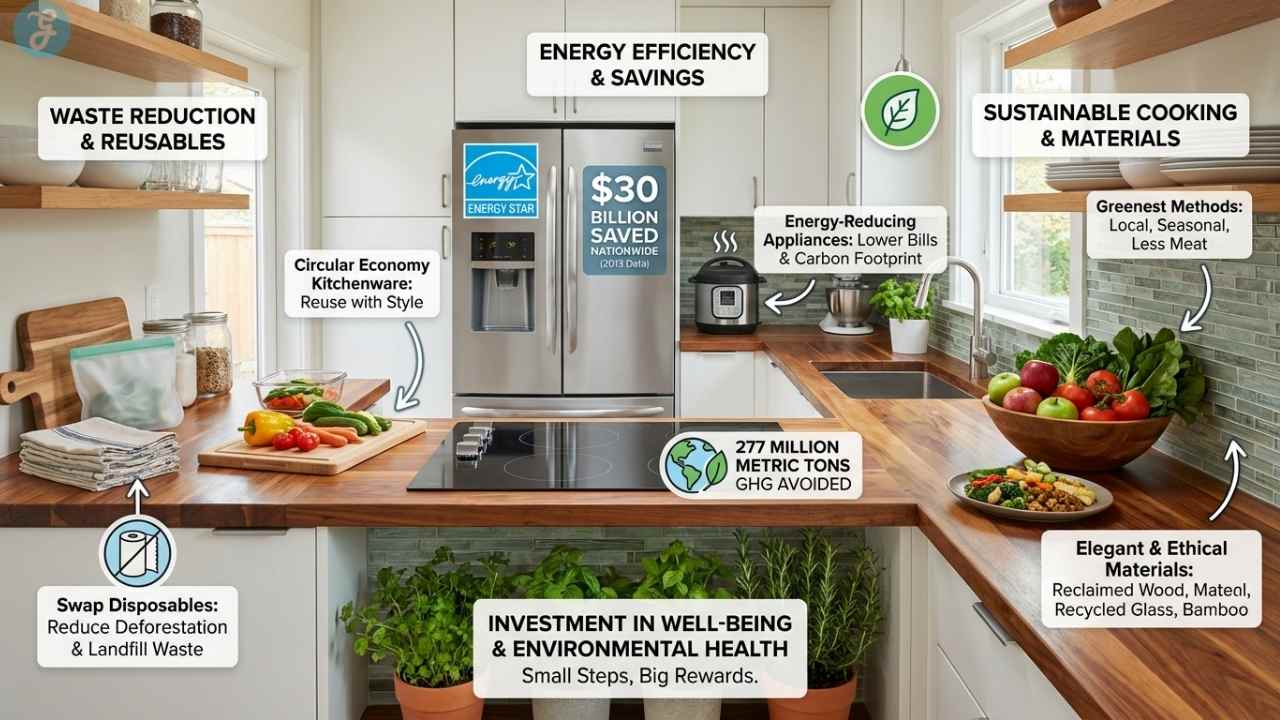
Kitchens serve as major centers of energy use and waste in homes. You make healthy kitchen choices that positively impact both the environment and personal finances. Imagine your kitchen as a bustling hub, where every decision counts toward a greener planet.
Americans saved $30 billion using ENERGY STAR appliances, lights, and windows in 2013. Those same ENERGY STAR products cut energy use equal to 277 million metric tons of greenhouse gas emissions that year.
Sustainable practices in your kitchen, like a quick sustainability audit, help you spot easy wins. Think about paper towels and napkins; they fuel deforestation, take years to break down, and boost greenhouse gas emissions.
Switch to sustainable kitchenware, and you join the circular economy, reusing materials with style.
Sustainable kitchens combine sustainability with elegance, showing style does not have to be sacrificed for eco-friendliness. – Karen Elsbury
Sustainable kitchens act as an investment in both family well-being and environmental health. Adopt the greenest cooking methods, such as using local and seasonal produce while cutting back on meat due to its higher environmental impact.
Energy-reducing appliances, like an Instant Pot, slash your bills and carbon footprint. Visualize your space transforming into a model of ethical and green living, perhaps with reclaimed wood countertops or recycled glass features.
In places like Salt Lake City or West Michigan, folks embrace these changes for Earth Day and beyond. A kitchen remodel or cabinet refacing with bamboo items keeps things elegant. Organizations like Treehugger and Allrecipes inspire these shifts, proving small steps lead to big rewards.
Sustainable Cooking Practices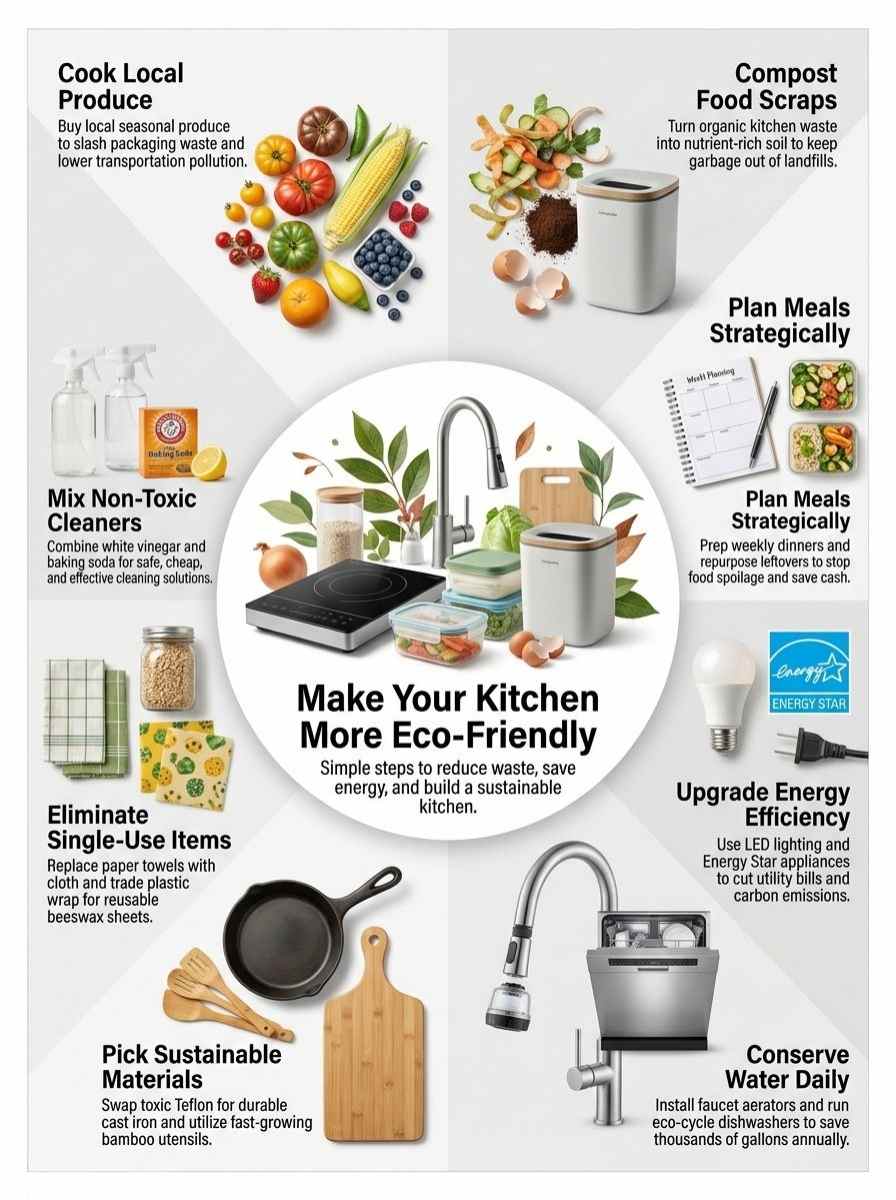 Whipping up meals from fresh veggies and fruits you grab at the local market, cutting down on all that wasteful packaging from store-bought stuff. Mark Bittman swear by this approach, and it ties right into smart food storage tricks that keep your produce lasting longer, so why not give it a shot and see how it freshens up your routine?
Cook from scratch to reduce processed food packaging
Cook from scratch, and you’ll cut down on all that processed food packaging cluttering your bins. This approach avoids the energy-heavy lifecycle of pre-prepared, frozen foods, saving resources right from the start.
Homemade meals keep their taste and quality far better than those boxed alternatives, plus they support local produce to slash the need for packaged goods. Mark Bittman often champions this style, showing how it fits into a kitchen sustainability audit for real change by degrees.
Buy ingredients in bulk to trim packaging waste and costs, but make sure you eat everything to dodge extra scraps. Bulk cooking boosts energy efficiency too, letting you prep meals that save time and cut down on daily stove use.
Grow your own fruits and vegetables to amp up eco-friendliness, then use composted kitchen waste as fertilizer for even more green gains. Energy Star notes that microwaving slashes cooking energy by up to 80% over ovens, perfect for quick homemade batches.
Swap in food storage tricks like those from Seed & Sprout for better food preservation, keeping leftovers fresh without plastic overload. Folks like Sophie Kovic at Elwood’s Kitchen Library in Melbourne inspire borrowing tools for scratch cooking, much like Paula Roten in Utah with her tips from Williams Kitchen & Bath.
Ditch Teflon pans laced with PFAS for stainless steel or cast iron during your kitchen tune-up of greater Salt Lake style, and you’ll cook cleaner. Meal planning turns leftovers into stars, like revamping last night’s veggies into a new dish, all while minimizing waste.
Use seasonal and local ingredients
Pick local ingredients first to cut down on food miles. You slash the environmental hit when food travels less from farm to table. Head to farmers’ markets or join community-supported agriculture co-ops for fresh picks.
These spots back local farms and keep things green. Steer clear of organic foods shipped from far away, like Chilean grapes; they add pollution and might spoil fast.
Buy and cook in bulk to trim packaging waste and save cash. The greenest ways involve seasonal produce with less meat. Plan your meals smart so you use every bit and dodge spoilage.
This ties into kitchen remodeling ideas, like adding Rev-a-Shelf organizers for better storage. Think of it as the original tune-up for your space, or tap into the party kit network for eco swaps.
Rosanne Castronovo Robinson shares tips on sustainable shifts that make a real difference.
Local and seasonal foods turn your kitchen into an eco powerhouse, cutting waste one meal at a time.
Reducing Waste in the Kitchen
Turning your banana peels and coffee grounds into rich soil that feeds your backyard veggies, it’s like giving Mother Nature a high-five. Or, whip up a quick stir-fry from last night’s roasted chicken bits, saving bucks and keeping your fridge from turning into a sad, forgotten graveyard.
Compost food scraps
Compost those food scraps, folks, and watch your kitchen waste shrink like magic. You know, 70% of household and yard waste can head to the compost pile instead of the trash bin. This simple habit turns banana peels and veggie trimmings into nutrient-rich soil that beats landfill junk any day.
Plus, it cuts down on greenhouse gas emissions from those stinky dumps. Many urban spots now take compost, even tossing in cardboard and paper for good measure. Grab a compost bin as your go-to tool; it’s perfect for slashing waste right at home.
Think of composting as closing the loop on all that organic mess, like giving scraps a second life. Mix in cardboard and paper to amp up the reduction in your kitchen. Then, use that fresh compost as fertilizer for your garden, boosting sustainability with every scoop.
It supports home gardening in a big way, turning waste into gold for your plants.
Plan meals to minimize food waste
Plan meals effectively, and you’ll use all your produce to cut down on food waste. Smart shopping kicks in here, with meal planning and buying in bulk to keep things minimal. You jot down a week’s worth of dinners, like turning fresh veggies into stir-fries before they wilt.
Avoid oversized portions, folks, because that stops scraps from piling up in the trash. Bulk cooking saves energy too, and it sets you up for meal prepping that trims waste even more.
It’s like being a kitchen wizard, waving away spoilage with a simple list.
Freeze those vegetable scraps, and whip up homemade vegetable broth to slash waste further. Meal planning saves money by curbing unnecessary buys and spoilage, no doubt about it. Grab reusable grocery bags, and minimize packaging to boost your waste reduction game.
Strategic meal planning makes sure perishable foods get eaten before they spoil, keeping your fridge happy and your wallet fuller. Chat with a friend over coffee, saying, “I planned my meals, and poof, no more rotten tomatoes in the bin.”.
Get creative with leftovers
You spot that roasted chicken from last night sitting in the fridge, right? Turn it into a quick stir-fry with veggies you have on hand. Get creative with leftovers to avoid food waste and make the most of what you have nearby.
Bulk cooking lets you repurpose those extras into new meals, which cuts down on trash even more. Cooking from scratch gives you better control over leftovers than pre-packaged stuff does.
Repurposing them leads to cost savings and boosts sustainable habits in your space.
Reuse glass jars for storing those creative leftover creations, or turn grocery bags into handy kitchen liners. Planning meals and using leftovers in fun ways minimizes food sent to landfills.
Utilizing them fully supports a zero-waste approach that feels good. Offer any extra usable kitchen items on sites like Freecycle or Craigslist to keep waste low.
Energy Efficiency in the Kitchen
Your fridge and oven sipping power like pros instead of guzzling it—grab those Energy Star-rated machines, swap in bright LED bulbs, and plug into clever power strips that kill off sneaky standby drain, saving you cash and giving the earth a break, so stick around for even more green hacks that’ll jazz up your space.
Use energy-efficient appliances with Energy Star ratings
Pick Energy Star ratings for your kitchen gear. These labels mark stoves, refrigerators, and dishwashers that save energy. They cut your utility bills, and shrink your carbon footprint, too.
New models pack upgrades that beat old ones hands down. Dishwashers with this rating use less water than scrubbing by hand. Grab a smaller fridge next time; it saves power and keeps food fresh longer.
Energy Star fridges and dishwashers gulp less energy and water.
Go for appliances built from stuff like bamboo or recycled metal. These beat options from non-renewable sources for the planet. Energy Star says microwaving slashes cooking energy by up to 80 percent over ovens.
Consider this: in 2013, their appliances, lights, and windows saved energy equal to 277 million metric tons of greenhouse gas emissions. You make a real difference with these choices.
Switch to LED lighting
Swap those old incandescent bulbs for LED ones, and watch your kitchen glow with energy efficiency. You cut down on power use right away, since LEDs sip electricity compared to traditional options.
Kitchen Tune-Up of Greater Salt Lake suggests letting in more natural light too, like pulling back curtains during the day, to ease up on artificial bulbs even more. Imagine flipping on the switch less often, and hey, your electric bill shrinks as a result.
LED and CFL bulbs last way longer than the old-school kind, so you swap them out less. They slash energy consumption big time, helping trim household power needs in total. Add motion sensors or timers to your setup, and lights only shine when you need them, like during a late-night snack run.
This simple change builds a more sustainable spot for cooking, all while keeping costs in check.
Use smart power strips to reduce standby energy use
Plug in your kitchen gadgets to smart power strips, and watch them cut power to appliances when not in use, slashing energy consumption. These handy devices minimize standby energy loss from things like toasters or blenders, you know, the sneaky vampires that drain power even when off.
Standby power can make up a big chunk of your total kitchen energy use, like a hidden tax on your electric bill.
Smart power strips prevent unnecessary energy suck from plugged-in devices, and they integrate easily into your current setup for better energy efficiency. This simple step lowers utility bills, shrinks your carbon footprint, and acts as an affordable upgrade to green up your space.
Think of it as giving your kitchen a power nap, saving money while you sip that morning coffee.
Water Conservation Tips
Your kitchen faucet as a thirsty camel, gulping down water like there’s no tomorrow—time to tame that beast with easy fixes that slash your bill. Picture loading up a smart machine that washes dishes without wasting a drop, turning everyday chores into eco wins that keep the planet smiling.
Install faucet aerators
You know that nagging drip from your kitchen faucet? Swap in a faucet aerator to cut water flow, all while keeping the pressure strong. These handy devices make a big splash in conservation, saving thousands of gallons of water each year.
Low-flow faucets, like those with aerators, slash water use by up to 30 percent over old-school models. They fit most modern kitchen faucets, turning a quick tweak into a smart home upgrade.
Your utility bills drop as you help the planet. Faucet aerators prove cost-effective for trimming water waste in the kitchen. Efficient water fixtures, such as these, preserve precious resources and ease your wallet’s burden.
Water-saving technologies like aerators weave right into an eco-friendly setup, offering big wins from a simple install.
Use water-efficient dishwashers
Switch to water-efficient dishwashers, and watch your water usage drop. These machines cut down on waste big time. Dishwashers with eco-cycles sip less water than standard ones, or even hand washing.
Energy Star models tackle both water and energy savings head-on. Efficient dishwashers beat out scrubbing by hand for real water cuts. Pick the right settings, like those eco options, to slash usage even more.
Water-efficient dishwashers make a smart upgrade for any sustainable kitchen. Grab a newer model, and see immediate water savings roll in. Load them properly, keep up with maintenance, and boost that efficiency.
Stainless steel racks inside hold dishes just right for the best rinse. Think of it as your kitchen’s secret weapon against high bills, saving gallons with every load.
Eco-Friendly Kitchen Upgrades
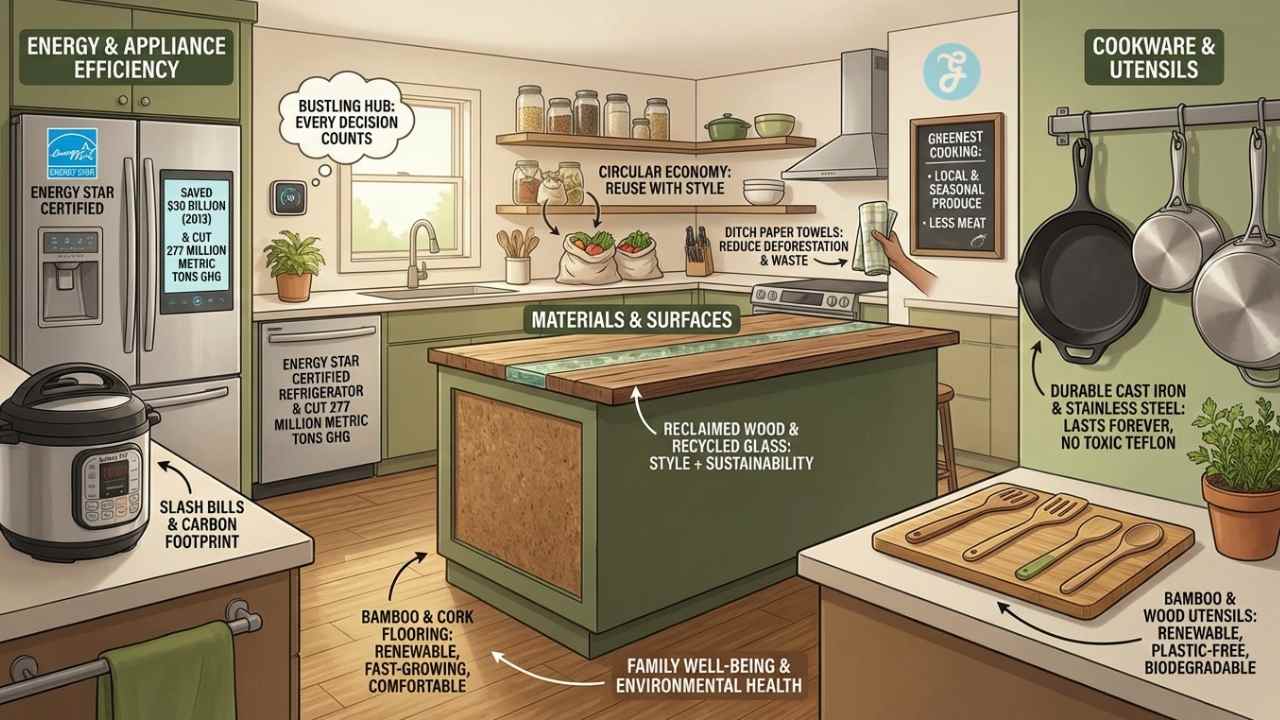
Transforming your kitchen into a green haven, one smart swap at a time, like ditching those scratched Teflon pans for durable cast iron skillets that last forever and heat evenly.
You can also pick bamboo boards for your counters, they’re tough, renewable, and add a warm vibe that makes cooking feel like a cozy adventure.
Choose sustainable materials for countertops and flooring
Pick green options like recycled paper and yogurt pots for your countertops. They cut down on waste and add a fresh look to your space. Go for bamboo and cork flooring too; these choices grow back fast and feel great underfoot.
Think about Hanex solid surfaces, made from natural minerals and acrylic resin. Homeowners love them for being eco-friendly and tough.
Hanex surfaces stay non-porous, resist scratches, and clean up easy. You can recycle them, and their high mineral content suits folks who care about the planet. They come from renewable or recycled resources, plus they skip harmful chemicals that old materials release.
Opt for durable picks like these to keep your kitchen green. Consider the Original Tune-Up service to refresh cabinets in one day; it slashes construction waste and boosts style.
Replace Teflon cookware with stainless steel or cast iron
Swap out that old Teflon pan for stainless steel or cast iron, folks. You know how Teflon wears out fast? It has a limited lifespan, so you end up tossing it sooner than you’d like.
Pick durable materials instead, like cast iron or stainless steel, and watch your kitchen waste drop. These options last longer, cutting down on frequent replacements. High-quality cast iron skillets even stick around for generations, imagine passing one down to your grandkids.
Stainless steel cookware shines as a sustainable choice for long-term use, holding up through countless meals. Cast iron grabs attention for its heat retention and toughness, perfect for searing steaks or baking cornbread.
Ditching Teflon also means less exposure to toxic chemicals, keeping your space safer. Invest in long-lasting cookware designed for longevity, and you support both sustainability and kitchen safety, like a smart swap that pays off big time.
Opt for bamboo or wooden utensils
You want to cut down on plastic in your kitchen, right? Grab wooden or bamboo utensils instead. These tools reduce plastic use right away. Bamboo grows fast as a renewable resource, so it fits eco-friendly goals.
Imagine trading a flimsy plastic spoon for something sturdy and natural. They break down in nature, unlike plastic that lingers forever. Plus, they create a plastic-free space you can feel good about.
Pick sturdy ones to avoid cheap wooden spoons that splinter or plastic that melts under heat. Bamboo options stay lightweight and tough, lasting longer without leaching chemicals into your meals.
They look great too, adding a cozy touch to cooking. This switch counts as a simple upgrade with real impact. Eco-friendly choices like these support the planet, one stir at a time.
Eliminate Single-Use Items
Toss out those throwaway paper towels, and switch to soft cotton cloths that you can wash and reuse over and over. Imagine wrapping your sandwiches in natural beeswax sheets instead of plastic film, or storing snacks in tough silicone pouches that last for years—it’s like giving Mother Earth a high-five every meal.
Use cloth towels instead of paper towels
Switch to long-lasting cloth towels, and ditch those disposable paper towels for good. They reduce waste right away, plus save you money over time. Paper towels and napkins fuel deforestation, you know, and take years to break down in landfills.
Cloth versions wash up easy and get reused again and again, unlike single-use paper products that pile up in the trash. Imagine wiping up spills with something durable, effective, and way better for cleaning than flimsy paper.
Cloth towels add a touch of elegance to your dining setup, all while staying kind to the planet. They cut down household waste big time, acting as a sustainable swap for throwaway paper goods.
Grab some cloth napkins too; they handle messes like pros and last through countless meals. Your kitchen feels cozier, more eco-smart, and hey, it’s like giving Mother Earth a high-five every time you reach for one instead of ripping off another paper sheet.
Replace plastic wrap with beeswax wraps
You know that plastic wrap lurking in your drawer? Ditch it for beeswax wraps, a smart swap that cuts down on single-use plastic waste. These reusable gems cover food and containers just like plastic wrap, but they last up to a year with proper care.
Made from natural materials, beeswax wraps prove biodegradable and support your zero-waste kitchen goals. Imagine wrapping up that half-eaten avocado without guilt; it’s like giving Mother Earth a high-five.
Opt for beeswax wraps to slash the demand for petroleum-based plastic products. They stand as a cost-effective alternative, saving you from buying roll after roll of the disposable stuff.
My friend tried them last month and said, “Hey, these things mold to any shape, and they wash up easy with cold water.” Picture your fridge staying fresh without the plastic pile-up; beeswax wraps make eco-living feel like a breeze.
Use silicone storage bags
Swap out those flimsy plastic bags for silicone food storage bags, a smart sustainable alternative that keeps your kitchen green. These bags stand tough, you can reuse them over and over, and they slash single-use plastic waste right away.
Folks, tossing leftovers into one without a second thought, knowing it handles the freezer or microwave just fine. Silicone bags stay safe for all your food storage needs, plus they’re a breeze to clean, wiping out the need for hundreds of those throwaway plastics.
Go ahead and grab silicone storage bags in all sorts of sizes, they fit whatever you need to stash, from snacks to soups. This switch cuts down plastic waste in your kitchen big time, supporting those long-term goals to reduce trash.
Best part? Silicone counts as a non-toxic material, perfect for building that eco-friendly space you want.
Non-Toxic Cleaning Solutions
Ditch those harsh chemicals that harm the planet, and whip up your own cleaners using everyday items like white vinegar, baking soda, and lemon juice, which cut through grime without toxic fumes, saving you money and keeping your family safe—want more ways to green up your space?
Choose biodegradable and eco-friendly cleaning products
Pick eco-friendly cleaning products that are non-toxic, biodegradable, and plant-based, you know, the kind you can grab right off store shelves these days. Many plant-based cleaning products now fill the market for kitchen use, making it easy to swap out the old stuff.
Choose soap bars made with natural ingredients, they help you avoid those harsh chemicals that sneak into your routine.
These green cleaning agents protect indoor air quality, and they cut down on household exposure to hazardous substances, like a breath of fresh air in your home. Eco-friendly cleaning supplies minimize chemical runoff and environmental impact, plus they decrease pollution from all your scrubbing sessions.
Non-toxic cleaning products work better for both human health and the environment, think of it as giving Mother Nature a high-five while keeping your family safe. Biodegradable cleaning products help with that too, breaking down without leaving a mess behind.
Make DIY cleaning solutions with natural ingredients
You know, switching to DIY cleaning solutions feels like giving your kitchen a fresh start, without all the harsh stuff. Grab white vinegar and baking soda, those simple ingredients make homemade products that work just as well as store-bought ones.
They tackle grime effectively, minus the harmful chemicals, and you mix them up easy at home. Imagine a quick scrub with lemon juice and baking soda shines your sink like new, versatile for all sorts of tasks.
Plus, using mild soap, vinegar, baking soda, and lemon juice as natural agents keeps things non-toxic, supporting a healthier space for you and your family.
These DIY options cut down on packaging waste, since you whip them up in your own jars. They save you money too, proving cost-effective over time. Imagine chatting with a friend, “Hey, this vinegar mix cleans my counters spotless, and it’s so eco-friendly.” Natural choices like these match the punch of many commercial cleaners, all while being kind to the planet.
Final Thoughts
You’ve learned simple ways to green up your kitchen, from cooking with local ingredients and composting scraps to picking energy-smart appliances and ditching single-use plastics. These tips fit right into your daily routine, no big overhauls needed, and they save time, money, and the planet all at once.
What small change will you try first, like swapping paper towels for cloth ones or firing up that pressure cooker? Small steps like these cut waste big time, think about how composting keeps 70% of your trash out of landfills and boosts soil health.
Check out sites like Energy Star for more appliance ideas or local farm shares for fresh produce tips. Go ahead, make your kitchen a force for good, I’ve seen my own energy bills drop after switching to LED lights, and you’ll love the difference too.
Frequently Asked Questions (FAQs) about Eco-Friendly Kitchens
1. What’s a quick way to cut down on plastic in my kitchen?
Swap out those single-use bags and wraps for reusable cloth ones, you know, like beeswax wraps that hug your leftovers tight. It’ll feel like giving Mother Earth a high-five every time you grab lunch. Plus, it saves you money in the long run.
2. How do I make my kitchen appliances more energy-smart?
Pick models with good energy ratings, and unplug them when not in use to stop that sneaky power drain.
3. Can composting really work in a small kitchen space?
Sure, start with a compact bin under the sink for scraps like veggie peels and coffee grounds; it’s like turning trash into treasure for your garden. Just remember to stir it weekly to keep smells at bay, and soon you’ll wonder why you ever tossed that stuff out.
4. What about switching to green cleaning supplies?
Go for ones made from plants, not harsh chemicals; they clean just as well without harming the planet.