

Why might your next electric car come from halfway around the world? Consumers in the United States, Europe, and emerging markets like Brazil and India are increasingly puzzled by rapid shifts in the auto industry.
While companies like Tesla and Ford Motor Company dominate headlines, high prices and limited options persist—making the global EV race feel uneven.
As climate concerns grow and demand for sustainable mobility rises, local players struggle to keep pace, highlighting the scale of China EV market dominance.
China now produces over 60% of the world’s electric vehicles, leading in battery electric vehicles (BEVs) and charging infrastructure. This article explores China EV market dominance, examines key players like BYD and NIO, and addresses challenges such as tariffs in North America and consumer trust issues.
It also analyzes the impact on global supply chains and the future of the EV industry, with insights from the International Energy Agency.
The Current State of the Global EV Market
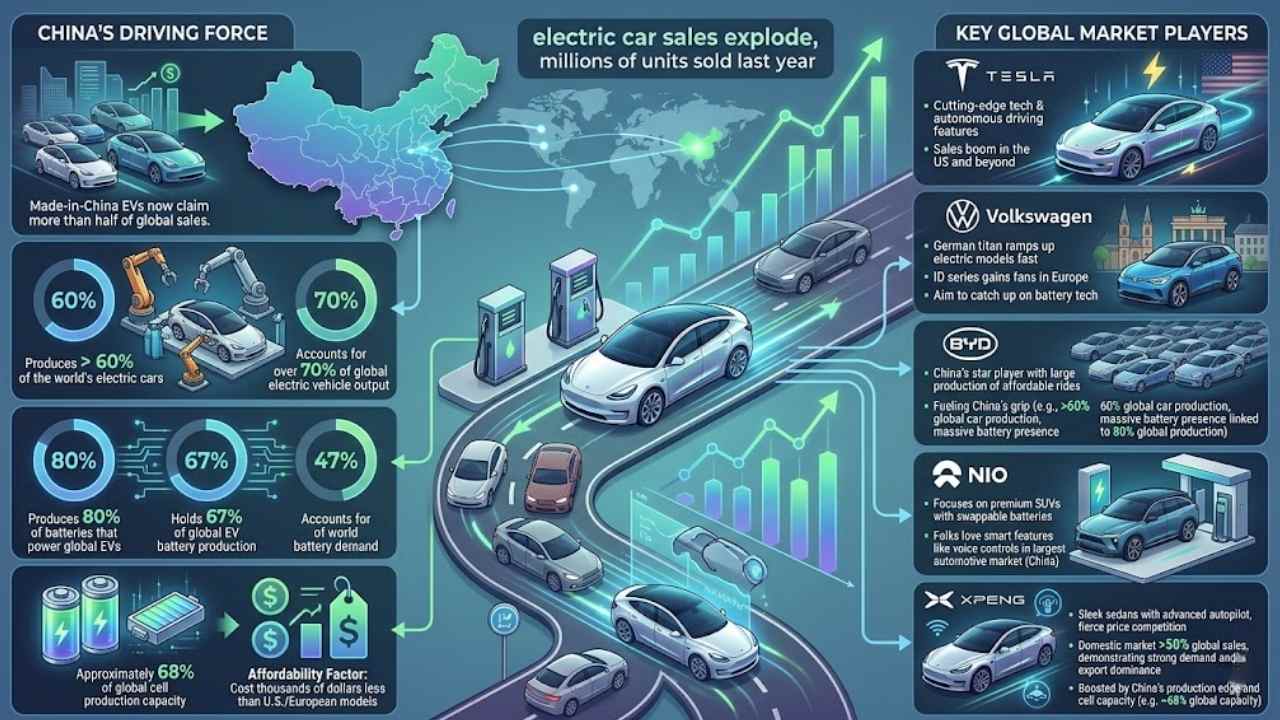
Electric car sales explode around the world, folks, as folks ditch gas guzzlers for cleaner rides, pushing the industry to new heights with millions of units sold last year alone. Key automakers like Tesla, Volkswagen AG, and General Motors battle for top spots, you know, shaping trends from sleek sedans to sturdy SUVs that keep drivers buzzing with excitement.
Growth of the EV industry
The global EV market has exploded in recent years, and China’s role fuels much of that surge.
| Growth Aspect | Key Details |
|---|---|
| General Industry Boom | You see, the EV sector races ahead like a sports car on an open highway. Sales worldwide keep climbing fast. Made-in-China EVs now claim more than half of those global sales, folks. |
| Production Stats | China leads the pack, producing more than 60 percent of the world’s electric cars. They crank out over 70 percent of global EV output too. Imagine that massive scale, it’s like they’ve cornered the market on wheels. |
| Battery Dominance | Batteries power this growth, right? China makes 80 percent of the batteries that run electric vehicles around the globe. They hold 67 percent of global EV battery production, and snag 47 percent of world battery demand. |
| Cell Capacity Edge | Zoom in on cells, those key battery parts. China boasts about 68 percent of global cell production capacity. That edge keeps prices low and innovation high, helping the whole industry zoom forward. |
| Market Share Insights | China’s home turf, the world’s largest automotive market, drives huge demand. Their domestic sales alone account for more than half of global EV sales. Exports add to that dominance, making waves everywhere. |
| Affordability Factor | Chinese electric vehicles cost thousands of dollars less than U.S. or European models. That pricing, like a bargain hunter’s dream, draws buyers in droves and sparks wider adoption. |
Key players in the global EV market
You see, major companies drive the global EV market, with China stealing the show through its giants.
| Key Player | Quick Scoop on Their Role |
|---|---|
| Tesla | Elon Musk’s outfit leads with cutting-edge tech. They push autonomous driving features hard. Sales boom in the US and beyond. |
| Volkswagen | Germany’s auto titan ramps up electric models fast. Their ID series gains fans in Europe. They aim to catch up on battery tech. |
| BYD | China’s star player cranks out affordable rides. They help fuel China’s grip, where made-in-China EVs now make up more than half of global sales. China produces more than 60 percent of the world’s electric cars, and this company plays a big part. They dominate in lithium-ion battery packs too, since China produces 80 percent of the batteries that power electric vehicles globally. |
| NIO | This Chinese innovator focuses on premium SUVs with swappable batteries. Folks love their smart features, like voice controls. China accounts for 47% of world battery demand, and NIO taps right into that. Their cars shine in China’s vast market, the world’s largest automotive market, providing a vast consumer base for EV companies. |
| Xpeng | Another Chinese contender builds sleek sedans with advanced autopilot. They compete fiercely on price. China’s domestic market accounts for more than half of global EV sales, demonstrating both domestic demand and export dominance. Xpeng boosts that edge. Plus, the electric vehicle industry in China accounts for more than 70% of global production of electric vehicles. China produces 67% of global electric vehicle batteries, and has approximately 68% of global cell production capacity, giving Xpeng a solid supply chain. |
China’s Role in EV Manufacturing
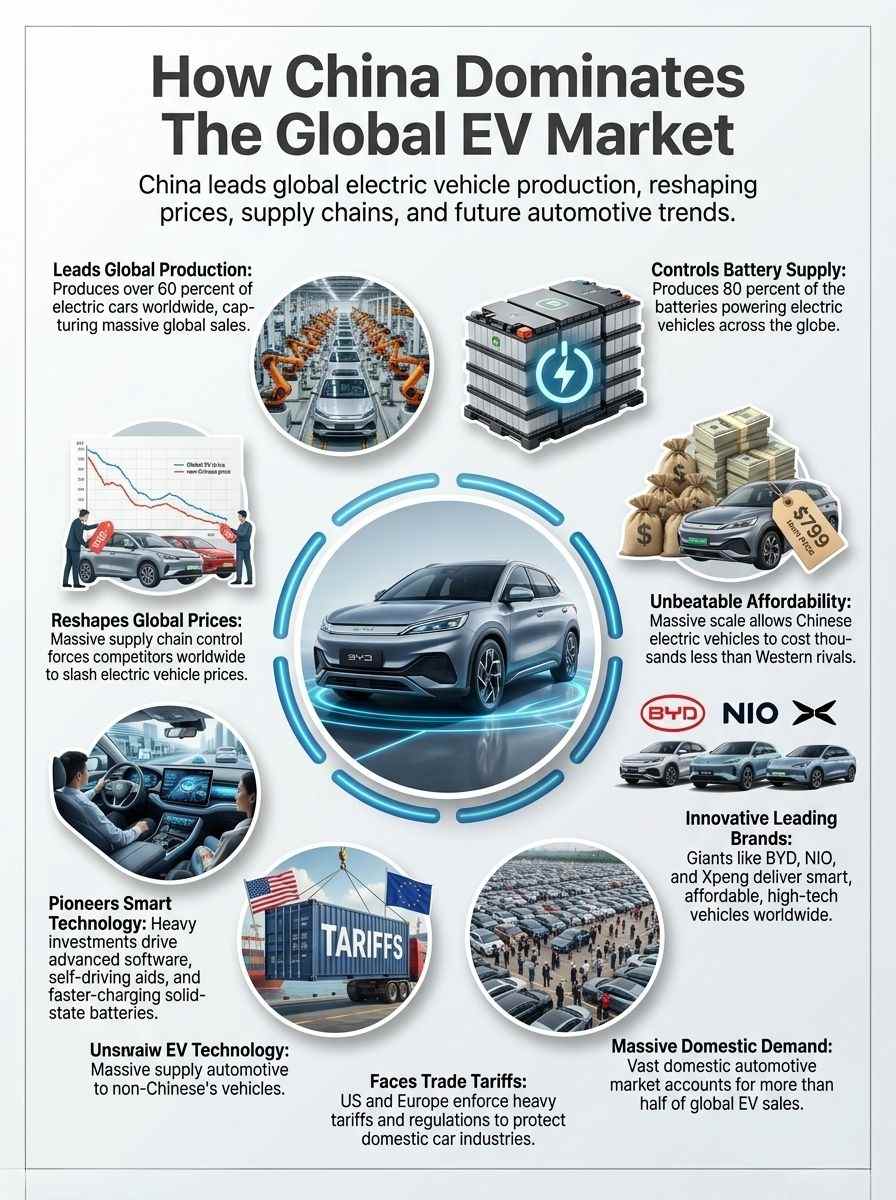
China cranks out over half of all electric cars sold around the world, folks, thanks to factories buzzing in places like Jinhua New Energy Vehicle Town. Chinese firms also rule the lithium-ion battery game, grabbing cobalt from spots like the Democratic Republic of the Congo to keep costs low and tech sharp.
Percentage of global EV production led by China
Let’s talk about how much of the global EV production China leads, folks. It’s like they’re the big fish in a growing pond, cranking out cars that zoom without gas.
| Key Fact | Details |
|---|---|
| Global EV Production Share | Factories in China make more than 60 percent of the world’s electric cars. That puts them way ahead. |
| Even Higher Estimates | The EV industry there handles over 70 percent of global production. Imagine that scale, like a giant assembly line that never stops. |
| Sales Dominance | Made-in-China EVs grab more than half of global sales. You see them everywhere now. |
| Domestic Market Power | Their home market takes more than half of all EV sales worldwide. It shows strong demand inside and big exports outside. |
Dominance in battery production and supply chain
China leads the pack in battery production for electric vehicles, or EVs. Chinese automakers crank out 80 percent of the batteries that power EVs around the world. They hold about 68 percent of global cell production capacity, a huge edge in electric mobility.
China meets 47 percent of world battery demand all by itself. Government subsidies fuel this growth, pushing advancements in technology strategy. Include a vast supply chain, and you see why China produces 67 percent of global electric vehicle batteries.
This setup keeps costs low, like EVs that sell for thousands less than U.S. or European models. No wonder made-in-China EVs grab more than half of global sales.
Global EV outlook 2025 points to China’s grip on the supply chain, from raw materials to final assembly. Think about it, folks, this dominance shapes environmental policies in places like the European Union and Canada.
Chinese firms control key parts, influencing prices worldwide and even product development at companies like Hyundai Motor Company or BMW. They supply batteries to players such as Stellantis N.V.
and Geely Automobile, building trust step by step. Tariffs from leaders like Joe Biden or Donald Trump try to slow this, but the momentum rolls on. In Mexico and the United Kingdom, Chinese EVs pop up more often, thanks to smart growth strategy.
World Resources Institute notes how this affects electric bus sales, too.
China’s battery dominance is reshaping global car markets, making electric mobility more accessible, says Joel Jaeger from the World Resources Institute.
Factors Behind China’s EV Market Dominance
China powers ahead in the EV race with strong government backing that fuels rapid growth, like a coach cheering on a star athlete. Add a massive home market hungry for affordable rides, plus tech leaps that keep prices low, and you see why rivals scramble to catch up—want the full story?
Governmental support and policies
Government gives strong backing to electric vehicles in China. Leaders push policies that boost production and sales. They offer big subsidies to companies like BYD and NIO. This helps firms grow fast.
Look at the numbers: China makes over 60 percent of the world’s electric cars. It also produces 80 percent of the batteries that power EVs globally. These stats show how policies drive success.
Even folks at UC Berkeley Haas School of Business note this edge, like in talks about global markets.
Policies create a huge home market too. China’s the largest auto market on the planet. This base lets firms test and sell EVs at low prices. Think about it, like a giant playground for innovation.
Leaders tie this to climate goals, similar to what Gavin Newsom pushes in California or Luiz Inacio Lula da Silva discusses at COP30. Yet China’s moves account for more than half of global EV sales.
They hold 68 percent of world cell production capacity. Tariffs from places like Europe challenge this, but the support keeps China ahead.
Large domestic consumer base
China boasts the world’s largest automotive market. This gives EV makers a huge pool of buyers right at home. Think about it, like having a giant backyard party where everyone wants your lemonade.
China’s domestic market accounts for more than half of global EV sales. That shows strong demand inside the country. It also boosts export power for firms like BYD and NIO.
Local buyers snap up electric vehicles fast. They fuel growth for companies facing rivals like Toyota and Volvo Cars. With such a vast consumer base, Chinese firms test new tech on millions.
This edge helps them lead in battery production too. China produces over 60 percent of the world’s electric cars. Plus, it makes 80 percent of EV batteries globally.
Competitive pricing and affordability
Chinese electric vehicles, or EVs, hit the sweet spot on price, folks. They cost thousands of dollars less than models from the U.S. or Europe, like those from Rivian or Lucid Motors.
Imagine, you snag a solid ride without breaking the bank, thanks to China’s edge in production. That low cost stems from their massive output, where made-in-China EVs now make up more than half of global sales.
GWM and other players keep things affordable, drawing in buyers worldwide.
Affordability ties right into China’s dominance, with their domestic market fueling over half of global EV sales. They produce more than 60 percent of the world’s electric cars, slashing prices through scale.
Al Jazeera reports often highlight this gap, showing how firms like Tata or Renault face stiff competition. Addisu Lashitew, in the California Management Review, points out the smart strategies at play.
You feel the pull, right, when innovation meets wallet-friendly deals.
Advancements in technology and innovation
China pushes electric vehicles forward with smart tech upgrades. They build better batteries that last longer and charge faster, folks. Imagine, like a race car tuning its engine for top speed, Chinese firms tweak designs to cut costs and boost performance.
They hold 80 percent of the world’s battery output, a feat that stems from bold research in materials. Engineers there mix new alloys, making cells lighter and more efficient. This edge lets them flood markets with affordable EVs.
Innovation flows from labs to factories, quick as a flash.
Folks see China’s EV makers leap ahead in software too. They add features like self-driving aids and app controls that wow drivers. Think of it as giving your car a brain upgrade, seamless and fun.
With 67 percent of global electric vehicle batteries under their belt, they test wild ideas others skip. Teams collaborate on solid-state tech, promising safer rides. This drive shapes electric vehicles worldwide, keeping prices low and options fresh.
Major Chinese EV Companies
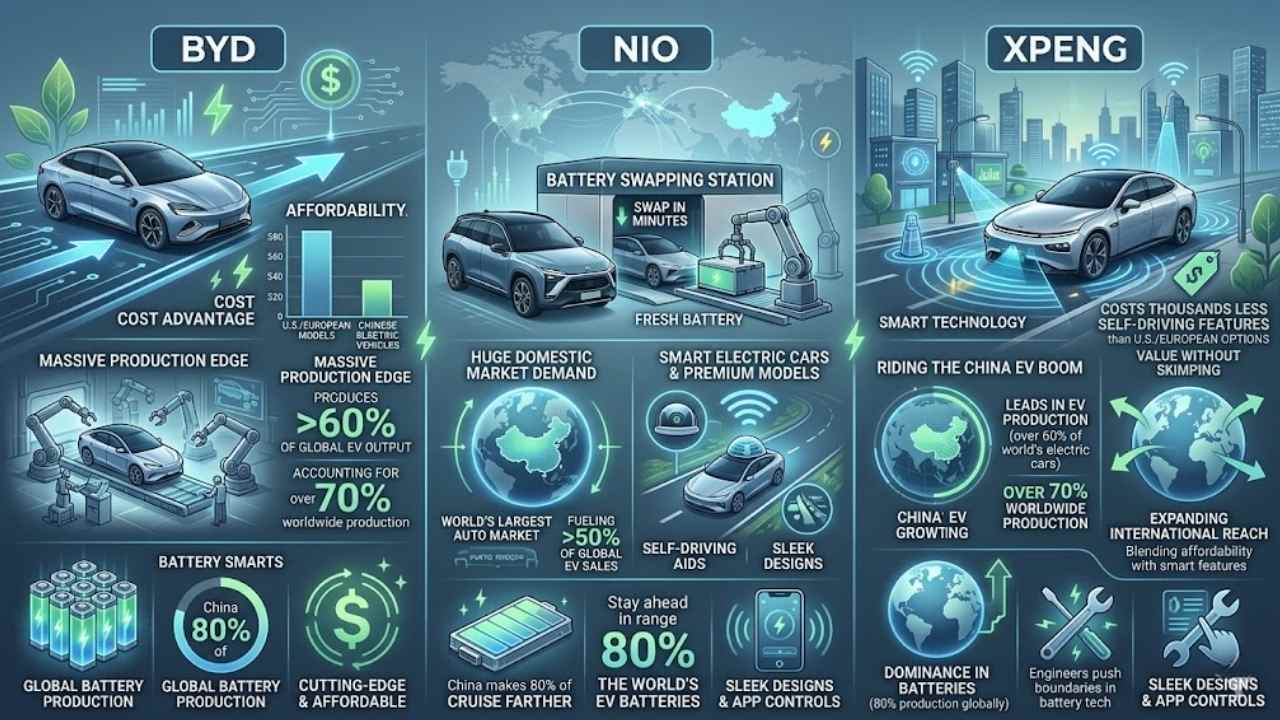
5. Major Chinese EV Companies: Imagine this, folks—powerhouse players in China’s electric vehicle scene, like BYD with its blade battery tech, NIO rolling out swappable power packs, and Xpeng pushing smart sedans with autopilot features, are revving up the industry like a well-oiled machine, making waves that ripple across the globe, so keep reading to see how they’re steering the future.
BYD
BYD stands out as a powerhouse in the electric vehicles (EVs) world. This company leads the charge with affordable options that beat U.S. and European models by thousands of dollars.
Picture a carmaker that pumps out vehicles at low costs, thanks to China’s massive production edge. BYD taps into the nation’s grip on over 60 percent of global EV output. They build cars that fit right into China’s huge domestic market, which grabs more than half of worldwide EV sales.
Folks love BYD for its battery smarts too. The firm cranks out a big share of the batteries that power EVs everywhere. China handles 80 percent of global battery production, and BYD rides that wave.
Their tech keeps prices low, making EVs a steal for buyers. Imagine zipping around in a ride that’s both cheap and cutting-edge, all from this Chinese giant.
NIO
NIO stands out as a top player in China’s EV boom. This company focuses on smart electric cars with cool features like battery swapping stations. You know, swap out a low battery for a full one in minutes, like grabbing a fresh coffee on the go.
NIO sells premium models that rival big names abroad, yet they keep prices lower thanks to China’s edge in costs. Chinese EVs, including NIO’s, cost thousands less than U.S. or European ones, drawing buyers worldwide.
Folks love NIO for its tech savvy approach. They build cars with self-driving aids and sleek designs that turn heads. In China’s huge market, the world’s largest for autos, NIO taps into massive demand.
That helps them push more than half of global EV sales from made-in-China rides. Plus, with China making 80 percent of the world’s EV batteries, NIO stays ahead in power and range.
Imagine cruising farther on a single charge, all while saving cash.
Xpeng
Xpeng stands out as a key player in China’s EV boom. This company focuses on smart electric cars with cutting-edge tech, like self-driving features that wow drivers. Picture zipping through city streets while your car handles the tough parts, almost like having a trusty sidekick.
Xpeng sells models that compete head-on with global giants, and they tap into China’s vast market, where the domestic scene makes up more than half of worldwide EV sales. Their cars often cost thousands less than U.S. or European options, drawing in buyers who want value without skimping on innovation.
Engineers at Xpeng push boundaries in battery tech, helping China produce over 60 percent of the world’s electric cars. They build vehicles that rely on the nation’s dominance in batteries, with China churning out 80 percent of those power sources globally.
Xpeng’s growth mirrors how Chinese firms lead in EV production, accounting for more than 70 percent worldwide. Folks love their sleek designs and app controls, making daily drives feel fun and easy.
As China expands its EV reach, Xpeng eyes more international spots, blending affordability with smart features that keep them ahead.
Challenges Facing Chinese EVs in Global Markets
Chinese electric vehicle makers face tough rules in places like the US and Europe, where safety standards and data privacy laws slow their entry. Tariffs jack up prices, and building trust with buyers abroad feels like climbing a steep hill, especially when folks worry about quality and support.
Regulatory issues in the US and Europe
Chinese EV makers face tough rules in the US and Europe, folks. Governments there worry about unfair competition from low-cost imports. Take those made-in-China EVs, they cost thousands less than local models.
This sparks tariffs and trade barriers to protect home industries. Picture a giant like BYD trying to sell cars stateside; strict safety standards and data privacy laws slow them down.
Europe slaps on extra duties too, aiming to level the playing field. With China producing over 60 percent of the world’s electric cars, these hurdles make sense, right? Officials fear losing jobs and tech edge.
Add in consumer trust issues, and it’s a bumpy road. US regulators probe battery supply chains, since China makes 80 percent of global EV batteries. Europe pushes for greener manufacturing rules, hitting Chinese firms hard.
Imagine shipping cars that dominate half of worldwide sales, only to hit a wall of red tape. Tariffs hike prices, making those affordable rides less of a steal abroad. Yet, companies like NIO push forward, adapting to these demands with clever tweaks.
It’s like dodging potholes on a highway to global success.
Tariffs and trade barriers
Tariffs hit Chinese EV makers hard, folks. The US and Europe slap on these extra fees to protect their own car industries. Think of it like a toll booth that jacks up prices for imports. China produces more than 60 percent of the world’s electric cars, after all. They make 80 percent of the batteries that power EVs globally. No wonder trade barriers pop up; leaders worry about jobs at home. These rules slow down Chinese brands from flooding markets abroad.
Trade walls create real headaches for expansion. Picture BYD or NIO trying to sell affordable rides overseas, only to face steep duties. China’s domestic market grabs more than half of global EV sales, showing huge demand inside. Yet outside, tariffs boost costs by thousands. Consumers eye these deals but hesitate over politics. Barriers stem from fears of supply chain control, since China holds 68 percent of global cell production capacity. It keeps the game competitive, sure, but limits choices for you and me.
Consumer trust and brand recognition
Chinese EV makers face a tough climb in winning over folks outside their home turf, especially regarding trust. You see, buyers in the US and Europe often stick with familiar names like Tesla or Ford, you know, the ones they’ve grown up with.
But here’s the kicker, China produces more than 60 percent of the world’s electric cars and 80 percent of the batteries that power them globally. That means a ton of innovation comes from there, yet many consumers hesitate.
They worry about quality, safety, or even data privacy in these high-tech rides. Imagine you’re eyeing a sleek BYD model that costs thousands less than a US counterpart, but that nagging doubt creeps in, “Is it as reliable?” It’s like trying a new coffee shop when your go-to spot never lets you down.
Building brand recognition takes time, and Chinese firms like NIO and Xpeng know this all too well. They pour resources into flashy ads and partnerships, aiming to show they’re not just cheap options but real contenders.
China accounts for 47 percent of world battery demand and has about 68 percent of global cell production capacity, which highlights their tech edge. Still, empathy here, it’s frustrating for these companies when tariffs and regs slow their roll abroad.
Consumers might chuckle at the idea of a “made in China” label on their driveway, but data shows made-in-China EVs now make up more than half of global sales. Chat with friends, and you’ll hear mixed stories, some rave about the affordability, others hold back due to old stereotypes.
Implications of China’s EV Dominance
China’s control over EV parts forces companies worldwide to rethink their supply lines, like a game of musical chairs where one player holds all the seats. This power slashes electric car costs everywhere, putting affordable rides in driveways, yet it raises eyebrows about fair play in trade.
Impact on global supply chains
China controls over 70 percent of global electric vehicle production, folks. This grip shapes supply chains around the world. Companies everywhere depend on Chinese parts, like batteries that power EVs.
China makes 80 percent of those batteries. Imagine your favorite carmaker scrambling if shipments slow down. That reliance can cause delays and higher costs for everyone. Made-in-China EVs now claim more than half of global sales, too.
Their low prices, thousands of dollars below U.S. or European models, push competitors to rethink strategies. Think of it as a giant wave reshaping the auto industry’s shore.
Global firms feel the pinch from China’s 68 percent hold on battery cell production capacity. Supply chains stretch thin across borders, vulnerable to disruptions. China accounts for 67 percent of EV batteries worldwide, after all.
This dominance influences prices and availability everywhere. Picture a domino effect: one policy shift in China ripples out to factories in Detroit or Berlin. The vast domestic market in China, the world’s largest for cars, fuels this power.
It drives export strength and keeps innovation humming.
Influence on EV prices worldwide
You see, Chinese makers crank out electric vehicles that cost thousands less than U.S. or European ones, and that shakes things up for buyers everywhere. They produce over 60 percent of the world’s electric cars, plus 80 percent of the batteries that power them.
Imagine a giant factory humming away, churning out affordable rides that force competitors to slash prices, like a domino effect in the auto world. Made-in-China EVs grab more than half of global sales now, thanks to their edge in battery tech, where they hold 68 percent of cell production capacity.
Prices drop worldwide as this flood of cheap options hits the market, making EVs feel more like a steal than a splurge.
Folks, with China accounting for 67 percent of global electric vehicle batteries and 47 percent of world battery demand, suppliers everywhere scramble to match those low costs. Their vast home market, the biggest in autos, fuels this by testing innovations on a huge scale before exports.
Picture your neighbor snagging a budget EV that undercuts fancy brands, pushing the whole industry toward wallet-friendly deals. Exports show both strong local demand and global reach, as their EVs make up over 70 percent of worldwide production.
This dominance ripples out, keeping prices in check for drivers from New York to Nairobi.
The Future of China’s EV Industry
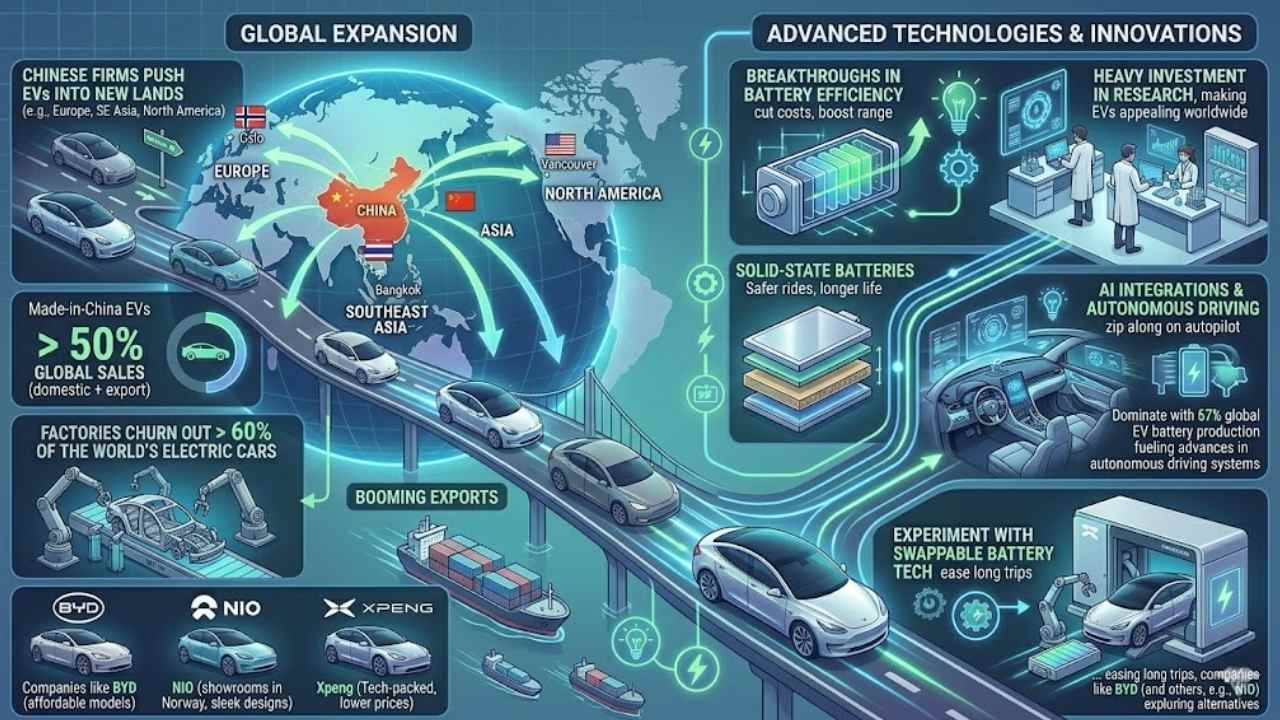
China plans to push its electric cars into new markets around the world, like Europe and Southeast Asia, with fresh models that catch eyes and wallets. Innovations keep rolling out, from smarter lithium-ion batteries to self-driving features, making folks wonder what’s next in this fast ride.
Expansion into international markets
Chinese firms push their electric cars into new lands. They sell these vehicles in Europe, Asia, and even North America. Made-in-China EVs grab more than half of global sales now. Think of it like a wave crashing over shores, companies such as BYD ship affordable models to eager buyers abroad.
NIO sets up showrooms in Norway, you know, drawing crowds with sleek designs. Xpeng follows suit, offering tech-packed rides that undercut rivals’ prices by thousands.
Exports boom as these brands tackle fresh challenges. Factories in China churn out over 60 percent of the world’s electric cars. They supply 80 percent of global batteries too. Imagine chatting with a friend over coffee, “Hey, that cheap EV from across the ocean just saved me big bucks.” Domestic sales in China account for more than half of all EV buys worldwide, yet firms eye bigger prizes overseas.
They innovate fast, adapting to local tastes, and keep costs low for everyone.
Continued innovations in EV technology
China keeps pushing the envelope in EV tech, folks. They lead with breakthroughs in battery efficiency that cut costs and boost range. Think about it, their firms crank out 80 percent of the world’s EV batteries, setting the stage for smarter, faster-charging options.
Engineers there tinker with solid-state batteries, which promise safer rides and longer life. This edge comes from heavy investment in research, making EVs more appealing worldwide.
Picture a future where cars zip along on autopilot, thanks to China’s AI integrations. They dominate with 67 percent of global EV battery production, fueling advances in autonomous driving systems.
Companies like BYD experiment with swappable battery tech, easing long trips. All this innovation stems from their massive market, where over half of global EV sales happen at home.
It sparks ideas that ripple out, keeping China ahead in the game.
Final Thoughts
China leads the global EV market with massive production shares, top battery control, and key players like BYD, NIO, and Xpeng driving innovation. These factors, backed by strong government policies and a huge home market, make affordable electric cars a reality for buyers everywhere.
Think about this: how might this shift affect your next vehicle choice, or even push local makers to step up? Such dominance reshapes supply chains and drops prices worldwide, solving big issues in clean transport.
Check out reports from the International Energy Agency for deeper insights, and get ready to embrace the electric future with excitement.
Frequently Asked Questions (FAQs) About China’s EV Market Dominance
1. Why is China leading the global EV market?
China’s got the edge with massive battery production and low-cost manufacturing, making their electric vehicles a steal for buyers worldwide. It’s like they’re the hare in the race, leaving others in the dust. Plus, government subsidies keep the momentum going strong.
2. How does China dominate EV sales around the world?
They flood markets with affordable models that appeal to everyday drivers. This strategy turns heads and boosts their share fast.
3. What role do Chinese companies play in EV tech?
Firms like BYD and NIO innovate with cutting-edge batteries and smart features, outpacing rivals. Think of it as them holding the aces in a high-stakes poker game. Their tech exports shape global trends, too.
4. Can other countries catch up to China’s EV lead?
It’s tough, but investing in local supply chains might help. China controls key minerals, so competitors need clever plays to level the field.





















