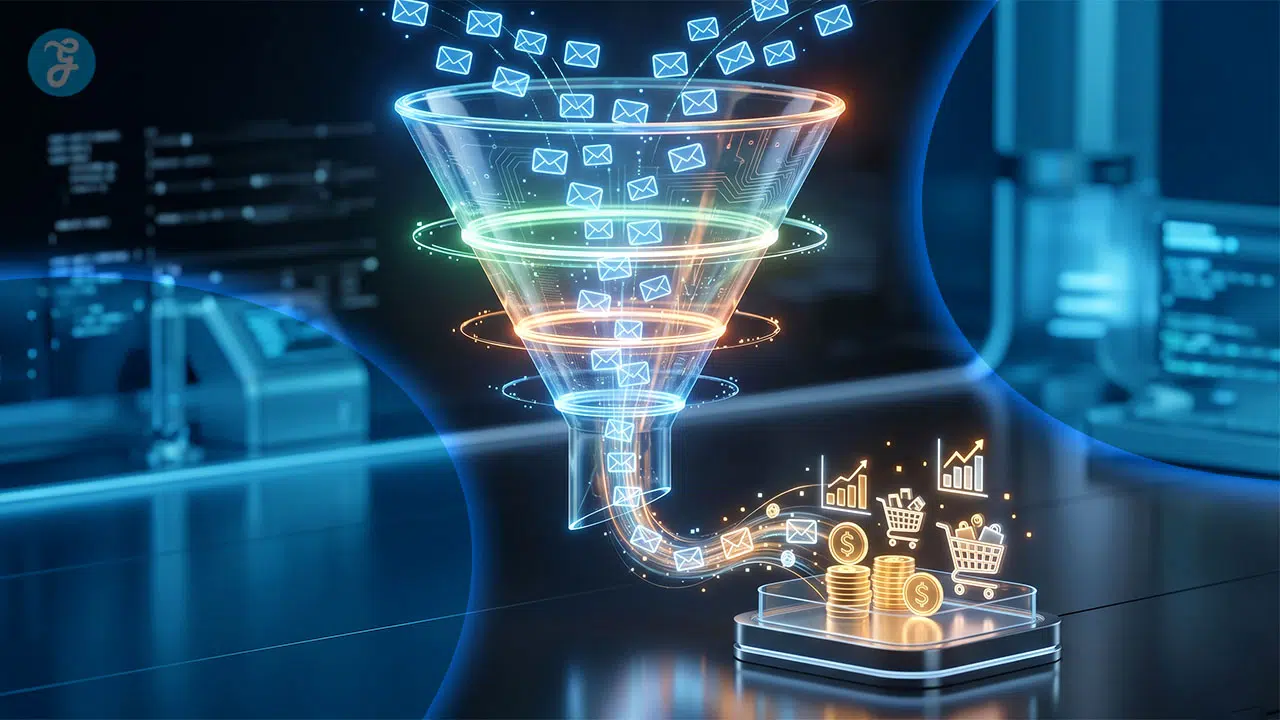
A busy business owner like you, juggling endless tasks while watching potential sales slip away. Customers visit your site, add items to their carts, but then vanish without buying.
Or leads sign up for your newsletter, only to ignore future messages. This happens all the time in ecommerce and digital marketing, leaving revenue on the table. It’s frustrating, right? Like chasing a squirrel up a tree, you put in the effort but get nowhere fast.
Did you know automated emails generate 320% more revenue than old-school manual campaigns? That’s a game-changer for revenue teams aiming to boost customer lifetime value and conversion rates.
Breaks down email automation workflows step by step. You’ll learn about types like welcome series workflows and abandoned cart recovery workflows, plus tips on behavioral triggers and A/B testing to personalize content and drive real results.
What Are Email Automation Workflows?
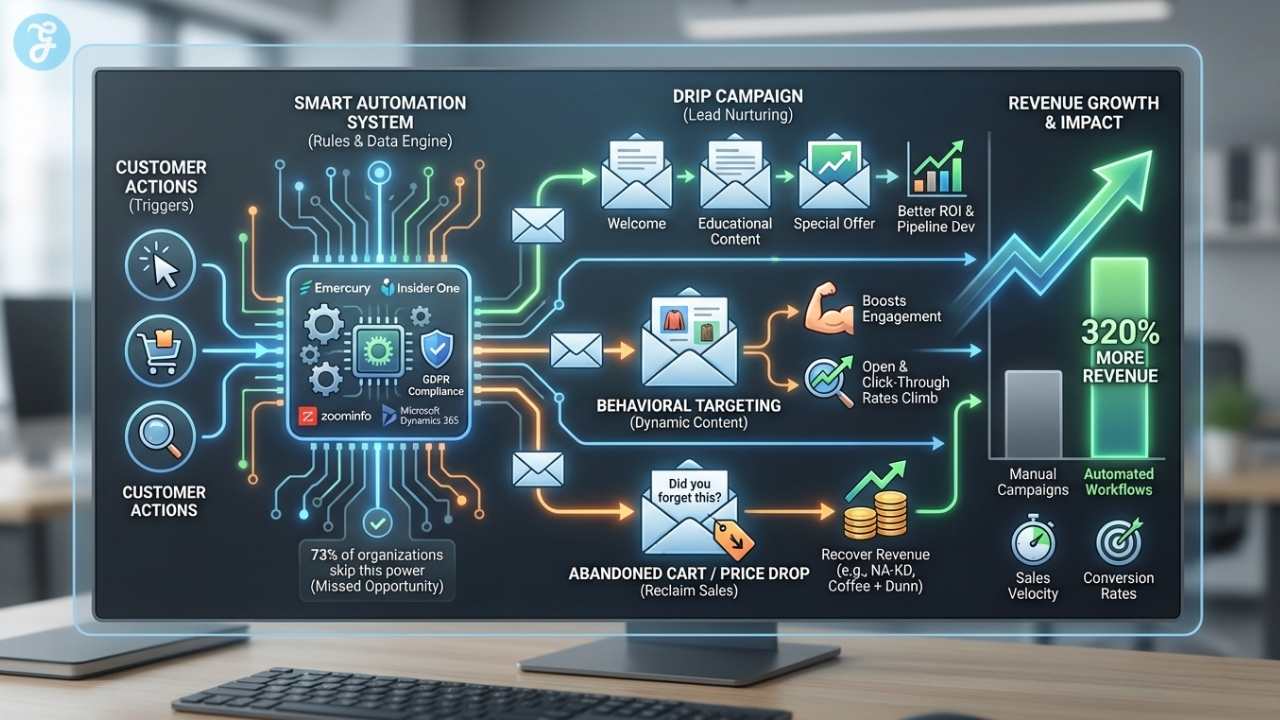
Email automation workflows act as smart systems in email marketing. They send messages based on customer actions and set rules. Think of them like a helpful assistant who knows just when to chime in.
These setups trigger emails automatically, boosting customer engagement without constant manual work. Tools like Emercury and Insider One make this process smooth for businesses. Automated email workflows drive revenue growth by targeting behaviors at the right moments.
Stats show they generate 320% more revenue than old-school manual campaigns. Many firms miss out, though; 73% of organizations skip email marketing automation despite its power. Lead nurturing thrives here, with better ROI than other channels.
Imagine reclaiming lost sales through quick, personalized nudges. Email deliverability stays strong when you follow GDPR compliance. Dynamic content keeps things fresh and relevant.
Email automation workflows that follow best practices can quietly drive consistent revenue for businesses.
Firms see real impact on conversion rates and sales velocity. Picture a drip campaign that guides leads through the customer journey. Platforms such as Zoominfo and Microsoft Dynamics 365 Customer Insights – Journeys help with data quality.
Behavioral targeting turns casual browsers into loyal buyers. Open rates climb, and click-through rates follow suit. Revenue per email jumps when you nurture leads well. B2C brands like NA-KD use these for abandoned cart workflows.
They recover revenue from forgotten carts. Automation strategies like this speed up pipeline development. Coffee + Dunn shows how targeted price drop alerts engage customers again.
The Business Impact of Email Automation
Automated emails boost revenue in big ways. They generate 320% more cash than old-school manual campaigns. Businesses see this spike because automation hits the right spots at perfect times.
Picture a leaky bucket; drip campaigns plug those holes by nurturing leads through customer journeys. You set up welcome email workflows, and suddenly new subscribers feel valued. Lead qualification happens fast, turning prospects into buyers.
Despite all this power, 73% of companies skip email automation. They miss out on steady gains. Think of it as a silent engine; workflows like re-engagement and win-back pull inactive folks back in.
Content creation ties into this, crafting messages that resonate. Amp emails add interactive flair, boosting engagement. Customer experiences improve, and sales velocity picks up speed.
Pipeline development strengthens too. Automation outshines other channels for ROI, especially in lead nurturing.
Smart segmentation makes emails personal, driving more revenue. Target price drops and back-in-stock alerts nudge shoppers to buy. Pre- and post-purchase feedback workflows gather insights, refining your approach.
ABM strategies focus on key accounts, amplifyingsev boosts precision. Imagine a garden; you plant seeds with post-purchase follow-ups, and they grow into loyal customers. Re-engagement workflows revive dormant lists, like a wake-up call for sleepy subscribers.
Conversion rates climb as these automations guide folks along. Businesses leverage this for consistent revenue streams. Drip campaigns build trust over time. Lead nurturing accelerates sales.
You measure impact on every step. Automation quietly works in the background, delivering results. Remix old content into fresh messages. It all adds up to better bottom lines.
Types of Triggers in Email Automation Workflows
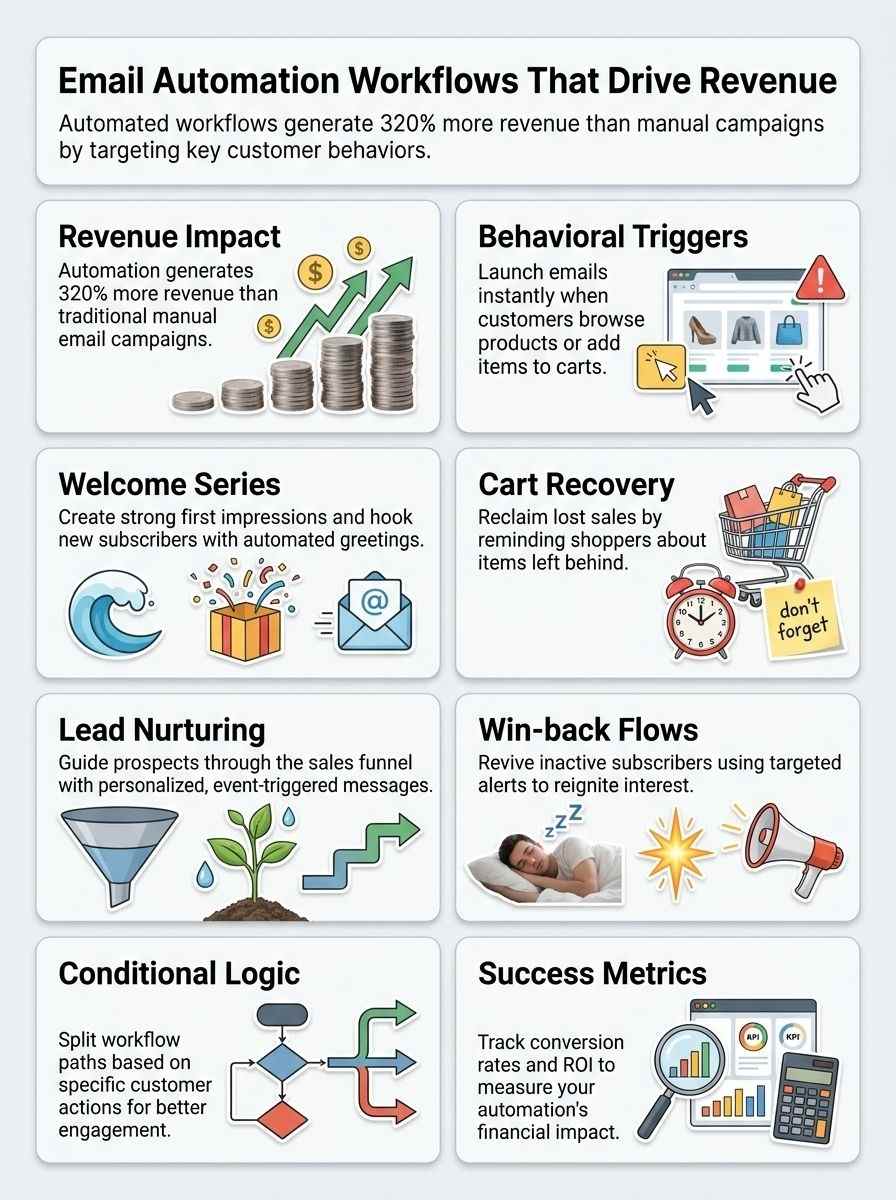
Triggers spark your email flows into action, kicking off messages based on customer clicks or scheduled dates, much like a watchful sidekick who jumps in at the perfect moment—curious how tools like Klaviyo turn open-rate signals and anniversary reminders into revenue gold? Stick around for the details.
Behavioral Triggers
Behavioral triggers kick in when customers take specific actions, like browsing products or adding items to a cart. These sparks automate emails right at the perfect moment. Picture a shopper who leaves your site; an abandoned cart email swoops in to nudge them back.
Companies see huge wins here, with automated emails generating 320% more revenue than manual ones. Smart audience segmentation makes these triggers shine, sending targeted price drop and back-in-stock alerts that feel personal.
You know that friend who texts you just when you need it? That’s the vibe. Despite the power, 73% of organizations skip email automation, missing out on easy revenue boosts.
Email automation workflows that follow best practices can quietly drive consistent revenue for businesses.
Email marketers use tools like Klaviyo or ActiveCampaign to set up these flows. They rely on concepts such as event tracking and user behavior data. For instance, a win-back workflow targets inactive folks, pulling them back with timely offers.
Lead nurturing thrives on these triggers too, turning casual visitors into loyal buyers. Post-purchase follow-ups build on that first buy, encouraging repeats.
Time-Based Triggers
Time-based triggers kick in emails at specific moments or after set periods. Imagine, you sign up for a newsletter, and bam, a welcome series lands in your inbox right on schedule.
These triggers rely on dates, like birthdays or anniversaries, or delays, such as a week after a purchase. Businesses love them because automated emails generate 320% more revenue than old-school manual ones.
You set the clock, and the system handles the rest, driving consistent sales without lifting a finger. Think targeted price drop and back-in-stock alerts that notify customers just when items become available again.
Smart folks use time-based flows for re-engagement campaigns, one of three must-have automations to wake up inactive buyers. Email marketing automation builds these as event-triggered workflows based on rules you define.
Despite the wins, 73% of organizations skip out on this goldmine. Add some conditional logic, and you personalize content, boosting ROI way above other channels. Lead nurturing thrives here too, with segmentation creating emails that feel custom-made, engaging folks and speeding up sales.
High-Converting Email Automation Workflows
Setting up smart email sequences that turn casual browsers into loyal buyers, like those targeted price drop and back-in-stock alerts that nudge customers just when they need it—stick around to see how these game-changers can boost your sales.
Welcome Series Workflow
Welcome series workflows kick off right after someone signs up for your emails. They send a string of automated messages to greet new subscribers and build that key first impression.
Fact is, these emails matter a ton for revenue, since they set the stage for lasting customer ties. Automated setups like this generate 320% more revenue than old-school manual campaigns.
Businesses use them to share tips, offers, and even targeted price drop and back-in-stock alerts to hook folks early. Smart audience segmentation lets you personalize content, you know, making each message feel just right for the reader.
This approach boosts engagement and drives sales velocity from the get-go.
Picture a new customer joining your list, excited but unsure. Your welcome series jumps in with timely emails based on their actions, like browsing habits or sign-up details. It follows best practices to nurture leads quietly and push consistent revenue.
Despite the wins, 73% of organizations skip email automation altogether. They miss out on top ROI from any marketing channel. Tools like Mailchimp or Klaviyo handle these workflows smoothly, with event-triggered rules that respond to customer moves.
Add in some humor, say a fun story about a shopper’s “aha” moment with your brand, and you keep things light while ramping up conversions. Segmentation guides it all, creating campaigns that truly connect and spark buys.
Abandoned Cart Recovery Workflow
Shoppers often fill carts online, then leave without buying. Businesses lose big on these missed chances. Abandoned cart recovery workflows step in to fix that. They send automated emails right after someone ditches their cart.
These messages remind customers about items left behind. Add targeted price drop and back-in-stock alerts to sweeten the deal. This strategy recovers immediate revenue from potential lost sales.
It acts like a friendly nudge, hey, you forgot something cool. Automated emails generate 320% more revenue than manual ones. Email automation delivers greater ROI than other marketing channels for this.
Smart audience segmentation makes these workflows shine. Tailor messages based on what customers browsed. Use behavioral triggers to time emails just right. Follow best practices, and these workflows quietly drive consistent revenue.
Picture a customer getting an email with a discount on that shirt they eyed. They click back and complete the purchase. Re-engagement happens fast. Despite effectiveness, 73% of organizations skip email automation.
Don’t join them; set up this high-impact strategy now. It boosts conversion rates and sales velocity with ease.
Post-Purchase Follow-Up Workflow
Customers just bought from you, and now you keep the connection alive with smart emails. These workflows send thanks, tips on using the product, and even targeted price drop and back-in-stock alerts for related items.
Email automation like this drives consistent revenue quietly, as best practices show. It boosts pipeline development, lifts conversion rates, and speeds up sales velocity. Think of it as a friendly nudge that turns one-time buyers into loyal fans, all without extra effort from your team.
You set up these automations to nurture leads and push sales further. They deliver greater ROI than other marketing channels when you leverage them right for ongoing engagement. Imagine a customer gets an email about a price drop on something they viewed before; that sparks another purchase.
Businesses see automated emails generate 320% more revenue than manual ones. Keep it personal, and watch your revenue climb steadily.
Lead Nurturing Workflow
Email automation shines in lead nurturing. It builds a system of event-triggered workflows. These send emails based on customer actions and predefined rules. Think of it like a patient gardener, you plant seeds with initial contacts, then water them over time.
Automated emails generate 320% more revenue than traditional manual campaigns. Smart audience segmentation plays a key role here. You create personalized email campaigns that engage folks and drive revenue.
Imagine sending targeted price drop alerts to spark interest, or back-in-stock alerts to nudge leads forward. Email automation provides greater ROI than any other marketing channel when you leverage it for lead nurturing and sales.
Many organizations miss out, 73% have not implemented email automation yet. They overlook its proven effectiveness. Lead nurturing workflows follow best practices to quietly drive consistent revenue for businesses.
You see measurable impact on pipeline development, conversion rates, and sales velocity. Picture a sales funnel that speeds up, prospects turn into buyers faster with timely emails.
Use tools like ActiveCampaign for segmentation, or HubSpot for tracking behaviors. These help tailor messages that feel personal, hey, we get what you need. Automation turns cold leads warm, step by step, without constant manual effort.
Re-engagement Workflow
Inactive customers slip away like sand through your fingers, but re-engagement workflows pull them back into the fold. These campaigns rank as one of three must-have email automations that spark revenue from dormant subscribers.
Picture a loyal shopper who vanished months ago; a smart workflow sends targeted price drop and back-in-stock alerts to reignite their interest. Businesses tap this strategy to drive consistent revenue quietly, especially when 73% of organizations skip email automation altogether.
Smart audience segmentation plays a key role here, personalizing messages that feel like a friendly nudge from an old pal. Automated emails outshine manual ones, generating 320% more revenue through thoughtful touches.
You set up these workflows with behavioral triggers, watching for signs of disengagement like no opens or clicks in weeks. Time-based triggers kick in too, sending alerts on anniversaries or quiet periods.
Lead nurturing thrives in this setup, boosting conversion rates and sales speed. Cross this with post-purchase follow-ups, and you build a web of connections that keeps customers hooked.
Email automation offers top ROI among marketing channels, turning silent lists into active buyers with ease.
Advanced Workflow Strategies
Take your email game to the next level with smart tricks like conditional logic, where your messages branch out based on what folks click or buy, and cross-workflow integration that links tools like Zapier with platforms such as Mailchimp for seamless data flow—imagine your sales soaring as abandoned carts turn into quick wins, right? Stick around to see how these power moves can supercharge your revenue.
Conditional Logic and Branching
Email automation gets smarter with conditional logic and branching. You set rules that split your workflows based on what customers do. A subscriber clicks a link? Send them one email path.
They ignore it? Branch to another. This approach boosts engagement, and it drives revenue like nobody’s business. Think of it as a choose-your-own-adventure book for your marketing.
Smart audience segmentation plays a big role here. It lets you create personalized paths that feel just right. Automated emails generate 320% more revenue than manual ones, thanks to these clever splits.
You can use branching for targeted price drop and back-in-stock alerts. A customer eyes a sold-out item? Branch the workflow to notify them when stock returns. They get excited, you recover sales.
Email automation provides greater ROI than other channels when you leverage logic like this for lead nurturing.
Businesses often overlook these advanced tactics, but they pack a punch. Conditional logic checks conditions, like if someone bought before. Branching then sends customized content.
A fork in the road during a hike; one path leads to treasure, the other to a dead end. Your emails avoid the dead ends. Post-purchase follow-ups branch based on what they bought.
Did they grab shoes? Send care tips. Accessories? Offer upsells. This quietly drives consistent revenue. Re-engagement workflows branch to wake up inactive folks with special deals.
Despite 73% of organizations skipping automation, those who use it see big wins in conversion rates and sales velocity.
Cross-Workflow Integration
Cross-workflow integration links different email automation sequences, so they work together like a well-oiled machine. Imagine a customer adds items to their cart but leaves your site, that sparks an abandoned cart workflow.
Now, tie it to targeted price drop alerts, and you send a nudge when prices fall on those items. Or connect it with back-in-stock alerts, folks get pinged right when products return.
This setup boosts sales, as automated emails generate 320% more revenue than manual ones. Smart audience segmentation plays a big role here, it creates personalized campaigns that engage customers and drive revenue.
You see, email automation delivers measurable impact on pipeline development, conversion rates, and sales velocity. Businesses love this, it provides greater ROI than other marketing channels for lead nurturing and sales.
Think a lead nurturing workflow handing off to a re-engagement sequence, they flow seamlessly based on customer actions. Link a welcome series to post-purchase follow-ups, add conditional logic for branching paths.
Despite the proven effectiveness, 73% of organizations skip email automation, missing out on these connections. Email marketing automation uses event-triggered workflows, they send emails automatically from predefined rules.
Follow best practices, your workflows quietly drive consistent revenue. Abandoned cart emails recover lost sales, tie them to targeted price drop and back-in-stock alerts for extra punch.
Re-engagement campaigns wake inactive customers, integrate them across workflows to spark action.
Measuring the Success of Email Automation Workflows
Track open rates, click-through rates, and conversion metrics in tools like Google Analytics or Klaviyo to gauge how your workflows spike sales, hey, picture your emails as revenue engines revving up—keep reading to master these checks and boost your bottom line.
Key Performance Metrics
You know, measuring your email automation workflows keeps things on track for real revenue growth.
| Metric | What It Means | Why It Matters for Revenue |
|---|---|---|
| Open Rate | Percentage of folks who open your emails. | High rates show strong subject lines pull people in, setting up more clicks and sales. |
| Click-Through Rate | Share of opens that lead to clicks on links. | This signals engaging content, and automated emails boost it by 320% over manual ones for bigger revenue jumps. |
| Conversion Rate | Portion of clicks turning into actions like buys. | Email automation lifts conversion rates, speeding up sales velocity and pipeline growth. |
| Revenue Per Email | Dollars earned from each sent email. | Automated workflows generate 320% more revenue than old-school campaigns, proving their power. |
| Return on Investment (ROI) | Profit gained versus costs spent on automation. | Email automation offers the best ROI of any marketing channel, especially for lead nurturing and sales. |
| Bounce Rate | Emails that fail to deliver. | Low rates mean clean lists, so your messages reach more eyes and drive consistent revenue. |
| Unsubscribe Rate | People opting out after receiving emails. | Keep this low with smart segmentation; it ensures engaged audiences stick around for ongoing sales. |
Customer Journey Analysis
Email automation shapes how customers move through your sales funnel, and smart analysis spots the wins and fixes. Track their path from first click to final buy. Use tools like Google Analytics or Mailchimp reports to see where emails spark action.
Fact is, automated emails boost revenue by 320 percent over manual ones. They speed up sales velocity and lift conversion rates. Imagine a shopper gets a targeted price drop alert; analysis shows if that email nudges them to checkout, or if they drop off.
Segment audiences wisely to personalize, like sending back-in-stock alerts to eager buyers. This drives consistent revenue, quietly and effectively. Measure pipeline growth too; it reveals how nurturing leads turns browsers into loyal fans.
Dig into the data for real insights, folks. Spot patterns in customer behavior across workflows. For instance, re-engagement emails wake up inactive folks and pull in revenue from them.
Lead nurturing builds that pipeline strong. Greater ROI shines through when you analyze journeys; email beats other channels hands down. Envision this: a post-purchase follow-up email delights a buyer, and your metrics show repeat sales jumping.
Use conditional logic in reports to branch out insights. Cross-workflow ties show the full picture. Keep it simple; focus on key metrics that matter for your business goals.
Building Your First Email Automation Workflow
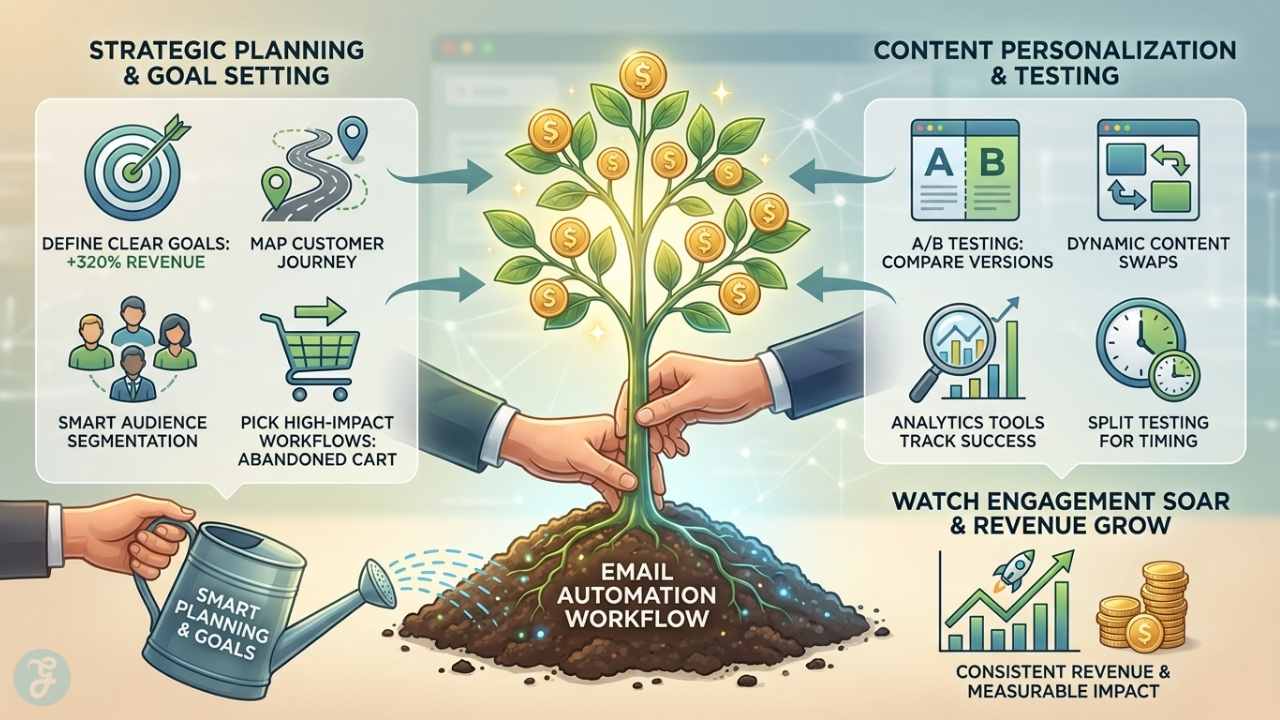
You’re setting up your first email automation workflow like planting a money tree that grows revenue, kick off with smart planning and clear goals, add personal touches to your messages, test them using email service providers, and watch engagement soar—stick around for the full how-to guide.
Strategic Planning and Goal Setting
Email automation starts with solid plans. You set goals to boost revenue through smart workflows.
- Kick off by defining clear goals for your email automation, like increasing sales by 320% more than manual campaigns, since automated emails generate that much extra revenue when you target the right customer actions.
- Map out your customer journey, you know, like plotting a road trip, to spot where workflows fit, such as welcome series that make a killer first impression and drive revenue from new sign-ups.
- Focus on smart audience segmentation, it’s like sorting friends into groups for the best party invites, which creates personalized campaigns that engage folks and push revenue higher.
- Pick high-impact workflows early, for example, abandoned cart recovery to snag back lost sales, because these represent a quick win for immediate revenue recovery.
- Include targeted price drop and back-in-stock alerts in your plan, they’re like secret weapons that notify customers at just the right moment, sparking buys and lifting your bottom line.
- Set up measurable targets, think conversion rates and sales velocity, since email automation delivers big impact on pipeline development when you track these metrics from the start.
- Factor in re-engagement campaigns, one of three essential automations that pull revenue from inactive customers, much like rekindling an old friendship to get the conversation flowing again.
- Weigh the fact that 73% of organizations skip email automation, so you gain an edge by planning yours now, quietly driving consistent revenue while others lag behind.
- Prioritize lead nurturing workflows in your strategy, they provide greater ROI than other channels when you leverage them for sales, turning prospects into paying customers step by step.
- Test content personalization right away, picture it as tailoring a suit to fit perfectly, which follows best practices and ensures emails resonate, boosting engagement and revenue.
Content Personalization and Testing
Content personalization turns your emails into customized messages that speak directly to each reader. Testing ensures these messages hit the mark and boost revenue through smart tweaks.
- Smart audience segmentation lets you group readers by behaviors or preferences, like sending targeted price drop and back-in-stock alerts to shoppers who viewed specific items. This approach follows key guidelines for creating personalized email campaigns that engage customers and drive revenue. Imagine a busy mom getting an alert for her favorite out-of-stock dress; she clicks buy right away. Businesses see measurable impact on pipeline development, conversion rates, and sales velocity with this tactic. Automated emails generate 320% more revenue than traditional manual campaigns when you segment wisely.
- A/B testing compares two email versions to see which performs better, such as testing subject lines or images in your welcome series. Readers love feeling seen, so test personalization elements like name usage or product recommendations. One company tested a post-purchase follow-up with custom upsell offers and recovered revenue from potential lost sales. Despite proven effectiveness, 73% of organizations skip email automation, missing out on greater ROI compared to other marketing channels. You can start small; send version A to half your list and track opens.
- Dynamic content swaps in real-time based on reader data, pulling in details like past purchases for a lead nurturing workflow. Imagine your email showing back-in-stock alerts only to those who abandoned carts with those items. This quietly drives consistent revenue for businesses, especially in re-engagement campaigns for inactive customers. Email marketing automation uses event-triggered workflows that send based on actions and rules. Test these swaps to refine what resonates, lifting engagement without guesswork.
- Multivariate testing checks multiple elements at once, like combining images, calls to action, and personalized greetings in an abandoned cart recovery workflow. You might discover that humorous anecdotes in the copy boost clicks by 15%. Automation provides greater ROI for lead nurturing and sales when you test properly. Think of it as a conversation; readers respond better to emails that feel personal, not generic blasts. Many firms overlook this, but you can leverage it for high-impact strategies.
- Analytics tools track open rates, click-throughs, and conversions to measure personalization success in your workflows. Use platforms like Google Analytics or Mailchimp to spot what drives revenue from welcome series or re-engagement efforts. One anecdote: a retailer tested targeted alerts and saw sales velocity jump. Email automation delivers measurable impact, yet 73% of organizations haven’t implemented it. Examine data weekly; adjust content to keep readers hooked and buying.
- Split testing for timing sends emails at different hours to find the sweet spot for reader engagement. For instance, test a time-based trigger for post-purchase follow-ups in the evening versus morning. Personalization shines here, as welcome series emails make the first impression that matters most for revenue generation. Abandoned cart emails recover immediate revenue, but timing tests amplify that. Automation workflows follow best practices to drive consistent revenue quietly.
Final Thoughts
You’ve seen how email automation workflows spark revenue with triggers like behavioral actions and time-based events, plus strategies from welcome series to re-engagement campaigns.
These setups prove simple to launch, hey, no need for tech wizardry, just pick your goals and let the system hum along efficiently. Imagine, businesses rake in 320% more cash from automated emails than old-school blasts, turning lost carts into gold and nurturing leads like a pro gardener.
Check out tools like Mailchimp or Klaviyo for easy starts, and explore guides on targeted price drop and back-in-stock alerts to amp up your game. Go ahead, fire up that first workflow today, because as I learned from my own shop’s turnaround, one smart email chain can flip your revenue story from flat to fabulous.
FAQs
1. What makes email automation workflows a game changer for boosting sales?
You’re running a shop and customers slip away because they miss deals; targeted price drop alerts swoop in like a trusty sidekick, notifying folks about lower prices right when they’re interested. This sparks quick buys, and hey, who doesn’t love snagging a bargain? Suddenly, your revenue climbs without you lifting a finger.
2. How do back-in-stock alerts fit into these workflows?
Back-in-stock alerts are like whispering in a customer’s ear when their favorite item returns; they automate emails that say, It’s back, grab it now.” This pulls people back to your site fast.
3. Can targeted price drop alerts really drive revenue on their own?
Absolutely, think of them as fishing with the perfect bait; they target shoppers who’ve eyed products before, alerting them to drops in price. Revenue jumps because impulse buys happen more often, and it’s all hands-off for you. Plus, it feels personal, like the store remembers what you want.
4. Why blend back-in-stock alerts with other email automations for better results?
Mixing them is like adding rocket fuel to your sales engine; these alerts catch customers at peak excitement, while broader workflows handle the rest. You see revenue grow steadily, and it’s empathetic too, solving that “out of stock” frustration we all hate.