Is your trash bin overflowing with plastic waste? Many households face this daily challenge as single-use packaging from food and shopping quickly accumulates. This growing waste contributes to landfills and greenhouse gas emissions. Kitchens often become cluttered with wrappers that harm the environment, making it difficult to reduce waste without major lifestyle changes.
According to the U.S. EPA, municipal solid waste in America reaches around 292 million tons annually, with a significant portion coming from households. Much of this waste ends up in landfills, releasing methane and accelerating the climate crisis.
This guide to a Zero-Waste Lifestyle at Home offers simple, practical steps to cut down waste without disrupting daily life. Learn how to conduct a waste audit, reduce food waste through meal planning, and switch to reusable bags and mason jars for bulk shopping.
It also covers sustainable tips for the bathroom, wardrobe, and home office, along with ways to build a supportive zero-waste community.
Start reducing waste today—one small change at a time.
What is a Zero-Waste Lifestyle?
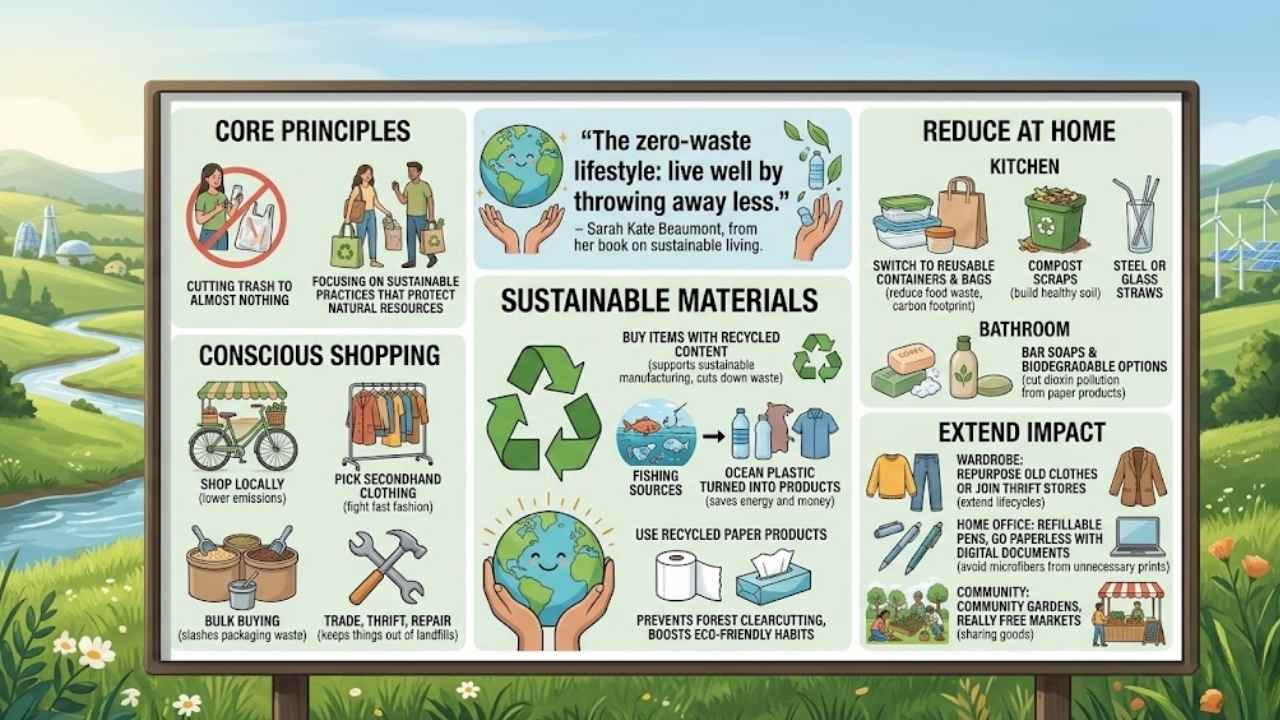
A zero-waste lifestyle means cutting trash to almost nothing, and focusing on sustainable practices that protect natural resources. People refuse single-use items, like plastic packaging, and choose reusable shopping bags instead.
They buy items with recycled content, which supports sustainable manufacturing and cuts down on waste. Many brands now turn ocean plastic from fishing sources into products, saving energy and money.
You can shop locally to lower transportation emissions, or pick secondhand clothing to fight fast fashion in the fashion industry. Bulk buying slashes packaging waste, while trading, thrifting, and repairing items keeps things out of landfills.
Using recycled paper products, such as toilet paper and facial tissues, prevents forest clearcutting and boosts environmentally friendly habits.
The zero-waste lifestyle: live well by throwing away less. – Sarah Kate Beaumont, from her book on sustainable living.
Switch to reusable containers and bags in your kitchen to reduce food waste and carbon footprint. Compost scraps to build healthy soil, and go for steel or glass straws over disposable ones.
In the bathroom, bar soaps and biodegradable options cut down on dioxin pollution from paper products. For your wardrobe, repurpose old clothes or join thrift stores to extend lifecycles.
At the home office, use refillable pens and go paperless with digital documents, avoiding microfibers from unnecessary prints. These steps build a zero-waste home, and they tie into community gardens or really really free markets for sharing goods.
Steps to Start a Zero-Waste Lifestyle
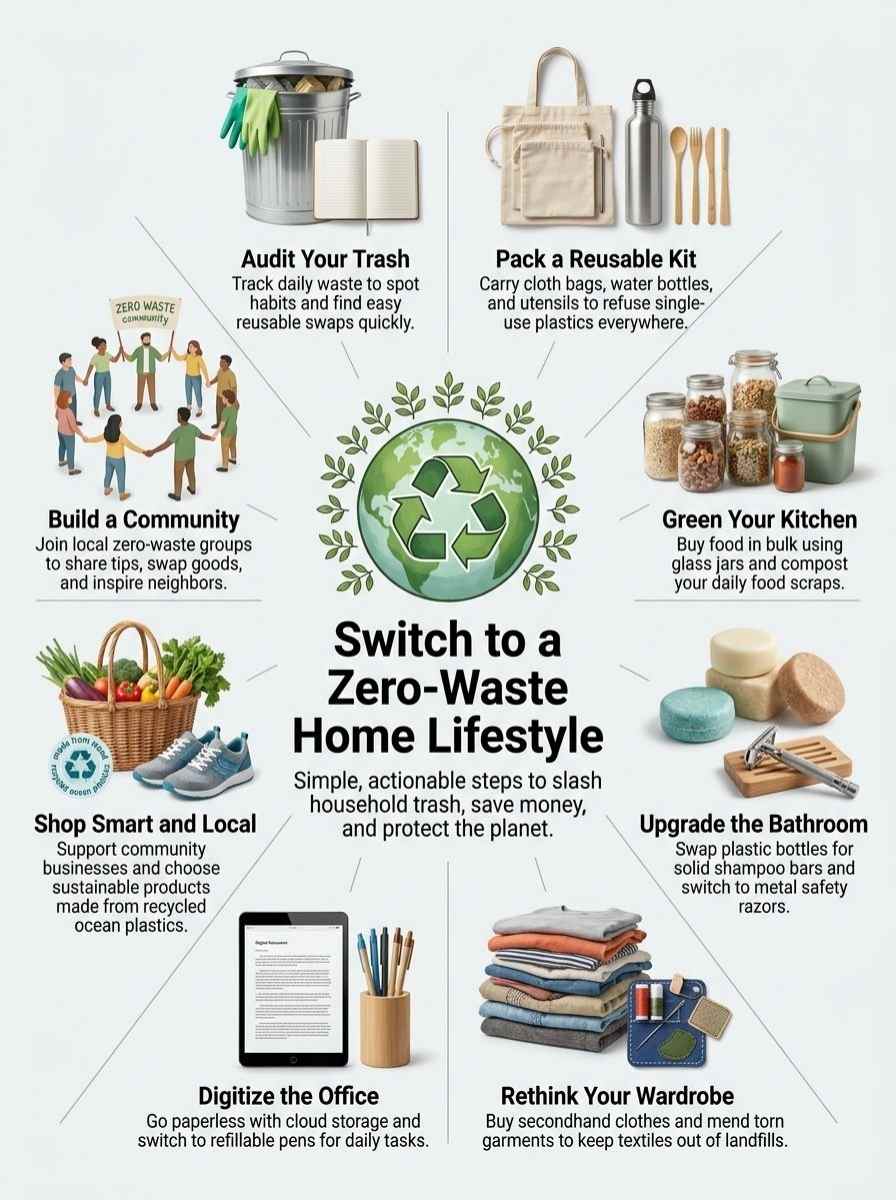
Kick off your zero-waste adventure with a quick check of your trash bin, like spotting that old coffee cup you toss every day. Grab some cloth bags and a water bottle to make your own kit, and watch how small swaps cut down on plastic waste fast.
Conduct a waste audit
Start your zero-waste journey with a waste audit at home. Grab a notebook and track every bit of trash you toss for a week. Sort it into categories like plastic, paper, and food scraps.
This step reveals what fills your bin most, from single-use items to excess packaging. Many brands now turn recycled waste materials, including ocean plastic from fishing sources, into new products.
You spot patterns fast, like how refusing single-use bags cuts down on clutter.
Using recycled paper products saves money and energy over virgin paper options. Recycled toilet paper and facial tissues stop clearcutting of forests. Reusable shopping bags become your go-to tool for minimizing waste during purchases.
Buy items with recycled content to back sustainable manufacturing practices. Shop locally to slash transportation emissions and boost community businesses. Secondhand shopping and borrowing items lower the demand for new manufacturing.
Buy in bulk to cut packaging waste and curb total consumption. Trade, thrift, and repair items to extend product lifecycles and halt waste buildup. Think of it like a treasure hunt, uncovering easy swaps for zero-waste living.
Join a zero-waste committee or groups like Isla Vista Co-op for tips on recycling and composting food scraps. Books such as “Zero Waste: Simple Life Hacks to Drastically Reduce Your Trash” and “A Life Less Throwaway: The Lost Art of Buying for Life” offer inspiration.
During Earth Month, try reusable utensils and eco-friendly supplies to reduce carbon emissions. Organizations like Food and Water Watch and reports from Global Waste Management Outlook guide your efforts.
Even Shopify helps find zero-waste home solutions online.
Set realistic goals
You want to start zero waste living at home, but big changes can feel like climbing a mountain. Set goals that fit your life, like beginning with one room or one habit. Pick something simple, such as using reusable shopping bags to cut down on plastic.
These bags are key for minimizing waste during purchases, and they support zero waste home habits. Many brands now turn ocean plastic from fishing sources into products, so aim to buy items with recycled content.
That choice backs sustainable manufacturing, saves money, and uses less energy than new materials.
Think about your kitchen goals first, folks. Reduce food waste by shopping locally, which cuts transportation emissions and helps community businesses. Buy in bulk to slash packaging, or switch to recycled paper products like toilet paper that prevents forest clearcutting.
For your wardrobe, set a goal to buy secondhand clothes, which lowers demand for new stuff. Trade or repair items to extend their life, and refuse single-use junk. Join a zero waste committee or online group, inspired by books like “Animal Vegetable Miracle” or “Drawdown: The Most Comprehensive Plan Ever Proposed to Reverse Global Warming.” These steps transform communities, as people like you heal neighborhoods through zero waste living.
Create a zero-waste kit
A zero-waste kit helps you cut down on trash every day. It acts like your sidekick in the fight against waste, making eco-friendly choices feel easy and fun.
- Grab reusable shopping bags first, since they serve as an essential tool for minimizing waste during purchases, and many brands now incorporate recycled waste materials into them, like ocean plastic from fishing sources.
- Add in cloth napkins or handkerchiefs to refuse single-use items, which ties into a zero-waste lifestyle and supports sustainable manufacturing practices by choosing products with recycled content.
- Include a set of stainless steel straws or bamboo utensils, because buying items with recycled content, such as recycled paper products, saves money and energy compared to virgin alternatives, and this extends to your kit tools.
- Pack a reusable water bottle and coffee mug, as these help prevent the need for disposable cups, plus shopping locally for such items reduces transportation emissions and supports community businesses.
- Toss in beeswax wraps or silicone lids for food storage, transforming communities how people like you are healing their neighborhoods by reducing total consumption and refusing single-use plastics.
- Include mesh produce bags for bulk shopping, since buying in bulk minimizes packaging waste, and using recycled toilet paper or tissues in your home routine helps prevent clearcutting of forests, linking back to kit essentials.
- Add a compact compost bin or bags for scraps, making it radical home ec for a post-consumer world, where composting ties into trading, thrifting, and repairing items to extend product lifecycles and prevent waste accumulation.
- Slip in bamboo toothbrushes or refillable floss, because secondhand shopping and borrowing items reduces the demand for new product manufacturing, and opting for biodegradable options in your kit boosts that effort.
- Include a small notebook from recycled paper for notes, as going paperless is great, but when you need paper, recycled versions save energy and tie into as recycling practices that make a real difference.
- Finish with a multi-tool for repairs, since trading, thrifting, and repairing items extends product lifecycles, and this supports buying secondhand or sustainable clothing principles, even for your kit’s upkeep.
Zero-Waste Practices for the Kitchen
Turning your cooking space into a trash-free zone with easy swaps like cloth totes for groceries and a backyard bin for scraps—stick with me to uncover these game-changing moves that keep things green and fun.
Reduce food waste
Food rots fast in your fridge, and that hits your wallet hard. Plan meals ahead to buy only what you need. Shop locally for fresh produce; this cuts down on transportation emissions and boosts community businesses.
Buy in bulk to slash packaging waste and curb overbuying. Imagine: you grab apples and oats in your own jars, skipping those plastic wraps that pile up in landfills. Refuse single-use items like flimsy bags at the store.
Use reusable containers for leftovers instead. These steps echo ideas from “making it: radical home ec for a post-consumer world,” where folks rethink daily habits to ditch excess.
Many people toss out scraps that could feed the soil. Turn veggie peels into compost for your garden. Trade extras with neighbors, or thrift kitchen tools to extend their life. This transforms communities; how people like you are healing their neighborhoods starts in the kitchen.
Support brands that weave recycled materials, like ocean plastic, into products. Choose recycled paper towels to save forests from clearcutting and cut costs on energy. Borrow gadgets you rarely use, reducing the push for new stuff.
Fix broken appliances before buying replacements.
Use reusable containers and bags
Switch to reusable containers and bags to cut down on trash in your kitchen. This simple change helps you live lighter on the planet, and it ties into transforming communities: how people like you are healing their neighborhoods by sharing tips and resources.
- Grab cloth totes for grocery runs, since reusable shopping bags cut waste from those flimsy plastic ones that pile up everywhere. They are an essential tool for minimizing waste during purchases, plus, you refuse single-use items as part of a zero-waste lifestyle. Imagine you stroll into the store, pull out your sturdy bag, and skip the checkout clutter.
- Stock up on glass jars or metal tins for storing leftovers, which beats tossing out food in disposable wraps. Buying in bulk minimizes packaging waste and reduces total consumption, so fill those containers with grains or nuts from the store’s big bins. You support sustainable manufacturing practices too, especially if you choose ones made from recycled materials like ocean plastic from fishing sources.
- Pack lunches in beeswax wraps or silicone pouches instead of plastic baggies that end up in landfills. Shopping locally reduces transportation emissions and supports community businesses, so hit up farmers’ markets with your reusables in hand. It feels good, like giving the earth a high-five, and you save money over time.
- Choose bamboo or stainless steel options for on-the-go snacks, ditching those throwaway packets for good. Secondhand shopping and borrowing items reduces the demand for new product manufacturing, so scout thrift stores for gently used containers. Trading, thrifting, and repairing items extends product lifecycles and prevents waste accumulation, turning old jars into your new favorites.
- Opt for recycled paper products when you need liners or wipes, but pair them with your main reusables to keep things eco-friendly. Using recycled paper products saves money and energy compared to virgin paper options, and recycled toilet paper and facial tissues help prevent clearcutting of forests. Many brands now incorporate recycled waste materials into their products, including ocean plastic from fishing sources, so look for those labels.
- Buy items with recycled content to boost the cycle of sustainability in your kitchen setup. This supports sustainable manufacturing practices, and when you refuse single-use items, you make a real difference. Imagine chatting with neighbors about your swaps; it sparks ideas for healing neighborhoods together.
Compost food scraps
Composting food scraps cuts down on kitchen trash, and it feeds your soil like a natural booster. You turn banana peels and veggie scraps into rich dirt that plants love.
- Grab a compost bin for your kitchen counter; fill it with scraps like fruit peels, coffee grounds, and eggshells, but skip meat and dairy to avoid smells and pests. This simple tool keeps things tidy, and many brands now make bins from recycled materials, including ocean plastic from fishing sources, which supports sustainable manufacturing practices.
- Layer your compost pile with browns like dry leaves and greens like food scraps for balance; mix in shredded recycled paper products to soak up moisture and save money plus energy over virgin paper alternatives. Envision your old newspapers turning into garden magic, it prevents clearcutting of forests just like using recycled toilet paper does.
- Stir your compost weekly with a pitchfork or tumbler tool to speed up the breakdown; add worms if you go for vermicomposting, they munch through scraps fast and create nutrient-packed castings. Hey, it’s like having tiny helpers in your backyard, and this extends product lifecycles by repurposing waste, much like trading or thrifting items does to prevent accumulation.
- Place your outdoor compost heap in a shady spot and cover it to keep animals out; use a reusable shopping bag to haul scraps from kitchen to pile, refusing single-use items as part of your zero-waste lifestyle. This bag becomes your essential tool for minimizing waste during any errand, and it ties into buying in bulk to cut packaging, plus shopping locally reduces transportation emissions while supporting community businesses.
- Harvest the finished compost after a few months when it looks like dark soil; spread it on your garden to grow veggies without chemical fertilizers, reducing total consumption. Envision your scraps fueling fresh tomatoes, it promotes buying items with recycled content and echoes secondhand shopping by lowering demand for new manufacturing, all while you repurpose what might have been trash.
Zero-Waste Ideas for the Bathroom
Ditch those plastic bottles that clutter your shower, and grab a solid shampoo bar instead, it lathers up just as well and cuts down on trash like a champ. Swap your disposable razor for a metal safety one with replaceable blades, yeah, it feels old-school but saves heaps of plastic from the landfill, plus your skin will thank you for the smoother shave.
Switch to bar soaps and shampoos
Switch your liquid soaps and shampoos to bar versions right away. These solid options cut down on plastic bottles that pile up in landfills. Many brands now make bars from recycled materials, like ocean plastic pulled from fishing nets.
You support eco-friendly habits by choosing them. Imagine you’re lathering up with a bar that once floated in the sea, turning trash into treasure. Refuse those single-use pump bottles at the store.
Bar soaps last longer too, saving you trips and cash.
Grab bars wrapped in minimal paper or none at all. They work great for hair and body, keeping things simple. Some folks say the switch feels like trading a leaky boat for a sturdy ship, steady and waste-free.
Buy ones with recycled content to back green manufacturing. This move prevents extra packaging from cluttering your bin. Your bathroom stays cleaner, and the planet thanks you.
Use reusable or biodegradable alternatives for personal care
You can ditch single-use plastics in your bathroom routine. These swaps cut down on trash and feel good for the planet.
- Opt for bar soaps and shampoos over bottled versions, as they skip the plastic packaging and last longer, plus many brands now include recycled waste materials in their products, including ocean plastic from fishing sources, to support sustainable manufacturing practices.
- Grab reusable cotton pads for makeup removal instead of disposables, and you’ll refuse single-use items as part of your zero-waste lifestyle, which also extends product lifecycles like trading or thrifting old cloths for new uses.
- Choose biodegradable toothbrushes made from bamboo, a step that minimizes packaging waste similar to buying in bulk, and it prevents clearcutting of forests just like using recycled toilet paper and facial tissues do.
- Pick refillable deodorant sticks or make your own with simple ingredients, a move that reduces transportation emissions if you shop locally, and it supports community businesses while cutting demand for new manufacturing through secondhand shopping and borrowing items.
- Try menstrual cups or reusable period underwear over pads and tampons, since these alternatives save money and energy compared to virgin paper options, much like recycled paper products do, and they help minimize waste during purchases akin to using reusable shopping bags.
- Select bamboo cotton swabs instead of plastic ones, and repurpose old clothes into washcloths for extra savings, which ties into buying items with recycled content to back sustainable practices and reduce total consumption.
- Go for solid toothpaste tabs in metal tins, an easy way to avoid plastic tubes, and composting any scraps aligns with refusing single-use items, while repairing items extends their lifecycles and prevents waste buildup.
Zero-Waste Tips for the Wardrobe
Hey, imagine turning your closet into a treasure trove of thrift store finds, where every shirt and pair of jeans tells a story of smart reuse. Dive right in by mending those worn-out pants with a simple sewing kit, saving cash and cutting down on landfill junk, and watch how your style blooms without the waste.
Buy secondhand or sustainable clothing
You love that cozy sweater, but fast fashion fills landfills fast. Head to thrift stores instead, and score great finds at low prices. Secondhand shopping cuts the need for new clothes production, like borrowing from a friend’s closet on a grand scale.
Many brands now weave in recycled materials, such as ocean plastic from old fishing nets, into their lines. Pick those options, and you back green manufacturing habits. Trading clothes with pals extends their life, dodging waste buildup.
Think of it as giving outfits a second act, much like reruns of your favorite show.
Shop local for sustainable threads, and slash those shipping fumes while boosting nearby shops. Hunt for pieces made from reused fabrics; it saves cash and sparks eco-friendly making.
Thrifting jeans or dresses keeps items in play longer, like passing the baton in a relay race. Repair a torn shirt yourself, or find a tailor, to stretch its use. Borrowing from community swaps feels like a treasure hunt, full of surprises.
These steps turn your wardrobe into a zero-waste powerhouse, one piece at a time.
Repurpose old clothes
Old clothes often clutter your space, but you can give them new life. This approach cuts waste and sparks creativity in your zero-waste journey.
- Turn worn-out shirts into cleaning rags or patchwork quilts, which extends product lifecycles and prevents waste accumulation, just like trading or thrifting does.
- Patch up jeans with fabric scraps from other old garments, supporting sustainable manufacturing practices by reducing the demand for new product manufacturing through secondhand shopping and borrowing items.
- Transform outdated dresses into tote bags or scarves, and note that buying secondhand or sustainable clothing, along with repairing items, helps avoid clearcutting of forests when you choose recycled paper products elsewhere in your home.
- Cut up old socks for dusting mitts or plant ties, tying into how shopping locally reduces transportation emissions and supports community businesses, much like extending the life of your wardrobe does.
- Sew buttons from one shirt onto another for a fresh look, and think about how many brands now incorporate recycled waste materials into their products, including ocean plastic from fishing sources, inspiring you to do the same at home.
- Make braided rugs from tattered towels or tees, which saves money and energy compared to virgin paper alternatives, applying the same thrift to fabrics as you would to recycled toilet paper and facial tissues.
Zero-Waste Solutions for the Home Office
Turning your desk into a green haven, where every click saves a tree and your trash bin gathers dust. Swap those throwaway notebooks for apps on your tablet, and refill that trusty ink pen instead of tossing plastic ballpoints—small shifts like these cut waste and spark joy in your workday.
Go paperless with digital documents
You cut paper use in your home office. Digital documents help you live zero-waste, save cash, and protect forests.
- Scan old papers into PDF files with apps like Adobe Scan; this switch supports sustainable practices by reducing demand for new paper, and fact is, using recycled paper products saves money and energy over virgin options.
- Store files in cloud services such as Google Drive or Dropbox, hey, it’s like having a magic filing cabinet that never fills up; buying items with recycled content backs eco-friendly making, plus recycled toilet paper and tissues stop forest clearcutting.
- Sign docs electronically via tools like DocuSign, no more printing forms; reusable shopping bags cut waste at stores, and refusing single-use items fits right in with going paperless to shrink your trash pile.
- Opt for e-bills and digital receipts from banks and shops, simple as pie; shopping locally trims emissions from transport and boosts nearby businesses, tying into your zero-waste push at home.
- Use note-taking apps like Evernote instead of notebooks, keeps things tidy and green; secondhand shopping or borrowing gear lowers new product needs, much like ditching paper for digital to extend resource life.
- Share files through email or shared links, skip the printer altogether; buying in bulk slashes packaging waste and curbs buying, just as digital docs reduce paper clutter in your workspace.
- Back up data on external drives made from recycled materials, smart move; trading, thrifting, and fixing items stretches their use, preventing waste buildup, similar to how paperless habits save energy.
- Read news and books on e-readers like Kindle, wave goodbye to magazines; many brands weave recycled waste, even ocean plastic from fishing nets, into products, so support them for a full zero-waste loop.
Use refillable pens and eco-friendly supplies
Your home office can cut waste with smart choices. Opt for refillable pens and eco-friendly supplies to keep things green.
- Grab refillable pens for daily tasks, and refill them when ink runs low. You extend their life this way, much like repairing old items to stop waste buildup. This simple swap refuses single-use junk, saves you cash in the long run, and feels good, like giving your desk a fresh start.
- Pick supplies made from recycled stuff, like notebooks from old paper. Brands now mix in waste materials, such as ocean plastic pulled from fishing nets, to build their goods. You support green factories by choosing these, and hey, it’s like turning trash into treasure right on your desk.
- Choose recycled paper for printing or notes, not fresh-cut stuff. These options save you money and cut energy use compared to new paper from trees. They fight forest loss too, similar to how recycled tissues stop clearcutting, so your office stays kind to the planet.
- Buy eco supplies in bulk when you stock up, to slash packaging trash. This curbs how much you consume in total, and pairs well with reusable shopping bags for those trips to the store. Imagine fewer bags in landfills, all thanks to your bulk buys.
- Shop local for pens and supplies, to trim emissions from far-off shipping. You boost nearby shops this way, and combine it with secondhand finds to drop the need for brand-new gear. It’s a win-win, like supporting your neighbors while ditching waste.
- Hunt for secondhand office items, or trade with friends for what you need. This stretches product lives and blocks waste piles, just as thrifting clothes does for your closet. You reduce new manufacturing demands, and who knows, you might snag a cool vintage stapler along the way.
Building a Zero-Waste Community
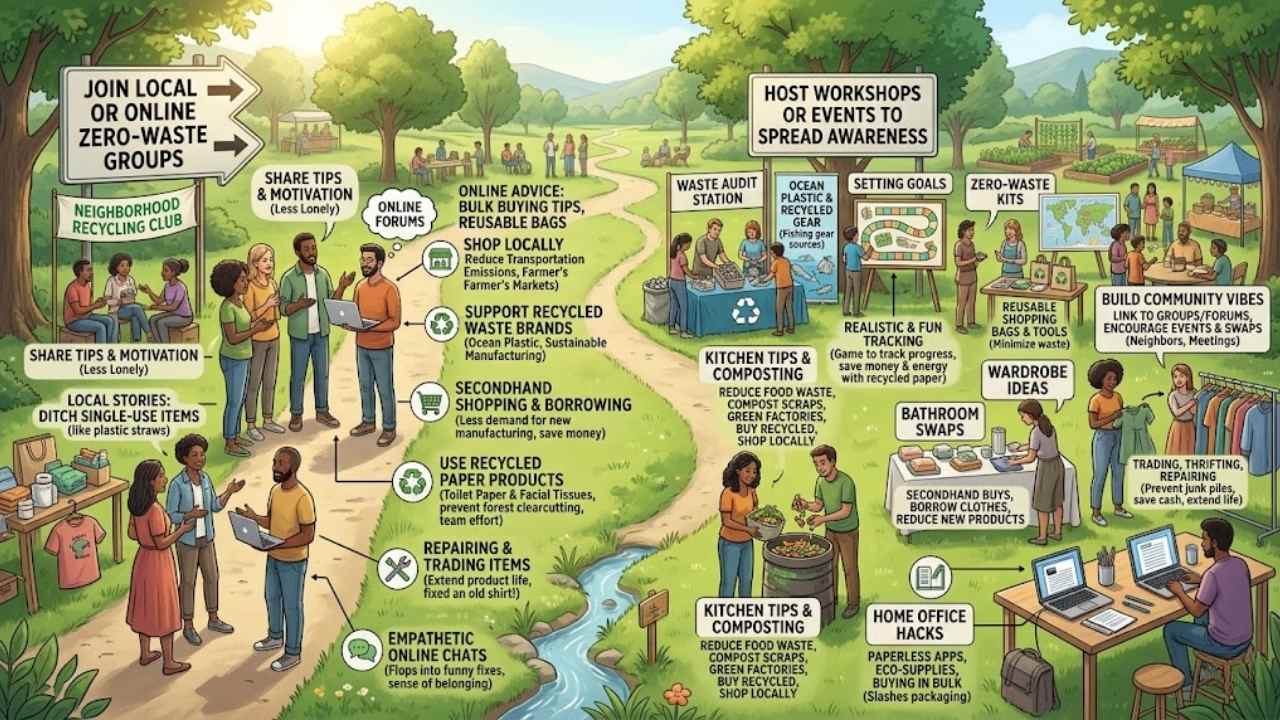
You know, going zero-waste feels less lonely when you connect with others on the same path, like joining a neighborhood recycling club or chatting in online forums about swapping tips.
Picture hosting a fun swap meet in your backyard, where friends trade old jars for cloth bags, sparking real change that ripples out to everyone around you.
Join local or online zero-waste groups
Joining zero-waste groups helps you connect with like-minded folks who share tips and motivation. These communities make the switch feel less lonely, turning small changes into big wins.
- Local groups often host meetups where you swap stories about refusing single-use items, like that time I ditched plastic straws at a coffee shop, and hey, it sparked a fun chat with strangers.
- Online forums buzz with advice on buying in bulk to cut packaging waste, plus members share hacks for using reusable shopping bags that minimize waste during purchases, saving you trips to the store.
- You connect with people who push shopping locally, which reduces transportation emissions and supports community businesses, like finding a nearby farmer’s market through group recommendations.
- Groups highlight brands incorporating recycled waste materials into products, including ocean plastic from fishing sources, so you learn which ones to support for sustainable manufacturing practices.
- Members trade tips on secondhand shopping and borrowing items, which reduces the demand for new product manufacturing, and it’s like a treasure hunt that keeps your wallet happy.
- In these circles, folks discuss using recycled paper products that save money and energy compared to virgin paper alternatives, often sharing deals on eco-friendly office supplies.
- You hear anecdotes about switching to recycled toilet paper and facial tissues to help prevent clearcutting of forests, with group challenges making it a team effort to track progress.
- Communities encourage trading, thrifting, and repairing items to extend product lifecycles and prevent waste accumulation, imagine fixing an old shirt instead of tossing it, all thanks to a shared tutorial.
- Groups promote buying items with recycled content to back sustainable manufacturing practices, and they organize swaps where you snag goodies without creating more trash.
- Online chats turn empathetic when someone shares a flop, like composting gone wrong, but then the group rallies with humorous fixes, building that sense of belonging.
Host workshops or events to spread awareness
Hosting workshops or events spreads zero-waste awareness in your community. You connect with others, share tips, and inspire change through fun, hands-on activities.
- Plan your workshop around simple audits where folks check their trash at home, just like you might do; tie this in by showing how many brands now use recycled ocean plastic in products, which saves resources and cuts waste from fishing gear.
- Invite locals to set goals during the event, make it realistic and fun, perhaps with a game to track progress; highlight that using recycled paper products saves money and energy over new paper, plus it stops forest clearcutting for items like toilet paper and tissues.
- Hand out zero-waste kits at the start, include reusable shopping bags as key tools; explain how these bags minimize waste on trips to the store, and refusing single-use items becomes a habit that everyone can adopt right away.
- Focus one session on kitchen tips, teach ways to reduce food waste and compost scraps; add in how buying items with recycled content supports green factories, and shopping locally cuts emissions while boosting nearby shops.
- Explore bathroom swaps, show bar soaps and reusable options for care items; share that secondhand buys or borrowing clothes and gear reduce the need for new stuff, which ties back to less manufacturing waste in general.
- Cover wardrobe ideas, like repurposing old shirts into rags or bags; point out that trading, thrifting, and fixing items stretches their life, prevents junk piles, and even saves cash in the long run.
- Add home office hacks, demo going paperless with apps and using refillable pens; stress how eco-supplies, made from recycled bits, help the planet, and buying in bulk slashes packaging that ends up in landfills.
- Build community vibes by linking attendees to local groups or online forums for ongoing chats; encourage them to host their own events, maybe a swap meet where people trade goods to extend lifecycles and cut down on new buys.
Final Thoughts
You’ve learned simple steps to cut waste at home, from auditing your trash to building a zero-waste kit and composting scraps. These tips fit right into daily life, making the switch feel easy and smart without big changes.
By going zero-waste, you help the planet, save money on things like recycled paper products, and support local shops that reduce emissions. Check out online groups or books on sustainable living for more ideas and community support.
Start small today, and watch your home turn into a green haven that inspires others.
Frequently Asked Questions (FAQs) About a Zero-Waste Lifestyle at Home
1. What does switching to a zero-waste lifestyle at home really mean?
Switching to a zero-waste lifestyle at home means you cut down on trash by reusing items, like turning old jars into storage containers. It’s like giving your garbage can a vacation, and hey, who doesn’t love less cleanup?
2. How can I start reducing plastic waste in my kitchen right away?
Grab cloth towels instead of paper ones, and swap plastic wrap for beeswax covers. You’ll feel like a kitchen hero saving the planet one sandwich at a time.
3. Is composting hard to set up at home, and does it smell bad?
Composting is simple; just collect food scraps in a bin and mix them with yard waste. It might pong a bit at first, like forgotten gym socks, but adding dry leaves keeps odors low. Soon, you’ll have rich soil for your plants, turning waste into garden gold.
4. What about shopping; how do I avoid bringing home extra packaging?
Bring your own canvas bags and buy in bulk to skip the plastic overload.