
Have you ever woken up after a full night of sleep and still felt completely exhausted? You might brush it off as aging or a busy schedule, but your thyroid could be the hidden culprit. This small gland in your neck controls how your body uses energy. When it misfires, you might gain weight without trying or lose hair in the shower.
About 20 million Americans have some type of thyroid disease, and nearly 60% of them have no idea. I have learned that a simple blood test can reveal the problem and change everything. Once you know what is happening, you can easily treat these hormonal imbalances.
That’s why understanding thyroid disorders, their symptoms, and solutions is the first step to taking your life back. I am going to walk you through the exact signs to look for and the most effective treatments available today. Grab a cup of coffee, and let us go through this together.
Identifying Different Thyroid Disorders
Your thyroid gland controls how fast your body burns energy. Problems start piling up fast when this gland misfires. Several different conditions can strike this small gland. Each one throws your endocrine system off balance in very specific ways.
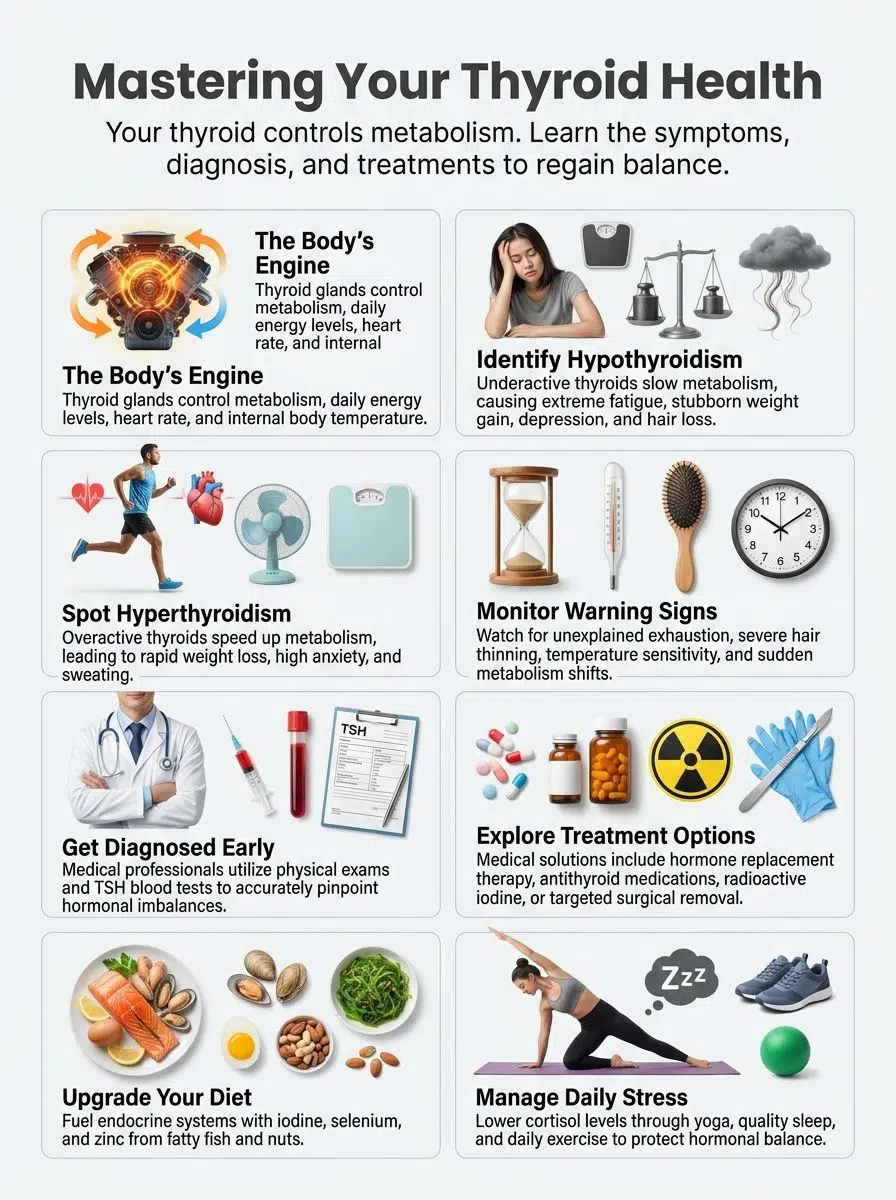
Hypothyroidism Overview
Hypothyroidism happens when your thyroid gland fails to produce enough hormones. This slows down your entire metabolism. You start to feel like you are moving through molasses.
The American Thyroid Association reports that women are five to eight times more likely than men to develop this condition. Without enough thyroid hormones, your cells literally lack the signals they need to function. Autoimmune conditions usually cause this, though certain medications can trigger it too.
Fatigue becomes your constant companion. Weight creeps up despite your best efforts at the gym. You might also notice cold hands, dry skin, and thinning hair.
Fortunately, treatment is incredibly common and accessible. In 2023, doctors in the United States wrote over 80 million prescriptions for levothyroxine, the primary medication used to replace these missing hormones. Catching these warning signs early makes a huge difference in how quickly you bounce back.
Insights into Hyperthyroidism
Hyperthyroidism does the exact opposite of hypothyroidism. Your thyroid gland produces too many hormones, forcing your body to run like an engine in overdrive. Your metabolism speeds up so much that you burn calories far too fast.
A condition called Graves’ disease is the biggest offender here. It causes up to 80% of all hyperthyroidism cases in the United States. Your immune system mistakenly attacks the thyroid, causing it to overproduce hormones. You often feel wired, anxious, and completely exhausted all at once.
Doctors typically look at three main treatment paths to slow your metabolism back to a normal speed:
- Antithyroid Medications: Drugs like methimazole block your gland from making excess hormones.
- Radioactive Iodine Therapy: You swallow a small dose of radioactive iodine that safely destroys the overactive thyroid cells.
- Surgical Removal: A surgeon removes part or all of the thyroid gland to permanently stop the excess production.
Your doctor will help you pick the best option based on your age and medical history.
Understanding Hashimoto’s Thyroiditis
Hashimoto’s thyroiditis is a specific autoimmune disease that directly attacks your thyroid gland. Your immune system treats your thyroid like a foreign invader. It creates antibodies that damage the gland over time.
This condition is the leading cause of an underactive thyroid in the United States. In fact, Hashimoto’s causes more than 70% of all hypothyroidism cases. Because the damage happens slowly, you might not notice the creeping exhaustion or weight gain for years.
Doctors confirm this diagnosis by running a specific blood test for Thyroid Peroxidase (TPO) antibodies. High levels of these antibodies prove that your immune system is attacking the gland.

Once you know Hashimoto’s is the culprit behind your symptoms, managing your energy levels becomes much clearer and easier.
Exploring Thyroid Cancer
Thyroid cancer develops when abnormal cells grow directly inside the thyroid gland. While it occurs less often than other cancers, it is a serious condition that requires immediate patient care.
The American Cancer Society estimates about 45,240 new cases of thyroid cancer in the United States for 2026. The average age of diagnosis is 51, making it a cancer that often strikes younger adults. It is also almost three times more common in women than in men.
Most patients discover the disease after feeling a lump in their neck or having trouble swallowing. Doctors categorize thyroid cancer into four main types:
- Papillary Thyroid Cancer: This type makes up about 80% of all cases and has an excellent survival rate.
- Follicular Thyroid Cancer: This grows in the hormone-producing cells and often affects older adults.
- Medullary Thyroid Cancer: This rare type develops in cells that produce calcitonin and can run in families.
- Anaplastic Thyroid Cancer: This is the most aggressive form, spreading rapidly and requiring urgent treatment.
Early detection usually transforms thyroid cancer into a highly manageable condition. Most patients achieve complete remission with proper surgery and care.
Symptoms of Thyroid Disorders
Your body sends out clear distress signals when something goes wrong with your hormones. Let us look at what these warning signs actually mean.
Fatigue and Weight Changes
Thyroid disorders severely disrupt your daily energy levels. You might sleep for nine hours and still wake up feeling completely drained.
Recent health surveys show that nearly 69% of thyroid patients struggle with ongoing weight management issues. Your metabolism relies on these hormones to function correctly. When the balance shifts, your body reacts in frustrating ways.
- Fatigue hits hard when your thyroid fails to produce enough hormones.
- Hypothyroidism causes weight gain because your body burns far fewer calories at rest.
- Hyperthyroidism triggers unexplained weight loss as your metabolism races out of control.
- Your appetite will shift drastically, either disappearing entirely or becoming uncontrollable.
- Brain fog often accompanies this fatigue, making basic concentration feel incredibly difficult.
Hair Loss and Temperature Sensitivity
Changes in your hair and body temperature are huge red flags for thyroid trouble. These symptoms appear because your body cannot regulate its normal cycles.
Studies indicate that up to 33% of patients with an underactive thyroid experience noticeable hair loss. Your body simply stops prioritizing hair growth when it lacks essential energy.
- Your hair follicles depend on thyroid hormones to stay in their active growth phase.
- Low hormone levels push hair into the shedding phase much too early.
- Hypothyroidism ruins your ability to stay warm, making a 70-degree room feel freezing.
- Hyperthyroidism makes you sweat excessively because your internal engine is running too hot.
- Your hair growth will usually return to normal once you start a proper medication routine.
Diagnosing Thyroid Disorders
Doctors use a combination of physical checks and lab work to pinpoint the exact problem. These tools remove the guesswork from your health and give you a clear diagnosis.
Physical Exams
Your doctor will start by physically feeling your neck during an exam. They check the thyroid gland with their hands to see if it feels enlarged, a condition known as a goiter. This simple touch test catches physical changes you cannot see in the mirror.
Your provider will also listen to your heart rate and check your resting blood pressure. Hyperthyroidism often causes a rapid resting heart rate of over 100 beats per minute. They will ask detailed questions about your daily energy levels and bathroom habits.
Many specialists also check your reflexes, particularly the Achilles tendon behind your ankle. Hypothyroidism often causes a delayed reflex response, giving your doctor an instant clue about your metabolic speed.
Blood Tests for Hormone Levels
Blood tests give doctors the hard data they need to make a confident diagnosis. These labs measure exactly how much hormone is floating in your bloodstream.
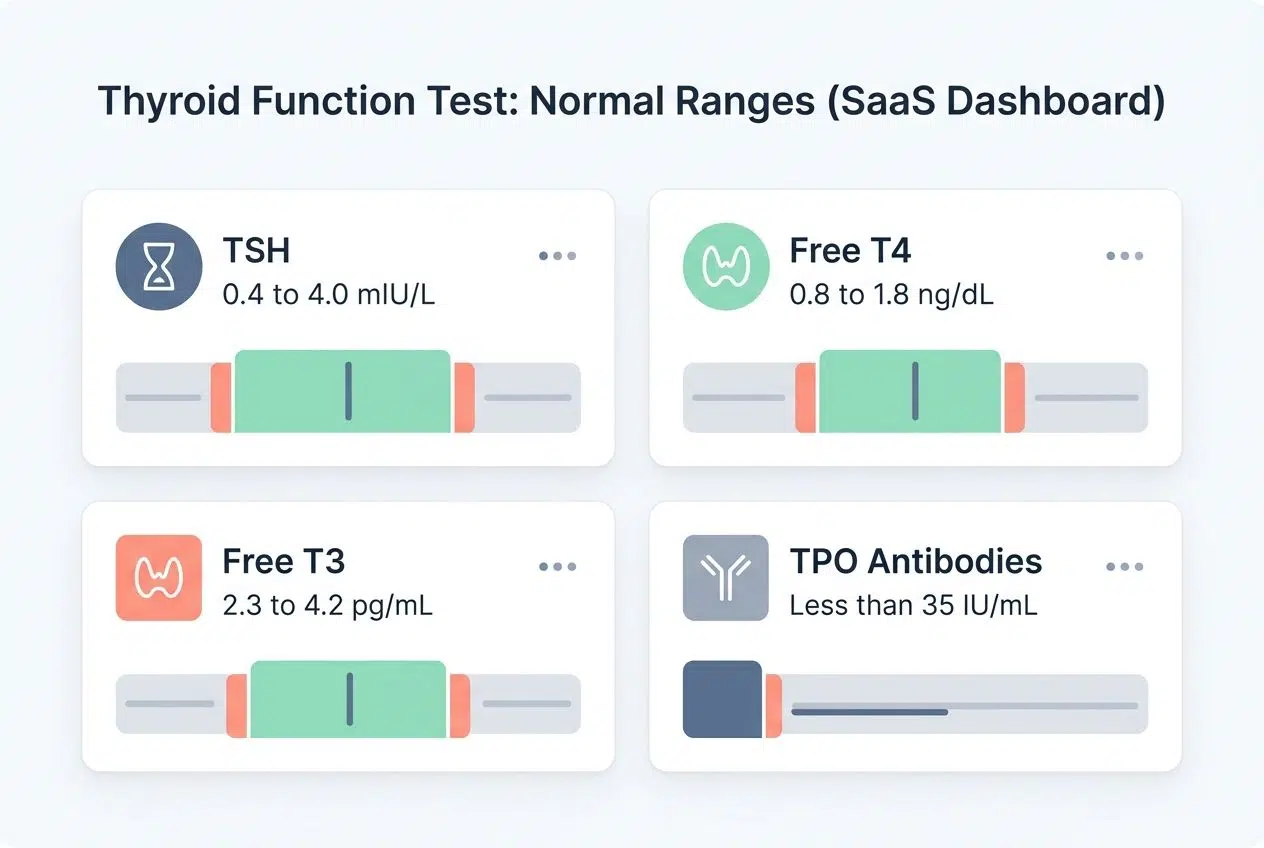
| Test Type | What It Measures | Normal Range | What Abnormal Results Mean |
|---|---|---|---|
| TSH (Thyroid Stimulating Hormone) | The pituitary gland’s signal to the thyroid. | 0.4 to 4.0 mIU/L | High TSH means hypothyroidism. Low TSH points to hyperthyroidism. |
| Free T4 (Thyroxine) | Active thyroid hormone in the blood. | 0.8 to 1.8 ng/dL | Low levels confirm an underactive thyroid. |
| Free T3 (Triiodothyronine) | The most potent energy-producing hormone. | 2.3 to 4.2 pg/mL | Helps doctors diagnose Graves’ disease and other complex issues. |
| TPO Antibodies | Immune markers attacking the thyroid. | Less than 35 IU/mL | High levels confirm Hashimoto’s disease. |
Doctors rely heavily on the TSH test because it is highly sensitive to early changes. If your TSH is high, your brain is screaming at your thyroid to work harder. They will run a Free T4 test to confirm the exact deficit.
Recent studies from Yale University show that natural seasonal changes can slightly alter these hormone levels. Your doctor might retest you a few weeks later to ensure the numbers are accurate before prescribing medication.
Thyroid Disorder Treatment Options
You have plenty of effective ways to treat a dysfunctional thyroid. Your doctor will match the right solution to your specific diagnosis.
Thyroid Hormone Replacement Therapy Details
Thyroid hormone replacement therapy is the gold standard for an underactive thyroid. Doctors prescribe synthetic hormones to restore your natural balance and restart your metabolism.
The most common medication is levothyroxine, often recognized by the brand name Synthroid. According to March 2026 data from the FDA, an estimated 22 million patients in the United States received prescriptions for levothyroxine in 2024. You take this simple pill once a day on an empty stomach to replenish your missing hormones.
Finding the perfect dose requires a little patience and communication with your doctor. Your specialist will adjust your prescription based on regular blood tests until you feel like yourself again.
Treatments for Hyperthyroidism
Treating an overactive thyroid requires a strategy to slow down hormone production. Your doctor will evaluate your heart rate and lab results to choose the safest path.
There are three primary ways to calm a racing thyroid gland:
- Antithyroid Medications: Drugs like methimazole and propylthiouracil (PTU) stop the gland from creating new hormones.
- Beta-Blockers: Doctors often prescribe propranolol to immediately stop heart palpitations and shaking while the other drugs take effect.
- Radioactive Iodine: This pill destroys the specific overactive cells inside the gland without harming the rest of your body.
Most patients achieve normal hormone levels within a few months of starting these treatments.
Options for Surgical Interventions
Medication cannot always resolve severe thyroid issues. Surgeons perform over 150,000 thyroidectomies every year in the United States to treat complex cases safely.
Surgery offers a permanent, direct fix for tumors, cancer, or dangerously enlarged glands.
- Total Thyroidectomy: A surgeon removes the entire gland to stop cancer or severe autoimmune diseases.
- Partial Thyroidectomy: Doctors remove only the diseased half of the gland, preserving some natural hormone production.
- Nodule Removal: This targets specific, troublesome lumps while leaving the healthy surrounding tissue intact.
- Emergency Surgery: This urgent procedure stops a rare, life-threatening condition known as a thyroid storm.
- Minimally Invasive Surgery: Surgeons use tiny incisions to reduce scarring and speed up your recovery time.
Lifestyle Solutions for Managing Thyroid Health
Your daily habits play a massive role in how well your endocrine system functions. Small adjustments at home can make your medical treatments much more effective.
Diet and Nutrition
Your thyroid requires specific nutrients to manufacture hormones effectively. Iodine, selenium, and zinc are the building blocks of a healthy metabolism.
You can get your entire daily requirement of selenium simply by eating two or three Brazil nuts a day. Fatty fish, whole eggs, and lean meats also provide excellent fuel for your gland. If you have Hashimoto’s disease, clinical nutritionists recommend checking your Vitamin D levels, as severe deficiencies affect over 60% of patients.
You should limit raw cruciferous vegetables like cabbage and kale if you have an underactive thyroid. Eating these in large, raw amounts can block your gland from absorbing iodine properly.
Stress Management
Chronic stress actively damages your thyroid function. When you feel overwhelmed, your body floods your system with cortisol.
High cortisol levels literally block your body from converting the T4 hormone into the active T3 hormone that gives you energy. Managing your stress is a medical necessity, not just a luxury.
- Daily Walking: A simple 30-minute walk lowers cortisol and naturally boosts your metabolism.
- Prioritize Sleep: Getting eight hours of dark, uninterrupted sleep helps your body repair cellular damage.
- Deep Breathing: Taking slow, deep breaths instantly signals your nervous system to calm down.
- Limit Caffeine: Too much coffee spikes your adrenaline and mimics the anxious feelings of hyperthyroidism.
When to Seek Medical Advice
You should never ignore the physical signals your body sends you. Catching these problems early saves you months of unnecessary exhaustion.
Recognizing Warning Signs
Thyroid problems rarely fix themselves without medical intervention. You need to know exactly when to call a specialist.
Make an appointment if you experience any of these persistent issues:
- You gain or lose ten pounds quickly without changing your diet.
- Your resting heart rate consistently stays above 100 beats per minute.
- You feel a physical lump or swelling at the base of your neck.
- You develop a hoarse voice that does not go away after a few weeks.
- Your hair starts shedding in large clumps on your pillow or in the shower.
Regular Checkups with a Specialist
An endocrinologist is a doctor who specializes in hormones and glands. They are the absolute best experts to handle your ongoing thyroid health care.
The American Thyroid Association recommends that all adults get a baseline TSH blood test starting at age 35. After that initial test, you should have your levels checked every five years. If you already take levothyroxine, your doctor will likely want to test your blood every six to twelve months.
Regular visits ensure your medication dose stays perfectly matched to your body’s changing needs. Your specialist is your best partner in keeping your metabolism running smoothly for decades to come.
Final Thought
Understanding Thyroid Disorders: Symptoms and Solutions puts the power back in your hands. You now know how to spot the early warning signs of an imbalance. Simple blood tests give your doctor the exact data needed to prescribe life-changing treatments like levothyroxine.
Whether you need medication, surgery, or just a few targeted lifestyle changes, you have highly effective options. Your daily energy levels do not have to remain a mystery. Schedule that checkup today, because a healthy thyroid is the foundation of a vibrant life.
Frequently Asked Questions (FAQs) on Thyroid Disorders
1. What are common signs of thyroid disorders?
You might notice you feel tired all the time, or maybe your heart races for no reason. According to the American Thyroid Association, about 20 million Americans have some form of thyroid disease, with symptoms including unexpected weight changes, thinning hair, dry skin, and mood swings.
2. How do doctors find out if someone has a thyroid problem?
Doctors usually start with questions about how you feel day to day, then order a TSH (thyroid-stimulating hormone) blood test to measure your levels. If your TSH is above 4.5 mIU/L or below 0.4 mIU/L, it signals your thyroid isn’t working right.
3. Can lifestyle changes help manage symptoms of thyroid disorders?
Yes, they sure can! Eating balanced meals with selenium-rich foods like Brazil nuts, getting regular exercise, and prioritizing 7-8 hours of sleep each night help your body regulate hormone levels better.
4. What treatments are available for people with thyroid issues?
Treatment depends on what’s going wrong inside that butterfly-shaped gland in your neck. For underactive thyroid, doctors typically prescribe levothyroxine (a synthetic hormone pill you take daily), while an overactive thyroid may need antithyroid medications or, in rare cases, surgery to remove part of the gland.