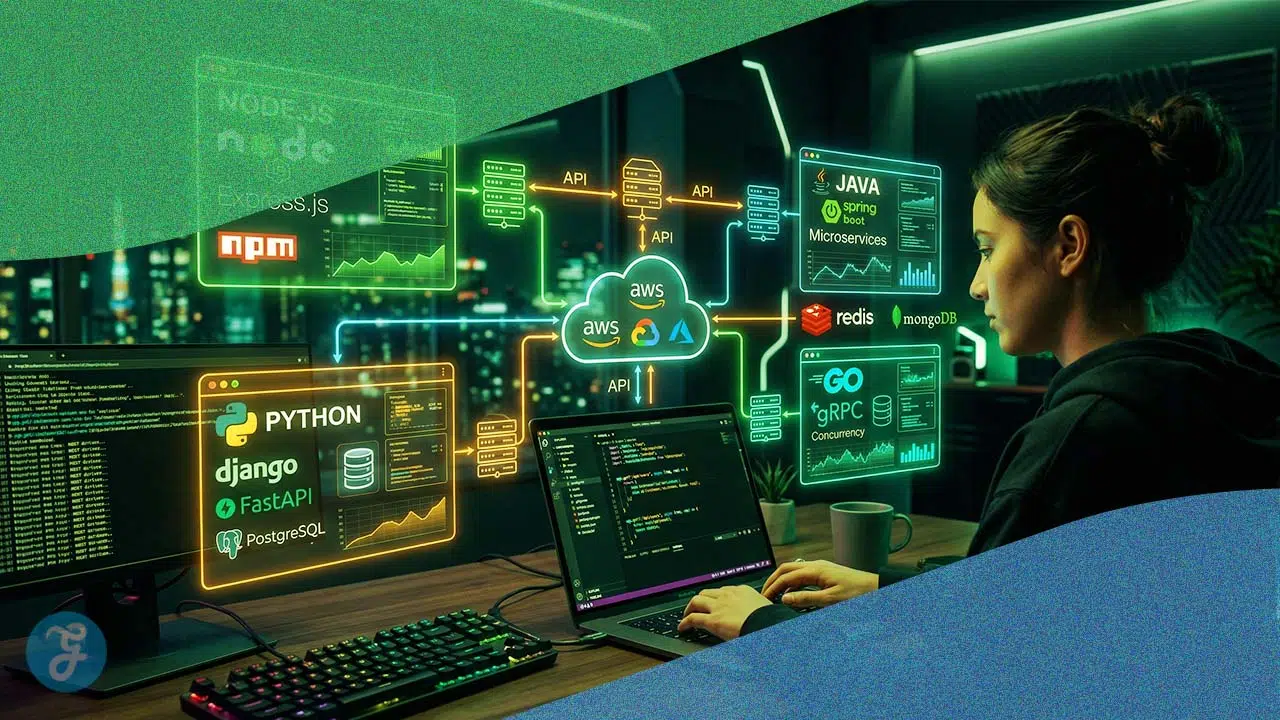
A blank screen and too many choices—selecting the right Back-End Technologies for Web Development in 2026 can feel overwhelming. Options like Node.js, Django, and Laravel all promise speed and scalability, but choosing the wrong one can lead to performance bottlenecks and rising hiring costs.
It’s like picking a car engine—make the right choice and everything runs smoothly; choose poorly and progress slows to a crawl.
Back-end technologies power everything from simple websites to complex SaaS platforms in industries like fintech and healthtech. Today, meta-frameworks such as Next.js have transformed development by replacing traditional routers and bundlers, making workflows faster and more efficient.
This guide explores top Back-End Technologies for Web Development, including Express.js, NestJS, FastAPI, and Spring Boot. It also highlights key factors like developer productivity, ecosystem maturity, AI integration, and sustainable (green) coding practices—helping teams build smarter, scalable applications in 2026.
Choosing the Right Back-End Technology
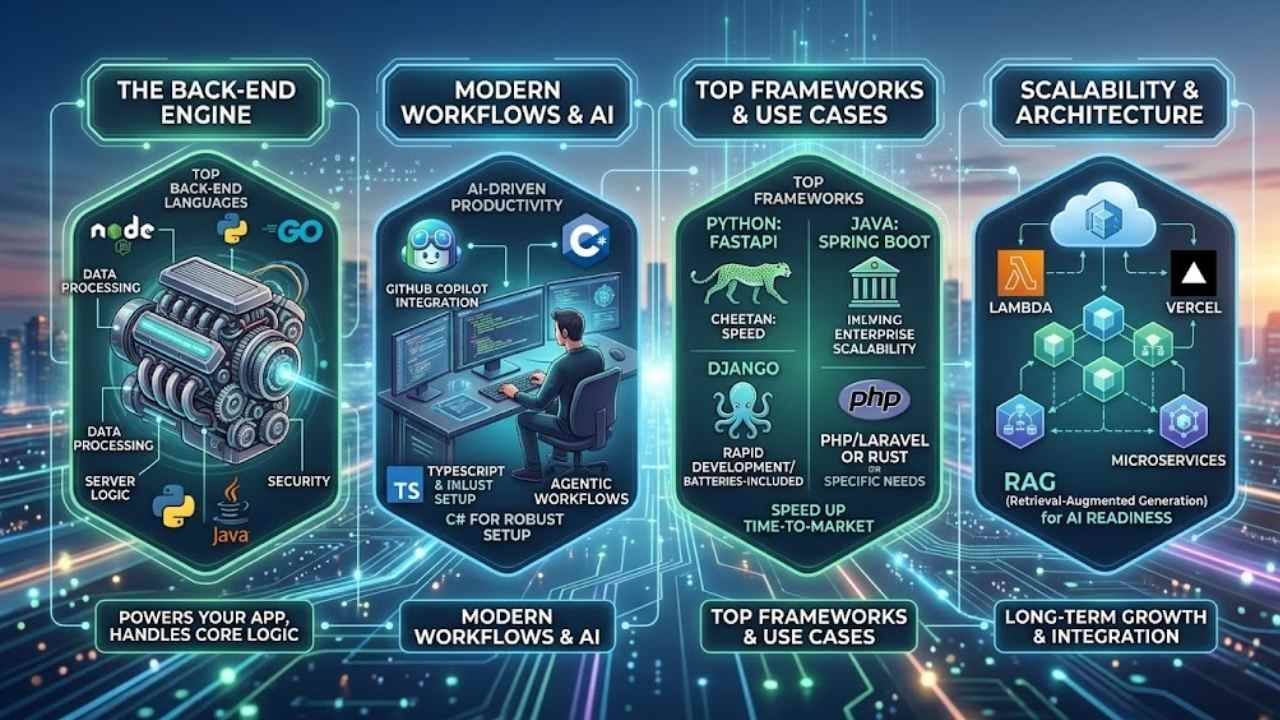
Backend technologies form the core of any web app, powering everything from simple sites to massive platforms. Think of them as the engine under the hood, handling data, logic, and security while frontend tools like React or Vue.js make things look pretty.
Pick the wrong one, and your project drags, costing time and money. Node.js, Python, Java, and Go stand out as top choices for 2026, thanks to their speed and scalability. Developers love how these boost productivity, letting teams ship features fast with tools like GitHub Copilot or large language models for smarter coding.
AI-driven workflows, including agentic workflows, change the game, integrating seamlessly with tech stacks that include TypeScript or C# for robust results.
Your choice affects developer experience and long-term wins, like easy integration with AWS Lambda or Vercel for serverless setups. Backend frameworks get judged on performance, features, and how well they scale with modern patterns, such as microservices or RAG for AI readiness.
Picture a team using FastAPI in Python; it cuts development time, letting you focus on innovation rather than bugs. Languages like PHP, Elixir, or even Rust offer options that fit various needs, from quick prototypes to enterprise-level apps.
Stack Overflow Developer Survey 2025 highlights these trends, showing how picks like Django or Spring Boot speed up time-to-market while supporting frontend development with React Native or Tailwind CSS.
Key Factors to Consider in 2026
Pick the right back-end tech in 2026, and you set your web project up for success, like choosing a sturdy engine for a long road trip. Think about how tools like Fastify boost speed, or how integrating Anthropic’s Claude with PyTorch powers AI-driven features, making your app ready for tomorrow’s demands.
Performance and Scalability
Backend technologies drive the speed and growth of web apps. Developers pick tools like Node.js, Python, Java, and Go for their strong performance in 2026. These choices handle heavy loads without slowing down.
Think of your app as a busy highway; you need lanes that expand easily. Frameworks get judged on how well they scale and perform. Express.js and Fastify shine in Node.js for quick responses.
Django and FastAPI boost Python projects with fast data handling. Spring Boot in Java manages large systems smoothly. Gin in Go keeps things lightweight and swift. Server-first performance shapes the whole strategy now.
AI tools like PyTorch and TensorFlow integrate to optimize back-end flows.
Server-first performance has become a critical consideration in modern web development architecture and strategy.
Scalability means your app grows with users. Node.js with NestJS handles spikes in traffic well. Python’s FastAPI uses async features for better speed. Java’s Spring Boot scales enterprise apps without hassle.
Go’s Gin framework cuts overhead for high throughput. Developers eye ecosystem maturity for long-term wins. Integration with AI ecosystems, like LangChain and Anthropic’s Claude, adds smart scaling.
Tools such as npm and tRPC streamline back-end tasks. State of JS 2025 highlights these trends in performance gains. Meta-frameworks like Next.js push server functions for faster loads.
Developer Productivity and Time-to-Market
Teams pick tools that speed up work, you know, like a fast car in a race. Meta-frameworks such as Next.js and Nuxt cut out old hassles with routers and bundlers. They let developers focus on building, not setup.
Frontend frameworks, React, Angular, Vue.js, they streamline UI tasks and shape the whole stack. Add in keywords like react compiler for smoother code, or shadcn/ui for quick components.
These choices hit productivity hard. Developers ship features to production faster. AI-driven workflows change the game in 2026. Tools like galileo ai and gemini pro vision automate steps, slashing time-to-market.
Imagine coding with a smart sidekick, spotting bugs early via logrocket.
Think about languages too, Haskell brings precision without endless debugging. Tauri helps with cross-platform apps, no sweat. V0 speeds up prototypes. All this boosts how teams roll out products.
Server-first approaches tie in, making apps zippy from the start. New browser standards ease workflows, cutting delays. Pick wisely, and your project flies.
Integration with AI and Data Ecosystems
AI-driven workflows shape web development in 2026, folks. Developers pick backend tech like Node.js, Python, Java, and Go for smooth ties to AI tools. These choices boost how teams handle data flows, much like a well-oiled machine in a busy factory.
Imagine your app chatting with smart systems, it pulls insights fast and keeps things running without a hitch. Modern patterns, such as serverless setups, make this integration a breeze for scalable projects.
Pick tech with AI readiness in mind, and watch your work soar. Backend frameworks get judged on how they mesh with data ecosystems, features, performance, and growth potential. Node.js shines here, linking React or Vue.js fronts to AI backends effortlessly.
Python’s FastAPI handles data-heavy tasks with ease, cutting down on headaches. Go offers speed for real-time AI ops, while Java’s Spring Boot builds sturdy links to vast data pools.
This setup powers robust apps across all web platforms, speeding up feature rolls to production.
Long-Term Maintenance and Ecosystem Maturity
Backend technologies power robust applications across the web. Pick ones with strong ecosystems, like Node.js or Python, for 2026 projects. These options offer solid community support, which keeps your code alive for years.
Think of it as planting a tree that grows with time, not a flower that wilts fast. Developers love mature setups because they cut down on bugs and speed up fixes. Node.js, for instance, boasts a vast library of tools that evolve steadily.
Java and Go also shine here, with updates that match modern needs. You want that reliability to avoid headaches down the road.
Ecosystem maturity ties into AI readiness and architecture patterns. FastAPI in Python integrates well with data tools, making long-term tweaks a breeze. Spring Boot handles scalability without constant overhauls.
Imagine your app as a well-oiled machine, humming along as trends shift. Teams evaluate frameworks on these traits to ship features quickly. Ruby on Rails provides that steady base, while Gin in Go focuses on performance for the long haul.
Developers pick these to match talent pools and cut costs over time. Scalability needs grow, so mature choices adapt without breaking the bank.
Top Back-End Frameworks for Web Development
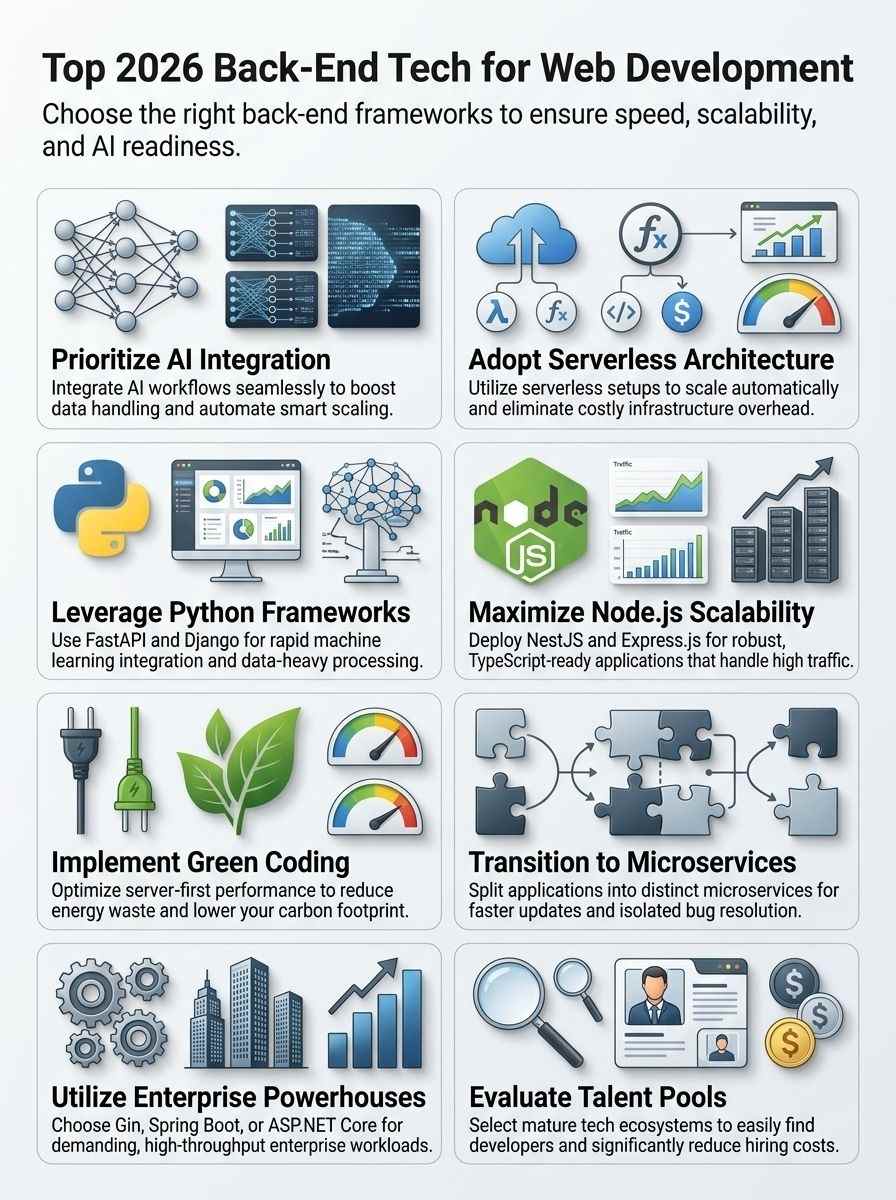
Picking the right back-end framework feels like choosing a trusty sidekick for your web project, one that handles databases, APIs, and server logic with ease. Explore these standout options, from speedy JavaScript runtimes like Node.js to sturdy Python web frameworks, and see which fits your next big idea—trust me, the choices pack a punch for scalability and speed.
Express.js (Node.js)
Express.js runs on Node.js, and it powers fast web apps with ease. Developers love it for quick setups that handle big traffic loads. Node.js stands out as a top backend choice for 2026, building robust apps that scale across platforms.
Think of it like a reliable engine in your car, it keeps everything moving smooth without much fuss. Teams ship features to production faster, thanks to its simple code structure.
Pair Express.js with frontend tools like React for seamless work. It fits right into AI-driven workflows, making data integration a breeze. Performance shines in server-first designs, and scalability meets modern needs.
Go with it if you need speed and maturity in your stack, especially for projects eyeing growth.
NestJS (Node.js/TypeScript)
NestJS stands out as a strong choice for backend work in 2026. It builds on Node.js, one of the top technologies for creating robust and scalable apps that power web platforms. Developers love its TypeScript base, which boosts productivity and cuts time-to-market.
Picture this, you’re juggling features like microservices and serverless setups, and NestJS handles them with ease, like a reliable sidekick in a tough project. It integrates well with AI ecosystems, fitting right into those emerging AI-driven workflows that reshape how teams ship code fast.
Teams pick NestJS for its performance and scalability, key factors when evaluating backend frameworks. Node.js drives it, making it ideal for modern architecture patterns and AI readiness.
Imagine ditching manual configs for something that plays nice with frontend tools like React or Next.js meta-frameworks. Your project needs quick feature rollout? NestJS supports that, with a mature ecosystem for long-term maintenance.
Go for it if you want green coding practices and smooth integration in a world of new browser standards.
Django (Python)
Django powers robust web apps with Python’s clean code. Developers love it for quick builds and strong security features. Python stands out as a top choice for 2026 back-end work, alongside Node.js, Java, and Go.
This framework shines in scalability, handling big traffic without sweat. You can pair it with front-end tools like React or Vue.js to speed up your whole stack. Teams ship features fast, thanks to its built-in tools that cut down setup time.
AI integration comes easy with Django, fitting right into modern trends. It supports server-first designs that boost performance in today’s web world. New browser standards make it even better for smooth workflows.
Pick Django if you need a mature ecosystem that grows with your project. Its features help teams tackle scalability and stay ready for data-driven tasks.
FastAPI (Python)
FastAPI stands out in Python for building quick APIs that scale with ease. Developers love it because it boosts productivity and cuts time-to-market. You’re racing to launch a web app, and FastAPI handles the heavy lifting with automatic docs and type hints.
It fits right into AI ecosystems, letting you integrate machine learning models without sweat. Python remains a top pick for backend work in 2026, thanks to its role in durable apps that power web platforms.
Teams pick FastAPI for its speed in shipping features to production.
This framework shines in performance and scalability, key factors for modern projects. It supports emerging trends like serverless setups and microservices. Imagine chatting with your code, FastAPI makes validation feel that natural and fun.
Developers evaluate it based on features that match AI readiness and green coding practices. With Python’s mature ecosystem, FastAPI helps teams tackle long-term maintenance. Go for it if your project needs fast integration with data tools and future-proof scalability.
Laravel (PHP)
Laravel shines as a powerful PHP framework for building reliable web apps in 2026. Developers love it for quick setup and strong features that boost performance and scalability. Consider this: you code a complex site, and Laravel handles routing, authentication, and caching like a pro, saving you hours.
It fits right into modern trends, like integrating with AI tools for smarter workflows. Teams pick it because Node.js, Python, Java, and Go lead the pack, but PHP with Laravel holds its own for scalable projects.
This framework pairs well with frontend stars like React or Vue.js, streamlining your full stack. You get built-in support for microservices and serverless setups, key for fast feature shipping.
Laravel’s ecosystem matures every year, making long-term maintenance a breeze. Consider ditching manual configs, much like how Next.js changed the frontend game. It even nods to green coding by optimizing resource use, perfect for eco-conscious devs.
Spring Boot (Java)
Spring Boot powers Java-based back ends with speed and ease. Developers love it for quick setups that skip the heavy lifting of old Java configs. Envision this, you jump straight into coding features instead of wrestling with boilerplate.
It shines in building scalable apps that handle big loads, fitting right into 2026’s push for resilient web platforms. Java stands strong among top picks like Node.js, Python, and Go for its reliability in enterprise setups.
Pair Spring Boot with modern trends, and you get AI-ready systems that integrate smoothly with data tools. Teams evaluate it on performance, features, and scalability for projects needing long-term muscle.
Envision scaling your app as traffic surges, no sweat. This framework boosts developer productivity, helping ship features fast to production. It aligns with server-first strategies, making it a go-to for folks eyeing efficient, green coding in the coming years.
ASP.NET Core (C#)
Developers love ASP.NET Core for its speed and power in building robust, scalable applications. This framework runs on C#, a language that packs a punch for enterprise-level projects.
Teams pick it because backend technologies like this one drive all platforms and products on the web. Picture a busy kitchen where the chef whips up meals fast; ASP.NET Core handles heavy loads just like that, with top-notch performance and scalability.
It integrates smoothly with AI ecosystems, fitting right into 2026 trends where AI-driven workflows reshape how we code. Node.js, Python, Java, and Go stand out as primary choices, but ASP.NET Core shines for its maturity and features.
You face choices in web development, and ASP.NET Core steps up with developer productivity in mind. It speeds up time-to-market, letting teams ship features to production quickly. Imagine chatting with a friend about tools that make life easier; this framework pairs well with frontend stars like React, Angular, and Vue.js to streamline UI development.
Backend frameworks get judged on features, performance, and scalability for 2026 projects, and ASP.NET Core nails AI readiness plus modern patterns. Green coding practices fit here too, as it supports efficient server-first performance in a world of new browser standards.
Ruby on Rails (Ruby)
Ruby on Rails powers web apps with Ruby’s clean code. This framework speeds up building robust back-end systems. It follows convention over configuration, so you skip endless setup hassles.
Picture a chef whipping up a meal without hunting for every spice; Rails does that for developers. Teams ship features to production quickly, thanks to its focus on productivity. Node.js, Python, Java, and Go join Rails as top picks for 2026 projects.
Rails excels in performance and scalability for growing apps. You integrate it with AI tools easily, fitting modern trends like serverless setups. Frontend pals, such as React or Vue.js, pair well with it too.
Developers evaluate Rails on features that boost long-term maintenance. Oh, and its community keeps things mature, ready for data ecosystems. Green coding fits right in, cutting energy use while you code.
Gin (Go)
Gin shines as a lightweight framework built on Go, perfect for developers chasing speed and efficiency in 2026. Imagine you’re crafting a high-traffic app, and Gin steps in like a swift runner, handling requests with minimal overhead.
It boasts impressive performance, scalability, and features that make it a top pick among backend technologies like Node.js, Python, Java, and Go itself. Teams love how it integrates smoothly with modern patterns, boosting AI readiness for those data-heavy projects.
Go ahead, think about your next build, Gin keeps things simple with its router and middleware, cutting down on boilerplate code. Developers rave about its quick setup, which aligns with trends in serverless and microservices.
Plus, its maturity ensures long-term maintenance, helping you ship features fast without the headaches. If scalability calls your name, this one’s got your back, blending power with ease for reliable web apps.
Phoenix (Elixir)
Phoenix shines in back-end tech with its Elixir roots. Developers love it for building fast, reliable web apps that handle tons of users without breaking a sweat. Think of it like a sturdy bridge that keeps traffic flowing smoothly, even during rush hour.
It excels in real-time features, making it perfect for chat apps or live updates. Teams pick Phoenix because it boosts developer productivity and scales well for big projects in 2026.
Plus, its ecosystem ties nicely into AI tools and data systems, helping you ship features to production quicker than ever.
Elixir’s functional style under Phoenix makes code clean and easy to maintain over time. Imagine chatting with a friend who always gets straight to the point, no nonsense. This framework supports microservices and serverless setups, aligning with emerging trends like green coding.
If your project needs strong performance and future-proof scalability, Phoenix fits right in, especially with Node.js, Python, Java, and Go as key players. Developers find it integrates well with front-end tools like React or Vue.js, speeding up your whole workflow.
Emerging Trends in Back-End Development
If you’re building apps that scale like a rocket while sipping energy like a wise old turtle, trends like AWS Lambda for serverless setups, Kubernetes for microservices, and eco-friendly code tweaks are shaking things up big time—keep scrolling to see how they can supercharge your next project!
Serverless Architecture
Serverless architecture lets you build and run applications without managing servers. Developers focus on code, and the cloud provider handles the rest. For example, you write functions that trigger on events, like a user upload or a data change.
Providers scale them automatically, so your app handles spikes without sweat. Node.js fits right in here, powering quick, efficient backends. Python joins the party too, with tools that integrate smoothly.
Think of AWS Lambda as your go-to for this setup; it runs code in response to requests and charges only for what you use. Go language shines in serverless, offering speed that beats the competition.
Java holds its ground with strong options for enterprise needs. Server-first performance matters a lot now, pushing teams to adopt this for faster loads and better user experiences.
AI-driven workflows boost serverless setups in 2026, automating tasks that once bogged down devs. You code less infrastructure, freeing time for features that wow users. Meta-frameworks like Next.js pair well, blending frontend ease with backend power.
FastAPI in Python thrives here, delivering APIs that scale on demand. Spring Boot from Java world adapts fast, supporting microservices that fit serverless vibes. Imagine ditching server upkeep, like trading a clunky old car for a sleek electric ride.
New browser standards enhance this trend, making web apps snappier across devices. Teams ship features quicker, thanks to these tools that cut time-to-market. Green coding practices emerge too, as serverless reduces energy waste in data centers.
Microservices Adoption
Teams now break big apps into small, independent services. This approach lets you scale parts without touching the whole system. Picture your app as a pizza, each slice handles its own job, like orders or payments.
Developers love it because changes happen fast, and bugs stay contained. Fact is, Node.js, Python, Java, and Go power these setups best in 2026. They tie right into AI-driven workflows, making your project zip along.
Plus, server-first performance shines here, keeping things quick even under heavy loads.
You pick microservices for that edge in scalability, especially with modern patterns like AI readiness. React, Angular, or Vue.js on the front end pairs well, speeding up your time-to-market.
New browser standards play in too, reshaping how these services talk to users. Go with tools that match your needs, and watch your app grow strong. Django or Spring Boot often fit the bill, offering solid features for the job.
It feels like building with Lego blocks, fun and flexible, right?
Green Coding Practices
Developers now focus on green coding to cut energy use in back-end tech. Node.js and Python lead the way, they help build apps that run lean and save power. Think of it like tuning a car engine for better mileage, you write code that avoids waste.
Java and Go also shine here, their tools push for low-carbon footprints in web projects. AI-driven workflows join in, they spot inefficient spots before code hits production.
Server-first performance ties right into this trend, it keeps servers from guzzling electricity. You pick frameworks like Django or Spring Boot, they scale smart without extra hardware.
Imagine chatting with your code, hey, let’s trim that fat for the planet. New browser standards help too, they make back-end choices greener for 2026 teams.
How to Select the Best Back-End Technology for Your Project
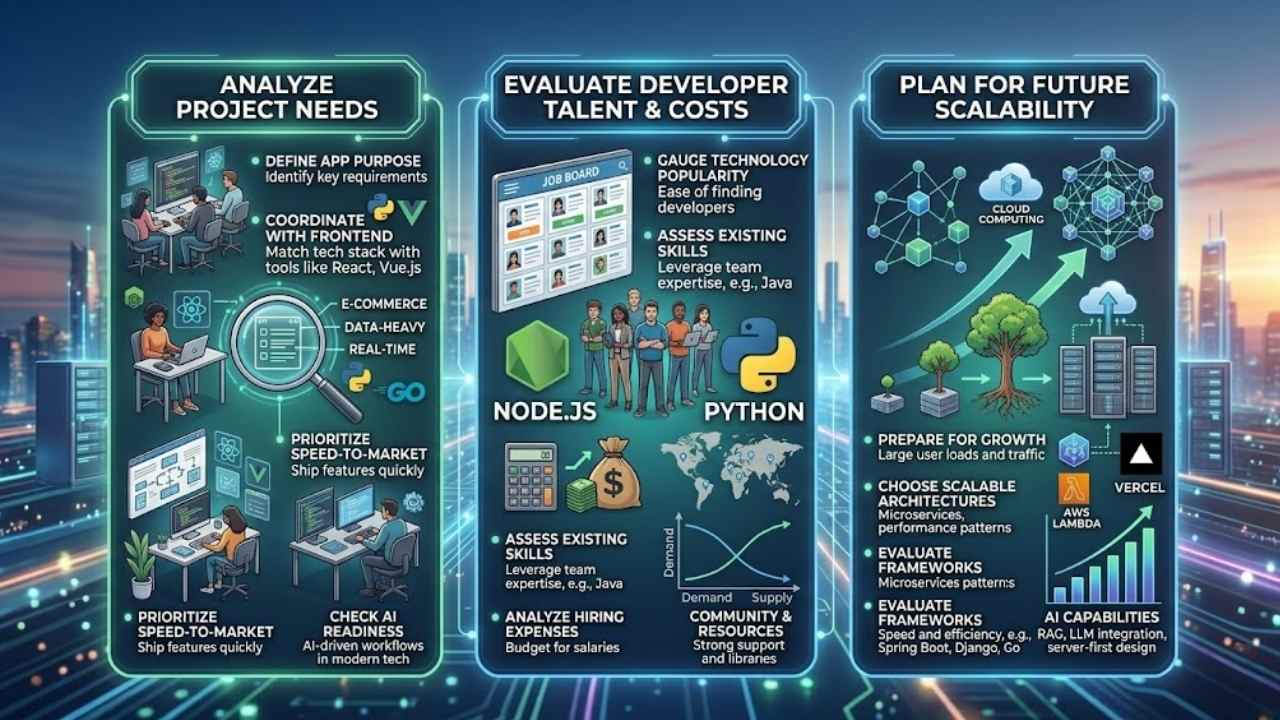
Picking the right back-end tech feels like choosing a trusty sidekick for your web app adventure, one that handles the heavy lifting without drama. Think about your team’s skills, the app’s growth potential, and how tools like Node.js or Django fit into that mix, and you’ll set yourself up for smooth sailing ahead.
Understand Your Project Requirements
Start by figuring out what your web project really needs, folks. Backend technologies power those robust and scalable apps that run everything on the web. Think about performance and scalability right away, since Node.js, Python, Java, and Go stand out as top picks for 2026.
Frontend tools like React, Angular, and Vue.js shape your whole tech stack, so match them with backends that fit. Your choices affect how fast teams ship features to production, like a well-oiled machine humming along.
AI-driven workflows emerge as a big trend, reshaping development processes, so check for AI readiness in your options. Server-first performance matters a ton now, especially with new browser standards changing workflows in 2026.
Evaluate backend frameworks on features, performance, and scalability for your needs. Meta-frameworks such as Next.js and Nuxt serve as standard entry points these days, ditching old manual setups.
Modern architecture patterns play into this too, helping you pick what’s best. Imagine your project as a puzzle; each piece, from Django in Python to Spring Boot in Java, must click into place for long-term success.
Go for options that boost developer productivity, cutting time-to-market. This approach keeps things smooth, avoiding headaches down the road.
Evaluate the Talent Pool and Hiring Costs
Pick a back-end technology with a strong talent pool, and you save big on hiring. Node.js draws tons of developers, so teams find skilled folks fast. Python pulls in experts too, keeping costs down.
Java and Go round out the top picks for 2026, each with solid communities. Frontend tools like React, Angular, and Vue.js shape your whole stack, so match them well. Smart choices speed up shipping features to production.
Hiring for rare skills jacks up expenses, like chasing a needle in a haystack. Check job boards for Node.js pros; they pop up everywhere. Python devs abound, easing budget strains.
Go with Java if your crew knows it already. These options boost developer productivity and cut time-to-market. AI-driven workflows in 2026 make popular tech even smarter for teams.
Consider Future Scalability Needs
Think about how your app will grow over time. Backend technologies like Node.js, Python, Java, and Go shine in building scalable applications that handle big loads. You want tools that support server-first performance, right? That keeps things fast as user numbers climb.
Pick frameworks evaluated for performance and scalability, such as those ready for AI and modern patterns. Imagine your project exploding in popularity, like a viral hit. Node.js and Go often lead here because they scale without breaking a sweat.
Teams choose these to ship features quickly to production. Factor in AI-driven workflows that reshape development in 2026. New browser standards play a part too, influencing your stack.
Go for maturity that matches long-term needs, avoiding headaches down the road. Chat with developers who swear by Python for its ease in scaling data-heavy apps. This approach keeps you ahead, no sweat.
Final Thoughts
We’ve covered the top back-end picks like Express.js and Django that power scalable web apps in 2026, along with trends such as serverless setups and AI integrations that keep things fresh.
These choices make development a breeze, you can implement them fast without breaking a sweat, and they boost your project’s efficiency right away. So, what back-end tech will you grab for your next big idea? Picking the right one ramps up your app’s performance and slashes long-term headaches, leading to real success in a crowded digital world.
Check out docs on Node.js or Python communities for more tips, and hey, go build that killer app you’ve dreamed about.
Frequently Asked Questions (FAQs) About Back-End Technologies for Web Development
1. What makes Node.js a top back-end pick for web development in 2026?
Node.js rules the roost with its speedy JavaScript runtime, letting you build scalable APIs like a pro. It handles real-time apps without breaking a sweat, kind of like a trusty sidekick in a superhero flick. Plus, its vast ecosystem keeps developers grinning from ear to ear.
2. I’m curious, will Python still lead back-end tech in 2026?
Python stays a powerhouse for web development, thanks to frameworks like Django and Flask that simplify server-side tasks. It shines in data-heavy projects, analyzing trends as smoothly as butter on hot toast.
3. What about Go for back-end work in the coming years?
Go, or Golang, surges ahead in 2026 for its efficiency in handling concurrent processes, making it ideal for high-performance microservices.
4. Tell me, how does Rust fit into top back-end technologies by 2026?
Rust grabs attention for its safety features, preventing those pesky memory errors that plague other languages. Developers love it for building reliable databases and secure systems, almost like crafting a fortress against bugs. It pairs well with cloud-native setups, boosting speed without the usual headaches.