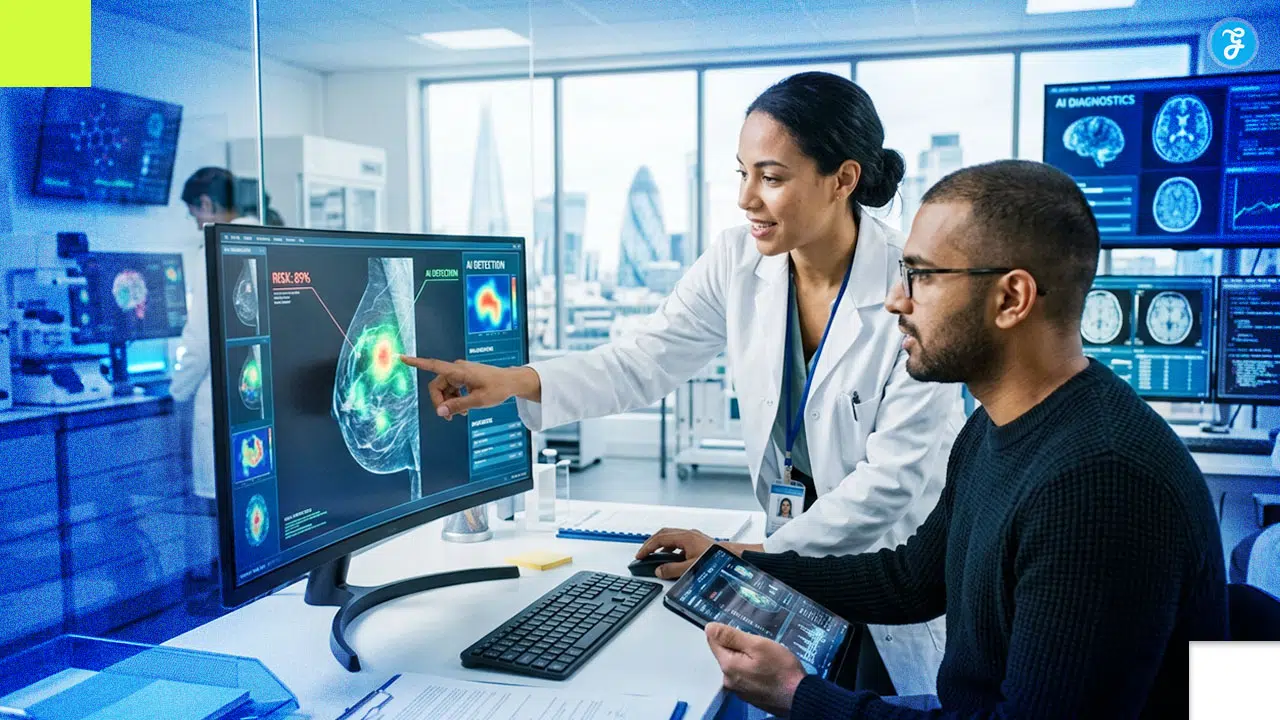
The atmosphere in a typical NHS radiology department in 2026 is noticeably quieter. The frantic backlog of grayscale images is rapidly shrinking. Instead, radiologists work alongside digital partners that never tire. These systems flag microscopic shadows on lung scans before a consultant even clicks the file. This is no longer a test phase. Today, AI diagnostics startups in UK serve as the backbone of a standard medical workflow. We have shifted from reactive treatment to proactive screening. This transition saves more than money. It buys time, the one resource a patient cannot afford to lose.
The 2026 Context: Engines of Growth
The UK’s leap in medical technology did not happen by chance. It was engineered through the AI Diagnostic Fund and the Sovereign AI Unit. These initiatives acted as the primary catalysts for the rapid expansion seen this year. By late 2025, the government realized that human capacity alone could not meet the rising demand for screening.
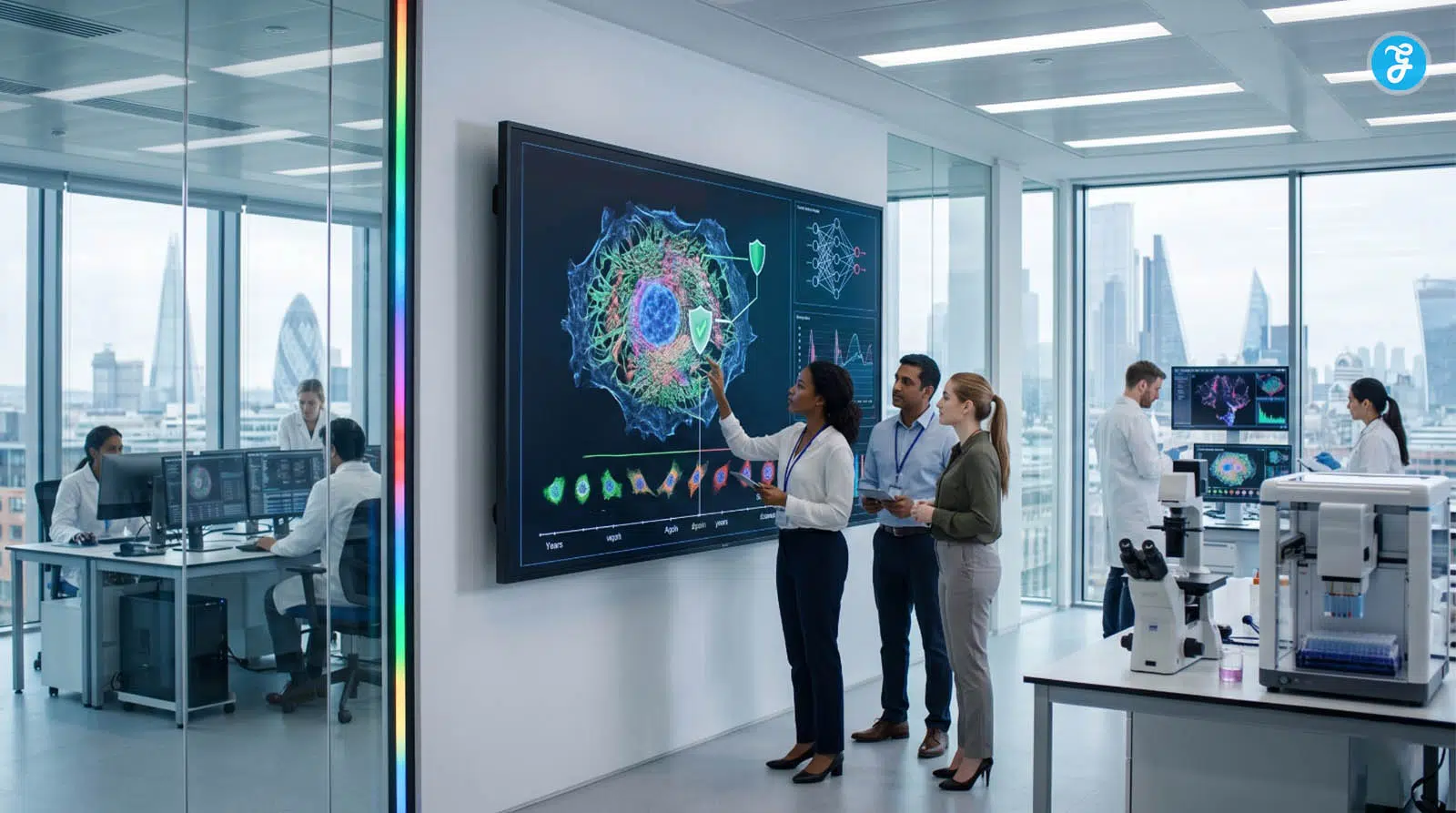
The Sovereign AI Unit provided the necessary compute power. For many companies, the cost of high-end GPUs was once a barrier. Now, the state treats AI processing power like a utility, similar to electricity or water. This allowed local firms to train their models on massive, diverse datasets within the secure NHS environment.
The AI Diagnostic Fund, a multi-million dollar investment, focused on deployment. It bridged the “valley of death” between a working algorithm and a tool used in a clinical setting. By 2026, this fund ensured that even smaller regional hospitals had access to the same world-class screening tools as major London teaching centers. This leveled the playing field for patient care across the country.
A major hurdle for medical technology has always been the “validation gap.” In 2026, the MHRA AI Airlock officially launched as the UK’s first regulatory sandbox for Artificial Intelligence as a Medical Device (AIaMD). This program allows startups to test their algorithms in real-world NHS environments under rigorous supervision before receiving a full UKCA mark.
Safe-Zone Testing and Real-World Evidence
The Airlock provides a “safe zone” where innovators can identify and fix potential biases or errors without risking patient safety. This collaborative approach between regulators and founders has slashed the time it takes for a new diagnostic tool to reach the clinic. Instead of years of bureaucratic delay, safe and effective tools are now reaching patients in months.
The Post-Market Surveillance Shift
The Airlock also pioneered “dynamic certification” in 2026. Unlike traditional static medical devices, AI models learn and evolve. The Airlock framework requires continuous monitoring to ensure that an algorithm’s accuracy does not “drift” over time. This high level of oversight is why British AI diagnostics are now considered the safest and most reliable in the world.
The UK’s New Frontline in AI Health Screening
The landscape of British healthcare is shifting from manual observation to automated precision. In 2026, the diagnostic frontline is defined by algorithms that process millions of data points in seconds.
This transformation is not just about speed. It is about catching life-threatening conditions at a stage where they are still treatable.
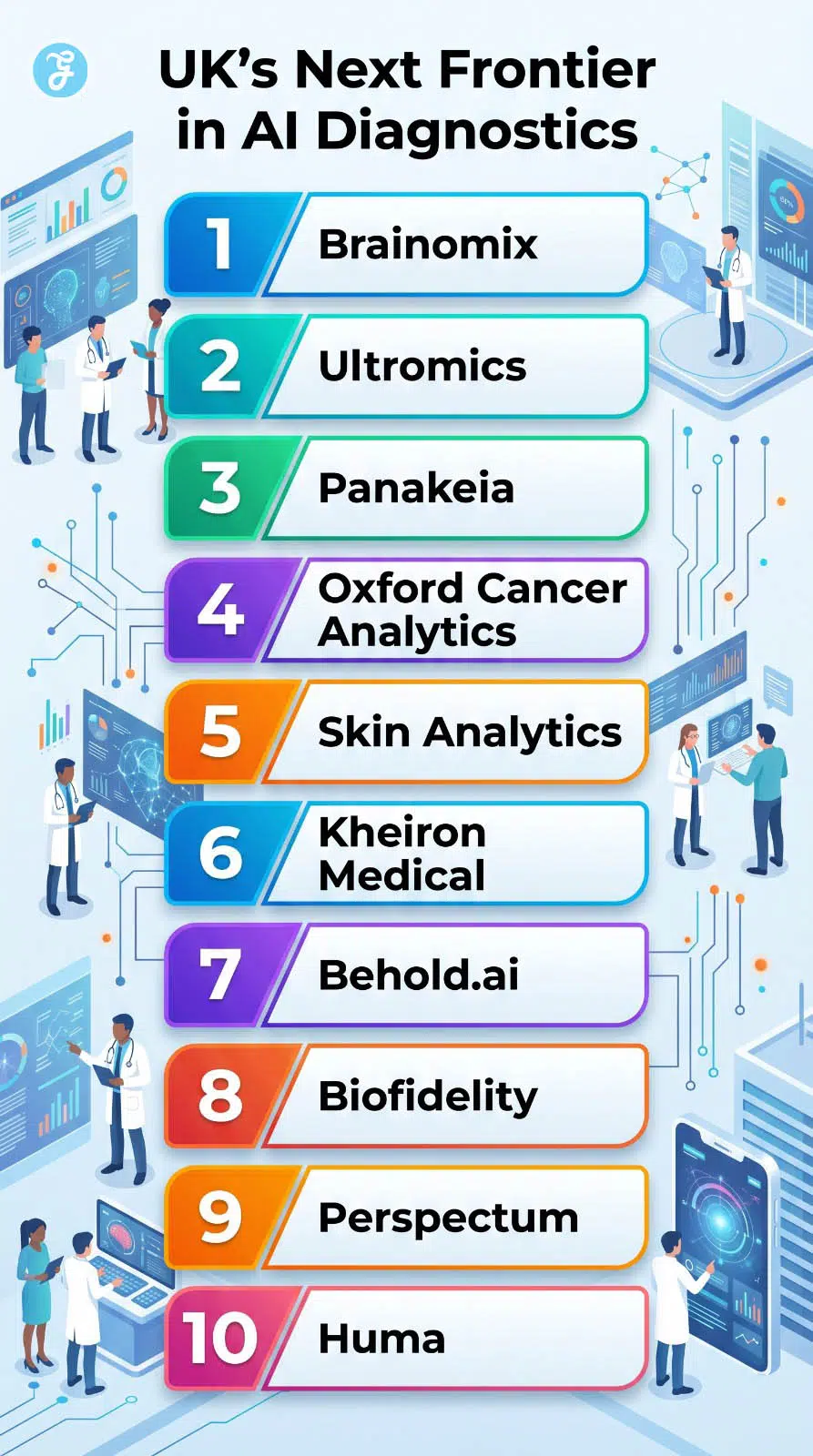
1. Brainomix
Best For: Rapid stroke triage and chronic lung disease monitoring.
Core Technology: The e-Stroke and e-Lung platforms use machine learning to automate the interpretation of CT scans. They identify vascular occlusions and quantify lung tissue damage without human intervention.
Market Impact: By accelerating the decision to administer clot-busting drugs, Brainomix has significantly reduced the rate of long-term disability in stroke patients across the NHS.
Limitations: The system requires high-quality CT imaging to maintain accuracy and is currently limited to specific neurological and respiratory pathologies.
2. Ultromics
Best For: Precision echocardiography and early heart failure detection.
Core Technology: Their EchoGo platform applies AI to ultrasound images of the heart. It extracts thousands of data points to calculate the probability of heart failure with preserved ejection fraction (HFpEF).
Market Impact: It has removed the subjectivity from heart scans, ensuring that women and older adults who traditionally face underdiagnosis receive immediate care.
Limitations: It relies on the skill of the sonographer to capture clear initial views, as the AI cannot fix poorly angled original footage.
3. Panakeia
Best For: Fast-tracking cancer pathology results.
Core Technology: PANProfiler analyzes standard H&E tissue slides digitally to predict molecular biomarkers. This skips the need for physical chemical testing that usually takes weeks.
Market Impact: It enables “one-stop” diagnostic clinics where patients can receive a full molecular profile of their tumor during their first hospital visit.
Limitations: While highly accurate, current regulatory frameworks still require some traditional lab verification for certain rare genetic mutations.
4. Oxford Cancer Analytics
Best For: Non-invasive multi-cancer early detection.
Core Technology: Their platform utilizes machine learning to scan for proteomics in blood. It detects the unique “chemical signature” left by early-stage tumors long before they show up on X-rays.
Market Impact: This has moved cancer screening out of the radiology suite and into the local primary care clinic through a simple blood draw.
Limitations: There is a risk of “over-diagnosis” where the AI flags tiny biological abnormalities that may never have progressed to clinical disease.
5. Skin Analytics
Best For: Automated skin cancer screening in community settings.
Core Technology: The DERM AI uses advanced computer vision to analyze photos of skin lesions. It compares them against a vast database of millions of confirmed cases to grade malignancy.
Market Impact: It has successfully offloaded thousands of “low risk” cases from hospital waiting lists, allowing specialists to focus on urgent melanoma patients.
Limitations: The AI can struggle with lesions located in areas with heavy hair or on patients with very dark skin tones if the lighting is inconsistent.
6. Kheiron Medical
Best For: Supporting radiologists in high-volume breast screening.
Core Technology: The Mia platform acts as an independent second reader for mammograms. It highlights suspicious clusters and architectural distortions that human eyes might overlook during a long shift.
Market Impact: In 2026, Mia helped the NHS detect over 10% more invasive cancers compared to traditional double-reading by human doctors alone.
Limitations: High sensitivity can sometimes lead to an increase in patient recalls for biopsies that ultimately turn out to be benign.
7. Behold.ai
Best For: Instant prioritization of emergency radiology workloads.
Core Technology: Their Red Dot algorithm analyzes chest X-rays in under 30 seconds. It identifies pneumothorax, lung cancer signals, and other acute abnormalities.
Market Impact: It has effectively eliminated the “waiting list” for emergency X-ray reporting by ensuring that critical scans are seen by a human doctor first.
Limitations: The tool is designed for triage and prioritization, meaning it cannot provide a definitive final diagnosis without human oversight.
8. Biofidelity
Best For: Decentralized genomic testing for precision oncology.
Core Technology: The ASPIDE platform simplifies the chemistry of DNA sequencing. It uses AI to interpret genetic mutations at the molecular level without requiring a full genomics lab.
Market Impact: It has brought precision medicine to regional hospitals, allowing doctors to prescribe targeted cancer drugs within 72 hours of a diagnosis.
Limitations: The technology is currently optimized for a specific set of actionable cancer mutations rather than whole-genome sequencing.
9. Perspectum
Best For: Non-invasive monitoring of metabolic liver disease.
Core Technology: LiverMultiScan uses AI to turn standard MRI data into a quantitative map of liver fat, iron, and inflammation.
Market Impact: It has rendered the painful and risky needle biopsies obsolete for thousands of patients with fatty liver disease or NASH.
Limitations: The cost of MRI time remains high, which can limit the frequency of screening for some primary care networks.
10. Huma
Best For: Predictive home monitoring and chronic disease management.
Core Technology: Huma uses AI to analyze “passive data” from wearables and smartphones. It looks for subtle shifts in heart rate, gait, and oxygen levels to predict health crashes.
Market Impact: By predicting heart failure exacerbations a week in advance, Huma has kept thousands of vulnerable patients out of hospital beds in 2026.
Limitations: Successful screening depends entirely on patient compliance and the consistent use of connected digital devices.
The Rise of Ambient Diagnostics in Neighborhood Health
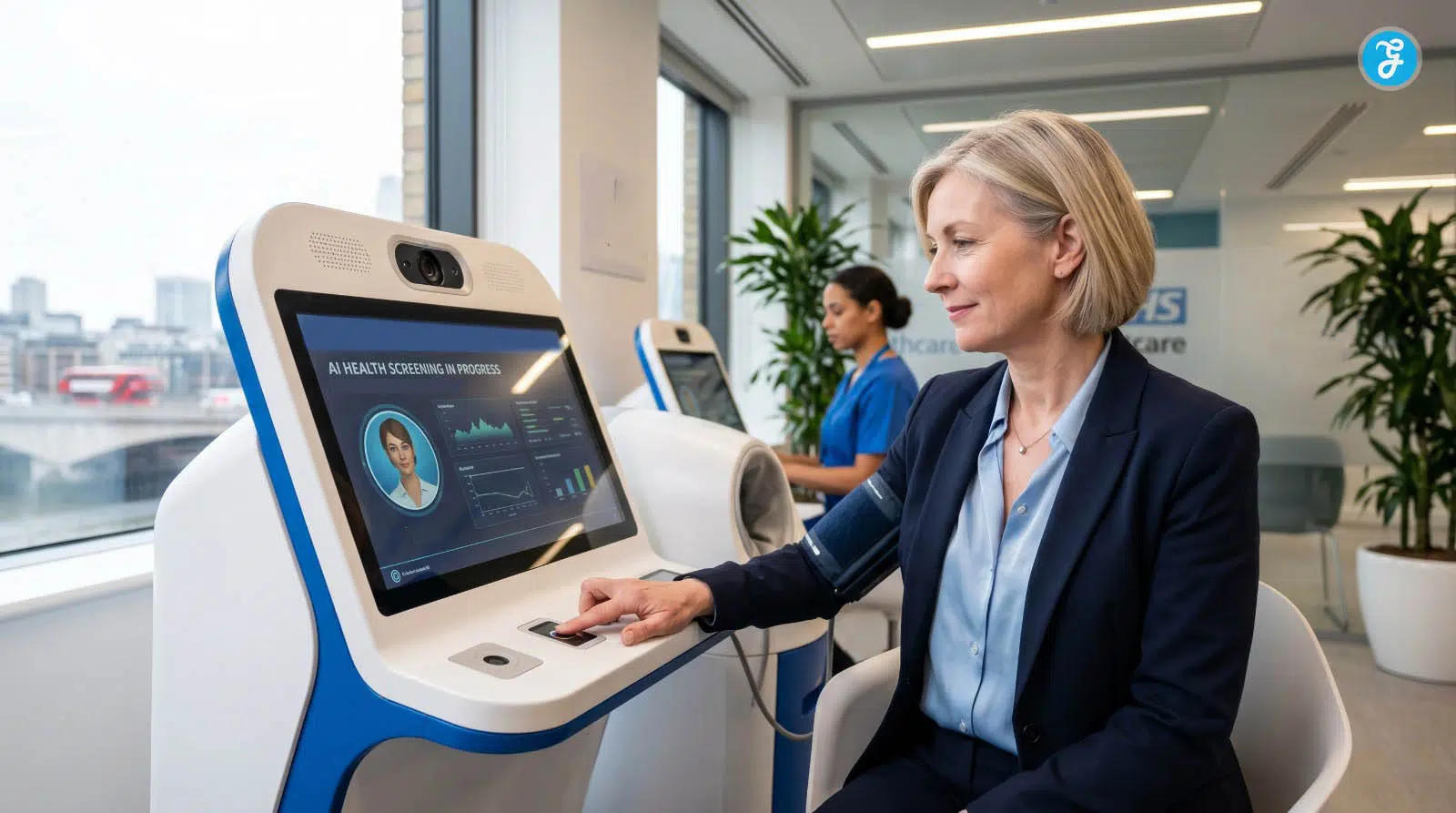
While the “Top 10” list focuses on specialized imaging, 2026 has seen a massive surge in “Ambient AI” within primary care. GP surgeries are no longer just places for consultations; they are becoming diagnostic hubs. New “Ambient Voice Technology” (AVT) is being rolled out to capture patient symptoms during a conversation, automatically screening for early signs of cognitive decline or respiratory distress.

This “silent” diagnostic layer works in the background of a standard appointment. It analyzes vocal biomarkers, such as the pitch, pace, and pauses in a patient’s speech, to flag risks of Parkinson’s or depression long before a physical symptom appears. This technology represents the ultimate humanization of AI: it allows the doctor to maintain eye contact with the patient while the machine handles the complex diagnostic screening in the background.
The Sovereign Compute Edge: GPU Power as a Public Utility
The democratization of processing power stands as one of the most significant advantages for AI diagnostics startups in the UK this year. Training a model to recognize Stage 1 cancer requires immense “compute.” Historically, British firms were forced to rent this capacity from overseas cloud giants, an arrangement that resulted in exorbitant costs and persistent data sovereignty concerns.
By early 2026, the launch of the Isambard-AI supercomputer in Bristol and the strategic expansion of the University of Cambridge’s Dawn system fundamentally changed the equation. The UK government now provides “GPU hours” as a public utility to vetted healthtech firms, much like electricity or water. For a pioneer like Oxford Cancer Analytics, this means a year’s worth of data simulations can now be executed in a single weekend. This “Sovereign Compute” infrastructure ensures that both the intellectual property and the sensitive patient data used for training remain securely on British soil.
Data Sovereignty and Local Training
By providing localized compute power, the UK ensures that sensitive patient data never leaves British soil to be processed in foreign clouds. Startups can now train their models on massive, diverse datasets within the secure boundaries of the NHS. This has created a “virtuous cycle” where the algorithms get smarter and more accurate without compromising national data security.
Market Challenges and the Ethics of Automated Medicine
The transition to a machine-led diagnostic system brings significant friction alongside its benefits. Technical success is only half the battle. For these startups to survive, they must navigate a thicket of public skepticism and shifting financial tides. By 2026, the focus has moved from “does it work” to “can we trust it with our lives.”
The Data Privacy Debate and Federated Trust
Patient trust is the currency of the modern health service. The UK has addressed this through the Federated Data Platform. This system avoids moving sensitive patient records into a single central hub. Instead, it allows AI models to learn from data where it lives, inside local hospital firewalls. This “privacy by design” approach has largely silenced critics who feared a massive data leak. It ensures that while the algorithm gets smarter, the patient remains anonymous.
Cracking the Black Box with Explainable AI
Medical professionals once worried about the “Black Box” problem, where an AI gives a result but cannot explain why. In 2026, new regulations changed the game. Any diagnostic tool used in the UK must now meet “Explainable AI” standards. This means a software must highlight the specific pixels in an X-ray or the exact biomarkers in a blood test that led to its conclusion. Doctors are no longer taking a computer’s word for it. They are reviewing the machine’s homework.
The 2027 Investment Horizon and M&A Trends
The financial future for these firms looks consolidated. As we move toward the 2027 cycle, analysts expect a surge in mergers and acquisitions. Large pharmaceutical companies and global tech giants are no longer building their own diagnostic tools from scratch. They are buying proven UK startups to integrate into their broader drug development pipelines. For many founders, the goal is no longer an IPO. The prize is becoming the primary diagnostic layer for a global health conglomerate.
Moving the Needle on Longevity
The ultimate goal of this technological shift is to extend the human healthspan. We are witnessing a move away from the era of late-stage intervention. By catching cellular changes years before they manifest as physical illness, these companies are effectively rewriting the aging process.
The 2030 Vision: Caught Not Fought
By the end of this decade, the medical community expects a world where cancer is “caught, not fought.” The aggressive, debilitating treatments of the past will become rare.

In this future, a routine annual scan or blood test powered by an algorithm identifies the earliest whispers of malignancy. Doctors can then remove or treat a handful of cells before they ever become a tumor. This is the promise of the next four years. It turns oncology from a war of attrition into a manageable, preventative routine.
The Global Gold Standard
The world is watching AI diagnostics startups in UK because they have done what others could not. They integrated advanced mathematics with a nationalized health system. This provides a level of real-world evidence that private insurance markets in other countries struggle to replicate.
As these British firms export their code and clinical findings, they are setting the rules for 21st-century medicine. They are proving that high-tech screening is not just a tool for the wealthy. It is a fundamental right for every patient. The shift to predictive care is no longer a dream. It is happening now, one line of code and one early diagnosis at a time.
Frequently Asked Questions (FAQs) on AI diagnostics startups in UK
How does the 2026 Sovereign AI Unit specifically help small startups?
In 2026, the Sovereign AI Unit acts as a digital utility provider. It offers small startups “compute credits” to access high-end GPUs that were previously cost-prohibitive. This allows boutique firms to train complex models without the multi-million dollar overhead typically associated with massive data processing.
What is “Algorithmic Decay” and how are UK startups fixing it?
Algorithmic decay occurs when an AI’s accuracy drops because hospital hardware changes or disease patterns shift (like a new virus variant). Leading UK startups now use “continuous monitoring” protocols that flag when an algorithm’s performance drifts from its baseline, triggering a retraining cycle before patient care is affected.
Can these AI tools work with old NHS computer systems?
Interoperability is a major challenge. While 66% of healthcare organizations still use legacy infrastructure, 2026’s top startups use “API-first” designs. This allows their modern AI to sit as a layer on top of old software, pulling and pushing data without requiring the hospital to replace its entire IT stack.
Are there “AI-only” hospitals in the UK yet?
No. Current UK regulations and the 2026 “Human-in-the-Loop” mandate require that AI only functions as a decision-support tool. Every final diagnosis must still be signed off by a qualified clinician. AI acts as a high-speed filter, but the human doctor remains the ultimate authority.
How does the “AI Diagnostic Fund” affect my local regional hospital?
The fund is specifically designed to prevent a geographic disparity in healthcare. It provides the capital for regional and rural NHS trusts to lease AI software from these top startups. By 2026, this has ensured that a patient in a small coastal town has the same access to early cancer detection as someone in a major London teaching hospital.
What happens if the AI makes a mistake?
The legal landscape in 2026 has shifted toward “shared liability.” Startups must hold specific AI-malpractice insurance, but hospitals must also prove that their staff used the tool correctly. New “Automation Bias” training for doctors helps prevent them from blindly following a machine’s suggestion if it contradicts their clinical judgment.
Disclaimer: This article is for informational purposes only and does not constitute medical or financial advice. AI diagnostic tools are clinical decision support aids and not a substitute for professional judgment. Always consult a qualified healthcare provider for medical concerns or before making health decisions.
Note on Methodology: This ranking reflects the extensive research and analysis conducted by our editorial team. While we have numbered these companies for clarity, this list does not represent a strict hierarchy or a definitive judgment on the value of one innovator over another. Every startup featured here provides distinct clinical breakthroughs within the UK’s AI-driven diagnostics sector.