


High employee turnover hits companies hard. It ramps up recruitment costs, cuts productivity, and hurts team morale. Imagine your best workers walking out the door because they feel stuck, with no chances for growth. Many firms face this mess in today’s job market. E-learning steps in as a smart fix, offering flexible training that keeps staff engaged and loyal.
Take this fact from the Research Institute of America: e-learning boosts knowledge retention by 25% to 60%, far above the 8% to 10% from old-school methods. This blog post explores how online training, through personalized learning and microlearning, drives up employee satisfaction and cuts turnover.
You’ll find tips on onboarding programs, gamification, and continuous development to build a stronger workforce. Ready to boost retention?
The Role of E-Learning in Employee Retention
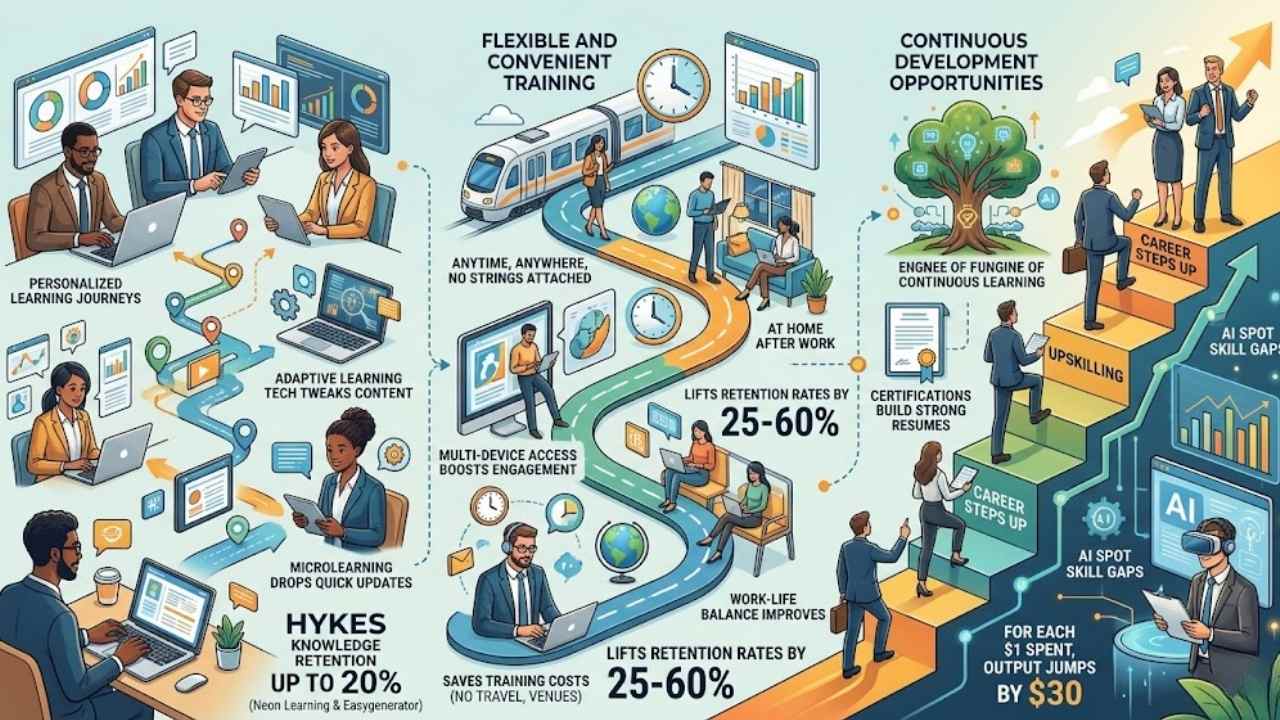
E-learning boosts employee retention by offering adaptive learning paths that match individual needs, like a custom roadmap to career growth. Imagine workers accessing on-demand training through a learning management system, anytime, which sparks engagement and cuts turnover, much like fueling a car to keep it running smooth.
Personalized learning experiences
Personalized learning experiences in e-learning boost employee retention by fitting training to each person’s needs. Companies use platforms to create customized programs that match career goals and daily roles.
These paths deliver relevant skills, which amps up performance and makes workers feel valued. Adaptive learning tech tweaks content on the fly, based on how someone does, so no one gets bored or swamped.
Imagine a visual learner watching videos, while a hands-on type grabs interactive simulations, all beating old-school methods hands down. Bite-sized microlearning drops quick updates, skipping full retrain sessions, and it hikes knowledge retention by up to 20%, per Neon Learning and Easygenerator reports.
Skill Dynamics notes that providing ongoing e-learning with customized learning paths demonstrates a company’s investment in employees’ careers and fosters increased loyalty.
Workers stick around longer with this setup, as it fuels continuous learning and job satisfaction through flexible, on-demand training. Learning management systems power these adaptive plans, often with AI to spot skill gaps and suggest paths.
Think of it like a custom suit, not one-size-fits-all, helping with upskilling, reskilling, and even soft skills training for better engagement. Mobile learning lets folks train anytime, blending into busy lives, which sparks career development and organizational growth.
Firms like Paycom and IBM show how this approach cuts turnover, building loyalty through talent development and performance improvement.
Flexible and convenient training
E-learning fits right into busy lives, like a puzzle piece snapping into place. Employees grab training modules on their own time, at their own pace. This setup works great for folks with odd shifts or remote jobs.
They learn anytime, anywhere, no strings attached. Multi-device access boosts employee engagement and satisfaction, plain and simple. Imagine a worker finishes a quick lesson on their phone during a commute, feeling zero stress.
On-demand options ease the load, improving work-life balance for everyone.
Companies save big with this approach, cutting training costs by ditching travel, venues, and instructors. Online learning slashes energy use by 90 percent and lifts retention rates by 25 to 60 percent.
Research shows it takes 40 to 60 percent less time than old-school classes. Learners cover almost five times more material in the same stretch. Online courses wrap up 60 percent faster, too, making professional development a breeze.
Tools like a learning management system (LMS) handle it all, from compliance training to skill gap assessments. Blended learning mixes things up for even better training effectiveness.
Continuous development opportunities
Employees value growth in their jobs. Continuous learning through e-learning makes them feel appreciated. This boosts their loyalty to the company. Think of it like watering a plant; it thrives and sticks around.
E-learning offers upskilling and reskilling for career steps up inside the firm. Certifications from courses build strong resumes and add security. These programs update staff on new tech tools and features as things change.
Workforce development shines here with training solutions that fit busy lives. Employee training stays goal-focused, interactive, and fresh for better knowledge hold and output. For each dollar on online training, output jumps by $30.
The US and Europe lead the e-learning market with 70% of revenue. AI-powered learning plans, like those from HubSpot or the University of the Potomac, keep skills sharp. Virtual reality adds fun to leadership training and succession planning, per Forbes and Harvard Business Review.
Stacey Pezold at MATC Group notes how this builds business growth and organizational resilience, even post-COVID-19 pandemic.
Key Benefits of E-Learning for Retention
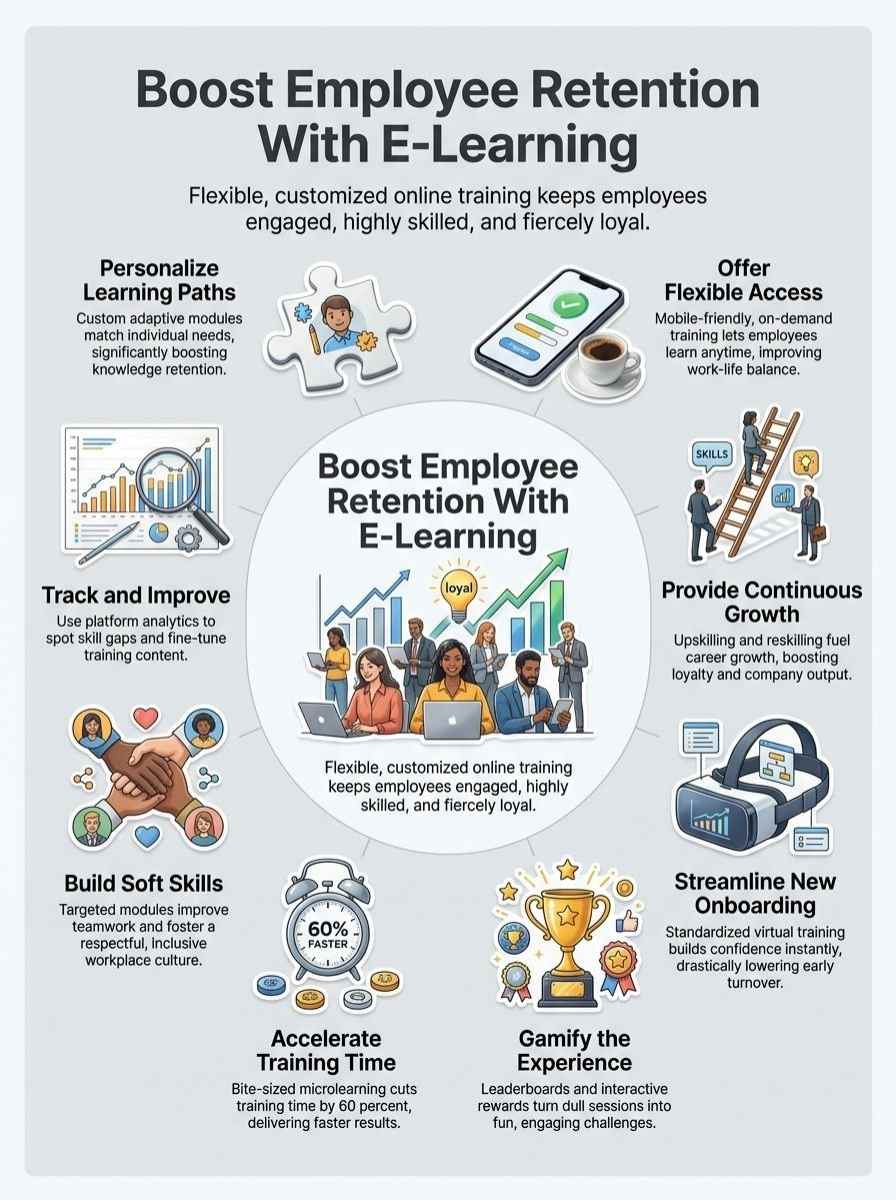
E-learning transforms how workers stick around, like a secret sauce that keeps teams happy and sharp. Chief learning officers often turn to groups, such as the American Society for Training and Development or Brandon Hall Group, for data on how AI-powered learning paths spark real engagement and quick skill boosts.
Enhanced onboarding experiences
New hires often feel overwhelmed on their first day. E-learning changes that picture, folks. It standardizes onboarding programs at scale, delivering uniform quality of training that boosts confidence right away.
Picture a chief learning officer using AI powered learning plans to guide fresh faces through the ropes. This approach cuts anxiety and helps employees settle in fast. Studies from Articulate and Easy generator show it lowers the chance of quick quits.
Companies see real gains here. The American Society for Training and Development highlights how e-learning streamlines these processes, sparking early engagement. Brandon Hall Group backs this up with data on smoother starts.
Employees access modules in small chunks, repeating them as needed for better grasp. Virtual reality even lets them practice real scenarios, like a dress rehearsal for the job. Training builds skills that stick, making folks eager to stay.
Increased employee engagement
E-learning sparks real excitement in the workplace. Imagine this, folks, employees jump into training that feels like a game, not a chore. Gamification elements like leaderboards and rewards boost participation and fun.
These tools turn dull sessions into lively challenges. E-learning technologies have led to an 18% jump in employee engagement. Platforms update content often, so workers stay sharp on the latest procedures and best practices.
The online education market grows fast, set to hit $374 billion by 2026.
Interactivity in e-learning amps up involvement and builds confidence. Employees tackle company-specific processes through hands-on modules, mastering operations with ease. Analytics on these platforms track progress and spot weak spots for quick fixes.
Finishing courses creates that sweet sense of achievement, lifting morale sky-high. This approach enhances completion rates and keeps everyone fired up. E-learning delivers thorough training on key skills, making daily work smoother and more rewarding.
Improved job satisfaction and morale
Employees love feeling valued at work, and e-learning steps in like a supportive coach to boost that vibe. Imagine this: your team engages with courses that show a clear path for advancement, sparking real job satisfaction and loyalty.
They build soft skills, creating a harmonious workplace where conflicts fade and collaboration thrives. Soft skills training even preps folks for leadership roles, making those jumps into management feel smooth as silk.
Plus, completing these online courses lifts happiness and satisfaction levels, just as eLearning Industry points out.
Companies commit to growth through e-learning, and it pays off big time in morale. Workers gain confidence from process training, tackling roles with ease. Knowledge sticks better too, jumping 25 to 60 percent versus the puny 8 to 10 percent from old-school methods.
Regular feedback from analytics keeps everyone on track with goals, improving skills and productivity. It’s like giving your team wings, watching engagement soar as they feel truly invested in.
Faster and more effective training
E-learning cuts training time by 40% to 60%, as Forbes reports. You get more done in less time, like speeding through a course without the drag of old-school classes. Online setups let workers cover five times the material in the same slot as traditional methods.
Imagine: a quick video module fits right into your day, no big breaks needed.
Short microlearning chunks help staff pick up skills fast, with little downtime from work. These bite-sized bits update info on the fly, skipping full retrains. Content updates easily, so everyone stays current.
This scalable approach boosts how well folks use and remember what they learn, lifting job satisfaction along the way.
E-Learning Use Cases to Boost Retention
Imagine turning your company’s training into a secret weapon that keeps top talent from jumping ship, all through smart online setups like video modules and quizzes. Picture employees thriving with courses on team communication or new software tools, sparking that “aha” moment that makes them stick around longer.
Onboarding programs
E-learning transforms onboarding programs into a smooth ride for new hires. Companies use it to standardize training at scale, delivering uniform quality that builds confidence from the start.
It streamlines the whole process, sharing key details on policies, procedures, and company culture right on day one. Think of it like a welcoming guide that eases jitters; effective onboarding cuts anxiety and helps folks settle in fast.
A Paychex survey shows 50% of new employees ponder quitting early, jumping to 80% when poor onboarding leaves them undertrained.
Findings from Articulate and Easygenerator highlight how e-learning creates a smoother path, slashing the odds of new hires bailing out. It simulates real-life scenarios with virtual reality, closing the divide between book smarts and hands-on skills.
Training modules break into bite-sized chunks, making knowledge stick better. Plus, learners replay lectures as needed, perfect for prepping exams or studying solo.
Soft skills development
Companies build stronger teams through e-learning focused on soft skills like communication, teamwork, and problem-solving. These modules boost employee interactions and ramp up productivity, you know, like oil smoothing out a rusty engine.
Well-developed soft skills create a harmonious workplace; they cut down on conflicts and spark effective collaboration. Imagine a team chatting freely without the usual drama, everyone pulling in the same direction.
Soft skills training sets folks up for leadership roles too, making those jumps into management feel like a natural step, smooth as silk.
Microlearning in these programs lifts knowledge retention by up to 20 percent over old-school methods, as Neon Learning and Easy generator report. E-learning fits various styles, visual, auditory, hands-on, way better than traditional setups.
Personalized paths deliver spot-on training for specific jobs, pumping up employee value and performance. Regular feedback from analytics keeps everyone on course with their growth goals.
Hey, it’s like having a personal coach in your pocket, cheering you on. This approach turns e-learning into a powerhouse for keeping great talent around.
Technology and process training
E-learning turns tech training into a breeze for your team. Imagine this, folks, you’re handing employees the keys to master daily software like email apps and project trackers right from their desks.
They get comfy and sharp with these tools fast. That boosts their productivity and cuts down on those head-scratching frustrations. Plus, online courses slash energy use by 90 percent, a real win for the planet and your budget.
Process training via e-learning keeps everyone in the loop on company operations. Employees learn specific procedures, feeling confident and making fewer slip-ups. Efficiency skyrockets, and so does job satisfaction.
These platforms update content often, sharing fresh features and best practices as tech changes. Retention rates jump 25 to 60 percent with this approach, keeping your crew happy and hooked.
Diversity, Equity, and Inclusion (DE&I) training
Companies offer e-learning courses on diversity, equity, and inclusion, or DE&I, to build a culturally inclusive workplace. These courses foster a culture of respect and belonging among teams.
They pair well with ethics training, which helps employees grasp organizational standards and legal rules. Imagine your team chatting over coffee about fair treatment; that’s the vibe DE&I aims for, like a well-blended smoothie where every flavor shines.
Teams scale company-wide training through e-learning to share initiatives, goals, and values with ease. This approach aligns everyone with the company’s mission and boosts unity and purpose.
Platforms deliver scalable, updatable, on-demand content for better material usage and retention. They use bite-sized microlearning to update info without full retraining. Analytics track progress and spot improvement areas, while measuring knowledge retention checks understanding of DE&I and ethics.
Picture it as a fitness tracker for your brain, keeping skills sharp and inclusive.
Designing Effective E-Learning Programs
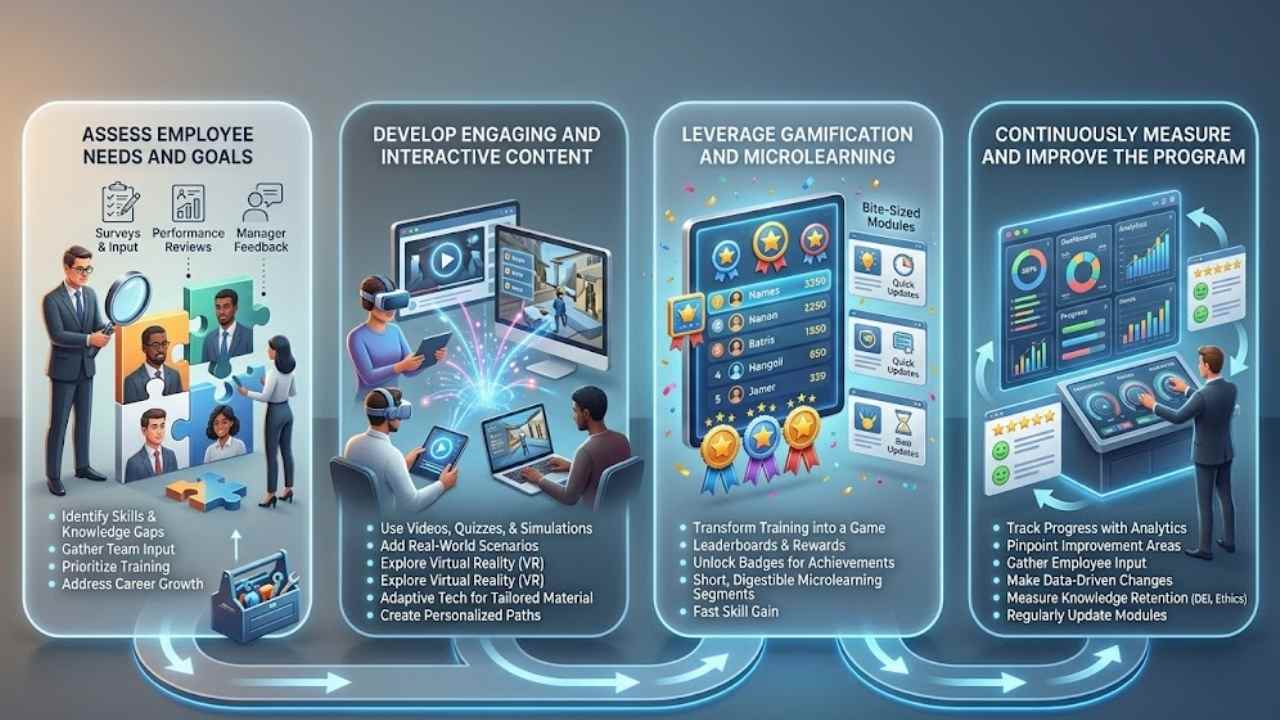
5. Designing Effective E-Learning Programs: Hey, imagine turning your company’s training into a fun adventure that employees actually crave, by figuring out what your team really wants, whipping up interactive lessons packed with quizzes and bite-sized modules on platforms like Moodle or Canvas, and keeping tabs on results to tweak things just right—curious for the full scoop on making it happen? Keep reading!
Assess employee needs and goals
Start with the basics to build a strong e-learning program. Identify skills and knowledge gaps in your organization first. This step kicks off an effective e-learning strategy. Picture your team, like a puzzle missing a few pieces, and you spot those gaps to make everything fit.
Employees often quit jobs because they lack growth, so addressing needs keeps them around. Use surveys to gather input from the crew. Grab performance reviews for real insights. Pull in manager feedback to pinpoint what matters most.
These tools help set training priorities that match what folks really want.
E-learning shines here by supporting upskilling and reskilling for career boosts inside the company. It delivers bite-sized microlearning, you know, those quick hits of updated info without redoing whole processes.
Professionals crave flexibility, and the Association for Talent Development reports 96% need it in training. Your program becomes scalable, updatable, and on-demand this way. Employees use and retain material better.
Long-term knowledge sticks around too. Hey, it’s like giving your team a toolbox they actually reach for, day in and day out.
Develop engaging and interactive content
Companies build engaging e-learning content with interactive tools like videos, quizzes, and simulations. They add real-world scenarios to make lessons pop. This approach keeps things digestible, relevant, and easy to remember, which boosts retention.
Imagine an employee exploring a virtual reality setup that mimics their daily tasks; it closes the divide between theory and real action. E-learning sparks interactivity, ramping up participation, confidence, and how often folks finish courses.
Gamification perks things up with leaderboards and rewards, making training feel like a fun game. Adaptive tech tweaks the material based on how someone performs, dodging boredom or overload.
Platforms craft custom programs that fit each worker’s needs and goals. Personalized paths deliver spot-on training for specific jobs, lifting value and output.
Leverage gamification and microlearning
Gamification turns training into a fun game. Add leaderboards and rewards to spark excitement. Employees engage more often, boosting participation and joy. Imagine earning badges for finishing modules, like collecting points in a video game.
This keeps folks hooked and eager to learn.
Microlearning breaks info into small modules. Neon Learning and Easygenerator report it lifts knowledge retention by up to 20% over old methods. Short segments let workers gain skills fast, with little work disruption.
E-learning Industry notes that finishing these courses builds achievement, lifting confidence, morale, happiness, and satisfaction. Update content easily to keep it fresh and spot-on.
Training splits into manageable bits, helping info stick better.
Continuously measure and improve the program
Companies use analytics in e-learning platforms to track employee progress. These tools pinpoint areas for improvement, like weak spots in skills. Managers give regular feedback based on this data.
This helps workers stay on track with their goals. Picture a coach reviewing game footage, spotting fumbles, and adjusting plays; that’s how analytics keep training sharp.
Ask employees for input on their training experience. This boosts program effectiveness and shows the company cares about their views. Review e-learning results often with feedback and analytics.
Make needed changes to keep content relevant. Update modules regularly so staff learn the latest procedures and best practices. Measure knowledge retention to check understanding of topics like DEI and ethics.
Keep modules goal-oriented, interactive, and current to boost retention and productivity. It’s like fine-tuning a recipe after tasting; small tweaks make the dish perfect.
Final Thoughts
E-learning transforms employee retention by offering personalized paths, flexible access, and ongoing growth that keep workers hooked. You can roll out these strategies with ease, fitting them into busy schedules without the hassle of old-school setups.
They drive big wins, like slashing turnover costs and boosting morale, as studies show a 25% to 60% jump in knowledge retention. Check out platforms like Coursera or LinkedIn Learning for ready-to-use tools that make training a breeze.
I’ve seen teams thrive when we swapped boring lectures for fun microlearning modules, turning skeptics into eager learners. So, grab this chance to build a loyal crew; after all, happy employees stick around like glue.
Frequently Asked Questions (FAQs) on E-Learning in Employee Retention
1. How does e-learning boost employee retention rates?
E-learning gives workers flexible training options that fit their busy lives, you know, like slipping into comfy shoes after a long day. This builds skills and job happiness, so folks stay put instead of jumping ship. Picture your team as a garden; e-learning waters the roots for strong growth and less turnover.
2. Why do companies turn to e-learning for better retention?
Companies use e-learning to help staff learn new tricks without leaving their desks. It sparks excitement, like finding hidden treasure in daily routines, and cuts down on folks heading for the exit.
3. Can e-learning make employees feel more loyal?
Sure, e-learning ramps up loyalty by offering quick skill boosts that match personal goals. Employees feel seen and valued, hey, it’s like getting a high-five from the boss every day. In turn, retention rates climb as people stick around for the ride.
4. What role does e-learning play in lowering turnover?
E-learning lowers turnover by personalizing development paths that keep workers engaged and growing.























