You work hard to make your website stand out, but concerns about security and search rankings can still arise. A website may trigger browser warning messages, or it might load slowly, causing visitors to leave before exploring the content. These challenges are common for many website owners trying to grow their online presence.
One important fact often overlooked is that Google favors websites that use HTTPS. Sites without HTTPS can appear less trustworthy to both search engines and users.
In 2014, Google officially confirmed that SSL is a ranking factor. Experts estimate that using HTTPS can provide up to a 5% boost in search rankings. This improvement can lead to greater visibility, more visitors, and fewer browser security warnings that might otherwise drive users away.
Understanding HTTPS and SSL as a ranking signal is essential for improving website performance. Updating a website to HTTPS not only strengthens security but also supports better search engine optimization (SEO). Most importantly, it helps protect visitors by encrypting data and creating a safer browsing experience.
What is HTTPS and SSL?
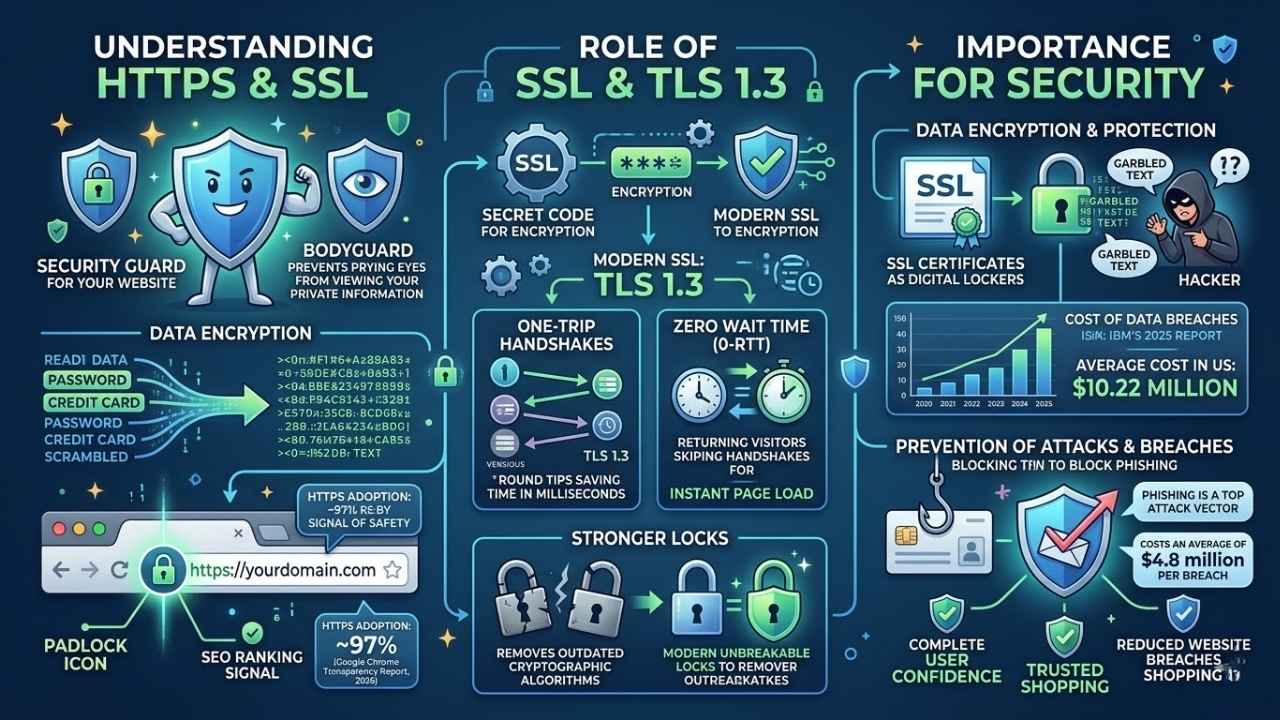
HTTPS might sound like alphabet soup. It is simply about keeping your online visits safe. SSL steps in as your website’s bodyguard. It makes sure prying eyes cannot snoop on private information.
Definition of HTTPS
HTTPS stands for Hypertext Transfer Protocol Secure. It acts as a security guard for your website.
It encrypts the data sent between a browser and a server. This encryption keeps things like passwords and credit card numbers safe from cybercriminals.
Google marks HTTPS as a search ranking signal, so secure sites get better spots in search results.
Sites with HTTPS show a padlock icon near the web address. This signals to users that their connection is safe.
Having a secure connection is basically a requirement now. According to Google’s 2026 Chrome Transparency Report, HTTPS adoption is hovering around 97% across the US.
With more people online daily, using HTTPS helps protect user privacy. It also gives your website a clear edge over less secure rivals.
Role of SSL in website security
SSL acts like a secret code between your site and its visitors. It locks data during transfer using encryption technology.
Hackers cannot read sensitive information like payment details. Google uses SSL as a ranking signal to show how important website security is for SEO success.
More than just extra protection, SSL builds trust with users by displaying the padlock icon. Without an SSL certificate, personal data can leak easily.
Modern SSL is actually called TLS, and the newest version is TLS 1.3. This updated connection protocol makes your site much faster and safer in a few specific ways:
- One-Trip Handshakes: TLS 1.3 cuts the secure connection setup to just one round-trip, saving about 200 to 300 milliseconds on mobile networks.
- Zero Wait Time: Returning visitors get a “0-RTT” connection, meaning they skip the handshake entirely and load your page instantly.
- Stronger Locks: It removes older, outdated cryptographic algorithms that hackers used to target.
In today’s landscape of browsing hazards, adding this layer makes your site safer for everyone.
Importance of HTTPS for Website Security
HTTPS acts like a secret handshake. It keeps private information safe in plain sight.
Hackers feel left out of the conversation. Meanwhile, your visitors relax and enjoy secure browsing.
Data encryption and protection
SSL certificates work like digital lockers. They scramble any sensitive data you share with a website.
Passwords and personal details turn into unreadable code. Hackers only see garbled text instead of useful information.
This makes it incredibly tough for cyber crooks to steal secrets. Search engines reward sites that guard user privacy through encryption.
“According to IBM’s 2025 Cost of a Data Breach Report, the average cost of a data breach in the US hit a record high of $10.22 million.”
If your site skips this step, attackers can swoop in. Secure Socket Layer technology keeps information safe as it travels from browsers to websites, protecting users every single step of the way.
Prevention of cyberattacks and breaches
Google favors websites with HTTPS because these sites use strong encryption. SSL stops hackers from viewing or stealing sensitive information.
After Google set HTTPS as a ranking signal, more site owners upgraded their security. Attacks drop significantly when data travels through secure connection protocols.
Hackers often try phishing attacks to steal credentials. In fact, that same IBM report notes that phishing is a top attack vector, costing businesses an average of $4.8 million per breach.
Sites without an SSL certificate face higher risks of these cyber threats. This vulnerability can even harm your rankings.
Security measures block attacks and reduce website breaches. Using HTTPS gives visitors complete confidence that their private details stay safe during online shopping.
HTTPS And SSL: Security As A Ranking Signal
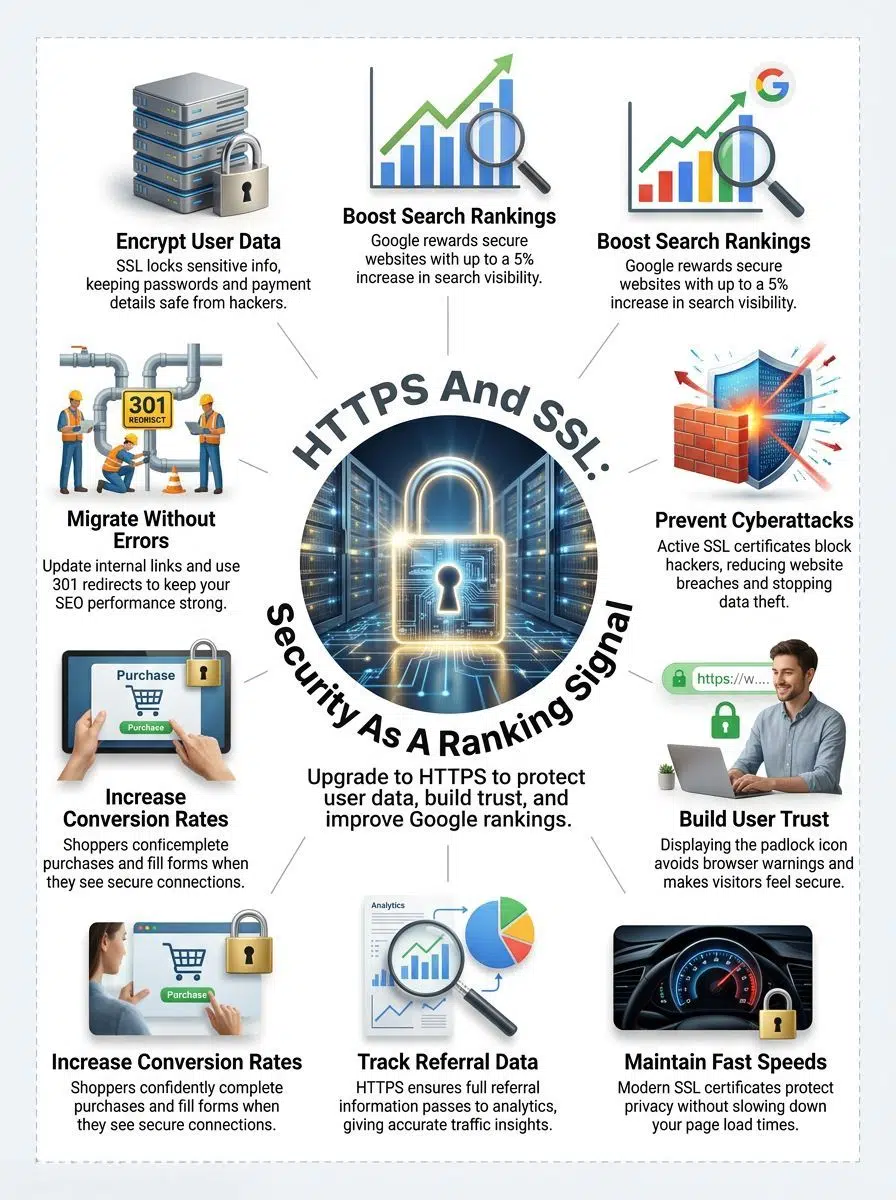
Google gives websites with HTTPS a slight boost in their search results. That little padlock makes your site easier to find, not just safer.
When Google introduced HTTPS as a ranking factor
In 2014, Google made a big move and announced that HTTPS would affect search rankings. SSL became a signal in their system, even if it started small.
Experts say switching to HTTPS can give your site up to a 5% boost in rankings. This is a great win for website optimization.
Websites without SSL now risk lower positions in the search results. Google deeply wants users to have secure browsing experiences.
| Website Security Level | SEO Impact | User Experience |
|---|---|---|
| HTTP (Unsecured) | Lower rankings, potential penalties | Browser warnings, high bounce rates |
| HTTPS (Secured) | Up to 5% ranking boost | Padlock icon, higher user confidence |
Sites with data protection and strong security get better SEO performance. Those left behind see immediate drops in traffic and trust.
The impact of HTTPS on SEO performance
Google made website security more than just a nice addition. Sites with SSL certificates and an encrypted connection see that helpful jump in search rankings.
Though this boost affects a small percentage of global queries, it helps you stand out. This is especially true if your competitors are stuck on HTTP.
Search engines prefer secure sites because they protect user data. Missing an SSL certificate means your site drops lower in rankings or misses out on valuable clicks.
This visibility drop is a huge deal. A December 2025 study by RedLocal Agency found that over 99% of searchers never look past the first page of Google results.
Secure websites build credibility with both users and search engines. They give your SEO game some extra muscle without much heavy lifting.
User Experience and Trust with HTTPS
People feel safer browsing sites that show the little padlock icon. Without it, visitors get spooked and leave your page in a hurry.
Browser warnings for insecure websites
Modern browsers display clear warnings for sites without HTTPS security. A big red “Not Secure” label pops up near the address bar if a website lacks an SSL certificate.
Kids and adults alike think twice before typing in passwords after seeing that alert. Who could blame them?
Ignoring those browser alerts scares off visitors. Google is actually getting stricter about this very soon.
“Starting with Chrome 154 in October 2026, Google will make ‘Always Use Secure Connections’ the default setting, forcefully warning users before they visit public HTTP sites.”
Browsers reward secure websites with smoother experiences. Nobody wants their personal details snooped on during simple tasks like ordering a pizza.
Building user trust and credibility
Websites with SSL certificates show a lock icon in the browser bar. This small symbol means your connection is completely secure.
People feel safe sharing sensitive information only on protected websites. Without it, your sales take a direct hit.
Data from a 2026 Mastercard Dynamic Yield study places the average online shopping cart abandonment rate at a massive 76.8%. Security fears play a huge role in that number.
- Security Concerns: Around 17% to 25% of shoppers abandon carts specifically because they do not trust the site with their credit card information.
- Speed Expectations: 50% of mobile users will abandon a checkout if the page takes more than two seconds to load.
- Missing Features: Shoppers want to see a clear return policy alongside trust badges before buying.
Search engines rank protected sites higher because safety is a key part of the page experience. Safe browsing builds loyalty fast.
Core Web Vitals and HTTPS Compatibility
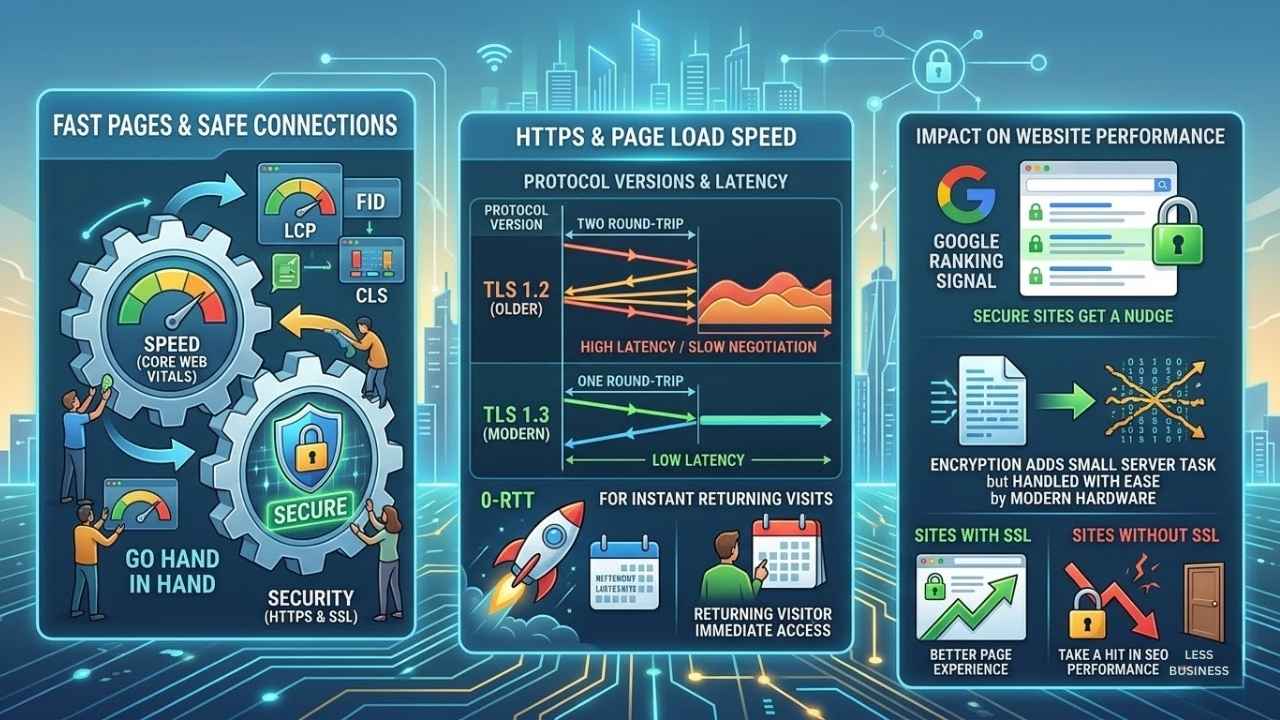
Fast pages and safe connections go hand in hand, just like peanut butter and jelly. HTTPS helps your site run smoother, keeping visitors happy as they click around.
HTTPS and page load speed
HTTPS affects page load speed, but modern SSL certificates actually make things faster. Google made HTTPS a ranking signal, so website owners rushed to secure their sites.
Some worried security would slow browsing and hurt the user experience. Today’s websites use strong servers and updated protocols that keep your data safe without any lag.
Most people will not spot any extra wait when loading a secure page. Proper website optimization keeps everything running smoothly.
Search engines prefer fast pages since they offer a better page experience. Using HTTPS protects user privacy while keeping load times sharp for crawling and indexing.
Impact on website performance
Using an SSL certificate secures the connection protocol. Encryption adds a small task for servers, but modern hardware handles it with ease.
Secure sites get a nudge in search rankings, which acts as a small pat on the back. HTTPS boosts website security by protecting data from cyber threats.
You do not have to worry about SSL making your site sluggish.
| Protocol Version | Average Mobile Latency | Key Performance Feature |
|---|---|---|
| TLS 1.2 (Older) | High (Two round-trips needed) | Slow handshake negotiation |
| TLS 1.3 (Modern) | Low (One round-trip needed) | 0-RTT for instant returning visits |
Sites without SSL might take a hit in SEO performance. Fewer clicks mean less business knocking on your digital door.
Challenges of Migrating to HTTPS
Switching to HTTPS may feel like trying to change a car tire while driving. It is tricky, but it is totally worth it.
Small mistakes can trip you up, so watch every step.
Common concerns with HTTPS migration
Moving your website boosts security and helps rankings. Many site owners have real worries about this upgrade, and you may share some of them.
- Loss of search engine traffic is a common fear, as URL changes can affect crawling by Google.
- Redirect problems often pop up, as every HTTP page must point to the new HTTPS page using 301 redirects for smooth SEO performance.
- Mixed content issues can happen. Images loaded over HTTP break security protocols and cause browser warnings.
- A drop in ranking occasionally happens right after migration, though it is usually short-term while Google re-crawls the new pages.
- Costs for SSL certificates put off some small businesses. This is completely solvable, as free options like Let’s Encrypt protect nearly one billion websites as of 2026.
- Broken links might show up across your site, disrupting referral data tracking.
- User trust may temporarily dip if visitors see insecure warnings before full migration is complete.
Tips for a smooth transition
Updating your website to HTTPS boosts security and helps with Google ranking. A few smart steps make the switch easy and safer for your visitors.
- Get an SSL certificate from a trusted provider. This locks the connection protocol.
- Stay updated on industry rules. Major groups are moving to reduce certificate lifespans from 90 days to 45 days by 2028, so setting up automated renewals is essential.
- Back up your website before any changes. If things go sideways, you still have all your files safe.
- Update every internal link, image, script, and iframe to use HTTPS instead of HTTP.
- Set up 301 redirects from HTTP to HTTPS for every page to help search engines with indexing.
- Tell Google Search Console about the new address right away.
- Fix canonical tags and your robots.txt file to reflect only secure links.
- Notify partners or affiliates that you now use HTTPS so they update their links too.
Switching to HTTPS offers up to a 5% boost in search engine results pages for those who do it right! Sites without SSL see drops in trust signals and SEO performance.
Benefits of HTTPS Beyond SEO
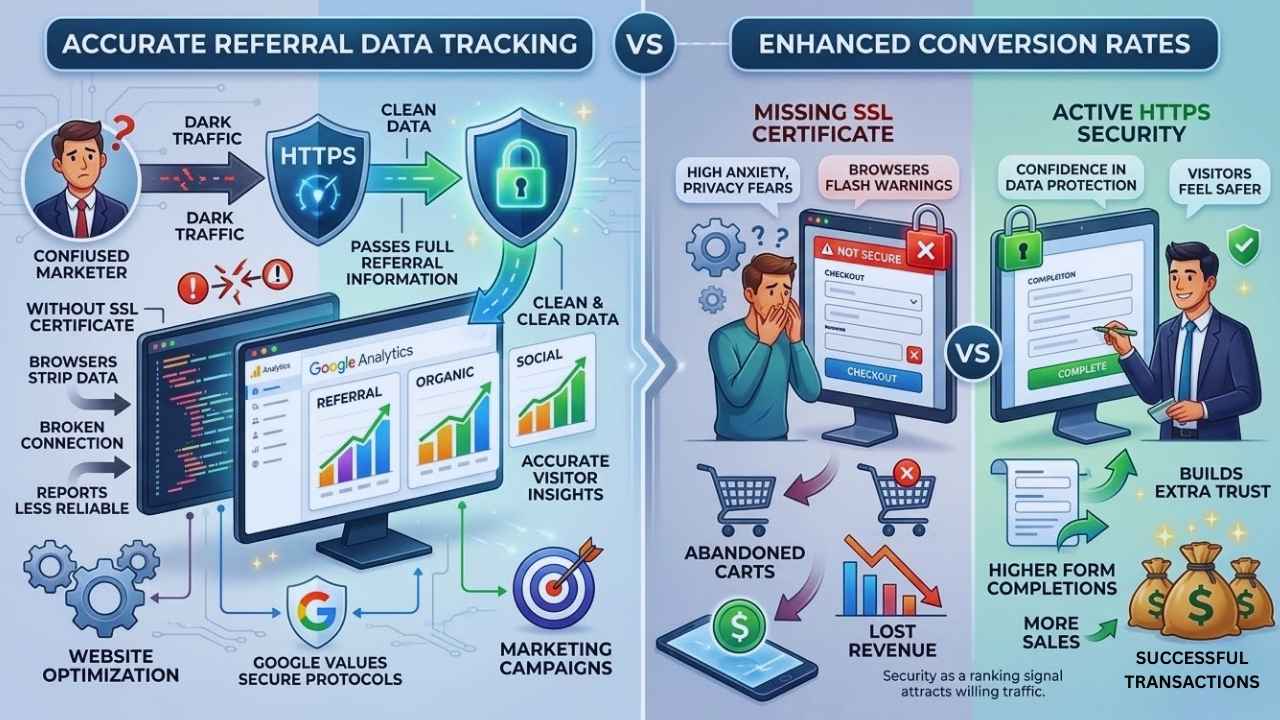
You can track where your visitors really come from, making reports clearer and smarter. Safer sites also help buyers feel confident pressing that “Buy” button.
Accurate referral data tracking
HTTPS keeps referral data clean and clear. Sites using HTTPS pass full referral information to Google Analytics, helping you track where your visitors come from.
Without an SSL certificate, some browsers strip this data away as “direct” traffic. Marketing experts often call this “dark traffic,” and it makes your reports much less reliable.
Google values secure connection protocols and uses HTTPS as a ranking signal. Secure websites send accurate details about user sources.
This directly boosts both website optimization efforts and your broader marketing campaigns. Accurate tracking gives better insights into what works.
Enhanced conversion rates
Sites with HTTPS and SSL certificates often see more people finishing purchases or filling out forms. Visitors spot the padlock in their browser, so they feel much safer sharing personal information.
Google gives a small ranking boost to secure sites, which builds extra trust. Without SSL protection, browsers flash warnings that scare off potential customers.
| Website Feature | Customer Reaction | Conversion Impact |
|---|---|---|
| Missing SSL Certificate | High anxiety, privacy fears | Abandoned carts, lost revenue |
| Active HTTPS Security | Confidence in data protection | Higher form completions, more sales |
With security as a ranking signal, search engines place safe sites higher in results. This attracts more traffic willing to complete transactions.
Final Thoughts
Switching to HTTPS with an SSL certificate gives a website a clear advantage in both security and search rankings. Visitors benefit from a safer browsing experience, browsers display trust signals, and Google rewards encrypted websites with improved ranking potential. Implementing these upgrades is often simpler than many website owners expect. Even small adjustments can significantly strengthen data protection.
These improvements support better SEO while also building user confidence every time someone visits the site. A secure connection shows visitors that their privacy and cybersecurity matter. For those looking to make the transition, many online resources and guides are available to explain the process step by step.
Strengthening website security today can help build a stronger online presence tomorrow. Secure websites often gain trust faster and encourage visitors to stay longer. HTTPS and SSL as a ranking signal remain an important factor for any website focused on long-term growth and credibility.