Are you tired of old-school work setups that feel stuck in the past? Web3, built on blockchain technology, is shaking things up by creating new ways to work with trust and freedom.
In this blog, we’ll show you 10 cool ways Web3 is changing the future of work, from remote gigs to digital tokens. Keep reading to see how!
Key Takeaways
- Web3 uses blockchain to create fair, decentralized workplaces with DAOs, giving everyone a voice.
- Blockchain boosts transparency with immutable ledgers, cutting fraud in the digital economy.
- Web3 gives you control over your data with Decentralized Identity, keeping it safe.
- Digital tokens in Web3 reward workers, boosting motivation and connection to projects.
- The Web3 market could grow from $6.63 billion in 2024 to $177.58 billion by 2033, creating new jobs.
Decentralized Workplaces
Hey there, readers, let’s chat about decentralized workplaces and how they’re shaking up the future of work. Imagine a job where there’s no big boss looming over your shoulder, no stuffy office hierarchy to climb.
Thanks to blockchain technology, this is becoming real. Decentralized setups, especially through Decentralized Autonomous Organizations (DAOs), promote inclusivity and cut down on those top-down structures.
It’s like giving everyone at the table a fair say, no matter their role or location.
Now, picture a workplace driven by community input, not just orders from the top. DAOs make this happen with transparent decision-making that you can see and trust. They foster decentralization, openness, and a sense of belonging for employees everywhere.
Whether you work remotely or tap into the gig economy, this approach using blockchain networks feels like a breath of fresh air. It’s all about building a digital economy where fairness isn’t just a buzzword, but a daily reality.
Enhanced Transparency
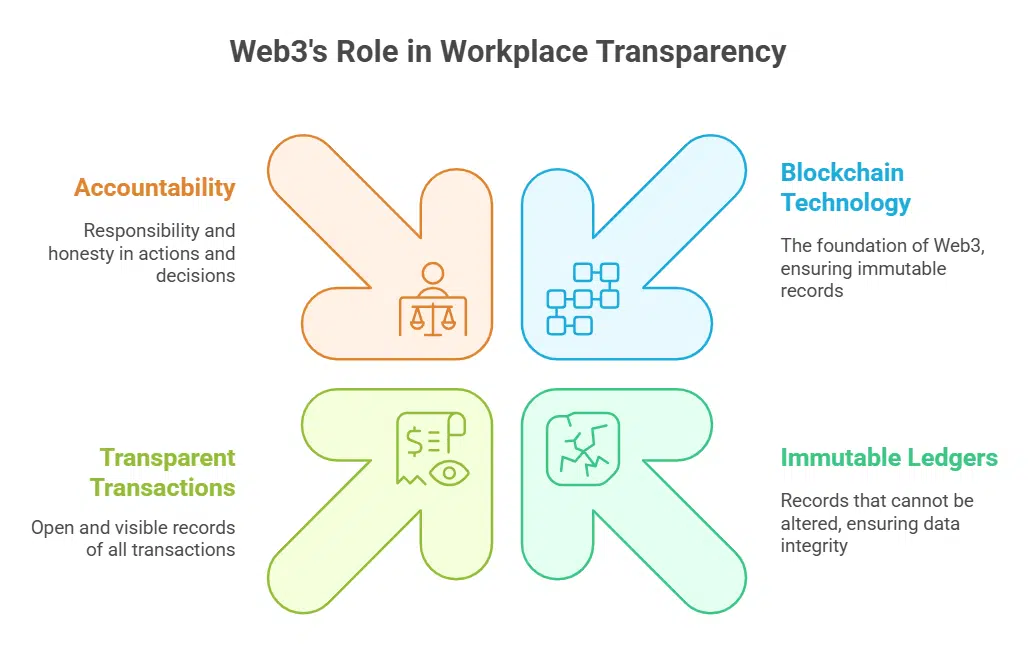
Let’s chat about how Web3 boosts transparency in the workplace. Imagine a world where every deal or decision is clear as day. With blockchain technology, that’s not a dream, it’s real.
This system records transactions on immutable ledgers, meaning no one can hide or change the facts. It builds trust among teams and cuts down on sneaky stuff like fraud. Plus, it’s a game-changer for accountability in the digital economy.
Now, think about tracking things at work, like a project’s progress. Blockchain makes supply chain management super open, letting you follow every step. No more guessing games or shady moves.
Transparent transactions on these ledgers keep everyone honest. So, whether you’re working remote or in an office, Web3 with its public blockchains has your back, making sure the truth always shines through.
Ownership and Control of Data
Hey there, folks, let’s talk about something really exciting in the sphere of Web3. Ownership and control of data is a game-changer, and it’s all yours now. Unlike the old internet days where big platforms held your info, Web3 hands you the keys.
You own your data, plain and simple. That means less concern about data breaches or misuse creeping up on you. It’s like having your own digital safe, locked tight.
Now, imagine, with Decentralized Identity, or DID, you’ve got authority over your online self. This setup greatly increases your privacy and security. No more worrying over centralized systems exposing your information.
Web3 also introduces self-sovereign identification, cutting down risks linked to those outdated, cumbersome systems. So, in this digital economy, your digital identity is yours to protect, and that’s a truly great thing.
Tokenized Incentives for Employees
Guess what, folks, Web3 is changing how we get rewarded at work with digital tokens. These aren’t just shiny coins; they stand for ownership, voting rights, or even access to cool resources.
Imagine getting a token that lets you have a say in company decisions, pretty neat, right? This setup boosts motivation like a shot of espresso on a sleepy Monday.
On top of that, token-based incentives pull people into decentralized ecosystems with real enthusiasm. Think of it as a digital high-five for a job well done, often tied to cryptocurrencies.
With tokenomics at play, employees feel more connected to their work in this digital economy. It’s like being part of a winning team where everyone shares the prize.
Smart Contracts for Task Automation
Hey there, folks, let’s talk about something really exciting in the Web3 space. Smart contracts are like small digital assistants that manage tedious tasks independently. Think of them as a reliable partner, taking care of things like payroll and invoicing without any human mistakes.
They reduce errors and save a lot of time, allowing you to concentrate on the bigger picture.
Now, imagine this: no intermediary holding things up. Web3 relies on these smart contracts to streamline processes and enhance security quickly. Built on decentralized protocols, they ensure everything operates seamlessly.
So, whether it’s paying your team or monitoring a project, blockchain technology supports you with minimal effort. How awesome is that?
Remote Work Revolution with Blockchain Technology
Holy cow, folks, let’s talk about how blockchain technology is transforming remote work! It’s like having a reliable partner that enhances both efficiency and security. Imagine working from your couch, yet feeling as protected as if you’re in a secure office.
Blockchain builds a strong barrier around your data, ensuring no unwanted intruders can tamper with your information. Plus, it speeds up operations by automating tasks with smart contracts.
You get paid quicker, and there’s no intermediary to slow things down.
Now, envision blockchain as more than just a tech tool; it’s a revolutionary force for decentralization in remote environments. It promotes clarity, so you’re always in the loop with your projects.
And speaking of opportunity, it creates access for people across the globe to participate in the digital economy. Whether you’re in a bustling city or a remote village, this technology allows you to step into the future of work with assurance.
How amazing is that?
Increased Security in Digital Workspaces
Hey there, readers, let’s talk about how Web3 is making digital workspaces safer than ever. With blockchain technology, your data gets a shield against harmful hacks and theft. Think of it as a digital fortress, keeping cyber crooks at bay.
Decentralized and cryptographic methods strengthen protection, so data breaches become a real challenge to achieve.
Now, imagine no single vulnerable point for attackers to target. Decentralized storage distributes your info across multiple locations, enhancing security significantly. Plus, greater confidence comes with blockchain, reducing risks of cyberattacks.
It’s like having a top-notch guard dog for your online work life, and who wouldn’t want that kind of safety in today’s digital economy?
Access to Global Talent Pools
Dig into this cool idea, folks. Web3 is tearing down borders and letting employers grab talent from every corner of the globe. With blockchain technology, companies can find diverse skills fast and easy.
They don’t just pick anyone, though; they verify credentials on the blockchain to make sure it’s legit. This sparks fresh ideas and boosts innovation like never before.
Think about it this way, a small startup in Texas could team up with a coding whiz from Tokyo. Global talent pools, checked through blockchain, open doors to new job roles in areas like decentralized finance, often called DeFi.
It’s like a worldwide job fair right at your fingertips, connecting people across the internet for employment and growth in the digital economy.
Empowering the Gig Economy with Decentralized Platforms
Hey there, folks, let’s talk about how decentralized platforms are transforming the landscape for gig workers. Think of this as a fresh type of marketplace, one that eliminates the intermediary.
With blockchain technology, freelancers can link directly with clients, striking deals that feel just and equitable. No more delays from large corporations to release payments; blockchain-based contracts streamline direct transactions effortlessly.
Plus, these systems often ensure fair pay, so you receive what you genuinely earn for your efforts.
Now, envision earning digital tokens for your dedication, like a symbol of achievement in the digital economy. These tokens aren’t merely interesting; they represent ownership and provide access to valuable resources.
For gig workers in the gig economy, this marks a significant change, a true shift in dynamics. Decentralized platforms are rewriting the rules, ensuring freelancers aren’t merely parts of a machine.
So, explore this space, and discover how it’s creating a promising future for work.
New Job Opportunities in Web3 Ecosystems
Check this out, folks, Web3 is creating opportunities for new careers like never before. The surge in blockchain development and decentralized finance, often called DeFi, is eager for talent.
Consider roles in developing blockchain games or designing digital assets. With the Web3 market projected to reach $6.63 billion in 2024 and potentially grow to $177.58 billion by 2033, companies are in urgent need of skilled professionals.
It’s a prime time for jobs in this digital economy.
Get involved, because these positions aren’t just office tasks, they inspire creativity too. Imagine crafting smart contracts or working on projects like Yield Guild Games. Web3 enables individuals, so your expertise in digital transformation or handling digital currencies could secure you a role in this expanding industry.
It’s like sowing seeds in a garden that’s just beginning to flourish. Stay tuned to see what’s coming next!
Interoperability Between Tools and Systems
Hey there, readers, let’s explore how Web3 is making tools and systems collaborate effortlessly. Interoperability, in simple terms, means different platforms and apps can link up without any issues.
Imagine your favorite apps communicating with each other, exchanging info with ease. Web3 encourages this kind of synergy between tools, making teamwork incredibly smooth. Think of it as a digital connection, uniting systems so you don’t face any obstacles.
With blockchain technology as the foundation, data moves freely across decentralized applications. This isn’t just impressive; it’s a major shift in how we operate.
Now, envision this setup in your everyday routine, where everything aligns without added hassle. Web3 reshapes digital ownership, inspiring new economic models that connect to this fluid integration.
Your project management app could link instantly with a payment system, all thanks to interoperability. It’s like having a master key for your digital workspace. Across platforms, from remote work tools to financial systems like decentralized finance (DeFi), interactions become effortless.
This enhances collaboration, reduces delays, and paves the way for fresh ideas in the digital economy. How amazing is that?
Decentralized Autonomous Organizations (DAOs) Reshaping Management Structures
DAOs are reshaping our perspective on managing a workplace, everyone. Envision a company without a single leader at the helm, but rather a collective making decisions as a unit. These Decentralized Autonomous Organizations rely on blockchain technology to maintain openness and equity.
They reduce traditional hierarchies, allowing each person to contribute their voice. It’s akin to a team meeting where every member suggests a strategy, not just the leader. This structure, driven by smart contracts, promotes inclusivity and transforms conventional management approaches.
Now, see this as a refreshing change for decision-making. DAOs advocate for governance led by the community, ensuring the process remains completely transparent. There are no concealed motives, only clear honesty in the digital economy.
They inspire creativity in workplace methods by welcoming ideas from every direction. Consider it a shared meal where each person contributes a unique dish to the spread. With DAOs, the future of work appears more united and just for everyone.
Leveraging NFTs for Professional Identity and Credentials
Hey there, readers, let’s talk about something exciting with NFTs, or non-fungible tokens, in the sphere of work. These digital assets are revolutionizing how we display our skills and credentials.
Imagine having your professional identity linked to an NFT. It’s like possessing a unique badge that validates your expertise, and nobody can replicate it!
Now, envision this as your digital identity amplified. NFTs can hold your career accomplishments, much like a highly secure diploma or certificate. They redefine ownership, just as they do in creative industries with tokenized digital art.
You hold full rights to your credentials, and they’re protected on the blockchain technology network. How impressive is that for distinguishing yourself in the future of work?
Tokenization of Assets for Workplace Benefits
Check this out, folks, tokenization of assets is changing how workplace benefits roll out. Imagine owning a tiny slice of a big company asset, like real estate or equipment, without needing a huge bank account.
This process, called tokenization, splits physical stuff into digital tokens on a blockchain. It boosts accessibility for everyone, letting even small investors grab a piece of the pie.
Plus, it makes trading these bits super easy and fast, improving liquidity in the digital economy.
Now, picture your job perks including these digital assets as bonuses. Companies can offer fractional ownership through tokens, making benefits more exciting than just a paycheck. It ties into financial inclusion, giving more people a shot at building wealth.
With Web3, this isn’t just a dream; it’s happening now, pushing the future of work into a fresh, fair direction.
Improved Collaboration through Decentralized Applications
Hey there, readers, let’s talk about how decentralized applications, or dApps, are transforming the way we collaborate. These tools, built on blockchain technology, make it incredibly simple for people to work together, no matter their location.
Think of a virtual environment, sort of like a digital playground, where everyone can exchange ideas and files without an intermediary causing delays. With dApps, remote work feels less like an isolated task and more like a team journey.
Now, envision this system integrating with the Internet of Things, forming networks that link devices and individuals effortlessly. These decentralized collaboration platforms keep teams aligned, whether they’re nearby or on opposite sides of the world.
It’s like having a reliable partner for every project, ensuring nothing gets overlooked. Plus, in today’s digital economy, this kind of seamless cooperation is a huge advantage for completing tasks quickly.
Promoting Innovation in Workplace Processes
Innovation is key in today’s fast-moving world, and Web3 is leading the charge in changing how workplaces operate. This new tech, built on blockchain technology, pushes decentralization and transparency, making it easier for teams to brainstorm fresh ideas.
Think of it like a garden where every seed of thought gets a fair shot to grow, thanks to open systems.
Web3 also brings automation to the table with smart contracts, cutting down on boring tasks. This frees up time for workers to focus on creative solutions. Plus, with token-based incentives, employees feel rewarded for thinking outside the box.
It’s like getting a high-five in the form of digital tokens for a job well done!
Challenges and Considerations for Web3 in the Future of Work
Stepping into Web3 for the future of work isn’t always an easy journey, folks. There are genuine obstacles to overcome, like ensuring everyone can access these emerging tools. Not all companies or workers have the technical skills or resources to engage with blockchain technology and smart contracts.
Then, you’ve got the challenge of unclear regulatory frameworks that can slow down progress. Laws around digital assets and decentralized autonomous organizations, or DAOs, remain undefined in many areas.
It’s a bit like trying to play a game without fully understanding the guidelines. Plus, with the global Web3 market projected to reach $6.63 billion in 2024 and potentially climb to $177.58 billion by 2033, the urgency to stay current with rapidly advancing tech is intense.
Now, let’s tackle another key aspect of this challenge. Companies must align their strategies with specific objectives while evaluating if their industry is prepared for digital transformation.
Think of it as planting a garden; you need the right conditions, or growth won’t happen. Evaluating resources and determining if your audience is receptive to concepts like NFTs for credentials or tokenized incentives is essential.
If people aren’t ready, even the strongest ideas fall flat. And hey, advancing technologies in the digital economy, especially concerning data breaches and online transactions, keep everyone alert.
It’s a thrilling journey, but confronting these issues directly could build a brighter, more inclusive workplace.
Takeaways
Hey there, isn’t it wild how Web3 is shaking up the future of work? From blockchain tech to smart contracts, it’s paving fresh paths for us all. Imagine a world with safer data and fair pay, right at your fingertips.
So, let’s keep an eye on this digital shift, okay? It’s a game-changer, and we’re just getting started!
FAQs on How Web3 Is Shaping the Future of Work
1. How does Web3 change the future of work with blockchain technology?
Hey, let me tell you, blockchain technology is shaking things up big time. It’s like a digital fortress, keeping data breaches at bay while powering smart contracts for smoother contract management. This means remote work and outsourcing get a trusty backbone, making the digital economy safer for everyone.
2. What’s the deal with decentralized autonomous organizations in Web3?
Listen up, decentralized autonomous organizations, or DAOs, are like a team without a boss, running on pure community vibes. They’re changing how we handle business models with automated decision-making, cutting out middlemen in the gig economy.
3. Can Web3 boost financial inclusion in the workplace?
Absolutely, Web3 is a game-changer for financial inclusion. It uses digital tokens and NFTs, or non-fungible tokens, to open doors for folks worldwide, even in far-flung spots hit hard by globalization, giving them a slice of the digital transformation pie.
4. How does the metaverse tie into Web3 and work?
Picture this, the metaverse is your new office, a wild virtual space where remote work feels like play. With blockchain games like Axie Infinity and setups from Yield Guild Games, it’s all about play to earn, blending fun and salaries in the digital economy.
5. Are digital identities important for Web3’s impact on jobs?
You bet, digital identity is the key to unlocking trust in this wild Web3 world. It’s like your online ID card, linking you to digital assets and crypto art, while keeping things tight against fraud in a world of investments and securities.