Grocery store aisles are overwhelmingly built around the illusion of convenience. From double-wrapped cucumbers to rigid plastic salad tubs, single-use plastic has become the default setting for almost everything we consume. Stepping away from this system can feel incredibly daunting, especially when your local supermarket seems designed to fight your efforts at every turn.
However, adopting practical plastic-free grocery swaps doesn’t mean you have to source your food from a pristine zero-waste boutique or reinvent your entire diet. It requires an understanding of where plastic waste is most concentrated and making small, tactical adjustments to how you collect, carry, and store your food. This guide focuses on realistic changes you can make during your weekly run to minimize packaging without driving yourself crazy.
The Best Plastic-Free Grocery Swaps for Your Weekly Run
Transitioning your grocery routine takes a bit of planning and a willingness to deal with minor inconveniences at the checkout counter. The following adjustments target the highest-volume plastic offenders in the supermarket and replace them with durable, long-term alternatives.
1. Swap Thin Plastic Produce Bags for Washable Cotton Mesh Bags
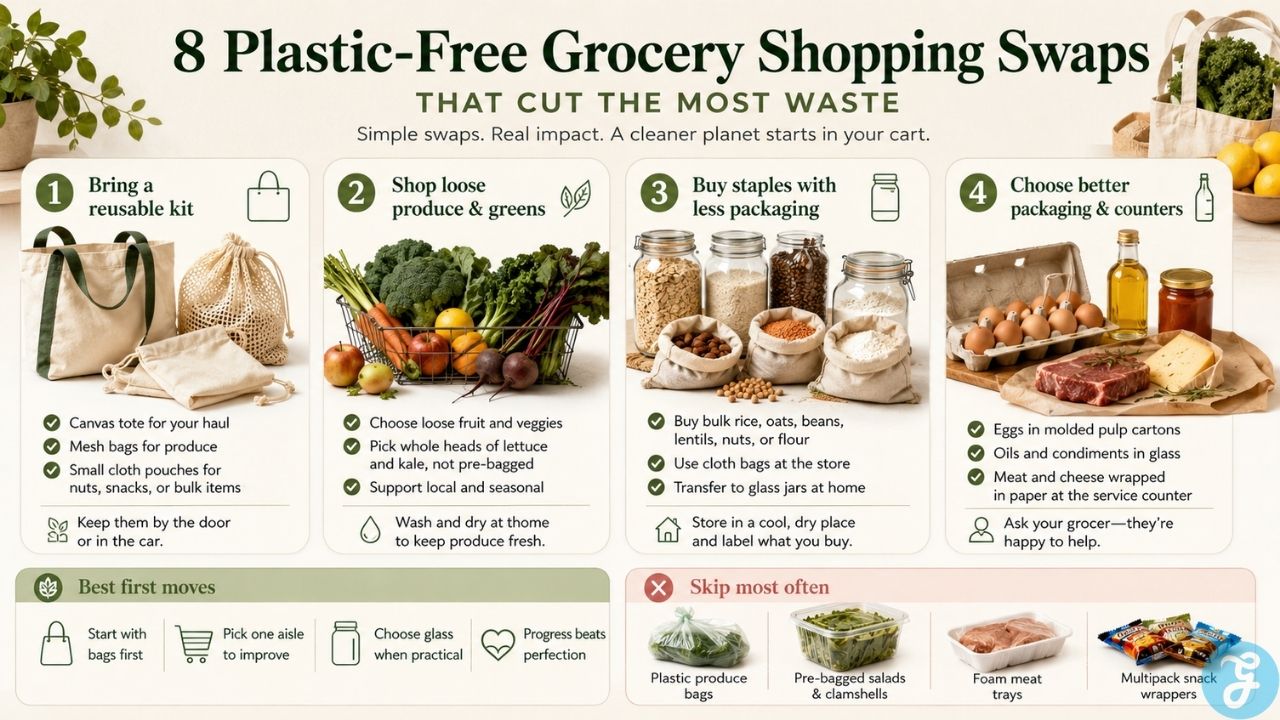
The flimsy plastic bags on rolls in the produce aisle are among the shortest-lived plastics in existence. They are used for less than an hour, can rarely be recycled, and often tear before you even get home. Replacing them with reusable drawstring cotton mesh bags is one of the easiest ways to start plastic-free shopping. Mesh bags allow cashiers to easily see the item bar code inside, and they are completely machine washable. The main point of friction here is weight; cotton bags are heavier than plastic, so look for options with the tare weight printed clearly on the label so the cashier can subtract it from your total price.
2. Trade Pre-Packaged Grains for Bulk Grocery Swaps Using Cloth Pouches
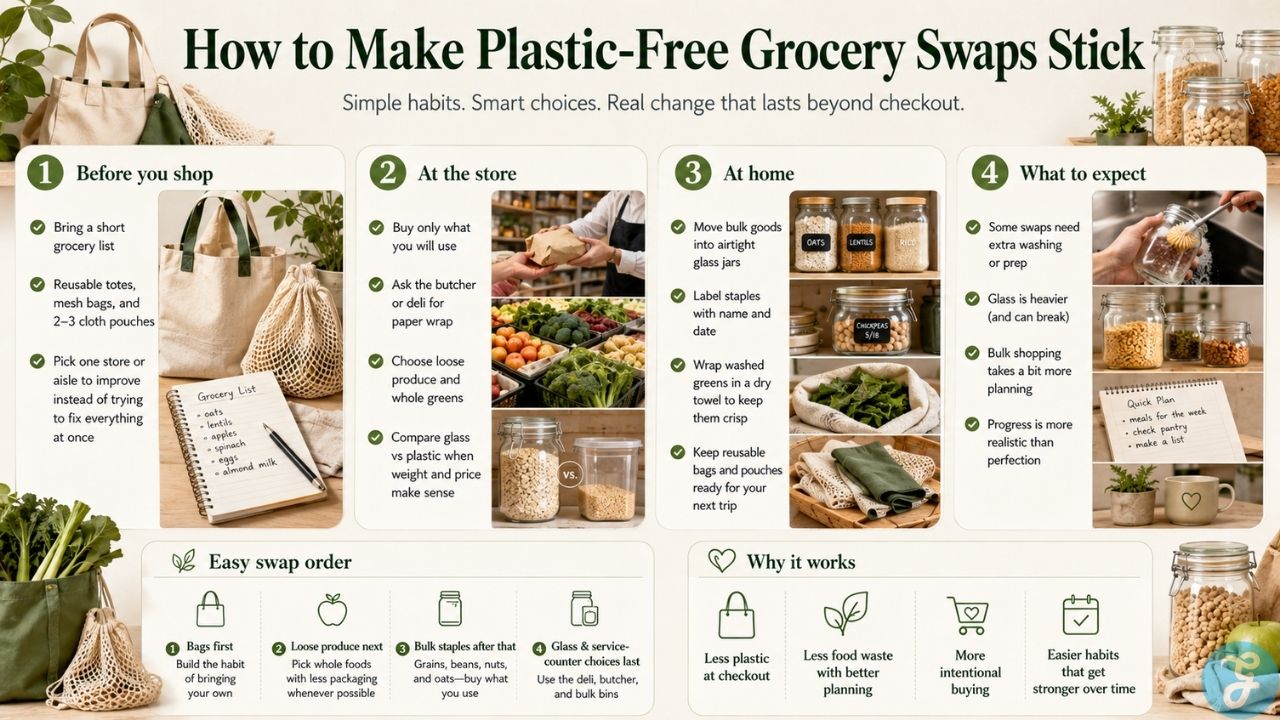
Buying rice, oats, lentils, and flour in pre-sealed plastic bags generates a massive amount of unrecyclable film waste. Shifting toward bulk grocery swaps allows you to scoop the exact quantity you need directly from large dispensers into your own lightweight cloth bags. This approach underpins the core philosophy of package-free shopping. The practical challenge with bulk bins is storage at home. Cloth bags are breathable, which means they do not protect grains from humidity or pantry pests. You will need to transfer your bulk purchases into airtight glass jars as soon as you unpack your groceries.
3. Switch from Pre-Packaged Salad Clamshells to Whole Heads of Loose Greens
Convenience salads packed in rigid plastic tubs or bags are incredibly popular, but that plastic frequently ends up in landfills. Swapping these out for whole, loose heads of lettuce, spinach, or kale completely removes the plastic footprint. The trade-off here is time and shelf life. Loose greens require thorough washing and spin-drying at home to remove dirt and insects. If stored wet, they rot quickly, so you must wrap them in a clean, dry kitchen towel inside your crisper drawer to keep them crisp.
4. Replace Plastic-Bottled Oils and Condiments with Recyclable Glass Jars
Condiments like ketchup, mayonnaise, salad dressings, and cooking oils are increasingly packaged in squeezy plastic bottles. While convenient, these plastics degrade in quality each time they are processed, whereas glass can be recycled infinitely without losing purity. Choosing glass jars and bottles over plastic alternatives ensures the packaging remains part of a circular economy. Be prepared for the extra weight in your shopping tote, as a haul consisting entirely of glass jars requires a bit more physical effort to carry home.
5. Trade Rigid Plastic Egg Cartons for Recycled Molded Pulp Trays
Many commercial egg brands have switched from traditional paper-pulp cartons to clear, rigid plastic containers. While these protect the eggs well, they add unnecessary synthetic material to your waste stream. Opting for brands that still use gray molded pulp trays is a straightforward decision. These pulp cartons are made from recycled paper and can be easily broken down in a home compost bin or tossed directly into your paper recycling stream.
6. Switch from Pre-Packed Meat Trays to Fresh Paper Wraps at the Butcher Counter
The meat aisle is filled with styrofoam trays tightly wrapped in clear plastic film, a combination that is completely unrecyclable in standard municipal programs. A much cleaner alternative is to step up to the service counter and ask the butcher to wrap your selections in traditional butcher paper. This paper protects the meat safely without the chemical footprint of plastic trays. Just be sure to clarify that you prefer plain paper wrapping without an additional plastic bag tucked inside.
7. Trade Single-Use Plastic Shopping Bags for Heavy-Duty Canvas Totes
Even in regions with plastic bag bans, thick plastic reusable bags are frequently sold at checkout, which still contribute to environmental accumulation. Investing in three or four heavy-duty canvas totes or collapsible wooden crates completely eliminates the need for any store-provided bags. The friction here is purely behavioral; you have to remember to bring them with you. Keeping your bags inside your car trunk or folded next to your front door is the simplest way to build the habit.
8. Swap Factory-Packaged Snacks for Whole Foods and Bulk Treats
Multipacks of chips, crackers, and granola bars are notorious for generating multi-layered plastic wrapping that cannot be processed by recycling facilities. Shifting your snacking habits toward loose whole fruits, bulk nuts, or homemade treats is a foundational aspect of plastic-free grocery swaps. It changes how you shop by steering you away from the center aisles of the supermarket and toward the outer perimeter where whole, unprocessed foods live.
The Boring Check That Matters
Before changing how you shop, it helps to understand the trade-offs involved with alternative packaging materials. Not every swap operates perfectly without adjustments, and some require extra maintenance at home.
| Grocery Item | Standard Plastic Packaging | Low-Waste Alternative | Practical Consideration |
| Fresh Produce | Thin plastic film bags | Cotton mesh bags | Requires subtracting tare weight at the register. |
| Dry Staples | Pre-sealed plastic bags | Bulk bin cloth sacks | Must transfer to airtight glass storage at home. |
| Salad Greens | Rigid plastic clamshells | Whole unwashed heads | Demands manual washing and proper moisture control. |
| Condiments | Squeezy plastic bottles | Glass jars and bottles | Increases total weight of your grocery bags. |
Before You Choose
Trying to eliminate every single piece of plastic from your grocery haul in one trip is a recipe for burnout. Supermarkets are intentionally structured around plastic packaging, and navigating them requires patience. The most effective way to sustain these plastic-free grocery swaps over time is to master one transition before moving to the next.
Start by simply bringing your own canvas totes and mesh produce bags for a month. Once that feels completely natural, look for a local store that accommodates bulk bins or switch to glass containers for your favorite condiments. Every piece of single-use plastic you avoid at the register is a direct win for your household routine and the wider environment.