Do you ever end the day tired, stressed, and wondering where your time went? If you want better wellness and modern living without turning your life upside down, TheLifestyleEdge com keeps the process simple.
It pulls together short guides, practical advice, and easy-to-read downloads so you can make one useful change at a time. Clear content categories and a digital library feel help you find what matters fast, whether you want better habits, stronger health and wellness, or smarter time management.
Ready to gain that edge?
Key Areas of Wellness and Modern Living
Real lifestyle improvement does not come from one perfect routine. It comes from a balanced system that supports your body, your mind, your schedule, and your money choices at the same time.
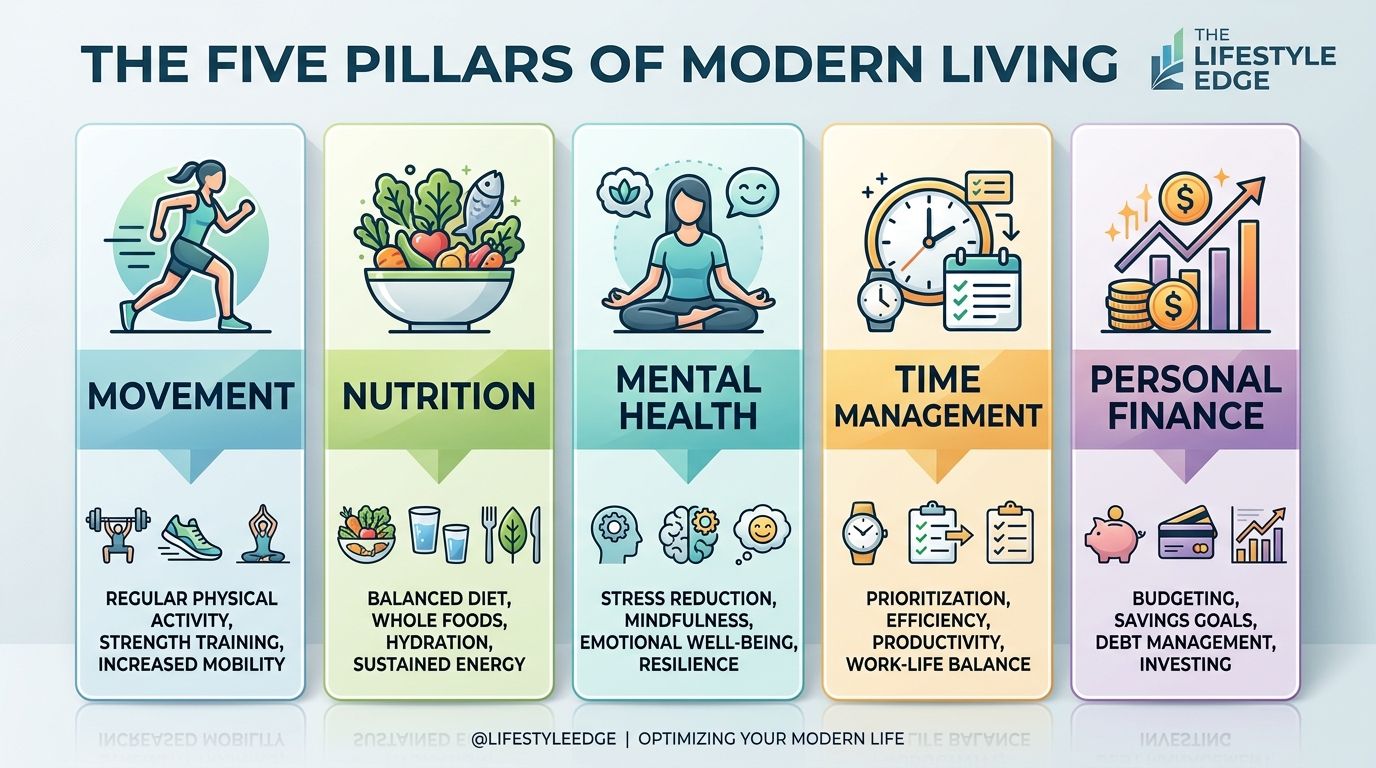
If you want a simple place to start, use these five pillars of modern living. They cover the basics that shape your quality of life most days.
| Pillar | Why it matters | Simple first move |
|---|---|---|
| Movement | Daily activity supports energy, stress management, and physical fitness. | Put 30 minutes of walking or cardio on your calendar 5 days a week. |
| Nutrition | Better meals improve focus, recovery, and steady energy. | Use a plate formula so half the plate is fruits and vegetables. |
| Mental health | Mindfulness, sleep, and emotional awareness protect your resilience. | Choose one wind-down habit, such as breathing, reading, or journaling. |
| Time management | Better planning reduces overload and improves productivity. | Pick one main goal each day and block time for it first. |
| Personal finance | Less money stress supports balanced living and better decisions. | Set a small automatic transfer to savings each payday. |
What are effective health and wellness tips?
In current public health guidance, adults are told to aim for 150 minutes of moderate exercise each week, plus muscle-strengthening activity on 2 days. That sounds like a lot at first, but it breaks down to about 30 minutes on 5 days, which feels much more doable in real life. Food works the same way.
- MyPlate still uses one of the easiest rules to follow: Make half your plate fruits and vegetables, then round out the meal with protein, grains, and dairy or a fortified alternative.
- Build your week around movement, not guilt. Brisk walking, cycling, home circuits, and short strength routines all count. The goal is consistency, not fancy equipment.
- Use a simple plate formula. When half your plate is produce, you make healthier choices faster and spend less energy guessing about portions.
- Protect sleep like a real appointment. The American Heart Association puts healthy adult sleep at 7 to 9 hours a night, so a steady bedtime matters more than chasing a perfect morning routine.
- Keep mindfulness short. The NIH emotional wellness toolkit suggests a basic breathing pattern, inhale for 4 and exhale for 5, which works well before bed or between tasks.
- Plan meals before you shop. Grocery prices in the U.S. have stayed elevated, so a short list built around repeat meals helps your budget and reduces last-minute takeout.
- Ask for professional help early. If sleep, diet, anxiety, or stress keeps getting in the way, a doctor, registered dietitian, or mental health professional can give you advice that actually fits your needs.
The big idea is simple: healthy living gets easier when you stop treating it like a weekend project. Small daily routines are what improve your life.
How can I improve myself through personal development?
Personal development starts working when you stop waiting for motivation to show up. A 2024 review of habit-formation research found that repetition in a stable context matters more than intensity, which is why tiny routines often beat big promises.
That is where The Lifestyle Edge feels useful. It turns self-improvement into something you can repeat on an ordinary Tuesday.
- Choose one stable cue. Use a moment that already happens every day, like brushing your teeth, pouring coffee, or opening your laptop.
- Add one tiny action. Journal for 2 minutes, read 1 page, stretch for 5 minutes, or do 10 squats.
- Track the action visibly. A paper calendar, notes app, or habit tracker gives you proof that progress is happening.
- Review once a week. Ask what made the habit easy, what created friction, and what you should simplify.
If you want a stronger system, use an if-then plan: if I finish lunch, then I walk for 10 minutes. That kind of cue-action pairing lowers decision fatigue and builds confidence fast.
Small habits matter most when they have a fixed cue, a short action, and a visible check mark.
That is how personal growth stops feeling abstract. You give it a time, a place, and a repeatable shape.
What are the best productivity and time management techniques?
Good productivity is really attention management. Google Calendar lists Focus Time as a feature that can mute chat notifications and automatically decline meetings on eligible work or school accounts, which shows how useful pre-set boundaries can be.
Breaks matter too. NIOSH research has found that short regular breaks can reduce discomfort and eyestrain without hurting productivity, so pushing straight through the day is usually the slower option.
- Pick one main goal. Decide what would make the day feel successful before messages and errands take over.
- Time-block the work. Put 20 to 60 minutes on your calendar and treat it like a real appointment.
- Capture tasks in one place. Google Tasks, Apple Notes, or a paper list all work if you use them consistently.
- Batch shallow work. Check email, messages, and admin tasks at set times instead of every few minutes.
- Protect reset time. Stand up, stretch, refill your water, or take a 5-minute walk between focused blocks.
| Tool | What it helps you do | Best use |
|---|---|---|
| Google Calendar | Block focus time and schedule tasks | Time management and work-life balance |
| Google Tasks | Capture to-dos, due dates, and subtasks | Daily routines and follow-through |
| Apple Health or a wearable | Track sleep trends, activity, and recovery | Link health and productivity |
One common mistake people mention in productivity forums is using the phone as a break reward. Five minutes easily turns into thirty, so if distraction is your weak spot, keep your phone out of reach during deep-work blocks.
Lifestyle Enhancement Strategies
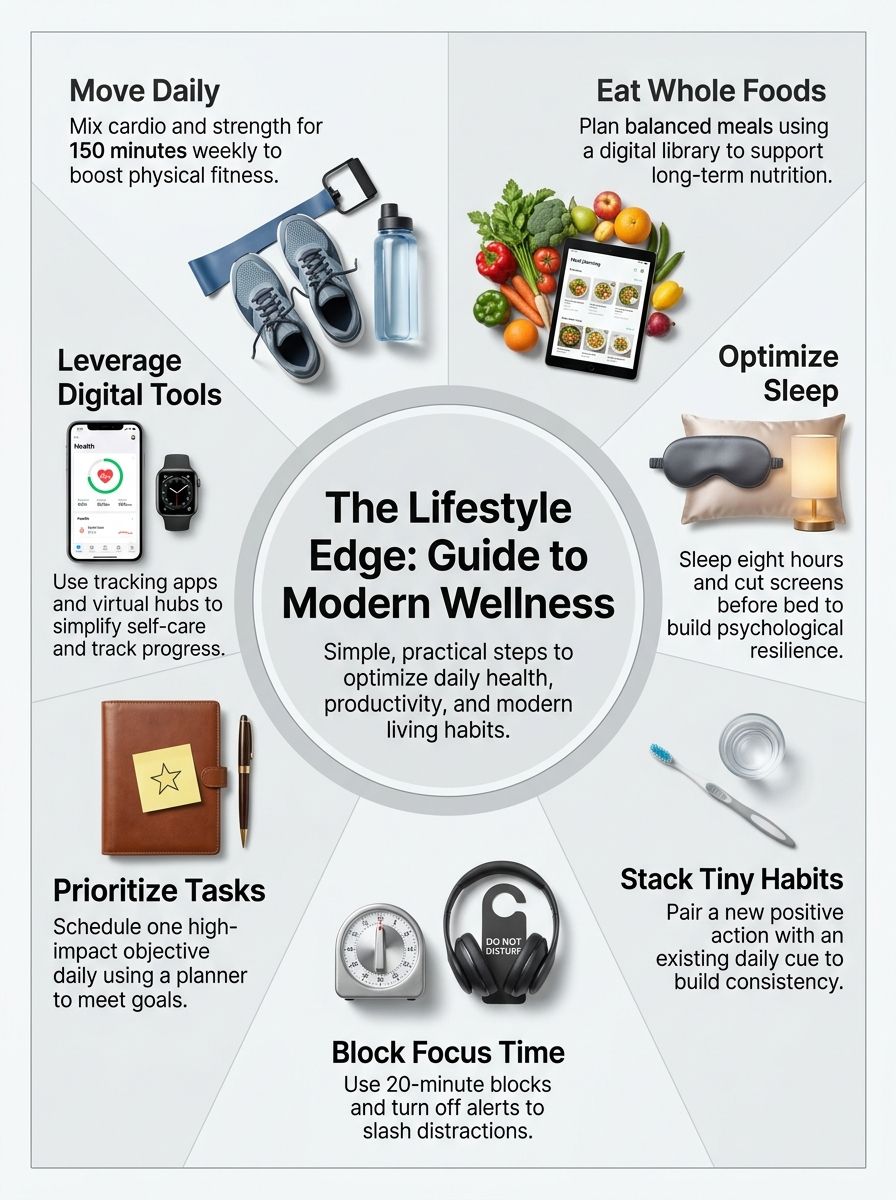
Lasting change comes from routines you can repeat on regular days, not from perfect plans you only follow when life is easy. Start with one habit for your body, one for your mind, and one that protects your schedule.
How do I build sustainable daily habits?
The NIH emotional wellness toolkit keeps pointing back to the same basics: regular sleep, movement, priorities, and planned relaxation. That is useful because sustainable habits usually look ordinary, and ordinary is exactly what makes them stick.
So skip the all-or-nothing reset. Build a routine that still works when you are busy, tired, or a little off track.
- Anchor the habit. Pair it with breakfast, your commute, shutting down work, or another fixed part of your day.
- Lower the entry point. Start with one minute of stretching, five minutes of reading, or one line in a journal.
- Measure the streak. A simple check mark on a calendar keeps motivation visible.
- Prepare your environment. Put workout clothes out, save a grocery list, or leave your journal where you will see it.
- Review friction weekly. If a habit keeps failing, shrink it, move it, or attach it to a better cue.
If you want a balanced approach, try a daily 10-10-10 routine: 10 minutes of movement, 10 minutes of planning, and 10 minutes of reading or reflection. It supports health, productivity, and personal growth without taking over your day.
Consistency beats intensity. A routine you can repeat on a stressful Tuesday will help you more than a perfect plan you abandon by Friday.
How can technology help me live smarter?
Good technology should remove friction, not add more noise. In the latest W3C recommendation from January 2026, EPUB publications are meant to reflow to fit the available screen space, which is why EPUB often feels easier to read on a phone than a fixed PDF.
That gives you a clean rule to follow: use EPUB for long reading sessions, and use PDF when layout matters, like worksheets, charts, checklists, and visual guides.
| Format or tool | Best for | Why it helps |
|---|---|---|
| EPUB | Books and long-form guides | Reflowable text adapts to your screen and reading size |
| Worksheets and fixed layouts | Keeps the original design consistent | |
| Adobe Acrobat Reader | Reading PDFs on a phone | Liquid Mode can reflow supported PDFs for easier mobile reading, though it does not apply to files over 200 pages |
| Apple Health | Sleep routines | Lets you set recurring bed and wake times plus a wind-down window |
| Google Calendar and Tasks | Reading plans and reminders | Turns good intentions into scheduled sessions with deadlines and notifications |
If you read on the go, download what you need before you leave home. Apps like Libby support offline reading for downloaded loans, while browser-based reading usually needs a connection.
- Schedule two 10-minute reading blocks instead of hoping you will find time later.
- Use reminders for the first week, then keep only the ones that truly help.
- Keep your reading app in one visible spot on your home screen.
- Switch to airplane mode during reading if alerts keep pulling your attention away.
That is how a digital lifestyle starts helping instead of distracting. The right setup makes good choices faster, and that is what helps readers stay consistent.
Final Words
The Lifestyle Edge works best when you treat wellness and modern living like a series of small, smart decisions. Move a little more, eat with a plan, protect your sleep, and block time for what matters.
Use short guides, PDFs, EPUBs, and simple trackers to turn good ideas into daily habits. This complete guide gives readers a practical path to balanced living, clearer thinking, and steady growth, without the fluff.
Frequently Asked Questions (FAQs) on TheLifestyleEdge com
1. What is The Lifestyle Edge, your complete guide to wellness and modern living?
It is a guide to smarter living, with short lifestyle tips and broad lifestyle topics. It will help readers use diet (nutrition) ideas and learn how the natural environment affects health. It builds understanding, and it aims to lift your overall quality of life and intelligence.
2. How does the book handle Stress (biology)?
It gives plain facts on stress (biology) and shows easy steps to calm the body and mind.
3. Can this guide help with diet and brain power?
Yes, it links diet (nutrition) to brain health, and it gives small changes that aid thinking and mood. It keeps things simple, so you can act fast.
4. How do I use the guide each day?
Pick one small habit each week, and keep it; small wins add up. Use the quick lifestyle tips, and watch your overall quality of life shift, like slow gold.