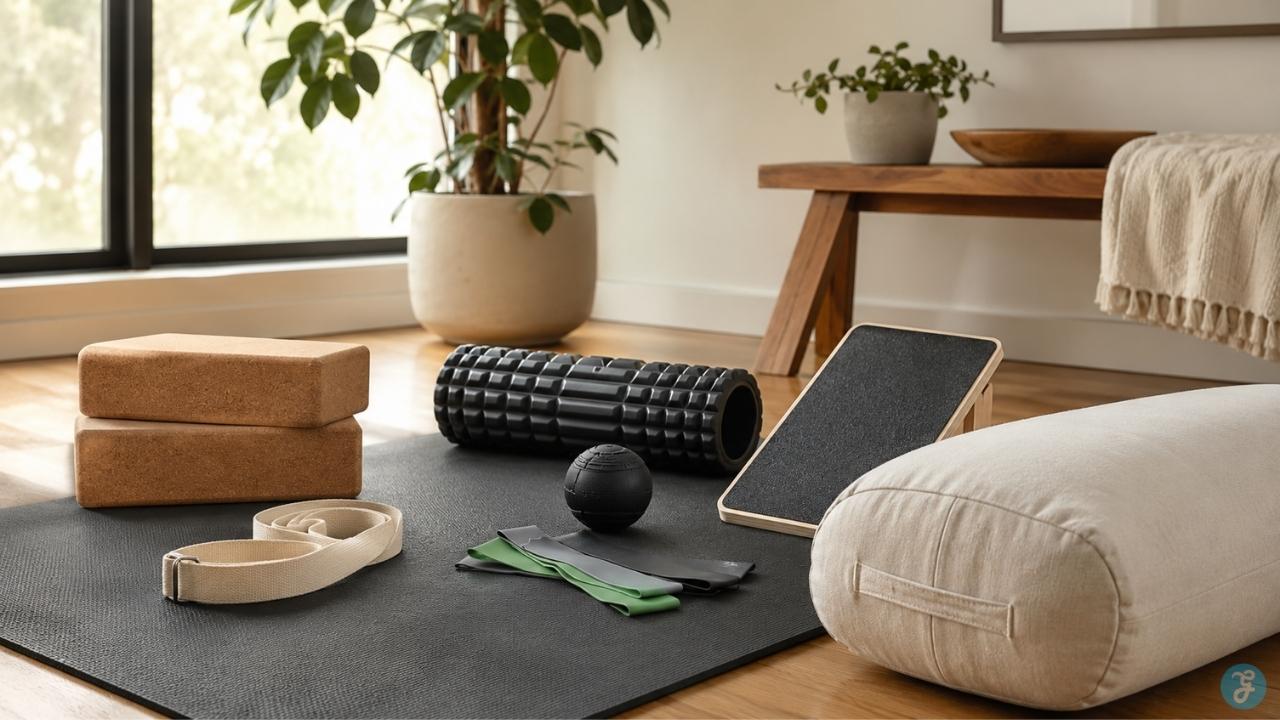
Most people do not need a room full of fitness gear to stretch better. They need the right kind of support. That is where stretching accessories can actually make a difference. A good strap can help you reach a hamstring stretch without rounding your back. A block can bring the floor closer. A foam roller can help prepare tight muscles before mobility work. A massage ball can target small stubborn areas.
A slant board can make calf and ankle stretching more precise. A bolster can turn forced stretching into supported relaxation. The problem is that stretching gear is often marketed like magic. Buy this tool, unlock your hips. Use this wheel, fix your back. Roll this ball under your foot, erase pain forever. That is not how flexibility works.
Stretching improves through consistency, control, breathing, smart positioning, and knowing when not to push. Accessories are useful when they make those things easier. They are not useful when they encourage you to force range, chase pain, or copy advanced poses your body is not ready for.
This guide covers 7 flexibility tools and mobility accessories worth considering because each one solves a real stretching problem.
What Makes a Stretching Accessory Worth Buying?
A stretching accessory is worth buying when it helps you stretch with better control, better alignment, or better consistency.
The best tools do not simply make a stretch look deeper. They help you stay in a useful position without strain. That might mean supporting your hands, reducing pressure on your joints, helping you control a limb, adding gentle resistance, or making a stretch easier to repeat.
A good stretching accessory should do at least one of these things:
| Good Stretching Accessory | Why It Helps |
| Adds control | Helps you ease into a stretch instead of forcing it |
| Improves positioning | Supports better alignment and less compensation |
| Increases accessibility | Makes stretches possible for different body types and mobility levels |
| Encourages consistency | Makes the routine easier to repeat |
| Supports recovery | Helps with gentle tissue prep or relaxation |
| Reduces strain | Lets you stretch without overreaching or collapsing |
The wrong accessory does the opposite. It makes you push harder than you should, adds instability, feels painful, or distracts from the real goal. Stretching should feel like tension, not sharp pain. A useful tool helps you find that line more clearly.
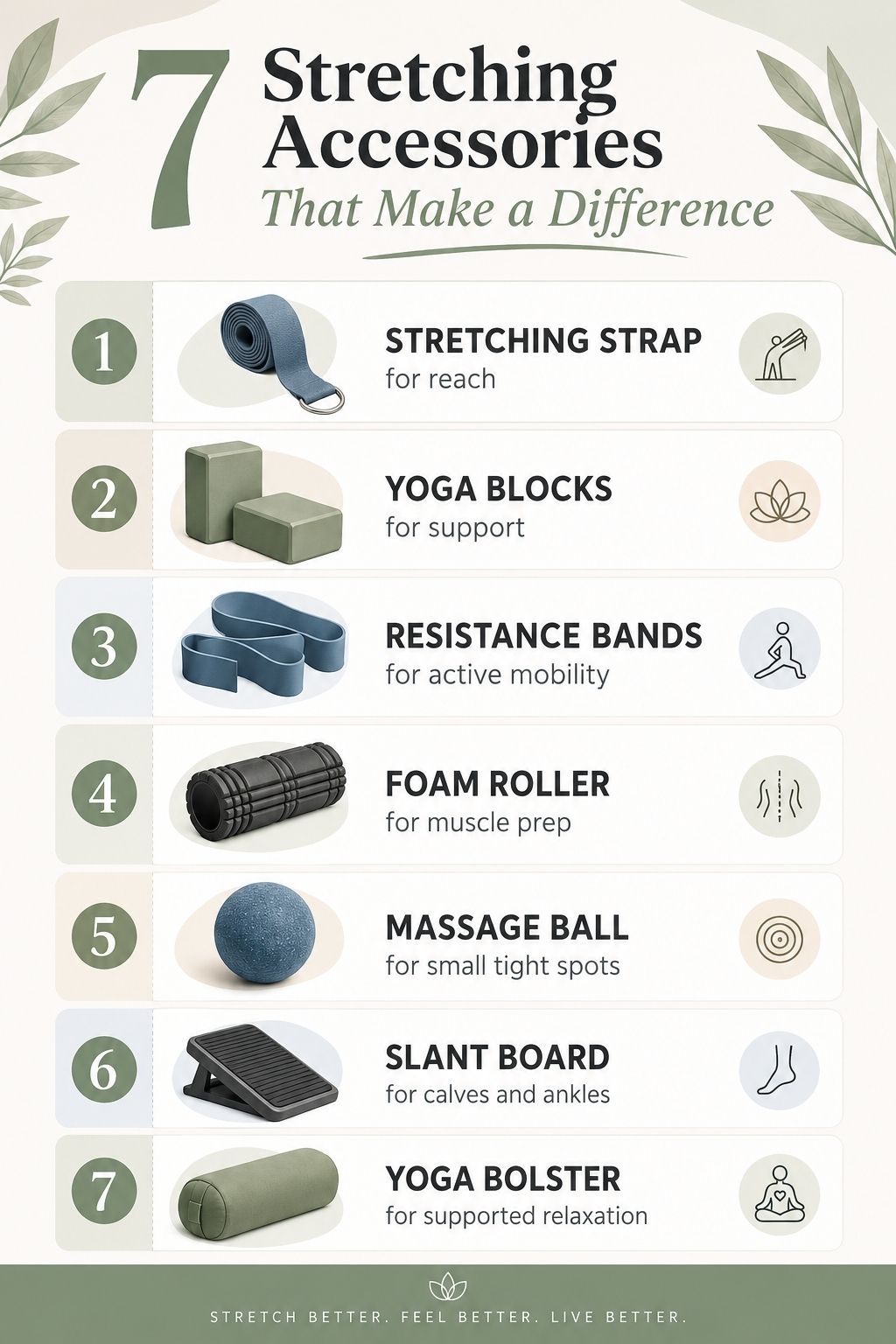
7 Stretching Accessories Worth Considering
These tools are not ranked by hype. They are ranked by practical usefulness for home stretching, mobility routines, yoga, warm-ups, cooldowns, and recovery sessions.
1. Stretching Strap
A stretching strap is one of the simplest and most useful stretching accessories because it gives you reach without forcing your body into poor positions.
Many people struggle with hamstring stretches because they round their back, yank their leg, or hold their foot awkwardly. A strap changes the setup. You can lie on your back, loop the strap around your foot, and guide your leg upward while keeping your shoulders, neck, and spine more relaxed.
That same idea works for calves, shoulders, quads, hip flexors, and side-body stretches. The strap gives you control. You can increase or decrease the stretch slowly instead of grabbing, pulling, and hoping your body cooperates.
It is especially helpful for beginners, desk workers, runners, yoga students, older adults, and anyone who feels stiff but does not want to force range.
A yoga strap with a D-ring or buckle gives more adjustment than a towel, but a towel can work as a beginner substitute. The goal is not to pull harder. The goal is to stay controlled.
Best for: Hamstring stretches, calf stretches, shoulder mobility, quad stretches, and beginner flexibility work.
Why it makes a difference: It helps you stretch without overreaching, rounding, or grabbing awkwardly.
Things to consider: Choose a strap long enough for your height and use gentle tension. If you feel numbness, tingling, pinching, or sharp pain, back off.
2. Yoga Blocks
Yoga blocks are underrated because people often think they are only for beginners. They are not. A block makes stretching more useful by changing the distance between your body and the floor. If your hand cannot reach the ground in a lunge, triangle-style stretch, hamstring fold, or hip opener, the body often cheats. The spine rounds, the shoulders collapse, the hips twist, or the knees take extra pressure.
A block brings the support closer to you. That makes it easier to hold a position with better alignment. It also helps you stay calmer in the stretch because you are not fighting to reach the floor.
Blocks are useful for hamstrings, hips, calves, chest opening, supported bridges, seated positions, and balance work. Two blocks are better than one because many stretches need support on both sides.
Foam blocks are lightweight and comfortable. Cork blocks feel firmer and more stable. Wood blocks are durable but less forgiving. For most home users, foam or cork is enough.
Best for: Yoga, hip mobility, hamstring stretching, lunges, supported poses, and balance assistance.
Why it makes a difference: It gives your body a stable place to land, which can make stretching safer and more accessible.
Things to consider: If a block wobbles, slides, or compresses too much, it may not give enough support. Stability matters more than style.
3. Resistance or Mobility Bands
Resistance bands are usually seen as strength tools, but they can also be excellent mobility accessories.
A light band can help with active stretching, shoulder mobility, hip activation, ankle work, and warm-up drills. Unlike a passive strap, a band can add gentle resistance. That means the muscles have to participate instead of simply being pulled into position.
This matters because flexibility without control is limited. You may be able to reach a position passively, but if your muscles cannot control that range, the movement may not carry over well to squats, lunges, running, lifting, dancing, yoga, or sports.
Long loop bands are useful for shoulder pass-throughs, hip openers, band-assisted hamstring work, ankle mobility, and resisted warm-ups. Mini bands are better for glute activation, lateral steps, and hip stability drills. Tube bands with handles work well for general strength but are less versatile for stretching.
The key is choosing the right resistance. Too heavy, and the band turns the stretch into a fight. Too light, and it may not provide enough feedback.
Best for: Active mobility, shoulder work, hip activation, warm-ups, and controlled flexibility.
Why it makes a difference: It helps connect flexibility with strength and control.
Things to consider: Inspect bands for cracks or thinning. Bands can snap when worn out, so do not stretch damaged bands near your face.
4. Foam Roller
A foam roller is not technically a stretching tool, but it can make stretching feel better when used before or after mobility work.
Foam rolling is a form of self-myofascial release. In plain language, it lets you apply pressure to larger muscle areas such as calves, quads, hamstrings, glutes, lats, and upper back. Many people use it to reduce tightness, improve comfort, and prepare muscles for movement. It works best when you treat it as preparation, not punishment.
Rolling aggressively until you wince is not the goal. A better approach is slow, steady pressure over the muscle, paired with breathing. Spend enough time to feel the area soften slightly, then move into your stretch or mobility drill.
A medium-density smooth roller is usually best for beginners. Very hard or deeply textured rollers can feel intense and may be too much for sensitive users. Longer rollers are easier for back and full-body work. Short rollers are easier to store and travel with.
Do not roll directly over joints, bones, the front of the neck, or painful injured areas. Be especially careful with the lower back.
Best for: Quads, calves, glutes, upper back, lats, and pre-stretch tissue prep.
Why it makes a difference: It can help reduce muscle tightness and make later stretching feel smoother.
Things to consider: More pressure is not always better. Foam rolling should feel tolerable, not sharp or alarming.
5. Massage Ball
A massage ball does what a foam roller cannot: it gets into smaller areas. A lacrosse ball, therapy ball, or softer massage ball can target the feet, glutes, upper back, shoulders, chest, and areas around the hips. It is especially useful when a foam roller feels too broad or clumsy.
For example, rolling the bottom of the foot can help prepare the foot and calf chain before ankle or hamstring stretching. Using a ball against the wall can help target the upper back or shoulder area without lying on the floor. Placing a ball under the glutes can help reach tight spots that a large roller may miss.
The biggest mistake is digging too hard. A massage ball can create a lot of pressure in a small area. That can be useful, but it can also irritate tissue if you chase pain. Start with a softer ball or use the wall instead of the floor to reduce pressure.
This tool is best for adults and older teens who can control pressure and describe what they feel. It is not ideal for young kids or anyone who treats pain as a challenge.
Best for: Feet, glutes, shoulders, upper back, chest, and small tight areas.
Why it makes a difference: It gives targeted pressure where bigger tools cannot reach.
Things to consider: Avoid rolling over joints, nerves, bruises, swelling, or sharp pain. Use gentle pressure first.
6. Slant Board
A slant board is a simple angled platform that can make calf and ankle stretching much more precise.
Tight calves and limited ankle mobility can affect squats, running, walking, lunges, stair climbing, and general lower-body movement. A slant board lets you stretch the calf with the foot supported at an angle rather than trying to force the heel down awkwardly on a wall or step.
It can be useful for runners, lifters, walkers, desk workers, and people who feel restricted when bending the ankle forward.
A good slant board should feel stable. Adjustable boards are useful because different angles create different levels of stretch. A lower angle is better for beginners. A higher angle is not automatically better.
You can stretch with the knee straight to emphasize the gastrocnemius, the larger calf muscle, or with the knee slightly bent to target the deeper soleus muscle. Both matter for ankle mobility.
This is a tool where patience helps. Hold the stretch gently, breathe, and avoid bouncing.
Best for: Calf stretching, ankle mobility, squat preparation, runners, and lower-leg tightness.
Why it makes a difference: It gives a stable, repeatable angle for calf and ankle work.
Things to consider: Avoid using a slippery board or unstable surface. People with Achilles, foot, ankle, or balance issues should be cautious and use support.
7. Yoga Bolster or Support Cushion
A yoga bolster is different from the other stretching accessories because it does not push you deeper. It helps you relax into a supported position.
That makes it valuable.
Many people stretch as if flexibility is a battle. They pull harder, hold their breath, and wait for the timer to end. A bolster changes the tone of the session. It supports the body so muscles can soften instead of gripping.
Bolsters are useful for restorative hip openers, supported child’s pose, reclined chest opening, supported twists, legs-up-the-wall variations, and under-knee support during relaxation. They can also make stretching more comfortable for people who feel stiff, tired, anxious, or overtrained.
A firm rectangular bolster gives more structure. A round bolster can feel better under the spine or knees. A pillow can work as a substitute, though it may collapse more easily.
The main benefit is consistency. If a supported stretch feels good, people are more likely to do it often.
Best for: Restorative stretching, hip openers, chest opening, supported twists, and cooldowns.
Why it makes a difference: It helps the body relax instead of fighting the stretch.
Things to consider: A bolster should support your position, not force your spine or hips into discomfort. Adjust height with blankets if needed.
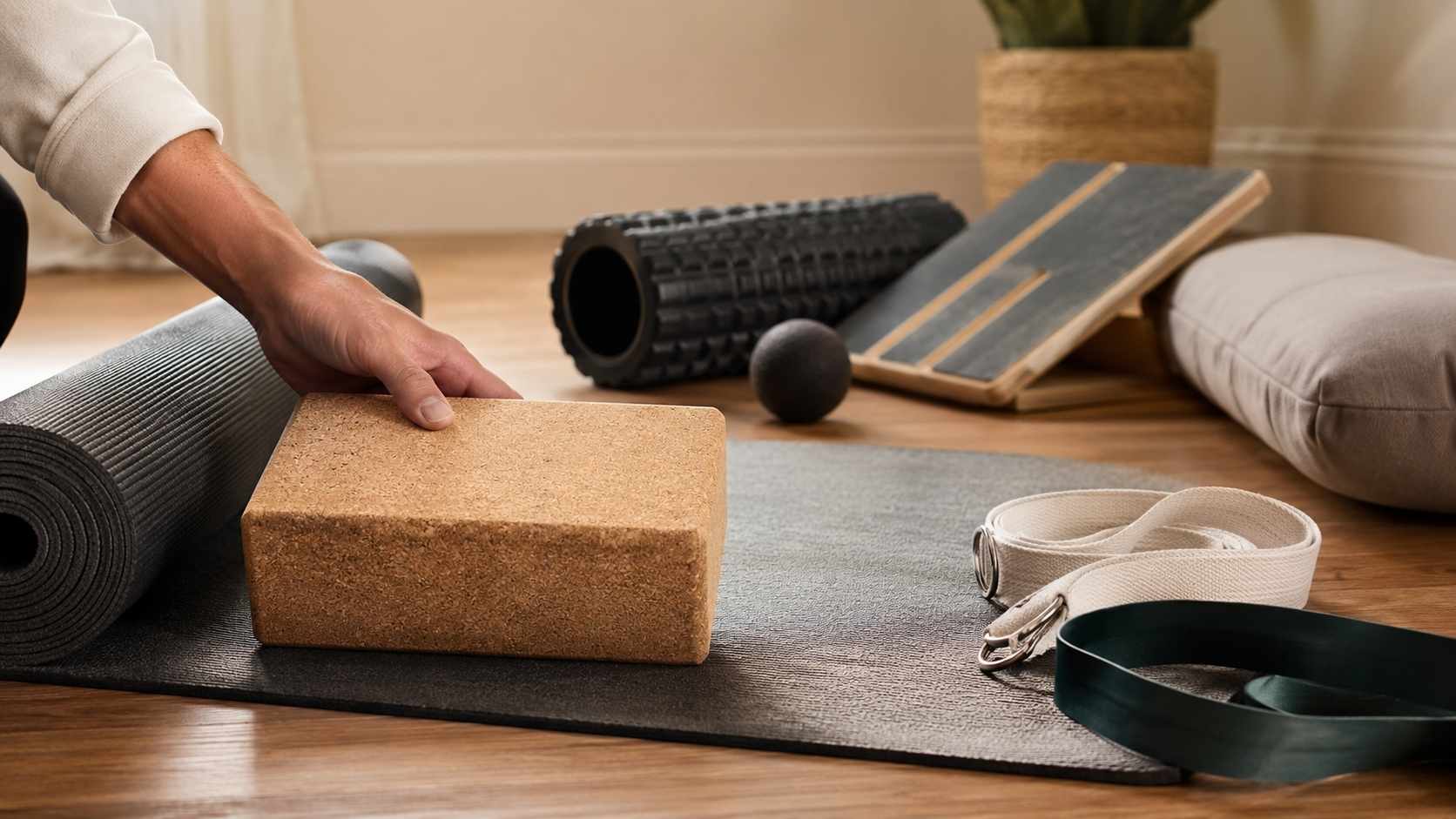
Quick Comparison: 7 Stretching Accessories That Make a Difference
| Stretching Accessory | Best For | Main Benefit |
| Stretching strap | Hamstrings, calves, shoulders, assisted stretches | Adds reach and control |
| Yoga blocks | Hips, hamstrings, lunges, balance support | Brings the floor closer |
| Resistance or mobility bands | Active flexibility, shoulders, hips, warm-ups | Adds light resistance and assistance |
| Foam roller | Quads, calves, glutes, upper back, pre-stretch prep | Helps reduce tightness and improve range of motion |
| Massage ball | Feet, glutes, shoulders, small tight areas | Targets smaller spots |
| Slant board | Calves, ankles, squat mobility | Supports precise lower-leg stretching |
| Yoga bolster or cushion | Restorative stretches, hips, chest, lower back comfort | Makes longer supported stretches easier |
Best Stretching Accessory by Goal
| Goal | Best Accessory |
| Improve hamstring stretching | Stretching strap |
| Make yoga poses more accessible | Yoga blocks |
| Add control to mobility work | Resistance or mobility bands |
| Prepare tight muscles before stretching | Foam roller |
| Target small tight spots | Massage ball |
| Improve calf and ankle stretching | Slant board |
| Relax into supported stretches | Yoga bolster |
How to Build a Simple Stretching Kit
You do not need all seven accessories on day one. A smart beginner kit starts with a strap, two blocks, and a foam roller. Those three tools cover most basic flexibility needs: reach, support, and muscle prep.
If you do more athletic mobility work, add a light mobility band and a massage ball. If you struggle with calves, ankles, or squats, add a slant board. If your goal is relaxation, recovery, yoga, or evening stretching, add a bolster. The best kit is the one you will actually use three or four times a week.
Safety Tips for Using Stretching Gear
Stretching accessories should make stretching safer, not more aggressive. Warm up first with light movement. Move slowly. Breathe normally. Hold gentle stretches without bouncing. Stay away from sharp pain, numbness, tingling, or joint pinching. Do not use tools to force range. Do not roll directly over joints, bones, or injured areas. Check bands for wear before using them.
If you have a recent injury, surgery, nerve symptoms, chronic pain, balance problems, or a diagnosed medical condition, get guidance from a qualified clinician before using mobility accessories intensely.
The best stretch is not the deepest one. It is the one your body can repeat without irritation.
Common Mistakes to Avoid
- Buying too many tools before building a habit. Accessories help only when they are used consistently.
- Chasing pain. Pain is not proof that the stretch is working. It is usually a sign to reduce intensity, change position, or stop.
- Using passive stretching for every problem. Some tightness improves more when flexibility is paired with strength and control.
- Ignoring setup. A strap used badly can still strain the back. A block placed too far away can still collapse your posture. A foam roller used too aggressively can irritate sensitive areas.
- Expecting instant flexibility. Accessories help you practice better, but flexibility still takes time.
Wrapping Up
Stretching accessories make a difference when they help you stretch with more control, comfort, and consistency.
A strap helps you reach without forcing. Blocks bring the floor closer. Bands add active control. Foam rollers prepare larger muscle areas. Massage balls target smaller spots. Slant boards make calf and ankle stretching more precise. Bolsters help the body relax into supported positions. None of these tools are magic.
But used well, they can turn stretching from something you avoid into something your body can actually repeat. That is where flexibility improves.
Frequently Asked Questions About Stretching Accessories
1. What are the best stretching accessories for beginners?
The best stretching accessories for beginners are a stretching strap, two yoga blocks, and a medium-density foam roller. These tools help with reach, support, and muscle preparation without making the routine too complicated.
2. Do stretching accessories really improve flexibility?
Stretching accessories can support flexibility by helping you hold better positions, control intensity, and stretch more consistently. They do not improve flexibility by themselves. The real progress comes from regular practice, gentle breathing, proper setup, and avoiding painful force.
3. Are resistance bands good for stretching?
Yes, resistance bands can be useful for active stretching and mobility work. They help add control and light resistance, especially for shoulders, hips, ankles, and warm-up drills. Choose light resistance first and avoid overstretching worn or damaged bands.
4. Is a foam roller better before or after stretching?
A foam roller can be useful before stretching to prepare tight muscles or after exercise to support recovery. Many people use it before mobility work because it can make movement feel smoother. It should be used gently and should not cause sharp pain.
5. What stretching gear is best for tight hamstrings?
A stretching strap is one of the best tools for tight hamstrings because it lets you stretch while lying down and control the leg position without rounding the back. Yoga blocks can also help during standing or seated hamstring stretches.
6. What mobility accessories are best for tight calves and ankles?
A slant board, stretching strap, foam roller, and mobility band can all help with calves and ankles. A slant board gives a stable angle for calf stretching, while bands can support active ankle mobility drills. Use gentle pressure and avoid bouncing.