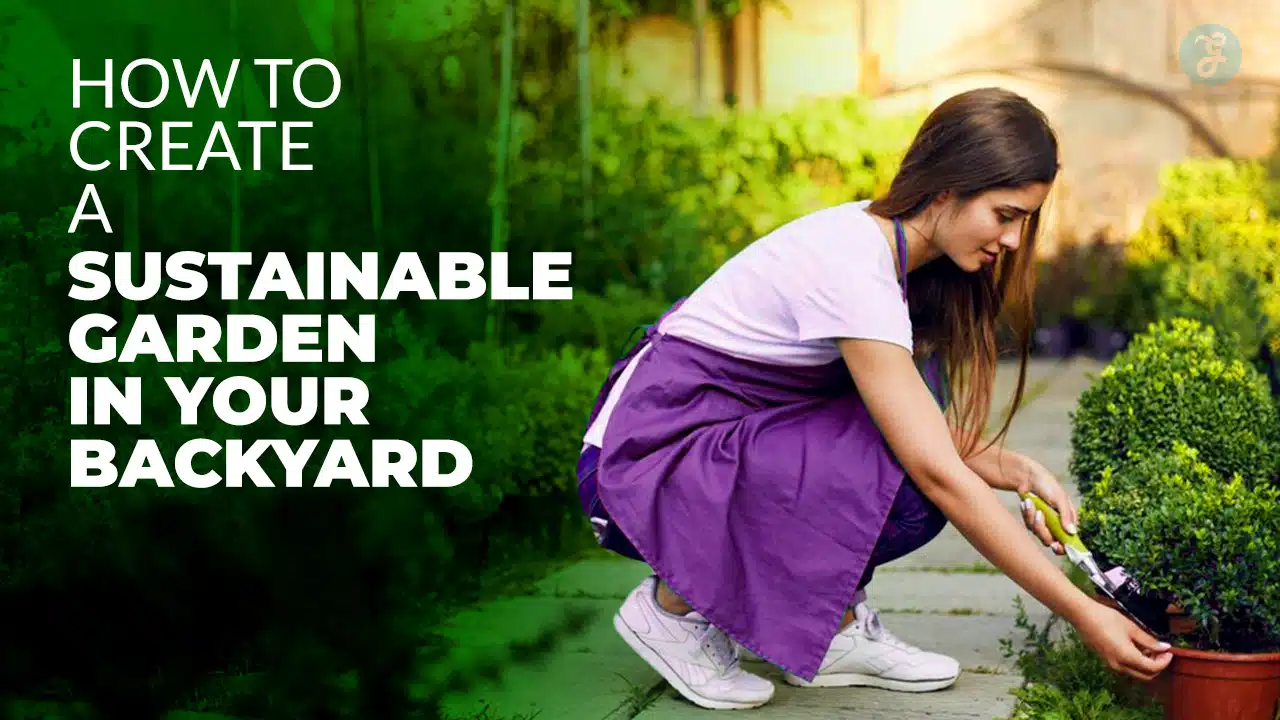
Are you tired of your yard hurting the earth? Maybe you want a pretty space that also helps the planet. You can learn How To Create A Sustainable Garden In Your Backyard!
Did you know sustainable gardening helps homes and the world around them? This article gives you simple steps to go green. Learn how to conserve water and use less energy. Read on to make your garden better!
Key Takeaways
- Plan your garden. Check sunlight and dirt.
- Pick plants that need less water. Native plants are good.
- Save water. Use rain barrels or drip hoses.
- Make your own plant food. Use compost.
- Help nature. Plant flowers for bees.
Plan Your Garden Layout
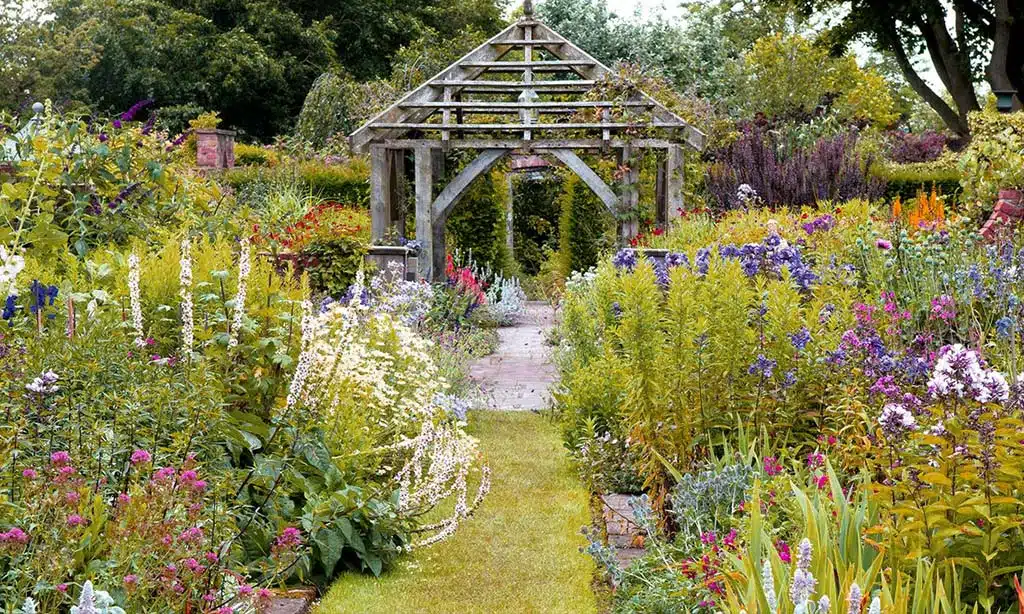
Ready to plan your space? Think about what spots get sun and check your soil.
Assess space, sunlight, and soil quality
Consider where you will put your gardens. Space matters. Plan your garden layout. Think about sunlight. Is there enough sunlight for planting? Also, check your soil. Good dirt helps plants grow.
Check your soil pH. This test stops too much fertilizing. Over-fertilizing pollutes water. Lawns need about 1 inch of rain each week. Test the soil to help your sustainable gardening.
Incorporate companion planting
Companion planting helps your sustainable gardening efforts. It means putting different plants together that help each other grow. Some plants offer weed control or draw in beneficial insects.
Pollinator friendly flowers and leafy greens are good choices.
Good garden beds can help with carbon sequestration. Garden pests and invasive species are not. Native plants are hardy. They also require less water. This is good for combating climate change.
Choose Sustainable Plants
Want a garden that gives back? Pick plants that work with nature, not against it.
Opt for native and drought-resistant species
Pick plants that grow well where you live. Native plants need less care. They also help local wildlife. Fewer weeds grow, too.
Drought-tolerant plants need less water. You save water and time. Avoid invasive plant species. Instead, choose different plants. This helps keep nature healthy. Using native plants support biodiversity.
Native plant selections also reduce water needs.
Conserve Water
Conserving water is key, and simple changes can make a big difference, so, read on for tips about drip irrigation and soaker hoses.
Install rain barrels or drip irrigation systems
Cut down on water waste with smart watering. You can use rain barrels to collect rainfall. Rain water is great for your plants. Drip irrigation systems help too. These systems use soaker hoses to water plants slowly.
Low-angle spray devices also help reduce evaporation.
Getting a rain gauge can show how much rain you get. Lawns often need 1 inch of rain each week. Replacing hard surfaces helps water sink into the soil. This stops water runoff that pollutes storm drains.
Drip irrigation is key for sustainable gardening!
Create Natural Fertilizers
Skip store-bought stuff. Instead, turn food waste into garden gold with a compost pile.
Start composting kitchen and garden waste
Make natural fertilizers. Start a compost pile using food waste and yard waste. Compost enriches your soil. It also helps soil hold moisture in the soil. This cuts down on watering needs.
Composting yard waste such as leaves, and food scraps enriches the soil. Use grass clippings with a mulching mower. Compost is a natural alternative to chemical fertilizers. Test your soil first before adding fertilizers, however.
Promote Biodiversity
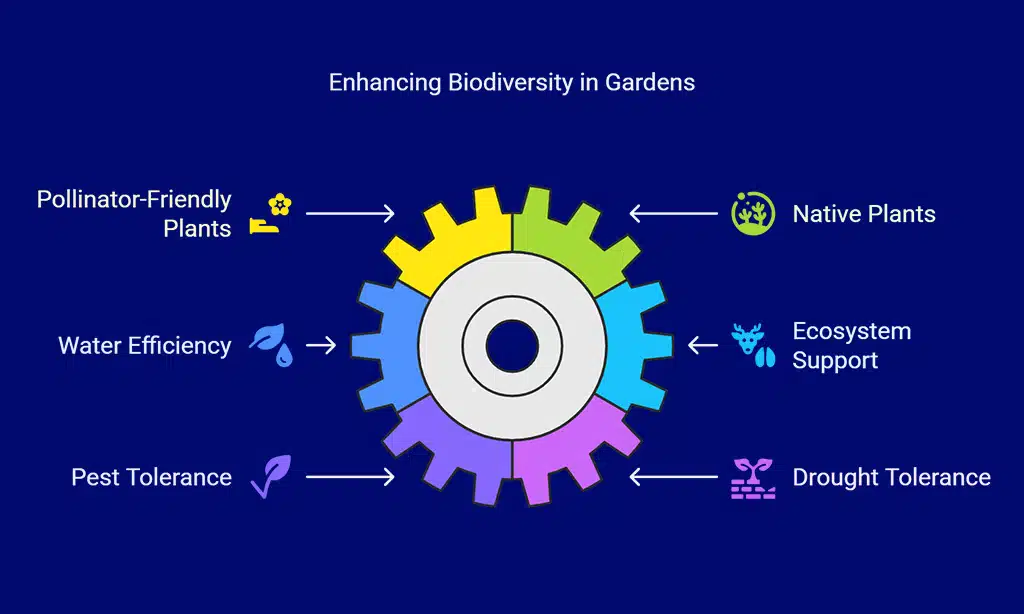
Help out nature! Welcome insects and other wildlife.
Plant pollinator-friendly flowers and shrubs
Plant some flowers and shrubs that bees, butterflies, and other helpful insects love. This boosts biodiversity. Native plants are a great choice. They need less watering. They also support local wildlife.
A variety of plants helps keep things healthy. Avoid plants that can take over. Tolerate a bit of bug damage. You do not have to use pesticides! Good gardening tips include planting flowers that pollinators enjoy.
Try drought-tolerant landscaping with these plants.
Reduce Energy Usage
Use less energy with hand tools, and read on to learn more.
Use manual or electric gardening tools
Gas mowers hurt the Earth. Instead, try a push mower. Try electric gardening tools. Push mowers need no gas. Electric mowers make less pollution. Keep your mower blade sharp. A sharp blade cuts better.
It also helps your mower work well. This cuts down on pollution.
Consider limiting outdoor lights. You could try lights powered by the sun. LED lights work well, too. Also, cut back on holiday lights. When you do, pick lights that use less power.
These steps help the environment and save energy. Using less energy is sustainable gardening.
Takeaways
Let’s grow a better future. Get your shovels and get started today. Make your yard green, and nature will smile. You will create a garden with compost heaps, drip irrigation types, and native plant varietals.
FAQs
1. What is sustainable gardening?
Sustainable gardening means growing plants in a way that helps the earth. It uses things like compost heap and organic mulch. It avoids fertilizer runoff and water wastage.
2. What are some gardening tips for a sustainable garden?
Try using drip irrigation or soaker hoses. Plant native plants and drought-tolerant plants. These gardening tips help save water.
3. How can I deal with food waste in my garden?
Start a compost heap! Put food waste and organic materials in it. This helps your plants grow. It also keeps waste out of landfills.
4. What are some ways to save water in my garden?
Use a rain gauge to check how much rain you get. Collect grey water to water your plants. Avoid sprinkler systems that waste water.
5. How can I keep my garden healthy without chemicals?
Attract beneficial insects to eat pests. Use organic mulch to feed the soil. Wood ash can also help your plants.
6. What about my lawn mower and other tools?
Think about using a manual lawn mower. Use recycled tools when you can. This helps reduce greenhouse gas and carbon dioxide.