Cleaning the kitchen can feel like a never-ending chore. But using harsh chemical cleaners might do more harm than good. They can leave behind fumes, irritate your skin, and even pollute indoor air.
Switching to non-toxic cleaning products is a safer choice. Many are plant-based, biodegradable, and better for your health. In this blog, you’ll learn how to find these products and why they work so well in kitchens.
Ready to make your kitchen sparkle safely? Keep reading!
Key Takeaways
- Non-toxic cleaners are safer for health and the planet. They avoid harmful chemicals like phthalates, parabens, and VOCs. These chemicals pollute air and water or cause allergies.
- Brands like ECOS, Thrive Market, Blueland, and PURACY offer plant-based options. These products clean effectively without harsh residues or fumes.
- Homemade solutions work too! Use vinegar with baking soda to tackle stains or lemon juice to disinfect naturally. They are cheap and easy to make.
- Check labels for certifications like EWG Verified® or EPA Safer Choice. These ensure products meet safety standards and contain no harmful additives.
- Switch now to protect your home from toxins while caring for the environment. Small changes can lead to a cleaner kitchen and healthier living space!
Why Choose Non-Toxic Cleaning Products for Your Kitchen?
Harsh cleaners can fill your kitchen with harmful fumes. Many release volatile organic compounds (VOCs) that harm indoor air quality. The EPA says indoor air can be 2–3 times more polluted than outdoor air due to these toxins.
VOCs may cause headaches, allergies, and breathing problems. Switching to non-toxic cleaning products helps reduce these risks.
Regular cleaners also harm waterways when rinsed down the sink. Bleach and similar chemicals damage aquatic life and ecosystems. Non-toxic options like biodegradable dish soap are safer for the planet.
They clean well without leaving dangerous residues on countertop surfaces or cutting boards where food is prepared daily.
Best Non-Toxic Cleaning Products for Kitchens

Keeping your kitchen clean doesn’t mean using harsh chemicals. Safer, plant-based options can tackle grease and grime just as well!
Plant-based all-purpose cleaners
Plant-based all-purpose cleaners work great for kitchens. They clean grease, spills, and grime without harsh chemicals. Brands like ECOS offer affordable options, like their $7 cleaner made with natural ingredients.
This product is biodegradable and uses renewable energy during production.
Thrive Market also provides eco-friendly cleaning agents. Their products are cruelty-free and budget-friendly. These cleaners reduce indoor air pollution while being safe for counters and sinks.
Always check labels to avoid harmful additives like phthalates or parabens in household cleaners.
Biodegradable dish soaps
Biodegradable dish soaps break down quickly and safely in the environment. They protect water sources by avoiding harmful chemicals like phosphates or chlorine bleach, which pollute rivers and harm marine life.
Brands like PURACY offer gentle, biodegradable options made of 98.5% natural ingredients. These are cruelty-free, baby-safe, and eco-friendly choices for everyday use. Using such soaps helps reduce waste while keeping your kitchen sink clean without harming the planet.
Non-toxic countertop sprays
Non-toxic countertop sprays clean without harsh chemicals. They are safe for your home, kids, and pets. Look for brands like Attitude with EWG Verified® standards. These sprays avoid harmful chemicals like phthalates or parabens found in conventional cleaners.
Blueland offers eco-friendly options, too. Their reusable bottles cut waste and reduce plastic use. Pair their spray refills with soapy water or white vinegar for a sustainable cleaning routine.
Keep surfaces fresh while caring for your health and the planet!
DIY Non-Toxic Kitchen Cleaning Solutions
Make your own safe cleaners with kitchen staples like vinegar, baking soda, and lemon juice—simple hacks that work wonders!
Vinegar and baking soda mixtures
Vinegar and baking soda work wonders for cleaning. Mix 1 cup of each to create a paste that tackles tough stains on your stovetop or oven. The fizzing action helps lift grease and grime easily.
To freshen drains, pour half a cup of baking soda followed by half a cup of white vinegar down the sink. Let it bubble for 10 minutes, then flush with hot water. This mix cleans without harsh chemicals, leaving no toxic residue behind.
Lemon juice for natural disinfection
Lemon juice can kill germs naturally. Its acidic nature fights bacteria and mold well. Mix fresh lemon juice with water for a chemical-free cleaning spray. Rub it on cutting boards, countertops, or sinks to disinfect.
Add baking soda for tough grime. Sprinkle the soda first, then scrub with lemon halves. This combo works as a natural deodorizer too! You get clean surfaces without harmful chemicals like phthalates or parabens.
Hidden Risks of Conventional Cleaning Products
Some cleaning products may harm your health. Ammonia can cause breathing problems. Chlorine bleach irritates eyes and skin, releasing fumes that hurt lungs over time. These chemicals are found in many household cleaners like glass cleaner, dish soap, and laundry detergent.
Phthalates in air fresheners mess with hormones. Triclosan in hand soaps makes bacteria stronger against antibiotics. These ingredients also pollute water when washed down drains. Choosing non-toxic cleaning products helps protect your home and the planet from these dangers.
How to Identify Truly Non-Toxic Cleaning Products
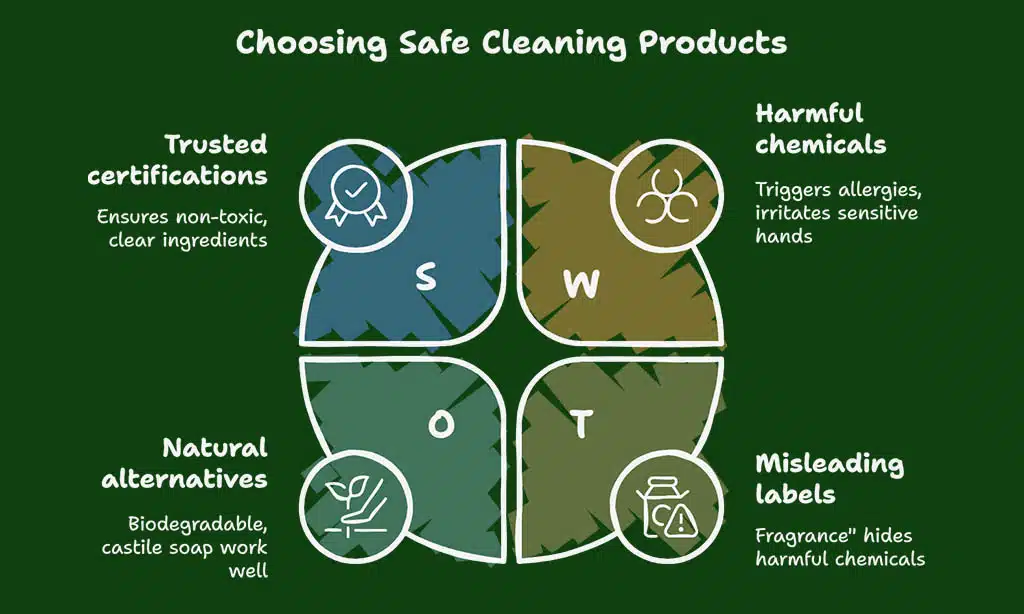
Read ingredient labels like a detective, and don’t be fooled by green packaging. Stick to trusted certifications or products backed by safety tests.
Look for certifications like EWG Verified
Certifications matter. EWG Verified® is a great start for finding safe products. It means the product avoids harmful chemicals like phthalates and parabens. This label ensures the ingredients are non-toxic and clear to understand.
Another helpful mark is EPA Safer Choice. This shows the product meets strict safety rules set by the Environmental Protection Agency. These labels help you choose natural cleaning products that work without risking your health or harming countertops, dishes, or even your hands!
Avoid harmful chemicals like phthalates and parabens
Phthalates can mess with your hormones. Some cleaning products sneak them in under “fragrance” on labels. Parabens, often used as preservatives, may harm your skin and health over time.
Both can trigger allergies or irritate sensitive hands.
Use natural cleaning products instead. Biodegradable dish soaps or castile soap work well without harsh chemicals. Check for labels like EWG Verified® to pick safer choices for countertops, dishwashers, and more.
Recommended Non-Toxic Cleaning Brands for Kitchens
Non-toxic cleaning brands keep your kitchen clean and safe. Many options offer effective, chemical-free solutions.
- Thrive Market sells natural cleaning products at affordable prices. Memberships cost $60 a year or $12 monthly. They focus on sustainable waste management.
- Grove Collaborative offers biodegradable dish soaps and countertop sprays. Customers praise their dish detergent for its strong grease-fighting ability.
- Blueland has over 23,000 glowing reviews from happy users. Their products include plant-based all-purpose cleaners in refillable containers.
- Branch Basics is praised by customers like Shelby R. for its budget-friendly, all-in-one cleaning solution. It works well for tough stains while being gentle on skin.
- Attitude makes effective chemical-free cleaners with no harmful toxins. Jessica, a user, loves how it cleans without harsh smells or side effects.
- Cleancult supports sustainable waste efforts in Bogotá, Colombia, through its eco-friendly practices. Their $6 all-purpose cleaner is both affordable and powerful.
- Seventh Generation creates non-toxic cleaning products using white vinegar and essential oils like tea tree oil. Their dishwashing liquid is safe yet strong against grease.
These brands make your kitchen safer while protecting the planet!
Takeaways
Switching to non-toxic cleaning products makes your kitchen safer and healthier. You protect your family from harmful chemicals while helping the planet. Small changes, like using white vinegar or castile soap, can make a big difference.
Choose wisely, read labels, and enjoy a cleaner home without the risks. Your kitchen—and the Earth—will thank you!
FAQs
1. What are non-toxic cleaning products?
Non-toxic cleaning products are made without harmful chemicals. They include items like natural dish soap, castile soap, white vinegar, and baking soda.
2. Can I clean my oven with chemical-free options?
Yes! You can use a mix of baking soda and water as a natural oven cleaner. It’s safe for your kitchen and doesn’t leave toxic fumes.
3. Are biodegradable cleaning products good for countertops?
Absolutely! Biodegradable cleaners work well on countertops while being safer for the environment and your home.
4. How do essential oils help in non-toxic home cleaning?
Essential oils like tea tree oil add natural antibacterial power to homemade cleaners. They also make everything smell fresh!
5. Are detergent pods safe if someone is allergic?
Detergent pods can sometimes cause allergies depending on their ingredients. Look for chemical-free or fragrance-free options when washing dishes or using the laundry machine.