In recent years, consumers have become more conscious of the chemicals present in household products, leading to a surge in demand for non-toxic cleaning products.
But are non-toxic cleaning products really better than conventional cleaners? Do they clean effectively while being safer for health and the environment?
This article dives deep into the effectiveness, benefits, and potential drawbacks of non-toxic cleaners to determine whether they live up to the hype. We’ll explore research-backed insights, expert recommendations, and practical advice to help you make informed decisions.
What Are Non-Toxic Cleaning Products?
Non-toxic cleaning products are formulated without harmful chemicals like ammonia, chlorine, or phthalates. They are often made from plant-based, biodegradable ingredients that pose little to no risk to human health or the environment.
Unlike traditional cleaners that rely on harsh synthetic compounds, non-toxic alternatives use natural disinfectants, enzymes, and essential oils to break down dirt and bacteria. These products aim to provide effective cleaning power while eliminating risks associated with toxic residues and air pollution inside homes.
Differences Between Non-Toxic and Conventional Cleaning Products
| Feature | Non-Toxic Cleaners | Conventional Cleaners |
| Ingredients | Plant-based, biodegradable, no harsh chemicals | Synthetic chemicals, preservatives, and artificial fragrances |
| Health Impact | Generally safe for people and pets | Can cause respiratory issues, skin irritation, and allergies |
| Environmental Impact | Low; biodegradable and eco-friendly packaging | High; toxic waste, plastic pollution |
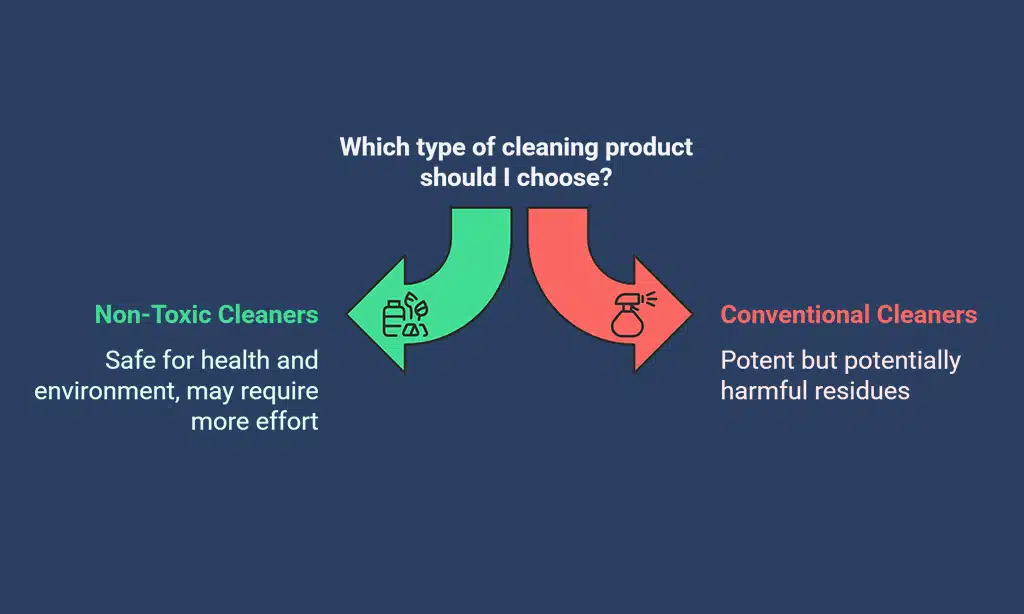
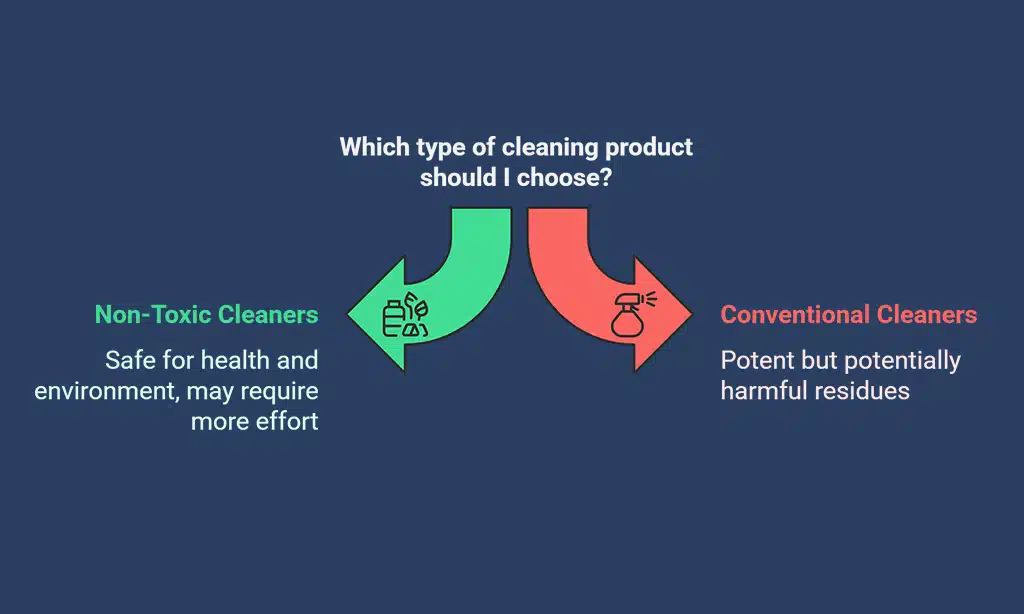
| Effectiveness | Works well but may require extra effort | Often more potent but can leave harmful residues |
| Fragrance | Natural essential oils or fragrance-free | Artificial fragrances, can trigger allergies |
| Shelf Life | Often shorter due to the absence of synthetic preservatives | Longer due to chemical preservatives |
Are Non-Toxic Cleaning Products More Effective?
A major concern among consumers is whether non-toxic cleaning products are really better at removing dirt, bacteria, and grime.
While conventional products often contain powerful disinfectants, some non-toxic alternatives also provide antimicrobial properties using ingredients like vinegar, hydrogen peroxide, and essential oils.
Studies show that while non-toxic products can effectively clean everyday messes, they may require additional scrubbing or longer contact time for deep disinfection. Some brands now use plant-derived enzymes and probiotics to enhance cleaning performance, making them just as effective as traditional cleaners in breaking down grease and grime.
Pros and Cons of Using Non-Toxic Cleaning Products
Pros:
- Safer for children, pets, and people with allergies. Reducing exposure to toxic chemicals minimizes health risks, especially for sensitive individuals.
- Reduces indoor air pollution and exposure to toxic fumes. Many conventional cleaners release VOCs, which can lead to respiratory problems.
- Environmentally friendly, with biodegradable ingredients and packaging. Sustainable products reduce pollution and support ecological balance.
- Free from synthetic fragrances that may trigger sensitivities. Many non-toxic products use essential oils for a refreshing, natural scent.
- Increasing effectiveness with new formulations. Innovations in green chemistry are making non-toxic cleaners more powerful and efficient.
Cons:
- Some products may require more effort or multiple applications. Non-toxic cleaners can take longer to break down tough stains.
- Higher cost compared to conventional cleaners. Many eco-friendly brands have premium pricing.
- Limited availability in some markets. Some non-toxic brands are not as widely distributed as conventional cleaners.
- Shorter shelf life. Without chemical preservatives, these products may expire faster than traditional cleaners.
Health and Environmental Benefits of Non-Toxic Cleaning Products
Many conventional cleaning products contain volatile organic compounds (VOCs), which can cause:
- Respiratory problems and asthma.
- Skin and eye irritation.
- Headaches and dizziness.
- Hormonal disruptions due to endocrine-disrupting chemicals.
Comparison Table: Toxic vs. Non-Toxic Cleaning Products
| Health Factor | Conventional Cleaners | Non-Toxic Cleaners |
| Respiratory Issues | Can trigger asthma and allergies | Minimal to no respiratory risks |
| Skin Irritation | Common due to harsh chemicals | Generally mild and skin-friendly |
| Long-Term Effects | Potential hormone disruption and toxicity | No known harmful long-term effects |
Environmental Impact of Toxic vs. Non-Toxic Cleaners
| Factor | Conventional Cleaners | Non-Toxic Cleaners |
| Water Pollution | Contain phosphates, bleach, and detergents harmful to marine life | Made with biodegradable ingredients that are safer for water systems |
| Air Pollution | Releases VOCs that contribute to smog and poor air quality | Minimal or no VOC emissions, improving indoor and outdoor air quality |
| Packaging Waste | Single-use plastic bottles, non-recyclable materials | Often use recycled or refillable packaging |
| Eco-Friendly Manufacturing | Uses petroleum-based chemicals | Utilizes plant-based, renewable resources |
How to Choose the Best Non-Toxic Cleaning Products?
Key Labels and Certifications to Look For
When shopping for non-toxic cleaning products, look for these certifications to ensure safety and effectiveness:
- EPA Safer Choice: Ensures the product is free from harmful chemicals.
- Green Seal: Verifies that the product meets strict health and environmental standards.
- EWG Verified: Indicates transparency in ingredient disclosure.
- USDA Certified Biobased: Confirms that the product is made from renewable, plant-based ingredients.
DIY Non-Toxic Cleaning Alternatives
Want a cost-effective and natural alternative? Try these DIY non-toxic cleaning solutions:
- All-Purpose Cleaner: Mix equal parts white vinegar and water with a few drops of lemon essential oil.
- Glass Cleaner: Combine 2 cups of water, ¼ cup of white vinegar, and 1 tablespoon of cornstarch.
- Disinfectant Spray: Mix ½ cup of hydrogen peroxide with 1 cup of water and spray on surfaces.
- Carpet Stain Remover: Mix 1 cup of warm water with 1 tablespoon of baking soda and scrub gently.
Takeaways
After evaluating the effectiveness, health benefits, and environmental impact, are non-toxic cleaning products really better than conventional ones?
The answer depends on your priorities. While they may require more effort in certain cases, their safety and sustainability make them a superior choice for long-term well-being.
With increasing innovation in the green cleaning industry, non-toxic products are becoming more powerful and accessible, making them a worthwhile investment.